Bangladesh Defense
Saif
Senior Member
- Jan 24, 2024
- 21,077
- 9,688
- Nation

- Residence
- Axis Group

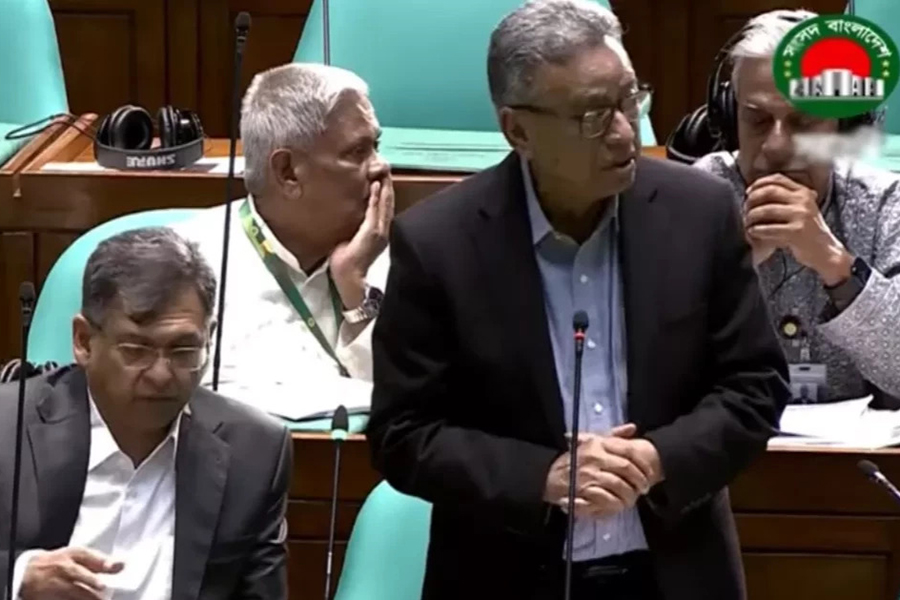
Four-tier plan taken up to reform fragile financial sector
Bangladesh's total external-debt buildup touched US$78.067 billion as of last February, the finance minister apprised parliament Tuesday while outlining their new government's financial-reform recipe. To a question, Amir Khasru Mahmud Chowdhury said between the 2008-09 and 2025-26 fiscal yea
Four-tier plan taken up to reform fragile financial sector
FE REPORT
Published :
Apr 22, 2026 09:07
Updated :
Apr 22, 2026 09:07

Bangladesh's total external-debt buildup touched US$78.067 billion as of last February, the finance minister apprised parliament Tuesday while outlining their new government's financial-reform recipe.
To a question, Amir Khasru Mahmud Chowdhury said between the 2008-09 and 2025-26 fiscal years, the previous government had taken external loans amounting to $85.993 billion.
The government has taken a four-tier, targeted plan to reform the country's fragile financial sector and restore economic stability, the finance minister told the House in response to a question from Noakhali-5 MP Mohammad Fakhrul Islam.
"As part of this, a medium-term macroeconomic framework up to the 2028-29 fiscal year has been approved, coordinating monetary and fiscal policies," he said, adding that the strategy was finalised at a Coordination Council meeting held at the Finance Division on April 10.
The minister said, "To maintain macroeconomic stability, the policy interest rate has been kept at 10 per cent, which is having a positive impact on controlling inflation. Food inflation, which rose to 14.10 per cent in July 2024, declined to 8.24 per cent by the end of March 2026."
Regarding the country's foreign-exchange reserves, he said as of 15 April 2026, the total reserves stood over $34.87 billion, or $30,201.71 million according to IMF's BPM6 method.
He also notes that Bangladesh Bank would provide special support to importers and general businesses facing capital shortages due to the depreciation of the taka.
"To keep economic activities dynamic, the central bank has also taken separate action plans for distressed productive sectors."
Finance Minister Chowdhury further says the government is forming a "Capital Market Reform Commission" to restore investor confidence in the stock market. Plans are also in place to modernise the market system using blockchain technology and to develop a strong bond market.
He adds that to restore discipline in the financial sector, targets for money supply (M2) and private-sector credit growth for the 2026-27 fiscal year have been reset in line with economic growth.
The government is also launching an "Investment Gateway" to make it easier for expatriates to invest and is taking legal measures to protect investors.
In a statement made in response to a question from MP Shamsur Rahman Shimul Biswas, the minister told parliament that between the 2008-09 and 2025-26 fiscal years, the previous government had taken external loans amounting to $85.993 billion. During the same period, $22 billion in principal and $8.6 billion in interest were repaid.
Responding to a question from Brahmanbaria-2 MP RumeenFarhana, he said as of 2026, the outstanding external debts of the government stand at $78.067 billion.
"The Economic Relations Division repays foreign loans on behalf of the government. Each fiscal year, projections are made for total repayment costs, including both principal and interest, and the required amount is allocated in the national budget. Loan repayments are being made throughout the year according to schedule using these budgetary allocations," the minister adds.
The minister also faced criticism over the present government's bank-borrowing spree. RumeenFarhana strongly criticised what she described as the "uncontrolled" pace of the government's bank borrowing and the fragile state of revenue collection.
She expressed concern over the future of the economy, stating that within just 52 days of taking office, the new government borrowed Tk 445 billion from the banking system.
While raising a supplementary question, she criticised the current economic situation.
She said the budget target for bank borrowing in the current fiscal year was Tk 1.04 trillion, but by early April, it had already exceeded 108 per cent of the target, reaching Tk 1.12761 trillion.
Citing a Bangladesh Bank report, she also mentions that revenue collection is lagging behind the target by about Tk 75 billion. "To cover the deficit, the government is becoming overly dependent on bank borrowing."
She asks the finance minister whether the government has any specific plans to expand the tax base or increase revenue.
The finance minister replies that the large volume of borrowing is largely a continuation of liabilities left by the previous government, describing it as a "carryover."
He notes that the current government has been in office for only two months and argues that the borrowing figures should not be seen as its own performance.
He assures parliament that the government's core economic policy is to gradually reduce reliance on borrowing from domestic banks, and that this will be reflected in the upcoming budget.
The minister also observes that businesses in the country are currently facing an "existential crisis" and industries are struggling with multiple challenges.
"It takes some time to restore the tax-to-GDP ratio to its previous level." Although this ratio declined during previous governments, he expresses optimism that the current government will efficiently strengthen the economy once again.
FE REPORT
Published :
Apr 22, 2026 09:07
Updated :
Apr 22, 2026 09:07
Bangladesh's total external-debt buildup touched US$78.067 billion as of last February, the finance minister apprised parliament Tuesday while outlining their new government's financial-reform recipe.
To a question, Amir Khasru Mahmud Chowdhury said between the 2008-09 and 2025-26 fiscal years, the previous government had taken external loans amounting to $85.993 billion.
The government has taken a four-tier, targeted plan to reform the country's fragile financial sector and restore economic stability, the finance minister told the House in response to a question from Noakhali-5 MP Mohammad Fakhrul Islam.
"As part of this, a medium-term macroeconomic framework up to the 2028-29 fiscal year has been approved, coordinating monetary and fiscal policies," he said, adding that the strategy was finalised at a Coordination Council meeting held at the Finance Division on April 10.
The minister said, "To maintain macroeconomic stability, the policy interest rate has been kept at 10 per cent, which is having a positive impact on controlling inflation. Food inflation, which rose to 14.10 per cent in July 2024, declined to 8.24 per cent by the end of March 2026."
Regarding the country's foreign-exchange reserves, he said as of 15 April 2026, the total reserves stood over $34.87 billion, or $30,201.71 million according to IMF's BPM6 method.
He also notes that Bangladesh Bank would provide special support to importers and general businesses facing capital shortages due to the depreciation of the taka.
"To keep economic activities dynamic, the central bank has also taken separate action plans for distressed productive sectors."
Finance Minister Chowdhury further says the government is forming a "Capital Market Reform Commission" to restore investor confidence in the stock market. Plans are also in place to modernise the market system using blockchain technology and to develop a strong bond market.
He adds that to restore discipline in the financial sector, targets for money supply (M2) and private-sector credit growth for the 2026-27 fiscal year have been reset in line with economic growth.
The government is also launching an "Investment Gateway" to make it easier for expatriates to invest and is taking legal measures to protect investors.
In a statement made in response to a question from MP Shamsur Rahman Shimul Biswas, the minister told parliament that between the 2008-09 and 2025-26 fiscal years, the previous government had taken external loans amounting to $85.993 billion. During the same period, $22 billion in principal and $8.6 billion in interest were repaid.
Responding to a question from Brahmanbaria-2 MP RumeenFarhana, he said as of 2026, the outstanding external debts of the government stand at $78.067 billion.
"The Economic Relations Division repays foreign loans on behalf of the government. Each fiscal year, projections are made for total repayment costs, including both principal and interest, and the required amount is allocated in the national budget. Loan repayments are being made throughout the year according to schedule using these budgetary allocations," the minister adds.
The minister also faced criticism over the present government's bank-borrowing spree. RumeenFarhana strongly criticised what she described as the "uncontrolled" pace of the government's bank borrowing and the fragile state of revenue collection.
She expressed concern over the future of the economy, stating that within just 52 days of taking office, the new government borrowed Tk 445 billion from the banking system.
While raising a supplementary question, she criticised the current economic situation.
She said the budget target for bank borrowing in the current fiscal year was Tk 1.04 trillion, but by early April, it had already exceeded 108 per cent of the target, reaching Tk 1.12761 trillion.
Citing a Bangladesh Bank report, she also mentions that revenue collection is lagging behind the target by about Tk 75 billion. "To cover the deficit, the government is becoming overly dependent on bank borrowing."
She asks the finance minister whether the government has any specific plans to expand the tax base or increase revenue.
The finance minister replies that the large volume of borrowing is largely a continuation of liabilities left by the previous government, describing it as a "carryover."
He notes that the current government has been in office for only two months and argues that the borrowing figures should not be seen as its own performance.
He assures parliament that the government's core economic policy is to gradually reduce reliance on borrowing from domestic banks, and that this will be reflected in the upcoming budget.
The minister also observes that businesses in the country are currently facing an "existential crisis" and industries are struggling with multiple challenges.
"It takes some time to restore the tax-to-GDP ratio to its previous level." Although this ratio declined during previous governments, he expresses optimism that the current government will efficiently strengthen the economy once again.