Donate ☕
201 Military Defense Forums
[🇧🇩] - Save the Rivers/Forests/Hills-----Save the Environment | Page 15 | PKDefense
Home Login Forums Wars Watch Videos
Serious discussion on defense, geopolitics, and global security.

[🇧🇩] Save the Rivers/Forests/Hills-----Save the Environment

Reply (Scroll)
Press space to scroll through posts
G Bangladesh Defense
[🇧🇩] Save the Rivers/Forests/Hills-----Save the Environment
523
13K
More threads by Saif

Stop disturbing the Sundarbans!​

Restrain traffic of ships through the forest

1711232731282.webp


It is deeply concerning that on top of projects, megaprojects, illegal occupations and deforestation ravaging the Sundarbans, traffic of ships through the forest has increased dramatically in recent years. A recent report sheds light on how ships, discharging harmful fumes and sound pollution, and often carrying toxic materials through the forest, have nearly doubled in a decade—from 357 trips monthly in 2012 to 837 trips in 2022, and 701 trips monthly so far this year.

Under the first Protocol on Inland Water Transit and Trade between Bangladesh and India, signed in 1972, lighter cargo vessels can operate between the two countries using the waterways mostly through the Sundarbans. A major route for these ships goes through at least 100 km of the river system inside the mangrove forest, which takes around eight hours for the vessels to travel. While any motor vehicle, including boats and ships, is strictly prohibited from operating through the forest after sunset till sunrise, ships continue to operate 24/7 unrestrained. The customs station in Angtihara, the entry point to the forest on this route, only logs the trips of the ships and does not monitor if any laws have been broken. While the customs and immigration in India close off at night, our customs office continues to operate throughout the night.
By allowing these activities, we are now destroying the Sundarbans from the inside. The toxic fumes and loud sounds greatly impact wildlife habitats and breeding environments. The propellers disrupt the marine ecosystem, and the waves cause severe erosions. For instance, the width of rivers on this route has increased from 20-30 metres to 50-60 metres. Most of the ships on this route contain fly ash, coal, and stones from India for our riverside cement factories. In the last seven years, at least 15 such ships have capsized inside the forest, spilling these harmful materials directly into the river.

Bangladesh has now become a land of lost forestlands and dead ecosystems. We have irredeemably destroyed a number of forests and major sources of biodiversity throughout this delta, and even in the hill tracts. The Sundarbans is the last hope for any unique and great population of wildlife to survive. The government must ensure that any activity harming this forest is halted immediately, and look for an alternative route for maritime trade with India as well as consider moving major power plants and factories from the area.​
 
Analyze

Analyze Post

Add your ideas here:
Highlight Cite Fact Check Respond

We must protect Tengragiri forest at any cost
We can't afford to lose the 'second Sundarbans' to timber thieves

1719962102790.webp

VISUAL: STAR

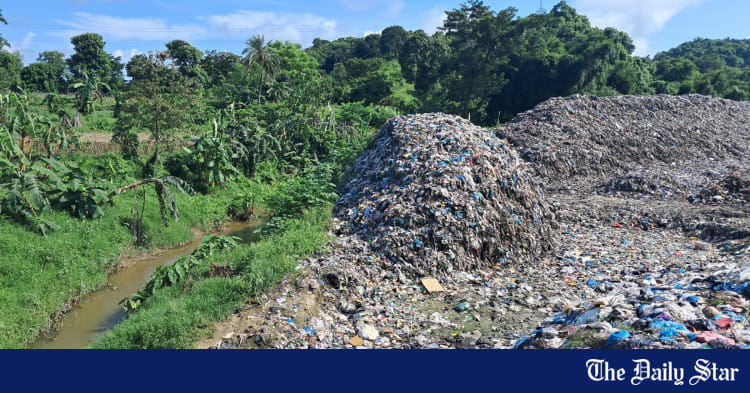
We are outraged to learn that another reserved forest is being plundered by timber thieves who are felling and stealing trees indiscriminately, with no visible steps to stop them. According to a recent report by Prothom Alo, an organised criminal gang has been stealing trees from the Tengragiri mangrove forest and setting the stumps on fire to destroy evidence, in the process causing damage to the trees that still remain standing. Locals complained that this has been going on for a long time, alleging that these thieves are working in cohort with forest officials.

The Tengragiri forest, situated along the coast of the Bay of Bengal, stretches from Taltali upazila of Barguna to Kuakata in Patuakhali, covering 13,644 acres of area, according to data from the Forest Department. In 1960, it was designated as a reserved forest based on a survey done in 1927. Home to an incredible biodiversity system, Tengragiri is the second largest mangrove forest in Bangladesh, and is often called the "second Sundarbans."

Such an invaluable gift of nature—which, much like the Sundarbans, acts as a natural barrier to calamities and protects the locals—already faces a host of threats to its survival, such as the rising sea level and increasing salinity due to global warming, erosion, etc. Its chances of survival are being further jeopardised because of the greed and recklessness of local influentials. A recent visit has revealed that 3,000 trees have been felled and stolen in the forest's Behular Char area. According to the Prothom Alo report, in March, a fire broke out there and burned as many as 10,000 trees, damaging a lot of others. What really puzzles us is that after the fire was reported, it took local forest officials 18 hours to reach the scene and bring the fire under control. Another fire incident happened in the Disirkilla area in April, but that was put out quickly enough, so the damage was minimal. For the March incident, the Forest Department filed a case against three suspects, who are already accused in a number of cases for tree robbery and smuggling, according to the report. However, the accused are out and about as all of the cases against them are still on trial.

When asked about their failure to prevent tree robbery and fire incidents, forest officials in Tengragiri cited lack of manpower and necessary resources, as well as logistical inconveniences. This seems to be their go-to excuse whenever there are reports of timber theft from reserved forests. We must ask: how difficult is it to ramp up the capacity of the Forest Department so that it can protect at-risk forest areas? Or is the concept of "reserved forest" lost on them? This lackadaisical attitude is totally unacceptable, especially considering Bangladesh's dwindling forest coverage. We urge the authorities to ensure that no further damage is done to what's left of our precious forests.​
 
Analyze

Analyze Post

Add your ideas here:
Highlight Cite Fact Check Respond

2.57 lakh acres of forest land under illegal occupation: Saber

1719962714770.webp

Photo: UNB/File

Over 2.57 lakh acres of forest land under the forest department have been illegally occupied, Environment Minister Saber Hossain Chowdhury told parliament today.

In a scripted answer, he said of the total grabbed land, a total of 30,162 acres of forest land have been recovered as of last May.

The minister said this in reply to a query from Awami League MP M Abdul Latif.

The minister said, "Eviction proposals are being sent to recover 5,000 acres of encroached forest land through a 100 working day priority action plan. Moreover, activities have been intensified to recover remaining encroached forest lands."

In response to a query from Independent MP Sohrab Uddin, he said from January to June, 170 mobile courts conducted operations against 611 illegal brick kilns, collecting fines worth Tk 15.08 crore and demolishing 250 brick kilns.​
 
Analyze

Analyze Post

Add your ideas here:
Highlight Cite Fact Check Respond

Bangladesh significant contributor to economic loss due to inadequate e-waste mgmt: ITU
Taufiq Hossain Mobin 03 July, 2024, 22:46

1720059118141.webp

Old and worn-out electronic devices are seen at a shop in the capital Dhaka recently. The global loss due to inadequate e-waste management practices amounts to $37 billion annually, with Bangladesh being a significant contributor, according to a study conducted by the International Telecommunication Union. | New Age photo

The global loss due to inadequate e-waste management practices amounts to $37 billion annually, with Bangladesh being a significant contributor, according to a study conducted by the International Telecommunication Union.

The report 'The Global E-WASTE Monitor 2024' published by the ITU, a specialised agency of the United Nations, Bangladesh is one of the largest e-waste generators in the South Asian region and the country generated 367 million kilograms of e-waste in 2022 at a rate of 2.2 kilograms per capita.

The report defined e-waste as the waste stream that contains both hazardous and valuable materials generated from disposed electrical and electronic equipment.

The UN agency published statistics of e-waste generation in 193 countries based on the data for the year 2022, showing that a record 62 billion kilograms of e-waste were generated globally in 2022, averaging 7.8 kilograms per person a year.

The report explained that despite gaining $28 billion from metal recovery and $23 billion from reduced greenhouse gas emissions, the costs of e-waste treatment and associated health and environmental impacts remain high.

With $10 billion spent on treatment and $78 billion in externalised costs, the net result is a staggering $37 billion annual loss in global e-waste management, it said.

The externalised costs amount to an estimated $36 billion in long-term socioeconomic and environmental costs, $22 billion representing the cost of illnesses and decreases in human capital, and the average monetised value of working lives caused by mercury emissions, $19 billion arising from the release of plastic waste into the environment, less than $1 billion arising from the release of lead into the environment and its effects on wildlife and humans.

Experts said that Bangladesh was incurring loss in this sector due to lack of a formal mechanism in e-waste management, and said e-waste management could be an industry if the government had set up proper process.

Hridoy Roy, a lecturer of the chemical engineering department at the Bangladesh University of Engineering and Technology, told New Age that assessing the economic impact of e-waste management in Bangladesh would be hard for various reasons.

'One of the main reasons is currently there is no formal mechanism for collecting and recycling e-waste in the country. Policies regarding this need to be introduced accordingly,' he said.

The ITU report stated that Bangladesh had only a few licensed e-waste dismantlers, which used basic resource recovery practices that were polluting and unsafe.

In the Southern Asian region, India, Iran, Thailand and Pakistan were above Bangladesh in generating e-waste, amounting to 4,137 million kilograms, 817 million kilograms, 753 million kilograms and 559 million kilograms of e-waste respectively in 2022.

Sri Lanka, Nepal, Afghanistan, Bhutan and the Maldives stayed below Bangladesh.

Of these countries, the first three generated 175 million kilograms, 42 million kilograms, 32 million kilograms respectively and the remaining two five million kilograms each.

While not highlighting on the formal and informal e-waste management in Bangladesh, the report said that only 22.3 per cent of this e-waste was documented as formally collected and recycled in an environmentally sound manner in the global scenario.

The report said that e-waste had a direct and severe impact on the environment and people's health.

E-waste contains toxic and persistent substances, such as the flame retardants that are used in appliances and in EEE containing plastics.

It also said that several international studies of the emissions caused by open burning of various materials, including hazardous materials, highlighted the health risks of inhaling the heavy metals and brominated flame retardants contained in plastic e-waste.

Mentioning unmanaged recycling of temperature exchange equipment, such as refrigerants as another major, but often overlooked concern, the report stated that it contributed to climate change and depletion of the ozone layer.

The report observed that the ministry of environment, forest, and climate change of Bangladesh issued the e-waste Management Rules in 2021, after nearly 10 years of talks.

The rules introduce the extended producer responsibility framework for e-waste management, requiring producers of almost all EEE to register with the Department of Environment, have an approved e-waste management plan and reach collection targets of 10 per cent in 2022, increasing annually by 10 percentage points to 50 per cent by 2026.

The report said that the government of Bangladesh had been unable to implement the rules despite the progress made.​

M Shahidul Islam, chairman of the department of geography and environment at the University of Dhaka, told New Age that consumption of electrical and electronics enhanced in Bangladesh, so disposing these goods had become a matter of concern, as it was a densely populated country.

'Bangladesh has two main resources, water and soil. Either disposed EEE, or e-waste goes to water, or mixes in soil. Water and soil get polluted by the heavy metals of e-waste, such as lead,' he said.

'Specific policy and its implementation are needed for e-waste management. But e-waste management in Bangladesh is currently treated as a casual issue without much seriousness,' he added.
 
Analyze

Analyze Post

Add your ideas here:
Highlight Cite Fact Check Respond
  • Love (+3)
Reactions: Bilal9

Heroes and villains of the climate crisis

1720222628842.webp

Visual: Shutterstock

In Alexander Ward's book The Internationalists, there is an account of a debate between the United States Special Presidential Envoy for Climate John Kerry and National Security Advisor Jake Sullivan on how the United States should address the issue of China in climate negotiations. Kerry argues that America and China must cooperate. Sullivan disagrees—they should focus on "boxing China out" and make deals with other countries. Sullivan argues that they should instead present China as the main climate villain, and force them to the negotiating table on US' terms.

Economist Raghuram Rajan recently wrote an article for the Financial Times in the aftermath of the Indian elections, arguing that the Modi administration's focus on expanding manufacturing is misguided: "The world does not have political or climatic room for another China-sized economy exporting manufactured goods." Notably, the lack of room is both "political" and "climatic". The unspoken "political" factor here is the recent American anxiety around Chinese overcapacity—G7 economies are worried about losing advanced manufacturing capacity to competitors in all emerging markets (not just China).

The "climatic" factor brings us back to the question of climate justice.

Who is the real "climate villain?"

Historical emissions and global inequality
How can one measure climate villainy? If we were to take annual carbon emissions, then the primary villain is very clear—it is the People's Republic of China, followed by the United States of America. If we measure "climate villainy" on this scale then one can even present the US as a relative "climate hero"—it's an example of a large, high-population economy that can sustain a higher quality of life than China while producing fewer emissions. Thanks to the radical green agenda in Biden's Inflation Reduction Act (glowingly endorsed by progressives) and the visionary entrepreneurialism of Elon Musk, it will be the US that saves the world from the climate crisis, just as it saves the world from every crisis.

This is the story US progressives would like to tell—of the climate hero America saving the world from the climate villain China.

The problem with looking only at annual carbon emissions is that carbon has accumulated over time. The climate crisis is not caused by present-day emissions, it is caused by the sum total of historical emissions. Once we account for the issue of historical emissions, we confront the heart of the matter: the benefits of historical carbon consumption are restricted to a small handful of advanced economies, former Warsaw Pact countries and Gulf Arab petrostates, but the costs have to be borne by us all.

Consider the figure below, taken from a Nature Sustainability paper by climate scientist Jason Hickel:

1720222713806.webp


Cumulative CO2 emissions with respect to 1.5 degrees Celsius fair shares versus cumulative GDP per capita, 1960-2018. Source: Jason Hickel
The y-axis shows the cumulative GDP per capita from 1960-2018. The x-axis measures how much each country has overshot or undershot the global carbon budget needed to restrict warming to 1.5 degrees Celsius, relative to a hypothetical world where historical carbon consumption was divided equally according to population—a value of 1 represents a country that has consumed exactly its fair share of global carbon.

A striking pattern emerges almost immediately—almost 70 percent of cross-national differences in cumulative per capita GDP can be explained solely by differences in cumulative emissions over time. Thus, it is impossible to disentangle the issue of global inequality from historical carbon emissions. With the exception of primarily the Gulf petrostates, the entirety of the Global South is in the bottom left of the chart, coloured in green. The figure ends in 2018, rapid economic development in the intervening period has since caused China to slightly overshoot its fair share. But the main climate villain when we take historical emissions into account is very clear—it is the US.

Liability vs generosity

The solution to the problem of historical emissions is quite straightforward—Global North (red in the graph) countries owe liability payments to Global South (green) countries for exceeding their fair shares of the atmospheric commons. This would enable emissions reductions while still allowing for "catch-up" growth in the Global South, and help solve long-standing issues of global inequality. COP would be the ideal venue to negotiate these payments.

However, the topic of liability payments at COP is consistently blocked by the Western negotiating bloc, particularly the US. The concept of Common but Differentiated Responsibility (CBDR) was enshrined into international climate law in the Paris Agreement to acknowledge the issue of historical emissions but is under attack every year from Western nations. CBDR acknowledges that while all countries must act on climate change, the nature of our responsibilities is different and corresponds to our historic emissions. This framework is essential to protecting every sovereign nation's inherent human right to development. It is also essential to preserve as we pursue climate justice. Jake Sullivan's strategy for climate negotiations with China suggests that senior American policymakers have abandoned it completely, choosing instead to use climate politics to suppress economic development in Global South competitors.

Let us return to Raghuram Rajan's prescriptions for the Indian economy. "Climatic" factors are only a barrier to industrial development in India if we take the US position that only present-day emissions matter in determining climate responsibility. A historical emissions framework gives countries in the Global South room to grow and to reach some kind of parity in economic prosperity with the advanced economies. Liability payments offer a mechanism to achieve that parity.

By now I hope the readers can fully comprehend the dark motivations behind the consistent blocking of liability payments at COP. We should recognise this for what it is—an attempt by the Global North to use the climate crisis to lock in current patterns of global inequality and maintain their position of privilege in the commanding heights of the world economy. In the context of China, it was even to be used as a way to neutralise an economic competitor.

We speak of Bangladesh in terms of "climate vulnerability". This is how the Global North would like to see us, as "vulnerable" people who exist only to be saved by their generosity and benevolence. This is the language of NGOs and aid dependency. This language also directs us away from the issue of liability payments that we are owed by the Global North. The climate crisis was not caused by Bangladesh, but the lives it claims will be disproportionately from Bangladesh. When you are not owed liability, you can only be grateful for generosity. We need to break out of this paradigm.

Look again at the figure given.Don't look at it through the lens of personal self-sacrifice and bleeding-heart activism. Don't look at it through the eyes of NGOs. Look at it through the lens of your material self-interest. The emergence of China as a peer competitor to the United States creates the scope for the formation of a counter-hegemonic Global South bloc that can exercise coercion on Global North countries to demand liability payments and an acceptance of the historical emissions framework. In the present moment, this is the clearest path forward to climate justice.

Zain Omar Ali is a PhD student in genetics at Lund University. Bareesh Hasan Chowdhury works on environment and climate and is interested in the sustainable energy transition.​
 
Analyze

Analyze Post

Add your ideas here:
Highlight Cite Fact Check Respond

Adapt or die: Bangladesh joins the race to climate-proof cities
Dhaka launches climate action plan to future-proof city

Lack of financial resources is a challenge

Across Asia, city authorities face up to climate hazards

Thomson Reuters FoundationDhaka
Published: 03 Jul 2024, 09: 57

1720336133843.webp

Dhaka cityFile photo

Lashed by torrential rains and scorched by brutal heatwaves, Dhaka's workers - from rickshaw drivers to those working in clothes factories - are exposed more than most to the reality of the climate emergency.

Bangladesh's capital, one of the world's most congested and polluted mega-cities, is home to around 10 million people, including thousands who have fled floods and droughts in other parts of a country that is on the frontline of climate change.

Managing these huge numbers while also climate-proofing the riverside city is a huge challenge but it is an urgent one that city authorities are hoping to address with their first climate action plan, which was launched in May.

"Transforming Dhaka was critical towards making Bangladesh green and climate-resilient," said Environment Minister Saber Hossain Chowdhury at the launch.

The plan will serve as a roadmap to enable the city to become carbon-neutral by 2050 and includes strategies to help it cope with ever more frequent floods and heatwaves.

It includes proposals to switch to renewable energy sources, introduce electric vehicles, increase green spaces, restore natural drainage systems, establish early flood warning systems and ensure a secure water supply by 2030.

Dhaka is just the latest city in the region to seek to face the climate challenge head-on.

Asia was the world's most disaster-hit region from climate hazards in 2023, including floods, storms and heatwaves, and the region is also warming faster than other areas, according to the World Meteorological Organization.

With around 704 million people living in urban areas in South Asia, the race is on to equip cities for a hotter, more dangerous future.

First of all, cities must set baselines for greenhouse gas emissions and risks so that they can measure progress over time, said Shruti Narayan, managing director at the C40 Cities network, a global network of cities working on climate action.

"Data-driven targets and monitoring is critical to turning the plans into reality," Narayan told the Thomson Reuters Foundation.

The C40 platform helps cities align their climate plans with the 2015 Paris Agreement to limit global warming to "well below" 2 degrees Celsius (3.6 degrees Fahrenheit).


More than 60 cities have announced such plans under the platform so far, including some of Asia's biggest urban areas.

The Indian cities of Mumbai, Chennai and Bengaluru have already adopted climate plans and Karachi in Pakistan is drawing up its own blueprint.

The stakes are high: the Asian Development Bank says that unless planet-heating emissions are cut, the collective economy of six countries - Bangladesh, Bhutan, India, the Maldives, Nepal, and Sri Lanka - could shrink by up to 1.8 per cent every year by 2050 and 8.8 per cent by 2100, on average.

Already, the livelihoods of more than 200 million people in these countries are threatened by the rapid loss of snow cover in the Himalayas and rising sea levels, according to the ADB.

Financing Green Ambitions

Cities consume two-thirds of the world's energy and house 50 per cent of the global population. More than 10,000 cities have committed to cutting emissions and adapting to climate hazards.

As part of its climate plan, Dhaka's twin municipalities - north and south - established emissions inventories for 2021-22 by identifying most polluting sectors and then set a target of cutting 70 per cent of emissions by 2050.

One challenge is financing the required changes; cities in the Global South have long complained about richer countries not paying their fair share to cover the costs of climate change.

This year's COP29 climate summit in Azerbaijan is expected to focus on setting a goal for the levels of climate finance that will be needed from 2025 onwards to help poorer nations curb emissions, adapt to worsening extreme weather and higher seas, and respond to unavoidable climate "loss and damage".

In the meantime, some cities in the Global South have invested in innovative digital tools, like digital twins, to build climate resilience, while others scramble for resources.

Mumbai - the richest municipality in India with an annual budget of nearly 600 billion Indian rupees ($7.2 billion) in 2024-25 - was able to allocate around 100 billion Indian rupees ($1.2 billion) for various climate actions like expanding tree cover, reviving urban parks, and managing floods.

Mumbai's climate allocation dwarfs the entire budget of northern Dhaka - 53 billion taka ($450.3 million) in 2023-24 - which means the resource-strapped city must prioritise cheaper actions, said Md Sirajul Islam, chief town planner of Dhaka South City Corporation.

Jaya Dhindaw, head of the South Asian chapter of the World Resources Institute (WRI) that developed the climate plans for several Indian cities, said realistic, achievable actions help set the pace for progress.

For example, in early June, Bengaluru's deputy chief minister announced extended opening hours for urban parks to provide shade for the city's people.

"With low-hanging actions like these, you can drive cities' confidence that climate actions are doable projects," Dhindaw said.

However, Dhaka will need funding to raise the share of renewable power to 85 per cent, treat a massive amount of organic waste to stem methane emissions, and ensure that 95 per cent of vehicles are electric.

The city might need to call on global donors, said Jubaer Rashid, the Bangladesh country representative of ICLEI – Local Governments for Sustainability, a global network of local and national governments.

"We will work closely with city officials to help them develop proposals for fundraising," said Rashid, who worked with Dhaka's municipalities on their climate plans.

Cities Reimagined

Urban planners and environmental activists said that another priority must be pushing back against the poor planning that has exacerbated problems caused by the changing climate.

For example, in the northern part of Dhaka, green cover has shrunk by 66 per cent in last three decades alone with canals and fields destroyed to make space for densely populated residential zones.

The city's rapid, unplanned growth has choked rivers like the Buriganga and blocked drains causing worse flooding, said urban planner Mehedi Ahsan, who represents the International Union for Conservation of Nature (IUCN) in Bangladesh.

The climate action plan aims to restore the canals and expand green spaces to cover 25 per cent of the city by 2050.

But with up to 2,000 people arriving in northern Dhaka every day, including many fleeing floods and droughts in other parts of the country, time is not on the authorities' side.

"The place we got ourselves into is not created by the climate crisis alone but the city climate plan provides us a hitch to shift away from a predatory pattern of building cities to protecting our ecology as we imagine a different future," said Ahsan.

($1 = 117.0000 taka)​
 
Analyze

Analyze Post

Add your ideas here:
Highlight Cite Fact Check Respond

Members Online

⤵︎

Latest Posts

Latest Posts