Bangladesh Defense
Saif
Senior Member
- Jan 24, 2024
- 21,100
- 9,688
- Nation

- Residence
- Axis Group

Agriculture enters a new evolutionary stage with AI
The Indian subcontinent has a rich heritage of more than a millennium as an agrarian society, where nature and daily human lives are closely linked. Today, people face problems like climate change and an imbalanced nature. Technological development offers a beacon of hope as the challenges of cli
Agriculture enters a new evolutionary stage with AI
IFTEKHARUL ISLAM
Published :
May 30, 2024 16:03
Updated :
May 30, 2024 16:03

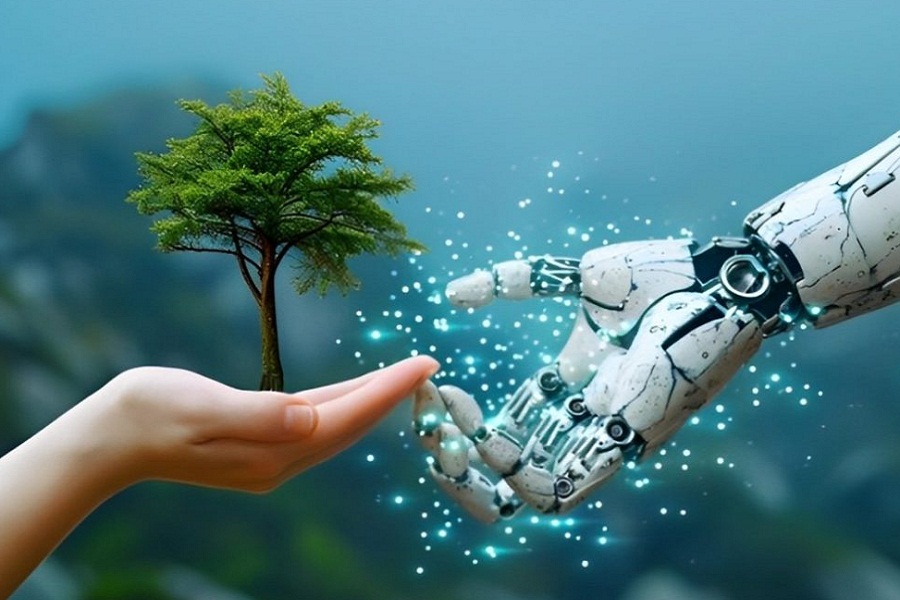
Representational image
The Indian subcontinent has a rich heritage of more than a millennium as an agrarian society, where nature and daily human lives are closely linked. Today, people face problems like climate change and an imbalanced nature.
Technological development offers a beacon of hope as the challenges of climate change and an imbalanced nature loom. Artificial Intelligence (AI) is changing how people farm and care for the environment, ushering in a new era of sustainable farming practices. This transformative potential of AI in agriculture is a cause for optimism, promising to address the pressing issues we face today.
AI has recently revolutionized industries, from digital content creation to media editing, increasing creativity and efficiency. Now, its revolutionary impact extends to agriculture, reviving the fight for environmental conservation and agricultural growth.
Markets and Markets predicts that the AI technology sector in agriculture will grow to be worth $11 billion by 2025. This surge is driven by AI's potential to transform farming techniques.
According to the World Economic Forum, AI can reduce irrigation water usage by half and pesticide use by 60%, providing a lifeline to farmers facing resource constraints and pollution.
In India, groundbreaking projects by Google's Partner Innovation and AnthroKrishi teams prove AI's transforming potential in agriculture. Using Google's AI capabilities, these teams have launched initiatives to provide farmers with relevant insights gathered from agricultural data.
At the heart of their efforts is a foundational model called 'landscape understanding,' which uses machine learning algorithms to calculate land boundaries and assess soil conditions.
Equipped with this information, AI systems create customized farming plans, improving irrigation tactics and reducing resource waste.
AI-powered solutions are not just a buzzword but a practical reality in agriculture.
To read the rest of the news, please click on the link above.
IFTEKHARUL ISLAM
Published :
May 30, 2024 16:03
Updated :
May 30, 2024 16:03
Representational image
The Indian subcontinent has a rich heritage of more than a millennium as an agrarian society, where nature and daily human lives are closely linked. Today, people face problems like climate change and an imbalanced nature.
Technological development offers a beacon of hope as the challenges of climate change and an imbalanced nature loom. Artificial Intelligence (AI) is changing how people farm and care for the environment, ushering in a new era of sustainable farming practices. This transformative potential of AI in agriculture is a cause for optimism, promising to address the pressing issues we face today.
AI has recently revolutionized industries, from digital content creation to media editing, increasing creativity and efficiency. Now, its revolutionary impact extends to agriculture, reviving the fight for environmental conservation and agricultural growth.
Markets and Markets predicts that the AI technology sector in agriculture will grow to be worth $11 billion by 2025. This surge is driven by AI's potential to transform farming techniques.
According to the World Economic Forum, AI can reduce irrigation water usage by half and pesticide use by 60%, providing a lifeline to farmers facing resource constraints and pollution.
In India, groundbreaking projects by Google's Partner Innovation and AnthroKrishi teams prove AI's transforming potential in agriculture. Using Google's AI capabilities, these teams have launched initiatives to provide farmers with relevant insights gathered from agricultural data.
At the heart of their efforts is a foundational model called 'landscape understanding,' which uses machine learning algorithms to calculate land boundaries and assess soil conditions.
Equipped with this information, AI systems create customized farming plans, improving irrigation tactics and reducing resource waste.
AI-powered solutions are not just a buzzword but a practical reality in agriculture.
To read the rest of the news, please click on the link above.