Bangladesh Defense
Saif
Senior Member
- Messages
- 21,737
- Likes
- 9,794
- Nation

- Residence
- Axis Group


Billions of taka worth of gas lie unused for want of a Tk 6 billion pipeline!
The Middle East war, which began on 28 February following a joint US-Israeli attack and aggression against Iran, has now continued for more than six months. Although the battlefield is more than 3,500 kilometers away, the fallout from the war has hit Bangladesh’s cities, villages, and small...
 en.prothomalo.com
Billions of taka worth of gas lie unused for want of a Tk 6 billion pipeline!
Monoj Dey
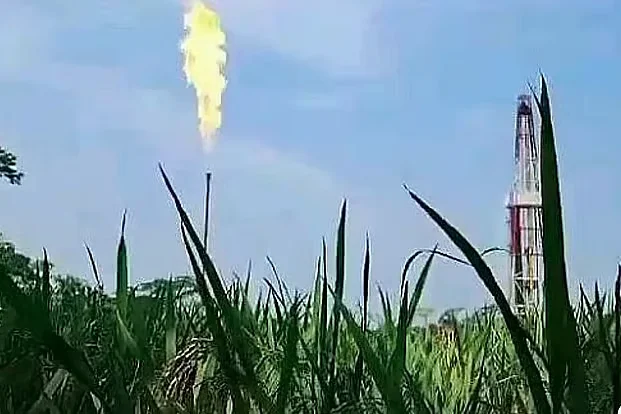
Bhola and surrounding areas are considered Bangladesh’s second most promising hydrocarbon hub.
The Middle East war, which began on 28 February following a joint US-Israeli attack and aggression against Iran, has now continued for more than six months. Although the battlefield is more than 3,500 kilometers away, the fallout from the war has hit Bangladesh’s cities, villages, and small towns alike. Fuel and electricity prices have risen once, but far from bringing the situation under control, the crisis has only deepened.
Load-shedding, which had spread across villages and small towns, is now in the capital too. The shortage of gas has driven up costs everywhere, from cooking at home to shopping in the markets. At CNG filling stations, motorists are unable to get gas even after waiting for long periods. Production has fallen across all factories, from food-processing plants to export-oriented industries. With fertiliser factories shut down, agricultural production, including the Aman rice crop, and food security are also coming under threat. Electricity shortages are disrupting healthcare services as well.
Nearly 50 per cent of Bangladesh’s energy and electricity generation depends on gas. The price Bangladesh is now paying, down to the last penny, is the result of the steady shift toward import dependence in the gas sector since 2016. The war in Ukraine, which began with Russia’s attack and aggression against Ukraine in February 2022, had already exposed just how disastrous this dependence on imports could become. Yet no lessons were learned from that crisis.
At a time when the entire country and economy are suffering from gas and energy shortages, what could be more unfortunate than being unable to use our own gas? When will the decision finally be made to bring Bhola’s gas to the mainland through a pipeline?
The crisis began soon after the then-government celebrated 100 per cent electrification by setting off fireworks. As European countries stopped buying Russian gas, the price of relatively cheap LNG on the spot market rose sharply. Oil prices also continued to climb. Foreign exchange reserves began to deplete rapidly as the country spent more on purchasing fuel. Even after electricity and gas prices were raised repeatedly, the energy crisis remained unresolved.
The energy crisis pushed the entire economy toward disaster. According to government figures, inflation kept rising until it reached 13-14 per cent. Economic growth and employment began to lose momentum. The cumulative anger of poor and marginalised citizens who had suffered continuous losses in real income and employment, along with young people facing an uncertain future, erupted in July-August 2024.
The Iran war has once again laid bare Bangladesh’s energy insecurity. A recent World Bank report says that if the crisis in the Middle East is prolonged, Bangladesh could face the risk of losing around 600,000 jobs. Urea fertiliser prices could double. If disruptions in the supply of various agricultural inputs occur, small farmers could face a major blow both to their food security and their incomes. The most worrying finding is that if rice prices rise by 10 per cent because of a fertiliser shortage, another 1.4 million people could be pushed into poverty.
Only 40 to 42 per cent of Bangladesh’s total gas demand is met from domestic sources. The rest has to be supplied through imported LNG. Of the imported LNG, 55 to 60 per cent comes from the Middle East. The war is not only disrupting fuel transportation through the Strait of Hormuz; energy infrastructure in countries such as Qatar, from which Bangladesh imports LNG under long-term contracts, has also been damaged. As a result, five of Petrobangla’s six LNG supply contracts have been declared under “force majeure.” Bangladesh has been forced to purchase LNG from the spot market at more than twice the usual price.
Bangladesh has become trapped in a vicious cycle of crisis centered on energy shortages: unless a reliable energy supply can be ensured, the economy will remain stagnant, while investment and employment will not grow. The crisis in the energy sector did not emerge overnight, and its solution cannot be confined to addressing the present crisis alone.
Otherwise, with any new global crisis, whether caused by war, a pandemic, or something else, the country could once again find itself back at square one.
In 2017, the National Committee to Protect Oil, Gas, Mineral Resources, Power and Ports put forward a master plan for a sustainable solution to Bangladesh’s energy crisis. Recently, economist Anu Muhammad referred to that plan in an article in Prothom Alo titled “There Is a Sustainable Solution to the Gas and Electricity Crisis.”
He wrote that the best path for us is to combine building national capacity to extract our own gas resources with strong policy and institutional measures to realise the vast potential of renewable energy.
Professor Anwar Hossain Bhuiyan of the Department of Geology at the University of Dhaka identified increasing gas exploration and extraction from domestic sources as the most realistic solution in an interview with Prothom Alo on 23 August.
He believes that by developing existing gas fields and conducting deep drilling, using modern technology, and exploring for gas in areas between existing fields, Bangladesh could potentially recover 18 trillion cubic feet (TCF) of gas, combining current and potential reserves. An investment of Tk 100 billion in gas exploration could yield gas worth Tk 5 trillion.
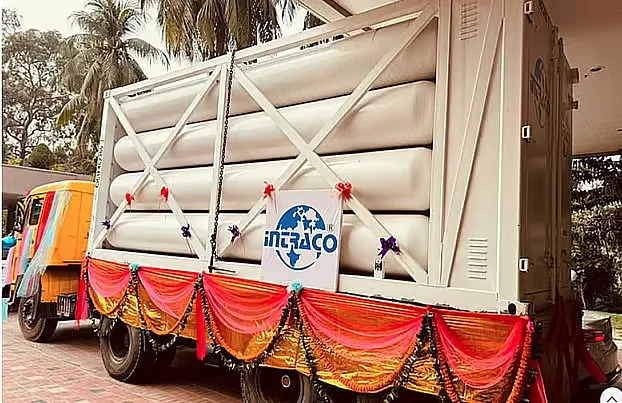
Although a decision was taken to supply gas from Bhola in CNG cylinders, the initiative proved ineffective. File photo: Prothom Alo
Despite having limited resources and a small workforce, Bangladesh Petroleum Exploration and Production Company Limited (BAPEX) has had a relatively high success rate in drilling and exploring gas wells. Globally, drilling 8 to 10 wells to find gas in one is considered a successful exploration rate; in Bangladesh, gas has been found in one out of every three wells drilled. The country’s main hydrocarbon, or gas, hub is the region comprising Cumilla, Brahmanbaria, and Sylhet.
Geologists consider Bhola and its surrounding areas to be the country’s second-most promising hydrocarbon hub. Gas has already been discovered at Shahbazpur, Bhola North, and Ilisha, as well as at Sundarpur in Noakhali and in Feni. Gas has also been found offshore at Kutubdia and Sangu in the southern sea. Taken together, these discoveries make the entire region highly promising for gas exploration.
Gas production in Bangladesh has been declining steadily since 2016-17. Yet despite the discovery of substantial gas reserves in Bhola, the gas has not been brought into the national grid through a pipeline. When shortages emerged, authorities adopted stopgap measures to transport gas after converting it into LNG and CNG, but these solutions failed to address the problem. In 2018, a decision was taken to build a pipeline to bring gas from the island district of Bhola to the mainland.
A report by Bonik Barta says the project was left on the back burner during the Awami League government simply because of the need for Tk 6 billion. The pipeline was not built even after eight years, on the grounds that transporting the gas through a pipeline would not be economically viable. Yet the three gas fields discovered so far in Bhola alone hold nearly 5 TCF of gas, with a current market value of around Tk 5 trillion. Not even half of the fields’ daily production capacity is currently being extracted.
As a result, the biggest question is whether there are powerful vested interests behind the failure to bring Bhola’s gas to the mainland through a pipeline. A pipeline was not built because Tk 6 billion was deemed too expensive, even though thousands of crores of taka have been provided in annual subsidies for LNG imports. The unfortunate reality is that the same pipeline that could have been built for Tk 6 billion at the time would now cost Tk 30-40 billion.
Even during the 18 months of the interim government, no specific decision was taken to bring Bhola’s gas into the national grid. The current government has also yet to decide whether the pipeline will extend to Khulna or Dhaka. At a time when the entire country and economy are suffering from gas and energy shortages, what could be more unfortunate than being unable to use our own gas? When will the decision finally be made to bring Bhola’s gas to the mainland through a pipeline?
* Manoj De is Editorial Assistant, Prothom Alo
Monoj Dey
Bhola and surrounding areas are considered Bangladesh’s second most promising hydrocarbon hub.
The Middle East war, which began on 28 February following a joint US-Israeli attack and aggression against Iran, has now continued for more than six months. Although the battlefield is more than 3,500 kilometers away, the fallout from the war has hit Bangladesh’s cities, villages, and small towns alike. Fuel and electricity prices have risen once, but far from bringing the situation under control, the crisis has only deepened.
Load-shedding, which had spread across villages and small towns, is now in the capital too. The shortage of gas has driven up costs everywhere, from cooking at home to shopping in the markets. At CNG filling stations, motorists are unable to get gas even after waiting for long periods. Production has fallen across all factories, from food-processing plants to export-oriented industries. With fertiliser factories shut down, agricultural production, including the Aman rice crop, and food security are also coming under threat. Electricity shortages are disrupting healthcare services as well.
Nearly 50 per cent of Bangladesh’s energy and electricity generation depends on gas. The price Bangladesh is now paying, down to the last penny, is the result of the steady shift toward import dependence in the gas sector since 2016. The war in Ukraine, which began with Russia’s attack and aggression against Ukraine in February 2022, had already exposed just how disastrous this dependence on imports could become. Yet no lessons were learned from that crisis.
At a time when the entire country and economy are suffering from gas and energy shortages, what could be more unfortunate than being unable to use our own gas? When will the decision finally be made to bring Bhola’s gas to the mainland through a pipeline?
The crisis began soon after the then-government celebrated 100 per cent electrification by setting off fireworks. As European countries stopped buying Russian gas, the price of relatively cheap LNG on the spot market rose sharply. Oil prices also continued to climb. Foreign exchange reserves began to deplete rapidly as the country spent more on purchasing fuel. Even after electricity and gas prices were raised repeatedly, the energy crisis remained unresolved.
The energy crisis pushed the entire economy toward disaster. According to government figures, inflation kept rising until it reached 13-14 per cent. Economic growth and employment began to lose momentum. The cumulative anger of poor and marginalised citizens who had suffered continuous losses in real income and employment, along with young people facing an uncertain future, erupted in July-August 2024.
The Iran war has once again laid bare Bangladesh’s energy insecurity. A recent World Bank report says that if the crisis in the Middle East is prolonged, Bangladesh could face the risk of losing around 600,000 jobs. Urea fertiliser prices could double. If disruptions in the supply of various agricultural inputs occur, small farmers could face a major blow both to their food security and their incomes. The most worrying finding is that if rice prices rise by 10 per cent because of a fertiliser shortage, another 1.4 million people could be pushed into poverty.
Only 40 to 42 per cent of Bangladesh’s total gas demand is met from domestic sources. The rest has to be supplied through imported LNG. Of the imported LNG, 55 to 60 per cent comes from the Middle East. The war is not only disrupting fuel transportation through the Strait of Hormuz; energy infrastructure in countries such as Qatar, from which Bangladesh imports LNG under long-term contracts, has also been damaged. As a result, five of Petrobangla’s six LNG supply contracts have been declared under “force majeure.” Bangladesh has been forced to purchase LNG from the spot market at more than twice the usual price.
Bangladesh has become trapped in a vicious cycle of crisis centered on energy shortages: unless a reliable energy supply can be ensured, the economy will remain stagnant, while investment and employment will not grow. The crisis in the energy sector did not emerge overnight, and its solution cannot be confined to addressing the present crisis alone.
Otherwise, with any new global crisis, whether caused by war, a pandemic, or something else, the country could once again find itself back at square one.
In 2017, the National Committee to Protect Oil, Gas, Mineral Resources, Power and Ports put forward a master plan for a sustainable solution to Bangladesh’s energy crisis. Recently, economist Anu Muhammad referred to that plan in an article in Prothom Alo titled “There Is a Sustainable Solution to the Gas and Electricity Crisis.”
He wrote that the best path for us is to combine building national capacity to extract our own gas resources with strong policy and institutional measures to realise the vast potential of renewable energy.
Professor Anwar Hossain Bhuiyan of the Department of Geology at the University of Dhaka identified increasing gas exploration and extraction from domestic sources as the most realistic solution in an interview with Prothom Alo on 23 August.
He believes that by developing existing gas fields and conducting deep drilling, using modern technology, and exploring for gas in areas between existing fields, Bangladesh could potentially recover 18 trillion cubic feet (TCF) of gas, combining current and potential reserves. An investment of Tk 100 billion in gas exploration could yield gas worth Tk 5 trillion.
Although a decision was taken to supply gas from Bhola in CNG cylinders, the initiative proved ineffective. File photo: Prothom Alo
Despite having limited resources and a small workforce, Bangladesh Petroleum Exploration and Production Company Limited (BAPEX) has had a relatively high success rate in drilling and exploring gas wells. Globally, drilling 8 to 10 wells to find gas in one is considered a successful exploration rate; in Bangladesh, gas has been found in one out of every three wells drilled. The country’s main hydrocarbon, or gas, hub is the region comprising Cumilla, Brahmanbaria, and Sylhet.
Geologists consider Bhola and its surrounding areas to be the country’s second-most promising hydrocarbon hub. Gas has already been discovered at Shahbazpur, Bhola North, and Ilisha, as well as at Sundarpur in Noakhali and in Feni. Gas has also been found offshore at Kutubdia and Sangu in the southern sea. Taken together, these discoveries make the entire region highly promising for gas exploration.
Gas production in Bangladesh has been declining steadily since 2016-17. Yet despite the discovery of substantial gas reserves in Bhola, the gas has not been brought into the national grid through a pipeline. When shortages emerged, authorities adopted stopgap measures to transport gas after converting it into LNG and CNG, but these solutions failed to address the problem. In 2018, a decision was taken to build a pipeline to bring gas from the island district of Bhola to the mainland.
A report by Bonik Barta says the project was left on the back burner during the Awami League government simply because of the need for Tk 6 billion. The pipeline was not built even after eight years, on the grounds that transporting the gas through a pipeline would not be economically viable. Yet the three gas fields discovered so far in Bhola alone hold nearly 5 TCF of gas, with a current market value of around Tk 5 trillion. Not even half of the fields’ daily production capacity is currently being extracted.
As a result, the biggest question is whether there are powerful vested interests behind the failure to bring Bhola’s gas to the mainland through a pipeline. A pipeline was not built because Tk 6 billion was deemed too expensive, even though thousands of crores of taka have been provided in annual subsidies for LNG imports. The unfortunate reality is that the same pipeline that could have been built for Tk 6 billion at the time would now cost Tk 30-40 billion.
Even during the 18 months of the interim government, no specific decision was taken to bring Bhola’s gas into the national grid. The current government has also yet to decide whether the pipeline will extend to Khulna or Dhaka. At a time when the entire country and economy are suffering from gas and energy shortages, what could be more unfortunate than being unable to use our own gas? When will the decision finally be made to bring Bhola’s gas to the mainland through a pipeline?
* Manoj De is Editorial Assistant, Prothom Alo