[🇧🇩] Insurgencies in Myanmar. Implications for Bangladesh

[🇧🇩] Insurgencies in Myanmar. Implications for Bangladesh
481
24K
More threads by Saif

G Bangladesh Defense

Rohingyas being forcibly recruited by Myanmar military: report​

Rohingyas offered citizenship cards, $41 monthly salary if they join the military

1708989677435.webp

Photo: Collected

Myanmar's military is forcibly recruiting Rohingya men from villages and camps for internally displaced persons (IDPs) in Rakhine State and it is feared that they will be used as human shields, said a report.

The report comes after the UN special rapporteur on the country said that Myanmar's ruling military junta has "doubled down" on civilian attacks while showing signs of becoming "increasingly desperate" by imposing military service.

Earlier this month, the military said it would enforce a law allowing it to call up all men aged 18-35 and women aged 18-27 to serve for at least two years, as it struggles to quell opposition to its 2021 coup, reports AFP.

"While wounded and increasingly desperate, the Myanmar military junta remains extremely dangerous," the UN's Tom Andrews said in a statement.

"As the junta forces young men and women into the military ranks, it has doubled down on its attacks on civilians using stockpiles of powerful weapons."

Activists and residents of Rakhine, meanwhile, said the military has conducted an initial drive to force Rohingya men in the war-torn state to join their ranks, which saw at least 400 Rohingya men from villages and IDP camps sent to military bases for two weeks of basic training.

"The training period is only two weeks. The junta's military can only use those who have been trained for just two weeks as human shields," Nay San Lwin, co-founder of the Free Rohingya Coalition, told The Irrawaddy, a Myanmar news outlet.

At least 400 Rohingya men have already been forcibly recruited from villages and IDP camps in Sittwe and Buthidaung townships to fight the Arakan Army (AA), residents of the townships and Rohingya activists say.

The recruitment drive follows the first-ever enforcement of Myanmar's conscription law on Feb. 10. Since then, the regime's military has pressured Rohingya community leaders and administrators in villages and IDP camps in three Rakhine townships -- Buthidaung, Maungdaw and Sittwe -- to compile lists of men between 18 and 35 years of age so that they can be conscripted to the military.

Community leaders and administrators have been pressured to compile lists of at least 50 men for each small village and at least 100 for each IDP camp and large village.

"What we were able to confirm on Wednesday (February 21) was that at least 300 people from IDP camps in Sittwe had already been drafted and are now in [military] training grounds," Nay San Lwin said.

Junta troops also arrested at least 100 men from four villages in Buthidaung Township on Feb 18 and 19 and they were sent to a nearby military base for basic military training, he added.

The conscription law only applies to Myanmar citizens. Rohingya people are not recognised as citizens of Myanmar.
Junta forces have told Rohingya men that if they serve in the military, each one will receive a sack of rice, a citizenship identity card and a monthly salary of 150,000 kyats (US$ 41), Rohingya residents of Rakhine State and activists say.

Sittwe, the state capital, has 13 IDP camps for about 100,000 Rohingya people who were displaced by ethnic and religious violence in the western state in 2012. The 300 Rohingya men already forcibly drafted to the junta's military from the IDP camps are just the first group. A list of 300 more, including their names, has already been drafted for the next group, local residents and activists say.

The Irrawaddy was unable to independently verify the numbers.

Rohingya people say they are anxious for those who have already been forcibly drafted as well as for themselves. Sooner or later, it will happen to them or a loved one, they say.

The first 300 Rohingya men forcibly conscripted from IDP camps are receiving "basic military training" inside the base of Artillery Battalion 373 in Sittwe.

The Irrawaddy was unable to independently verify the numbers.

Nay San Lwin is calling for rapid and more effective international action against the junta's atrocities and human rights violations. He called on neighboring countries and Asean to do more.

The junta's military is suffering major defeats in battles with the AA, one of three ethnic armies in the Brotherhood Alliance that spearheaded Operation 1027, which was launched in northern Shan State on Oct. 27 last year.
After humiliating the junta's military in northern Shan State, the AA did the same in Rakhine State.

On Nov. 13, it launched a large-scale offensive against regime targets across northern Rakhine State and in Paletwa Township in neighboring Chin State.

It has seized more than 170 junta bases and outposts since Nov 13, as well as six towns in Rakhine State and one in Chin State.

The junta's military is fighting an army that knows the terrain of Rakhine State better than it does and has public support.​
 
Brigadier General (rtd) Shakhawat Hossain expressed concern about the volatile situation in Chin and Rakhine state of Myanmar and its effect on national security of Bangladesh.


Global, regional crises: Experts bat for pragmatic foreign policy​


1709078560889.webp


Experts yesterday urged Bangladesh to take a pragmatic foreign policy to deal with the challenges, including the worsening situation in Myanmar, in a changing world.

Violent situation prevailing in the eastern part of Myanmar, especially in Rakhine and Chin states bordering Bangladesh, is a big reason to worry, they added.​

​

They said the absence of political consensus in Bangladesh is causing detrimental impact on diplomatic, economic, and geopolitical fronts.

Speaking at a programme in the capital's Brac Centre Inn they also raised concerns about the lack of transparency regarding government negotiations, emphasising the absence of parliamentary discussions on crucial matters such as the Rohingya crisis.

Titled, "Rifts in the Global Order and the Rise of Multipolarity: Counterbalancing Strategies for Bangladesh," South Asian Network on Economic Modeling (SANEM) organised the programme.

Dr Lailufar Yasmin, professor and chairperson of the Department of International Relations at Dhaka University, chaired the discussion.

Brig Gen (retd) M Shakhawat Hossain, former election commissioner and Senior Fellow at the South Asian Institute of Policy and Governance of North South University; Ambassador M Humayun Kabir, president of the Bangladesh Enterprise Institute (BEI); and Dr Imtiaz Ahmed, professor of the Department of International Relations at Dhaka University, took part in the discussion.

Shakhawat said it is still unknown where the ongoing violence in Rakhine will stop. Along with that, the radical nationalism that is developing in India and Myanmar can also threaten the security of Bangladesh.

He also said that the US-led unipolar world order is still in place, which is beginning to crumble.

Shakhawat also said Bangladesh's foreign policy -- friendship to all and malice to none -- is not working right now.

'I am worried about what is happening in our neighbouring country Myanmar. I am especially worried about Myanmar's Chin and Rakhine states. There is instability. We don't know where it will end up," he said
He concluded with a call to action, urging Bangladesh to chart its own path.

Humayun Kabir said changes are now taking place at a rapid pace. He outlined three layers of transformation, starting with the erosion of global norms and order.

Reflecting on past consensus, he noted, "The idea was that the international community should respect sovereignty and the world should enjoy equity."

Addressing the concept of multi-polarity, he questioned, "China wants to become like the US. India wants to become like the US. So where is the multi-polarity everybody is talking about?"

He expressed concerns over diminishing guarantees of sovereignty and privacy, saying, "Sovereignty is no longer a guarantee… privacy is no longer a guarantee. Everybody is being spied on. Where is human sanctity, human dignity?"

Concluding with a note of caution, he urged vigilance in assessing regional developments, stating, "We have to be careful about how our region is evolving."

Dr Ahmed positioned Bangladesh favourably in this multipolar world, stating, "Bangladesh is better placed when it comes to multi-polarity."

He underscored the importance of professionalism and global engagement for Bangladesh's success.

Dr Ahmed emphasised the inevitability of multipolarity, stating, "In no way can we go back to unipolarity."

He urged Bangladesh to enhance its engagement with regional powers like India and China, asserting, "Bangladesh needs to engage with India and China on a much bigger scale."

Dr Lailufar Yasmin noted the emergence of a new assertive Bangladesh on the global stage, prompting the necessity to develop indigenous policies tailored to the country's population.

She advocated for interdisciplinary collaboration to foster the holistic development of Bengalis, highlighting the importance of a multifaceted approach to national growth.

She highlighted the evolving centre of gravity in international politics, noting, "In international politics, the centre of gravity is gradually shifting toward Asia."

She underscored Bangladesh's pivotal role as a gateway to Northeast India.

She said, "When you do not write your own story, another person will write it from their vantage point. That is why we have to write our own story."​
 

MYANMAR CONFLICT​

Sounds of firing return along Teknaf border​

Our Correspondent . Cox’s Bazar | Published: 00:14, Mar 01,2024
facebook sharing button

twitter sharing button

whatsapp sharing button
226714_113.jpg

email sharing button
--File photo

Sounds of heavy firing and shelling from Myanmar were heard daylong on Thursday in Teknaf of Cox’s Bazar, causing fresh tension among the local people after days of break as fighting between the Myanmar army and the ethnic Arakan Army continued.

The residents of Teknaf said sounds of heavy firing and shelling were heard on the Hnila and Whykong borders, while airstrikes were also reported some two kilometres inside Myanmar territory.

A Myanmar national from Rakhine told New Age that firing and shelling continued in their area between the AA and Myanmar Army in the Bolibazar area.

Witnesses in Teknaf also saw Myanmar gunships using artillery.

Hnila union parishad chairman Rashed Mahmud Ali told New Age that they heard sounds of gunshots and explosions between the early hours and afternoon.

The Border Guard Bangladesh’s Teknaf battalion commanding officer, Lieutenant Colonel Mohiuddin Ahmed, said they had kept their forces on standby and were observing the situation closely.

Myanmar-based Arakan Army on Tuesday claimed to have taken complete control of the junta’s 9th Central Military Training School based in Minbya Township, Rakhine State, after 10 days of intense fighting, according to Thailand-based news portal Irrawaddy.

Most residents and junta administrators have reportedly fled Sittwe as AA forces advance on the state capital.​
 

Protecting Rohingyas: Don’t repeat mistakes of the past​

UN rights chief urges int’l community

1709334303989.webp


UN High Commissioner for Human Rights Volker Türk has appealed to the international community not to repeat the failings of the past in protecting the Rohingya community in Myanmar's Rakhine State which has spiralled further in violence since November.

"After suffering decades of systematic discrimination, repression, forced displacement, and other serious human rights violations, the Rohingya today remain essentially imprisoned in villages and internment camps," he said while addressing the 55th session of the UN Human Rights Council in Geneva yesterday.

He said more than a million continue to languish in refugee camps in Bangladesh, and in Myanmar, they continue to be denied citizenship rights and free movement, and there is currently no prospect for safe and sustainable return.
Türk said since November, amid communications blackouts, sources indicated that nearly 200 people have died in Rakhine, of which at least 50 were Rohingya. Over 150,000 people fled their homes seeking safety – most Rohingya, however, are not allowed to flee.

"Just yesterday [Thursday], military naval vessels shelled a market in Rakhine's capital of Sittwe, reportedly killing at least 16 civilians and injuring over 80 others. This violence impacts every community, many of which are still reeling from last year's Cyclone Mocha," he said.

"In Rakhine State, we have heard reports that displaced Rohingya youth are being offered money, food, and even citizenship if they join the ranks of those who displaced them years ago. They are threatened with punishment if they refuse. And reports of forced recruitment, including child recruitment, have already proliferated among many warring parties.

"Military-imposed movement restrictions have almost completely disrupted the delivery of life-saving humanitarian aid. Homes have been burned down. Supply routes connecting Rakhine to other parts of Myanmar have been closed, creating an acute food shortage and significant price hikes. Most families are now surviving on one meal a day."

"Up to 5,000 Rohingya undertook perilous boat journeys last year in their search for safe haven. Hundreds of others have been detained as they seek to escape to other parts of Myanmar," Türk added.

He said his office has received multiple credible reports that hundreds of Rohingya fleeing violence are being prevented from entering Bangladesh. I appeal to all Member States to ensure international refugee protection to people fleeing persecution and conflict in Myanmar.

Four years ago, the International Court of Justice called on Myanmar to halt any activities that could violate provisions of the Genocide Convention. It ordered that the authorities protect Rohingya communities, preserve evidence of wrongdoing against them, and create conditions conducive to a safe, dignified, and voluntary return to their places of origin.

"Yet, the military continues to engage in the same callous, heavy-handed behaviour. This Council must act on these alarming warning signs."​
 

Myanmar now ‘never-ending’ nightmare: UN​

Blast in Myanmar market kills, wounds civilians​

Agence France-Presse . Geneva | Published: 00:44, Mar 02,2024

facebook sharing button
226804_199.jpeg

twitter sharing button

Three years of military rule in Myanmar have inflicted unbearable cruelty, leaving people trapped in an unending nightmare as the conflict spreads, the UN human rights chief said on Friday.

The junta is crushing all forms of dissent with total impunity, Volker Turk told the UN Human Rights Council, urging the United Nations’ top rights body and countries to focus on preventing further atrocities.

‘The human rights situation in Myanmar has morphed into a never-ending nightmare, away from the spotlight of global politics,’ Turk said.

‘Armed conflict has escalated and spread to nearly every corner of the country. Three years of military rule have inflicted — and continue to inflict — unbearable levels of suffering and cruelty on people in Myanmar.’

He said the junta was cracking down on any opposition with ‘total abuse of power’, while development in the southeast Asian nation was now in freefall.

Meanwhile, a blast hit a busy market in Myanmar’s conflict-torn Rakhine state on Thursday, killing and wounding civilians, the country’s junta and an ethnic rebel group said, blaming each other for the attack.

Clashes have rocked Myanmar’s western Rakhine state since the Arakan Army attacked security forces in November, ending a ceasefire that had largely held since the junta’s 2021 coup.

The AA is one of several armed ethnic minority groups in Myanmar’s border regions, many of whom have battled the military since independence from Britain in 1948 over autonomy and control of lucrative resources.

A junta naval vessel shelled the popular ‘Korea port’ market in state capital Sittwe early Thursday, the AA’s political wing said in a statement, killing 12 civilians and ‘critically’ wounding 31 others.

Fifty others suffered minor wounds, it said, accusing the junta of targeting the civilian population.

The junta said the blast was a result of ‘careless heavy artillery shooting’ by the AA, which had killed and injured a number of local people. It did not say how many.

The junta came to power in the February 2021 coup that ousted Aung San Suu Kyi’s democratically-elected government, ending a 10-year experiment with democracy and plunging the country into bloody turmoil.

The junta is struggling to crush resistance to its rule by long-established ethnic rebel groups and newer pro-democracy People’s Defence Forces.

Turk told the council that credible sources had verified that over 4,603 civilians, including 659 women and 490 children, had been killed by the military since February 2021.

‘The actual toll is almost certainly much higher,’ he noted.

He said around 400 civilians, including 113 women, had been burnt — either alive or after being executed.

Turk said the violence had intensified since late October, when ethnic armed groups launched coordinated attacks, triggering punishing retaliation from the military.

He said that in January, 145 out of 232 verified civilian deaths were attributable to air strikes and artillery attacks as the military increasingly directs its jets on towns and cities.

‘This is horrific,’ said Turk.

‘For the last three years, people in Myanmar have sacrificed everything, and kept alive their aspirations for a better and safer future.

‘They need the entire international community to support them.’​
 
Last edited:

Myanmar junta's access to arms, cash must be cut off, UN rights chief says​

REUTERS
Published :​
Mar 01, 2024 16:09
Updated :​
Mar 01, 2024 16:09


1709336089014.webp

​
Volker Turk, United Nations High Commissioner for Human Rights, attends the high-level event commemorating the 75th Anniversary of the Universal Declaration of Human Rights at the United Nations in Geneva, Switzerland, December 11, 2023. Photo : Reuters

The international community must take "targeted action" to restrict the Myanmar junta's access to arms, jet fuel and foreign currency to prevent it from committing "atrocities" against its people, the UN human rights chief said on Friday.


"I repeat my call to the international community to refocus its energy on preventing atrocities against all people in the country, including the Rohingya," Volker Turk, the United Nations High Commissioner for Human Rights, told the Human Rights Council in Geneva, referring to the junta.

He said countries should "end the military's access to arms, jet fuel and foreign currency that it needs to sustain its campaign of repression against civilians."

Myanmar has been plunged in turmoil since the military seized power from an elected government in a 2021 coup.

Muslim Rohingya have faced persecution in Buddhist-majority Myanmar for decades and nearly a million of them live in crammed camps in Bangladesh's border district of Cox's Bazar. Most fled a military crackdown in 2017.

Myanmar's military rulers view the Rohingya as foreign interlopers and have denied them citizenship.

"After suffering decades of systematic discrimination, repression, massive forced displacement, and other serious human rights violations, the Rohingya today remain essentially imprisoned in villages and internment camps," Turk said.

Bangladesh said last month it will not allow any more Rohingya refugees from Myanmar to enter the country because supporting the huge numbers already there threatens its own security.

"My Office has received multiple credible reports that hundreds of Rohingya fleeing violence are being prevented from entering Bangladesh," Turk said.

"I appeal to all member states to ensure international refugee protection to people fleeing persecution and conflict in Myanmar."​
 

Teknaf border shelling intensifies​

BDNEWS24.COM
Published :​
Mar 02, 2024 22:02
Updated :​
Mar 02, 2024 22:02
Share this news

1709424560684.webp


Smoke and flames were observed at the border between Bangladesh and Myanmar after continuous loud explosions amid a violent conflict between the Myanmar military and rebels of the Arakan Army.

Smoke was seen across the Hnila border in Cox's Bazar's Teknaf from 8am on Saturday. On the other side of the border are Balibazar and Nagakura Para in Myanmar.

Tarek Mahmud Roni, the president of Hnila Adarsha Govt Primary School, believed that a village located between these areas appears to have been deliberately set ablaze.

Roni noted a shift in the conflict dynamics, with gunfire subsiding by Friday evening, only for explosions to intensify post-midnight into Saturday morning.

A series of around 40 to 50 explosions were reported between 7:30am and 8am, with fires raging until noon.

However, upon recalling the Rohingya crisis in 2017, Roni noted that the residents are terrified of the explosions and the smoke.

The Arakan Army clashed with the military in Myanmar's villages east of the Whykong and Hnila border, including Kumirhali, Naichdong, Kwangchigong, Shilkhali, and Nafpura.

The Border Guard Bangladesh and Coast Guard members have increased their patrols along the Naf River, covering a 54km stretch from Whykong in Teknaf Upazila to Shah Pori’s island at the border.

Residents of the border region reported intermittent shelling and mortar fire in some villages around Maungdaw in Myanmar’s Rakhine State from Friday evening to Saturday afternoon.

Rashed Mahmud Ali, chairman of Hnila Union, mentioned that fighting intensified in Rakhine State over two days, with mortar shells exploding across the Naf River.

Fear prevented thousands from going to their farms, he added.

Shah Jalal, the panel chairman of the Whykong union council, noted that the loud sound of mortar shells caused tremors in his area. Children were disturbed by frequent vibrations at night, and many cried out in fear.

The Arakan Army took control of the Totardia area on the Naf River bank across the Whykong Union two weeks ago, and now it is believed that the Myanmar security forces are trying to retake it.

Adnan Chowdhury, the Upazila executive officer or UNO, said the BGB and the Coast Guard have strengthened patrols along the Myanmar border and residents have been advised to remain vigilant amid the escalating conflict in Rakhine state.

Residents living on the Naikhongchhari border in Bandarban and the Ukhia border in Cox’s Bazar did not hear any gunfire last three days.

Lt Col Mohiuddin Ahmed, leading the Teknaf 2 Battalion of the BGB, said they are closely monitoring the situation in Rakhine and the BGB is on high alert to prevent Rohingya infiltration.​
 

Civil War in Myanmar​

'We need to demonstrate diplomatic agility and manoeuvring skills'​


1709509086860.webp


Maj Gen (retd) ANM Muniruzzaman, president of the Bangladesh Institute of Peace and Security Studies (BIPSS), suggests what Bangladesh can do regarding the ongoing crisis in Myanmar, in an exclusive interview with Naimul Alam Alvi of The Daily Star.

For Bangladesh, what are the implications of the current situation in Myanmar?
​

​

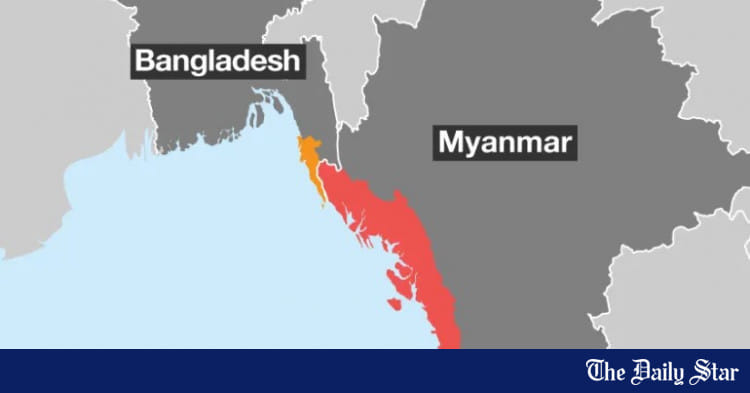
The current situation in Myanmar is in a state of flux. The Myanmar military junta is rapidly losing control of areas, including areas of interest to Bangladesh—Rakhine and Chin states. The Arakan Army's significant gains suggest they will soon control large swathes. They have already captured Pauktaw, Minbya, and Paletwa. Not only are civilians fleeing these areas, but military soldiers and paramilitary forces are also retreating. Some of them are crossing into Bangladesh, creating a tense and volatile situation. The rapidly changing situation makes it difficult for Bangladesh to receive complete information on the ground, posing a major security threat.

What are the specific challenges?

The first challenge is the insecure border. There have been airspace violations and mortar shells from Myanmar have landed in Bangladesh, damaging settlements; two civilians have already been killed and several villagers have been injured. This is disrupting life and security in Bangladesh.

Secondly, the influx of fleeing Myanmar soldiers poses a major threat. There is information that civilians are gathering on the other side of the border, preparing to enter Bangladesh, including over 400 members of the Chakma ethnic group. We can also expect that others may follow—even the remaining Rohingya who are in Myanmar may also try to enter Bangladesh.

Can the unrest there spill over and create unrest inside our border?

Instability is inherently contagious. When one region experiences turmoil, it can naturally spread to neighbouring areas. This concern is heightened due to the presence of shared ethnicities on both sides of the border. An attack on one group there could easily invite sympathy and even cause unrest among their kin on this side. Therefore, the potential for ethnic tensions spilling over is a significant cause for concern and something to be analysed.


Is there a possibility of unrest increasing in the Rohingya refugee camps?

Of course, the possibility exists. The Rohingya camps have already faced various security issues and disruptions over several years. Internal conflicts and violence between groups within the camps are still going on. If the instability on the other side intensifies, it will undoubtedly affect the Rohingya population here, further complicating an already complex situation.

The prospects for repatriation, already bleak, have dimmed further due to the escalating crisis in Myanmar. Discussions, effective arrangements, and sustained action seem nearly impossible in the current turmoil. The situation worsens daily.

Bangladesh recently summoned the Myanmar ambassador to express its displeasure. However, given the Myanmar government's precarious control, how effective is such an act? What can Bangladesh realistically achieve?

Traditional diplomatic methods might struggle in this fluid conflict zone. Summoning the ambassador and issuing a protest note is standard diplomatic practice, but this is no ordinary situation. It's a dynamic conflict demanding a robust approach. We may need to explore avenues of understanding and communication with various actors involved.

Major international players like India, China, the US, other Western powers, and Russia are directly involved due to their diverse interests. Communicating solely with Myanmar won't be entirely effective. We must engage in broader diplomatic manoeuvring, leveraging our existing relationships.

I fear crucial time has been lost, but establishing new communication channels is imperative. We need to demonstrate the diplomatic agility and manoeuvring skills required in such complex conflict situations. Clinging to routine diplomacy will leave us overtaken by events. We cannot repeat our inactiveness during the Rohingya crisis, when we'd started our diplomacy after the influx. We must be proactive, anticipating developments and taking steps to prevent the situation from spiralling out of control.


What additional measures can we take?

Beyond diplomacy, we must prioritise physical security. This requires fortifying and strengthening our borders, and closing any loopholes vulnerable to infiltration or security breaches. We need comprehensive armed arrangements to effectively respond to potential threats across the entire border region. These are immediate crisis management needs.

Furthermore, engaging with regional powers is vital. Understanding their perspectives on the security situation and aligning our own needs with theirs is crucial. This multipronged approach requires a comprehensive understanding of how to effectively secure our borders.

You mentioned major global players being involved. Can you elaborate on their motivations and specific interests in Myanmar?

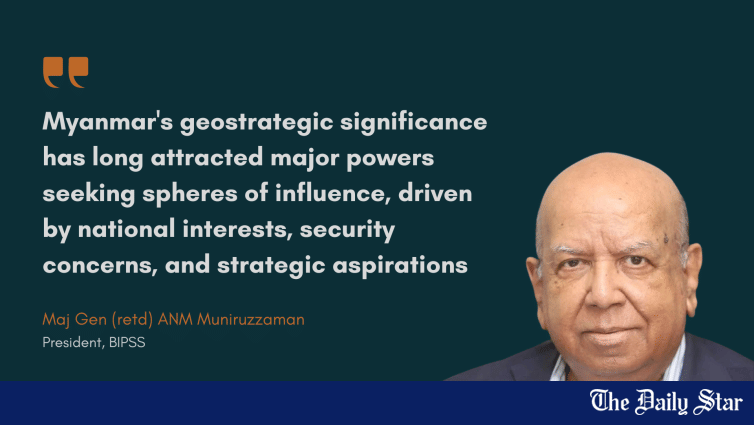
Myanmar's geostrategic significance has long attracted major powers seeking spheres of influence, driven by national interests, security concerns, and strategic aspirations. The ongoing crisis has reignited their involvement, with each aiming to maintain or expand their reach.

For example, India has a significant presence in our bordering state Rakhine. There is the Kaladan Multi-Modal Highway, which enters India's northeast from Sittwe port by land and river. This is a multi-billion dollar project for India, and India's interests are directly involved in it.

We also know that Rakhine is a major gateway to the Bay of Bengal and the Indian Ocean. And for this reason, all the major powers have a special interest in this region. The deep sea port that has been built in Kyaukpyu is a major Chinese port. It does not only serve as a deep sea port but is also a major energy hub—transporting oil and gas directly to China's Yunnan province. This strategic location aligns with their national and energy interests. So China has significant interest in Rakhine.

There are also several special economic zones being set up in Rakhine, where Russia and China plan to establish industrial zones, drawing Russia into the mix.

In the current geopolitical reality, with global strategic competition being high, wherever China has an interest, the US gets involved to counter it. So that's why the US has a big interest here too. This is evident in their close monitoring of Myanmar and the recent Burma Act legislation, signalling their readiness for action.

What strategy do you propose to deal with the current crisis?

Our approach must be exceptionally dynamic and innovative. We need unconventional solutions alongside traditional diplomacy, engaging with multiple actors. Maintaining active communication with Asean, given Myanmar's membership, is crucial. Additionally, establishing communication with the major global players I have mentioned, while considering their interests alongside our own, is essential. We must also reevaluate the timing of formally engaging with non-state actors. Time is of the essence. Delays in effective diplomacy could lead to even more significant challenges.

This is a crisis, and like any crisis, it demands more than a routine 9-to-5 office. Establishing a dedicated crisis task force is paramount. This team, comprising representatives from various ministries and government agencies (foreign affairs, home affairs, defence, intelligence), humanitarian organisations and relevant stakeholders, should operate 24/7. Their mandate would be to constantly monitor the situation, analyse developments, and propose solutions for political decision-making across various angles: security, diplomacy, conflict resolution, humanitarian aid, and resource management.

It's crucial to remember that this is not just a security concern; it's a multifaceted crisis with diverse dimensions requiring a holistic approach. Addressing emerging challenges swiftly and effectively necessitates a collaborative effort beyond the capabilities of any single ministry.

Traditional diplomatic methods of summoning ambassadors or issuing protests are inadequate for this dynamic situation. We need a fresh, analytical approach, tailoring responses to emerging threats. Proactive measures are essential; there is no time to lose.​
 

MYANMAR CONFLICT
Bangladeshi youth succumbs to bullet injury

Our Correspondent . Cox’s Bazar | Published: 23:02, Mar 08,2024 | Updated: 23:40, Mar 08,2024


1709941147864.webp


A Bangladeshi youth who sustained bullet injuries in Ukhia of Cox’s Bazar during ongoing conflict in Myanmar a month ago died at a hospital on Thursday.

The victim, Anowarul Islam, 35, a father of three, sustained bullet injuries on February 6 when a group of locals tried to resist Myanmar nationals from trespassing on the international border.

He was admitted to Cox’s Bazar District Hospital where he died at about 10:00pm on Thursday.

Palongkhali union parishad chairman M Gafur Uddin Chowdhury said that Anowarul sustained injuries when a group of armed Rohingyas, who were later arrested, entered Bangladesh along with members of the Myanmar Border Police.

The hospital resident medical officer, Ashikur Rahman, confirmed the death.

Moriam Khatun, wife of the deceased, said that they had two daughters and one son.

Anowarul was a farmer and got injured while working on land like every day, she added.

Ukhia police station officer-in-charge Shamim Hossain said that he had learnt about the death and were looking into the matter.​
 

179 Myanmar troops take shelter in Bangladesh again
Muktadir Rashid | Published: 16:39, Mar 11,2024 | Updated: 00:13, Mar 12,2024


1710197008708.webp


Members of the Angthapaya Border Guard Police Camp of Myanmar enter Bangladesh through the border of Jamchari union in Bandarban on Monday. — New Age photo

At least 179 personnel from Myanmar security forces crossed the border near Naikhyangchari in Bandarban on Monday and sought shelter in Bangladesh amid their ongoing conflict with the ethnic rebel group Arakan Army.

Initially, 29 personnel with camouflage and civil dress arrived in the daytime, and after dark, 150 others arrived, officials in Border Guard Bangladesh and Bandarban district administration said.

‘Now our security forces are disarming them,’ said Bandarban district deputy commission Shah Mujahid Uddin.

Earlier, a total of 330 troops and civilians fled fighting in Myanmar’s Rakhine State to enter Bangladesh between February 4 and 10, while the Border Guard Bangladesh rejected the entries of 75 Rohingya who wanted shelter around the same time.

A ship from Myanmar took back Myanmar troops and civilian officials on February 15.

After sending them back, BGB director general Major General Mohammad Ashrafuzzaman Siddiqui told the media that no more troops would be allowed to cross the border.

Different government authorities said that Bangladesh would also not allow any more Rohingya people here.

More than 700,000 Rohingya fled the Myanmar military’s crimes against humanity and acts of genocide in 2017. They joined thousands of Rohingya people already leaving Bangladesh, taking the number of Rohingyas here to over a million.

Two attempts to repatriate the Rohingyas failed, as they refused to return with out a guarantee of safety and citizenship.

An estimated 600,000 Rohingya are still believed to remain in Rakhine State, confined to squalid camps and villages under a system of apartheid.

Shayna Bauchner, Asia researcher at Human Rights Watch, noted in their latest report published on February 9 that in late January, between 12 and 24 Rohingya civilians were killed in Myanmar, while as many as 100 more may have been injured.

People living in Bangladesh villages living along the border have reported frequent sounds of gunfire in recent weeks.

BGB officials confirmed that 29 members of the Angthapaya Border Guard Police Camp came through the border area of Jamchari union and took shelter with Bangladesh Border Guard Battalion 11.


‘We are verifying their identities and documenting their details,’ said a senior BGB official.

The AA warned all regime forces in Rakhine to raise the white flag or face death, Thailand-based news portal The Irrawaddy reported on Monday.

The report, quoting AA, said that the rebel forces chased and attacked fleeing regime forces during their seizure of a military division headquarters in Kyauktaw Township and the junta’s 9th Central Military Training School in Minbya Township. It also claimed to have captured a number of fleeing regime forces.
​
 

Govt working to send back Myanmar escapees: FM
Civilians pushed back
Staff Correspondent | Published: 00:09, Mar 13,2024

1710285728017.webp

Foreign minister Hasan Mahmud. --File photo

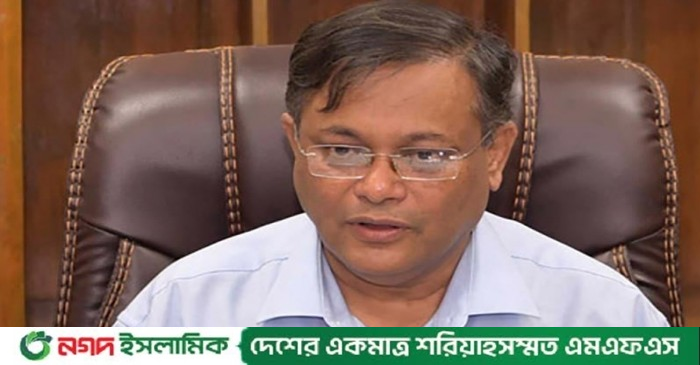
Foreign minister Hasan Mahmud said on Tuesday that the government was in touch with Myanmar authorities to send back the Myanmar security force members, who fled to Bangladesh again amid fighting with rebel forces in bordering Rakhine State.

He said that some civilians in a fresh move also made efforts to enter Bangladesh, but they were pushed back.

‘A total of 177 members of Myanmar’s Border Guard Police have entered Bangladesh again till Tuesday afternoon. We are working to send them back as before. Some civilians also tried to come, but they were pushed back,’ the foreign minister said, responding to reporters’ queries at his Segunbagicha office.

Asked whether the ambassador of Myanmar would be summoned following the latest incident, Hasan said that his ministry was in constant contact with them. ‘The Myanmar ambassador will be summoned if it is necessary,’ he added.

The Myanmar security forces crossed the border near Naikhyangchari in Bandarban on Monday and sought shelter in Bangladesh amid their ongoing conflict with the ethnic rebel group, the Arakan Army.


Initially, 29 personnel with camouflage and civil dress arrived in the daytime, and after dark, 150 others arrived, officials at the Border Guard Bangladesh and the Bandarban district administration said on Monday.

Earlier, a total of 330 troops and civilians fled fighting in Myanmar’s Rakhine State to enter Bangladesh between February 4 and 10, while the Border Guard Bangladesh rejected the entries of 75 Rohingya who wanted shelter around the same time.

A ship from Myanmar took back Myanmar troops and civilian officials on February 15.

After sending them back, BGB director general Major General Mohammad Ashrafuzzaman Siddiqui told the media that no more troops would be allowed to cross the border.​
 

Four ARSA members arrested with weapons
Our Correspondent . Cox’s Bazar | Published: 20:21, Mar 14,2024 | Updated: 23:45, Mar 14,2024

1710456264007.webp


Rapid Action Battalion arrested four members of the Arakan Rohingya Salvation Army from Cox’s Bazar camps on Thursday morning.

The RAB arrested Master Kalim Ullah, 32, a resident of camp-20 at Ghonarpara, Mohammed Akij, 27, of camp-7 at Kutupalong, Mohammad Jubaer, 29, of camp-13 at Balukhali, and Saber Hossain, 35, of camp-22 in Teknaf in a special operation at Ukhia.

The battalion seized one foreign pistol and a locally made gun, seven hand bombs, and six bullets from their possession.

Lieutenant Colonel HM Sajjad Hossain, the commanding officer of RAB-15, alleged ARSA were planning sabotage at Ukhia.

He said Master Kalim Ullah is the head of ARSA’s Bangladesh chapter and financer. Akij is one of the bodyguards of ARSA commander in chief Ataullah abu Ammar Jununi.

The battalion said they were accused in eight cases including murder and kidnapping, and were handed over to Ukhia police station after the filing of a case in in this connection.​
 

PM calls upon UNDP to raise more funds for Rohingya​

UNB
Published :​
Mar 18, 2024 22:37
Updated :​
Mar 18, 2024 22:37

1710804819622.webp

— Collected

Prime Minister Sheikh Hasina on Monday urged the United Nations Development Programme (UNDP) to make an effort to raise larger international funds for the support of the Rohingya people.

She made the call at a meeting with visiting UNDP goodwill ambassador and Crown Princess of Sweden Victoria at a hotel in Dhaka.

PM’s speech writer Md Nazrul Islam briefed reporters after the meeting.

The prime minister said Bangladesh had given shelter to forcibly displaced Rohingyas from Myanmar on humanitarian grounds and arranged improved accommodation for them in Bhashanchar, ensuring many facilities for them. Now some one lakh Rohingya can reside there in Bhashanchar, she added.

She sought assistance from the UNDP to relocate more Rohingyas to Bhashanchar.

Princess Victoria arrived in Dhaka on Monday on a four-day visit to Bangladesh during which she will tour Rohingya camps in Cox’s Bazar and Bhashanchar.

Bilateral and multilateral issues including climate change came up for discussion during the meeting with the PM.

The princes said there is a huge scope to deepen the bilateral relations between Sweden and Bangladesh.

She expressed her optimism for strengthening the bilateral ties between the two countries especially in trade, business and investment.

The Bangladesh prime minister urged the Swedish businesses to make investment in Bangladesh, particularly in special economic zones.

The PM said Bangladesh is one of the worst victims of climate change. Bangladesh’s contribution to carbon emission is negligible but the country is badly affected. Bangladesh faces different natural calamities like floods and cyclones due to climate changes, she said.

About the local climate adaptation and mitigation programmes, she said Bangladesh formed a climate trust fund to protect the local community and their livelihood.

The PM said her government’s main goal is poverty alleviation, as it has already reduced the poverty rate to 18.7 per cent from 41 per cent and the extreme poverty rate to 5.6 per cent from 25.1 per cent.

She said the government has been providing the homeless people with free cyclone-resistant houses throughout the country so that there will be no homeless people in Bangladesh.

She said her government constructed cyclone shelter centres on the coastal areas.

Hasina recalled her first visit to Sweden in 1969 when her husband was there for study.​
 

Myanmar conflict visibly exposes Rohingyas to fresh persecution: Report​

BSS
Published :​
Mar 20, 2024 20:08
Updated :​
Mar 20, 2024 20:08

1710974765679.webp


The ongoing armed clashes between government troops and rebel forces in Myanmar visibly exposed the remaining Rohingyas in their homeland in Rakhine, close to Bangladesh borders, to persecution afresh with security reports suggesting the ethnic minority Muslim group was now being harassed by Arakan Army insurgents, security sources said on Wednesday.

Security and intelligence officials said a group of nearly 500 Rohingyas rallied at Buthidaung Township in Maungdaw District of Myanmar’s troubled Arakan province to mark their stance, denying to be drafted by either the rebels or the government troops.

The Rohingyas said they wanted peace, not war in Rakhine.

“The government troops earlier wanted to draft Rohingyas to be their fighters against the rebels, while the scenario now suggests the (rebel) Arakan Aramy also wants them to join the rebel force to fight against the junta rule,” one security official familiar with the development told news agency BSS.

He said the army-led brutal crackdown forced over a million Rohingyas to flee their homes in 2017 when Bangladesh extended them makeshift refuge on humanitarian grounds.

The majority Buddhist Rakhine population’s attitude towards the Rohingya’s at that time was visibly no different to that of the government troops, while Arakan Army which comprises the Rakhines, were believed to have taken a softer stance about the Rohingyas after they launched an offensive against the military junta visibly to gain their support.

But the security reports gathered from the other side of the border suggested that the more the Arakan Army established their position in Rakhine, the Rohingyas were exposed to their repression afresh.

The security report came as a second group of 177 Myanmar’s paramilitary Border Guard Police (BGP) has taken refuge in Bangladesh and currently, they are under Border Guard Bangladesh (BGB) custody in Naikkhanchhari area of bordering Bandarban district, awaiting repatriation process.

Until a year ago, Bangladesh exterminated over a million Rohingyas took shelter in Bangladesh to evade persecution while the figure has now been assumed to reach 13 million.

The reports suggest some 3 million Rohingyas still live in Rakhine, while they are assumedly sandwiched between government troops and Arakan Army.

The United Nations Secretary General Antonio Guterres on Monday expressed “alarm” at reports that the Myanmar military is bombing civilian areas.

mceu-19697547011710925723835.jpg


Guterres called for calm following reports that continuing air attacks on villages in the restive country’s Rakhine state have killed dozens.

Clashes have rocked the western state since the Arakan Army (AA) attacked the government forces in November, ending a ceasefire that had largely held since the army’s 2021 coup.

“The expansion of conflict in Rakhine State is driving displacement and exacerbating pre-existing vulnerabilities and discrimination,” a spokesman for the UN chief said.

He added: “The secretary general calls on all parties to prevent further incitement of communal tensions.”

According to international media outlets, Minbya township lies east of the state capital of Sittwe, which has been all but cut off by AA fighters in recent weeks.

The air raid hit the village of Thar Dar, a predominantly Rohingya village about 5km (3 miles) north of Minbya, early on Monday, killing 10 men, four women and 10 children, one resident said.

“There was no fighting in our village and they bombed us,” he said, asking for anonymity for security reasons.

Another resident, also asking for anonymity, said 23 people had been killed in the blast and 18 wounded.

With most mobile networks down, communication with the riverine region is extremely difficult.

Myanmar’s military rulers view the Rohingya as foreign interlopers and have denied them citizenship.

Government troops hold Sittwe, but in recent weeks, AA fighters have made gains in surrounding districts.

Fighting has also spilt over into neighbouring India and Bangladesh.

Last month, at least two people were killed in Bangladesh after mortar shells fired from Myanmar during clashes landed across the border.

The AA is one of several armed ethnic minority groups in Myanmar’s border regions, many of whom have battled the military over autonomy and control of lucrative resources since independence from Britain in 1948.​
 

Conflict in Myanmar​

Blasts, gunshots heard along Teknaf border​

1711403749001.webp

The Bangladesh Army inspect an unexploded rocket-propelled grenade, launched from Myanmar, on the Tumbru border in Bandarban’s Naikhongchhari. File photo:Naimur Rahman/Star

Following a week of calm, gunshots and mortar shell explosions were heard from across the Naf river, suggesting the resumption of fighting between the Myanmar junta and rebel Arakan Army in Rakhine state.

Locals in Teknaf upazila of Cox's Bazar said gunfighting near the Bangladesh-Myanmar border lasted five hours until 3:00am today and could be heard in Kharankhali, Naya Bazar, Mina Bazar, Kanjor Para, Jimmkhali, Unchiprang, and Lambabil areas of Whykong union, reports our Cox's Bazar staff correspondent.

Kabir Ahmed, a member of Ward 6 under Whykong Union Parishad, said, "The gunshots could be heard from my house, which is far from the border.

"This ongoing clash is disrupting the day-to-day activities of the people living along the border. Farmers and fishermen have to go to their fields or enclosures every day to work fearing for their lives because of the recurring explosions."

Earlier, BGB Teknaf-2 Battalion Commander Lt Col Md Mohiuddin Ahmed said, given the circumstances, the border guard members were ready to deal with any sort of security threat that may arise, including border infiltration.

The conflict escalated in early February when Myanmar government forces clashed with the Arakan Army at the Tumbru border in Ghumdhum union under Naikhongchhari upazila of Bandarban.

Subsequently, a significant number of Myanmar government troops, predominantly comprising Myanmar's Border Guard Police, sought asylum in Bangladesh in successive waves before being repatriated on February 15.

With the conflict spreading from the Naikhongchhari to the Teknaf border, where many Rohingya populations live in villages bordering Rakhine State, the situation remains volatile.

The ongoing clashes between the Myanmar junta and the Arakan Army have caused tragic incidents on this side of the border as well.

A Bangladeshi woman and a Rohingya man were killed and a child was injured as a mortar shell from across the border in Myanmar exploded in Ghumdhum union of Bandarban's Naikhongchhari on February 5.​
 

Myanmar polls may not be held nationwide: junta
Agence France-Presse . Yangon | Published: 23:24, Mar 25,2024

Myanmar may not be able to hold its next election nationwide, the country’s junta chief admitted in comments published Monday, as the military struggles to contain escalating violence against its rule.

The military has made numerous pledges to hold elections since it seized power in February 2021, but has repeatedly extended a state of emergency as it battles opponents across swathes of the country.

Junta supremo Min Aung Hlaing said officials were currently focusing on verifying voter lists, reiterating that polls could only come once peace was restored.

‘If the state is peaceful and stable, we have a plan to hold the election in relevant sections as much as we can, even if the election is not held nationwide under the law,’ he said in an interview with Russia’s TASS news agency, reprinted in English in the state-owned Global New Light of Myanmar newspaper.

The generals justified their coup with unsubstantiated claims of electoral fraud during elections in 2020 won resoundingly by the National League for Democracy party of Nobel laureate Aung San Suu Kyi.

The junta-stacked election commission last year scrapped the first-past-the-post electoral system under which the NLD had won resounding victories.

Instead, a proportional representation system will be used.

Three years after seizing power the junta is struggling to crush widespread armed opposition to its rule, battling pro-democracy armed groups and older ethnic minority armed groups across large parts of the country.​
 

Myanmar to return 200 Bangladeshis, take back 179 border troops
Muktadir Rashid | Published: 00:01, Mar 28,2024

Dhaka is finalising the repatriation of 179 Myanmar troops who fled conflict in Rakhine and sought refuge in bordering Bandarban, Bangladesh on March 11, while Naypyidaw wishes to give back over 200 Bangladeshis languishing in Myanmar prisons.

At least four officials in Dhaka and Cox’s Bazar confirmed that the swap would be held by the first week of April.

No formal comment from the BGB headquarters was available when they were approached on Sunday and Monday. One BGB commander only said that they were waiting to execute the order.

‘We are not given any date,’ said the senior BGB official.

Separate meetings were held in Dhaka recently over the repatriation and evacuation process, officials said.

Bandarban deputy commissioner Shah Mujahid Uddin only confirmed that discussion was going on about repatriating all of the Myanmar soldiers.

Another official in Dhaka said that it was difficult for Naypyidaw to maintain prisons in Rakhine and other war-ravaged areas and so they are willing to return Bangladeshi prisoners on the ship that would reach Cox’s Bazar to evacuate the BGP members.

‘It’s not technically a prisoner swap as the BGP members escaped and sought shelter. All of them are willing to return home. If any of them seek refuge we will communicate with the UNHCR,’ said the official.

Officials in Dhaka and Cox’s Bazar said that most of the 200 Bangladeshis were held on charges of trespassing during fishing.

Several hundred Myanmar border guards recently fled to Bangladesh from the clashes with the Arakan Army, an ethnic resistance organisation in the Rakhine State of Myanmar.

Earlier between February 4 and 10, a total of 330 troops and civilians fled fighting in Rakhine and entered Bangladesh, while the Border Guard Bangladesh refused entry to 75 Rohingyas who wanted shelter about the same time.

A ship from Myanmar took back Myanmar troops and civilian officials on February 15.

After sending them back, BGB director general Major General Mohammad Ashrafuzzaman Siddiqui told the media that no more troops would be allowed to cross the border.

Later on March 11, at least 179 personnel from Myanmar security forces crossed the border near Naikhyangchari in Bandarban and sought shelter in Bangladesh amid their ongoing conflict with the ethnic rebel group Arakan Army.

More than 7,00,000 Rohingyas fled the Myanmar military’s ‘crimes against humanity and acts of genocide’ in 2017. They joined thousands of Rohingya people already living in Bangladesh, taking the number of Rohingyas here to over a million.

Two attempts to repatriate the Rohingyas failed, as they refused to return without a guarantee of safety and citizenship.

An estimated 6,00,000 Rohingyas are still believed to remain in the Rakhine State, confined to squalid camps and villages under a system of apartheid.

On March 12, foreign minister Hasan Mahmud said that the government was in touch with the Myanmar authorities to send back the troops.​
 

Explosions in Myanmar as ship spotted in Naf river​


1711750031218.webp

File photo of a tourist ship travelling to St Martin's Island from Teknaf via the Naf river. Photo: Star

Sound of explosions intensified after a Myanmar ship was spotted across the Naf river on the border of Shahparir Dwip in Teknaf, Cox's Bazar today.

Locals said the ship was seen there from this morning for a few hours till 11:00pm, then it moved away. Since then, loud explosions have been heard on the border of Shahparir island, reports our Cox's Bazar staff correspondent.

People in the border area said they heard sounds of multiple explosions intermittently from last night to Friday afternoon. However, between 3:00pm and 4:00pm today, there were more than 10 loud explosions.
Mohiuddin Ahmed, commanding officer of Bangladesh Border Guard (BGB) Teknaf 2 Battalion, said, "In the morning, a large ship was seen across the Naf river in the waters of Myanmar. It could not be confirmed whether it was a warship or some other ship of the country. But the ship moved there before noon.

"But soon after the ship moved away from the Naf river border, there were intermittent loud explosions coming from the other side of Myanmar opposite St Martin's Island," he added.

There is no connection between these two incidents and the conflict going on in Myanmar's side is their internal matter. People of Bangladesh should not be worried about this matter, he added.

Myanmar's junta forces have been fighting with the rebel Arakan Army for the past few months. Rebels have already shown some success by occupying several important areas and army posts in Rakhine State.

Infighting in Myanmar is rattling the lives of Bangladesh people living along the border.

Amid the ongoing fighting along the bordering areas, a Bangladeshi woman and a Rohingya man were killed when a mortar shell fired from Myanmar exploded in Bandarban's Ghumdhum union on February 5.​
 

3 more soldiers from Myanmar take refuge
Our Correspondent . Cox's Bazar | Published: 00:58, Mar 31,2024


1711837345163.webp


Three more members of Myanmar military forces Saturday morning fled to Bangladesh through the Tambru border of Naikhyangchari upazila in Bandarban amid conflict in its bordering Rakhine State between junta forces and rebel Arakan Army.

They took shelter in Tambru government primary school of ward no 2 of Ghumdhum union parishad in the upazila.

Bandarban deputy commissioner Shah Mujahid Uddin said that the Myanmar soldiers were disarmed and took shelter at Tambru government primary school.

According to the local people, the three Myanmar soldiers took refuge in Bangladesh to escape the fighting between the Myanmar junta and the Arakan Army.

The fresh intrusion of the Myanmar forces happened at a time when Dhaka was finalising the repatriation of 179 Myanmar troops, who fled the conflict in Rakhine and sought refuge in bordering Bandarban on March 11.

Several hundred Myanmar Border Guard Police recently fled to Bangladesh to escape the clashes in the Rakhine.

Earlier between February 4 and 10, a total of 330 troops and civilians fled the fighting in Rakhine and entered Bangladesh, while the Border Guard Bangladesh refused entry to 75 Rohingyas, who wanted shelter about the same time.

A ship from Myanmar took back Myanmar troops and civil officials on February 15.

After sending them back, BGB director general major general Mohammad Ashrafuzzaman Siddiqui told the media that no more Myanmar troop would be allowed to cross the border.

More than 7,00,000 Rohingyas fled the Myanmar military's 'crimes against humanity and acts of genocide' in 2017. They joined thousands of Rohingya people already living in Bangladesh, taking the number of Rohingyas to over a million in the country.

Two attempts to repatriate the Rohingyas failed, as they refused to return without a guarantee of safety and citizenship.​
 

POST-COUP MYANMAR
Fighters target military in drone attacks on capital

Opponents of army rule in Myanmar said yesterday they carried out drone attacks on two military targets in its capital Naypyitaw, attacks which, if confirmed, would be a major blow to the image of a junta struggling to govern.

The National Unity Government (NUG), an alliance of anti-junta groups formed to challenge military rule in the wake of a 2021 coup, announced coordinated drone attacks on two military installations, but provided no details on the drones or weapons used, or whether the targets sustained any damage.

"The synchronized drone operations were simultaneously executed against Naypyitaw, targeting both the headquarters of the terrorist military and Alar Air Base," the NUG said in a statement. "Preliminary reports suggest there were casualties."​
 

Rohingya crisis at United Nations: BD urges SC to resolve soon
6 Apr 2024, 12:00 am

f2-2.jpg


Staff Reporter :

Bangladesh has called on the Security Council to swiftly address the Rohingya crisis, emphasizing the challenges stemming from delays in initiating the repatriation of these persecuted individuals to Myanmar.

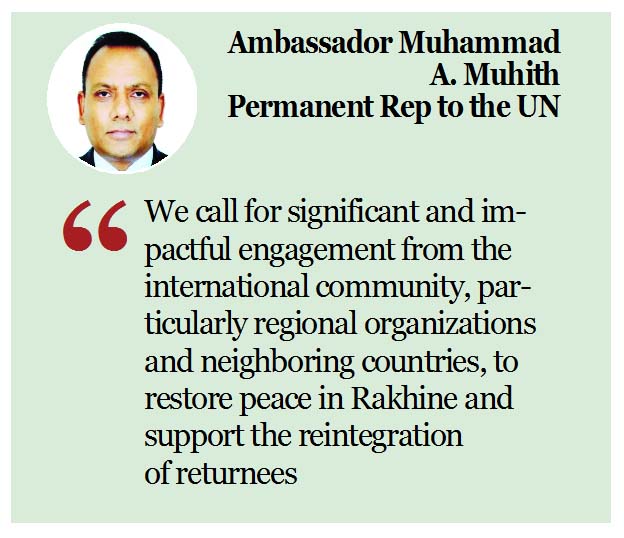
"Amid the unresolved crisis of 2017, the Rohingya Muslims in Rakhine are now facing new dangers as conflicts between the Myanmar military and the Arakan Army escalate," stated Ambassador Muhammad A. Muhith, Bangladesh's Ambassador and Permanent Representative to the United Nations, during a Security Council session on Friday, as noted in a press release.

His remarks were part of the Open Briefing on Myanmar, hosted by the Maltese Presidency, to deliberate on the recent surge in violence in Rakhine State and its impact on civilians, particularly the Rohingya minority.

The briefing included insights from Khalid Khiari, the Assistant Secretary-General at the Department of Political and Peacebuilding Affairs, and Lisa Doughten, Director at the UN Office for the Coordination of Humanitarian Affairs. Representatives from Malaysia, Indonesia, and Bangladesh also addressed the Council.

Ambassador Muhith stressed that the recent escalation in Rakhine has hindered the repatriation process, which he identified as the ultimate resolution to the Rohingya dilemma.

He expressed optimism for the resumption of the repatriation process once conditions permit and urged Myanmar to show real political willingness to cooperate with Bangladesh under the bilateral return agreements signed in 2017 and 2018.

"We call for significant and impactful engagement from the international community, particularly regional organizations and neighboring countries, to restore peace in Rakhine and support the reintegration of returnees," he added.

Referencing UN Security Council Resolution 2669, Ambassador Muhith highlighted the necessity of creating a conducive environment in Rakhine and addressing the deep-rooted vulnerabilities among the Rohingya, largely due to Myanmar's discriminatory legal and political structures.


"Without tackling these root causes, bilateral and regional efforts are likely to fall short," he remarked.

Ambassador Muhith laid out several expectations for resolving the crisis, including enhancing the UN's presence in Myanmar, consistent reporting on the execution of Security Council resolution 2669, accountability for crimes against Rohingya Muslims and ongoing violations of international humanitarian law, and the prompt realization of key agreements and recommendations.

He also stressed the importance of international support in fostering a sustainable environment for the reintegration of Rohingya into Myanmar society.

Highlighting the adverse social, economic, environmental, and security repercussions on Bangladesh from the prolonged presence of Rohingyas, Ambassador Muhith appealed to the Council for focused action on the Rakhine situation and a comprehensive, enduring solution to the Rohingya crisis.

Other speakers expressed grave concerns about the escalating conflict and violence in Myanmar, urging the authorities to tackle the root causes of conflict in Rakhine and facilitate the voluntary, safe, dignified, and sustainable return of all displaced Rohingyas and Internally Displaced Persons (IDPs).

They also advocated for increased international solidarity and support for the UN and ASEAN's peace efforts in Myanmar, in alignment with Security Council Resolution 2669.

Commending Bangladesh for its humanitarian leadership in hosting over a million Rohingyas, the speakers called for further support for the humanitarian efforts in Cox's Bazar until the displaced population can safely return.​
 

Military forcibly recruiting Rohingyas in Mayanmar: HRW
Staff Correspondent | Published: 11:10, Apr 10,2024

1712787062855.webp


The Myanmar military has abducted and forcibly recruited more than 1,000 Rohingya Muslim men and boys from across Rakhine State since February 2024, Human Rights Watch has said in a statement.

'The junta is using a conscription law that only applies to Myanmar citizens, although the Rohingya have long been denied citizenship under the 1982 Citizenship Law,' the statement, posted on HRW website on Tuesday, said.

Rohingya described being picked up in nighttime raids, coerced with false promises of citizenship, and threatened with arrest, abduction, and beatings.

The military has been sending Rohingya to abusive training for two weeks, then deploying them. Many have been sent to the front lines in the surging fighting between the junta and the Arakan Army armed group, which broke out in Rakhine State in November 2023, and a number have been killed and injured.

'It's appalling to see Myanmar's military, which has committed atrocities against the Rohingya for decades while denying them citizenship, now forcing them to fight on its behalf,' said Shayna Bauchner, Asia researcher at Human Rights Watch.

'The junta should immediately end this forced recruitment and permit Rohingya unlawfully conscripted to return home.'

Human Rights Watch documented 11 cases of forced recruitment, drawing on interviews with 25 Rohingya from Sittwe, Maungdaw, Buthidaung, Pauktaw, and Kyauktaw townships in Rakhine State and in Bangladesh, according to a message received from Bangkok on Wednesday.

On February 10, the military activated the 2010 People's Military Service Law, enabling the conscription of men ages 18 to 35 and women ages 18 to 27 for up to five years during the current state of emergency. The announcement followed months of increased fighting with ethnic armed groups and resistance forces.

The junta announced that conscription would start in April, with a monthly quota of 5,000, but the authorities in Rakhine State began forcibly recruiting Rohingya in early February.

In late February, the military abducted over 150 Rohingya in raids on villages in Buthidaung township, according to people interviewed, Rohingya activists, and media reports. A 22-year-old Rohingya man said that light infantry battalion soldiers abducted him and 30 other young men and boys at gunpoint at about 11:00pm on February 25 in Buthidaung town.

'The youngest boy taken away with us was 15 years old,' he said. 'There were three recruits under 18 among us. After we were apprehended and taken to the military battalion, we saw the list of Rohingya who were going to be recruited. All the Rohingya youths in the region were included.'

Further raids took place in Maungdaw township in March. A 24-year-old Rohingya man who was abducted with about two dozen others from Ka Nyin Tan village said the officers told them, 'Protecting Maungdaw is upon you.'

An estimated 630,000 Rohingya remain in Rakhine State under a system of apartheid and persecution, including about 150,000 held in open-air detention camps.

Since the February 2021 military coup, the junta has imposed severe movement restrictions and aid blockages on the Rohingya, increasing their vulnerability to forced recruitment.

Rohingya camp management committee members said that junta authorities have been tallying 'eligible' Rohingya or compelling the committees to make lists.

Two members said when they tried to refuse, junta authorities further restricted movement in the camps and threatened mass arrests and ration cuts. 'We had no other option,' one committee member said.

At meetings in camps in Sittwe and Kyaukpyu, junta officials promised to issue all forced recruits pink citizenship cards, reserved for 'full' citizens. 'In the meetings, officers picked up their citizenship cards and told people, 'We will give you this type of ID card if you join the military service,'' a camp management committee member in Thet Kae Pyin camp said. 'People believed them.' Authorities also promised 4,800 kyat (US$2.30) a day and two sacks of rice.

About 300 Rohingya from the Sittwe camps were sent to two weeks of military training in late February. Upon completion, the military gave the forced recruits 50,000 kyats ($24) but no citizenship cards.

'When the junta broke their promise to issue citizenship cards to the first 300 Rohingya recruits, people stopped believing them and started avoiding the recruitment campaigns,' a camp management committee member said. Rohingya in the Sittwe camps said that for the second round of forced recruitment, the few hundred Rohingya were taken at gunpoint in raids.

Officials have also threatened to beat Rohingya to death if they refuse to join or to punish their families if they fled.

Many young Rohingya men have tried to escape Rakhine State or gone into hiding in the jungle to escape forced recruitment. The authorities rounded up and beat about 40 Rohingya from Kyauk Ta Lone camp when their family members ran away, according to Radio Free Asia.

On March 18, United Nations Secretary-General António Guterres expressed his concern about 'reports of forcible detention and recruitment of youths, including Rohingya, and the potential impact of forced conscription on human rights and on the social fabric of communities in Myanmar.'

'The Myanmar military's forced recruitment of Rohingya men and boys is its latest exploitation of a community made vulnerable to abuse by design, over decades of oppression,' Bauchner said. 'Concerned governments should be strengthening avenues to justice to hold junta leaders accountable for their abuses, past and present.'​
 

16 more Myanmar troops enter Bangladesh
Staff Correspondent 16 April, 2024, 00:12

1713220254241.webp

File photo

At least 16 more Myanmar Border Guard Police and army personnel have sought shelter to the Bangladesh authorities after crossing the international border last couple of days amid the on-going conflict between the Myanmar's military junta and ethnic Arakan Army.

Of them, two members of the Myanmar army crossed the border at Naikhyangchhari in Bandarban, while the rest of them crossed Tekhnaf in Cox's Bazar until early hours of Monday.

All of them were taken to the Border Guard Bangladesh custody in Naikhyangchhari, said Lieutenant Colonel Md Mahiuddin Ahmed, commanding officer of the Teknaf BGB

They entered through the Kharangkhali border in Teknaf, with arms and ammunition, in two phases, he said, adding that the BGB seized their weapons and took them into custody. Two came with wounds and were put under treatment.

Since March 11, at least 196 Myanmar soldiers and border force members crossed the border and sought shelter to the Bangladesh authorities.

On February 15, 330 Myanmar nationals, including 302 BGP officials and four of their family members, two army members, 18 immigration members, and four civilians, entered Bangladesh and were returned to their country later.​
 

In a rebel-held Myanmar town, fragile unity pushes junta to brink
New age Desk 18 April, 2024, 23:25

Myawaddy, a critical trading post in Myanmar that rebel forces seized from the ruling junta last week, offers a glimpse of dynamics playing out across the Southeast Asian country as its vaunted military reels from battlefield losses, reports Yahoo News Canada.

At the border town's outskirts, the site of the most intense fighting, abandoned homes sat next to buildings pockmarked with bullet holes, gas stations damaged by blasts and structures flattened by airstrikes, Reuters reporters saw on a visit this week.

Rebels who fought against junta troops in Myawaddy described a demoralised military that was unwilling to hold its ground.

'We managed to seize three bases and control the area in a very short period of time,' said Saw Kaw, a commander of a rebel unit involved in the battle for Myawaddy. 'Then, they fled.'

Guards from ethnic militias until recently loyal to the military administration roamed streets in the town — normally a conduit for over $1 billion of annual border trade with nearby Thailand. Those fighters stood aside when forces led by the Karen National Union laid siege in early April.

Reuters gained rare access to rebel-held territory on Monday and interviewed seven resistance officials for this story, alongside three Thai officials with detailed knowledge of the conflict and four security analysts.

They provided insight into the delicate diplomacy between armed groups with longstanding rivalries as they seek to hold key population centres and keep the junta they want to topple on the backfoot.

The fall of Myawaddy means that Myanmar's two most important land border crossings are in resistance hands, after the rebels last year claimed control of Muse, near the Chinese border.

Rebel successes have now cut off the cash-strapped junta from almost all the country's major land borders, with the economy in free-fall and poverty doubling since 2017, according to UN data.

The Thailand-based Institute for Strategy and Policy-Myanmar think-tank said in an estimate after Myawaddy's fall that the junta has been deprived of 60 per cent of land-based customs revenue.

It leaves the junta, which has failed to repel any major rebel offensive since October, in its weakest position since its 2021 coup against Aung San Suu Kyi's elected civilian government, according to analysts.

Neighbours such as Thailand, who were previously focused on engaging the junta, have started to rethink their stance on the conflict.

Thai vice foreign minister Sihask Phuangketkeow told Reuters on Wednesday that Thai security officials have been in communication with the KNU and other groups and that they were 'open to more dialogue,' particularly on humanitarian issues.

'We don't blindly side with the Myanmar military but because we want peace we have to talk to them,' he said.

A junta spokesperson did not respond to calls from Reuters seeking comment.

Junta chief General Min Aung Hlaing has accused rebel groups of seeking to undermine Myanmar's unity through armed insurgency and his government has called resistance fighters 'terrorists.'

The Democratic Karen Buddhist Army and Karen National Army, the forces still patrolling parts of Myawaddy and its vicinity even after they abandoned the junta, did not return requests for comment. The groups have not pledged loyalty to the resistance.

At the western edge of Myawaddy, Colonel Nadah Htoo, a senior commander of Brigade 6 of the KNU's armed wing, one of Myanmar's oldest ethnic fighting forces, was thinking about next steps after leading the patchwork of resistance fighters that defeated the army in roughly a week.

Surrounded by armed guards as he chewed betel leaves and peered over his Louis Vuitton sunglasses, Nadah Htoo described on-going talks with other ethnic armed groups about fighting the junta locally. Reuters has also reported that recent coordination between rebel armies in other parts of Myanmar has taken place at an unprecedented level.

For decades, the country of 55 million has been riven by insurgencies along its borderlands, where some two dozen ethnic armed groups operate. Many of them are part of, or supporting, the resistance.

Nadah Htoo and another resistance official acknowledged the challenges of maintaining cooperation over the course of what both expect will be a difficult war against a better-armed military.

'We have to constantly coordinate so there won't be any mistake,' the colonel told Reuters. He declined to be photographed or filmed until the operation ended, citing security concerns.

In Myawaddy, Reuters observed at least three armed groups coordinating to maintain control, reflecting recent rare cooperation among rebel forces that share a common enemy in the junta but otherwise have different interests.

Most of the rebels who took Myawaddy were ethnic Karen, though they fought along some ethnic Burman members of the national resistance, said rebel commander Saw Kaw.

'The first thing (is that) we don't kill each other,' said spokesman Saw Taw Nee of tensions between his KNU and other ethnic Karen groups that were allied to the junta until this month. 'And then we start from that.'

Last October, three rebel groups, including the powerful Arakan Army, led Operation 1027, a major offensive that saw the resistance take wide swathes of military-controlled areas along the border with China.

'After 1027, we saw the AA in Arakan starting to push. When the AA eased, then we decided to push,' said KNU's Nadah Htoo, describing how different rebel groups were hitting the military with successive offensives across multiple areas.

The junta 'is fighting the war on too many fronts,' said Lalita Hanwong, an assistant professor at Thailand's Kasetsart University.

'If you look back from the beginning of Operation 1027, the towns that the resistance forces seized have never been regained.'

In the battle for Myawaddy, KNU-led forces encircled the town and pushed the local junta administration to the point of collapse before taking over, said Nadah Htoo.​
 

Create right conditions for Rohingya repatriation: G7

1713564718336.webp

Photo: Collected

Foreign ministers from the Group of Seven (G7) countries have stressed the need to create conditions for the voluntary, safe, dignified, and sustainable return of all Rohingya refugees and displaced persons to Myanmar.

They also called for justice and accountability for atrocities committed against Rohingyas and other ethnic communities in Myanmar.

They, in a joint statement, also reiterated their call on all states to prevent or cease the flow of arms and other dual-use materials, including jet fuel, into Myanmar.

They urged the Myanmar military to immediately cease any violence, release all prisoners arbitrarily detained including the democratically elected leaders and establish an inclusive dialogue with all stakeholders to restore the path towards a meaningful and durable democratic process.

"We also reiterate our call on the Myanmar military to respect human rights and international humanitarian law, to desist from any form of forced labour and to allow prompt, safe and unhindered humanitarian access to all displaced persons and people in need," said the G7 foreign ministers of Canada, France, Germany, Italy, Japan, the United Kingdom and the United States of America and the High Representative of the European Union in their statement issued by the US Department of State on Friday.

They will continue to support Asean's efforts to promote a credible and inclusive process to achieve the swift implementation of the Five-Point Consensus.

"We highlight the importance of a comprehensive implementation of United Nations Security Council resolution 2669 (2022) and support the UN's further engagement in the crisis, including through the leadership of the newly appointed UN Special Envoy on Myanmar and through the designation of a Resident Coordinator in country," said the G7 countries, noting that accountability for serious crimes committed in Myanmar remains essential.

The G7 countries reiterated their strong condemnation of the military coup in Myanmar and reaffirm our support and solidarity with the people of Myanmar in their quest for peace, freedom, and democracy.

The continuing attacks by the military destroying civilian infrastructure (including homes, schools, places of worship and hospitals), the repeated and serious violations of human rights and the alarming humanitarian situation – which particularly affect those in most vulnerable situations, including children, women and members of minority religious and ethnic groups – are unacceptable.

"We also condemn the recent implementation of the 2010 conscription law by the military regime," they said.

The forced recruitment of young people can only lead to further violence and trigger a massive exodus to neighbouring countries, according to the joint statement.​
 

24 more Myanmar troops enter Bangladesh
Staff Correspondent 19 April, 2024, 11:44

At least 24 more personnel of Myanmar's Border Guard Police crossed international borders with firearms and ammunition and sought shelter in Bangladesh amid continued fighting between Myanmar junta forces and ethnic rebel group Arakan Army between Thursday night and Friday evening, officials said.

Border Guard Bangladesh public relations officer Shariful Islam said that a total of 285 Myanmar personnel had taken shelter in Bangladesh since March 11.

All but 13 personnel entered through land borders in Bandarban and Cox's Bazar, officials from the bordering areas said.

The 13 personnel sought assistance from the Bangladesh Coast Guard on the Naf River on Thursday night and were later taken into custody of BGB authorities.

Later on Friday evening, the BGB headquarters said 11 others sought shelters crossing the Jhimonbkhali and Hatimarajhiri borders.

Bangladesh border guard officials told New Age that they had learned that a large number of soldiers were dismantled following a clash with the Arakan Army, and small groups were trying to sneak into Bangladeshi territories to save their lives with the hope of repatriation to their homeland soon.

A senior BGB official said that they had disarmed them and taken them to safe custody, where they would be quizzed for their ranks and files in the force they belong to.

A home ministry official said they were yet to finalise the repatriation date as the Myanmar soldiers kept coming.

In early February, 330 members of Myanmar security forces, including BGP, army personnel, and immigration officials, took shelter in Bangladesh.

On February 15, they were handed over to the Border Guard Police of Myanmar amid tight security.

Thailand-based news portal The Irrawaddy reported this week that the junta was now facing its most serious threat after losing control of strategic border regions adjacent to India, China, and Bangladesh.

Beijing, meanwhile, has urged all warring parties in Myanmar to halt hostilities and begin peace talks after escalating clashes saw the military regime lose more territory, including another major border town last week.

The message came as Chinese Foreign Ministry spokesperson Lin Jian addressed inquiries on recent developments in Myanmar, including the fall of Myawaddy, at a press briefing on Tuesday.​
 

Myanmar army, BGP personnel will be repatriated Monday: FM
Hasan Mahmud says 150 Bangladeshi citizens stranded in Myanmar will return by ship
BDNEWS24.COM
Published :
Apr 19, 2024 20:47
Updated :
Apr 19, 2024 20:47

1713567517646.webp


Foreign Minister Hasan Mahmud has said the government has finalised plans for the second phase of repatriation of Myanmar's Border Guard Police and army personnel who fled the conflict between junta forces and armed insurgents.

"Many members of the BGP and the army have sought refuge in Bangladesh, including some who arrived this morning," he told reporters at the foreign ministry on Friday.

"So far, a total of 285 individuals have taken shelter in our country. We are currently negotiating with them for their return. We have granted clearance for Myanmar to take them back by ship on April 22."

"However, whether they can be transported on April 22 depends on the sea and overall situation there. Myanmar has agreed to their repatriation, and they will be returned via waterways, " Hasan added.

He added that 150 Bangladeshi citizens stranded in Myanmar will return onboard ships arranged for the repatriation.

On Feb 15, the government repatriated a total of 330 individuals, including members of Myanmar's border guards and armed forces, who had fled the conflict in Rakhine State.

The group included 302 BGP personnel, four of their family members, two army men, 18 immigration officials and four civilians.​
 

Hundreds of Rohingyas await to enter Bangladesh
22 Apr 2024, 12:00 am
Staff Reporter :

1713742366062.webp


Thousands of Rohingyas have sought refuge along the banks of the Naf River on the Myanmar side, waiting to cross into Bangladesh amidst escalating conflict between the military junta and rebel factions in the Arakan region.

Sources report that Myanmar is in turmoil due to the ongoing warfare between the junta and armed rebel groups.

According to reports, hundreds of Rohingya men, women, and children have gathered on the banks of the Naf River near Teknaf, attempting to enter Bangladesh.

In response, law enforcement authorities are taking stringent measures to prevent Rohingya infiltration into Bangladesh.

Law enforcement is maintaining a vigilant watch both day and night to ensure tight security.

Despite these efforts, locals claim that several Rohingyas have managed to clandestinely enter Bangladesh.

It's estimated that around 2,000 Rohingyas are seeking to enter Bangladesh, hiding in various areas along the border.

Additionally, there have been instances of pushback after the detention of some Rohingyas arriving by boat. This situation has persisted along the border for several days.

Sources said several thousand Rohingyas have come and taken shelter in different places on Shahporir Island since April 11, (the night of Eid).

They took shelter with their relatives in Rohingya camps. However, BGB claims that they are not aware of any Rohingya infiltration.

Meanwhile, pushbacked Rohingya claims, this time, along with the Myanmar army, the Arakan Army (AA), the armed forces of the Mugads, have attacked the Muslim minority in Rakhine. They are trying to move away as the conflict escalates.

The Bangladesh Coast Guard held a Rohingya-laden boat carrying 26 people while infiltrating along the Golapara Jhowban near the Naf River on Shahparir Island on Tuesday.

A Coast Guard official confirmed this information and said that the Rohingyas who infiltrated will be pushed back after verification.

According to Rohingya sources, several thousand Rohingyas are currently hiding in Mandipara Char across the Naf River, trying to enter Bangladesh through Shahparir Island. Sensing the opportunity, they are waiting to infiltrate.

Locals said there was a movement of suspects in the Jhowbagan and Kachubaniya remote fields of Teknaf Shahparir Island. Local people usually avoid going there because of the remoteness and poor communication system.

BGB members are not easily seen patrolling there. Rohingyas are trying to enter Bangladesh by choosing this difficult route.

Meanwhile, local people said that some Rohingyas have entered by getting help from four brokers on Shahparir Island. They alleged that the brokers take Tk 20,000 to 25,000 per person.

Most of the fleeing Rohingyas are residents of Buthedong village in Rakhine. Several of them are from some villages in Mangdu.​
 

JS body fears Myanmar border situation may deteriorate
Staff Correspondent 28 April, 2024, 23:53

1714348069373.webp


The ongoing tense situation in Myanmar, bordering Bangladesh's Bandarban and Cox's Bazar, is likely to worsen next month, and as a result, more Rohingya people and Myanmar nationals could attempt to infiltrate into Bangladesh, the Jatiya Sangsad standing committee on home ministry observed.

Such apprehension was expressed in a report placed in the meeting of the committee held in the parliament building on Sunday.

The report presented on the Bangladesh-Myanmar border situation said that by May 2024, the conflict situation in the region bordering Teknaf was likely to deteriorate further, several JS officials confirmed New Age.

'This could lead to increased attempts by the Rohingya people and members of Myanmar Border Police to enter Bangladesh,' the report stated.

The report highlighted the risks faced by Bangladesh due to the worsening situation along the Myanmar border.

The risks include influx of Myanmar nationals, including Rohingya, security threat along the unprotected land and marine borders of Bangladesh and Myanmar, smuggling of Rohingya rations, drug trading, subversive activities by terrorist groups, and the smuggling of firearms.

The report said that the Arakan Army could try to destabilise the Chittagong Hill Tracts area by taking advantage of its affinity with local ethnic communities.

According to meeting insiders, in the previous meeting of the committee, the senior secretary of the public security department of the home ministry mentioned that effective action was not taken against the culprits after the Bayley Road fire.

Referring to the Bayley Road fire incident, he said that often a crackdown starts after an incident before everything becomes business as usual within a short time.

According to the press release of the Parliament Secretariat, the committee has recommended action against juvenile gangs in addition to urging everyone to come forward to eliminate drugs.

In the meeting, the committee recommended that all forces under the home ministry should be more aware and vigilant in maintaining law and order.

Committee members and home minister Asaduzzaman Khan, Shamsul Alam Dudu, Samil Uddin Ahmed Shimul, Moyj Uddin Sharif, Sanowar Hossain, Chayan Islam, Md Saddam Hossain,

and Hasina Bari Chowdhury attended the meeting presided over by committee chairman Benjir Ahmed.​
 

Three Bangladeshis injured in mine explosions along Myanmar border in Bandarban
Published :
May 05, 2024 20:30
Updated :
May 05, 2024 20:30

1714951733735.webp


Three Bangladeshis have been injured in two separate incidents of landmine explosions at Naikhongchhari in Bandarban along the Myanmar border.

Two people were injured in the first blast near border pillar No. 47 in the Fultali area on Saturday night and the second explosion in the same area injured a third person on Sunday morning, said Nurul Absar Emon, chairman of Naikhongchhari Sadar Union Council.

All of them crossed the border into Myanmar illegally to bring cattle, Absar said.

The injured are Md Rafique from Ramu in Cox's Bazar, Mohammad Abdullah of Garjania, and Rashid Ahmed of Kachchhapia, reports bdnews24.com.

One of the explosions caused the dismemberment of Abdullah's both legs. He was sent to Chattogram Medical College Hospital in a critical condition.

The two others were transferred to Cox's Bazar District Hospital.

Md Ashikur Rahman, resident medical officer of the district hospital, said one of the injured was brought in a critical condition on Saturday night and the other on Sunday morning.

Saber Ahmed, member of Naikhongchhari Sadar Union, said Border Guard Bangladesh strengthened security along the border.

Bangladeshis experienced casualties in mine blasts along the Myanmar border several times in the recent years amid intense fighting between the Myanmar military and rebels in the Rahine state.​
 

Myanmar armed group captures hundreds of junta personnel
Agence France-Presse . Bangkok 07 May, 2024, 00:36

A Myanmar ethnic armed group said on Monday it had captured a military command and taken hundreds of junta personnel prisoner in western Rakhine state, the latest blow to the military.

Clashes have rocked Rakhine since the Arakan Army attacked security forces in November, ending a ceasefire that had largely held since the junta's 2021 coup.

The military still holds the state capital Sittwe but AA fighters have seized territory in surrounding districts, including bases on the border with India and Bangladesh.

A video released by the AA's media channel said the group had captured 'Military Operations Command 15' near the town of Buthidaung, around 90 kilometres north of Sittwe.

The video did not say when its fighters had captured the site but local media have reported regular clashes around Buthidaung in recent days.

'The video record of the deputy commander of MOC 15 after a certain period of siege,' read a message published in Burmese, Chinese and English.

After a 'final assault' the junta troops had 'faced total defeat and surrendered,' it said.

Images showed a long line of men, some wearing what appeared to be military uniforms, walking single file through a field.

Some were in shorts and T-shirts and sandals while others were not wearing any footwear. Some shots showed women and children accompanying the men.

One man with a bandage around his knee was limping and some were being carried in makeshift stretchers.

The video also showed around 200 people sitting in rows in a clearing and men in uniform and guns watching over them.

AFP has attempted to contact a junta spokesman for comment.

The AA is one of several armed ethnic minority groups in Myanmar's border regions, many of whom have battled the military since independence from Britain in 1948 over autonomy and control of lucrative resources.

The AA claims to be fighting for more autonomy for the state's ethnic Rakhine population.

In 2019 clashes between the AA and the military roiled the region and displaced around 2,00,000 people.

In 2017 the military launched a crackdown on the Rohingya minority there that is now the subject of a United Nations genocide court case.

Since the November outbreak, fighting had spread to 15 of Rakhine state's 17 townships, the UN's human rights chief said last month.

Hundreds have been killed or wounded and more than 3,00,000 displaced, it said.​
 

Myanmar conflicts hinder repatriation of Rohingyas
6 May 2024, 12:00 am

Staff Reporter :

The ongoing conflict between the Myanmar Army and Arakan Army forces continues to impede the establishment of a safe environment for the repatriation of Rohingya refugees who sought shelter in Bangladesh in 2017.

The intensity of the fighting has led to Myanmar Army personnel seeking refuge across the border in Bangladesh to ensure their safety, as they reportedly struggle to withstand the attacks from the Arakan forces.

On Sunday, a group of 88 members of the Myanmar Border Guard Police (BGP) crossed into Bangladesh through the Teknaf border, armed and seeking protection from the fierce clashes.

They surrendered to the Teknaf Coast Guard at the Shahparir and Nazirpara border areas, as confirmed by Lt. Tahsin Rahman, a media official of Coast Guard Chattogram (East).

Lt. Rahman stated, "The surrendered BGP members would be handed over to the Border Guard Bangladesh (BGB) soon."

The official further added that they are ready for any situation along the border.

Mohammad Islam, a local resident, said, "We have been hearing gunfire from within Myanmar and witnessing the influx of BGP members seeking refuge in Bangladesh.

Additionally, we have also heard that there are reports of Rohingyas attempting to enter Bangladesh through the border."

Previously, a total of 618 members of the BGP and Myanmar military were sent back to their countries twice. Of these, 288 BGP military personnel were repatriated on April 25 and 330 on February 15 by Bangladesh.

Despite numerous attempts, the repatriation of Rohingya Muslims to their homes in Rakhine State has not been implemented, even six years after the initial displacement in 2017.

The international community has always vowed to create a safe, durable, and sustainable environment before commencing any repatriation process.

Even a group of Rohingya individuals who visited Rakhine last year reported that they did not find a safe environment for their return. Though China is mediating to resolve the crisis through the repatriation process, several tripartite meetings were also held, including the Kunming meeting in April last year.

However, Western countries, which are funding assistance for the Rohingyas, have expressed concerns about the lack of a favourable environment in Rakhine and the reluctance of the Rohingyas to return amid the volatile atmosphere. Even the United Nations said that repatriation of the Rohingyas amid a volatile situation would not be correct until a favourable condition prevailed there.

In recent months, fierce fighting between the Myanmar Army and Arakan Army has intensified, creating an atmosphere of fear along the borders. In the last several months, there has been fierce fighting between the Myanmar Army and the Arakan Army, creating an environment of fear along the borders.

Many mortar shells and bullets entered Bangladeshi territory during the clashes along the borders. The local residents of Bangladesh were also evacuated to avoid any casualties.

At that time, the Myanmar Army entered Bangladesh to save their lives, although they were handed over later when the situation improved.

The trend of entering Bangladeshi territory by the Myanmar Army and BGP members, however, is not being stopped, which is a clear sign of a volatile situation there.

But the lingering of conflicts is creating a burden for Bangladesh as the Rohingya repatriation process is not yet within sight.​
 

Myanmar displaced now at 3m: UN
Agence France-Presse . Yangon 08 May, 2024, 23:13

1715236354956.webp


The number of displaced people in Myanmar has reached three million, the United Nations said, the vast majority forced to flee their homes by conflict unleashed by the military's 2021 coup.

Around 2.7 million have fled since the putsch that toppled Aung San Suu Kyi's government after a short-lived experiment with democracy.

The coup sparked renewed clashes with established ethnic armed groups and birthed dozens of new 'People's Defence Forces' that the military has failed to crush.

'Myanmar stands at the precipice in 2024 with a deepening humanitarian crisis,' the UN's resident coordinator in the country said in a statement released on Monday.

An estimated one-third of those displaced are children, according to the statement.

Around half of the three million have been displaced since late last year, when an alliance of ethnic armed groups launched an offensive across northern Shan state, the statement said.

The offensive seized swathes of territory and lucrative trade crossings on the China border, posing the biggest threat to the junta since it seized power.

Myanmar's borderlands are home to a plethora of ethnic armed groups, many of whom have battled the military since independence from Britain in 1948 over autonomy and control of lucrative resources.

The UN said a severe funding shortfall was hampering its relief efforts, particularly ahead of the May-June cyclone season.

Last year cyclone Mocha smashed into western Myanmar's Rakhine state, killing at least 148 people.

More than 3,55,000 people are currently displaced in western Rakhine state, which has been rocked since November by clashes between the Arakan Army and the military, the UN said.​
 

Myanmar's opposition gains ground in conflict, civilian casualties mount
Published :
May 09, 2024 11:41
Updated :
May 09, 2024 11:41

1715237161142.webp


Six months into an offensive against Myanmar 's military government, opposition forces have made massive gains, but civilian casualties are rising sharply as regime troops increasingly turn toward scorched-earth tactics in the Southeast Asian country's bitter civil war, reports AP.

There is pressure on all fronts from powerful militias drawn from Myanmar's ethnic minority groups and newer resistance forces. Troops are retaliating with air, naval and artillery strikes on hospitals and other facilities where the opposition could be sheltered or aided.

"When the mass of people rise up against them, I think it terrifies them," said Dave Eubank, a former U.S. Special Forces soldier who founded the Free Burma Rangers, a humanitarian aid organization that has provided assistance to both combatants and civilians in Myanmar since the 1990s.

"They know that hospitals, churches, schools and monasteries are important places for human care, and gathering, and symbols — and they hammer them," said Eubank. "That's new."

Military forces now control l ess than half the country, but are holding on tenaciously to much of central Myanmar including the capital, Naypyidaw — recently targeted by drone attacks — and largest city, Yangon, and is far better armed than the resistance forces, with support from Russia and China.

"People have been saying that the regime was on the brink of collapse since two weeks after the coup," in February 2021, said Morgan Michaels, an analyst with the International Institute of Strategic Studies who runs its Myanmar Conflict Map project.

"On the other hand, obviously the regime is weaker than it's ever been.... so there's no doubt that it's in serious, serious trouble," he said.

Thet Swe, a spokesman for the military government, acknowledged an email from The Associated Press seeking comment but did not respond to questions.

As the fighting has moved into more populated areas, about 1 million people have been forced to flee their homes since the start of the offensive in October, contributing to the more than 3 million internally displaced people in the country of some 56 million, according to the U.N.'s humanitarian aid agency.

With the collapse of its health care system and food supplies dwindling, 18.6 million people are in need, up 1 million from a year ago, including 6 million children, the agency said.

HOW IT BEGAN

Opposition in Myanmar, also known as Burma, had been growing since the army seized power from the elected government of Aung San Suu Kyi in February 2021, but it gained new momentum in October when major militias known collectively as the Three Brotherhood Alliance launched a joint offensive.

Together, the Arakan Army, the Myanmar National Democratic Alliance Army and the Ta'ang National Liberation Army — among the most powerful militias formed by Myanmar's ethnic minorities — made quick advances.

As they captured huge swaths of territory largely in the north and northeast, including economically important border crossings with China and several major military bases, other ethnic armed groups sensed momentum and joined the fighting.

At the same time, People's Defense Forces — armed resistance groups that support the shadow National Unity Government, which views itself as Myanmar's legitimate administration — have been increasing in number and launching their own attacks, often supported and trained by the ethnic armed militias.

Both sides claim they have inflicted heavy tolls. And the military government under Senior Gen. Min Aung Hlaing has acknowledged it is under pressure, recently reintroducing conscription to increase its ranks.

That has pushed some young people into the resistance. Many more have fled to rural areas or neighboring countries to avoid fighting.

With the violence across its border, China helped broker a cease-fire in Myanmar's north in January with the Three Brotherhood Alliance. But the alliance's Arakan Army continues to fight in its home Rakhine state in the west and has made significant gains, while PDFs and other ethnic armed groups continue their own attacks elsewhere.

THE LATEST FIGHTING

The fiercest fighting in recent weeks has been in the southeast, where the main ethnic Karen fighting force, the Karen National Liberation Army, claimed in early April to have seized all the military bases in Myawaddy, the main town on the border with Thailand in Kayin state.

One army battalion clung to a position beside one of Myawaddy's two bridges, assisted by the Border Guard Force, a rival Karen group that had been in charge of border area security for years, conducting lucrative business by providing protection to area casino resorts with links to organized crime.

The force, which declared itself neutral in January, now controls the town with military government administrators still in place, highlighting how some militia groups still prioritize their own interests.

"This is not a black and white situation. This is not the regime reconquering and reconsolidating control," Michaels said of the fighting in the area. "This is the regime hanging on, keeping a foothold by the razor's edge."

Meanwhile, the military has pushed KNLA and People's Defense Forces out of Kawkareik, a strategically important town along the road that connects Myawaddy with the rest of the country.

Thousands of civilians have fled Myawaddy and Kawkareik. But many civilians haven't managed to escape.

At least 1,015 civilian deaths have been documented from Nov. 1 through May 1, according to the Assistance Association for Political Prisoners, a watchdog group that tracks political arrests, attacks and casualties. It says 4,962 civilians have been killed overall since the military took power three years ago.

The watchdog blamed the deaths on the military's increasing use of scorched-earth tactics and fighting moving into more populated areas.

"The military has increasingly lost areas of control in recent months, which has only increased their use of this strategy, responding with airstrikes, shelling and so on in civilian areas," the AAPP said in an email.

The group added that the number of civilian deaths in the recent months of fighting is likely double what it reported, if not more, but that it can't document the numbers due to the intensification of the conflict.

Kyaw Zaw, a spokesperson for the shadow National Unity Government, said the military had destroyed 343 hospitals and clinics since it took power, and that those attacks had accelerated in the last two months, though he didn't have specific details.

Eubank, with the Free Burma Rangers, said he and his teams operating near the front lines have witnessed the military, known as the Tatmadaw, fighting with a " speed and force and a viciousness that we've never seen."

But in fighting a common enemy, the resistance is showing growing unity, he said.

"The Burma army is still stronger than any of these resistance groups, and if they want to bring a division or two to bear, they will win the battle, but they're not stronger than everybody else together," he said.

WHAT COMES NEXT

Whether that unity will continue if the regime falls, and if the disparate resistance forces can agree on a common path ahead for Myanmar, is an open question, Michaels said.

"On one hand, Myanmar is not Syria — there is common cause in fighting the regime," Michaels said. "But at the same time, as the regime has receded from some areas, there are at least indicators of potential future conflicts between groups."

He noted an incident in northern Shan state last month in which troops from two members of the Three Brotherhood Alliance — the Myanmar National Democratic Alliance Army and the Ta'ang National Liberation Army — traded fire over a territorial dispute. One person was injured.

The groups quickly agreed to stand down, but the incident illustrates that territorial tension is real, Michaels said.

An opposition politician still inside the country, speaking on condition of anonymity for his own safety, said Myanmar's people have a common desire for peace and stability, but the various factions still pursue their own interests.

"It is hard to predict what is ahead, and they still don't have a single political direction or goal. I think there is quite a problem in this situation," he said.

"Myanmar is now at a crossroads."​
 

UN says 3m forced to flee in Myanmar conflict
9 May 2024, 12:00 am

Aljazeera :

The number of people in Myanmar forced from their homes by conflict now exceeds more than 3 million in what the United Nations has described as a "bleak milestone" for the country.

The UN said the number displaced had surged by 50 percent in the last six months as fighting escalated between the military and armed groups trying to remove the generals who seized power in a coup in February 2021.

"Myanmar has this week marked a bleak milestone with more than 3 million civilians now displaced nationwide amid intensifying conflict," the office of the UN Resident and Humanitarian Coordinator for Myanmar said in a statement on Monday.​
 

Rohingya man shot dead in Teknaf

1715416881878.webp

Star Online Graphics

A Rohingya man was shot dead in a refugee camp under Hnila union of Teknaf upazila in Cox's Bazar this morning.

The incident took place at Mochni registered Rohingya camp in the union around 8:30am, said Oficer-in-Charge Mohammad Osman Gani of Teknaf Police Station.

The deceased Mohammad Alam, 48, was a resident of E-Block of Mochni Rohingya camp.

According to the locals and police, Alam was stopped by five to six miscreants in the morning while going to a local arbitration meeting.

They picked up Alam and took him to an area near to a local school. He was shot in the head, the OC said, adding that he died on the spot.

We are suspecting that previous enmity might be the reason behind the killing, he added.

Police are trying to arrest those involved in the incident, the OC said.

The body has been sent to Cox's Bazar District Sadar Hospital's morgue for autopsy.​
 

Civilian casualties rise in Myanmar's civil war
11 May 2024, 12:00 am

1715471651591.webp


AFP :

Six months into an offensive against Myanmar 's military government, opposition forces have made massive gains, but civilian casualties are rising sharply as regime troops increasingly turn toward scorched-earth tactics in the Southeast Asian country's bitter civil war.

There is pressure on all fronts from powerful fighters drawn from Myanmar's ethnic minority groups and newer resistance forces.

Troops are retaliating with air, naval and artillery strikes on hospitals and other facilities where the opposition could be sheltered or aided.

"When the mass of people rise up against them, I think it terrifies them," said Dave Eubank, a former US Special Forces soldier who founded the Free Burma Rangers, a humanitarian aid organization that has provided assistance to both combatants and civilians in Myanmar since the 1990s.

"They know that hospitals, churches, schools and monasteries are important places for human care, and gathering, and symbols – and they hammer them," said Eubank. "That's new."

Military forces now control less than half the country, but are holding on tenaciously to much of central Myanmar including the capital, Naypyidaw – recently targeted by drone attacks – and largest city, Yangon, and is far better armed than the resistance forces, with support from Russia and China.

"People have been saying that the regime was on the brink of collapse since two weeks after the coup," in February 2021, said Morgan Michaels, an analyst with the International Institute of Strategic Studies who runs its Myanmar Conflict Map project.

"On the other hand, obviously the regime is weaker than it's ever been…. so, there's no doubt that it's in serious, serious trouble," he said.

Thet Swe, a spokesman for the military government, denied that troops were targeting buildings and areas where civilians were sheltering, blaming their destruction instead on the opposition forces, without citing evidence.

"The military never harmed hospitals, churches and civilians in our country," he told The Associated Press in an email. "They did not use that strategy and are fighting the rebels only for the sovereignty of our country."

As the fighting has moved into more populated areas, about 1 million people have been forced to flee their homes since the start of the offensive in October, contributing to the more than 3 million internally displaced people in the country of some 56 million, according to the UN's humanitarian aid agency.

With the collapse of its health care system and food supplies dwindling, 18.6 million people are in need, up one million from a year ago, including six million children, the agency said.

Opposition in Myanmar, also known as Burma, had been growing since the army seized power from the elected government of Aung San Suu Kyi in February 2021, but it gained new momentum in October when major fighters known collectively as the Three Brotherhood Alliance launched a joint offensive named "Operation 1027."

Together, the Arakan Army (AA), the Myanmar National Democratic Alliance Army (MNDAA) and the Ta'ang National Liberation Army (TNLA) – among the most powerful fighters formed by Myanmar's ethnic minorities – made quick advances.

As they captured huge swaths of territory largely in the north and northeast, including economically important border crossings with China and several major military bases, other ethnic armed groups sensed momentum and joined the fighting.

At the same time, People's Defense Forces (PDF)- armed resistance groups that support the shadow National Unity Government (NUG), which views itself as Myanmar's legitimate administration – have been increasing in number and launching their own attacks, often supported and trained by the ethnic armed fighters.

Both sides claim they have inflicted heavy tolls. And the military government under Senior General Min Aung Hlaing has acknowledged it is under pressure, recently reintroducing conscription to increase its ranks.

That has pushed some young people into the resistance. Many more have fled to rural areas or neighboring countries to avoid fighting.

With the violence across its border, China helped broker a cease-fire in Myanmar's north in January with the Three Brotherhood Alliance.

But the alliance's Arakan Army continues to fight in its home Rakhine state in the west and has made significant gains, while PDFs and other ethnic armed groups continue their own attacks elsewhere.

The fiercest fighting in recent weeks has been in the southeast, where the main ethnic Karen fighting force, the Karen National Liberation Army (KNLA), claimed in early April to have seized all the military bases in Myawaddy, the main town on the border with Thailand in Kayin state, also known as Karen state.

One army battalion clung to a position beside one of Myawaddy's two bridges, assisted by the Border Guard Force, a rival Karen group that had been in charge of border area security for years, conducting lucrative business by providing protection to area casino resorts with links to organized crime.

The force, which declared itself neutral in January, now controls the town with military government administrators still in place, highlighting how some fighter groups still prioritize their own interests.

"This is not a black and white situation. This is not the regime reconquering and reconsolidating control," Michaels said of the fighting in the area. "This is the regime hanging on, keeping a foothold by the razor's edge."

Meanwhile, the military has pushed KNLA and People's Defense Forces out of Kawkareik, a strategically important town along the road that connects Myawaddy with the rest of the country.

Thousands of civilian have fled Myawaddy and Kawkareik. But many civilians haven't managed to escape.

At least 1,015 civilian deaths have been documented from November 1 through May 1, according to the Assistance Association for Political Prisoners (AAPP), a watchdog group that tracks political arrests, attacks and casualties. It says 4,962 civilians have been killed overall since the military took power three years ago.

The watchdog blamed the deaths on the military's increasing use of scorched-earth tactics and fighting moving into more populated areas.

"The military has increasingly lost areas of control in recent months, which has only increased their use of this strategy, responding with airstrikes, shelling and so on in civilian areas," the AAPP said in an email.

The group added that the number of civilian deaths in the recent months of fighting is likely double what it reported, if not more, but that it can't document the numbers due to the intensification of the conflict.

Kyaw Zaw, a spokesperson for the shadow National Unity Government, said the military had destroyed 343 hospitals and clinics since it took power, and that those attacks had accelerated in the last two months, though he didn't have specific details.

Eubank, with the Free Burma Rangers, said he and his teams operating near the front lines have witnessed the military, known as the Tatmadaw, fighting with a " speed and force and a viciousness that we've never seen." But in fighting a common enemy, the resistance is showing growing unity, he said.

"The Burma army is still stronger than any of these resistance groups, and if they want to bring a division or two to bear, they will win the battle, but they're not stronger than everybody else together," he said.

Whether that unity will continue if the regime falls, and if the disparate resistance forces can agree on a common path ahead for Myanmar, is an open question, Michaels said.

"On one hand, Myanmar is not Syria – there is common cause in fighting the regime," Michaels said. "But at the same time, as the regime has receded from some areas, there are at least indicators of potential future conflicts between groups."

He noted an incident in northern Shan state last month in which troops from two members of the Three Brotherhood Alliance – the Myanmar National Democratic Alliance Army and the Ta'ang National Liberation Army – traded fire over a territorial dispute. One person was injured.

The groups quickly agreed to stand down, but the incident illustrates that territorial tension is real, Michaels said.

An opposition politician still inside the country, speaking on condition of anonymity for his own safety, said Myanmar's people have a common desire for peace and stability, but the various factions still pursue their own interests.

"It is hard to predict what is ahead, and they still don't have a single political direction or goal. I think there is quite a problem in this situation," he said. "Myanmar is now at a crossroads."​
 

Saudi for quick renewal of 69,000 passports
Muktadir Rashid 13 May, 2024, 00:16

1715556268555.webp


Saudi authorities on Sunday wanted a faster renewal of 69,000 Bangladeshi passports issued to Rohingya people over the years, prompting the Bangladesh authorities to seek six more months for necessary steps.

A six-member Saudi delegation, headed by the kingdom's deputy interior minister Nasser bin Abdulaziz Al-Daoud, flagged the issue once again during a bilateral meeting with a Bangladeshi delegation, headed by home minister Asaduzzaman Khan, in Dhaka.

The meeting was held for three hours at a hotel near Hazrat Shahjalal International Airport a day after the arrival of the Saudi delegation on a chartered plane on Saturday night.

This is the second such meeting between Bangladesh and Saudi authorities over the renewal of 69,000 Bangladeshi passports in less than two years.

In November 2022, the Saudi deputy interior minister visited Dhaka and raised the same issue with the home ministry.

All expats living in Saudi Arabia, from children to adults to the elderly, need an Iqama, an official identification document in the kingdom that allows the individual to open a bank account, sign rental agreements, enter government buildings, and even get their first Saudi SIM card.

A copy of the passport is required, among others, to get the Iqama.

Bangladesh officials told New Age that the Saudi authorities had threatened that they would deport thousands of people to Bangladesh if their Bangladeshi passports were not renewed.

Home minister Asaduzzaman Khan, however, believed that the Saudi authorities would not deport them, saying that the delegation had inquired about the process of renewing 69,000 Bangladeshi passports.

He claimed a number of Rohingyas using Bangladeshi passports have gone to Saudi Arabia since the mid-1970s, and their passports needed to be renewed.

Asaduzzaman could not say the exact number but added that many of them travelled to Saudi Arabia in 1973–74.

A document related to the matter read, 'necessary steps will be taken for the renewal of their passports within six months.'

Referring to a Memorandum of Understanding signed between Dhaka and Riyadh regarding the renewal of passports, Asaduzzaman said that the Saudi delegation wanted to know if Dhaka had any problems materialising it.

The minister said that Saudi Arabia wanted to sign an extradition treaty with Bangladesh.

The Saudi deputy minister did not make any comments.

The home minister said that they had discussed ways of extending cooperation to enhance the capacity of the Border Guard Bangladesh and the police.

Dhaka also informed the Saudi delegation that they could consider recruiting Ansar members for jobs in the kingdom.

He also sought their cooperation to resolve the Rohingya crisis.​
 

How China, India and Bangladesh could be drawn into Myanmar's conflict
DAVID BREWSTER
Rakhine state has become a de facto battleground for the competing interests of Beijing, Delhi and Dhaka.

1715656297834.webp

Insurgency in Myanmar's western Rakhine state has particular consequences for the broader region (STR/AFP via Getty Images)
Published 8 Nov 2022

The 2021 military coup in Myanmar sparked renewed civil conflict between Myanmar government forces, the Tatmadaw, and perhaps a dozen insurgent groups seeking their own ethnic states. Many of these conflicts have cross-border implications, but the insurgency in Rakhine state has particular consequences for the broader region. China has already been drawn into the conflict in Rakhine state to protect key interests, and India and Bangladesh could soon follow. This may produce unpredictable outcomes.

Over the last decade or more, Myanmar's Rakhine state, which borders southern Bangladesh, has been the scene of brutal ethnic cleansing. In 2017, the Tatmadaw, working with local nationalists, violently expelled more than 700,000 Rohingya people – mostly Muslims – from Myanmar. Around a million now live in festering conditions in the world's largest refugee camp at Cox's Bazar in southern Bangladesh.

The Bangladesh government takes the position that the presence of the Rohingya people on their territory is only temporary and that, one way or another, they must be repatriated to their homeland in Rakhine. But all attempts have been stonewalled by Myanmar authorities.

The Tatmadaw is in retreat and could be expelled from much of Rakhine state. This has some potentially far-reaching consequences for the broader region.

The situation has been further destabilised in the last several months by renewed fighting between the Tatmadaw and local separatists, the Arakan Army, who have taken control of large areas, including the north, much of central Rakhine, and the border with Bangladesh. The Tatmadaw is in retreat and could be expelled from much of Rakhine state. This has some potentially far-reaching consequences for the broader region.

China has significant interests in Rakhine, principally the protection of its transport and economic corridor between southern China and the Bay of Bengal, a key element in the Belt and Road Initiative. This includes the newly-built Kyaukphyu port on the Bay of Bengal and a pipeline and planned road and rail links between the port and southern China. Together, these give China direct access to the Bay of Bengal for the first time in history, with considerable implications for the regional balance of power.

With renewed fighting in Rakhine, China is seeking to protect its investments in the Kyaukphyu corridor by providing substantial support for the Arakan Army, including money and arms. This allows China to gain leverage against the Tatmadaw and hedge its bets.

1715656415136.webp

In 2017, more than 700,000 Rohingya – mostly Muslims – were expelled from Myanmar. Around a million now live in festering conditions in the world's largest refugee camp at Cox's Bazar, southern Bangladesh (Allison Joyce/UN Women/Flickr)

Chinese support for the Arakan Army also provides other benefits, particularly in relation to India's competing Kaladan project in Rakhine, which would connect the Bay of Bengal with India's northeast. The Kaladan project involves construction of new port facilities at Sittwe, a river transit system and a road to India's Mizoram state. When completed, this would provide a direct link between the Indian Ocean and India's northeast states, which are only otherwise tenuously connected with the rest of India.

Delhi hopes the Kaladan corridor will be a driver of economic development in India's northeast. It is also anticipated that it will reduce India's reliance on Bangladesh for transit routes – with some important implications for relations between those two countries.

But there have been long delays in completing the Kaladan corridor, and the Arakan Army has recently seized key territory along the corridor, which gives it considerable bargaining power with India. It is not clear whether India will do a deal with the Arakan Army, or if it will just double down on its long-running support for the Tatmadaw.

Neighbouring Bangladesh also has crucial interests in Rakhine. Fighting in the state is increasingly spilling across the border, stymying Bangladesh's hopes to repatriate Rohingya refugees. Aside from whether Myanmar authorities would ever allow the return of the Rohingyas they recently expelled, the international community would not countenance the repatriation of refugees into a war zone. There seems little chance that Bangladesh could move forward with repatriation in the foreseeable future with the Tatmadaw's agreement.

The takeover of Rakhine state by the Arakan Army would come with risks for all concerned, including whether it could achieve lasting stability and security.

For years, Bangladesh has approached its difficult neighbour with great caution, seeking to de-escalate and de-militarise cross-border violations. But with frustrations building in Dhaka, there may be a hardening in its response and a search for new approaches to the Myanmar problem.

The Tatmadaw claims that the Arakan Army already finds safe havens in ethnically related communities in remote Bangladesh border areas. Bangladesh officially denies this. But there may be growing temptations in Dhaka to assist the Arakan Army's ambitions for an autonomous state. Indeed, Arakan Army control of Rakhine probably provides the only realistic pathway for the repatriation of at least some Rohingyas.

The Arakan Army recently pledged to recognise the citizenship rights of what they call "Myanmar Muslims" and to allow those who still remain in Rakhine to "participate" in any future administration. But many Rohingyas view these statements with deep scepticism given long-running Arakanese nationalist sentiments against Rohingyas. Indeed, some recent incidents, such as shelling of border areas, suggest that the Arakan Army may be trying to fuel tensions between Bangladesh and the Tatmadaw for their own ends.

The takeover of Rakhine state by the Arakan Army would come with risks for all concerned, including whether it could achieve lasting stability and security.

The Tatmadaw's response is difficult to predict. India, too, has strong reasons not to see a group that is in league with China take control of Rakhine. A fully independent Rakhine state could also lead to the further splintering of Myanmar, with unpredictable consequences.

Of all Myanmar's internal conflicts, this is the one to watch. The conflict in Rakhine, fuelled by major power competition and the Rohingya crisis, may have significant ramifications far beyond Myanmar's borders.​
 

MYANMAR CONFLICT
Recruits march to training as junta presses conscription


Myanmar's embattled junta is pressing ahead with military conscription, state media said yesterday, with video footage showing new recruits being marched to training centres across the country.

The military is struggling to crush widespread opposition to its rule following its 2021 coup that ended an experiment with democracy and plunged Myanmar into turmoil.

In February the junta said it would enforce a law allowing it to call up all men aged 18-35 to serve in the military, sending thousands queueing for visas outside foreign embassies in Yangon.

Junta number two Soe Win visited Yangon on Monday and was briefed on "systematic selection" of those being called up, the Global New Light of Myanmar newspaper said. The first batch of recruits began training in April, according to broadcaster MRTV, which did not say how many had been signed up. Recruits from the second batch have begun arriving at their training camps, according to a montage broadcast by MRTV last week.

The images showed dozens of men, purportedly at different locations, walking in lines to training centres, some led by soldiers or marching bands.​
 

Myanmar junta presses conscription
Agence France-Presse . Yangon 14 May, 2024, 23:32

Myanmar's embattled junta is pressing ahead with military conscription, state media said on Tuesday, with video footage showing new recruits being marched to training centres across the country.

The military is struggling to crush widespread opposition to its rule following its 2021 coup that ended an experiment with democracy and plunged Myanmar into turmoil.

In February the junta said it would enforce a law allowing it to call up all men aged 18-35 to serve in the military, sending thousands queueing for visas outside foreign embassies in Yangon.

Junta number two Soe Win visited Yangon on Monday and was briefed on the 'systematic selection' of those being called up, the state-owned Global New Light of Myanmar newspaper said.

The first batch of recruits began training in April, according to state broadcaster MRTV, which did not say how many had been signed up.

Recruits from the second batch have begun arriving at their training camps, according to a montage broadcast by MRTV last week.

The images showed dozens of men, purportedly at different locations across the country, walking in lines to training centres, some led by soldiers or marching bands.

Groups of women and soldiers formed tunnels to greet some of them with flowers or place garlands on their necks.

One group of men were wearing identical T-shirts with 'Natmauk' on the back, the images showed.

Natmauk is the home town of Aung San, who spearheaded the independence struggle against British colonial rule and is revered by Myanmar's military, which he founded.

His daughter, democracy figurehead Aung San Suu Kyi, has been detained by the military since the coup and jailed on charges critics say are designed to remove her from politics.

After arriving at their training centres the second batch of recruits 'took a medical test and were issued with food, military equipment and a stipend,' MRTV said.

It did not say how many men were included in the second batch.

The military service law was authored by a previous junta in 2010 but was never brought into force.

It allows the military to summon all men aged 18-35 and women aged 18-27 to serve for at least two years.

The service term can last up to five years during a state of emergency, which the junta has extended multiple times since its coup.

Around 13 million people will be eligible to be called up, a junta spokesman has said, though the military only has the capacity to train 50,000 a year.

Local media have reported cases of young men being pulled off the streets in Yangon and other cities and taken away to undergo military training.

The junta has denied the reports.

The 2021 coup re-ignited conflict with established ethnic minority armed groups and birthed dozens of newer pro-democracy 'People's Defence Forces' now battling the military across Myanmar.

The conflict has displaced around 2.7 million people, according to the United Nations.

Rights groups say the junta has burned villages, carried out extrajudicial killings and used air and artillery strikes to punish communities it suspects of opposing its rule.​
 

Rohingyas: A permanent guest syndrome?
AFSAN CHOWDHURY
Published :
May 13, 2024 22:15
Updated :
May 14, 2024 21:25

1715730293006.webp

Reuters file photo

It's been seven years since the Rohingyas arrived in their latest edition and this time caught most international attention. They had been coming here for a long time, expelled by the Myanmar authorities as outsiders historically. Various Bangladeshi regimes have responded as per their perceptions of advantages and difficulties.

However, when they arrived this time, it was a tsunami of arrival - 700,000 in number at least -and the rest is known. What we don't know is what exactly is going on there between not just the two countries directly involved but the big powers pulling the strings to make it happen for their own benefit.

Does Bangladesh matter in all this? That string pulling is happening not because Bangladesh matters but other states linked to Bangladesh do. And Bangladesh can hardly decide the drift of things. Its denial of its own limited external sovereignty and that it's not bilateral but tri-lateral and multilateral relations that decide matters has continued to weaken Bangladesh's official stances. Given the political power equation scenario at the international problem, the Rohingya problem is not just an issue of refugees but an indicator of our global political-economic status.

Humanitarian issues, IOM and other interventions are a constantly asked question. That is another dimension of the crisis which is real, humane and about human suffering that not many bother about in the issue. International relief and humanitarianism is a reality but does it stand alone from the rest of global politics?

The response to the humanitarian crisis has fewer issues that impact on internal and external policies globally so the international community has been very supportive of the problem and helping out Bangladesh with resources and support.

However, if one goes back in time, one can see that the funding countries didn't support Bangladesh in any international way for repatriation of the refugees. That is only to be expected as Bangladesh has been caught in a very uncomfortable international, diplomatic and real crossfire. So what does IOM and other's presence mean in relation to the Rohingya crisis?. It's possible they want prolonging the same as long as it suits the bigger boys. .

The IOM DG Pope recently visited Bangladesh and offered hope and promised to raise more money. She said, "I am deeply grateful to our generous donors for their support and commitment to addressing the urgent humanitarian needs of Rohingya refugees and vulnerable populations in Bangladesh. Their substantial contributions will not only make a tangible difference in the lives of those in need, but they also demonstrate our collective responsibility to uphold the principles of solidarity and compassion on a global scale. Together, we are not only assisting Bangladesh but setting a powerful example for collaborative action in tackling migration challenges worldwide."

The IOM newsletter says, "In March, IOM appealed for USD 119 million to support nearly a million Rohingya refugees in what has been called the world's largest refugee settlement in Cox's Bazar, Bangladesh, and the vulnerable community generously hosting them. In a momentous step towards preserving Rohingya cultural heritage, DG Pope inaugurated the World Tour of the Rohingya Cultural Memory Centre (RCMC). This exhibition will showcase, in several global locations, the rich cultural heritage of the Rohingya community and raise awareness about their plight." The signal is clear. It's as far as one can go in calling the problem or situation permanent.

Permanent visitors' status is not something anyone is talking about but it's clearly there on the table. Bangladesh has no control over the problem because it's also a battle between China and the West at one level and a regional political situation that is not under anyone's control. When the Rohingya deluge came, Myanmar's boss was Suu-Kyi. She was the West's pet 'democrat" at the receiving end of unconditional support for expelling the refugees if the reality is held up.

At that point as now, Bangladesh didn't matter and doesn't now either. What was good for Suu-Kyi's continuation in power was good for the US as she was seen as a bulwark against Chinese clout.

China has meanwhile helped the Myanmar army topple Suu Kyi but the Myanmar regime is weak and not really a big help to its primary patron. At the same time they have become directly involved in the yaba trade that has created a vested interest group amongst the power structure in Bangladesh.

That has made the Chinese feel better not to mention Myanmar and of course those who matter in many parts of the Bangladeshi power structure. Most yaba is produced in the Chin state which is an "independent " state" run by the Chin Liberation Army. It may be an accident that the Chin state's biggest backer is China.

Bangladesh is not a party to the coming and going of the Rohingyas so it's basically playing the role of a forced host. And the Rohingya's living here as refugees serve most if not all the purposes. They are hated as "Muslim dark skinned Bengalis" and really don't fit into the power framework that China supports there.

The West on the other hand see it as an opportunity to argue that the West sanctioned pro-Chinese Myanmar regime is pretty awful though it had also supported Suu-Kyi when they were initially thrown out at a mass scale.

Meanwhile, the smart ones in both Myanmar and Bangladesh make serious money from the yaba trade, the most openly criminal activity possible. No one minds really. That being the case, the chances of the Rohingyas returning are slim to slimmer. Unless of course, some equations change in global politics.​
 

RAKHINE STATE
Myanmar air strike injures 20 at clinic

A Myanmar military air strike on a medical clinic wounded around 20 people in western Rakhine state, according to an ethnic armed group, a resident and local media yesterday.

Clashes have rocked Rakhine since the Arakan Army (AA) attacked security forces in November.

AA fighters have seized territory, including along the border with India and Bangladesh, piling further pressure on the junta.​
 

Top Asean officials meet Myanmar junta chief for 'cooperation' talks
17 May 2024, 12:00 am

AFP :

Myanmar's military chief has held talks with top Asean officials on the junta's participation in the Southeast Asian regional bloc, from which it has been isolated since the 2021 coup, state media reported Thursday The 10-member Association of Southeast Asian Nations has led so far fruitless diplomatic efforts to solve the conflict unleashed by the military's putsch, which has displaced 2.7 million people, according to the United Nations.

Myanmar is still a member of Asean, but the generals have been excluded from top-level bloc meetings over their refusal to engage in a peace plan and with their opponents. Army chief Min Aung Hlaing met Asean special envoy Alounkeo Kittikhoun and secretary-general Kao Kim Hourn on Wednesday in the capital Naypyidaw, according to the Global New Light of Myanmar.

They "exchanged views on the issues of Myanmar's cooperation in Asean," the state-owned newspaper reported.

They also "discussed the best cooperation of Myanmar in Asean, the conditions of Myanmar's participation in Asean meetings" and the junta's plan to hold fresh elections, the newspaper said.

The Myanmar crisis has divided Asean — long derided by critics as a toothless talking shop.

Indonesian, Malaysia and the Philippines have called for tougher action against the junta, while Thailand has held its own bilateral talks with the generals as well as detained democracy leader Aung San Suu Kyi.

Last year, officials from Indonesia held talks with a shadow "National Unity Government" that is dominated by lawmakers ousted in the coup and which the junta has designated a "terrorist" organisation.

In January, the junta sent a senior bureaucrat to an Asean foreign ministers meet in Laos — the first time the country attended a high-level meeting of the bloc in more than two years.

More than 5,000 people have been killed and more than 26,000 arrested in the military's crackdown on dissent since the coup according to a local monitoring group.

The coup ended a short-lived experiment with democracy and plunged the Southeast Asian nation into turmoil.

Across swathes of the country, the junta is battling established ethnic minority armed groups as well as pro-democracy "People's Defence Forces."​
 

Myanmar ethnic armed group claims control of western town
Agence France-Presse . Bangkok 19 May, 2024, 00:36

1716076857123.webp

A Myanmar soldier. | AFP file photo

A Myanmar ethnic minority armed group on Saturday claimed its fighters had seized control of a town in western Rakhine state, in what would be another blow to the junta.

Clashes have rocked Rakhine since the Arakan Army attacked security forces in November, ending a ceasefire that had largely held since the 2021 military coup.

AA fighters have seized territory, including along the border with India and Bangladesh, piling further pressure on the junta as it battles opponents elsewhere across the Southeast Asian country.

'We seized all bases of the Myanmar Army in Buthidaung,' in northern Rakhine state, the AA said on its Telegram channel on Saturday.

Those seized included a 'military strategic headquarters', it added, without giving details.

Its fighters were still clashing with junta troops outside the town, it said.

Buthidaung sits around 90 kilometres north of state capital Sittwe, which is still held by the military.

Earlier this month, the AA said it had taken hundreds of junta personnel prisoner following an assault on a command near the Buthidaung.

A junta spokesman has been approached for comment.

Communication with Rakhine is extremely difficult, with most mobile networks down.

The AA is one of several armed ethnic minority groups in Myanmar's border regions, many of whom have battled the military since independence from Britain in 1948 over autonomy and control of lucrative resources.

The AA claims to be fighting for more autonomy for the state's ethnic Rakhine population.

Fighting had spread to 15 of Rakhine state's 17 townships since November, the UN's human rights chief said last month.

Hundreds of people have been killed or wounded and more than 3,00,000 displaced, it said.

Clashes between the AA and the military in 2019 roiled the region and displaced around 2,00,000 people.

The military launched a crackdown on the Rohingya minority there in 2017 which is now the subject of a United Nations genocide court case.​
 

Rohingya expats in Saudi Arabia: How long to bear this liability?
Editorial Desk
Published: 18 May 2024, 15: 21

As reported in the media, Bangladesh at the request of the Saudi Arabia government has agreed to renew the passports of 69,000 Rohingya community members living in Saudi Arabia.

These Rohingyas had moved to Saudi Arabia many years ago with Bangladeshi passports. During his recent visit to Dhaka, deputy interior minister of Saudi Arabia Nasser bin Abdulaziz Al-Dawood discussed the matter with home minister Asaduzzaman Khan. Earlier, a memorandum of understanding (MoU) had also been signed between the two countries.

Following his meeting, the home minister said that Saudi Arabia has sought to know about the progress of the passport renewal efforts for the Rohingyas who went to the country with Bangladeshi passports.

Saudi Arabia has promised that they would not send the Rohingya expatriates back to Bangladesh even after their passports have been renewed. Their passports need to be renewed for them to be able to stay in Saudi Arabia, he had added.

Notably, Rohingya migrants who fled from Myanmar towards the end of 70s moved to Saudi Arabia from Bangladesh and Pakistan. While the Pakistan government sent them with travel documents, the Bangladesh government had directly given them passports.

That's why the country has been pressurising Bangladesh to renew the passports. The Bangladesh government has also agreed to renew the passports of the Rohingyas considering the interest of the Bangladeshi expatriates living in Saudi Arabia.

But the number of Rohingya migrants moving to Saudi Arabia from Bangladesh is not 69,000. It's a lot higher than that. In that case, what's the guarantee here that they would not ask to renew the passports of the remaining Rohingya members?

Often, there is news in the media about Rohingya members getting their passports and national identity cards done in the country. Even some of them have been caught at the airport while getting out of this country.

In this situation, we have to also consider the fact if renewing the passports of Rohingya expatriates in Saudi Arabia turns out to be a major problem for us.

There are about 2.8 million (28 lakh) Bangladeshi labourers living in the country. The government can take any step for their safety and welfare. However, we must also be careful so that the Rohingyas holding Bangladeshi passports cannot return to the country.

Bangladesh is now faced with a serious problem concerning the Rohingya migrants' issue. Right now there are more than a million (10 lakh0 Rohingyas living in Bangladesh, major chunk of whom arrived in 2017.

Sending Rohingyas to Saudi Arabia with Bangladeshi passports only proves the fact that past mistakes can still haunt you. Pakistan has shown more intelligence in this matter.

Home minister Asaduzzaman Khan only talked about the Rohingya expatriates who moved there between 1976 and 1979. But, a lot of other Rohingyas have also gone to Saudi Arabia via Bangladesh after that.

The important question here is that how did these Rohingyas get their hands on Bangladeshi passports? While the actual citizens of the country fall victim to different types of harassments in getting their passports done, the Rohingyas get their passports just like that. The mystery behind it needs to be unearthed as well.

Right when the government is about to renew 69,000 passports to ensure that the Rohingya expatriates living in Saudi Arabia can continue living in that country, more than a million (10 lakh) Rohingyas are residing in Bangladesh. There are no effective initiatives to repatriate these Rohingya migrants.

There came no positive message from the discussion with US Assistant Secretary of State for Central and South Asia, Donald Lu either. He said that the situation in Myanmar is not yet favourable for Rohingya repatriation. Then does Bangladesh alone have to bear the responsibility of those millions of Rohingyas?

It must be kept in mind that these Rohingya migrants are not only creating a severe pressure on our public life, environment and economy but are also spreading narcotics.​
 

Myanmar can demonstrate its willingness by starting Rohingya repatriation: FM Hasan

1716160250247.webp

Photo: PID
Foreign Minister Hasan Mahmud has told outgoing Myanmar Ambassador Aung Kyaw Moe that Myamar can demonstrate its willingness by at least starting the Rohingya repatriation.

He said this when the Myanmar ambassador called on the minister at the foreign ministry yesterday.

"Repatriation with the full rights of the Rohingyas to Myanmar is the only solution to the Rohingya crisis," Hasan Mahmud told the Myanmar envoy.

Myanmar's foreign minister during a bilateral meeting in Uganda early this year expressed opinion that Rohingya repatriation could start this year.

Aung Kyao Moe told the minister that the current conflicts between the Myanmar army and the ethnic groups is the reason why the repatriation has not happened yet.

However, Myanmar would be try more to start the repatriation of the Rohingya.

Meanwhile, the foreign minister yesterday directed the senior officials of the ministry to effectively coordinate the activities of the Bangladesh missions abroad, supervise and improve the services to the Bangladeshi expatriates.

Chairing the meeting, Hasan Mahmud said Bangladesh needs to achieve the trade targets set by the government.

He discussed various aspects of the activities of the foreign ministry and coordination of the activities of relevant ministries.

Foreign Secretary Masud Bin Momen moderated the Senior Officers Meeting.​
 
Back
Top