Donate ☕
[🇧🇩] - Indo-Bangla Relation: India's Regional Ambition, Geopolitical Reality, and Strategic Options For Bangladesh | Page 9 | PKDefense

[🇧🇩] Indo-Bangla Relation: India's Regional Ambition, Geopolitical Reality, and Strategic Options For Bangladesh

Reply (Scroll)
Press space to scroll through posts
G Bangladesh Defense
[🇧🇩] Indo-Bangla Relation: India's Regional Ambition, Geopolitical Reality, and Strategic Options For Bangladesh
567
23K
More threads by Saif


No deal yet, India for Teesta management
Mustafizur Rahman 23 June, 2024, 00:20
1719098947970.webp


India on Saturday announced to send a technical team to Bangladesh to discuss 'conservation and management of the Teesta River in Bangladesh' as the bilateral talks between prime minister Sheikh Hasina and her Indian counterpart Narendra Modi ended in New Delhi without any breakthrough in the long pending water sharing deal on the common river.

The two leaders, however, decided to start technical level discussions for renewal of the 1996 Ganges Water Sharing Treaty expiring in 2026.

Both sides also agreed to begin negotiations on a proposed 'Comprehensive economic partnership agreement' between the two neighbours.

'We have decided to start technical level discussions for renewal of the 1996 Ganga Water Treaty. A technical team will soon visit Bangladesh to discuss conservation and management of the Teesta River in Bangladesh,' said Narendra Modi in a press statement after the bilateral meeting at the Hyderabad House.

India has very recently expressed its willingness to support a mega development plan on the trans-boundary River Teesta inside Bangladesh, where China has already shown its interest and completed a survey for a $1 billion project.


The Bangladesh side once again pressed for bringing the incidents of killing Bangladeshi civilians by the Indian Border Security Force along the border to zero level, energy cooperation and smooth supply of essential commodities, while the Indian side expressed interest in using both Mongla and Chittagong ports and rail network for easing connectivity with its north-eastern states, according to officials concerned.

'We had comprehensive discussions on further strengthening our defence cooperation, from defence production to modernisation of armed forces. We have decided to strengthen our cooperation on counter-terrorism, countering radicalism and peaceful management of the border,' said Modi in the statement, an English translation of which was made available on the official site of the External Affairs Ministry of India.

In her statement, Sheikh Hasina said that Dhaka and New Delhi agreed about a shared vision for digital and green partnerships to ensure a sustainable future for both the nations, Bangladesh Sangbad Sangstha reported.

'Today, our two sides had very productive meetings where we discussed politics and security, trade and connectivity, the sharing of water from common rivers, power and energy, and regional and multilateral cooperation, among other issues of mutual interest,' BSS quoted her as saying after the one-to-one meeting and the bilateral talks.

Describing India as Bangladesh's major neighbour, trusted friend, and regional partner, she said, 'Bangladesh greatly values our relations with India, which were born during our War of Liberation in 1971.'

To be continued..................​
 
Analyze

Analyze Post

Add your ideas here:
Cite Fact Check Highlight Respond
After the delegation-level talks, Dhaka and New Delhi signed 10 Memorandums of Understanding, including seven new and three renewed ones, in the presence of the two prime ministers.

Greeting Hasina as their first state guest, Modi, who took over as prime minister of India for the third consecutive term on June 9, said that they had met almost ten times in the past one year.

'In last one year, we have completed many important public welfare projects together. Between Akhaura-Agartala, the 6th India-Bangladesh cross-border rail link has been started. Cargo facility for India's north-eastern states has been started through Khulna-Mongla Port. Mongla Port has been connected by rail for the first time,' the Indian prime minister said.

He also mentioned that electricity export from Nepal to Bangladesh via the Indian grid had become the first example of sub-regional cooperation in the energy sector.

'Today we have prepared a futuristic vision for cooperation in new areas. Youth of both countries will benefit from the agreement reached on cooperation in a lot of areas such as green partnership, digital partnership, blue economy, space. India- Bangladesh "Maitri Satellite" will give new heights to our partnership. We have kept in our focus- Connectivity, Commerce and Collaboration,' he said.

He also announced that India would launch the e-medical visa facility for people coming from Bangladesh to India for medical treatment.

'We have decided to open a new Assistant High Commission in Rangpur to facilitate the people of the North-Western region of Bangladesh,' Modi added.

Hasina paid her last bilateral visit to India in September 2022 and later attended the G20 Summit held under the Presidency of India in September 2023 in New Delhi as the leader of 'Guest Country'.

'Both countries endorsed the "vision statement" to guide us toward a peaceful and prosperous future. We agreed to have a shared vision for "digital partnership" and "green partnership for a sustainable future",' Hasina said.

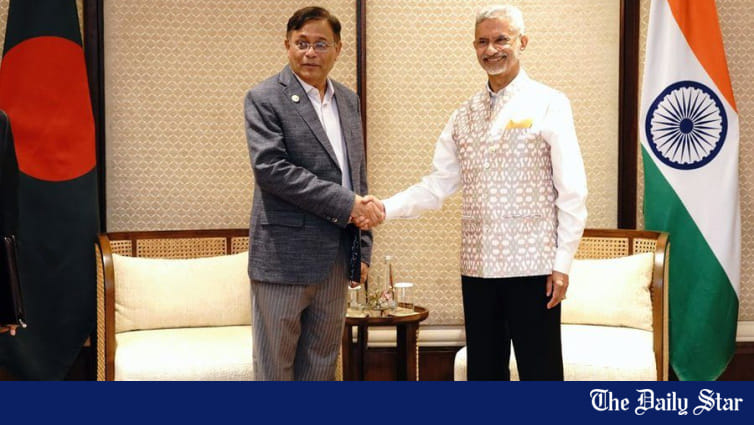
Briefing reporters at a hotel in New Delhi, Bangladesh foreign minister Hasan Mahmud said that the delegation-level talks featured issues of bilateral interests, including connectivity, joint management and water sharing of 54 common rivers, trade, security, border management, and introduction of quota for Bangladesh to import essential commodities from India.

'The issue of connectivity was elaborately discussed and India expressed interest so that India's eastern states can use Chattogram and Mongla ports,' he said.

To be continued.................​
 
Analyze

Analyze Post

Add your ideas here:
Cite Fact Check Highlight Respond
Regarding border killings, Hasan said that the two countries politically agreed to bring down the border killings to zero, but such incidents keep occurring. 'So, the issue came up for discussion to end the border killings,' he added.

Of the seven new MoUs signed, one was on the field of blue economy and maritime cooperation in the Bay of Bengal and Indian Ocean region, BSS reported.

Another new MoU was signed between the Bangladesh Oceanographic Research Institute and the Council of Scientific and Industrial Research of India for joint oceanographic research in the Indian Ocean and capacity building.

An MoU on extending rail connectivity between the two countries, one on India- Bangladesh digital partnership another on green partnership for a sustainable future were also signed.

Another MoU between the Indian National Space Promotion and Authorization Centre under the Department of Space and Bangladesh's Ministry of Posts, Telecommunication and Information Technology was signed for collaboration on a joint small satellite project. An MoU between the Defence Services Staff College, Wellington, India and Defence Services Command and Staff College, Mirpur, Bangladesh was also signed highlighting cooperation concerning military education in strategic and operational studies.

Three renewed MoUs concern cooperation in fisheries, disaster management and cooperation in the health and medicine.

Sheikh Hasina returned home later in the evening after concluding her two-day state visit at the invitation of Narendra Modi, her second visit within 15 days as she had attended administering of oath to the Indian PM on June 9.

New Delhi has long been foot-dragging on the Teesta water-sharing treaty with Dhaka, adversely affecting the lives and livelihoods of the people in the Rangpur region.

After finalisation of the draft of the Teesta deal by the two sides, India backtracked on signing the treaty just hours before the arrival of then Indian prime minister Manmohan Singh in Dhaka on September 6, 2011, on the plea that West Bengal chief minister Mamata Banerjee objected to the agreement.

Indian prime minister Narendra Modi, like his predecessor, continued to promise to conclude the interim agreements on sharing the waters of seven trans-boundary rivers, the Teesta in particular, amid repeated requests from Bangladesh prime minister Sheikh Hasina on almost every occasion they met.
 
Analyze

Analyze Post

Add your ideas here:
Cite Fact Check Highlight Respond
India has successfully dragged Bangladesh into its sphere of influence with the help of Sheikh Hasina. India has also outmaneuvered China to get the much talked about Teesta Management Project.


A Transformative Vision: India-Bangladesh Partnership for Regional Peace and Prosperity
Both nations acknowledge the interdependence of their progress and prosperity, committing to guide their bilateral ties towards realizing their respective national visions—India's "Viksit Bharat 2047" and Bangladesh's "Smart Bangladesh Vision 2041."
Written by Express Defence
June 22, 2024 20:23 IST
1719131076355.png

A significant component of this partnership is expanding power and energy cooperation, particularly in regional electricity trade. (Image: AP)

In a historic step towards a deeper and more comprehensive relationship, the leaders of India and Bangladesh have articulated a shared vision aimed at fostering peace, prosperity, and development for their people and the entire region. Recognizing the immense potential of their partnership, the leaders have laid out a roadmap driven by connectivity, commerce, and collaboration. This vision outlines several key areas of cooperation and strategic alignment, signaling a new era of future-oriented partnership.

Interlinked Progress and Mutual Development Goals

Both nations acknowledge the interdependence of their progress and prosperity, committing to guide their bilateral ties towards realizing their respective national visions—India's "Viksit Bharat 2047" and Bangladesh's "Smart Bangladesh Vision 2041." Bangladesh, situated at the crossroads of India's "Neighbourhood First" and "Act East" policies, SAGAR doctrine, and Indo-Pacific vision, is seen as a pivotal partner in the development of India's northeastern region. Conversely, India is viewed by Bangladesh as a crucial ally in its Neighborhood Foreign Policy, aimed at ensuring shared peace and prosperity.

Enhancing Connectivity and Economic Integration
The shared vision emphasizes transforming geographical proximity into economic opportunities through multi-faceted connectivity. This includes physical infrastructure like multi-modal transport and cross-border trade, energy connectivity, and digital networks. A notable initiative is India's extension of transit facilities for Bangladeshi goods to Nepal and Bhutan via rail. Additionally, the operationalization of the BBIN Motor Vehicle Agreement and new MoUs on railway connectivity will enhance sub-regional integration, promising seamless movement of goods and services.

Power and Energy Collaboration

A significant component of this partnership is expanding power and energy cooperation, particularly in regional electricity trade. Both nations aim to expedite the construction of high-capacity interconnections, such as the 765 kV Katihar-Parbatipur-Bornagar line, to anchor grid connectivity. This collaboration will facilitate the trade of competitively priced power generated from clean energy projects in India, Nepal, and Bhutan, reinforcing the commitment to sustainable development.

Digital and Green Partnerships

Recognizing the transformative power of emerging technologies, India and Bangladesh are forging new paradigms through the "Shared Vision for India-Bangladesh Digital Partnership" and the "Shared Vision for India-Bangladesh Green Partnership for a Sustainable Future." These initiatives will leverage digital and green technologies to drive economic growth, environmental conservation, and regional prosperity. Joint ventures in frontier technologies, including civil nuclear, oceanography, and space technology, are also on the agenda, with plans to develop and launch a small satellite for Bangladesh using Indian capabilities.

To be continued.................​
 
Last edited:
Analyze

Analyze Post

Add your ideas here:
Cite Fact Check Highlight Respond
Strengthening Trade and Investment Linkages

To promote mutual prosperity, both countries will strengthen trade and investment ties, beginning with negotiations for a Comprehensive Economic Partnership Agreement (CEPA). The early operationalization of Special Economic Zones (SEZs) in Mongla and Mirsharai, along with the establishment of new border haats, will further enhance bilateral trade. Improved connectivity infrastructure across road, rail, air, and maritime routes will transform geographical proximity into tangible economic benefits.

Collaborative Water Resource Management

Water resource management remains a priority, with both nations committing to data exchange and formulating frameworks for interim water sharing, guided by the Joint Rivers Commission. Efforts will focus on the conservation and management of the Teesta River with Indian assistance, reflecting a commitment to sustainable and equitable resource utilization.

Cooperation and Regional Stability

The partnership aims to strengthen defence cooperation with a long-term perspective, aligning with the modernization plans of the Bangladesh Armed Forces. This includes exploring defence industrial cooperation and continuing multifaceted military engagements, such as joint exercises, training, and capability development.

Development Cooperation and Capacity Building

A new Framework Agreement for Development Partnership will expand the reach of joint projects and programs, aligned with the priorities of the Bangladeshi government and people. Capacity-building initiatives will extend to civil services, judicial officers, police, and other specialized services, fostering a robust and efficient administrative framework.

Cultural and People-to-People Ties

The rich cultural and historical heritage shared by India and Bangladesh will be nurtured through exchanges among Muktijoddhas, scholars, academics, artists, tourists, students, and youth. Support for Muktijoddhas and their families will be enhanced with new medical and educational programs, strengthening the bond between the two nations.

Facilitating Cross-Border Travel and Essential Commodities

To ease cross-border travel, India will extend e-Medical Visa facilities to Bangladeshi nationals seeking medical treatment in India. Additionally, the opening of a new Assistant High Commission in Rangpur will facilitate expeditious consular and visa services. India will also support Bangladesh with the supply of essential commodities based on availability.

Youth Development and Regional Integration

The partnership will prioritize youth development through education, skilling, entrepreneurship, technology, sports, and creative industries, responding to the aspirations of the younger generation for a better future. Both nations envision their relationship as a cornerstone for regional and sub-regional integration under BIMSTEC, SAARC, and IORA frameworks, working together on global platforms to promote common interests.

Commitment to a Free and Secure Indo-Pacific

Reiterating their commitment to a free, open, inclusive, secure, and rules-based Indo-Pacific region, India and Bangladesh will co-lead the 'Disaster Risk Reduction and Management' pillar of the Indo-Pacific Oceans Initiative. This collaboration aims to mitigate disaster risks, build resilient infrastructure, and sustain the shared maritime region.​
 
Analyze

Analyze Post

Add your ideas here:
Cite Fact Check Highlight Respond
  • Like (+1)
Reactions: Bilal9

Bangladesh is a key part of India's SAGAR doctrine. The two countries agreed to collaborate on frontier technologies, including civil nuclear, oceanography, and space technology. To this end, India will partner in joint development of a small satellite for Bangladesh and its launch using an Indian launch vehicle. Sheikh Hasina has put the last nail in Bangladesh's coffin.
 
Last edited:
Analyze

Analyze Post

Add your ideas here:
Cite Fact Check Highlight Respond
  • Angry (-3)
Reactions: Bilal9

Bangladesh's existence in danger: BNP
Staff Correspondent 28 June, 2024, 00:26

The main opposition Bangladesh Nationalist Party secretary general, Mirza Fakhrul Islam Alamgir, said on Thursday that the existence of Bangladesh was in danger due to the Awami League government's policy towards India.

'Today, the existence of Bangladesh is in danger. You have seen that during the prime minister's recent India visit, all the agreements and memorandums of understanding were made, none in favour of Bangladesh,' Fakhrul said at a human chain programme in Dhaka.

The Women and Children's Rights Forum organised the programme in front of the BNP's Naya Paltan central office, demanding the unconditional release of former prime minister and BNP chairperson Khaleda Zia.

'A foreign minister has been appointed, who again and again gives us the impression that we do not understand the difference between a treaty and a MoU. He advises us to study. I don't want to answer his words. I just want to say one thing, don't be dishonest with the country. Do not fool people and mislead them into signing treaties and agreements that are against the interests of my people,' he said.

Saying that the people want to know what the government has achieved during the prime minister's visit to India, the BNP secretary general said, 'There is no talk of border killing. India is our close friend, such a close friend who shoots and kills our citizens at the border.'

He said that there was no such precedent anywhere in the world, and people could not be misled by how the government was justifying India's killing.

Fakhrul said that the country is in extreme danger, the government is selling the country, and there is no rule of law in the country.

'They [the government] destroyed every institution, the independence of the judiciary has been undermined, and the media has been strangled,' he said, adding that the aim is to prolong the power that has been illegally usurped.

Fakhrul suspected that the renewal of the suspension of the sentence of BNP chairperson Khaleda Zia every six months was a government trick.

He said that Khaleda Zia was sentenced in an arranged case, as the main goal was to remove her from politics.

Khaleda Zia has been detained for using the law illegally, he said, adding that the former prime minister has to fight death every day.

Stating that Khaleda Zia's release movement is significant for the overall movement, the BNP secretary general said that democracy and Khaleda Zia could not be separated.

'Khaleda Zia and democracy are synonymous. If Khaleda Zia can be freed, democracy will be freed. If democracy can be freed, Khaleda Zia will be freed,' he said.​
 
Analyze

Analyze Post

Add your ideas here:
Cite Fact Check Highlight Respond
  • Angry (-3)
Reactions: Bilal9

Members Online

Latest Posts

Latest Posts