New Tweets

[🇧🇩] Insurgencies in Myanmar. Implications for Bangladesh

G Bangladesh Defense
[🇧🇩] Insurgencies in Myanmar. Implications for Bangladesh
395
15K
More threads by Saif


Make int’l meet on Rohingya a success
Yunus tells UNHCR chief

1740698203681.webp

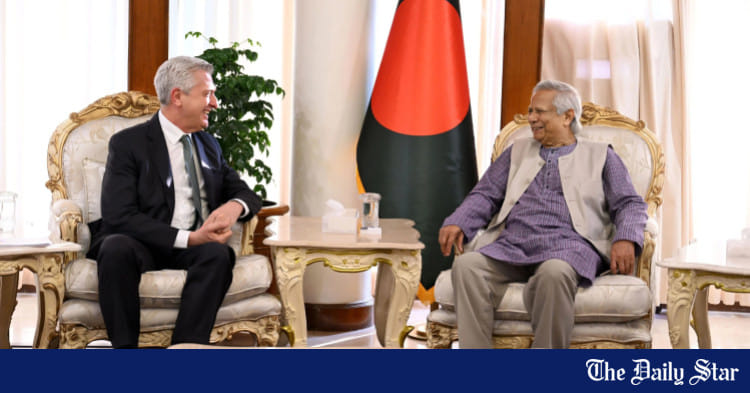
UN High Commissioner for Refugees Filippo Grandi at a meeting with Chief Adviser Professor Muhammad Yunus the state guest house Jamuna in Dhaka yesterday. Photo: PID

Chief Adviser Professor Muhammad Yunus yesterday called for making the upcoming international conference on the Rohingya crisis a big success to bring back focus on the decades-long humanitarian tragedy and mobilise more support for the long-persecuted Myanmar minority.

He made the call when Filippo Grandi, head of UN High Commissioner for the Refugees, called on him at the state guest house Jamuna in Dhaka, according to the press wing of the Chief Adviser's Office.

"Let's make it a big success. Let's hope something concrete comes out of it," Yunus said.

"Let's put this issue on the map. The UN conference is a great way to put it back on the table," Grandi said, referring to the Rohingya crisis.

"We are happy to work with you," he said, hoping that the visit of the UN Secretary General Antonio Guterres in mid-March would create a new momentum for the issue.

Earlier, Grandi, who is on a five-day visit to Bangladesh, called on Touhid Hossain, adviser to the foreign ministry, at the latter's office. He also had a meeting with Home Adviser Jahangir Alam.

The advisers highlighted the important role of UNHCR and international community in resolving the Rohingya crisis. They urged the UNHCR to seek alternative funding sources from donor agencies and development partners.​
 
Analyze

Analyze Post

Add your ideas here:
Highlight Cite Respond

Govt engaging with Arakan Army
Says CA’s representative on Rohingya issue

Bangladesh is maintaining contact with the Arakan Army (AA), which has occupied some 90 percent of Rakhine State, for the sake of protecting the country's border and Rohingya repatriation, said Khalilur Rahman, the chief adviser's high representative on the Rohingya issue.

"The day the AA raised its flag on our border, I instantly realised it's a new world -- you got to deal with them," he said at a seminar yesterday on the situation in Rakhine and implications for Bangladesh.

The seminar was organised by the South Asian Institute of Policy and Governance (SIPG) at the North South University premises.

Myanmar has been in civil war since the military coup that ousted the democratic government in February 2021.

The National Unity Government, the shadow government formed by the political leaders, and dozens of other ethnic groups, have been fighting the junta since then.

The AA, which seeks autonomy in Rakhine, controls the entire 271-kilometre-long border with Bangladesh and more than a million Rohingyas fled that state to Bangladesh.

"Mind you, this is our border and we have to protect, make it secure and make sure that we work in collaboration with whoever is on the other side. We reached out to them at a certain level," Rahman said.

Before that, he held a meeting with Julie Bishop, the UN secretary general's special envoy on Myanmar, over drafting a statement for the UN secretary general to the AA.

The statement communicated that the AA has to respect international human rights principles and abide by international laws.

At the seminar, Rahman also said, "A new neighbour is emerging and Bangladesh wants to be friendly with them and not dominate them. This is our only land border outside of our border with India. It is also in our national interest to reach out to them. We can begin the process of building trust, building confidence and lay the basis of longtime friendly relations."

He said he made it very clear that Bangladesh does not have any pipeline through Rakhine or any transit projects through Rakhine.

Abdul Hafiz, special assistant to the chief adviser on defence and national solidarity development, said diplomacy, backed by strategic deterrence based on a national consensus, is critical to protecting national interests.

He underscored Bangladesh's priority of ensuring safe, dignified and voluntary Rohingya repatriation.

Keynote speaker Ambassador Md Sufiur Rahman, a senior research fellow at SIPG, provided an analytical overview of the shifting political landscape in Rakhine.

He highlighted that 750,000 people have been displaced from Rakhine and that poverty in Rakhine has ascended to alarming levels.

He believes Bangladesh can play a pivotal stabilising role by providing humanitarian support and strengthening economic ties between Chittagong and Rakhine.

"Economic linkages can serve as a pathway to broader cooperation and peacebuilding," he said, while suggesting leveraging this to secure a peaceful border and a friendly neighbour.

Sk Tawfique M Haque, director of SIPG, urged a pragmatic policy toward the AA by recognising the fast-evolving situation in Rakhine and stopping the slow and silent influx of Rohingya Refugees since October 2023.

Bangladesh should balance security concerns with economic and diplomatic goals, he added.​
 
Analyze

Analyze Post

Add your ideas here:
Highlight Cite Respond

Resolving the Rohingya crisis: Does Bangladesh need to shift gear?

1740700221489.webp

Rohingya refugees cross a bamboo-made bridge in Cox's Bazar, Bangladesh, on May 2, 2024. FILE PHOTO: REUTERS

Recent developments in Myanmar, tensions at the Bangladesh-Myanmar and Bangladesh-India borders, and even the return of Donald Trump as president in the US have dramatically affected geopolitics in the South Asian region. While 64,718 Rohingya entered Bangladesh in 2024, according to the foreign ministry, and they continue to enter Bangladesh in small groups every day, according to the Rohingya living in the camps in Cox's Bazar, Bangladesh needs to shift gear from talking about repatriation and start focusing on finding ways to stop the influx.

Based on the recent domestic political changes in Bangladesh, as well as the global changes, some questions arise in this regard. For one, when there is no instance of strict border closure in the past, can we hope that Bangladesh will be able to stop the (ir)regular small- and large-scale influxes of the Rohingya people? Also, since the country has not been able to successfully repatriate the Rohingya after the 2017 exodus, is it considering better alternatives to repatriation? While the foreign ministry considers the Arakan Army (AA) as a "non-state actor," Bangladesh has, on occasions, been in contact with the AA. Has the government done enough homework on how to engage with the AA, if necessary?

The Awami League government did not focus on formulating the country's own legal instruments, such as a national policy, regarding the Rohingya issue. What about the interim government? Has it started developing a national refugee policy or a national policy for the Rohingya? With the emergence of "Arakan" in Rakhine, now controlled by the Arakan Army, have all the stakeholders in Bangladesh reached a consensus on what strategies to adopt to deal with the situation? Indeed, questions abound. However, at present, it is important to understand the motives and motivations of the AA.

Strangely, a fake message claiming AA asked Bangladesh for help was circulated by some individuals without realising the damages it might cause. Some speculate that the supply chain for AA's daily essentials may be linked to Bangladesh. The Myanmar junta may cut the internal supply chain anytime. Relying completely on India for a long time is surely not prudent because of the costs involved with it. This may make AA somewhat dependent on Bangladesh. Yet, because of their strength in arms and planning, they have reasons to create a fearful and threatening environment at the Bangladesh-Myanmar border, which is now under their control.

But at the same time, it is necessary to have experts and others study the nature of AA and its background characteristics to deal with them.

Let's consider the AA's statement, "We recognise the human rights and citizen rights of the Rohingyas" (by Maj Gen Twan Mrat Naing). It may seem quite promising, but the fact is, in less than three years after making this statement in an interview with Bangladeshi journalists, they appeared before the Rohingya people in Rakhine as an equally brutal entity as the Tatmadaw. As a result, the 2024 influx took place.

Despite the negative sides, AA knows that it may have to rely on Bangladesh to maintain the supply chain for their survival. In the past, Bangladesh failed to seize this opportunity to start negotiations on the Rohingya issue. Will it now leap into action, or keep waiting for "the right time" to raise the issue? Realistically, there is no such thing as "the right time" when it comes to the situation of refugees like the Rohingya. It is all about protecting the human rights of over a million stateless people and saving Bangladesh from irreparable social, economic, and environmental damage.

It is not difficult to understand that the Rohingya issue may destabilise the entire region of South Asia. This is known to the global community as well. But we must remember, all superpowers, no matter how friendly they are with Bangladesh, have their investments in Myanmar. China and India have their own geopolitical and geo-economic interests in Rakhine, which dictate their policies for the region. Regional platforms may also remain passive. And the UN has so far been ineffective at doing anything to help Bangladesh resolve the crisis. So what other options are available to us?

There does not seem to be any practical alternative to meeting the AA with a strategic agenda. Engaging with a non-state actor is not an endorsement. And engaging with the AA may not even be enough to break the stalemate. It alone does not guarantee success. Engaging with other national, regional, and international actors simultaneously is necessary to bring the AA to the negotiating table.

Dr Ishrat Zakia Sultana is assistant professor in the Department of Political Science and Sociology at North South University (NSU).

Dr Sk Tawfique M Haque is professor and Director of the South Asian Institute of Policy of Governance (SIPG) at NSU.​
 
Analyze

Analyze Post

Add your ideas here:
Highlight Cite Respond

Arakan Army returns 29 Bangladeshi fishermen taken from Naf River
UNB
Published :
Feb 27, 2025 22:34
Updated :
Feb 27, 2025 22:34

1740704512402.webp


Twenty-nine Bangladeshi fishermen who were taken by Myanmar's Arakan Army, were returned by the group after a week.

The fishermen were brought back to Bangladesh on Thursday through the jetty at Shah Porir Dwip in Teknaf.

"The 29 fishermen, who were taken by the Arakan Army while fishing in the Naf River, have been brought back. Their health is being checked, and after the necessary procedures, they will be handed over to their families," said Teknaf Upazila Nirbahi Officer Sheikh Ehsan Uddin.

The return was facilitated by the Border Guard Bangladesh (BGB), who assisted in ensuring their safe passage back to the country.

Ten of the returning fishermen were identified as Md. Kala Mia (37), Md. Nurul Alam (39), Abdul Rahman (19), Md. Abul Kalam Ahmed (29), Md. Lalu (11), Md. Kabir Ahmed (43), Mohammad Yunus (23), Nurul Islam (34), Md. Lutfor Rahman (23), and Rahim Ullah (21). All are residents of Shah Porir Dwip, Majherpara. The names of the remaining fishermen were yet to be known.

According to local authorities, the group of 29 fishermen, who had accidentally crossed the border while fishing on February 11 and 20, were held by the Arakan Army. The fishermen had been aboard six motorised boats when they were captured by the group.​
 
Analyze

Analyze Post

Add your ideas here:
Highlight Cite Respond

Arakan Army taking 'tariff' from border trade
Home adviser Jahangir Alam Chowdhury confirms

1740872311926.webp

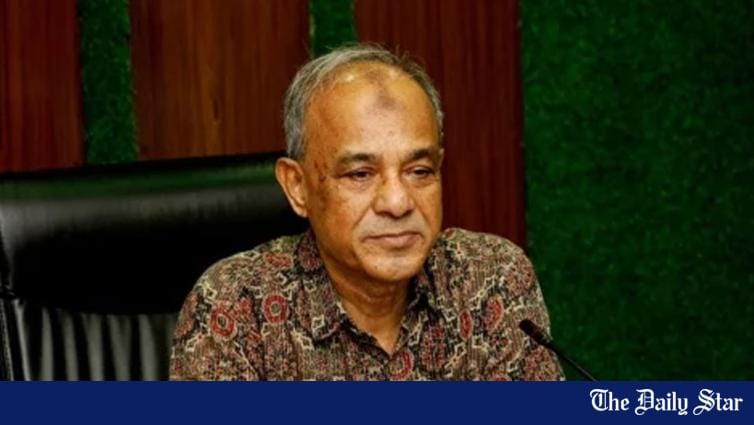
Home Adviser Lt Gen (retd) Jahangir Alam Chowdhury. Photo: Collected

Speculation over the Arakan Army's demand for "tariff" from the border trade between Bangladesh and Myanmar was confirmed by Home Adviser Lt Gen (retd) Jahangir Alam Chowdhury yesterday.

At a briefing at the Cox's Bazar Deputy Commissioner's office following discussions with home and agriculture ministry officials, he elaborated on the scenario.

Replying to a question, he said, "First there is the Myanmar government which collects taxes for goods coming in from Sittwe. But, since the border is controlled by the Arakan Army, they too collect taxes. This is a difficult situation. A senior representative has been appointed to address the issue," he said.

He said Khalilur Rahman, special assistant to the chief adviser (equivalent to state minister), has been appointed as the liaison in this regard.

Chowdhury added that the government is maintaining communications with both the Myanmar government and the Arakan Army.

This is the first time a high-ranking government representative has publicly acknowledged the Arakan Army's intentions in a briefing with journalists.

On December 8 last year, the Arakan Army announced that it had seized control of the 271-kilometer border shared by Bangladesh and Myanmar after seizing a Border Guard Police's (BGP) base in Rakhine State.

In a statement, it imposed an indefinite ban on vessel movement in the Arakan waters of the Naf River. Since then, no cargo ships have arrived in Teknaf.

Businessmen based in Teknaf land port, on condition of anonymity, alleged that the Arakan Army was detaining cargo ships and demanding payments.

On January 16, the Arakan Army intercepted three cargo vessels, en route from Yangon to Teknaf, in the Naikhongdia area of the Naf River estuary. Four days later, two vessels were released, while the third was freed on February 1.

Most recently, on February 10, the Arakan Army chased down a timber-laden trawler near Golar Chor in Shah Porir Island using speedboats and seized it. The vessel has not yet been released.

Jasim Uddin, general manager of United Land Port in Teknaf, which is commonly known as Teknaf land port, said the last boat arrived at the port on February 1 after being released by the Arakan Army.

"It has been one month since there has been trade between Myanmar and Bangladesh through Teknaf Land Port," he said.

He also mentioned that the boat which arrived on February 1 is still at the port as they are unwilling to return to Yangon due to security concerns.

A businessman from Teknaf, who frequently imports goods from Myanmar, said on condition of anonymity that the Arakan Army released the three seized boats after it received the same amount of money that was paid as tax to the Myanmar government.

The exporters in Myanmar paid them off and charged it to Bangladeshi businessmen, he said.

He further said that after learning about the issue, the Myanmar government stopped trade with Bangladesh through Teknaf as they did not want the Arakan Army to benefit financially.

Shawkat Ali, a businessman at the port, said Teknaf is a more viable option for trading with Myanmar since using Chattogram significantly increases costs and time.

"Lead times to import goods from Myanmar through Teknaf is five to seven days while using Chattogram requires at least a month," he explained.

Import-export falling year after year

Due to the cross-border conflict, trade through Teknaf land port has experienced a significant downturn over the past two fiscal years, according to data from Teknaf Customs.

In FY23, 188,999 metric tonnes of goods, valued at approximately Tk 1,545 crore, were imported from Myanmar through the Teknaf land port, while Bangladesh exported 2,941 metric tonnes of goods worth Tk 6.72 crore.

However, in FY24, imports dropped sharply to 71,741 metric tonnes, valued at approximately Tk 808 crore. Exports also saw a significant decline, with only 704 metric tonnes of goods, valued at Tk 2.45 crore, shipped to Myanmar.

In the first six months of the current fiscal year, Bangladesh imported 11,129 metric tonnes of goods worth around Tk 113 crore. During the same period, 636 metric tonnes of goods valued at approximately Tk 64 lakh were exported to Myanmar.

The imported items primarily include dry fish, chilled fish, betel nuts, onions, ginger, coconuts, wood, and other goods. Bangladesh's main exports to Myanmar are cement and potatoes.​
 
Analyze

Analyze Post

Add your ideas here:
Highlight Cite Respond

6 Rohingyas held en route to Jashore

1740872865562.webp

Illustration: Star Digital Graphics

Detective Branch has arrested six Rohingyas in Magura who were on their way to Jashore from Balukhali refugee camp in Cox's Bazar's Ukhiya.

The arrestees are Sanaullah, 38, of Balukhali refugee camp, Mohammad Ayub, 26, of Lambasia camp in Kutupalong, Razia Begum, 20, a camp in Ukhiya, Mohammad Arzu, 20, of Rohingya camp 17, and Mohammad Erfan, 25, of Rohingya camp 13. The other arrestee was a 15-year-old of Rohingya camp 5.

Based on a secret tip-off, they were arrested from Khulna-bound Soudia Paribahan and MR Paribahan buses in the Wapda Bus Stand area of Sreepur upazila of Magura, confirmed Magura Additional Superintendent of Police Crime Mohammad Mirajul Islam.

ASP Mirajul said Sanaullah concealed his identity and presented a Bangladeshi NID card which showed his current address in Tejgaon Industrial Area of Dhaka and Modrama Ghona village in Naikhangchhari area of Bandarban district as his permanent address.

During their interrogation, police found out that the five other Rohingya, led by Sanaullah, were going to Jashore to make Bangladeshi national identity cards.​
 
Analyze

Analyze Post

Add your ideas here:
Highlight Cite Respond

EU vows pressure on Myanmar, pledges €68m for Rohingyas

1741047397694.webp

Photo: MoFA

Visiting EU Commissioner for Equality, Preparedness and Crisis Management Hadja Lahbib yesterday assured that the European Union would impose political and economic pressure on Myanmar to resolve the Rohingya crisis.

She also announced that the EU will provide €68 million this year for Rohingyas and the Bangladeshi host community in Cox's Bazar.

Lahbib made the pledges during a meeting with Foreign Adviser Md Touhid Hossain at the foreign ministry, according to a ministry statement.

During the meeting, the EU commissioner shared her first-hand experience from visiting Rohingya camps in Cox's Bazar yesterday and lauded Bangladesh's generosity in hosting the forcibly displaced Rohingyas.

She also praised Bangladesh's initiative in organising the High-level Conference on Rohingyas, scheduled to be held in New York in October 2025.

Beyond the Rohingya issue, Lahbib expressed the EU's strong support for the interim government and its reform initiatives.

"It's a pivotal moment in the history of Bangladesh, which needs new partnerships and new cooperation," the ministry statement quoted her as saying.

The foreign adviser said Bangladesh's relationship with the EU remains strong.

He thanked the EU commissioner for her visit and expressed deep concern over Myanmar's political situation and its impact on the Rohingya crisis and regional security.

Emphasising that the ultimate solution lies in the repatriation of the Rohingyas to Myanmar, he urged the international community to take action.

Both sides also discussed disaster management, recognising the need for stronger collaboration in preparedness and response, given the increasing frequency of natural calamities in both Europe and Bangladesh.

The foreign adviser thanked the EU for its support and sought continued technical and financial assistance to further improve Bangladesh's disaster management capabilities.

Earlier, Commissioner Lahbib met Chief Adviser Professor Muhammad Yunus.​
 
Analyze

Analyze Post

Add your ideas here:
Highlight Cite Respond

Junta chief heads for meeting with key ally Putin

Myanmar's junta chief yesterday departed for talks with President Vladimir Putin in Russia, a key ally and arms supplier for the isolated state struggling to quell violent opposition to military rule.

Min Aung Hlaing, who seized power in a 2021 coup, left the capital Naypyidaw with a retinue of high-ranking officials, according the junta's information service, and is due to meet Putin today.

Analysts say Moscow's support has become vital to the military administration, particularly its air force, as it battles an array of ethnic minority armed groups and pro-democracy guerrillas on multiple fronts.

The junta suffered significant territorial losses after a 2023 rebel offensive but its air power has been pivotal to arresting the advance of opposition forces.

"Russia has been invaluable in helping them keep their air fleet afloat," Morgan Michaels, research fellow at the International Institute for Strategic Studies think tank, told AFP.​
 
Analyze

Analyze Post

Add your ideas here:
Highlight Cite Respond

Members Online

Latest Posts

Back
PKDefense - Recommended Toggle