Home Watch Videos Wars Movies Login

[🇧🇩] Will the political parties and voters support referendum on July Charter?

[🇧🇩] Will the political parties and voters support referendum on July Charter?
14
221
More threads by Saif

G Bangladesh Defense

‘Yes’ vote to bring new Bangladesh: Yunus

‘Yes’ vote to free Bangladesh from discrimination, exploitation, oppression, he says

Staff Correspondent 19 January, 2026, 19:30

1768873044395.webp

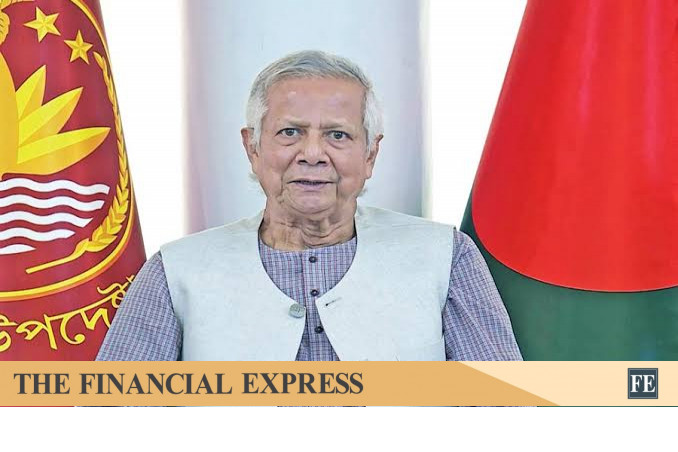
Chief adviser Professor Muhammad Yunus. | UNB photo

Interim government chief adviser Muhammad Yunus on Monday in a message urged the voters to vote for ‘Yes’ in the referendum to implement the National July Charter, stressing that the key to building a new Bangladesh was now in the hands of the people.

‘If you vote for ‘Yes’, the door to building a new Bangladesh will open. Cast your vote for ‘Yes,’ encourage everyone you know to do the same, and bring them to the polling stations. Change the country,’ he said.

Yunus made the call in a televised message amid criticisms from different quarters over seeking the ‘Yes’ vote in the referendum by the government advisers and officials.

‘I urge all of you to take part in the upcoming referendum. Vote for ‘Yes’ to build the state according to your expectations,’ said Yunus.

He said that the ‘July uprising’ was an extraordinary achievement in the nation’s history, creating an opportunity to establish democracy, justice, and human rights in the life of the nation.

Noting that a number of reforms have already been undertaken in the spirit of July uprising, he said that a July Charter had been formulated on the basis of consensus among all political parties of the country to carry out deeper and far-reaching reforms.

‘Your consent is required to implement the July Charter, ‘he said, adding that a referendum was therefore being organised for this purpose.

‘Take part in the referendum and give your consent to the charter,’ he added.

Noting that the referendum will be held on the same day as the Jatiya Sangsad election, on February 12, he said, ‘If you vote for ‘Yes’ in the referendum, Bangladesh will be free from discrimination, exploitation, and oppression.’

Yunus said that a ‘Yes’ vote in the referendum would mean that the government and the opposition would work together to form a caretaker government and an Election Commission.

A ‘Yes’ vote also means that the government will not be able to amend the constitution at will while the consent of the people will be required for any important changes to the constitution.

‘It also provides that the deputy speaker and the chairpersons of key parliamentary committees will be elected from the opposition party,’ he said.

He said that a person would not be able to serve as prime minister for more than 10 years and the judiciary would function independently.

‘The representation of women in the Jatiya Sangsad will increase while an upper house will be formed in parliament to maintain a balance of power.’

Yunus said, ‘A ‘Yes’ vote means that people’s fundamental rights will be better protected, the state language, Bangla, will be constitutionally recognised, along with the languages of other ethnic groups.’

‘The president will not be able to pardon convicted criminals at will while all power will not be concentrated in the hands of the prime minister,’ he explained.​
 
Analyze

Analyze Post

Add your ideas here:
Highlight Cite Respond

Why the interim government’s ‘Yes’ vote advocacy is legitimate

25 January 2026, 02:41 AM
UPDATED 25 January 2026, 12:38 PM

1769391652100.webp

FILE VISUAL: SALMAN SAKIB SHAHRYAR

Bangladesh’s upcoming July National Charter referendum has triggered a debate that goes beyond the substance of constitutional reform. At the heart of this debate lies this question: can the interim government openly advocate for a “Yes” vote? Detractors warn that government advocacy undermines neutrality, violates democratic norms, and also risks undermining the political process. However, when examined within the country’s political context and comparative constitutional practices, the case for principled government advocacy is stronger than critics acknowledge.

Much of the criticism rests on the assumption that the interim government is akin to a conventional non-party caretaker government with a narrow mandate to conduct elections. That assumption is flawed. This government did not assume office under any constitutional provision; it arose from a popular uprising that rejected authoritarian rule and demanded a fundamental restructuring of the political order. Its legality originates from the constituent power of the people, and its legitimacy is derived not merely from political neutrality but from its mandate to pursue reforms that would enable a transition to a more accountable system of governance. The referendum on the July National Charter reforms lies at the heart of this mandate. It is the institutional means by which the reform agenda is placed directly before the people. To insist that the government remain silent on the referendum’s outcome is to misunderstand its distinctive character and purpose.

Some argue that the government cannot campaign for a “Yes” vote without influencing the voting process. This argument, however, conflates advocacy with coercion. By supporting the reforms, the government is not denying citizens a choice. No voter is prevented from rejecting the reforms, political parties remain free to campaign for a “No” vote, and any rejection would be binding. If voters approve the reforms, they acquire democratic legitimacy that no uprising alone could supply. By urging a “Yes” vote, the government is not circumventing public consent but submitting itself to it.

The claim that citizens lose their capacity for independent judgement once a government expresses a preference reflects an authoritarian mindset inherited from the past decade, which sought to regulate every aspect of public life. Democratic theory rests on the opposite premise: that voters are capable of weighing arguments, assessing sources, and deciding for themselves.

Comparative constitutional law offers a useful perspective, particularly through the US Supreme Court’s government speech doctrine. Although Bangladesh’s legal system is distinct, the doctrine captures a core democratic principle: that governments are not constitutionally required to remain neutral when articulating their own policy positions.

In Rust v. Sullivan (1991), the US Supreme Court upheld regulations barring federally funded doctors from discussing abortion, affirming that when the government funds and administers a programme, it may promote its chosen policy objectives. Similarly, in Johanns v. Livestock Marketing Association (2005), the court upheld a mandatory levy on beef producers to fund generic advertising, holding that citizens have no constitutional right to object merely because public funds convey a government message they oppose. In Pleasant Grove City v. Summum (2009), the court ruled that monuments in public parks constitute government speech, permitting officials to select which messages to display without violating free speech guarantees.

The reasoning here is straightforward. Democratic governments exist to pursue policies. They may advocate their positions, so long as dissenting voices remain free. Government advocacy becomes objectionable only when it crosses into coercion or suppression, not when it advances a case and submits itself to public judgement.

This balanced approach is echoed in the Council of Europe’s guidelines on constitutional referendums. While the Venice Commission emphasises that “the national, regional and local authorities must not influence the outcome of the vote by excessive, one-sided campaigning,” it explicitly recognises that “contrary to the case of elections, it is not necessary to completely prohibit the intervention of the authorities supporting or opposing a proposal submitted to referendum.” Moreover, the use of public funding for campaigning purposes, while subject to restrictions, has not been strictly prohibited. Thus, the guidelines do not demand governmental silence—they demand proportionality and fairness.

Some critics point to Ireland’s decision in McKenna v An Taoiseach, which barred the use of public funds to promote one side of a referendum. But McKenna reflects a jurisdiction-specific interpretation grounded in Ireland’s constitutional framework; it does not establish a universal democratic rule. Indeed, many democracies, including the United States, Australia, and the United Kingdom, permit varying degrees of government advocacy in referendums. Comparative practice shows not a single model but differing constitutional balances between neutrality and political leadership.

Bangladesh must therefore assess this question on its own constitutional and political terms, especially given the transitional, post-uprising context in which this referendum is taking place. There is no constitutional or legal bar preventing the interim government from supporting a “Yes” vote, nor is a reasonable use of public funds for campaigning questionable. The interim government derives its authority from the constituent power of the people and holds office on the strength of its commitment to comprehensive state reforms. In that context, it is not only permitted but also morally obliged to campaign in support of the reforms and submit them to popular approval.

History shows that transitional governments often advocate constitutional reform in the aftermath of popular uprisings. Following Egypt’s 2011 revolution, interim authorities actively campaigned for constitutional changes, explaining the need for reform and urging public approval through successive referendums. Tunisia’s post-Arab Spring transition similarly featured state-led advocacy as part of redefining the political order.

In Bangladesh, the interim government is expected to be neutral with respect to the forthcoming elections, but it is not—and need not be—neutral on the reform agenda. It has already established multiple reform commissions precisely to pursue far-reaching changes. Government advocacy in favour of a “Yes” vote is therefore entirely proper. In this context, advocacy is not authoritarian; it is a necessary element of democratic reconstruction. The government’s silence in the name of neutrality would not protect democracy; it may weaken it.Citizens are entitled to know what the government believes the uprising stood for, which reforms it supports, and why those reforms matter.

The July National Charter referendum presents a clear constitutional question of whether Bangladesh should adopt safeguards designed to prevent the re-emergence of unchecked executive power, or retain the existing constitutional framework. A vote in favour of the charter is not an endorsement of the interim government. It is an endorsement of reform, institutional restraint, and decentralisation of power. The interim government is legally and democratically entitled to articulate this position. The ultimate determination, however, rests with the people.

Imran A Siddiq, Barrister-at-law, is a senior advocate. He has served as a member of the Constitution Reform Commission (2024-2025) and the expert legal panel of the National Consensus Commission (2025).​
 
Analyze

Analyze Post

Add your ideas here:
Highlight Cite Respond

Economist Rehman Sobhan doubts government is holding referendum to genuinely implement reforms

bdnews24.com
Published :
Jan 29, 2026 22:56
Updated :
Jan 29, 2026 22:56
1769733075420.webp

Economist Rehman Sobhan has expressed doubts over whether the government is pursuing a referendum simply to appease former interim minister Mahfuj Alam and his colleagues.

On Thursday evening, Rehman criticised the lack of public awareness regarding the proposed reforms in the July National Charter.

“We have created an imaginary situation around reforms and are now trying to validate it through a referendum, which is being conducted rather opaquely,” he said.

Rehman argued that asking citizens a simple “Yes” or “No” on 38 complex reform proposals, of which the general public knows little, reduces the exercise to a “meaningless proposal”.

He added, “I have not heard any leader from the two main alliances -- the BNP or Jamaat-e-Islami -- explain that these 38 reforms are essential for rethinking democracy or create public awareness on them. No one has addressed it.”

Rehman also criticised the government’s claim that it is pursuing reforms, calling it a “false statement”.

“For an interim government in office for just 18 months, implementing reforms is impossible. Reform is a process that requires legislation, parliamentary debate, and proper execution by a sitting government.”

He condemned the government’s campaign promoting a “Yes” vote, pointing to Ali Riaz, bank employees, and a small number of NGO workers mobilised to persuade citizens.

“This is a completely insignificant proposal,” he said.

Rehman suggested the real motive may be political: “My suspicion is that Mahfuj and his colleagues are being appeased, ensuring the situation does not revert to previous conditions.

“This appears to be a cosmetic arrangement to create the impression that reforms are under way.”

He warned, “Until a five-year government assumes office capable of implementing reforms and we can assess their quality and sincerity, reforms do not truly occur.

“Written proposals hold no value until execution.”

The referendum will coincide with the parliamentary elections on Feb 12, presenting voters with a summary of four issues, without options for separate decisions -- only a “Yes” or “No” choice.

Former information advisor Mahfuj and University of London professor Naomi Hossain also participated in the conference discussion.​
 
Analyze

Analyze Post

Add your ideas here:
Highlight Cite Respond

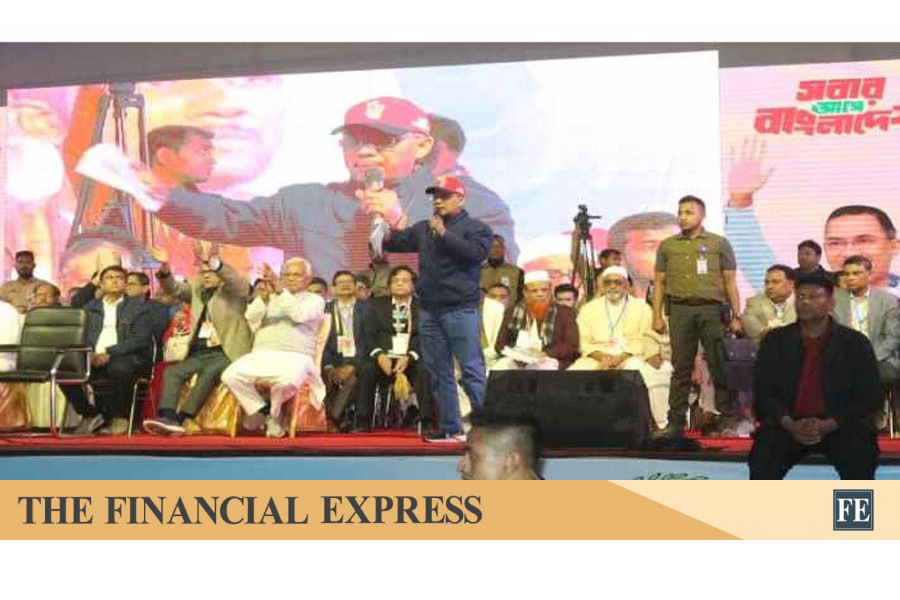
Tarique Rahman urges ‘Yes’ vote in referendum

UNB
Published :
Jan 31, 2026 00:21
Updated :
Jan 31, 2026 00:21

1769819083216.webp


BNP Chairman Tarique Rahman on Friday called upon all to cast a ‘Yes’ vote in the upcoming referendum to be held together with the national election on February 12 next.

Addressing a massive public rally at the historic Collectorate Eidgah ground in Rangpur, Tarique Rahman emphasised the importance of national unity.

“Rangpur is sacred soil, sanctified by the blood of Abu Sayed. It is our moral obligation to uphold the ‘July Charter’—the cause for which Abu Sayed, Wasim, and approximately 1,400 martyrs laid down their lives,” he said.

The BNP chief urged people to safeguard the solidarity displayed by ordinary citizens during the August 5 uprising and remain vigilant in exercising their democratic rights on the polling day.

Developmental Vision for Rangpur

Highlighting his specific plans for the region, the BNP Chairman sought to dispel the image of Rangpur as a deprived area.

Regarding industrial growth, he said BNP has a plan to transform the region by establishing agro-based industries.

About entrepreneurial support, the BNP leader said his party will provide special facilities for business owners and creating widespread employment opportunities.

On digital Economy, Tarique Rahman said they will offer temporary tax exemptions for IT companies to encourage investment.

Regarding the rural economy and gender equality, he detailed several key pledges:

Debt Relief: Waiver of agricultural loans up to Tk 10,000 under a BNP administration.

Farming Support: Provision of agricultural cards and the free distribution of seeds and pesticides for at least one crop cycle.

Women’s Empowerment: Introduction of ‘family cards’ to ensure economic independence and the protection of rights for women.

Addressing the enthusiastic crowd, he asked, “We have shared our plans; what are yours?”

In response, the audience chanted the BNP election symbol, ‘Dhaner Sheesh’ (Sheaf of Paddy).

The BNP leader urged supporters to perform their Fajr prayers before heading to the polling stations to cast their votes.​
 
Analyze

Analyze Post

Add your ideas here:
Highlight Cite Respond

Protect the referendum’s integrity

Civil servants must remain neutral


31 January 2026, 06:16 AM

1769909162137.webp


That the government employees have been campaigning for a “Yes” vote in the upcoming referendum on the July charter, scheduled to be held alongside the 13th parliamentary election on February 12, in violation of the law is deeply concerning. Government advisers and senior officials have reportedly been actively promoting a “Yes” vote for the referendum, raising concerns about legality, neutrality, and the overall credibility of the process. Now the EC has clearly stated that government employees may inform the public about the referendum, but they must not campaign for a “Yes” or a “No” vote. The government must take cognisance of this.

According to Section 21 of the Referendum Ordinance, 2025, and Article 86 of the Representation of the People Order, 1972, any misuse of official position to influence the outcome of a referendum or election may constitute a punishable offence, carrying imprisonment of one to five years along with fines. Reportedly, the EC has issued letters to returning officers, cabinet secretaries, and secretaries of all ministries and divisions, reminding them of their legal obligations. Election officers, while on deputation under the EC during this period, are explicitly bound to prioritise electoral responsibilities over other duties. The EC, however, did not address the role of the advisers. Banners advocating a “Yes” vote are being displayed in government offices nationwide, and senior government advisers have publicly urged citizens to vote “Yes” in the referendum. When civil servants campaign for one side, it seriously undermines the credibility and fairness of the referendum process.

Understandably, a “Yes” vote in the referendum will open the door for an array of significant reforms. The new parliament, alongside its regular duties, would function as a constitutional reform council to oversee these changes. While proponents of the “Yes” campaign argue that there is no legal barrier to such advocacy, the EC’s letter, grounded in the existing law, makes it clear that campaigning by civil servants would constitute a punishable offence. However, we have yet to learn of the government’s clear position in response to the EC’s letter.

We believe it would be unwise for the government to create any situation that renders the referendum controversial. It must ensure that the law is not violated by its advisers and senior officials, who must fully respect the EC’s directives. The EC, for its part, must remain vigilant and ready to enforce the law decisively, sending a clear message that violations will not be tolerated. Only by keeping the civil servants neutral and the state machinery impartial can the referendum and the general election be conducted in a manner worthy of public trust.​
 
Analyze

Analyze Post

Add your ideas here:
Highlight Cite Respond

Jamaat amir seeks ‘yes’ vote in referendum
Staff Correspondent 02 February, 2026, 00:49

1769995919909.webp

Focus Bangla photo

Bangladesh Jamaat-e-Islami amir Shafiqur Rahman on Sunday urged the voters to cast ‘yes’ vote in the upcoming referendum for resisting fascist rule in the country in the future.

He made the call on Sunday at an election rally at Darogali ground in Sherpur town.

The next general election and national referendum are scheduled for February 12.

Shafiqur told the Sherpur rally that the next general election would be different from all other national elections in the country’s history, as it will be the election for burying political fascism.

He said that Jamaat, if voted to power, wanted to form a society free from discrimination and extortion.

The Jamaat chief claimed that he did not make any comment on women on his X account.

Saying that he respects women, he claimed that his X account was hacked and indecent remarks on women were made from the hacked account.

Before joining the rally, Shafiqur went to the village home of Shreebordi thana Jamaat leader Rezaul Karim, who was killed recently in a clash between activists of Jamaat and the Bangladesh Nationalist Party.

The Jamaat chief offered prayers at Rezaul’s grave and condoled his family members.

Jamaat organising secretary Samiul Haque Faruqui and Jamaat candidate for the Sherpur-3 constituency, Nuruzzaman Badal, among others, accompanied the Jamaat amir.

Earlier, Shafiqur also spoke at an election rally at Singhjani High School field in Jamalpur district town, where he called on the voters to cast ‘yes’ votes in the referendum.

Chaired by the district Jamaat amir and party candidate for the Jamalpur-5 constituency, Abdus Satter, the rally was also addressed, among others, by local leaders Samiul Haque and Mohammad Abdul Awal.

Shafiqur returned to Dhaka in the evening and took part in electioneering in the Dhaka-15 constituency area.​
 
Analyze

Analyze Post

Add your ideas here:
Highlight Cite Respond

CA says ‘Yes’ vote would prevent return of misgovernance

FE ONLINE REPORT
Published :
Feb 09, 2026 18:27
Updated :
Feb 09, 2026 18:27

1770683561851.webp


Chief Adviser Professor Muhammad Yunus has voiced confidence that the country’s forthcoming national election will be conducted in a free, fair and transparent manner, describing it as a decisive moment after years of what he called “mock” and “fake” polls.

Addressing senior secretaries and secretaries of the government, at his office in Tejgaon on Monday, Yunus said the election — to be held alongside a constitutional referendum on 12 February — could usher in a fundamental transformation of the country’s political order.

According to his press secretary, Shafiqul Alam, Yunus told the meeting that a victory for the “Yes” vote in the referendum would ensure that misgovernance “does not return” and would place Bangladesh’s future on a more positive footing.

“If the ‘Yes’ vote wins in the referendum, Bangladesh’s future will be built in a more positive way,” Yunus said, adding that the country was “almost at its destination” with only days remaining before polling.

The chief adviser contrasted the upcoming vote with the previous three general elections held under the government of Sheikh Hasina, which he said lacked legitimacy and failed to attract credible international observers. Those polls, he argued, could “hardly be described as genuine elections”.

By contrast, Yunus said the forthcoming election would be peaceful and competitive, noting an absence of major political tension. Campaigning was taking place across the country without serious incidents, he said, and political parties were showing restraint even as large public gatherings continued.

For the first time, expatriate Bangladeshis have been formally brought into the political process, a move Yunus described as long overdue. He acknowledged the role played by the diaspora in past political movements and said their inclusion would allow them to contribute more meaningfully to national life.

Technology, he said, would play a central role in ensuring transparency. A voter guidance mobile app has been developed, while other digital tools are being used to monitor security at nearly 43,000 polling centres. Initiatives such as the “Election Bondhu” programme, the deployment of body-worn cameras to around 25,700 law enforcement personnel, and the installation of CCTV cameras at polling stations are also part of the security framework.

Yunus said the arrival of a large number of international observers from different countries reflected renewed global confidence in Bangladesh’s democratic process and showed that the election was being taken seriously by the international community.

He thanked senior civil servants for their support over the past 18 months, particularly in fast-tracking work on around 130 ordinances issued during the interim period, saying their cooperation had been crucial to the government’s functioning.

Looking beyond the election, Yunus said Bangladesh would seek to capitalise on its young population to attract global investment and expand industrial production. He pointed to the Japan-Bangladesh Economic Partnership Agreement as a model for future trade arrangements, arguing that duty-free and preferential market access would encourage foreign companies to establish factories in the country.

Bangladesh, he said, would pursue additional free trade and preferential trade agreements to open new economic opportunities and expand the reach of its exports, signalling an outward-looking economic strategy alongside what he described as a turning point in the nation’s political history.​
 
Analyze

Analyze Post

Add your ideas here:
Highlight Cite Respond

Members Online

Latest Posts

Back
 
G
O
 
H
O
M
E