☕ Support Us
[🇧🇩] - Political Activities of Jamaat-E-Islami | Page 6 | PKDefense

[🇧🇩] Political Activities of Jamaat-E-Islami

Reply (Scroll)
Press space to scroll through posts
G Bangladesh Defense
[🇧🇩] Political Activities of Jamaat-E-Islami
53
1K
More threads by Saif


Election: Coalition politics, strategy, and Jamaat’s candidate Krishna Nandi
Sohrab Hassan
Published: 06 Dec 2025, 09: 49

1765070090409.webp


Despite the illness of party chairperson Begum Khaleda Zia, the Bangladesh Nationalist Party (BNP) has not stepped back from preparing the electoral field, a fact underscored by its announcement of candidates for a further 36 constituencies.

BNP leaders claim that by abolishing the traditional system of selling and submitting nomination papers, they have avoided the commercialisation surrounding nomination purchases. According to the party, final lists were made only after independent organisations conducted public opinion assessments in each constituency. Even so, controversy persists, with supporters of nomination-deprived leaders protesting in several areas.

Earlier, the party had announced candidates for 236 constituencies, saying then that some seats would be left for allies. A few constituencies were withheld due to internal disputes. In total, the BNP has now declared candidates for 272 seats, leaving 28 still pending. The number of BNP allies and coalition partners is significant, the 12-party alliance, six parties of the Ganatantra Mancha, and several others have reportedly expressed interest in contesting the election jointly with the BNP. But where the BNP itself has multiple qualified aspirants per seat, allocating seats to others remains a challenge.

Nonetheless, a number of names are circulating as potential beneficiaries of BNP’s seat-sharing. These include Mahmudur Rahman Manna (Bogura-2) of Nagorik Oikya; Andaleeve Rahman Partho (Dhaka-17) of the Bangladesh Jatiya Party; ASM Rob (Lakshmipur-4), president of Jatiya Samajtantrik Dal (JSD); Bobby Hajjaj (Dhaka-13) of the NDM; Zonayed Saki (Brahmanbaria-6) of Ganosamhati Andolan; Nurul Haque Nur (Patuakhali-3), president of the Gono Odhikar Parishad; and the party’s general secretary Rashed Khan (Jhenaidah-2).

Yet each of these constituencies already has multiple BNP nomination seekers, many of whom have begun campaigning. It remains to be seen how the BNP ultimately resolves these coalition complexities.

The BNP’s earlier principle, joint movement, joint election and joint government, is not being implemented in full. Some who had long been discussed as possible BNP coalition partners are now, in frustration, contemplating forming alliances outside both the BNP and Jamaat spheres. Internal discussions have begun among them. Others argue that any coalition outside these two major spheres would not yield electoral benefits.

Among the most unsettled regarding coalition strategy is the National Citizen Party (NCP), formed just eight months ago. According to the BBC, public enthusiasm surrounding the party’s launch has since diminished, and the party still has not decided whether to contest within a coalition or independently.

Historically, coalition politics in Bangladesh has rarely been a success. After independence, the three-party alliance led by the Bangladesh Awami League failed to sustain the government. The components of Ziaur Rahman’s Jatiyatabadi Oikya Front (Nationalist Unity Front) did not remain with him to the end. The 15-party and 7-party anti-Ershad alliances of the 1980s also failed to hold together; many leaders delivered fiery speeches by day and joined Ershad’s cabinet by night.

In the late 1990s during the Awami League government, the four-party alliance of BNP, Jamaat-e-Islami, the Jatiya Party and the Islami Oikya Jote was formed; later, Ershad withdrew while some of his factions stayed with the BNP. The grand alliance led by the Awami League formed during Khaleda Zia’s second term in office also did not ultimately accommodate all partners in government.

I recently spoke with a Jamaat leader about their 8-party coalition. He said they were not forming an electoral alliance but could consider seat adjustments. They would assess whether allied candidates in certain constituencies had strong winning prospects. If an ally proved more popular than the Jamaat candidate, the seat could be ceded. Conversely, where Jamaat candidates were strong, others would be expected to step aside.

An unsettling trend is emerging in electoral politics: while a religion-based party like Jamaat increasingly emphasises governance of honest people over religious rhetoric, centrist parties appear to be invoking religious sentiment more frequently to win votes. Such a trajectory does little to move the country forward.
BNP leaders echo this view: they cannot overlook stronger BNP candidates merely to accommodate allies in seats where the risk is losing to opposing parties.

Coalition politics requires calculated risk and strategic compromise. While rebel candidates pose a risk for the BNP, Jamaat faces no such challenge. The Jamaat leader noted that even if the party decided that the ameer should not contest, he would comply; the party’s interests supersede personal ambition.

Another striking example of Jamaat prioritising party strategy is the nomination of a Hindu candidate for the Khulna-1 constituency. In this Hindu-majority seat, the party has chosen Krishna Nandi, president of the Dumuria unit of Jamaat’s Hindu committee. The decision was taken suddenly.

Krishna Nandi confirmed his nomination, saying, “On 1 December I was summoned to the headquarters, where the Jamaat ameer and other senior leaders were present. They declared me the candidate and gave me instructions. I will now begin work in the constituency.”

Media reports suggest that Krishna Nandi also maintained close relations with Narayan Chandra Chanda, the local MP and former livestock minister during the Awami League government, and photos of the two have circulated widely on social media.

Since 1973, every election in this constituency has been won by a minority candidate. Sheikh Hasina herself once won the seat, but in the subsequent by-election her nominee from the majority community lost to an independent candidate from the minority community; that candidate also was from her party.

Perhaps it is this electoral reality that led Jamaat to field a candidate from the Sanatan (Hindu) community. Whether this signals a fundamental shift in Jamaat’s politics or is simply a tactical move will likely become clear only in time.

But an unsettling trend is emerging in electoral politics: while a religion-based party like Jamaat increasingly emphasises governance of honest people over religious rhetoric, centrist parties appear to be invoking religious sentiment more frequently to win votes. Such a trajectory does little to move the country forward.

* Sohrab Hassan, journalist and poet.​
 

Jamaat to form national govt even if it wins 200 seats: Ameer

UNB
Published :
Dec 08, 2025 20:02
Updated :
Dec 08, 2025 20:02

1765241509864.webp

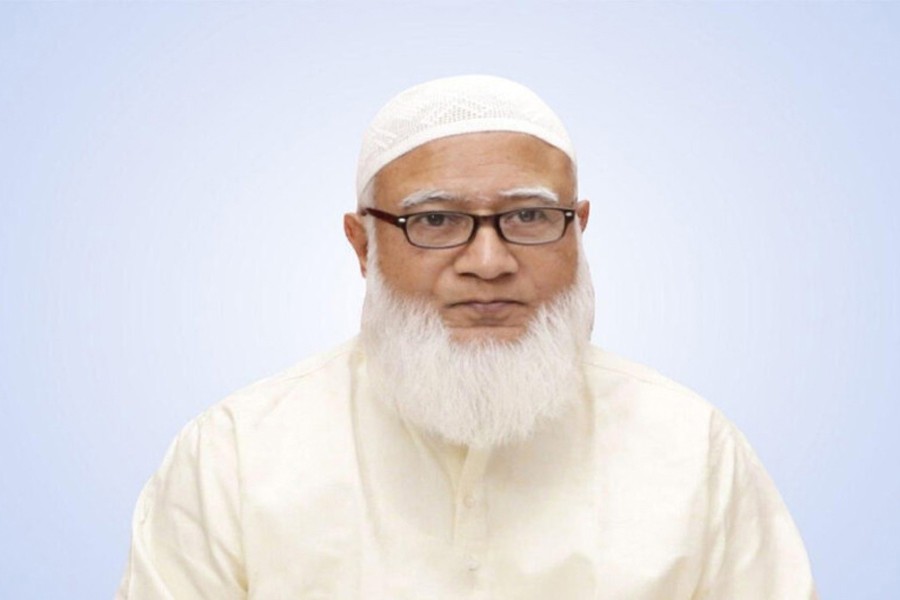
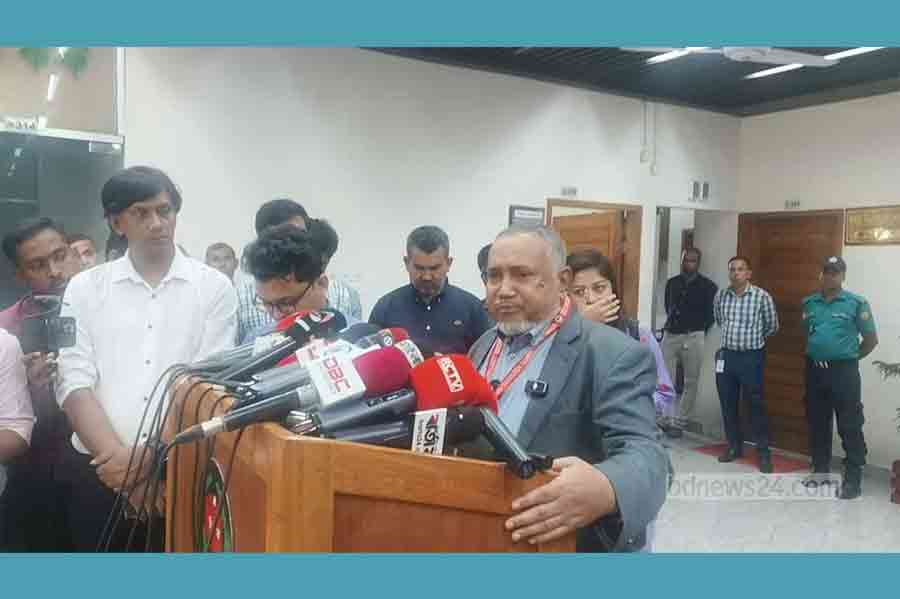
Jamaat Ameer Dr Shafiqur Rahman on Monday said his party intends to form a national government if it comes to power, even if it secures 200 parliamentary seats independently, aiming to safeguard national interest and ensure political stability.

He made the remarks while briefing reporters after paying a courtesy call on European Union Ambassador Michael Miller in Gulshan.

Ambassadors and diplomats at the meeting also included Swedish Ambassador Nicholas Wicks; Norwegian Ambassador Hakon Arald Gulbrandsen; German Ambassador Dr Rüdiger Lotz; Italian Ambassador Antonio Alessandro; French Deputy Head of Mission Frédéric Inza; Dutch Deputy Head of Mission Thijs Woudstra; EU Deputy Head of Mission Baiba Zarina; and Sebastian Rieger Braun, First Secretary at the EU Delegation.

During the meeting, EU representatives asked about issues including the Rohingya crisis, public security, the party’s election manifesto, and its 100-day plan after assuming office.

In response, the Jamaat chief assured them that his party would work to build an ‘inclusive Bangladesh’, if elected.

“We will not exclude any political party. A national government is essential for the next five years to restore the economy, ensure stability, establish the rule of law, and curb corruption,” he said.

He also outlined two conditions for joining the national government: no member would be allowed to engage in or tolerate corruption, and equal justice must be ensured with no political interference in the judiciary.

Speaking about holding the national election and referendum simultaneously, Shafiqur Rahman said voter awareness was still not adequate for two major ballots on the same day, warning that both processes could be hampered.

He recommended keeping them separate.

Responding to allegations of using religion in politics, he said religion is part of Jamaat’s ideology, not a tool. “We do not exploit religion. Those who suddenly appear with caps and prayer beads only during elections are the ones using religion,” he said.

He reiterated that the upcoming parliamentary election scheduled for February must not be postponed. “We believe the election should be held on time, in February.”

The Jamaat chief also reaffirmed the party’s support for the proportional representation (PR) electoral system, saying it has been demanded in the interest of the people and that Jamaat would implement it, if elected.​
 

We’ve never used religion, and we never will: Jamaat ameer
Staff Correspondent Dhaka
Published: 08 Dec 2025, 21: 36

1765242414579.webp

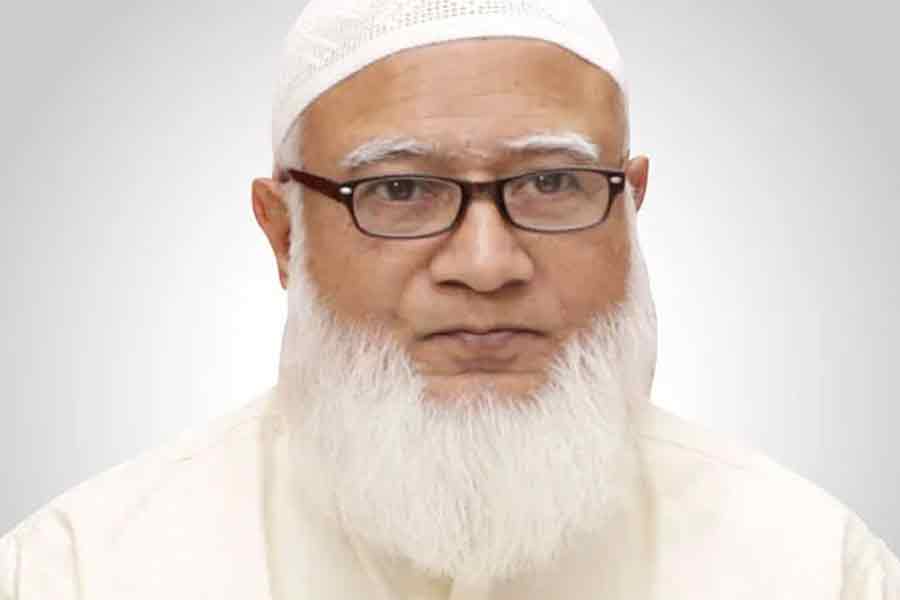
Jamaat-e-Islami ameer Shafiqur RahmanFile photo

Jamaat-e-Islami ameer Shafiqur Rahman on Monday claimed they have never used religion, and they never will do so.

“Religion is part of our intellectual framework, it is part of our very being. We work through religion; we do not use religion as a tool,” the Jamaat ameer said.

Responding to a question about who, in his view, uses religion, the Jamaat ameer said, “Those who suddenly begin to pray more, wear caps, and walk around with tasbih (prayer beads) during elections, perhaps they are the ones who use religion.”

He further said, “We do not roam around with a tasbih in our hands only during certain times; we keep the tasbih close to our hearts throughout the year. We want to conduct our activities under the umbrella of our faith. Now, how others interpret that is up to them.”

He made these remarks today while speaking to journalists after a meeting with the high-level European union delegation at the EU Embassy in Dhaka.

A journalist had asked him to respond to indications from the top leadership of the Bangladesh Nationalist Party (BNP) that Jamaat and its allies were using religion politically.

Asked whether he foresaw any possibility of the national election being postponed, the Jamaat ameer replied, “We do not believe there is any scope for delaying the election. Nor is it desirable. We think it is absolutely essential for the country that the election is held within the announced February timeline. Even the slightest deviation would cause serious harm to the country. We do not want the nation to be harmed by anyone. We do not do politics for a party or for individuals; our politics is for the people. We want to prove that through our actions, not merely words.”

When asked whether BNP chairperson Khaleda Zia’s illness had created any political uncertainty, he remarked, “Health and illness depend entirely on the will of Allah. The people of this country respect her and are praying for her recovery. But I too will die one day; none of us will remain forever. We will all leave this world. The functioning of society should not depend on whether one person remains or departs. However, it is important that everyone receives the respect and affection they deserve.”

‘Jamaat will form a national government even if it wins 200 seats’
Speaking about the meeting with the EU delegation, Shafiqur Rahman said that the EU representatives wanted to know Jamaat’s thinking on how different sections of society would be represented, how citizens’ safety would be ensured, and how the Rohingya crisis could be resolved.

They also asked what Jamaat’s commitments would be to the public in the first 100 days if elected, he added.

“We said that everything has already been framed. We will release each component as and when appropriate,” the Jamaat ameer stated.

He further said the EU representatives wanted to see an inclusive Bangladesh.

“We said that if Allah wills and if the people support us, we will build that inclusive Bangladesh. We will not exclude any party. We genuinely feel that, at least for the next five years, the country needs a national government to restore stability, revive the economy, establish the rule of law and eliminate corruption from society. If elected, we shall form that government.”

He added that Jamaat would expect two commitments from any party joining such a national government: they must not engage in corruption themselves, nor tolerate corruption by others; and, they must ensure equal justice for all, without political interference.

“Even if Allah wills that we win 200 seats, we will still form such a government, inshaAllah,” he stressed.

Commenting on holding the Jatiya Sangsad (national parliament) election and the referendum on the same day, Shafiqur Rahman told the EU that both processes risked being compromised if conducted simultaneously, and voter turnout could be lower. For this reason, Jamaat had demanded the two elections be held separately.

Beyond these issues, the discussion also covered proportional representation (PR) based elections, employment generation, migration, academic exchanges, and economic restructuring, according to the Jamaat ameer.​
 

Anyone trying to re-establish fascism or reign of terror will get fitting response: Shafiqur

Staff CorrespondentDhaka
Published: 12 Dec 2025, 20: 18

1765587877625.webp

Jamaat-e-Islami Ameer Shafiqur Rahman visits Inqilab Moncho spokesperson Shairf Osman Hadi at Dhaka Medical College Hospital; speaks to reporters in front of the emergency unit. Prothom Alo

Bangladesh Jamaat-e-Islami Ameer Shafiqur Rahman has expressed outrage over the shooting of Sharif Osman Hadi, the possible independent candidate for Dhaka-8 and spokesperson of Inqilab Moncho in the upcoming 13th parliamentary election.

Jamaat ameer said that if anyone attempts to re-establish fascism or a reign of terror in Bangladesh, they will quickly receive an appropriate response. The people will foil all conspiracies.

Shafiqur Rahman said that no one will be allowed to commit such vile acts. This land of Bangladesh is not anyone’s ancestral estate, it is the property of 180 million people.

Around 5 p.m. today, Friday, Shafiqur Rahman visited Osman Hadi at Dhaka Medical College Hospital. He made these remarks while speaking to journalists there.

The Jamaat Ameer said, “Those who carried out this assassination attempt, those who fired the shots, must be identified immediately and brought under punishment. I call on the government to take action. Any negligence on the government’s part will not be tolerated. We want to see the government proactively fulfilling its responsibilities.”

Shafiqur Rahman said, “I have spoken to the physicians and to his (Hadi’s) siblings. We are shocked, stunned, and outraged by this incident. The cowards who committed this must be identified at once and brought to justice.” At this point he added, “One message is very clear –the nation will not be intimidated by bullets, God willing. We do not fear bullets.”

The Jamaat Ameer further said, “We pray for the recovery of Sharif Osman Hadi. May he return and join us again on the streets in the struggle for freedom. His condition is very critical. He is now between life and death.”

Earlier in the afternoon, Osman Hadi was shot in Bijoynagar in the capital. He was later taken to Dhaka Medical College Hospital, where he had been placed on life support, according to the hospital director’s office.​
 

Members Online

Latest Posts

Latest Posts