Home Watch Videos Wars Movies Login

[🇧🇩] Save the Rivers/Forests/Hills-----Save the Environment

Latest Posts Countries Wars Q&A

[🇧🇩] Save the Rivers/Forests/Hills-----Save the Environment
528
14K
More threads by Saif

G Bangladesh Defense

Season’s longest cold wave likely next week, temp may fall below 10°C
Special Correspondent
Dhaka
Published: 07 Jan 2025, 20: 30

1736297674007.webp


Working people wrapped in warm clothes brave the cold as they head out for work on a three-wheeler. The photo was taken from the Manoharpur area of the Pabna-Ishwardi highway on 6 January 2024. Hasan Mahmud

The shivering cold is set to return with dense fog as a fresh spell of cold wave is likely to hit the country the next week, according to the weather office.

Daytime temperature is likely to drop by 1 to 2 degrees Celsius across the country on Wednesday, and it may gradually lead to a cold wave in different parts of the country within a few days, particularly in the northern region.

In the northernmost region, Tentulia in Panchagarh, temperatures have already reached cold wave levels. The meteorological department forecast that cold may intensify in the coming days and persist throughout the next week.

The capital city experienced a respite from cold in the last few days due to a steady rise in temperatures, ranging between 1 or 2 degrees Celsius daily. It is expected to decline consistently in the next five to six days. Minimum temperatures may fall below 10 degrees Celsius across more than half of the country, inviting a bone-chilling cold.

The cold wave might be the longest one of the current season.

While talking to Prothom Alo, a meteorologist of the Bangladesh meteorological department (BMD), Omar Faruk, said the cold air flow has strengthened, and the volume of fog is rising rapidly. “As a result, both fog and cold may intensify over the next few days and continue until 14 January.”

According to meteorologists, the cold air is being driven by a western low-pressure persisting over the Kashmir region of the Himalayan mountains in northwestern India.

It is moving eastward through the central and northeastern states of India and is expected to reach Bangladesh by Wednesday morning. Therefore, cold air accompanied by fog is likely to flow over the country from tomorrow.

Among the districts, those of Rangpur, Rajshahi, and Khulna divisions are likely to suffer the most from the cold wave. Besides, the Sylhet division may experience an intense cold.​
 
Analyze

Analyze Post

Add your ideas here:
Highlight Cite Respond

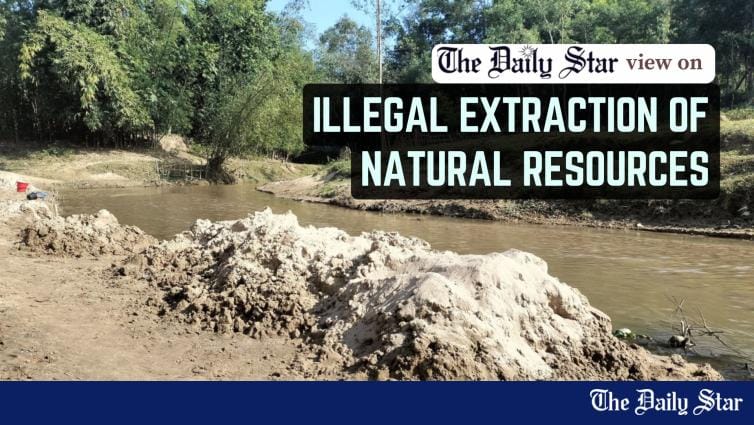
Stop illegal extraction of natural resources
Combined public-private initiatives can prevent such practices

1736381180771.webp

VISUAL: STAR

We are concerned about the rampant illegal sand extraction reported at the Barachhara canal in Sharsharshee village of Sreemangal, Moulvibazar. According to a report by this daily, the extraction has continued unabated despite a High Court order banning sand mining in the area, causing parts of a sluice gate to sink. Built to provide irrigation water to local farmers, the gate's functionality is now compromised, jeopardising agricultural activities and the livelihoods of around 25,000 farmers in surrounding villages. Furthermore, several sinkholes have appeared in the nearby Dinarpur Tea Garden, while roads have been severely damaged by heavy vehicles transporting the sand.

Locals allege that an influential group, led until recently by a Jubo League leader who is now on the run, is behind this operation. Even though his two-year lease for sand extraction has expired, there has been no let-up in sand extraction. Who, then, is doing it in his absence? The local administration is apparently in the dark about this. We have seen a similar trend in Sylhet's Companyganj where two hillocks have been stripped bare since August 5 through illegal stone quarrying. There, too, the local administration's role has left a lot to be desired.

In Bangladesh, we have no shortage of laws, regulations, and court orders prohibiting illegal and destructive resource extraction. Yet, enforcement has remained woefully inadequate. Even with a non-political government in place, the entrenched political-administration-business nexus continues to wreak havoc on our precious environment and ecology. This needs to change.

We expect the environment adviser, herself a prominent environmental activist, and her ministry to use their authority and experience to stop all illegal operations in extracting natural resources. Given the scale of the problem, it may not be possible for the government to guard every canal, hill, or natural resource on its own. However, community-based initiatives can play a crucial supportive role. Locals can be educated, empowered, and included in the protection and maintenance of these resources. The idea of community policing, supported by local administration and environmental groups, should also be pursued to curb these activities. Only collective efforts can help protect our natural resources on which the livelihoods and well-being of countless citizens depend.​
 
Analyze

Analyze Post

Add your ideas here:
Highlight Cite Respond

What will it take to end the brick kiln menace?
984 kilns operating in breach of regulations in Rangpur division

1736552010493.webp

VISUAL: STAR

The number is quite staggering, and it's frustrating that such numbers exist even when there is a pro-environment government in place. According to a report citing officials at the departments of environment and agricultural extension in Rangpur, the division has 984 brick kilns—set up on farmlands across its eight districts—operating in violation of government regulations. These kilns use fertile topsoil to make bricks in a process that causes significant damage to the local environment, livelihoods, and health. While the proliferation of such kilns, owned or operated mostly by people with political connections, was understandable under the Awami League regime, their continued operation now questions the ability and sincerity of the interim administration.

The situation is by no means unique to Rangpur. Similar operations also continue in many other areas, ravaging topsoil and burning bricks with impunity. Not long ago, we highlighted the case of Brahmanbaria where, according to a Prothom Alo report, 56 kilns operate illegally. Many of them, including one set up by a former Awami League lawmaker, have no valid documents such as environmental clearance or the permit for brick burning. Many were set up on agricultural lands and even wetland areas. In Lalmonirhat, according to another recent report, 36 brick kilns are operating without a clearance certificate. Although there is no central database on the number of illegal or non-compliant brick kilns in the country, the above reports portray a grim picture.

The question is, what is the interim government doing? To be fair, the environment ministry did take some encouraging steps, including the development of a National Air Quality Management Action Plan in early November to tackle sources of air pollution and enhance enforcement mechanisms. More recently, it has overseen a number of drives through mobile courts targeting illegal kilns, shutting down quite a few by demolishing their chimneys while ordering the closure of multiple others. These measures, however, are proving to be inadequate to address the menace of brick kilns.

We, therefore, urge the government to step up its efforts. Given the massive impact of brick kilns, having legal papers or not, it is no longer enough to just go after a few illegal ones without enforcing compliance across the sector or addressing the heavy reliance on topsoil or traditional bricks. What's at stake here is not just the health of our environment or local communities. The livelihoods of farmers, and by extension the nation's food security, are also at risk. So, the government must explore options to replace traditional brick-making in a way that eventually reduces topsoil and fuel consumption.​
 
Analyze

Analyze Post

Add your ideas here:
Highlight Cite Respond

SOS from rivers around the city
Sarker Nazrul Islam
Published :
Jan 10, 2025 21:16
Updated :
Jan 10, 2025 21:16

1736554625052.webp

Buriganga: Living along a dead river Photo : Reuters

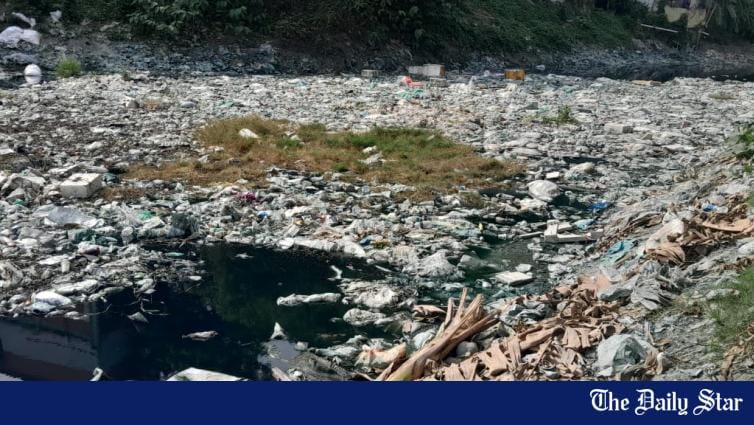
How a boon turns into a bane or a blessing into a curse is best exemplified by the highly deplorable condition of the rivers around the capital city. Nature created these streams for its own sake, man also found them beneficial; but for unsustainable use, those have now turned into bodies of dirty water. Rivers have given humans life and livelihood but, in turn, the latter have pronounced death penalty for the former. These rivers were once the lifeline of the city but now, polluted to the extreme, have themselves become sources of health hazard. The pitch-black water of the rivers and foul toxic smell emitted every moment are taking a heavy toll on health of those who live on the river banks and nearby areas. Given the death throes the rivers find themselves in, the authorities' negligence and reluctance to save them is deplorable.

The city area surrounded by five rivers on all sides, once crisscrossed by many natural canals and dotted with closed water bodies is convex in shape, with the central region a bit elevated compared to the periphery. These special physical features of the land attracted the founders of the city more than 400 years ago. They displayed extraordinary prudence in selecting the spot to set up a military base. From the point of defence strategy, the importance of the terrain was that the rivers around would serve as the first line of defence against invaders. The navigability of the rivers round the year and the natural drainage system were other points of consideration. A good many open and closed water bodies in the city also held excess water and helped keep city free from waterlogging. The then city authorities carefully maintained the navigability of the rivers and allowed none to pollute them. Our present-day policy makers and city authorities proved to be utterly incompetent in comparison to their predecessors. They have not only proved incapable of protecting the natural endowment but also failed to develop a modern drainage and sewerage system befitting the megacity with a population of about 20 million.

In addition to serving the above purposes, the rivers also served as waterways to transport cargoes and passengers. The canals were also used for communication with the city centre. Even during the early years of independent Bangladesh, farmers used to carry their agricultural products to Karwan Bazar wholesale market by boat. These rivers, abound with varieties of sweet water fishes, were important sources of animal protein for the city dwellers. Some of the canals were also used for mooring water vehicles. However, almost none of the facilities are available now due to negligence of the authorities to these natural endowments.

While these canals have been lost almost totally, the rivers are now in their death throes due to encroachment by powerful quarters and dumping of solid waste and industrial effluents. Human waste and waste from slaughter houses are also dumped into rivers indiscriminately. The pollution of the river water has reached beyond purification. Due to drastic fall of dissolved oxygen in the water of the rivers, aquatic plants and animals cannot survive in them. The Buriganga and the Turag rivers are virtually dead rivers; what remains of those now are shadows of their past. Needless to say, other rivers across the country are also not in good health.

The city is now absolutely dependent on ground water to meet its daily need. Had not the rivers been polluted to the present level, a significant part of the demand could have been met with river water. In that case, it would have been possible to supply water to the city dwellers at much cheaper rates. The rivers and nearby water bodies could supply fish to the citizens.

The rivers need to be saved from imminent deaths --- all for a healthy environment and well-being of the city dwellers. Saving the rivers involves such actions as dredging to remove solid waste and silt that have accumulated on their beds over many decades, freeing them from illegal encroachment and imposing complete ban on dumping of waste materials into them.

But the rivers around the city seem to be doomed since those are under nobody's care. There is no clear-cut answer to the question as to who own them and look after them. Despite the importance of the rivers for the ecology and environment of the city and communication, there is no unified authority that can take care of them and save them from impending death. The complex nature of river management would rather hasten the end of their life. The shipping ministry owns the river banks but it does not evict the illegal structures from there. The BIWTA is entrusted with the task but it is a question how many establishments they have knocked down so far. Water resources ministry owns the water but environment ministry has been assigned the task of keeping the water clean. How much the water is kept clean is anybody's knowledge. So many cooks have only spoiled the broth.

However, the rivers cannot be left to their fate, the authorities should take the task of saving the rivers seriously and chalk out a separate plan and make budgetary allocation for the purpose. A powerful taskforce may be entrusted with the task of reclaiming the rivers, canals and water bodies. On different occasions in the past people saw a mockery of river dredging and freeing city canals from encroachment. However, those were nothing more than eyewash. Let the rivers not fall victim, once again, to the negligence of the unwilling authorities.​
 
Analyze

Analyze Post

Add your ideas here:
Highlight Cite Respond

Three coral reefs found in Bay of Bengal

1736638777365.webp

Representational image. Photo: Mohammad Arju/Save Our Sea

Researchers of Bangladesh Oceanographic Research Institute (BORI) found three sites in the Bay of Bengal, which are rich with coral and one site for coral reef.

Among the coral sites, they identified a new soft coral species near the St Martin's Island that could contribute to pharmaceuticals for cancer treatment, said principal investigator of the research Md Hasibul Islam, the principal scientific officer of BORI.

Besides using the coral for medicinal purposes, the new discovery brings new hope to contribute up to Tk 114 crores per year to the blue economy from marine tourism for snorkeling diving, photography, and videography, he added.

He presented their research to the Annual Research Results Presentation Seminar at BORI campus today.

In another research, a total 131 crab species were identified by the Bori researchers. Principal investigator of the research Md Tarikul Islam, senior scientific officer of the institute said among the species, five are commercially being used as sea food in Bangladesh.

A research on seaweed analysed the approximate composition of seaweed, nutrient content and antioxidant status, which will help to understand the value of seaweed for human health.

Abu Sayeed Muhammad Sharif, senior scientific officer BORI, said they worked with 10 commercial seaweed in the research.

He said they are working to produce seaweed through tissue culture commercially, which will contribute to the blue economy.

Fifteen researchers were present at the daylong seminar chaired by commodore Md Minarul Hoque, director general of BORI.

Md Mokabbir Hossain, senior secretary of Ministry of Science and Technology, and Rear Admiral Md Khurshed Alam, member, board of director of BORI and president of National Oceanographic and Maritime Institute also spoke on the occasion.​
 
Analyze

Analyze Post

Add your ideas here:
Highlight Cite Respond

Pollution, encroachment killing Brahmaputra
1736639548033.webp


Shah Alam, 62, from Alokbali union in Narsingdi Sadar upazila, has been fishing in the Brahmaputra since the age of 8, following in the footsteps of his father.

However, water pollution and encroachment have drastically reduced fish populations, forcing him to consider changing his occupation and pushing him into hard times.

Fishing, once the primary livelihood for Shah Alam's five-member family, has become increasingly unsustainable. His two sons, Jalal Mia, 20, and Helal Mia, 23, have already abandoned the ancestral occupation due to the dwindling fish population, which fails to meet the costs of living.

Many like Shah Alam are quitting fishing, unable to sustain their families due to the pollution and encroachment that have plagued the river.

In Narsingdi, parts of the Brahmaputra have become lifeless due to pollution from industrial waste and encroachment by influential individuals. Once a symbol of heritage and vitality, the river is now a shadow of its former self, its biodiversity and surrounding environment severely disrupted.

According to official data, the Brahmaputra river flows about 20 kilometres through the district.

Locals alleged influential people have built industries and houses, occupying significant portions of the river that once served as a crucial lifeline for trade and commerce in Narsingdi Sadar, Madhabdi, and Narayanganj.

Moinul Islam Miro, president of Narsingdi Paribesh Andolon, said, echoed the same.

Kamruzzaman Sarker, deputy director of Department of Environment in Narsingdi, said, "We are working to save the Brahmaputra and other rivers by taking punitive measures at different times against factories and ensuring ETP compliance."

Mohammad Rashed Hossain Chowdhury, deputy commissioner, said, "The Water Development Board has sent us a list of illegal structures to free the Brahmaputra from encroachment, and we have forwarded the list to the ministry concerned. If approved, the eviction drive will resume."​
 
Analyze

Analyze Post

Add your ideas here:
Highlight Cite Respond

CURBING AIR POLLUTION: Enforce 2020 directives: HC
Staff Correspondent 13 January, 2025, 00:51

1736726442755.webp


The High Court on Sunday asked the government to fully implement its nine-point directives issued in January 2020 to curb air pollution in Dhaka.

The bench of Justice Farah Mahbub and Justice Debasish Roy Chowdhury also asked the authorities concerned to submit reports on the compliance of the order by February 26, the next date of hearing on the matter.

The court passed the order after hearing an application filed by the Human Rights and Peace for Bangladesh to address longstanding environmental and public health concerns in the capital, which kept rnaking high among the most polluted cities in the world.

In the nine directives issued on January 13, 2020, the High Court asked the police to ensure that all trucks, carriers, or vehicles transporting sand, mud, dust, or waste were properly covered to prevent spillage.

It asked the Dhaka North and South City Corporations and the Rajdhani Unnayan Katripakkha to ensure that construction materials, including sand, mud, cement, and stones, were securely covered by contractors or authorities concerned.

Both the city corporations were asked to spray water regularly to control dust pollution.

They were were asked to oversee road construction and excavation projects to ensure strict compliance with laws, tender terms and environmental guidelines.

The two city corporation were also asked to ensure that market owners and shopkeepers stored daily waste in safe bags for disposal by the city corporations.

The direrctives tasked the police with seizing vehicles emitting black smoke beyond the permissible limit.

The Bangladesh Road Transport Authority was asked to set the economic lifespan at 20 years for public transports and 25 years for goods vehicles as per Section 36 of the Road Transport Act 2018 and stop the operation of vehicles beyond the lifespan.

The section empowers the BRTA to set the economic lifespan for all motorised vehicles.

The directives asked the Department of Environment to shut down all illegal brick kilns in two months, immediately halt tyre burning without environmental clearance and unapproved battery recycling.

HRPB lawyer Manzill Murshid informed the court that air pollution in Dhaka worsened due to inadequate enforcement of the 2020 directives.

He emphasised that although authorities made initial progress until 2023, the enforcement was stalled, allowing Dhaka’s air quality to deteriorate further.

He said, ‘Dhaka’s air pollution often peaks during winter, posing severe health risks, including respiratory issues, especially among vulnerable populations. Effective implementation of the High Court directives is a must to reverse this trend.’

The High Court on Sunday stressed the urgency of compliance with the directives, warning that the failure to act would continue to endanger the health and lives of Dhaka residents.

The High Court on several occasions had expressed dissatisfaction with activities of the Department of Environment as environmental pollution, including river and air pollution, kept worsening.

The court questioned the role of the department in preventing air pollution, doubting any necessity of the department as it failed to play any role in stopping air pollution.​
 
Analyze

Analyze Post

Add your ideas here:
Highlight Cite Respond

2024 hottest recorded year, crosses global warming limit
Agence France-Presse . Geneva, Switzerland 11 January, 2025, 07:21

The past two years saw average global temperatures exceed a critical warming limit for the first time, Europe’s climate monitor said on Friday, as the UN demanded ‘trail-blazing’ climate action.

While this does not mean the internationally-agreed 1.5C warming threshold has been permanently breached, the United Nations warned it was in ‘grave danger’.

‘Today’s assessment from the World Meteorological Organization is clear,’ UN chief Antonio Guterres said. ‘Global heating is a cold, hard fact.’

He added, ‘Blazing temperatures in 2024 require trail-blazing climate action in 2025. There's still time to avoid the worst of the climate catastrophe. But leaders must act now.’

The WMO said six international datasets all confirmed that 2024 was the hottest year on record, extending a decade-long ‘extraordinary streak of record-breaking temperatures’.

The United States became the latest country to report its heat record had been shattered, capping a year marked by devastating tornadoes and hurricanes.

The announcement came just days before US president-elect Donald Trump, who has pledged to double down on fossil fuel production, was set to take office.

Excess heat is supercharging extreme weather, and 2024 saw countries from Spain to Kenya, the United States and Nepal suffer disasters that cost more than $300 billion by some estimates.

Los Angeles is currently battling deadly wildfires that have destroyed thousands of buildings and forced tens of thousands to flee their homes.

Another record-breaking year is not anticipated in 2025, as a UN deadline looms for nations to commit to curbing greenhouse gas emissions.

‘My prediction is it will be the third-warmest year,’ said NASA’s top climate scientist Gavin Schmidt, citing the US determination that the year has begun with a weak La Nina, a global weather pattern that is expected to bring slight cooling.

The WMO’s analysis of the six datasets showed global average surface temperatures were 1.55C above pre-industrial levels.

‘This means that we have likely just experienced the first calendar year with a global mean temperature of more than 1.5C above the 1850-1900 average,’ it said.

Europe’s climate monitor Copernicus, which provided one of the datasets, found that both of the past two years had exceeded the warming limit set out in the 2015 Paris Agreement.

Global temperatures had soared ‘beyond what modern humans have ever experienced’, it said.

Scientists stressed that the 1.5C threshold in the Paris Agreement refers to a sustained rise over decades, offering a glimmer of hope.

Still, Johan Rockstrom of the Potsdam Institute for Climate Impact Research called the milestone a ‘stark warning sign.’

‘We have now experienced the first taste of a 1.5C world, which has cost people and the global economy unprecedented suffering and economic costs,’ he told AFP.

Nearly 200 nations agreed in Paris in 2015 that meeting 1.5C offered the best chance of preventing the most catastrophic repercussions of climate change.

But the world remains far off track.

While Copernicus records date back to 1940, other climate data from ice cores and tree rings suggest Earth is now likely the warmest it has been in tens of thousands of years.

Scientists say every fraction of a degree above 1.5C matters –– and that beyond a certain point the climate could shift in unpredictable ways.

Human-driven climate change is already making droughts, storms, floods and heat waves more frequent and intense.

The death of 1,300 pilgrims in Saudi Arabia during extreme heat, a barrage of powerful tropical storms in Asia and North America, and historic flooding in Europe and Africa marked grim milestones in 2024.

The oceans, which absorb 90 per cent of excess heat from greenhouse gases, warmed to record levels in 2024, straining coral reefs and marine life and stirring violent weather.

Warmer seas drive higher evaporation and atmospheric moisture, leading to heavier rainfall and energising cyclones.

Water vapour in the atmosphere hit fresh highs in 2024, combining with elevated temperatures to trigger floods, heatwaves and ‘misery for millions of people’, Copernicus climate deputy director Samantha Burgess said.

Scientists attribute some of the record heat to the onset of a warming El Nino in 2023.

But El Nino ended in early 2024, leaving them puzzled by persistently high global temperatures.

‘The future is in our hands –– swift and decisive action can still alter the trajectory of our future climate,’ said Copernicus climate director Carlo Buontempo.​
 
Analyze

Analyze Post

Add your ideas here:
Highlight Cite Respond

Members Online

Members Online

Back
 
G
O
 
H
O
M
E