Home Watch Videos Wars Movies Login

[🇧🇩] Bangladesh Police and Rapid Action Battalion

Latest Posts Countries Wars Q&A

[🇧🇩] Bangladesh Police and Rapid Action Battalion
149
5K
More threads by Saif

G Bangladesh Defense

Police to maintain neutrality, professionalism in national election: IGP

UNB

Jan 27, 2026 21:45
Updated :
Jan 27, 2026 21:45

1769560974014.webp


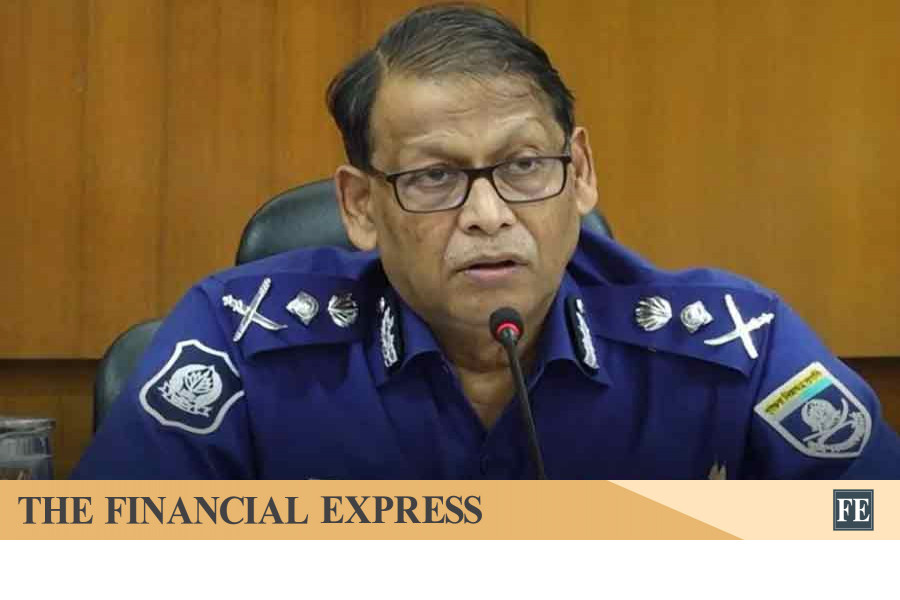
Inspector General of Police Baharul Alam on Tuesday said police will uphold professionalism, neutrality and a strong sense of responsibility during the national parliamentary election.

He made the remarks while addressing Assistant Superintendent of Police (ASP) probationers at the Hall of Integrity at Police Headquarters in the morning.

The programme was attended by ASP probationers of the 27th BCS (Police) batch, who were initially selected in 2008 and joined recently, along with officers from the 28th and 43rd batches.

The IGP said efforts are underway to raise morale within the force and rebuild public trust.

Congratulating the probationers, he said their joining marks not only a personal success but also the restoration of their rightful position in the service.

Referring to emerging challenges, he said cybercrime is rising and public opinion is increasingly shaped through social media. “In this context, policing can no longer depend only on physical presence or traditional methods.”

He stressed the need for intelligence-based policing, global awareness and technological skills, saying integrity and professionalism must also be ensured in the digital space.

Urging the probationers to prepare themselves as future leaders of Bangladesh Police, the IGP asked them to undergo training at the Bangladesh Police Academy with strict discipline, punctuality and adherence to rules.

Of the probationers, 60 are from the 27th batch, one from the 28th batch and six from the 43rd batch.

The officers of the 27th BCS (Police) batch received their appointments after a prolonged legal process, having been deprived of recruitment earlier.

Senior officials of the police headquarters were also present at the event.​
 
Analyze

Analyze Post

Add your ideas here:
Highlight Cite Respond

Why is Rab getting new vehicles?
Govt must reconsider its decision, focus on reform proposals instead

29 January 2026, 00:00 AM
UPDATED 29 January 2026, 17:25 PM

1769737538678.webp


We are concerned by the interim government’s decision to approve the purchase of 163 vehicles for the Rapid Action Battalion (Rab)—that, too, at the end of its tenure. According to a Prothom Alo report, the vehicles are to be procured through direct purchase without any tender under a revised project aimed at enhancing Rab’s “operational capacity.” While the government has said the vehicles cannot be purchased before the national election due to procedural requirements, the approval itself raises questions. At a time when Rab’s very existence is under national and international scrutiny, this decision sends a wrong signal.

For years, Rab has been accused of extrajudicial killings, enforced disappearances, torture, and other grave human rights violations. These allegations are not confined to domestic rights groups; they have been echoed by international organisations and UN bodies. Consequently, in 2021, the US imposed sanctions on Rab and several of its former and then-serving officials. The role of this force was questionable during the July uprising, too. The Commission of Inquiry on Enforced Disappearances, formed by the interim government itself, recommended disbanding Rab after identifying it as the worst offender in cases of enforced disappearances. The Police Reform Commission also proposed reviewing Rab’s past activities and allegations of abuse to assess whether the force is needed at all. Citing this widespread criticism, the TIB chief has pointed out that Rab’s dissolution has become a national demand.

Against this backdrop, the decision to strengthen Rab’s logistical capacity is not only misguided, it also ignores prevailing reform proposals as well as well-documented facts and findings. We must ask why the government has made such a decision, and what purpose it serves. Proceeding with direct procurement worth hundreds of crores of taka at a time of economic stress and political uncertainty is equally questionable.

If the interim government is serious about reform, justice, and restoring public confidence in law enforcement, it must reconsider this purchase and act upon the recommendations of the Commission of Inquiry on Enforced Disappearances and the Police Reform Commission. Instead of enhancing Rab’s capacity, the government should focus on disbanding the force or fundamentally rebuilding it through a transparent process that addresses its structural flaws, lack of accountability, and history of political misuse.​
 
Analyze

Analyze Post

Add your ideas here:
Highlight Cite Respond

Bangladesh to rename RAB as SIF, says adviser
Staff Correspondent 03 February, 2026, 15:58

1770169383629.webp

Interim government has decided to rename the Rapid Action Battalion as Special Intervention Force. | UNB photo

The interim government has decided to rename the Rapid Action Battalion amid calls from the United Nations and various human rights organisations to disband the elite force.

Home adviser retired Lieutenant General Jahangir Alam Chowdhury on Tuesday said the new name of RAB would be Special Intervention Force.

He made the remarks while speaking to journalists after a meeting of the law and order–related core committee at the home ministry.

'The chief adviser has already approved the decision. A government order will be issued shortly,' he said.

He also said changes would be brought to the force’s uniform along with the name.

'A decision has already been taken. You will soon see SIF members in a new uniform,' he added.

RAB was formed on March 26, 2004, during the BNP-led four-party alliance government amid a rise in militancy and a deterioration of law and order.

Members from the police, army, navy, air force, Ansar and VDP, Border Guard Bangladesh, and Coast Guard were brought together to form the force.

Over the years, RAB has faced widespread allegations of extrajudicial killings, often described as ‘crossfire’ or ‘gunfights’. Such allegations continued during both the BNP and Awami League tenures in power.

International bodies, including the United Nations, and domestic and global human rights organisations have repeatedly called for the force’s disbandment, citing concerns over human rights violations.

However, the Professor Muhammad Yunus-led interim government has opted for a restructuring through renaming and rebranding instead.

In December 2021, the United States government imposed sanctions on RAB and several of its former and serving officials over allegations of serious human rights violations.

Following the sanctions, incidents of so-called ‘crossfire’ involving the force declined sharply and were almost halted, according to rights groups and monitoring organisations.​
 
Analyze

Analyze Post

Add your ideas here:
Highlight Cite Respond
Analyze

Analyze Post

Add your ideas here:
Highlight Cite Respond

Prompt action against interference in police work: Home Minister

UNB
Published :
Feb 23, 2026 17:32
Updated :
Feb 23, 2026 17:32

1771849237439.webp


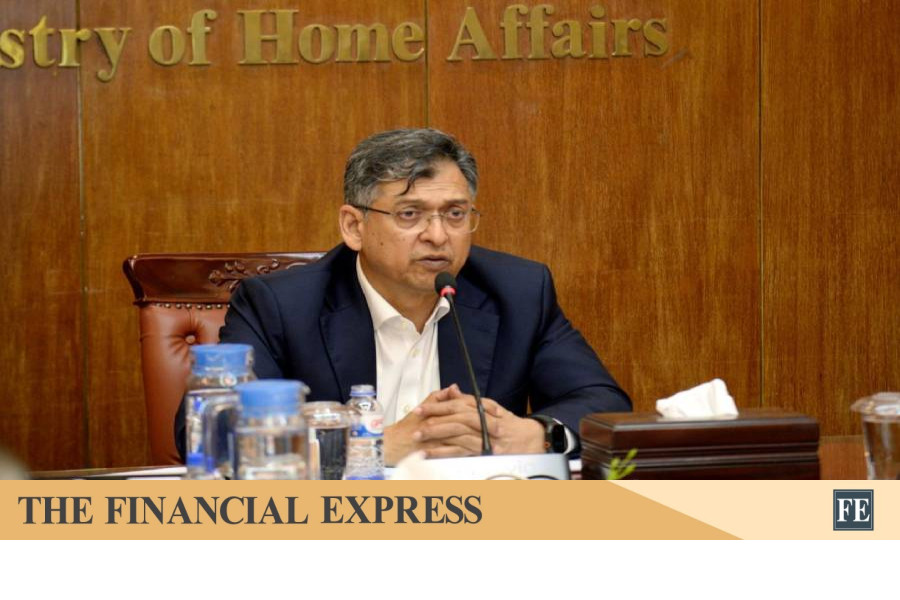
Home Minister Salahuddin Ahmed on Monday warned that immediate action will be taken against anyone who will obstruct the police in carrying out their duties.

He made the remarks after a meeting with the heads of law enforcement agencies at the Ministry of Home Affairs.

The minister said no one—whether for political or social reasons—would be allowed to interfere with the lawful work of the police.

At the same time, police activities would also be monitored to ensure there is no public suffering, he added.​
 
Analyze

Analyze Post

Add your ideas here:
Highlight Cite Respond

Massive reshuffle in police, admin in the offing
Contractual appointments of 9 secretaries cancelled, 3 attached to public admin ministry


Solamain Salman 23 February, 2026, 23:56

1771894814864.webp


The new government led by Tarique Rahman has initiated massive changes in the military and civil administrations, presumably to make its initial 180-day priority plan a success.

As part of the changes, the government on Monday cancelled the contractual appointments of nine secretaries and attached three other secretaries to the public administration ministry.

Officials at the home and public administration ministries said that more reshuffles in the police and administration would occur soon.

Experts said that all changes should reflect the people’s democratic aspirations for a neutral administration and an impartial law enforcement system.

The changes must be made on the basis of merit and competence. Otherwise, the suffering people experienced in the past may recur, they said.

According to public administration ministry officials, the nine secretaries whose contractual appointments were cancelled are planning commission member Md Mokhles ur Rahman, SM Akmall Hossain Azad, Quayyum Ara Begum, Alternate executive director at the World Bank Sharifa Khan, Md Saidur Rahman of the Health Services Division, Shish Haider Chowdhury of the Information and Communication Technology Division, National Academy for Planning and Development director general Siddiq Zubair, Land Appeal Board chairman Mohammad Yusuf, and women and children affairs secretary Momtaz Ahmed.

The three secretaries who were attached to the public administration ministry on Monday are secretary to the Prime Minister’s Office Md Saifullah Panna, secretary of the Secondary and Higher Education Division of education ministry Rehana Parveen, and religious affairs secretary Md Kamal Uddin.

The government on Monday also appointed six leaders of the ruling BNP as administrators to six city corporations, including two city corporations in Dhaka.

The local government division on Sunday issued a notification confirming the appointments, which placed BNP figures in charge of Dhaka South, Dhaka North, Khulna, Sylhet, Narayanganj and Gazipur city corporations.

According to officials at several ministries, changes would be carried out gradually in the administration, while the changes are also likely at the top levels of the police.

The Bangladesh Nationalist Party-led government has already changed eight key posts in the Bangladesh Army, while nine secretaries appointed on contracts in civil bureaucracy have been cancelled.

The changes came since the formation of the BNP-led new government following a landslide victory of the party in the 13th Jatiya Sangsad elections held on February 12.

Retired secretary AKM Abdul Awal Mazumder told New Age on Monday that changes in the administration and other important positions after a change in government are common in all countries, including India, Pakistan and Bangladesh.

‘The BNP-led current government has pledged to give importance on merit, competence, efficiency and integrity, and I believe that prime minister Tarique Rahman will try to act accordingly,’ he said.

‘I expect the administration to be reorganized on the basis of merit, competence and integrity so that the government can function well. Because if the government runs well, everyone will be benefited,’ Awal said.

Eight senior army posts were reshuffled on February 22, five days after the formation of the BNP-led government.

On February 14, three days before the formation of the new government, two top officials of the administration stepped down voluntarily. They are the cabinet secretary Sheikh Abdur Rashid and the chief adviser’s principal secretary M Siraj Uddin Mia.

Subsequently, home affairs senior secretary Nasimul Ghani, who was serving on contract, was appointed as cabinet secretary and retired secretary ABM Abdus Sattar was appointed on a contractual basis as the principal secretary to the prime minister.

Officials at the secretariat said that many changes may take place in the administration in the coming days as the government is reshuffling the top administration.

A day after the formation of the BNP-led government, prime minister Tarique Rahman held his first meeting with cabinet members at the secretariat on February 18.

The government, at the first meeting, has set a 180-day priority plan, with initial focus on controlling commodity prices, maintaining law and order, stabilising supply chains, and ensuring uninterrupted gas and electricity supply across the country.

The new prime minister also met with secretaries of various ministries and urged them to implement the government’s manifesto and prioritise the people’s mandate.

After the meeting, home minister Salahuddin Ahmed said that officials would be evaluated on the basis of merit, not on the basis of any personal or political affiliation.

The officials are expected to carry out their duties according to the constitution, laws, and rules of business, the minister said.

Officials at the public administration ministry said that the administration would not be overhauled at a time. Instead, the reshuffle will be held in phases in line with the government’s 180-day priority plan.

Appointments, promotions and transfers will be made based on merit, efficiency and competence to achieve the goal of the new government, they added.

The posts of secretaries at various ministries and agencies are also under review and there is a possibility of reshuffling vice-chancellors of public universities, officials of several ministries said.

Asked about the changes, Shushashoner Jonno Nagorik secretary Badiul Alam Majumdar on Monday said that changes are inevitable as a new government has taken office.

‘However, all changes should reflect the people’s democratic aspirations for a neutral administration and an impartial law enforcement system,’ he said.

The governance campaigner also said that the changes must be made on the basis of merit and competence. ‘Otherwise, the suffering people experienced in the past may recur.’

He expressed hope that the government would pay attention to these concerns and make the necessary changes accordingly.

The BNP, in its election manifesto, has pledged to build a ‘Meritocratic Bangladesh’, stating that merit, integrity, competence, experience, and training will be the sole criteria for recruitment, transfer, and promotion in both civil and military administration, ensuring that no one is unfairly deprived.

Following the fall of the Awami League regime on August 5, 2024 on a student-led mass uprising, the interim government headed by Muhammad Yunus carried out extensive changes in the administration.

In its first six months, a number of senior officials were sent into compulsory retirement or made officers on special duty.

A significant portion of the current secretaries and senior officials were appointed during the interim government with the preference of the BNP, and they are likely to continue in their posts, said officials.

They, however, said that officials appointed under the interim government’s preference and reportedly backed by Bangladesh Jamaat-e-Islami and the National Citizen Party might be changed as part of the ongoing administrative restructuring.

Five days after the formation of the BNP-led government, eight senior army posts, including the chief of general staff, principal staff officer of the Armed Forces Division, and the director general of DGFI, were reshuffled.

Discussions are also ongoing regarding possible changes in the posts of secretaries in different ministries, including the ministries of environment, forest and climate change, agriculture, defence, finance, local government, railways, power, energy and mineral resources, health services, and housing and public works.

On February 22, in response to journalists’ questions, home minister Salahuddin Ahmed said that changes at the top level of the police may come soon.​
 
Analyze

Analyze Post

Add your ideas here:
Highlight Cite Respond

Members Online

Latest Posts

Back
 
G
O
 
H
O
M
E