Home Watch Videos Wars Movies Login

[🇧🇩] Bangladesh Polls & Referendum 2026

Latest Posts Countries Wars Q&A

[🇧🇩] Bangladesh Polls & Referendum 2026
21
97
More threads by Saif

G Bangladesh Defense

Newly elected MPs, new cabinet to be sworn in on Tuesday

FE ONLINE DESK
Published :
Feb 14, 2026 22:07
Updated :
Feb 14, 2026 22:07

1771115734582.webp


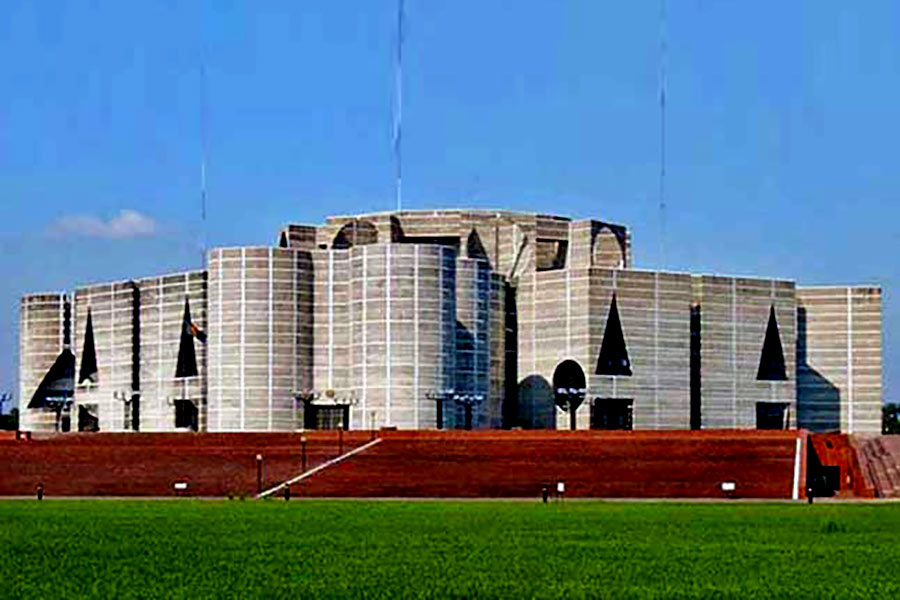
The oath-taking ceremony of the newly elected members of parliament and new cabinet members will take place on Tuesday.

News portals said Chief Election Commissioner AMM Nasir Uddin will administer the oath of office to the newly elected members of parliament at Jatiya Sangsad on Tuesday morning.

On Tuesday evening, President Mohammed Shahabuddin will administer the oath of office to the new prime minister and the members of the new cabinet.​
 
Analyze

Analyze Post

Add your ideas here:
Highlight Cite Respond

This election sets a new EU benchmark for the future: EU election observation mission

Diplomatic Correspondent Dhaka
Published: 14 Feb 2026, 15: 29

1771117178368.webp


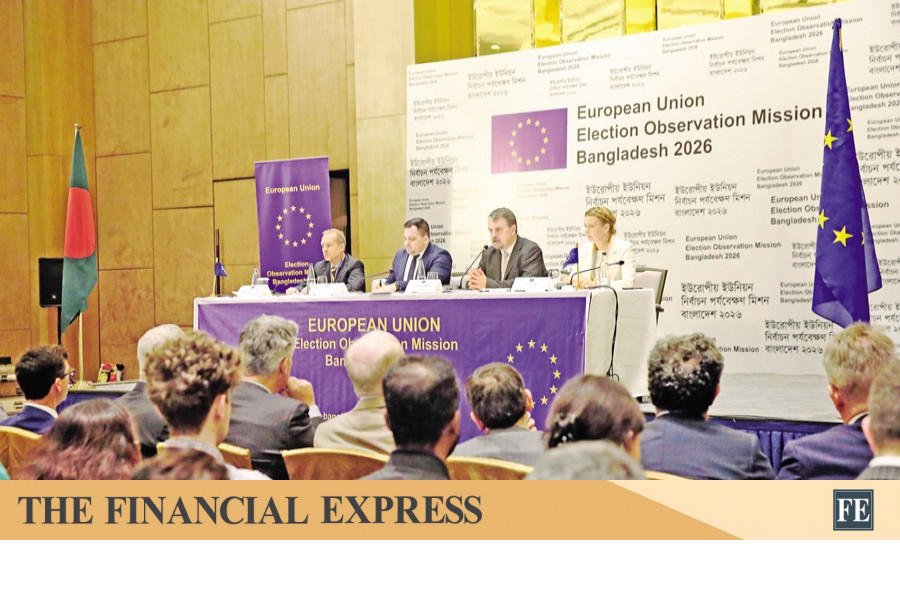
The European Union Election Observation Mission has published its preliminary assessment report on the thirteenth National Parliamentary election Prothom Alo.

The head of the European Union Election Observation Mission, Ivars Ijabs, said that the thirteenth national parliamentary election has been conducted credibly, the first such election since 2008. He added that this election sets a new benchmark for future elections in Bangladesh.

He made these remarks this morning, Saturday, at a hotel in the capital while presenting the mission’s preliminary assessment of the thirteenth national parliamentary election.


Ivars Ijabs said the election was genuinely highly competitive. The Election Commission conducted the polls independently, impartially, and with transparency. He also noted that misinformation played a negative role in the election.

The EU Election Observation Mission believes that although candidates were able to campaign freely, there was internal conflict within political parties.

Ivars Ijabs further said that although women were at the forefront of the mass uprising, they were almost absent in this election. Only four percent of the candidates were women.

He added that the new government must meet the expectations of the voters.​
 
Analyze

Analyze Post

Add your ideas here:
Highlight Cite Respond

Foreign observers term polls as credible, peaceful

FE REPORT
Published :
Feb 15, 2026 08:25
Updated :
Feb 15, 2026 08:48

1771203309886.webp


Foreign observers in their separate observations have termed the Feb 12 national election as peaceful and credible.

The European Union's chief election observer has described Bangladesh's 13th parliamentary elections as "credible and competently managed", calling them a pivotal step towards restoring democratic governance and the rule of law.

Presenting the European Union Election Observation Mission's (EU EOM) preliminary findings on Saturday, Ivars Ijabs, a Member of the European Parliament and the mission's chief observer, said the 2026 contest marked a historic moment for the country.

"The 2026 parliamentary elections were credible and competently managed, marking a pivotal step towards restoring democratic governance and rule of law," he said. "This historic contest was genuinely competitive, with fundamental freedoms broadly respected."

Ijabs described the electoral legal framework as largely aligned with international standards. He praised the Bangladesh Election Commission for working independently and transparently, maintaining stakeholders' confidence and lending integrity to the polls.

He highlighted the role of citizen observers, fact-checkers, and youth and women activists in rebuilding public trust, enhancing transparency and helping voters make informed choices.

The EU mission reported that election day was orderly, festive and calm, with polling staff managing voting and counting efficiently. The presence of party agents throughout the process was seen as reinforcing transparency, while regular updates from returning officers and legacy media on local-level tabulation helped sustain public confidence. However, observers noted shortcomings. Independent participation for persons with disabilities was not consistently ensured. The mission also raised concerns about the limited political space afforded to women, warning that it undermined equal participation.

Ijabs pointed to sporadic localised political violence and a persistent fear of mob attacks, often fuelled by disinformation, as factors that harmed the democratic process. He added that the absence of affirmative action measures continued to leave indigenous communities and minorities underrepresented.

"It is time to abandon the old practices that no longer reflect the growing maturity of Bangladesh's democracy and to chart a new course promoting independent institutions, human rights and accountability," he said.

The delegation of Members of the European Parliament, led by Tomáš Zdechovský, fully endorsed the mission's preliminary statement. Zdechovský said the country was entering a crucial new phase and urged the incoming parliament and government, backed by other state institutions, to implement approved reforms.

The EU EOM has been deployed in Bangladesh since late 2025. On election day, the mission fielded 223 international observers drawn from all EU member states, as well as Canada, Norway and Switzerland, across all 64 administrative districts.

The mission will continue to monitor the post-election environment and is expected to publish a final report in the coming months, including recommendations aimed at strengthening future electoral processes, officials said.

The Commonwealth Observer Group has lauded the peaceful conduct of Bangladesh's parliamentary elections and the July Charter referendum, while also highlighting areas where further progress on inclusion and accessibility could strengthen the democratic process.

The Group shared its preliminary observations at a press conference held at a city hotel on Saturday.

The Observer Group's Chairperson, Nana Akufo-Addo, also a former President of Ghana, presented the key findings.

He acknowledged the broader context in which the elections were conducted, including significant political developments following the July Uprising of 2024, as well as decisions that affected the participation of some political parties.

"The people of Bangladesh have exercised their democratic rights in pursuit of the fulfilment of their aspirations. We encourage them to be magnanimous and united in their shared democratic future," he said.

The Observer Group praised the vibrant media coverage of the elections, noting its important role in informing citizens and stimulating political debate. At the same time, it raised concerns about online misinformation, cyber harassment and hate speech, which it said continue to affect public discourse.

The participation of women and young people emerged as areas requiring greater attention. Women accounted for only 4 per cent of candidates, with seven ultimately elected, while youth activism did not always translate into formal influence within political party structures.

According to the Group's statement, despite isolated tensions before and after polling day, election officials, security personnel and party agents generally carried out their duties with professionalism

The Group also observed that officials assisted elderly voters and persons with disabilities.

However, many polling stations remained inaccessible, particularly those located on upper floors, and lacked adequate provisions for voters with different forms of disability.

UNB adds: International Republican Institute (IRI), a Washington-based organisation dedicated to advancing democracy and freedom globally, on Saturday said the new government in Bangladesh, to be formed within days, should swiftly implement the July Charter reforms and ensure institutions deliver for all Bangladeshis.

"Now that the election is over, the hard work of governing lies ahead and the enthusiasm of the Bangladeshi people needs to be translated into action," said David Dreier, the IRI delegation leader and former United States Congressman (R-CA).

Significant underrepresentation of women, along with ethnic and religious minorities, among candidates remains a serious concern, said the IRI.

The IRI deployed a delegation of international election observers to Dhaka from February 9 to 13, 2026, to assess the conduct of the February 12 elections.​
 
Analyze

Analyze Post

Add your ideas here:
Highlight Cite Respond

BNP secures 49.97pc of vote, Jamaat-e-Islami 31.76pc and NCP 3.05pc
Staff Correspondent Dhaka
Updated: 15 Feb 2026, 19: 06

1771204422394.webp

Voters stand in line, waiting to cast their ballots in the 13th parliamentary election and the referendum. File photo

The Bangladesh Nationalist Party (BNP) received 49.97 per cent of the votes with the paddy sheaf symbol in the 13th National Parliamentary Election.

The party fielded candidates in 290 constituencies. On the other hand, Jamaat-e-Islami received 31.76 per cent of the votes with the balance scale symbol (Daripalla), contesting in 227 constituencies.

This information regarding the percentage of votes received by the parties in the 13th National Parliamentary Election was announced by the Election Commission (EC) to journalists on Sunday afternoon.

The National Citizen Party (NCP), led by the student-youth of the July uprising, secured the third position in terms of vote percentage.

Running under 32 constituencies, they garnered 3.05 per cent of the votes. The NCP participated in the election as part of an 11-party alliance led by Jamaat.

The Jatiya Party (JaPa), which was the opposition in the last three parliaments, fielded candidates in 199 constituencies and received 0.89 per cent of the votes with the plough symbol.

In this election, 50 political parties took part. The Islami Andolan Bangladesh, led by Charmonai Pir Syed Muhammad Rezaul Karim, contested in 257 constituencies with the hand fan symbol, securing 2.70 per cent of the vote share.

The Bangladesh Khelafat Majlish, part of the 11-party alliance, ran in 34 constituencies with the rickshaw symbol and received 2.09 per cent of the votes.

The percentage of votes received by other parties was below 1 per cent. These parties include Jamiat Ulema-e-Islam Bangladesh, Khelafat Majlish, Islami Oikya Jote, Communist Party of Bangladesh (CPB), Ganosamhati Andolan, BASAD, BASAD (Marxist), Gono Forum, and Nagorik Oikya.​
 
Analyze

Analyze Post

Add your ideas here:
Highlight Cite Respond

The Welfare Mandate: How bread-and-butter politics delivered BNP's historic 2026 victory

Arman Ahmed
Published: 15 Feb 2026, 15: 46

1771289513525.webp

BNP chairman Tarique Rahman Prothom Alo file photo

The dust settled on the watershed of the 2026 Bangladesh national election, and the figures paint a narrative that many traditional analysts would not have dreamed of. Bangladesh Nationalist Party (BNP) has secured a nationwide mandate with a supermajority of 212 seats in the Jatiya Sangsad and is poised to form a new government. The short-term temptation of the political intelligentsia is to interpret this election as an ideological victory of the purest sort, a physical repudiation of the legacy of Awami League and an all-out, all-up embrace of the centre-right nationalism of the BNP.

But a more detailed examination of the mechanics of this triumph and the 59 per cent turnout reported by the Election Commission is an indication of a different, more utilitarian fact. BNP did not merely win the ideological war; they did a masterpiece of new welfarism. The politics of the kitchen table were successfully transformed by BNP into a post-uprising political environment that was still tainted by inflation and economic nervousness.

To understand the sheer scale of the BNP’s landslide, one must look beyond the campaign rallies and examine the party’s manifesto. The cornerstone of their campaign was not a lofty constitutional promise but a highly targeted socioeconomic safety net. The pledge of a "family card" for low-income households, subsidised rations, unemployment benefits for youth, and specific financial support for disabled citizens fundamentally altered the electoral arithmetic.

By weaponising welfare, BNP successfully built a direct, transactional connection with the most vulnerable layers of the electorate, circumventing the more traditional political elites and establishing this connection with the most vulnerable segments of the electorate. It is not an entirely new strategy; it is borrowed directly from the playbooks of contemporary and powerful political machineries around the world.

One only needs to look at its neighbour, India. Although the ruling Bharatiya Janata Party (BJP) has earned the international observers' accolades for attributing the electoral hegemony of such a party to its ideological nationalism, it is actually strategic welfarism that has been the powerful anchor of the party. BJP has achieved a huge, loyal base of labharthis (beneficiaries) by the direct provision of benefits such as subsidised cooking gas and sanitation facilities, as well as direct cash transfers. The BNP has seemingly come to the realisation that in South Asia today, a nationalistic storyline, coupled with violent and left-wing economic attacks, is the final recipe for a winner.

This welfare-orientated mindset is also the reason for the strategic failure of the opposition bloc. Bangladesh Jamaat-e-Islami, the main opposition, misinterpreted the immediate hierarchy of the electorate's needs. Jamaat conducted a highly anti-fascist, structural reformist, and ideologically pure campaign. Although these themes were undeniably moving during the July 2024 uprising, in 2026, when voters were exhausted by a weak transition economy, they demanded economic confidence more than systemic transformation. Jamaat never came up with a serious counteroffer to the BNP family cards and unemployment schemes, effectively giving the economic point away. However, ideology does not guarantee success.

Additionally, the welfare agenda of BNP included a significant gendered aspect that played a decisive role. Welfare programmes that allocate resources directly to women in developing democracies (who are often presented as the economic breadwinners of the house) are likely to produce enormous electoral payoffs. Focusing on women's development and guaranteeing improvements to the household economy helped BNP gain a silent but important group of female voters. This strategy of deliberately avoiding the patriarchal patronage networks that typically influence rural voting blocs allowed BNP to directly reach voters as a provider.

This transition is of a deep scholarly tone. In 2026, the electorate in Bangladesh will witness the shift of a completely emotive voting block to a highly rational interest-based electorate. A turnout of 59 percent indicates a calculating electorate that considered its choice and voted for the party that would bring the most solid payoff on their ballot. This indicates that the electorate is no longer willing to cast their votes based solely on historical sentiment; they now expect a tangible return on their democratic investment.

However, winning an election through welfare populism is not the same as governing successfully. The BNP has fundamentally redefined the social contract in Bangladesh, elevating the people's expectations to unprecedented levels. Fiscal reality is the challenge that the incoming administration is facing now. To meet the important financial needs of family cards, disability supports, and unemployment programs in a recovering economy, careful economic changes and a tough stance on corruption will be necessary.

So far, BNP has demonstrated that economic security is the strongest political ideology in the contemporary democratic sphere. The BNP has led the debate on welfare issues. The real test of whether their rule was good or detrimental will be whether the state's coffers can pay the bill.

* Arman Ahmed is founder & president, DhakaThinks; Research Analyst, Nicholas Spykman International Center; Research Fellow, ICHRPP​
 
Analyze

Analyze Post

Add your ideas here:
Highlight Cite Respond

The weight of a supermajority in parliament
16 February 2026, 00:00 AM
Tasneem Tayeb

1771291070579.webp

The BNP-led alliance achieved a decisive victory in the general election, winning 212 seats. FILE PHOTO: AFP

Large mandates are usually treated as moments of political triumph. In institutional terms, however, they are something else: a change in the conditions under which power operates. Beyond a certain parliamentary threshold, debates give way to convenience. The real test begins later, in how systems run when resistance is no longer a risk.

A parliamentary majority is familiar territory in democracies. Governments win them, lose them, negotiate around them. A two-thirds majority belongs to a different category. It alters the temperature of the room. It changes how institutions behave, where allies place themselves, and most importantly, how opponents calculate their moves. The numbers look like celebration material. Administratively, they function more like a structural shift.

That distinction is easy to miss in the first days after a result. Public attention tends to rest on spectacle—gestures, statements, the choreography of optics. Systems, however, respond to incentives, not spectacle. And incentives change when parliamentary arithmetic crosses certain thresholds. What becomes possible on paper begins to influence behaviour in practice. Not immediately. Gradually. Sometimes almost humbly.

Tarique Rahman’s political story has long unfolded at a physical distance. For years, his presence in Bangladesh’s political life was shaped by absence. That absence carried a curious advantage. Distance allows projection. Supporters imagine possibilities. Critics imagine risks. Neither has to confront the administrative reality of governance. Proximity removes that buffer. Once authority is exercised from within the system, expectations acquire weight. They stop being rhetorical. They start becoming procedural. Earlier in December, I wrote about the expectations surrounding his return in an article published in this daily. That question has already been answered. The one that matters now is how power settles once it arrives.

A supermajority adds another layer to that transition from expectation to execution. While it reduces friction, challenges arise when legislative resistance becomes harder to organise. Committees fall into alignment more easily. Amendments that once required negotiation start looking easily achievable, at least numerically. None of this is automatically harmful. Some governments use strong mandates to clear policy backlogs or stabilise long-stalled reforms. If leveraged correctly, this can be a benefit for a political landscape such as ours that is still navigating a deeply unsettled institutional transition.

For a start, the prime minister-designate has identified the right pressures. Speaking at his first press conference following the results, he framed his message around unity rather than division, restraint rather than retaliation, and order rather than spectacle—acknowledging, at least rhetorically, the institutional anxieties that tend to surface when mandates become overwhelming. How Tarique Rahman will translate these assurances into actions will determine how institutions—and by extension the nation—will read the mandate itself.

The watchout is that institutional atmosphere shifts all the same. The system senses that fewer obstacles remain between intention and implementation.

Political history suggests that this is the point where governing styles begin to reveal themselves: not in speeches or slogans, but in practices. Appointment patterns, file movement, enforcement tone, and regulatory signalling. These details rarely generate headlines, though they often decide whether a political moment settles into stability or gradually unravels. Political analysts tend to watch these inconspicuous indicators first. They know that systems signal their direction long before they arrive at their conclusions.

Outside the country, the result will be read differently. Foreign governments, multilateral partners, donors, and investors seldom interpret election results as emotional verdicts. What matters to them is whether rules still hold once political momentum builds. A strong mandate can reassure if it delivers predictability. The same mandate can be unsettling if it points to rapid redesign without institutional consultation. The difference lies less in ideology than in method. In international perception, stability is essentially behavioural before it is political.

Inside the parliament, the atmosphere is more textured. A dominant majority narrows the space available to opposition actors. Sometimes that encourages constructive adaptation. Most of the time, though, it encourages withdrawal. Much depends on how the governing side treats the absence of immediate challenge. Systems tend to function best when authority acts as though scrutiny were constant, even when it is not. Administrative restraint, practiced early, often prevents built-up confrontation. Once institutions begin adjusting defensively, restoring confidence becomes slow work.

There is also a subtler institutional question beginning to form. Large mandates can create a sense of political invulnerability within the ruling party itself. Members feel they are participating in a turning point. That sentiment can energise unrestrained ambition. It can also test patience with procedural delays. Bureaucratic caution, judicial review, regulatory pacing: these can start to look like obstacles rather than safeguards. Whether they are treated as pain points or as stabilisers will shape how this phase is remembered.

None of this predicts inevitability. Democratic systems around the world have accommodated dominant governments before. Some used their position to deepen institutional credibility. Others discovered, too late, that numerical strength does not automatically translate into sustainable authority. Longevity in office has rarely depended on margins alone. It has depended on whether governance practices convince citizens and stakeholders that rules still matter when they become inconvenient. The 2024 toppled regime has learnt this lesson the hard way.

For a first-time prime minister, the learning curve is rarely about politics. It is about managing administration. Decisions that look straightforward in opposition often become layered once one sits inside the machinery of state. Issues resurface with new challenges or urgency. Laws overlap or contradict with other laws. Agencies operate according to routines that resist change. Navigating this landscape requires a different discipline from mobilising voters. It requires patience with process, as a matter of method and discipline.

This is where large mandates change the test facing leaders, especially when they are holding overwhelming power for the first time. When parliamentary numbers guarantee passage, debate inside the parliament becomes less necessary. The real persuasion shifts elsewhere: toward civil institutions, professional bodies, regulators, courts, and international partners. They cannot be directed in the same way as party members are directed. They respond to signs of continuity, legality, predictability and stability. If those signals are steady, confidence grows. If they fluctuate, uncertainty spreads faster than official assurances can contain it.

Bangladesh has seen moments of political consolidation before. Each has left behind a different institutional aftertaste. Some periods strengthened administrative coherence. Others generated long-rippling consequences that outlasted the governments that produced them. The pattern suggests that outcomes are shaped by what power decides to do once resistance becomes nominal.

That choice appears in ordinary decisions. Whether an appointment prioritises competence or loyalty. Whether criticism is answered with explanation or dismissal. Whether procedural delay is tolerated or circumvented. Whether disagreement is treated as a platform for inclusive decision-making or dissent. While individually these might look like isolated acts, together they form the behavioural pattern of a government.

The true weight of power is measured not by how it is won, but by how it is exercised when it no longer needs to prove itself to mobilise vote banks.

The moment power stops needing permission is the moment it requires discipline. The current result carries a responsibility that is heavier than triumph. It places the ruling party leadership in a position where constraint must increasingly come from within. External limits have already thinned. Internal discipline will have to thicken to compensate for it.

Voters have delivered their verdict. The institutional story begins now.

Earlier, the question was whether expectation would weigh on Tarique Rahman. That question has already run its course. A different burden now begins. The one Kundera described belongs to the phase before power settles. This one arrives afterward, in the period when authority must prove it can govern. What lies ahead is not the weight of expectation, but the treacherous lightness of power.

Tasneem Tayeb is a columnist for The Daily Star.​
 
Analyze

Analyze Post

Add your ideas here:
Highlight Cite Respond

Members Online

Back
 
G
O
 
H
O
M
E