Home Watch Videos Wars Login

[🇧🇩] Jute Industry in Bangladesh

[🇧🇩] Jute Industry in Bangladesh
63
3K
More threads by Saif

G Bangladesh Defense

Bangladesh's quest to restore the golden glory of jute
In an effort to breathe a new life into Bangladesh's jute industry, the government is actively exploring untapped markets to elevate the global significance of jute and its associated products.

1716081606342.webp

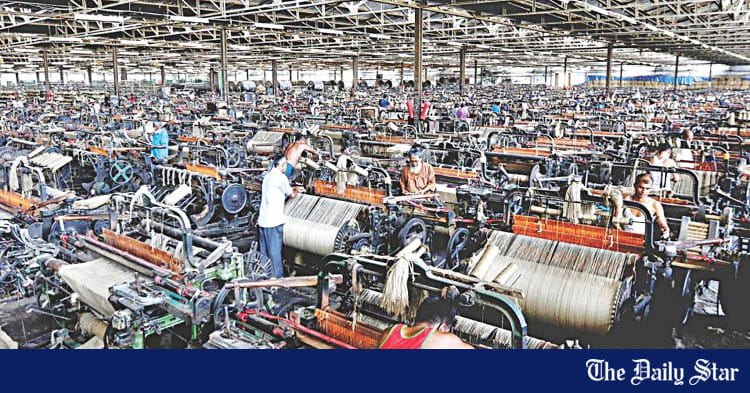
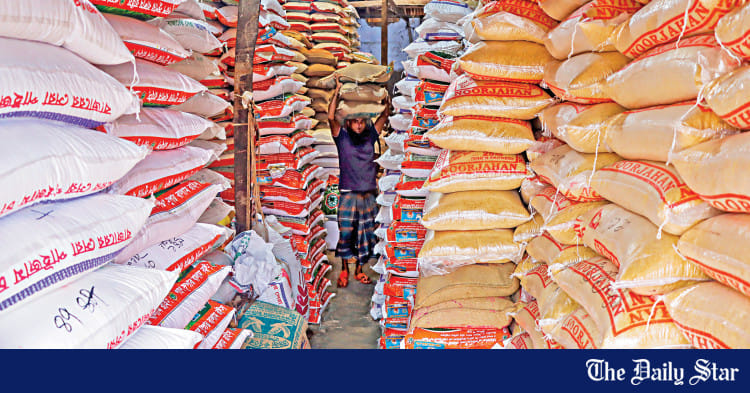
Jute, once hailed as Bangladesh's 'Golden Fibre,' reached its zenith 52 years ago. File photo

State Minister for Foreign Affairs, Shahriar Alam, conveyed this commitment at a function in Dhaka, urging foreign diplomats to champion the cause of eco-friendly jute products.

However, amidst this ambitious quest lies a pressing concern — a decade-long decline in jute prices within Bangladesh. Presently, the market sees jute being traded at a rate ranging from Tk 1,800 to Tk 2,200 per maund, marking a significant drop from Tk 2,400 to Tk 2,800 per maund just a year prior.

This trend has left those who stockpiled jute last year in anticipation of higher prices facing considerable financial losses.

The Bangladesh Jute Association (BJA) underscores the effective role the government can play in sustaining the jute industry.

Their recommendations include ensuring fair procurement prices, offering loans and incentives through banks, and extending cash support to individuals involved in jute-related exports. The absence of government support could potentially plunge everyone associated with the jute sector into challenging times.

Against the backdrop of these challenges, there is optimism among stakeholders that the government will intervene, providing the necessary support to rejuvenate the sector and usher in a new era of prosperity.

The Rise and Fall of Jute

Jute, once hailed as Bangladesh's 'Golden Fibre,' reached its zenith 52 years ago. Now, the government is on a mission to resurrect its former glory. Agronomists are immersed in intensive research to develop new jute varieties, and the integration of advanced technology is deemed a crucial step towards restoring the industry's former splendour.

The Ideal Growing Conditions: Bangladesh's Natural Advantage

The thriving growth of jute plants hinges on fertile, well-drained soil with excellent water-holding capacity. The alluvial soil in the deltaic regions of Bangladesh, enriched by sediment deposits from the Ganges and Brahmaputra rivers, creates the ideal conditions for optimal jute cultivation.

Economic Contributions and Global Presence

Bangladesh's jute exports make significant contributions to the national income. With 285 diverse jute products exported worldwide, including raw jute, hessian, bags, sacks, ropes, and carpets, the country has solidified its position as a key player in the global jute market.

Challenges and the Road Ahead

Despite its historical significance, Bangladesh's jute sector grapples with challenges such as mismanagement and corruption within the Bangladesh Jute Mills Corporation (BJMC), a lack of modern machinery, a shortage of skilled workers, weak marketing strategies, and government policies that demand reassessment.

Global Dynamics: India and Turkey's Roles

India holds the position of the world's largest producer of raw jute and jute goods, contributing over 50% and 40% of global production, respectively. Turkey emerges as Bangladesh's largest market for jute yarn and twine, with other major export destinations including Iran, India, Pakistan, and China.

Seizing Opportunities: The $2.6 Billion Jute Bag Market

The global market for jute bags is projected to reach $2.6 billion in 2022, presenting a significant opportunity for Bangladesh. Currently producing 33% of the world's total jute and exporting 90% of the raw jute it produces, Bangladesh has the potential to leverage this opportunity for sustainable economic growth.

A Sustainable Future for Bangladesh's Jute Industry

As Bangladesh endeavours to reinstate the prominence of its jute industry on the world stage, collaborative efforts involving the government, industry players, and international partnerships are crucial.

Addressing challenges and capitalizing on global opportunities can position Bangladesh's jute sector as a beacon of economic strength and environmental responsibility once again.​
 
Analyze

Analyze Post

Add your ideas here:
Highlight Cite Fact Check Respond

Bangladesh exports jute, jute goods worth $1.2 bn

Bangladesh has exported jute and jute goods worth $1.2 billion in the last fiscal year as the sector contributes 1.4% to the country's Gross Domestic Product (GDP).

1716081826576.webp

Bangladesh is the second largest producer of jute in the world with an estimated average annual production of 1.44 million tonnes. File photo

"Jute contributes 1.4% to the GDP and 26% to agriculture," Director General of Bangladesh Jute Research Institute (BJRI) Dr Md Abdul Awal told a workshop in Dhaka, according to a handout.

The BJRI organised the workshop on "Progress, obstacle and doings of jute sector" to achieve the Sustainable Development Goals (SDGs).

Additional Secretary of the Ministry of Textiles and Jute Md Ruhul Amin Talukdar and senior officials of BJRI, among others, were present at the workshop.

Awal called upon relevant organisations to take necessary and effective steps to boost jute and jute goods production.

He said, "Alongside commercial side, jute is an eco-friendly crop as jute absorbs 15 tonnes of carbon dioxide from the atmosphere and releases 11 tonnes of oxygen during 100 days of the crop."

Family nutrition can be met by growing jute, Awal added.

"One of the problems with jute is the seed problem. The government is working to produce quality of seed of jute for increasing production," he said.

Bangladesh is the second largest producer of jute in the world with an estimated average annual production of 1.44 million tonnes and the local consumption is 1.16 million tonnes. The country exports around 0.19 million tonnes annually, according to Bangladesh Jute Spinners Association.

Bangladesh is also the top exporter of jute and jute-based products with average annual exports of around $1 billion, according to BIDA.​
 
Analyze

Analyze Post

Add your ideas here:
Highlight Cite Fact Check Respond

Khulna's jute products grabbing global market
The jute products made in various private jute factories in Khulna region are increasingly drawing the attention of the global market, posting a rise in their exports.

1716082011081.webp


According to exporters, various handmade jute products have also gained great popularity in Middle Eastern countries.

They hope that the jute industry will make a turnaround again if they get government support at various levels, including finding new markets internationally.

Multipurpose jute products like yarn, packing equipment, smart jute bags, tubs, toys, jewellery items, mats, shoes, sandals, baskets, carpets and table mats are made in various private jute factories of Khulna, officials here said.

They said the exports of those products have marked a substantial rise amid the high demand both in the domestic market as well as the global one.

During the first six months of last year, 573 consignments of jute goods were exported from Khulna region, and 609 consignments in the next six months, according to the officials.

In 2020, they said, the income of exporting jute products is more than seven million dollars. In this situation, businessmen demand increased government incentives and export facilities to catch new markets abroad.

They said that 'Green Nari Kalyan Foundation' has been making various jute products with jute yarn for a long time.

Sakera Banu, the chief executive of the foundation, said that the government should increase supervision to maintain the demand for jute products.

She said that the use of jute in the country should be increased. Many more people will be interested in working with jute if they get government support at various levels, she added.

Yunus Ali Shimul, Manager (Export) of Jute Textiles Mill, one of the largest jute manufacturing companies in Khulna, said that production costs must be reduced if jute products are to remain competitive in the European market.

For this, he said, cooperation should be increased with incentives at the government level.

Director of Ayan Jute Mill, another big jute-manufacturing company in Khulna, Zahir Uddin Rajeev said, "It is very important to fix the price of raw jute. It will reduce our suffering along with production cost. Besides, our ports must also be made dynamic in the case of jute export."

Economists say that it is important to establish relations with various embassies to capture the international market.

Prominent economist Prof Anwarul Qadir said, "Government should play a more active role in jute exports. Where we have embassies abroad, our officials should increase liaison in those countries. Our Ministry of Commerce, Ministry of Jute and Ministry of External Affairs have to work together. Arrangements should be made to exhibit jute products in various foreign fairs."

Meanwhile, the Export Development Bureau has ensured various benefits for the export of jute products.

Khulna bureau director Zeenat Ara Ahmed said, "The government has declared this year as 'Jute Year'. We will always strive to ensure that traders get more benefits in the case of jute export."

Read more: Water scarcity puts jute farmers in a pickle
Officials said that there are 12 companies producing and exporting jute products in Khulna alone.
 
Analyze

Analyze Post

Add your ideas here:
Highlight Cite Fact Check Respond

MoU signed for marketing Bangladeshi jute products in Europe
The Jute Diversification Promotion Center (JDPC) and Centre for the Promotion of Imports from Developing Countries (CBI) have signed a Memorandum of Understanding to market jute goods in the European markets.

1716082181901.webp


Executive Director Md Mahmud Hossain signed the MoU on behalf of JPDC while Netherlands Ambassador to Bangladesh Anne van Leeuwen inked it on behalf of the CBI at a function at JPDC office in the city, said a press release.

Under the MoU, entrepreneurs producing home textiles and home decoration will be able to produce and market new design products to European markets as per the market demand.

The MoU will remain effective for the next five years.

A recent study noted that enhancing production capacity and product diversification can help Bangladesh increase its exports to the European Union by an additional $18 billion a year.

The bloc is by far our largest export market as almost half of Bangladesh's merchandise exports are destined for the EU.​
 
Analyze

Analyze Post

Add your ideas here:
Highlight Cite Fact Check Respond

Jute diversification and value-added jute bags
WASI AHMED

1717027237917.webp


The performance of the country's jute sector in innovation and product diversification, notwithstanding progress, fails to live up to the expectations. Despite the remarkable achievement of genome sequencing of jute plants by Bangladeshi scientists in 2010, which positioned Bangladesh as a leader in the global jute industry, required follow-ups are missing. Additionally, the decline in exports of jute goods raises concerns that the country is currently not well-prepared to meet the increasing demand for diversified jute products, especially jute bags, which dominate the market.

Demand for jute goods, especially jute sacks and shopping bags, is on a sharp rise in view of restrictions, even outright bans in many developed and developing countries on the use of bags made of artificial materials such as synthetic fibre or plastic. The reusable jute bags are biodegradable, eco-friendly and long lasting. They are a sustainable alternative to plastic and most other green or eco-type bags that are made of PP (polypropylene a petrochemical by-product) and not biodegradable.

Bangladesh, one of the top producers of raw jut with a share of 1.2 million tonnes in the annual global jute production of 2.86 million tonnes, is missing out on seizing the opportunity as the manufacturing process required for diversified and high-end jute products has not been adequately activated. A news story in a local daily, quoting the International Jute Study Group, reports that global demand for shopping bags is at present around 500 billion pieces, worth approximately $500 billion a year. This is likely to grow manifold once the US, the European countries and China - the major markets of jute bags -- begin to enforce stricter measures against use of synthetic and plastic bags.

It has been learnt that while Bangladesh manufacturers in both the public and private sector are yet to move in a proactive manner, manufacturers in neighbouring India are gaining increased market access through large-scale product diversification and adaptation as per market requirements.

To read the rest of the news, please click on the link above.
 
Analyze

Analyze Post

Add your ideas here:
Highlight Cite Fact Check Respond

Members Online

Latest Posts

Back
 
G
O
 
H
O
M
E