Why US consulates cancelled H-1B appointments for Indians
The expanded vetting policy and subsequent appointment cancellations are part of a long list of controversies surrounding the H-1B programme since Trump took office.
Udit Hinduja
22 December, 2025 01:51 pm IST
https://pkdefense.com/javascript:void(0)
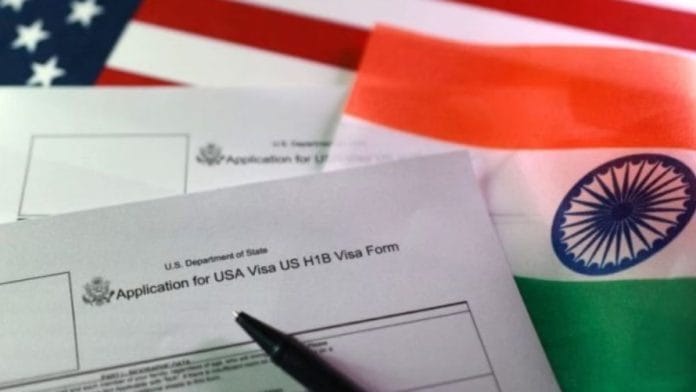
Representative image | (c) Copyright Thomson Reuters 2025
Follow Us :

 New Delhi:
 Thousands of Indian H-1B visa holders who returned to India to renew their American work permits have been left stranded, after appointments between 15 and 26 December were abruptly cancelled and rescheduled.
The disruptions come on the heels of an expanded social media vetting policy, part of US President Donald Trump’s clampdown on immigration. With expired visas, many Indians are stuck at home without the authorization to head back to the United States.
Why is visa vetting taking so long?
As part of the new vetting policy, the State Department has instructed all visa holders to change their social media privacy settings to ‘public’, allowing the administration to scrutinize their posts and flag any content deemed to be against the interests of the US.
The US State Department explained that officials needed more time to ensure that no applicants “pose a threat to US national security or public safety” and that thorough vetting was now being prioritized.
If an H-1B visa holder’s stamp expires and they travel outside the US, they need to obtain a new stamp at a US Consulate before re-entering the country. The new policy has led to visa renewal appointment delays of up to 12 months, with many employees fearful of losing their jobs.
Apple, Google, Microsoft and other tech companies have warned visa-holding employees to avoid international travel. According to memos accessed by
Business Insider, a Microsoft associate general counsel for immigration wrote that rescheduling notifications were concentrated in Chennai and Hyderabad.
The memos also contained instructions for employees stranded in foreign countries and recommended that those still in the US change their travel plans.
What other controversies surround the visa programme?
The expanded vetting policy and subsequent appointment cancellations are part of a long list of controversies surrounding the H-1B programme since Trump took office. In September 2025, he announced a $100,000 fee for new applications – a massive spike from the traditional $2,000 to $5,000 original fee.
In November 2025, former US Representative and economist Dave Brat alleged that the Madras (Chennai) district got 220,000 H-1B visas, despite the statutory US annual cap of 85,000 visas.
“That’s 2.5 times the cap that Congress has set. That’s the scam,” said Brat, on the
War Room podcast hosted by Steve Bannon. “One of these folks that comes over claiming they’re skilled – they are not. That’s the fraud. They just took away from your family’s job, your mortgage, house and all that.”
He also pointed out that around 71 per cent of all H-1B visas reportedly go to India, while only 12 per cent go to China – implying that such a lopsided distribution itself should set off alarm bells.
In the same month, former US diplomat, Mahvash Siddiqui, claimed that during her stint from 2005 to 2007, she saw “industrialized fraud” in visa approvals at the Chennai consulate. Siddiqui was speaking on the Parsing Immigration Policy podcast.
According to her, as much as 80-90 per cent of the H-1B visas issued to Indian applicants during that period were essentially bogus, backed by fake degrees and forged documents. She alleged that some of the applicants lacked the actual skills that the visa demanded.
For thousands of skilled Indian workers who look at the H-1B programme as a pathway to global opportunities, the recent appointment cancellations only add to their worries as more barriers are erected to immigrate to the United States.


 Indian Defense