Home Watch Videos Wars Movies Login

[🇧🇩] A New Political Party: National Citizen Party

Latest Posts Countries Wars Q&A

[🇧🇩] A New Political Party: National Citizen Party
181
4K
More threads by Saif

G Bangladesh Defense
When NCP’s rhetoric of a new politics meets reality

1767403852166.webp

VISUAL: ANWAR SOHEL

The promise of a "noya bondobosto" or new settlement carries an enormous political appeal. After years of democratic erosion, institutional decay, and public disillusionment in the country, citizens have understandably been eager for a political force that breaks with the entrenched habits of established parties. The National Citizen Party (NCP) had positioned itself as that force. But a new political "settlement" or system or culture cannot be built through lofty speeches or slogans. It requires clarity, credibility, and disciplined political practice on the ground. Judged by these standards, there is reasonable scepticism, especially after its seat-sharing arrangement with Jamaat-e-Islami, about whether NCP can deliver its promise as it increasingly surrenders to the pull of familiar political conveniences.


The central issue with the NCP's move isn't that they have ideological differences with their partners, but the action's potential to create public distrust. In an article published in this daily on October 17, 2024, I argued that the student-public uprising succeeded where established political parties such as the BNP failed, despite their shared goal of regime change, because the public had lost trust in traditional politicians. That distrust was the cumulative outcome of years of opacity, opportunism, and instrumental politics. Notably, the same pathologies appear to have emerged within the NCP itself, a party that had promised to transcend them.


Any party serious about a new political settlement must first articulate a clear vision to the people. Apart from a few vague concepts and symbolic initiatives, such as the "Desh Gorte July Padajatra", the NCP has failed to offer sustained pro-people programmes that explain what it stands for, or how it intends to govern differently. Even after formally constituting itself as a political party, its leadership has remained disproportionately engaged on university campuses and with foreign delegates, rather than systematically building grassroots connections. My conversations with voters outside elite or educated circles in urban areas reveal, most citizens cannot identify NCP leaders beyond a handful of prominent figures, let alone explain the party's ideological commitments. A party that remains largely socially unrecognisable cannot plausibly claim to represent the public.

This limitation of outreach reflects a deeper failure of ideological clarity. What exactly is the NCP for? What principles guide its policy positions, alliances, and internal decisions? Nearly a year after its emergence, the party still lacks a clear, publicly articulated manifesto. Even senior figures struggle, when asked, to move beyond a few abstract terminologies in explaining the party's commitments. This is not a messaging problem. It is a failure of political self-definition.


When a party cannot clearly state who it is and what it stands for, citizens are not obliged to supply trust in advance. On the contrary, opacity invites suspicion. If a political actor appears uncertain about its own identity, or unwilling to clarify it, it dents confidence. Political trust arises from sustained clarity about ends, means, and limits. Ambiguity may offer short-term tactical advantages, but it is normatively corrosive. Clarity is a political virtue, and without it, the rhetoric of a new settlement collapses.

Concerns about political judgment on different occasions further compound this credibility gap. Even the decision to rename their July podojatra in Gopalganj as a "March to Gopalganj," a move that later contributed to violence, raised questions about the party's political maturity and capacity to assess risk in volatile contexts. A party aspiring to reshape the political order must demonstrate restraint, situational awareness, and responsibility. On this count, the NCP has fallen short.

Problems of internal governance intensify these doubts. Recent public disclosures, including Tajnuva Jabeen's Facebook post and Anik Roy's interview, suggest that decision-making within the party does not consistently follow transparent or consultative procedures. Decisions reportedly taken without majority consent, or circulated at the last moment when party insiders have had no meaningful opportunity to respond, generate internal distrust. Such dysfunction does not remain internal. Political parties are public institutions by nature. When their internal processes appear arbitrary, citizens reasonably infer that similar habits will govern public decision-making.


The problem becomes even more acute when questions of inclusion are considered. A party that claims to inaugurate a new political settlement must demonstrate a principled commitment to women and marginalised groups. Yet, the NCP has articulated no clear roadmap for women's participation or leadership. This absence is especially troubling given its electoral coalitions with parties that openly oppose women's visibility in public life and often display misogynistic attitudes. Former insiders suggest that the NCP is now compelled to campaign for allied parties in constituencies where it does not field its own candidates. Such arrangements compromise both moral credibility and political autonomy.


Taken together, these failures form a pattern, and it is this pattern that decisively undermines the NCP's claim to a new political settlement. The conditions required for a genuine settlement—ideological clarity, organisational discipline, internal democracy, political judgment, and principled inclusion—are not missing by chance. They appear to be absent by design or neglect. A party that cannot properly define or govern itself, and cannot transparently justify its actions and alliances, cannot plausibly be entrusted with reshaping the political order. Political settlements are built by actors who know who they are, what they stand for, and whom they refuse to accommodate. The NCP has shown neither the coherence nor the courage required for such a task. What remains is not an unfinished project but a cautionary example of how the language of renewal can be hollowed out from within.

Bangladesh does not merely need new actors in politics. It needs new standards of political conduct. Trust cannot be demanded in advance, nor can democratic renewal be declared into existence. It must be earned through clarity, discipline, judgment, and visible commitment to principles that survive pressure, temptation, and alliance politics. Where these are absent, appeals to novelty only deepen public cynicism rather than overcome it.

Kazi A S M Nurul Huda is associate professor of philosophy at the University of Dhaka and the Cmelikova Visiting International Scholar in Leadership and Ethics at the University of Richmond.​
 
Analyze

Analyze Post

Add your ideas here:
Highlight Cite Respond
NCP in talks with resigned leaders, no final decision on seat sharing yet: Akhtar

BSS
Published :
Jan 04, 2026 21:26
Updated :
Jan 04, 2026 21:26

1767574807101.webp


National Citizen Party (NCP) Member Secretary Akhtar Hossain on Sunday said the party is holding discussions with leaders who have resigned, noting that their resignations have not yet been formally accepted.


"The resignations have hurt the party. Those concerned have submitted resignation letters, but we have not officially accepted them yet. Dialogue is continuing," he told a press conference in the evening at the party's temporary central office in Banglamotor.

On seat-sharing arrangements for the upcoming election, Akhtar said no final decision has been taken so far. "Our convener has made it clear that this is not an ideological alliance, but an electoral understanding," he said.

Akhtar also called on the Election Commission to bar the Jatiya Party from participating in the election, alleging its role in fostering authoritarian rule.

"The Jatiya Party created authoritarianism and legitimised it. With its backing, the Awami League was able to kill thousands of people in Bangladesh. The Jatiya Party acted as an accomplice to genocide. Such a party must not be allowed to contest the election," he said.

Raising allegations of bias in the nomination scrutiny process, Akhtar said the concerned officials had shown partisan behaviour in certain cases.

"In many instances, individuals affiliated with certain parties, despite alleged involvement in serious offences relevant to nomination eligibility, have had their nominations declared valid. Conversely, many nominations have been cancelled on the basis of allegations that are neither acceptable nor relevant in the present context," he added.​
 
Analyze

Analyze Post

Add your ideas here:
Highlight Cite Respond
Sarjis Alam’s documents show income mismatch

As the February 12 election nears, affidavits submitted by candidates open a window into their assets, liabilities, and personal histories. The Daily Star is running stories based solely on these filings.

1767662769907.webp


National Citizen Party candidate Sarjis Alam has declared conflicting income figures in documents submitted to the Election Commission.


In his affidavit, the 27-year-old postgraduate listed Tk 9 lakh as annual business income, while his tax return for 2025–26 shows Tk 28.05 lakh -- more than three times higher. Both figures appear separately in the affidavit.


Sarjis, contesting from Panchagarh-1, described himself as a businessman. His affidavit also shows inconsistencies between declared assets and the net wealth reported in his tax return. While the tax return lists total assets worth Tk 33.73 lakh, the affidavit's breakdown accounts for significantly less.

According to the affidavit, Sarjis holds liquid assets of Tk 5.61 lakh: Tk 3.11 lakh in cash, Tk 1 lakh in banks (without naming institutions or accounts), and Tk 1.5 lakh in electronic goods and furniture.


He also declared 16.5 decimals of agricultural land, noted as "gifted", with an acquisition value of Tk 7,500 and an estimated market value of Tk 5 lakh.

Sarjis paid Tk 52,500 in income tax for the 2025-2026 assessment year.

In his election expenditure statement, Sarjis said he expects to receive Tk 11 lakh in gifts from four well-wishers who are not his relatives and another Tk 2 lakh in loans from an individual.


According to the document, he is also receiving funds in gifts from his father-in-law, mother-in-law, and paternal and maternal uncles.

However, the exact amount could not be ascertained, as the first digits of the six-digit figures were illegible in the scanned document available on the EC website. Based on the visible digits, it appears he is receiving at least Tk 1 lakh from each of them. He also listed a contribution of at least Tk 1 lakh from his brother-in-law as a loan.

He faces one criminal case filed in Gazipur.​
 
Analyze

Analyze Post

Add your ideas here:
Highlight Cite Respond
‘Abandoning July revolutionaries for electoral gain would be a grave mistake’

SAD president says NCP leaders were ‘silent’ as July warriors faced danger

1767835906921.webp

Photo: Collected

Students Against Discrimination (SAD) President Rifat Rashid today criticised National Citizen Party (NCP), saying leaders who emerged through the July uprising did not stand beside the revolutionaries in times of crisis.


Questioning NCP's role during the recent arrest of the platform's Habiganj unit member secretary Mahdi Hasan and "July warrior" Tahrima Jannat Surovi, Rifat said the party issued statements only after their release.


"Those NCP leaders who rose through the July uprising -- every single one of them -- remained silent when they [Mahdi and Surovi] were in danger," he added.

Speaking at a press conference held at Madhur Canteen on the Dhaka University campus, Rifat also warned that abandoning the July revolutionaries for electoral politics would be a grave mistake.


"If you [NCP] think that by entering the electoral race, playing the 'game of votes' and courting the so-called Awami League vote bank you can abandon the July revolutionaries, you are making a grave mistake," he said.

He further said that Awami League has never been a friend of Bangladesh.

"The Awami League is like a black cobra that has crawled into a hole. The moment it gets an opportunity, it will strike with such force that not only will you die from its venom, but the fighters of the July uprising will not be spared either," he added.


The SAD president also announced three programmes and several demands, including the unconditional release of Mahdi Hasan and Surovi.

The demands also include issuing an ordinance by the president within the next 24 hours -- granting immunity for all activities carried out by students and the public who participated in the July uprising between July 1 and August 8, 2024.

The platform further demanded documentation of the significant contributions made during the uprising by members of the army, navy and air force, as well as officials and employees of military, paramilitary and civilian administrations.

The platform also demanded immediate promotions and appointments to sensitive and important posts for armed forces officers who were deprived of promotion after February 25, 2009, due to what it described as "repression under fascism".

As part of its next set of programmes, the platform will prepare a list of officers-in-charge of police stations, district superintendents of police and higher commanding officers under whose jurisdictions students and members of the public were killed during the July uprising.

The platform will submit the list to the International Crimes Tribunal (ICT) and file cases accordingly, Rifat said.

He further said they would hold discussions with the law and home affairs advisers to ensure an indemnity ordinance by the president.

Their third programme includes continuing meetings with the heads of the two largest electoral alliances to ensure that the revolutionary spirit of July and the security of July revolutionaries are clearly reflected in their election manifestos.​
 
Analyze

Analyze Post

Add your ideas here:
Highlight Cite Respond
Elections and alliance politics: Fate of NCP and 'untimely demise' of new arrangement
Altaf Parvez

1768007438367.webp


The first national election after the Liberation War was held 14–15 months later. After the mass uprising of 1990, elections were held within an even shorter period. In both cases, the electoral atmosphere was shaped by the memories and convictions of the struggle against war and military rule.

This time, the election is being held nearly 18 months after the mass uprising. In terms of time, the gap is not much greater, but in election-related discussions and debates, the presence and influence of the blood-soaked aspirations of “36 July” are noticeably weaker. However, the inclusion of a chapter on a referendum in the election process is an exception.

No voice for the grassroots in nomination allocation

The nomination paper submission phase—seen as a step toward a festive election—has already passed. For this alone, the people of Bangladesh could earn high marks. Over the past few months, considerable effort has gone into countering masked, invisible forces that sought to derail the country from the electoral roadmap.

New incidents were repeatedly orchestrated to delay the election. Evidence recovered from the explosion site in Keraniganj, on the outskirts of Dhaka, on 26 December suggests what other grave obstacles could have emerged in the path of the polls.

In the end, however, candidates were able to present themselves before the public. Yet, as before, the culture of nominations followed the old pattern: one or two central leaders of each party, like corporate bosses, decided who was “qualified” to become an MP.


For a long time, there has been a demand that the opinions of grassroots units and activists be institutionally recognised as decisive in nominating party candidates. The nomination process was meant to be structured from the bottom up—a principle also reflected in electoral regulations. But to what extent were those rules followed? Or did Bangladesh’s electoral culture remain, in effect, an indirect presidential system?

Not only in nominations, but also in the formation, dissolution, and reconfiguration of alliances, decisions were taken by a handful of party leaders as if they were personal property. In the case of the NCP, which had promised a “new arrangement,” civil society witnessed even some of its central leaders saying they were unaware that the party had left the “Democratic Reform Alliance” to join a different alliance led by Jamaat-e-Islami. In other words, decision-making within the party was not participatory even at the central level—let alone at the grassroots.

In this regard, the new party failed to move beyond the traditional practices of the BNP and the Awami League. Those who had seen the hope of a new “republic” in its politics may have been disappointed by the party’s shifting alliance strategies. Caught in the constant movement from one alliance to another, the party also found itself facing internal fractures.

In the campaign, the NCP will also have to speak in favour of a theocratic state project.

Many commentators say that joining forces with Jamaat was an inevitable outcome for the NCP. From the very beginning, a significant portion of the NCP’s organisers showed a clear ideological leaning toward the right. At the same time, the government’s inaction and failures on key national issues were indirectly being associated with them as well.

Over the past 17 months, the party has failed to exert pressure on the government to advance the politics of reform. In countries like Sri Lanka and Nepal, leaders of mass uprisings have continued to emerge as influential forces in national politics. In the case of the NCP, however, the opposite has happened.

As the election drew closer, the party became increasingly directionless. As a result, advisers and supporters across different circles ultimately wanted the NCP to remain at least relevant in post-election opposition politics.

In this harsh reality, joining the Jamaat-led alliance appeared to be the “relatively better” option for the new party. However, the clear moral beneficiary of this move will be Jamaat, and the long-term internal discord it is likely to cause within the NCP will continue to erode the strength, pride, and momentum of “Red July.”

Unfortunately, the NCP’s alignment with Jamaat has caused July-centric policy issues to disappear from the election campaign at an accelerated pace. From now on, electioneering is likely to be dominated by old BNP-versus-Jamaat feuds, personal rivalries, image-building, and contradictions.

As a condition of the alliance, beyond its quota of 30 seats, NCP activists and supporters will have to campaign throughout the election season in favor of a theocratic state project in the remaining 270 seats of the alliance.

The question is whether Maulana Maududi’s vision of the state can truly align with the NCP’s long-standing goal of a centrist, inclusive, and democratic Bangladesh.

Women and Ethnic and Religious Minorities Lag Behind in Nominations

Even before the election campaign began, prominent female organisers of the NCP started leaving the party. Leading organisers from the workers’ and farmers’ fronts have also resigned.

It appears that the central leadership of the July movement is becoming disconnected from its women’s, farmers’, and workers’ wings. This is not only an organisational loss for an emerging party; these developments also carry a broader national cost.

Many central male organisers of the NCP had long taken negative positions on women’s rights issues. At least two NCP organisers were on the stage at a rally against the Women’s Commission held at Suhrawardy Udyan. Against this backdrop, the continued departure of female organisers from the NCP represents a significant national loss.

Thousands of adolescent girls and young women participated in the uprising, yet there is now hardly anyone in leadership positions within mainstream politics to articulate their rights and aspirations.

Even Rumeen Farhana, one of the most vocal opposition figures during the previous regime, was denied a nomination. In just 17 months of the so-called “new political arrangement,” we have witnessed what is almost a counter-uprising against women’s issues and against a new generation of female organisers.

Just as women’s representation in nominations is low, the presence of ethnic and religious minorities in the electoral politics of major parties is also minimal. The 1971 Liberation War had called for cultural pluralism, defeating identity- and division-based politics, but numerous incidents over the past 17 months have already dulled that call, leaving minorities feeling insecure.

It now appears that ethnic and religious minorities will face historically low representation in party nominations. Even by sheer numbers, at least thirty representatives from such communities would have been fair in the National Parliament, yet the nomination patterns point in the opposite direction.

In the past, many in Bangladesh pointed out the underrepresentation of minorities in India’s Lok Sabha. Soon, Bangladesh’s own record on this issue is likely to be equally embarrassing.

Relying on past controversies instead of principled politics

Instead of forward-looking, principle-based political debate, the election has been dominated by past controversies. Another concern is the absence of a strong pro-democracy opposition party. If, as the public currently anticipates, the results of 12 February follow these expectations, the country’s politics is likely to remain more centered on the streets than in Parliament, focusing on right-wing cultural debates rather than pressing political and economic issues.


When there is a strong opposition in Parliament, public attention is drawn there, and the cabinet faces pressure for transparency and accountability. Without that, the post-uprising trend of politics in Bangladesh being dominated by cultural controversies is likely to continue.

For several months, there has been widespread use of a highly effective strategy to corner rights-based politics through controversies over songs, shrines, sports, and similar cultural issues. As a result, the shape of the current election campaign and political calculations is gradually diminishing the prospects of addressing democratic reforms in national life, as well as urgent issues related to improving the lives of women, minorities, workers, and farmers. Yet for a long time, there had been hope that post-uprising elections and the society that follows would prioritise the aspirations of July.

The NCP, Ganatantra Mancha, and leftist parties could have united under the spirit of July to pursue this agenda. But that did not happen. Within less than two years, right-wing politics, rather than reform-oriented issues, has taken the driver’s seat in society. The NCP’s latest decisions have only reinforced this trend. Regardless of which party wins the election, it remains doubtful how much social unity, which has been threatened by mobs and arson over the past 17 months, can be rebuilt.

Civil society in the country has also failed to take an active stance against the slow erosion of the spirit of July. During the previous regime, they could not take a firm position against the misuse of the Liberation War’s legacy.

How is a political shift possible?

Like a section of the liberal society in earlier times, another part of the country’s civic leadership over the past 17 months has adopted a blind policy of direct or indirect support for government actions, leaving the public without any guidance or guardianship. Although some third-stream political commentators remain inspired by the spirit of the July uprising, they have been unable to find ways to implement it or exert pressure on the government and political parties toward that goal.

Thus, the politics of state reform from 17 months ago has now fallen behind. It is not just that progress has stalled; nearly all cultural institutions, repeatedly attacked and disrupted over time, have left Bangladesh in a weakened position to defend itself.

In mob violence across the country over the past year, 197 people have been killed, and the total destruction of homes is incalculable. Even the fact that offices of the country’s major newspapers were burned without hindrance sends a long-term warning: in Bangladesh, speaking or writing against any powerful group carries maximum risk.

For the past decade and a half, Bangladesh has functioned under a form of structural state fascism. In the attempt to move beyond it, leadership weaknesses and failures are now pushing the country gradually toward social fascism.

While elections are extremely urgent, it is difficult to say how much education, culture, and the media will be spared in the next chapter of social fascism. Recent months have made it clear that “mobs” are not merely a law-and-order problem; they are part of a political project nurtured with support from various domestic and international actors. Elections alone may not be enough to protect Bangladesh from this threat.

Overall, even in the most optimistic scenario, there now appear to be only two paths as alternatives to the spirit of July: a return to the old-style rule dictated by the will or whims of a single person with unlimited power, or the adoption of a theocratic governance structure. Both options are completely contrary to the aspirations of 1971. Yet, after 17 months, we again face these two alternatives. At the national level, there is no immediate way out.

The NCP’s alignment with Jamaat has further weakened even this limited prospect. Some, however, argue that the massive turnout at Khaleda Zia’s funeral reflects society’s preference for a centrist, democratic Bangladesh. That funeral also contains some signs for the future of the country.

If this is true, we may see some indications of it in the next election. In that case, to advance this public preference, it will be necessary for local organisations working on democracy, human rights, farmer-worker-women’s rights, economic justice, and environmental protection to form new alliances. At this moment, is there any other way to protect the achievements and potential of the July movement?

#Altaf Parvez is a researcher on history​
 
Analyze

Analyze Post

Add your ideas here:
Highlight Cite Respond
NCP-Jamaat seat deal to be made public soon: Nahid

Staff Correspondent 11 January, 2026, 01:00

1768116306933.webp

The Bangladesh Jamaat-e-Islami-led alliance is fully prepared to contest the 13th Jatiya Sangsad elections, and the final seat-sharing deal will be announced publicly within a day or two, National Citizen Party convener Nahid Islam said on Saturday.

Nahid made the remarks while speaking to journalists after a meeting with a European Union election observer delegation led by chief observer Ivars Ijabs at Hotel InterContinental in Dhaka.


The alliance has completed its internal preparations, and only the public announcement of seat sharing remains pending, he said.

He said that the Jamaat–NCP alliance had already begun electioneering across the country, while confusion and disorder still prevailed in other political alliances over seat distribution.

Nahid, however, expressed concern over the lack of a level playing field in the election, saying political parties had little confidence that equal opportunities were being ensured.

He alleged that special privileges and state protocol were being extended to a particular political party, which was sending a message of administrative bias and could create an uneven electoral environment.

The NCP leader also accused sections of the mainstream media of bias, saying negative and false reports were being deliberately published about his party.

He said that some media outlets were targeting the NCP with misleading news, which was undermining fairness in the electoral process, and added that the party had repeatedly raised the issue with the government and the Election Commission.

Regarding loan defaulters, Nahid said that many candidates with outstanding bank loans had initially been declared valid, while only a small number had been disqualified despite a much larger figure being involved.

He demanded a tougher stance from the Election Commission to ensure that defaulters were not allowed to contest the polls.

On election monitoring, Nahid said that the European Union would send a large observer mission for the upcoming parliamentary elections.

He said that the EU wanted the polls to be free, competitive and credible so that a democratic transfer of power could take place smoothly after the results were announced.

Raising concerns over security, Nahid said that the public shooting and killing of Inquilab Mancha convener Sharif Osman Bin Hadi had created fear in the electoral field.

He said that the continued failure to arrest the perpetrators had left candidates and activists feeling unsafe ahead of the election.​
 
Analyze

Analyze Post

Add your ideas here:
Highlight Cite Respond
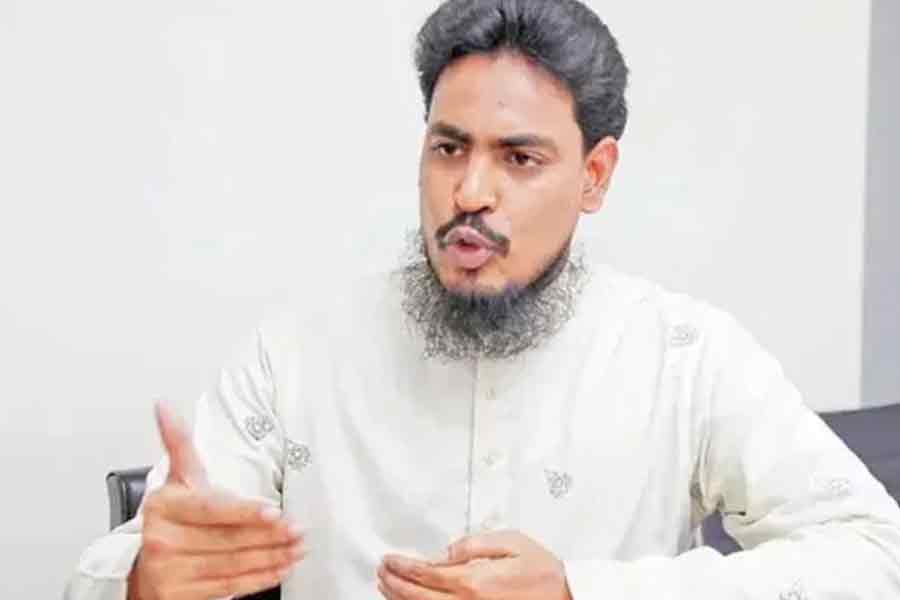
Faction of July uprising activists, NCP breakaways to unveil new platform this Friday

Official launch will be announced from Central Shaheed Minar


1768353448328.webp

From left: Anik Roy, Meghmallar Bose, Nazifa Jannat, Mir Huzaifa Al Mamduh

A new political platform led by a faction of the July uprising activists and breakaways from the National Citizen Party (NCP) is set to make its debut this Friday.


The platform, ideologically rooted in social democracy, will be joined by current and former leaders of the left-leaning Bangladesh Chhatra Union, as well as socio-cultural activists who played active roles in the uprising to topple the Sheikh Hasina government.

The official launch will be announced from the Central Shaheed Minar in Dhaka on January 16, said founding member Anik Roy, a former joint convener of the NCP.

Speaking to The Daily Star, Anik said, “We want to carry forward the generational fight.”


He added that the platform’s economic framework would be based on the concept of a “democratic economy”.

Distinguishing itself from traditional political parties, the organisers plan to introduce a rotating leadership structure to prevent the accumulation of power.

“The leadership structure will be fluid, meaning the chief of the platform will change every three or four months,” Anik explained.


The platform comprises several prominent figures, including former Dhaka University student Mir Huzaifa Al Mamduh; Meghmallar Bose, president of the Chhatra Union’s Dhaka University unit; Nazifa Jannat, vice president of the Chhatra Union central unit; and Ferdous Ara Rumee, poet and activist.

Sakhawat Fahad, former Chhatra Union president of the Dhaka University unit, also confirmed that he is involved in the platform.


Although the organisers have not yet settled on a name, they have rented a temporary office in Dhaka’s Eskaton area.

“From January 16, we will officially start circulating membership forms,” Anik Roy told this newspaper.

This development comes days after former adviser Mahfuj Alam issued a call for “fresh blood” in the political landscape.

In a Facebook post on January 10, Mahfuj wrote, “In the last two weeks, I have spoken to hundreds of students and citizens who were once optimistic about a new political settlement. I saw a kind of frustration and lack of confidence in everyone I spoke to. But, at the end of the conversation, we came to the decision that we all want to try once more.”

He invited those who believe in a discrimination-free system, human rights and justice and are uninterested in traditional bi-party or alliance structures to connect.​
 
Analyze

Analyze Post

Add your ideas here:
Highlight Cite Respond
Hey everyone!
Wanted to post a fresh article about market analysis.
It goes over key movements in Web3 & DeFi projects.
I think you’ll like it, especially if you’re into news.
Full link
 
Analyze

Analyze Post

Add your ideas here:
Highlight Cite Respond

Members Online

No members online now.

Latest Posts

Back
 
G
O
 
H
O
M
E