Home Watch Videos Wars

[🇧🇩] Banking System in Bangladesh

[🇧🇩] Banking System in Bangladesh
275
9K
More threads by Saif

G Bangladesh Defense

Autonomy for BB

Published :
May 29, 2025 01:07
Updated :
May 29, 2025 01:07

1748474321315.webp


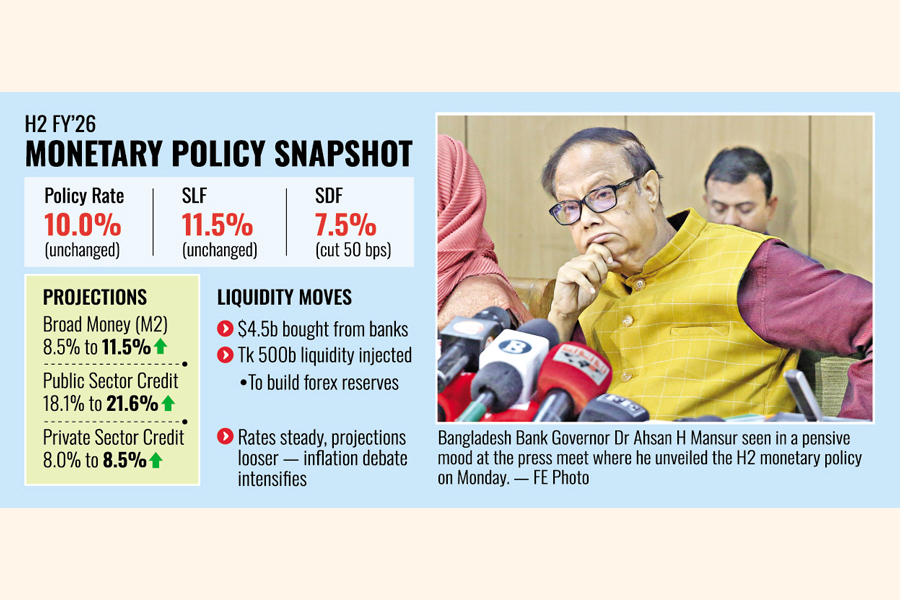
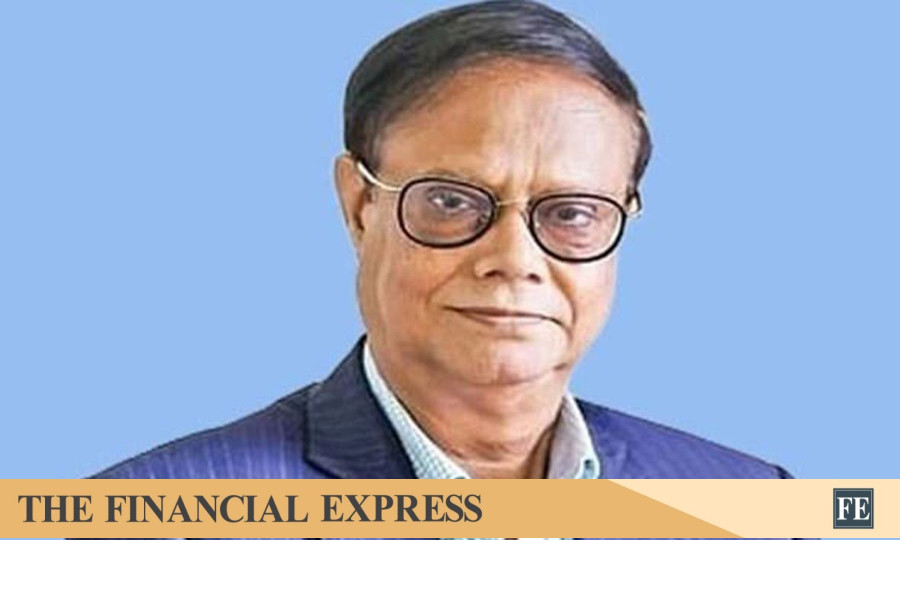
If everything goes according to the plan, the Bangladesh Bank (BB)---the country's monetary authority, is all set to emerge as an autonomous financial institute. To make this happen, as incumbent governor of the central bank Dr Ahsan H Mansur discloses in an interview with the FE, the process of bringing about the necessary revision to the Bangladesh Bank Order 1972 is under way right now. With this move Bangladesh stands poised to break free from the stereotyped notion that only the developed, not the developing or least developed, countries deserve independent central banks. In fact, the central bank in every country should enjoy some degree of independence in performing its core functions like monetary policy and financial stability. It may be accountable as much as required for maintaining transparency and responsiveness to crises through reporting to the finance ministry or parliament.

The nation will be waiting to see how far the horizon of the BB's autonomy can be extended under the legal provisions now getting worked out on the anvil. That the incumbent BB governor has made it clear that he has not been under any pressure from the government is understandable. It is, however, one thing under the rule of an interim government but quite another when a political government takes over. Political governments more or less exert pressure on the central banks everywhere at times to take popular decisions for reasons of political expediency. The national banks in advanced countries have safeguards equal to the task of withstanding such pressures without getting swayed by political pressures in favour of adopting short-term populist policies. Instead, the central bank undertakes the task of navigating the tortuous and painful course to achieve the long-term economic goals even if the policy is unpopular. If the BB is made structurally sound and legally strong to go about the business of focusing on its long-term goals such as framing effective monetary policy, controlling inflation and managing financial crises arising even out of external developments, it will be an excellent job.

It must be recognised that the BB has already given a good account of itself. During the remaining period, it will have to build on this to leave a legacy for the political government to continue with such an enabling equation. If this happens, it will be a great gift from the incumbent governor and the interim government to the nation. It is because of such mutually beneficial relations between the government and the BB, the later could take a few unpopular decisions such as leaving the exchange rate between dollar and Taka on the open market and supporting at least two banks to have an appreciable turnaround.

Next to come, according to the governor, the most crucial decision on the non-performing banks. Merger of a few of them and takeover of others on the basis of assessment the BB made are on the cards now. The banks that face severe liquidity crisis will be taken over but not dissolved. The government can hardly afford to operate such sick banks. If not divested to raise funds, the other ways of their survival will be handing over to private hands or injecting more minted money. The last option is undesirable. Perhaps a middle course based on a combination of disposal of some assets, thriftiness in operation and the barest minimum injection of fund can help wobbling banks to gradually stand on their feet.​
 
Analyze

Analyze Post

Add your ideas here:
Highlight Cite Fact Check Respond

Legal flaws, decentralisation fuel banking scams: Saddat
Mostafizur Rahman 03 June, 2025, 21:43

1749083004587.webp

Kimiwa Saddat

Centralised operations, diversified revenue models, and disciplined governance are vital for the recovery of Bangladesh’s banking sector, said Kimiwa Saddat, Managing Director (current charge) of Community Bank Bangladesh PLC.

In an interview with New Age Business magazine, the country’s youngest Managing Director identified the decentralised operational structures still followed by most banks as a root cause of unchecked lending, mismanagement, and inefficiencies.Wellness retreats

‘Unless banking operations are consolidated and streamlined, incidents of mismanagement and fraud will continue, undermining public confidence,’ he said, making the remarks at a time when the country’s banking sector is grappling with one of the worst crises in its history.

He noted that banks currently performing well tend to have more centralised control structures, which allow for more effective risk management.

Saddat identified non-performing loans (NPLs) as the most pressing issue facing the banking sector today.

He argued that the problem extends beyond lending discipline and reflects deeper structural inefficiencies.

While stronger banks are adopting centralised models that promote better governance and risk control, many institutions continue to operate in a fragmented manner, hindering systemic reform.

On the issue of supporting a large number of weak banks through capital injections, despite the economic strain on Bangladesh, Saddat acknowledged that the recovery process would require a long-term commitment, potentially spanning three to four decades.

While capital infusion is one option, he emphasised that it should not be seen as the only path forward. Alternatives such as involving depositors as equity stakeholders or implementing targeted restructuring measures must be explored as part of a comprehensive reform agenda.

1749083035257.webp

Kimiwa Saddat

He expressed optimism that the sector would eventually overcome these challenges.

In his view, the market will self-correct over time, and banks currently underperforming will either adapt or be phased out, resulting in a more robust system overall.

Saddat pointed to the turnaround of previously struggling banks, such as Eastern Bank, which are now among the top performers. These success stories, he said, demonstrate that recovery is possible through sound management, transparency, and strategic reform.

He also believes that forensic audits can play a key role in identifying the extent of losses in weaker banks, thereby providing a factual basis for targeted interventions. Solutions could include fresh capital injections by the government, public-private partnerships, or other innovative financial models.

Commenting on the recent push for bank mergers, Saddat struck a cautious note. While acknowledging that mergers and acquisitions are a potential solution, he does not view them as the first or most effective course of action.

In previous instances where strong and weak banks were merged, mere announcements triggered depositor panic and led to falling share prices for listed banks, he noted.

The complexity of merging banks with wide structural differences makes it a risky and challenging process.

Without thorough planning and clear communication, such strategies can backfire, eroding public trust rather than restoring it.

Beyond the challenges posed by decentralised operations, another major obstacle, according to Saddat, is the outdated legal framework — particularly regarding mortgage foreclosure laws and the decision-making processes for handling defaulted loans.

The sale of mortgaged properties often takes between three and seven years due to legal entanglements.

As such, rules governing mortgage foreclosure must be clearly defined, timelines shortened, and responsibilities allocated through a well-structured decision tree.

Saddat emphasised the urgent need to modernise legal and regulatory frameworks. ‘Without legal reform, other structural adjustments will have limited impact,’ he said.

As long as wilful defaulters are able to exploit legal loopholes and obtain indefinite stay orders, banks will remain exposed.

Saddat stressed the need to enforce existing regulatory provisions designed to penalise such defaulters, warning that without enforcement, reform will remain an illusion.

He also highlighted the profitability strategies of foreign banks operating in Bangladesh.

1749083067014.webp

Kimiwa Saddat

He cited Standard Chartered Bank’s recent financial disclosure, which reported profits of over Tk 3,500 crore despite its comparatively smaller loan and deposit base.

Saddat observed that foreign banks such as HSBC succeed by adopting diversified revenue models that do not rely heavily on interest income. Instead, they generate significant fee-based income, strong treasury operations, and non-funded earnings — particularly from trade finance activities such as letters of credit (LCs).

In contrast, many Bangladeshi banks remain heavily reliant on interest income from loans.

Saddat urged local banks to reconsider their business models by drawing lessons from international best practices.

The key difference, he explained, is that foreign banks enjoy greater credibility and trust in global credit markets. Their LCs are widely accepted, whereas Bangladeshi banks often face difficulties in finding foreign correspondents willing to confirm or process LCs due to concerns over credibility.

This disparity restricts the capacity of local banks to expand their non-funded income, putting them at a competitive disadvantage.

Saddat expressed cautious optimism regarding the government’s recently established taskforce on banking reform.

However, he believes that for the taskforce to be effective, it must focus on a few core priorities: regulatory modernisation, strategic centralisation, diversified revenue models, and disciplined governance.

Addressing the recent surge in depositor anxiety and fund withdrawals, Saddat underscored the importance of restoring public confidence.

He argued that regaining trust requires more than financial measures — it calls for transparency, consistent communication, and visible accountability.

Government agencies and banking leaders must work together to reassure the public that deposits are secure, that defaulters will be held to account, and that reforms are being implemented with genuine commitment and urgency, he said.​
 
Analyze

Analyze Post

Add your ideas here:
Highlight Cite Fact Check Respond

Five underperforming banks to merge into Islamic bank
bdnews24.com
Published :
Jun 05, 2025 18:37
Updated :
Jun 05, 2025 18:37

1749165013263.webp


Bangladesh Bank will merge five underperforming Islamic banks into a single entity, which will be structured in line with Shariah-compliant banking principles.

The decision came at a meeting on Wednesday, where Bangladesh Bank Governor Ahsan H Mansur met with the managing directors and chairpersons of the five banks.

According to First Security Islami Bank Chairman Abdul Mannan, the banks involved are Social Islami Bank, Global Islami Bank, First Security Islami Bank, Union Bank, and EXIM Bank.

Four of these banks were previously controlled by Saiful Alam, a Chattogram-based businessman known for his close ties to deposed prime minister Sheikh Hasina.

EXIM Bank’s board was under the control of Nazrul Islam Mazumder, also a close associate of Hasina.

The merger process is expected to begin after Eid-ul-Azha, taking approximately three and a half months.

A new board will be formed, comprising existing board members and representatives from various sectors. Until the merger is complete, the banks will operate under the direct supervision of the central bank.

It has also been decided that the newly formed bank must reduce its total defaulted loans to below 10 percent. The banks’ assets will be consolidated, and bad assets will be transferred to a management company.

A fresh banking licence will be issued by Bangladesh Bank for the newly formed entity. The government, along with international development partners, will provide the required capital. Budgetary allocations have already been made in the 2025-26 fiscal year.

The entire process will be carried out under the upcoming Bank Resolution Ordinance 2025.

Mannan expressed optimism that the move would bring much-needed stability to the banks, and confirmed that the new bank will follow a fully Shariah-compliant model.

He also acknowledged that most of the loans that were issued while these banks were under S Alam Group’s influence have turned into defaults, severely weakening their financial position.

“After the merger, the number of branches will increase and customer service will improve,” he added.

“Initially, these banks will be brought under state control, after which the government will seek foreign investors for privatisation,” Mannan said.​
 
Analyze

Analyze Post

Add your ideas here:
Highlight Cite Fact Check Respond

Banks fail to implement BB directive to keep adequate cash at ATMs during Eid holidays

Published :
Jun 13, 2025 00:17
Updated :
Jun 13, 2025 00:17

1749769408539.webp


Banks have failed to follow Bangladesh Bank's (BB) instructions to keep ATM boothsin service during the Eid holidays.

There is a 10-day holiday from June 5 to June 14 on the occasion of Eid-ul-Azha. Banks are also closed during this holiday.

As a result, ATM booths have become the only hope for withdrawing cash. But during this long Eid holiday, the booths have not provided the desired service. Customers are facing hardships.

Most of the ATMs in Dhaka city are now out of service or out of operation. The same is true of ATMs located in different districts.

The central bank announced in a circular on May 29 that all scheduled banks in the country will have to provide sufficient money to their ATM booths to allow customers to make smooth financial transactions during the Eid holiday.

Bangladesh Bank instructs commercial banks every year before Eid to keep sufficient money in the booths and have a system for refilling around the clock. But in reality, this is not reflected.

Several bank officials told UNB that ATM booths are usually operated in two ways - one is a booth attached to the bank branch, and the other is a separate or independent booth. The booths adjacent to the branch are operated by that branch.

Since the banks were closed last Thursday during the Eid holiday, new money could not be deposited in these booths because all the branch officials were on leave. However, some banks have taken special initiatives and have kept some officials in charge only for filling money in ATMs.

As a result, although some booths had money, most were empty.

An official of Bangladesh Bank said, "We have already given instructions so that sufficient money is kept in each booth."

However, there are complaints at the field level that many banks are not following those instructions.​
 
Analyze

Analyze Post

Add your ideas here:
Highlight Cite Fact Check Respond

WB-GUARANTEED REVOLVING FUND FOR LNG IMPORT
Local, foreign banks scramble for LC financing
First-year guarantee to fetch $350m under 'Revolving LC facilities' scheme


FHM HUAMAYN KABIR
Published :
Jun 13, 2025 00:51
Updated :
Jun 13, 2025 00:51

1749770559633.webp


Six proposals from national and international commercial banks have so far been received as the bankers queue up for funding Bangladesh's LNG import with the World Bank playing the guarantor, officials said.

Now, they said, the country's energy and mineral resources corporation - nicknamed Petrobangla -- is negotiating with the aspirant banks on the possible rate of interest on their loans and other charges for the import of liquefied natural gas from the global market.

The World Bank's soft lending window, the International Development Association (IDA), has come forward with a US$350 million worth of loan guarantee for facilitating the fuel import to meet Bangladesh's growing energy demand, they said.

"We have got six expressions of interest (EoIs) from national and international banks. Now we are negotiating with them on the rate of interest and other charges," a senior Petrobangla official told the FE Thursday.

They have a plan to suggest the commercial banks to form a consortium to support the government in importing LNG with the guarantee of the multilateral funding agency.

The Washington-based lender's soft-lending window has assured Bangladesh of underwriting loans needed to foot the bill worth $350 million for LNG import. This amount falls under a 'Revolving LC facilities' scheme.

"In the first phase, we have talked to the aspirant commercial banks on their LC-opening rate and charges for other services for the LNG import. We hope we will get a competitive rate from them," says a senior Energy and Mineral Resources Division (EMRD) official.

"After finalising deal with the commercial banks or with their consortium, we will welcome the IDA's guarantee scheme and will open LCs for importing the LNG."

The EMRD considers the WB proposal as a new avenue for Bangladesh in LNG supply to feed the country's growing fuel demand.

Another senior EMRD official says although the WB has proposed to help Bangladesh in importing liquefied natural gas or LNG worth up to $350 million annually from the international market, it also offers that the facility will be enhanced over the next seven years.

The proposed first tranche of credits for the first year will be a 'revolving LC facility' for securing the corporation's long-term working capital for smooth import of the liquid gas that supplements the supplies from the national gas grid amid gas-exploration stalemate in the country.

According to the proposal, for the revolving LC-facilitating funds the IDA will charge SOFR-plus 2.0 per cent. Its LC-opening period will be three months and the repayment period nine months.

The EMERD official says after getting the EoI from the commercial banks, they will compare the proposal with other financing facilities like the ongoing credit facility from the Islamic Development Bank (IsDB)'s ITFC.

"If we find it concessional than the other existing facilities, we will go for taking the IDA offer."

The ITFC has recently confirmed $600 million worth of loans for Bangladesh to import fuels and fertilisers from the overseas market.

Bangladesh government will borrow $600 million from the ITFC to import fuel oils, LNG, and fertilisers. The loan will carry an interest rate of six-month SOFR-plus 1.80 per cent, along with a 0.2-percent administrative fee.

As per IDA's proposal, some local and foreign banks will arrange the loan for opening LNG- import LCs. The IDA will be the guarantor on the loans from the commercial banks on behalf of the importer, the state-run Petrobangla.

Following Bangladesh's natural gas-supply shortages from its own gas fields across the country-largely for neglecting new exploration-it has imported the liquid gas from overseas market over the last few years in a bid to meet local energy demand.

The LNG import started in the 2018-2019 period. Since then, the imported fuel has played a vital role in meeting the country's growing gas demand.

In 2022, the country imported a substantial quantity of LNG, to the tune 5.06 million metric tonnes, from Qatar Gas, Oman Trading, and the spot market at a cost of US$4.555 billion.

Last year, a total of 86 LNG cargoes were imported-- 56 from long-term suppliers and 30 from spot market, the official mentions.

Bangladesh will need to import 30-Mtpa LNG to meet the growing local demand by 2041 as domestic gas reserves are depleting fast, according to a global report of the Copenhagen-based research firm Ramboll in association with Geological Survey of Denmark and EQMS Consulting Limited.

The country's "existing gas reserves will run out by 2038 if no new exploration and discovery take place," the report reads about the alert.​
 
Analyze

Analyze Post

Add your ideas here:
Highlight Cite Fact Check Respond

Members Online

Latest Posts

Back
 
G
O
 
H
O
M
E