Home Watch Videos Wars Movies Login

[🇧🇩] Banking System in Bangladesh

Latest Posts Countries Wars Q&A

[🇧🇩] Banking System in Bangladesh
285
9K
More threads by Saif

G Bangladesh Defense

Nov Islamic banking up on remittances, investments

SAJIBUR RAHMAN
Published :
Jan 25, 2026 08:22
Updated :
Jan 25, 2026 08:22


1769390324160.webp


The Islamic banking sector in Bangladesh staged a significant comeback in November 2025, buoyed by a robust surge in inward remittances and a steady rise in Shariah-compliant investments.

After a period of structural adjustments and governance reforms, the sector recorded double-digit growth in investments and total assets, indicating a restoration of depositor confidence, particularly among expatriates and rural savers.

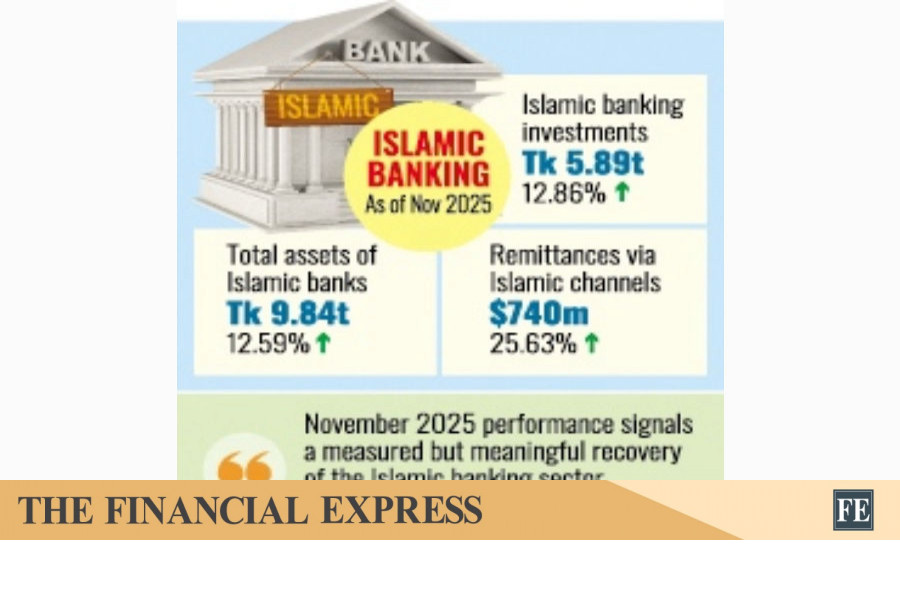
According to Bangladesh Bank (BB) data, the Islamic banking system recorded considerable growth in investments, rising 12.86 per cent to Tk 5.89 trillion in November 2025, up from Tk 5.21 trillion in the same month of the previous year.

While the conventional banking system also experienced growth -- rising from Tk 16.07 trillion to Tk 17.78 trillion -- its 10.60 per cent increase was slightly outpaced by Shariah-based lenders.

This expansion has solidified the Islamic sector's position, which now accounts for approximately one-fourth of total investment in the country's banking industry.

Total assets of Islamic banks saw a "robust growth" of 12.59 per cent, jumping from Tk 8.74 trillion to Tk 9.84 trillion during the period under review.

Perhaps the most striking highlight of the sector's performance is the recovery of its remittance share.

Remittances through Islamic channels surged from $472 million in November 2024 to $740 million in November 2025.

"The regained confidence of foreign workers in Islamic banks, likely due to improved management and tighter regulatory oversight, has been a primary driver for this 25.63 per cent jump in remittance share," said a senior central bank official.

In contrast, the trade sector showed more stability than growth.

Export proceeds via Islamic banks saw a slight decline of 4.41 per cent, standing at $668 million, while import payments marginally decreased 1.90 per cent to $1.04 billion.

Islamic banks continue to dominate the agent banking landscape, serving as a critical bridge for financial inclusion. Personal finance advice

They hold 54.58 per cent of total deposits in the agent banking arena. Deposits in this segment rose to Tk 261 billion in November 2025, marking a sharp 22.67 per cent year-on-year growth.

The BB report said full-fledged Islamic banks remain the primary drivers of the sector, sanctioning 91 per cent of all Islamic investments, while conventional banks operating through Islamic branches and windows contributed the remaining 9 per cent.

Industry experts suggest that while the sector has shown resilience, maintaining this momentum will require continued focus on governance and diversification of Shariah-compliant products to compete with an increasingly aggressive conventional sector.

Dr Masrur Reaz, chairman of Policy Exchange Bangladesh, said the November performance signals a measured but meaningful recovery of the Islamic banking sector.

"The rebound in remittance inflows through Islamic banks is particularly significant, as remittances are fundamentally trust-based. This suggests that governance reforms and closer regulatory oversight are beginning to restore confidence among expatriate workers," he noted.

He observed that the double-digit growth in investments and assets reflects strong demand for Shariah-compliant financing, especially in rural and semi-urban areas where agent banking has emerged as a key strength.

"Islamic banks' dominance in agent banking underscores their comparative advantage in financial inclusion and grassroots deposit mobilisation," he added.Personal finance advice

However, Dr Reaz cautioned that sustaining this momentum would require deeper structural improvements.

"The sector must move beyond balance-sheet expansion and focus on risk management, product innovation, and greater transparency. Without diversification of Shariah-compliant instruments and stronger corporate governance, the gains may prove cyclical rather than structural," he said.

He also pointed out that the relatively weak performance in trade finance highlights the need for Islamic banks to enhance their capacity in export-import financing to remain competitive with conventional lenders.​
 
Analyze

Analyze Post

Add your ideas here:
Highlight Cite Respond

What banks must get right in 2026

By Salekeen Ibrahim

1769476840830.webp


In 2026, the message from the Bangladesh Bank is blunt. The year will reward prepared banks and punish complacent ones. The introduction of risk-based supervision from January 2026, supported by a new supervisory structure, stricter loan classification, prompt corrective action and a roadmap towards IFRS 9-aligned expected credit loss provisioning, marks the most serious regulatory reset in the financial system in decades.

For bank owners, managing directors and senior executives, the key question is no longer what the regulator will do, but how prepared each bank is to survive and grow under the new framework. The days of business as usual are over.

The first and most significant step for bank management in 2026 must be radical honesty. The Bangladesh Bank’s comprehensive loan classification and provisioning guidelines, introduced in 2025, have already exposed hidden stress. The era of masking weakness through repeated rescheduling is effectively over. Research by the Centre for Policy Dialogue (CPD) and the World Bank financial sector review shows that prolonged rescheduling and evergreening disguised true asset quality for years. Balance sheet strength was overstated, and investor confidence was misled.

Internal asset quality reviews must now move beyond regulatory paperwork and become a strategic tool. Banks that acknowledge losses early are more likely to earn regulatory trust, investor support and depositor confidence. Pain delayed becomes pain multiplied.

Weak governance remains the core disease of the banking industry. Studies by Transparency International Bangladesh (TIB) repeatedly show that political influence, related party lending and ineffective boards have driven reckless credit decisions. In 2026, banks will be forced to empower independent directors and risk committees, give chief risk officers real authority and enforce zero tolerance for related party transactions. Under risk-based supervision, poor governance leads to closer scrutiny, growth restrictions and reputational damage. Governance is no longer about image. It is about regulatory survival.

Past mistakes also show that balance sheet growth without proper risk pricing destroys value. The Bangladesh Bank’s revised core risk management guidelines call for credit growth that reflects risk capacity rather than ambition. Banks must reprice loans based on sector and borrower risk, exit politically exposed and structurally weak segments, and focus on small and medium-sized enterprises, supply chains and cash flow-based lending where risk can be monitored. Research by the IFC and ADB consistently shows that diversified SME portfolios, when properly supervised, perform better over time than concentrated corporate loan books. The future belongs to smarter lending, not bigger lending.

The shift towards expected credit loss provisioning under IFRS 9 is not merely an accounting change. It is a cultural transformation. Banks must move from backwards-looking loss recognition to forward-looking risk anticipation. In 2026, this means investing in data infrastructure and credit analytics, building historical default and recovery databases, and training finance, risk and business teams together rather than in silos.

The formation of new central bank divisions for technology risk, digital banking and supervisory analytics sends a clear signal. Banks must respond by strengthening core banking systems and management information systems, integrating credit, liquidity and operational risk dashboards, and stress testing liquidity under deposit withdrawal scenarios. The planned emergency liquidity assistance framework will support banks in distress, but only those with sound governance and transparency will qualify. Liquidity support is not a bailout. It is a test of trust.

With rising non-performing loans eroding capital adequacy, capital planning must become a strategic priority, not a year-end formality. IMF-supported financial stability assessments show that undercapitalised banks lose lending capacity, credibility and regulatory flexibility. Balance sheet repair through asset sales, mergers or structured resolution of weaker institutions will therefore remain on the table.

The banking crisis is painful, but it is also an opportunity to rebuild trust, discipline and competence. The banks that succeed in 2026 will be the most honest, disciplined and prepared. In the new era of Bangladeshi banking, ignored risk disrupts growth, while managed risk restores confidence.

The writer is a senior banker​
 

Analyze Post

Add your ideas here:
Highlight Cite Respond

A blueprint for restoring trust
Initiative for reforming banking sector


Md Touhidul Alam Khan
Published :
Jan 27, 2026 23:41
Updated :
Jan 27, 2026 23:41

1769561991044.webp


The stability and integrity of a nation’s banking system are fundamental pillars of economic prosperity and public confidence. To ensure these systems function effectively, insulated from short-term pressures and vested interests, a comprehensive and principled reform agenda is essential. The following framework outlines a series of interlinked measures designed to reform the banking sector through institutional independence, enhanced governance, and unwavering accountability.

Upholding central bank autonomy. The cornerstone of financial stability is a central bank empowered to operate independently. This requires a legal mandate that shields monetary policy, regulatory oversight, and supervisory actions from political influence, ensuring decisions are guided solely by economic fundamentals and long-term stability goals.

Depoliticising bank governance. The integrity of financial institutions begins with their leadership. Governance must be reformed to mandate transparent, merit-based appointments for bank boards and senior management. Selection criteria should prioritize professional expertise and independence, decisively ending and avoiding the practices based on political affiliation.

Fortifying risk and regulatory frameworks. A proactive and robust supervisory architecture is non-negotiable. This entails the full adoption of Risk-Based Supervision (RBS) to allocate resources efficiently, alongside the rigorous enforcement of the Expected Credit Loss (ECL) model for forward-looking loan loss provisioning. Furthermore, integrating mandatory forensic audits and strengthening internal controls are critical steps to detect and prevent malfeasance.

Championing radical transparency. Transparency serves as a powerful deterrent to malpractice. Mandating the real-time public disclosure of significant loan approvals, beneficial ownership information, and non-performing loan data empowers media, civil society, and the public to act as vigilant stakeholders, fostering a culture of accountability.

Ensuring stringent legal accountability. The rule of law must be reinforced with clear, stringent penalties for financial misconduct. Legislation should target wilful defaulters, fraudulent activities, and any undue external pressure on banking decisions, establishing a credible and formidable deterrent.

Accelerating digital transformation. Technological adoption is key to reducing discretionary risks and enhancing inclusion. Accelerating the implementation of automated, data-driven credit assessment and digital platforms minimises opportunities for graft while boosting efficiency. Initiatives like “nano-lending” can strategically extend services to the unbanked population.

Cultivating an ethical institutional culture. Integrity must be ingrained at every level. This requires mandatory, ongoing training in ethics, compliance, and risk management for banking personnel, coupled with strong, enforceable whistleblower protection policies to safely surface internal concerns.

Managing a stable and decisive transition. Reform must be implemented with resolve yet careful sequencing to maintain market stability. Ensuring continuity through secured tenures for key independent leadership and establishing merit-based, transparent processes for selecting board chairpersons are vital. Crucially, banking strategy must be insulated from transient political cycles to build durable investor confidence.

Attracting top-tier independent directors. To secure the highest calibre of independent oversight, compensation for independent directors must be competitive and market-based, reflecting the significant responsibility and expertise the role demands.

Fostering inclusive stakeholder collaboration. Sustainable reform requires actively engaging civil society, private sector leaders, and international financial institutions. These ensures that policies are not only technically sound but also socially grounded, widely accepted, and enduring.

This holistic approach is not merely a regulatory checklist but a necessary covenant for rebuilding trust. By committing to these principles, stakeholders can collectively forge a banking sector that is resilient, transparent, and fundamentally aligned with the nation’s long-term economic health.

The imperative for collective action: The path outlined herein is neither a theoretical exercise nor a mere aspiration; it is an urgent operational necessity. A banking sector weakened by political interference, weak governance, and a deficit of accountability cannot serve as the reliable engine of growth and capital allocation that a modern economy requires. The consequences—eroded public trust, stifled investment, and systemic vulnerability—are already apparent and demand a decisive response.

Implementing this blueprint requires more than legislation; it demands a profound shift in mindset and a covenant of shared responsibility. The government must demonstrate the political will to enact and, crucially, to uphold the laws that guarantee independence. Regulators must be empowered and resourced to act without fear or favour. Bank leadership must embrace a culture where professional integrity outweighs personal or political allegiance. Civil society, the media, and the international community must maintain vigilant oversight, holding all actors to the promised standards.

The journey will be complex and will encounter resistance from entrenched interests. A phased, yet unwavering, implementation is key. Begin by cementing central bank autonomy and depoliticizing appointments—the foundational steps without which other measures will falter. Concurrently, the strengthening of legal frameworks and the rollout of transparency platforms can build public momentum and create facts on the ground.

A financial system that commands domestic and international confidence, channels savings productively to fuel sustainable enterprises, extends opportunity through genuine financial inclusion, and acts as a stabilising force during economic uncertainty. It is the bedrock upon which long-term prosperity is built.

Ultimately, the reform of the banking sector is a test of institutional maturity. It is a choice between short-term expediency and long-term strength, between opacity and trust, between vulnerability and resilience. The blueprint is clear. The need is urgent. The responsibility for action rests with all who have a stake in the nation’s future. The time to begin is now.

Dr Md. Touhidul Alam Khan is the Managing Director & CEO of NRBC Bank PLC and a fellow cost & management accountant from ICMAB.​
 
Analyze

Analyze Post

Add your ideas here:
Highlight Cite Respond

Automated real-time monitoring of financial transactions to be introduced

Shanaullah Sakib Dhaka
Updated: 27 Jan 2026, 17: 47

1769563541568.webp

Bangladesh Bank Prothom Alo file photo

All types of financial transactions across the banking sector are being brought under instant, automated monitoring. As a result, the Bangladesh Financial Intelligence Unit (BFIU) will be able to detect any financial crime committed through bank accounts in real time.

According to the agency, once the new system is operational, all forms of financial crime, including anonymous loans, loan misuse, money laundering and trade-based fraud, will be detected immediately.

Mobile financial services (MFS) will gradually be brought under this initiative as well. With the introduction of the new system, Bangladesh will enter a new era of financial transaction oversight.

1769563626478.webp


At present, the BFIU does not receive information on suspicious transactions, or STRs, in real time. The flow of such information depends entirely on the relevant bank. Moreover, under the existing framework, the agency receives no information on financial crimes committed through trade.

In this context, the BFIU has undertaken an initiative to bring all types of transactions under real-time, automated surveillance. This technology-driven and automated service has been named the Proactive Transaction Monitoring System (PTMS), or early-warning transaction monitoring mechanism.

A pilot phase of the system is scheduled to be launched later this month. Initially, 13 banks will be connected to the system, with all banks to be brought under its coverage in subsequent phases, according to relevant sources.

At present, the BFIU does not receive information on suspicious transactions, or STRs, in real time. The flow of such information depends entirely on the relevant bank. Moreover, under the existing framework, the agency receives no information on financial crimes committed through trade.

Speaking to Prothom Alo, Syed Mahbubur Rahman, managing director of Mutual Trust Bank, said, “If this system can be fully implemented, financial crimes in the banking sector will be reduced significantly.”

Stating that alongside bankers, all bank customers will also become more cautious, he further said, “If anonymous loans, fraudulent letters of credit and money laundering can be prevented, the country’s economy will develop rapidly. Many countries have progressed by adopting this system. We need to move in this direction without delay.”

Are CTR and STR mechanisms failing?

Under the current system, banks are required to submit a Cash Transaction Report (CTR) to the BFIU when cash deposits or withdrawals of Tk 1 million or more are made through banking channels. These reports must be submitted by the 22nd of each month.

In addition, banks must identify suspicious transactions as STRs and report them to the BFIU. However, reports are submitted only when banks themselves deem a transaction suspicious.

In many cases, banks fail to report serious offences, leaving financial irregularities beyond detection. Dishonest officials, directors and influential individuals exploit these loopholes. The agency also receives no information on trade-based money laundering or the laundering of loan funds.

This initiative will make everyone more cautious. Large-scale transactions may decrease----Ahsan Zaman Chowdhury, secretary general, ABB, and MD of Trust Bank.

According to BFIU data, although the volume of STRs increased in the 2024–25 financial year compared to 2023–24, around 80 per cent were related to routine banking transactions. There were very few allegations concerning trade-based money laundering or loan irregularities. As a result, agency officials believe that the existing preventive mechanisms are not effectively reducing risks related to money laundering and financial misconduct.

How PTMS will work

The PTMS is being introduced as a technology-based, automated system to prevent irregularities in the financial sector. Through this technology, the source and destination of every transaction conducted through banking channels will be identified, and automated early-warning alerts will be generated for any transaction that is inconsistent with the account profile.

These alerts will be transmitted automatically to the relevant bank branch, the bank’s head office, and the BFIU. This will enable the BFIU to take immediate action in cases of large or abnormal transactions.

Relevant officials noted that under existing regulations, customers are required at the time of opening a bank account to declare the sources from which funds will be deposited and the purposes for which funds will be spent. Under the PTMS, an alert will be issued if a loan is not used for its declared purpose.

According to them, under the new rules, key indicators, including the nature and capacity of importers’ and exporters’ businesses, beneficiary information and the flow of funds, will be incorporated at the time of opening letters of credit.

In the initial pilot phase, 13 banks will be connected to the new system. These are Sonali Bank, The City Bank, Dutch-Bangla Bank, BRAC Bank, Islami Bank, United Commercial Bank, Bank Asia, Southeast Bank, South Bangla Agriculture (SBAC) Bank, Trust Bank, Mutual Trust Bank, Eastern Bank and Prime Bank.

Following the pilot phase, the BFIU aims to roll out the system across all banks within the current year.

Asked about the initiative, Ahsan Zaman Chowdhury, secretary general of the Association of Bankers, Bangladesh (ABB), and managing director of Trust Bank, told Prothom Alo, “This initiative will make everyone more cautious. Large-scale transactions may decrease.”

“With proper oversight, financial crimes will decline in the future, which will have a positive impact on the economy. This initiative will be beneficial for the country’s financial sector,” he added.​
 
Analyze

Analyze Post

Add your ideas here:
Highlight Cite Respond

Rationalising microcredit interest rates

FE
Published :
Feb 02, 2026 00:04
Updated :
Feb 02, 2026 00:04

1769993074205.webp


As the government seeks to reform the microfinance sector, which has long been plagued by irregularities and high interest rates, a crucial question has emerged: should lending rates of microfinance banks be capped? The newly promulgated Microfinance Bank Ordinance proposes transforming eligible microfinance institutions into specialised banks operating under a social business model. Under this framework, dividends for investors would be capped at the level of their total investment, while profits beyond capital recovery would be reinvested for social purposes. The ordinance states that the banks' primary objective would be to create new entrepreneurs by providing loans with or without collateral, and thereby to support job creation and poverty reduction. A critical issue, however, remains conspicuously absent from the ordinance: the interest rates these microfinance banks will be allowed to charge.

On this point, the Financial Institutions Division (FID) under the Ministry of Finance is in favour of capping lending rates of microfinance banks in line with commercial banks. Some economists, however, propose that interest rates should be left to market competition, arguing that borrowers' freedom to choose lenders will compel banks to offer loan at competitive rates. However, if past experience of microcredit operation in Bangladesh is anything to go by, giving a free rein to micro lenders can be tricky. Microfinance Institutions (MFIs) once used to charge borrowers 30-40 per cent interest. Then in the face of widespread backlash and international criticism, the Microcredit Regulatory Authority (MRA) was formed in 2006. The MRA capped microcredit interest rate at 27 per cent in 2010. Later in 2019, the MRA further lowered it to 24 per cent, which is effective till to date. Critics argue that the existing interest rate is still excessively high, particularly because the effective interest rate often rises well beyond the stated cap due to compound interest, where borrowers end up paying interest on accrued interest. Considering this, the FID's move to cap interest rates of microfinance banks and push for the introduction of a simple interest system in place of compound interest is welcome.

The current rate of interest rate on microcredit is disturbing for several reasons. First, there is a clear issue of disparity. Whereas the wealthier sections of society can borrow from commercial banks at interest rates of around 12 per cent, it is unacceptable that the poor microcredit borrowers are required to pay more than twice that rate. Then, the repayment on loans starts from the very first week, which gives borrowers almost no time to establish an income-earning enterprise. To cover the instalments of first few weeks, borrowers often have to resort to taking out a further loan from a different NGO. Thus, much of the repayment of the loan is in fact a fresh loan in disguise, contracted from other agencies to pay off the old debt and save the borrower from default. Thus in many cases the recipients far from getting enriched find themselves stuck in a vicious cycle. To free themselves from this trap, many of them end up selling their cows, farmlands and homesteads. In worst case scenarios, many even commit suicide.

Ideally, the primary objective of microcredit is poverty eradication. In practice, however, it has become a lucrative business for some NGOs, trading on poverty and exploiting the poor. Only time will tell whether the government's move to establish microfinance banks can turn the tide and stop the exploitation of the poor.​
 
Analyze

Analyze Post

Add your ideas here:
Highlight Cite Respond

IMF cautions against unsecured liquidity support to weak banks

31 January 2026, 11:01 AM
UPDATED 31 January 2026, 14:15 PM

1769995153573.webp

Photo: REUTERS/FILE

The International Monetary Fund has cautioned against unsecured liquidity injections into weak banks in Bangladesh and urged full implementation of exchange rate reforms.

The Fund highlighted the urgent need for a credible banking sector reform strategy consistent with international standards to restore stability.

“Such a strategy should include estimates of undercapitalisation, define fiscal support, and outline legally robust restructuring and resolution plans,” it said.

The Washington-based multilateral agency made the observation in a statement issued yesterday after its executive board completed the Article IV Consultation for Bangladesh last week as part of a review of the progress in implementing the conditions it tied with the $5.5 billion loans to Bangladesh.

The IMF encouraged the authorities to conduct asset quality reviews for all systemic and state-owned banks, advance risk-based supervision, and strengthen governance and balance sheet transparency.

It said maintaining a tight policy mix is necessary to keep rebuilding foreign exchange reserves and reducing inflation. The Fund stressed the importance of full and consistent implementation of the exchange rate reform and greater exchange rate flexibility, while cautioning against unsecured liquidity injections into weak banks.

“Monetary policy should remain appropriately tight until inflation is firmly on a downward path,” it said, noting that inflation remains elevated despite a slight moderation.

The IMF said headline inflation fell from double-digit levels in early FY25 but remained elevated at 8.2 percent in October.

Inflation is projected to remain elevated at 8.9 percent in FY26 before subsiding to around 6 percent in FY27. “Risks to the outlook are tilted to the downside, mainly from delayed or inadequate policy action and reversals of exchange rate reform and fiscal discipline.”

“The economy continues to face mounting macro-financial challenges from weak tax revenue and financial sector vulnerabilities, with significant downside risks stemming from delays in the implementation of bold fiscal and financial reforms,” the IMF said, projecting Bangladesh’s economic growth at 4.7 percent for FY26.

It said the economy is expected to recover gradually over the medium term, with growth projected to accelerate to around 6 percent over the medium term.

Policies should focus on safeguarding fiscal sustainability and strengthening macro-financial stability, while implementing comprehensive structural reforms over the medium term to strengthen governance, create jobs, and promote economic diversification, it said.

The IMF acknowledged the interim authorities’ efforts to stabilise the economy following the 2024 uprising and in the run-up to the upcoming national elections.

It, however, noted that Bangladesh faces mounting macroeconomic and financial challenges, as weak revenue mobilisation, banking sector vulnerabilities, incomplete implementation of the new exchange rate framework, and elevated inflation continue to weigh on macroeconomic stability and growth prospects.

The lender observed an uneven programme performance and emphasised that decisive and sustained policy actions and bold reforms are needed to restore macroeconomic and financial stability and support the country’s long-term development goals.

“The new administration’s full ownership of the programme will be critical, supported by early and active engagement with staff and efforts to secure stakeholder buy-in.”

Directors stressed the need for ambitious fiscal reforms and encouraged the authorities to undertake bold tax policy reforms, simplify the tax system, and strengthen tax administration and compliance to mobilise revenue, it added.

The Fund suggested rationalising subsidies, prioritising growth-enhancing investments, enhancing social safety nets, and improving public financial and investment management to support inclusive development and growth.

“Strengthening the financial viability of energy SOEs will also be important.”​
 
Analyze

Analyze Post

Add your ideas here:
Highlight Cite Respond

Bank stocks propel market on hopes of post-poll recovery

FE REPORT
Published :
Feb 03, 2026 09:07
Updated :
Feb 03, 2026 09:07

1770165768107.webp


The Dhaka bourse closed Monday's session with a moderate rise in the broad index, extending the gaining streak for the second consecutive session, mainly driven by the banking sector.

From the very beginning of the day's session, investors' buoyancy was visible through the movement of the broad index and turnover value. DSEX, the broad index of the Dhaka Stock Exchange (DSE), continued its upward trend for more than an hour. Except for the midsession, the index movement was steady, and it finally closed the day with a moderate gain.

At the end of the session, DSEX settled at 5,247 points, up 1.04 per cent or 54.39 points.

The appreciation in banking stocks played a pivotal role in the index's rise. Market operators said banks saw increased participation amid expectations that they would benefit the most from the post-election economic scenario.

Ahsanur Rahman, chief executive officer of BRAC EPL Stock Brokerage, said, "The banks would bag the highest benefits from the recovery of the national economy." He noted that banks had been deprived of the benefits of exports and imports for a long time due to economic slowdowns.

"Many investors think the earnings of the banks will rise if the economy sees any recovery after the national election," Rahman said.

Ongoing reforms in the banking sector also made the stronger banks optimistic about further growth in operating profits. "That's why good banks, including BRAC Bank, have experienced increased participation from local and foreign investors," he added, noting that banks typically lead the market under normal conditions.

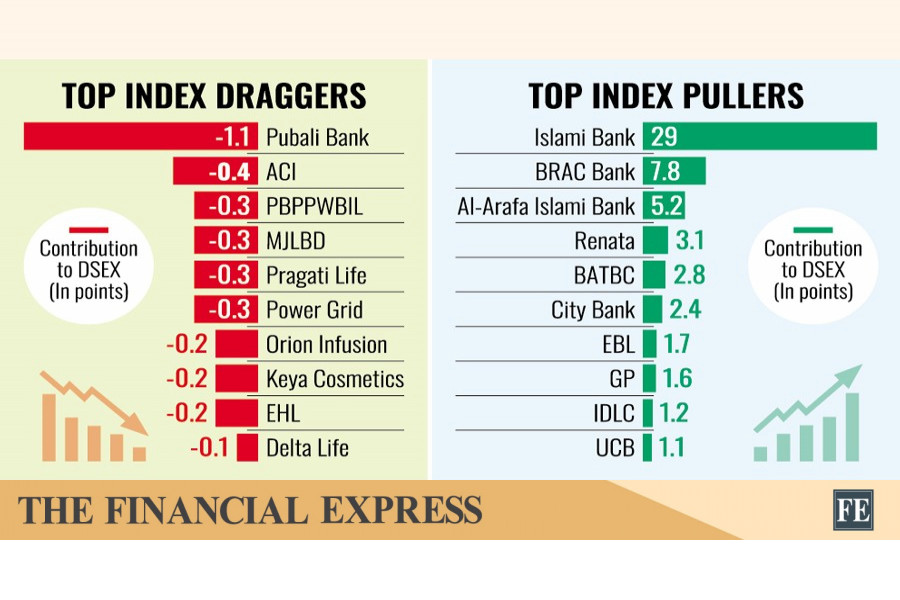
BRAC Bank was the top turnover leader on Monday with a value of Tk 298 million, followed by City Bank, Islami Bank Bangladesh, and Pragati Life Insurance. Islami Bank alone added 29 points to the broad index.

Among the top 10 index contributors, six were banks, including BRAC Bank, Al-Arafa Islami Bank, City Bank, Eastern Bank Ltd., and United Commercial Bank.

A market review by EBL Securities said the premier bourse extended its upward trajectory for a second consecutive session, as investors heightened participation and sustained accumulation in banking stocks.

"This improving sentiment translated into broad-based buying interest across key sectors, enabling the index to extend gains through the session and close in positive territory," the review said.

Other blue-chip stocks, including Square Pharmaceuticals and Grameenphone, also supported the rise in the broad index. Of the 30 blue-chip companies, 21 advanced, seven declined, and two remained unchanged.

The DS30 index, comprising blue-chip stocks, advanced 1.03 per cent or 20.59 points to close at 2,017.83 points.

Of the total issues traded on Monday, 215 advanced, 107 declined, and 68 remained unchanged. The premier bourse posted a turnover of Tk 7.46 billion, up 19 per cent from the previous session, with Tk 139 million coming from transactions executed on the block board.

Investors' participation in the banking sectoraccounted for 25.8 per cent of total market turnover, followed by pharmaceuticals, textiles, and general insurance.

Islami Bank Bangladesh was the top gainer with a rise of 9.85 per cent to close at Tk 52.40 per share, while Meghna Pet Industries was the worst performer, declining 7.80 per cent to close at Tk 26 per share.​
 
Analyze

Analyze Post

Add your ideas here:
Highlight Cite Respond

Govt’s net bank borrowing jumps nearly fivefold

Tk 48,819cr collected in seven months, nearly half of full-year target, as revenue growth falls short

5 February 2026, 00:00 AM
Sohel Parvez

1770280393760.webp


The interim government’s net borrowing from the banking system rose almost fivefold in the first seven months of the current fiscal year 2025-26, as spending raced ahead of sluggish revenue collection.

The government borrowed Tk 48,819 crore from banks as of January 25, compared with Tk 10,558 crore by January 23 last year, according to Bangladesh Bank (BB) provisional data.

The amount already accounts for nearly half of the full year’s borrowing target of Tk 104,000 crore.

The sharp rise reflects a widening gap between expenditure and income. Government spending has climbed steadily, while revenue collection has failed to keep pace.

The National Board of Revenue posted a 14 percent year-on-year growth in collection in the first six months of FY26, mobilising Tk 185,229 crore. Even so, receipts fell short of the target by about Tk 46,000 crore.

In the same period last year, revenue slipped by 1 percent amid unrest following the political changeover in August 2024.

“This is not a sustainable situation,” said Fahmida Khatun, executive director of private think-tank the Centre for Policy Dialogue (CPD).

She said weak domestic resource mobilisation pushes debt levels higher and leaves little room to manage day-to-day spending. “The revenue collection remains so low that it is difficult to manage regular expenditure.”

According to the economist, the country’s persistently low tax-to-GDP ratio has made the government increasingly reliant on bank borrowing, driving up debt and interest payments.

In FY25, interest payments reached a record Tk 132,460 crore, almost one-fifth of total budget spending, according to the finance ministry’s debt bulletin.

For the current year, interest costs stand at Tk 122,000 crore, accounting for 13 percent of the budget.

As debt servicing takes up a larger share of public funds, allocations for education, health and infrastructure are squeezed, undermining long-term growth prospects.

Fahmida said that unless tax collection grows fast, heavier government borrowing from banks will also tighten credit for the private sector.

Ashikur Rahman, principal economist at the Policy Research Institute (PRI), warned that a risky cycle is beginning to take hold.

Higher borrowing, he said, feeds directly into a growing interest burden within the fiscal framework.

“As debt servicing absorbs a larger share of public expenditure, fiscal space for productivity-enhancing investments, particularly in human capital, health, education, and critical infrastructure, shrinks,” he explained.

Over time, this trade-off weakens the state’s ability to address structural development constraints and undermines the quality of growth itself, said Rahman.

Rising government demand for credit also crowds out private firms, pushing up borrowing costs and discouraging investment.

“This is particularly concerning at a time when economic recovery and employment generation depend critically on a revival of private sector confidence and investment momentum,” he added.

The persistence of high borrowing also points to deeper weaknesses on the revenue side. Despite some gains, collections remain far below what is needed to finance public spending in a sustainable way.

“This points to longstanding deficiencies in tax policy design, tax administration, and compliance. Without a durable improvement in domestic resource mobilisation, borrowing risks becoming a default adjustment mechanism rather than a temporary counter-cyclical tool,” he said.

Breaking the cycle, Rahman said, will require prudent debt management alongside credible revenue reforms and a clear medium-term fiscal strategy that shifts spending towards growth-enhancing priorities rather than debt servicing.

More pressure is expected in the months ahead. The rollout of a new pay scale for government employees will require an additional Tk 106,000 crore, around one-fifth of total operating expenditure for the year.

CPD’s Fahmida suggested the increases should be phased in.

Otherwise, she said, maintaining fiscal balance will become one of the toughest challenges for the next government.​
 
Analyze

Analyze Post

Add your ideas here:
Highlight Cite Respond

Members Online

No members online now.

Latest Posts

Back
 
G
O
 
H
O
M
E