Home Watch Videos Wars Movies Login

[🇧🇩] Banking System in Bangladesh

Latest Posts Countries Wars Q&A

[🇧🇩] Banking System in Bangladesh
285
9K
More threads by Saif

G Bangladesh Defense

Banking fix may cost $5b-$6b
Says finance adviser; the amount is way below IMF’s $35b estimate
1753583342941.webp


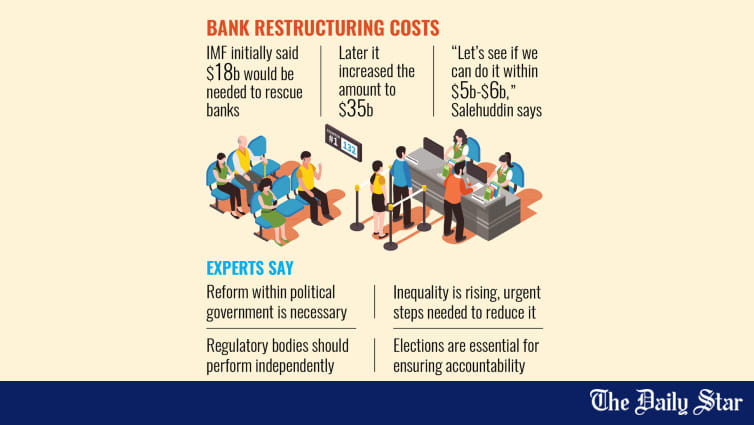
The interim government is considering a rescue plan costing around $5 to $6 billion to salvage troubled banks, which are reeling from widespread irregularities during the previous Awami League government, said Finance Adviser Salehuddin Ahmed.

This is way below the International Monetary Fund's (IMF) initial estimate of $18 billion, which was later raised to $35 billion.

"The IMF asked us where we would get such a whopping amount. I told them let's see if we can restructure them within $5 billion to $6 billion," Ahmed said at a book launch in Dhaka yesterday.

Former caretaker government adviser Hossain Zillur Rahman's book "Arthoniti, Shashon, O Khamota: Japito Jiboner Alekkho" was unveiled at the programme. BNP Secretary General Mirza Fakhrul Islam Alamgir was also present.

Ahmed said the interim government had inherited an economy on the brink of collapse, but signs of recovery are now beginning to show.

"But it is not fully recovered yet, and a total cure is not a simple task," he added.

Commenting on the scale of economic mismanagement and plundering during the previous government, Ahmed said, "Such looting was not seen in any country in the world."

1753583417998.webp


The interim government is carrying out short-term reforms, while long-term and mid-term reforms will be undertaken by a political government-— Salehuddin Ahmed Finance adviser.

He claimed that up to 80 percent of loans from some banks had been siphoned off.

"For instance, the total outstanding loan of a bank is Tk 20,000 crore, while around Tk 16,000 crore was taken away and they are now bad loans," said Ahmed, an economist and former governor of the central bank.

He questioned whether any public institution remained unaffected. "The law was broken. Process and system were distorted to such a level, it is difficult to do a good task," he said.

He noted that while the institutions remained in place, those responsible for the decay had not been replaced.

"Some people called to depart them all. However, an administration cannot run in such a way. So, we are trying to make them work by either gently persuading or scolding them. A countervailing power is necessary in the government," said the adviser.

Ensuring good governance under the existing political structure is extremely difficult, as there are no effective checks and balances on the prime minister and members of parliament, he said.

"Without reforms here, no matter how many reforms we talk about, it would not make any difference. Reforms are also needed within political parties," said the finance adviser.

He said that while the interim government is working on short-term reforms, it will be up to an elected political administration to carry out long-term and mid-term changes.

"I have realised that it is easy to exploit, but difficult to govern people here," he said.

BNP Secretary General Mirza Fakhrul Islam Alamgir said reforms are needed, but that must not be used as a pretext to delay elections.

"Reforms cannot be carried out overnight, and they take time. So democratic practices should not be delayed for the sake of reforms," Fakhrul said, adding, "Reforms must be made by people's representatives elected through a democratic process."

At the programme, Professor Mahbub Ullah, former chair of the Department of Development Studies at Dhaka University, focused on addressing rising inequality.

Fahmida Khatun, executive director at local think tank Centre for Policy Dialogue (CPD), said good governance is possible only if accountability is ensured, political stability is maintained, law enforcement remains effective, and regulators operate properly.

Despite high GDP growth and development over the past 15 years, most people had not benefited due to poor governance and corruption, she added.

"During this period, it was forgotten that people are at the centre of power," said the economist. "Regulatory bodies such as the Bangladesh Bank, the Bangladesh Securities and Exchange Commission, and the National Board of Revenue lost their institutional strength. As a result, a vested group benefited."

Prof Abu Ahmed, chairman of the Investment Corporation of Bangladesh (ICB), said he found the institution stripped of all assets when he was appointed. "It is a policy of autocracy that creates 'Mafiaism' and loots institutions. ICB was one victim of such an act."

He recommended elections, even if they might not resolve every issue. "Leaders should be elected, which will make them accountable," he said, adding that there must be a system to ensure no one can become an autocrat again, as autocracy damages the economy.

Hossain Zillur Rahman highlighted three essential conditions for reform and good governance.

First, he said, the democratic framework should prevent any individual or group, including within political parties, from becoming the sole source of power. During the previous regime, not only the prime minister but also all 300 parliamentarians acted as power centres in their own constituencies.

Rahman called for the decentralisation of power.

Second, he said the country should be made capable in terms of institutional functionality. Third, democratic behaviour must be practised and embedded immediately.

"It may take time, but there is no way to sit idle, saying it will take time. So practice should start," he said.

The book was published by Aloghar Prakashana. M Humayun Kabir, president of the Bangladesh Enterprise Institute, also spoke at the launch.​
 
Analyze

Analyze Post

Add your ideas here:
Highlight Cite Respond

Micromanaging should not be Bangladesh Bank’s job


1753666404011.webp

VISUAL: FREEPIK

Over the last three decades, Bangladesh Bank (BB) has become an increasingly operational regulator. Today, it reviews foreign loan approvals, dollar deposit flows, and large-ticket transactions on a case-by-case basis, making BB's role more cautious yet reactive, instead of strategic. A developing economy that wants to be a middle-income nation, such micromanagement is no longer tenable.

Globally, modern central banks focus on frameworks, not transactions. The Federal Reserve sets macro-prudential tools—capital adequacy norms, systemic liquidity thresholds, and risk-weighted asset requirements—without intervening in individual deals. The European Central Bank supervises systemic institutions but delegates day-to-day approvals to the banking layer. Even the Reserve Bank of India (RBI), long criticised for micromanagement, has shifted toward a supervisory approach that enables self-regulation through compliance-based incentives.

BB's current role in vetting each dollar deposit linked to external commercial borrowing illustrates the core issue. Instead of setting clear rules of eligibility, compliance documentation, and risk-based pricing bands, it approves every inflow manually. This adds friction, delays, and promotes opacity. According to data from the Bangladesh Investment Development Authority (BIDA), average approval cycles for foreign loans exceed 30-45 days, undermining competitiveness in global capital markets.

Besides, the strict enforcement of the Internal Credit Risk Rating System (ICRRS) has had unintended consequences. While aiming to protect banks from poor credit exposures, it disproportionately blocks smaller borrowers from credit. Large political borrowers, often backed by implicit guarantees, face no such friction. This skewed outcome has starved innovation and enterprise finance and failed to stop the trillions of fraudulent loans in the country.

Banks, in this regime, have stopped asking fundamental questions such as how ICRR ties into forward cash flow predictability or sector-specific volatility. Instead, a compliance mindset has emerged: "Bangladesh Bank required it." Over time, such an attitude has eroded institutional thinking capacity, making banks passive executors rather than strategic financiers. That is perhaps the most damaging long-term cost—when a regulatory environment encourages blind compliance over judgment.

A forward-looking central bank must enable rather than control by defining boundaries, building ecosystems, and letting licensed banks operate with autonomy within those boundaries. This requires: i) shifting from transactional approval to risk-based frameworks; ii) institutionalising supervisory sandboxes and early-warning systems; and iii) enabling ecosystem development instead of direct regulation.

BB should replace transaction-level oversight with sectoral risk frameworks. This includes pre-approved External Commercial Borrowing (ECB) routes for eligible companies with audited financials; risk-weighted credit windows for banks based on their capital base and non-performing loan (NPL) history; dynamic asset-liability matching rules that incentivise long-term lending; and launching multiple sandboxes to test the regulation and policies.

Countries like Malaysia have implemented credit guarantee schemes and sandbox-based regulations that allow rapid experimentation under controlled exposure. According to reports from Bank Negara Malaysia, their innovation sandbox approved 38 new financial products in 24 months with less than one percent regulatory breaches.

BB must also institutionalise a proactive supervision model rather than waiting for banks to default or misreport by building an AI-backed credit risk surveillance tool that flags high-risk portfolios; conducting quarterly asset quality reviews for banks above a certain asset threshold; integrating non-banking datasets (e.g., utility payments, tax records) into borrower scoring; and moving away from collateral-backed lending, and acknowledging other forms of assets.

The Reserve Bank of India introduced a Central Repository of Information on Large Credits (CRILC), mandating banks to report exposures above 50 million Indian rupees. This has significantly improved stress recognition timelines.

BB should catalyse markets, not dominate them. This means licensing independent credit rating agencies and asset reconstruction companies; opening up private distressed asset markets; and facilitating interbank repo and derivative markets to improve price discovery.

Vietnam and Indonesia have liberalised their NPL disposal process, resulting in a 30-40 percent recovery improvement within two years of implementation. According to the World Bank, NPL resolution in Indonesia improved from 22 percent to 63 percent post-reform between 2016 and 2019.

These steps require BB to fundamentally redesign its identity from an enforcer to an ecosystem architect. It must trust its licensed entities to operate under risk-based guardrails and reserve interventions only for systemic risks.

The banking reforms recently outlined with support from the IMF, Asian Development Bank, and World Bank offer a unique opportunity. The Distressed Asset Management Act, the Bank Resolution Ordinance, and the proposed deposit protection enhancements are foundational shifts. However, their success will depend on execution and mindset change.

More critically, Bangladesh Bank must invest in building human capital—regulators who understand structured finance, international bond markets, and fintech-led credit models. Otherwise, BB will continue to regulate yesterday's risks with today's tools, while tomorrow's markets go ungoverned.

Mamun Rashid, an economic analyst, is chairman at Financial Excellence Ltd and founding managing partner of PwC Bangladesh.​
 
Analyze

Analyze Post

Add your ideas here:
Highlight Cite Respond

Strong banks see massive deposit growth
Crisis-hit lenders lose deposits

Mostafizur Rahman 27 July, 2025, 22:55

1753755161604.webp


Several well-performing banks, led by BRAC Bank and City Bank, saw strong deposit growth in the year ending May 2025 as depositors shifted funds away from weaker institutions amid fear of collapse and loss of trust in bank governance.

Bankers said the shift reflects public frustration with troubled banks that continue to restrict withdrawals despite receiving substantial liquidity support from the central bank.

Despite Bangladesh Bank injected over Tk 35,000 crore into nine of the most distressed banks, several of them continued negotiating partial withdrawals due to overwhelming demand, further fueling public anxiety.

The situation worsened as the central bank began enforcing disciplinary measures, including the restructuring of bank boards, the initiation of special audits and merger process — steps that, while intended to restore order, triggered further unease among depositors who feared deeper instability.

Amid this crisis of confidence, depositors flocked to stronger, better-governed banks that are widely perceived as safer and more liquid, according to a Bangladesh Bank data.

BRAC Bank led the pack with a 35 per cent year-on-year deposit growth in May, with total deposits rising to Tk 78,460 crore.

It was at Tk 70,425 crore in December 2024.

City Bank followed with a 28 per cent rise, including its Islamic banking wing, reaching Tk 56,404 crore in deposits in May. It was at Tk 51,751 crore in December.

Jamuna Bank secured the third position, posting a 27 per cent growth to reach Tk 33,230 crore in May. Eastern Bank saw a 21 per cent rise to Tk 48,355 crore over the same period.

Pubali Bank, Dutch-Bangla Bank, and Trust Bank each registered 20 per cent deposit growth, with respective balances at Tk 80,084 crore, Tk 59,448 crore, and Tk 47,601 crore in May respectively.

Other banks showing robust growth include Mutual Trust Bank with 17 per cent, NCC Bank with 14 per cent, Bank Asia with 12 per cent, and Prime Bank with 11 per cent.

These banks are regarded as more resilient due to stronger compliance frameworks and healthier asset profiles.

Even Islami Bank Bangladesh, which has faced serious allegations of loan scams and mismanagement under the control of S Alam Group, managed to post a 7.48 per cent growth in deposits.

The bank began regaining depositor confidence after a major board overhaul in 2024. Its deposit base grew from Tk 1,58,435 crore in December to Tk 1,66,217 crore in May.

Banks associated with the S Alam Group experienced sharp declines.

Social Islami Bank posted a 17.38 per cent negative growth in deposits. First Security Islami Bank saw a 7.73 per cent fall, Bangladesh Commerce Bank 9 per cent, Global Islami Bank 7.15 per cent, National Bank 13.21 per cent, and Union Bank 2 per cent.

Exim Bank, which was under the control of NASSA Group saw 14 per cent fall in May.

The damage to these banks’ deposit bases was somewhat limited only because they restricted withdrawals, failing to meet depositor demands. Without such restrictions, bankers noted, the losses would have been much more severe.

According to central bank data, total deposits in the banking sector, excluding government and interbank accounts, stood at Tk 18,32,065 crore in May 2025, up from Tk 17,00,608 crore a year earlier—representing a 7.73 percent year-on-year increase.

However, bankers said the growth is sharply uneven. While strong banks continue to attract growing volumes of deposits, weaker banks remain under intense liquidity stress.​
 
Analyze

Analyze Post

Add your ideas here:
Highlight Cite Respond

Modernisation of monetary policy framework
A brief review of Bangladesh Bank's measures

Md Omor Faruq, Mahmud Salahuddin Naser, and Md Ezazul Islam

Published :
Jul 30, 2025 00:45
Updated :
Jul 30, 2025 00:45

1753832205047.webp


In the process of monetary policy formulation, Bangladesh Bank (BB) has been relying on the monetary targeting approach since its independence, to achieve the ultimate goal of price stability along with financial stability and supporting growth. The possibility of achieving success in maintaining price stability under the monetary targeting framework became very difficult, mainly due to changes like the money demand function resulting from financial innovation, the digital payment system, and the integration of Bangladesh’s economy with the global economy. As Bangladesh’s economy is strongly growing and equally integrating with the worldwide economy, the financial market has been developing and becoming more complex. In this context, a forward-looking strategy and an interest rate targeting monetary policy would be more effective for ensuring macroeconomic stability and promoting financial development. Therefore, BB adopted the interest rate targeting monetary policy framework to have an efficient monetary transmission mechanism to support the monetary policy objective of price stability and economic growth trajectory from July 2023 onward.

Policy Measures taken by BB under Modernisation of Monetary Policy

Policy initiatives for operationalisation of Interest Rate Corridor (IRC)

(I) On July 1, 2023 BB introduced a Interest Rate Corridor (IRC) where overnight Repo rate replaced by Policy rate and re-fixed at 6.50 per cent. The upper limit of this IRC is named as Standing Lending Facility (SLF) and replaced Special Repo rate which was re-fixed at 8.50 per cent. Moreover, the lower limit of IRC named as Standing Deposit Facility (SDF) and replaced the Reverse Repo rate which also re-fixed at 4.50 per cent.

(II) On October 5, 2023 BB re-fixed its IRC by increasing all the rates by 75 per cent basis points. After the increase Policy rate, SLF and SDF stand at 7.25 per cent, 9.25 per cent and 5.25 per cent respectively.

(III) On November 26, 2023 BB re-fixed its IRC by increasing all the rates by 50 basis points. After the increase Policy rate, SLF and SDF stand at 7.75 per cent, 9.75 per cent and 5.75 per cent respectively.

(IV) On January 17, 2024, BB re-fixed its IRC by increasing the policy rate by 25 basis points, from 7.75 per cent to 8.00 per cent. At the same time, the band width of the IRC was narrowed from ±200 basis points to ±150 basis points by Reducing SLF rate by 25 basis points from 9.75 per cent to 9.50 per cent, and increasing SDF rate by 75 basis points from 5.75 per cent to 6.50 per cent.

(V) On May 8th, 2024 to tame down the uprising inflation, BB re-fixed its IRC by increasing all the rates by 50 basis points. After the increase Policy rate, SLF and SDF stand at 8.50 per cent, 10.00 per cent and 7.00 per cent respectively.

(VI) On August 25, 2024, following the Monetary Policy Committee‘s decision to continue raising the policy rate until inflation reaches the desired level, BB increased all IRC rates by another 50 basis points. After the increase Policy rate, SLF and SDF stand at 9.00 per cent, 10.50 per cent and 7.50 per cent respectively.

(VII) On September 24, 2024, BB further re-fixed its IRC by increasing all rates by 50 basis points. After the increase Policy rate, SLF and SDF stand at 9.50 per cent, 11.00 per cent and 8.00 per cent respectively.

(VIII) On October 22, 2024, BB re-fixed its IRC once again, raising all rates by 50 basis points. After the increase Policy rate, SLF and SDF stand at 10.00 per cent, 11.50 per cent and 8.50 per cent respectively.

(IX) Finally, on March 4, 2025, to provide liquidity flexibility and financial support to all scheduled banks (including Islamic banks), BB reduced the daily Cash Reserve Requirement (CRR) by 50 basis points, from 3.50 per cent to 3.00 per cent, while keeping the bi-weekly average CRR unchanged at 4.00 per cent.

Policy initiatives for streamlining Open Market Operations (OMOs)

(I) Since August 2023, BB has provided unrestricted access to the Standing Deposit Facility (SDF) and Standing Lending Facility (SLF) along with the full allotment of the repo facility for all banks and non-bank financial institutions based on their demand.

(II) Since July 2024, BB introduced Central Bank Repo auctions twice a week, on Mondays and Wednesdays (or the next working day in case of a holiday), replacing the previous practice of daily auctions, while the Standing Lending Facility (SLF) and Standing Deposit Facility (SDF) remained available daily at prevailing rates.

(III) To enhance the effectiveness of monetary policy transmission within the framework of the Interest Rate Corridor (IRC) of monetary policy of BB, the following structural reforms in Open Market Operations (OMOs) has been implemented:

Starting from November 1, 2024, the practice of conducting repo auctions twice a week has been replaced with a single weekly auction (7 days, 14 days, and 28 days) held once a week, on Tuesdays. If Tuesday is a holiday, the auction will be rescheduled to the next working day.
The Reserve Maintenance Period (RMP) for Cash Reserve Requirement (CRR) has been aligned with a one-week maintenance cycle to synchronise with OMO operations. To eliminate liquidity crunch on RMP it has been decided to introduce fine tuning overnight OMOs.
It was assured that the SLF and SDF available on a daily basis to support liquidity management in line with the IRC framework.
(IV) To sterilise the additional liquidity injected through Lender of Last Resort to ailing banks, BB introduced 90-day and 180-day BB Bill operations along with existing 7-day, 14-day, and 30-day BB Bills from November 2024.

(V) To enhance the monetary policy framework and strengthen liquidity management, the daily minimum Cash Reserve Ratio (CRR) has been reduced from 3.5 per cent to 3.0 per cent, effective March 5, 2025. The bi-weekly average CRR requirement remains unchanged at 4.0.

(VI) To eliminate the interest rate differential in term repos, it has been decided to conduct all term repo auctions at the policy repo rate. This decision has been implemented from 09th March 2025.

(VII) To further enhance the efficiency of the interbank money market and strengthen liquidity management, it has been decided to discontinue all repo operations except the 7-days and overnight tenors. In this regard, the 28-day repo facility has been discontinued with effective from April 10, 2025, and the 14-day repo facility will be phased out from July 2025.

Forward-looking OMOS streamlining

Assured Liquidity Support (ALS) facility is proposed to be discontinued effective June 2025.

Intra-Day Liquidity Facility (IDLF) will be introduced shortly to support smooth settlement of OMOs.

Assured Repo (AR) operations against special-purpose treasury bonds, as well as capital market repo operations, are planned to be phased out in the near future.

Policy Initiatives to stabilise the foreign exchange market

(I) Bangladesh adopted fixed exchange rate regime since its independence and continued until May 30, 2003 with occasional adjustment to maintain export competitiveness.

(II) Effective from May 31, 2003 Bangladesh floated its exchange rate and followed a market based exchange rate for Taka. Under this arrangement, exchange rate was determined on the basis of demand and supply of the respective currencies.

(III) For avoiding unusual volatility in the exchange rate Bangladesh Bank may purchase and sell US Dollar as and when it deems necessary to maintain stability in the foreign exchange market.

(IV) Up until April 2022, the Bangladesh Taka (BDT) maintained a stable rate of 86.45 BDT/USD, reflecting Bangladesh Bank‘s active intervention.

(V) During the height of the pandemic, BB frequently sold foreign currency to stabilise the Taka. Over FY22, FY23, and FY24, BB‘s net sales of foreign currency totalled US$ 7.4 billion, US$ 13.4 billion, and US$ 9.4 billion, respectively, showing increased intervention to support the currency. However, this intervention contributed to a depletion of foreign reserves, prompting Bangladesh to adopt a gradual depreciation strategy.

(VI) Recognising the un-sustainability of an overvalued BDT, BB allowed gradual depreciation, which amounted to 9.3 per cent in FY22, 11.84 per cent in FY23, and 10.14 per cent in FY24.

(VII) In order to bring more flexibility in the foreign exchange market, BB implemented a crawling peg system on May 8, 2024. This interim arrangement was anchored to a currency basket with a mid-rate aligned with the Real Effective Exchange Rate (REER) Index. Under this system, the Crawling Peg Mid Rate (CPMR) was set at Tk. 117.00 per US dollar and allowed market participants to trade around this mid-rate.

(VIII) Following the introduction of the Crawling Peg Exchange Rate System, Bangladesh Bank implemented a ±1 Taka band around the Crawling Peg Mid-Rate (CPMR) (BDT 117/USD), effective from May 9, 2024. It allowed interbank foreign exchange transactions within a defined range, facilitating a gradual market adjustment to the new regime.

(IX) Following the initial implementation of a ±1 Taka band around the Crawling Peg Mid-Rate (CPMR) (BDT 117/USD) on May 9, 2024, BB further widened the band to ±2.5 per cent, effective from August 19, 2024. The widening of the band was aimed at enhancing the efficiency of the foreign exchange market, reducing distortions, and supporting the transition to a more marketoriented exchange rate regime.

(X) On December 30, 2024, the Governor of Bangladesh Bank announced an upward revision of the Crawling Peg Mid-Rate (CPMR) from BDT 117/USD to BDT 119/USD, effective January 1, 2025. The band of ±2.5 per cent around the CPMR was remained unchanged.

(XI) In order to enhance market-driven foreign exchange operations, BB allowed authorised dealers (ADs) to freely negotiate foreign exchange rates with customers and other dealers, ensuring greater flexibility in currency transactions since December 31, 2024.

(XII) BB started to publish a daily reference benchmark exchange rate from January 12, 2025, which was calculated as the weighted average of freely quoted exchange rates from market transactions.

(XIII) On February 9, 2025, BB decided that spot exchange rates may vary from transaction to transaction in a business day, subject to movement within the prescribed band of the crawling peg mid rate, as guided by BB from time to time.

To bring wider flexibility in exchange rate management, it has been decided to repeal the previous circular in which it was instructed that Authorised Dealers (ADs) may apply a maximum of One Taka as spread between buying and selling foreign currencies as well as to maintain uniformity irrespective of the size for all buying and selling transactions of a business day. Accordingly, FE Circular No. 38 dated 31 December 2024 was made operational which allowed ADs to purchase and sell foreign currencies from/to their customers and other dealers at freely negotiated rates.

Dr Md Omor Faruq, Additional Director, and Mr Mahmud Salahuddin Naser,

Director, Monetary Policy Department; Dr Md Ezazul Islam, Executive

Director, Bangladesh Bank.

The piece is originally published as a policy note in the

Monetary Policy Review 2024-25. www.bb.org
 
Analyze

Analyze Post

Add your ideas here:
Highlight Cite Respond

BB unveils half-yearly MPS
Policy rate remains unchanged at 10pc to help check prices
Cost of funds remains as high as before thru H1/FY26


FE Report
Published :
Jul 31, 2025 23:54
Updated :
Jul 31, 2025 23:54

1754008266172.webp


Bangladesh's tightfisted monetary-policy stance to continue with 10-percent policy rate until inflation drops below 7.0 per cent, the central bank announced Thursday.

During the rollout of the half-yearly monetary policy for the current fiscal year, Bangladesh Bank (BB) Governor Dr Ahsan H. Mansur said the 'tight' monetary-policy stance would continue unless the inflation is tamed down this bottom line by the end of December next.

In instant reaction, leading trade bodies in the country noted with concern that continued contractionary monetary policy would continue to dampen private investment and hurt business confidence as cost of funds remains as high as before.

Explaining the monetary policy statement (MPS) for the first half (H1) of the financial year 2025-26 at the BB headquarters, Mr Mansur said the inflationary pressure continued to fall in recent months due to the conservative monetary approach but the inflation-combat target has yet to be reached.

Under the circumstances and taking into account the global risks, he said, the BB will continue with its tight monetary policy in the first half of FY'26 to tame inflation and anchor inflation expectations.

"If the inflation rate continues to decelerate further, as we expect, the policy repo rate may be adjusted downward, if inflation rate comes below 7.0 per cent, until then, the policy repo rate will remain unchanged at 10.0 per cent," he said.

Under the unchanged monetary stance, the Standing Lending Facility (SLF) rate will remain at 11.5 per cent while the Standing Deposit Facility (SDF) rate will be 8.0 per cent.

In the latest MPS, the projection of private-sector-credit growth is lowered to 7.20 per cent until December from last June's projection of 9.80 per cent.

The central bank has pinpointed some major challenges confronting the economy-like persistently high inflation, a depreciating exchange rate, depleting foreign-exchange reserves, a buildup of external-payment arrears, tight liquidity conditions, a lack of good governance, and elevated non-performing loans (NPLs).

In response, the banking regulator has outlined clear and forward-looking strategies emphasising its strong commitment to containing inflation, stabilising the exchange rate, rebuilding foreign-exchange reserves, and restoring confidence in the banking sector through improved governance.

"Once current developments and projections consistently show a decline in inflation and the policy rate in real terms reach 3.0 per cent, BB will gradually begin to lower the policy rate," says the governor.

Asked whether the central bank is sacrificing economic growth and employment generation through a repeat of contractionary monetary, the BB governor said macroeconomic stability is a precondition for a sustainable economic growth.

Keeping this in mind, he said, the central bank has been focusing on improving the country's macroeconomic situation. Despite the approach, the country maintained over 4.0-percent economic growth, which is "perfect under the current macroeconomic context".

"We can still achieve artificially lucrative growth by injecting high-powered money like in the previous regime, which will not sustain," the former IMF-executive-turned governor under the post-uprising government told the reporters.

The banking regulator has raised the policy rate, through which the commercial banks borrowed funds from the central bank, 11 times since May 2022.

It lifted the rate to 10 per cent in October last year and continued the policy stance despite criticism from the business circles because it significantly enhanced their cost of borrowings amid persisting economic slowdown.

Responding to a question, the governor said the central bank will intervene in some 15 to 20 troubled banks in the coming days in phases.

"We are already taking steps regarding Bangladesh Commerce Bank Limited," Dr Mansur said, adding that Padma Bank is also under close observation. "Padma Bank is now almost non-functional. It needs to be made functional. It can also be merged. This will be addressed in the second phase."

In the first phase, BB plans to intervene in five banks. In the second, Padma Bank will be included along with five to ten additional banks.

"We will proceed phase by phase, depending on our capacity," the governor notes about possible mergers and acquisitions.

However, money-market experts raised question over the nature of tight monetary-policy stance because commercial banks have been allowed intensified volume of liquidity supports from the central bank in recent months.

According to BB statistics, commercial lenders borrowed Tk 1.45 trillion under the central bank repo facility alone in June last. Simultaneously, the banks received special liquidity supports amounting to Tk 817 billion in the same month.

Former lead economist of World Bank's Dhaka office Dr Zahid Hussain says the central bank probably wants to avoid possible risks of inflation buildups in the days ahead. That's why it does not take risks of squeezing policy rate.

He thinks the country got an opportunity to lessen the inflationary burden when the exchange rate was falling couple of weeks ago, but the central bank did not cash in on the opportunity and upped the dollar price through direct intervention.

Under the intervention, he says, the BB injected a good volume of liquidity through purchasing US dollars from the market. "These funds may create a fresh risk to raise inflation if the regulator does not mop up the liquidity immediately."

"I think the BB takes the right decision under the current macroeconomic context," the economist told The Financial Express.

Dr M. Masrur Reaz, chairman and CEO of Policy Exchange Bangladesh, thinks the BB needs to continue conservative monetary stance for another round to keep under control the higher inflationary pressure.

But it will not be sufficient if the stability in exchange rate and improvement in balance of payments are not continued in the coming days. "Otherwise, it may trigger inflationary pressure again through creating depreciation of local currency further."

About the BB liquidity feeding, he says the central bank continues providing the support because financial health of some banks is not in good shape but the injected liquidity needs to be sterilised as quickly as possible to avert possible push in inflation.

"But, the BB has to reach a logical solution to the struggling banks through consolidation, mergers and acquisitions," he told the FE.​
 
Analyze

Analyze Post

Add your ideas here:
Highlight Cite Respond

BB continues tight monetary policy stance for 1st half of FY26

Published :
Jul 31, 2025 16:22
Updated :
Jul 31, 2025 17:25

1754008548137.webp


Bangladesh Bank (BB) has maintained its tight monetary policy stance for the first half of the current fiscal year 2025-26 (H1FY26) to contain inflation and anchor inflation expectations.

"BB will continue its tight monetary policy stance in the first half of FY26 to contain inflation and anchor inflation expectations. If the inflation rate continues to decelerate further, as we expect, the policy repo rate may be adjusted downward, if inflation rate comes below 7% until then the policy repo rate will remain unchanged at 10.0 percent, the Standing Lending Facility (SLF) rate will remain at 11.5 percent, and the Standing Deposit Facility (SDF) rate will be 8.0 percent," said BB Governor Dr Ahsan H Mansur, BSS reports.

He said this while announcing the monetary policy for the first half of the fiscal FY26 at a press conference at the central bank headquarters in the city today (Thursday).

In his speech, the Ahsan H Mansur said the primary aims of this MPS are to decelerate the rate of inflation further while maintaining exchange rate stability and strengthening financial stability.

"Global economic growth is expected to weaken due to increased trade tensions and heightened policy uncertainty. The recent rise in tariffs by the U.S. administration and the associated uncertainties pose risks to exports, disruptions to global supply chains, and intensify financial market turbulence," he added.

Moreover, he said, global inflation is expected to ease due to weakening demand, currency volatility, and declining hydrocarbon prices.

Therefore, central banks around the world may be more inclined to reduce interest rates or keep them steady at current low levels, given the dual context of weaker growth and lower inflation, he added.

Meanwhile, he said, world commodity prices are expected to decline in 2025 and 2026.

The BB governor said that the central bank will continuously monitor inflation trends and the liquidity situation in the domestic market.

"Once current developments and projections consistently show a decline in inflation and the policy rate in real terms reaches 3.0 percent, BB will gradually begin to lower the policy rate. Moreover, if exports weaken due to tariff shocks and the weaker global growth outlook, accompanied by depreciation pressures, BB will adjust the policy rate as needed to cushion the short-term impact while safely guiding its inflation objectives," he added..

Mansur, however, said that the economy was confronted with significant macroeconomic challenges when the current interim government assumed office in August 2024.

"The major challenges included persistently high inflation, a depreciating exchange rate, depleting foreign exchange reserves, a buildup of external payment arrears, tight liquidity conditions, a lack of good governance, and elevated non-performing loans (NPLs)," he added.

In response, he said, BB has outlined clear and forward-looking strategies emphasizing its strong commitment to containing inflation, stabilizing the exchange rate, rebuilding foreign exchange reserves, and restoring confidence in the banking sector through improved governance.

To fulfill its commitment, he mentioned, BB has maintained a tight monetary policy stance and adopted a fully flexible market-based exchange rate regime.

BB also initiated a wide range of reform programs targeting the banking sector, he said.

Ahsan H Mansur said headline inflation (p-t-p) has gradually eased in response to the coordinated demand and supply-side measures adopted by the respective authorities.

"Exchange rate stability has been achieved due to a substantial improvement in the BoP, which contained the pass-through effect of imported inflation," he added.

He opined that BB's initiatives towards implementing a fully flexible exchange rate regime have also contributed to rebuilding foreign exchange reserves.

Furthermore, he said, accountability and good governance in the banking sector are gradually being restored, depositor confidence has improved, and the liquidity situation has slowly eased.

These positive developments resulted from a wide range of administrative measures and reform programs initiated in the banking sector, he added.

Mansur, however, said that BB has aligned its policies with the government's budgetary targets of achieving 5.5 percent GDP growth and containing inflation within the 6.5 percent ceiling for FY26.

Regarding exchange rate, he said, BB moved towards a more flexible exchange rate regime in May 2025, aiming to enhance stability in the foreign exchange market.

"This flexible exchange rate regime remains crucial for achieving smoother adjustments to external imbalances, easing foreign exchange market pressures, and preserving foreign reserves," he said.

He also mentioned BB recognizes that allowing greater exchange rate flexibility is an important policy initiative to compensate for the impact of reduced demand of exports amid escalating trade tariffs.

"To closely monitor the foreign exchange market, BB publishes a reference exchange rate twice a day, which serves as a benchmark for price discovery in the market," he added.

In this regard, he said, consistent with the flexible exchange regime and to rebuild foreign exchange reserves, BB will intervene in the foreign exchange market to curb volatility in the exchange rate and ensure greater stability in the foreign exchange market.

BB's commitment to maintaining a flexible exchange rate regime aims to ensure stability in the exchange rate and build up foreign reserves, thereby helping to mitigate external shocks, he added.

To address the rising non-performing loans (NPLs), Mansur said, BB has launched significant reform initiatives to avoid a crisis and ensure long-term economic stability.

"The effective implementation of ongoing initiatives, coupled with forthcoming measures and the development of robust resolutions for distressed banks based on AQR findings, will position BB to restore good governance practices and bolster stakeholder confidence in the banking system. Additionally, BB will roll out the risk-based supervision (RBS) of banks starting from January 2026, aiming to usher in qualitative changes in how banks are monitored and regulated," he added.​
 
Analyze

Analyze Post

Add your ideas here:
Highlight Cite Respond

Bangladesh's capital market and banking sector need simultaneous reforms

Bidyut Kumar Saha
Published :
Aug 05, 2025 23:33
Updated :
Aug 05, 2025 23:33

1754612613622.webp


Bangladesh's economic progress is at risk due to a weak banking sector and the absence of a functioning capital market.

The banking sector is the weakest link in Bangladesh's economy. Despite the strength and competitiveness of the overall economy, banks have long posed serious risks.

A review of bank asset quality is underway and expected to expose the extent of damage in several stressed banks. It may also reveal the economic burden ahead.

While reforms are ongoing, they focus mainly on the banking sector, with inadequate attention to capital markets. In a balanced financial system, banks, bond markets, and stock markets play complementary roles.

The poor state of the banking sector is tied to the absence of a functional capital market-critical for long-term financial stability. Capital markets fund long-term assets, while banks, with short-maturity deposits, should finance working capital and daily transactions, which is essential for the sector's stability.

Banks are currently making long-term loans for fixed assets. In doing so, they have supported industrial development and mortgage lending-but at great cost. This structural mismatch threatens growth and economic stability.

A functional capital market would channel long-term funds from life insurers and other sources into productive investments. Yet Bangladesh's life insurance sector is poorly governed and small relative to the overall economy.

About a quarter of its funds go into short-term deposits and real estate-an unacceptable waste of long-term capital. These investments inflate land prices, harming industrial and infrastructure development.

Lacking a bond market, insurers have few long-term investment options. Bangladesh seeks foreign direct investment, but squanders its own billion-dollar life insurance funds due to a missing bond market. This contradiction undermines the economy.

Countries like Indonesia, Malaysia, and India invest a large share of life insurance funds in long-term bonds, financing infrastructure, housing, and industry. This is possible because they have functioning corporate bond markets-unlike Bangladesh.

Bangladesh is a top country for receiving inward remittances, one-fourth of which goes to the real estate sector challenging industrialization efforts. Inward remittances can have a positive impact on long-term investments if there are functional bond and equity markets.

A transparent capital market is also a prerequisite to introducing much-needed derivative instruments for mitigating risks for businesses and the economy.

In Bangladesh, banks issue corporate bonds mainly to raise Tier-II capital through reciprocal deals with other banks, offering little benefit to the bond market or banking stability.

Affordable housing is a national priority. A healthy mortgage finance market can turn housing expenses into investment, boosting household wealth. In Bangladesh, housing costs consume large portions of household income. With a mortgage bond market, these costs could become wealth-building investments.

A sustainable housing finance sector requires a national mortgage warehouse to refinance loans from banks and financial institutions. This warehouse could also issue mortgage-backed securities through securitization-a tool that reduces asset-liability mismatches and improves liquidity.

Beyond housing, securitisation could attract domestic and foreign capital to priority sectors like infrastructure and industry.

Capital market reforms should include drafting securitization rules and establishing a mortgage warehouse-steps already taken in Malaysia, Indonesia, and India.

Development finance institutions can help by drafting rules, supporting new institutions, taking equity stakes, improving governance, and transferring technology.

Global capital is available. Bangladesh needs investment vehicles and instruments that match the diverse appetites of investors in its private sector-led economy.

The writer is Lead Investment Officer, Asian Development Bank (ADB) Bangladesh Resident Mission.​
 
Analyze

Analyze Post

Add your ideas here:
Highlight Cite Respond

Fast-tracking credit to performing businesses
It is necessary to support growth, reduce NPLs


Syed Md Aminul Karim and Md Ariful Islam
Published :
Aug 08, 2025 22:21
Updated :
Aug 08, 2025 22:21

1754699673947.webp


In today's challenging economic landscape, access to timely and appropriate credit has become a critical factor for survival and growth. Yet, in Bangladesh, many fundamentally sound businesses are being denied financing due to a structural rigidity in our credit classification system, one that fails to distinguish between a failing company and its flourishing sister concerns within the same group.

Although Bangladesh Bank's BRPD Circular No. 07 (April 2024) was a welcome policy shift, permitting loans to performing concerns within a group even if another entity is classified, provided the default is not willful and certain conditions are met. The process it mandates remains cumbersome, lengthy, and underutilised. This bureaucratic complexity discourages banks from using the provision. As a result, banks hesitate to proceed, businesses are denied timely credit, and the country loses valuable momentum in industrial recovery and job creation.

THE REAL PROBLEM: ONE BLACK MARK, MANY VICTIMS: The current credit assessment model in Bangladesh still operates on a group-based classification, which means if one company in a corporate group becomes classified, all other sister concerns-regardless of their individual performance-are often treated as high-risk or ineligible for financing.

This system not only restricts liquidity to viable businesses but also creates a vicious cycle: promising enterprises are choked off from working capital, which ultimately pushes them toward distress-adding further to the country's ballooning non-performing loan (NPL) portfolio.

RECENT ICRR CHANGES MAY INTENSIFY PRESSURE: Bangladesh Bank has not extended the relaxed Internal Credit Risk Rating (ICRR) guidelines beyond December 2024. While these relaxed standards had helped businesses qualify for credit during tough times, the return to the stricter scoring model from January 2025 will further narrow borrower eligibility. This dual pressure-from group-based CIB constraints and tightened credit risk ratings-is likely to slow credit growth, increase rejection rates, and may raise NPLs as financially strained but viable firms are pushed into default. Bangladesh Bank should consider extending the ICRR flexibility until the economy gains momentum and stabilizes.

WHAT WE CAN LEARN FROM THE WORLD: Globally, countries like India, Malaysia, the Philippines, South Africa, Nigeria, and even Nepal are evolving towards entity-based credit assessment models. These allow banks to evaluate and lend to businesses based on their own financial strength, rather than group association alone-unless legal or financial guarantees directly tie them to a defaulter.

In contrast, Bangladesh remains one of the few countries where central bank approval is mandatory to lend to a performing concern within a group that has a defaulting member. While this ensures control, it causes serious delays and discourages lending-even when there is low risk.

A SMARTER FRAMEWORK: FASTER LENDING WITH ACCOUNTABILITY: What is needed now is a fast-track lending framework-one that allows banks to lend to low-risk, well-performing group concerns without waiting for BB approval, subject to strict safeguards:

Risk-Based Segmentation: Classify performing group concerns as Green (low risk), Amber (moderate), or Red (high risk).

Bank-Level Autonomy: Let banks approve Green-category loans up to a threshold (e.g., BDT 50 crore) with post-disclosure to BB, not prior approval.

Enhanced Monitoring: Require banks to impose strict end-use covenants, utilize digital fund tracking, and conduct quarterly reviews.

Digital Portal for BB-Bank Communication: Create an e-approval system for BB review and oversight, reducing paperwork and delay.

Incentives and Penalties: Encourage ethical lending by rewarding compliant banks and penalizing misuse or negligence.

ETHICS AND REALITY: BRIDGING THE TRUST GAP: It is true that ethical business practices in Bangladesh are still evolving, and concerns over fund diversion are legitimate. But a blanket restriction on all group-linked financing does not solve the problem-it merely punishes genuine entrepreneurs while leaving loopholes for habitual defaulters.

If performing business owners-those who create jobs, export goods, and build industries-are not supported now, the long-term cost to the economy will be far greater than any single bad loan.

Bangladesh Bank must lead this transformation by adopting a balanced approach that enables trust, enforces discipline, and supports growth.

To reduce NPLs, accelerate industrial recovery, and rebuild credit confidence, Bangladesh must shift from bureaucratic control to smart regulation. A well-designed, risk-based fast-track lending framework-alongside thoughtful ICRR flexibility-can deliver both credit discipline and credit access.

Now is the time for reform that works in practice, not just on paper. Let us empower banks to lend responsibly and enable performing businesses to thrive again.

Dr. Md Ariful Islam is a banker and economic researcher. Dr. Syed Md Aminul Karim is a former Member of the National Board of Revenue (NBR)​
 
Analyze

Analyze Post

Add your ideas here:
Highlight Cite Respond

Members Online

Latest Posts

Back
 
G
O
 
H
O
M
E