โ˜• Support Us โ˜•
[๐Ÿ‡ง๐Ÿ‡ฉ] - Corruption Watch | Page 10 | PKDefense

[๐Ÿ‡ง๐Ÿ‡ฉ] Corruption Watch

Reply (Scroll)
Press space to scroll through posts
G Bangladesh Defense
[๐Ÿ‡ง๐Ÿ‡ฉ] Corruption Watch
339
11K
More threads by Saif


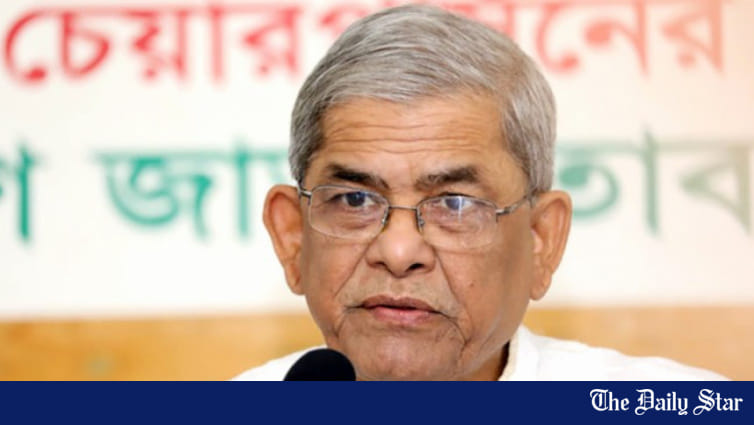
AL stays in power by forging ties with corrupt officials: Fakhrul

1718150043650.png


BNP Secretary General Mirza Fakhrul Islam Alamgir yesterday alleged that the Awami League has remained in power by forging an alliance with corrupt bureaucrats and government officials.

Speaking at a discussion, he also alleged that the current government is obtaining funds from China in the name of mega projects and embezzling huge money as commissions.

"The Awami League is now the party of Benazir and Aziz. Awami League is no longer a political institution as it has become extremely bankrupt...," the BNP leader said.

BNP's Dhaka division unit organised the discussion at Monno City, Gilondo, marking the 43rd death anniversary of party founder Ziaur Rahman

Fakhrul said Bangladesh is now under the grip of not only hegemony but also fascism. "Those who now rule the country have no relation with the people."

He said the government has been arranging unilateral elections in its own style, keeping the voters and major political parties out of the race.

He voiced concern that the country's economy is on the verge of collapse due to widespread corruption and plundering.

The BNP leader said the noted economists of the country at a seminar organised by NOAB (Newspaper Owners' Association of Bangladesh) on Monday warned that the country's economy is on the brink of disaster.

"The government is unwilling to admit this. They always claim that the economy is doing very well. But their corruption continues unabated. They are constantly seeking new ways to engage in further corruption. Through mega projects, they are facilitating mega corruption," Fakhrul observed.

Fakhrul said it is surprising that most of the mega projects are financed by China.

"They [China] give funds to the Bangladesh government which awards tenders to their preferred individualsโ€ฆ one or two government-backed persons get five percent commission for securing the funds and another five percent is given for the distribution of work on the project. Many of us are unaware that the funds brought in from China are subject to commissions," the BNP leader said.

He also alleged that the current regime does not do anything without taking a commission. "Not only that, several new financial institutions have been established hereโ€ฆ One such institution is called 'Nagad.'"

Fakhrul said a certain percentage of the commission from every transaction of Nagad is sent abroad to a specific individual. "I don't want to mention the name of anyone, but this money goes to a particular individual abroad. And this is not just a one-off case; there are many more such instances."

He called upon the people from all walks of life, especially the young generation, to be vocal to save the country.​
 

Don't reward corrupt, negligent public servants
Bangladesh needs an accountable, service-oriented administrative system

1718150478678.png

VISUAL: STAR

We are shocked to learn of the reinstatement of an official at the youth and sports ministry who, only a few months ago, was dismissed on charges of embezzlement. According to a report by this daily, the move has raised questions among the ministry officials themselves. Indeed, such a decision would make any honest employee disappointed, and it also sets a dangerous precedent at a time when the widespread corruption in public sector demands exemplary actions, not exemptions.

The official in question, Farhat Noor, and three others were found guilty of embezzling Tk 11.52 crore during an investigation conducted by a probe body formed by the ministry. Upon finding proof, the ministry decided to terminate the four officials, and the decision was endorsed by the Bangladesh Public Service Commission on February 12. But on June 5, the ministry issued an order through a gazette notification reinstating Noor in his old position, in Moulvibazar. The gazette further mentions that Noor pleaded for withdrawal of his dismissal in an appeal filed with the PMO on March 18.

Another report also caught our attention yesterday. According to Prothom Alo, Dr Fatema Doza, an associate professor at the National Institute of Cardiovascular Diseases (NICVD), has been accused of many irregularities including being absent from work for one and a half years, presenting fake invitation to an overseas seminar, etc. She has even been charged with the abuse of domestic help. Several internal investigations found proof supporting the allegations, and yet, there has been no repercussion as she continues to hold on to her position, enjoying all the benefits that come with it.

How would the responsible government organisations justify their inactions? Why is it that government employees like Noor and Doza get away with their criminal acts with such impunity? Has the charge against Farhat Noor been disproven? As far as we know, there is no indication of that. What drove the ministry to backtrack on its own decision, then? And how is it that Fatema Doza has been able to carry on with her job for years when she has been found guilty of the charges against her? It goes without saying that these circumstances directly contradict the government's own stated policy of zero tolerance for corruption.

These two cases once again show how the public sector is being run without any functional accountability, and exhibit why there is a trust deficit between the public and the government. If there was a strong mechanism in place to ensure accountability in public service, so many government employees would not be so bold to carry out their corruption and irregularities. This state of affairs cannot continue in a democratic system. We urge the government to establish a modern, accountable administrative system where officials paid by the public are held responsible for any breach of contract, and indeed crimes.​
 

ACC finds graft evidence against ex-IGP Benazir
Staff Correspondent 13 June, 2024, 23:48

1718321983920.png

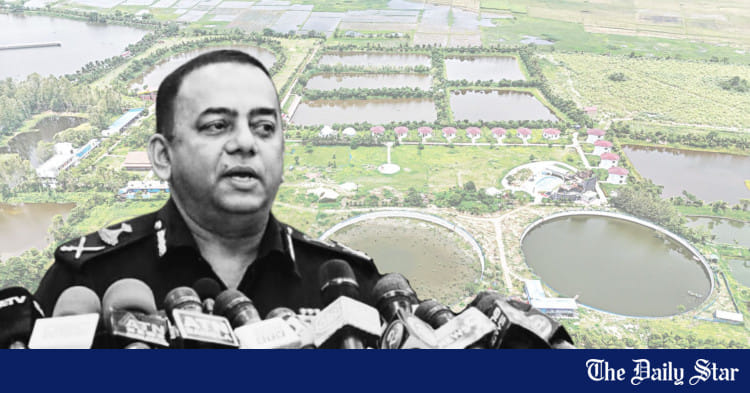
Benazir Ahmed

The Anti-Corruption Commission found evidence of corruption against former inspector general of police Benazir Ahmed and his family in the inquiry over his amassing illegal wealth.

'There is no legal bar to file a case against Benazir Ahmed based on the findings received till now regarding his wealth,' said ACC lawyer Khurshid Alam Khan on Thursday.

Talking to journalists, the lawyer said, 'I think, there is enough information to file a regular case against him, but now, the ACC will take the decision regarding the filing of the case, it is their jurisdiction.'

The court has already ordered the seizure of the properties and bank accounts of Benazir and his family as there was evidence of offences, he said.

Khurshid also said, 'The information about suspicious transactions, ill-gotten income, and wealth of the former IGP is, I think, "dangerous".'

Earlier, in three phases, the Dhaka Metropolitan Senior Special Judge Court ordered the seizure of a huge amount of movable and immovable assets belonging to Benazir and his family members following ACC petitions.

Among the wealth, the court ordered the seizure of a total of 697 bighas of land in Gopalganj, Madaripur, Cox's Bazar, Bandarban, and Narayanganj, 12 flats in Dhaka, and shares in 21 companies in the name of Benazir and his family.

Apart from this, the court also ordered the freezing of a Tk 30 lakh investment in savings certificates, 33 bank accounts, and three BO accounts.

A three-member inquiry team, led by ACC deputy director Md Hafizul Islam, found the assets during the ongoing inquiry into allegations of Benazir and his family members.

The ACC, based on a media report, decided on April 18 to investigate allegations of amassing illegal wealth by Benazir and his family.

On May 28, the ACC summoned them, but neither Benazir nor his family members appeared before it on June 6 and 9.

Later, the ACC fixed June 23 and 24 for them to come before the commission.

Benazir and the family reportedly left the country on May 4 amid allegations of acquiring illegal wealth and money laundering.

Benazir joined the police force as an assistant superintendent of police in February 1988, and he retired on September 30, 2022.

On December 10, 2021, the United States declared the then IGP Benazir ineligible for entry into the country for 'gross violations of human rights' while serving as RAB director general.​
 

Danger of treating black money softly
SYED FATTAHUL ALIM
Published :
Jun 09, 2024 22:02
Updated :
Jun 10, 2024 22:47
1718323616841.png


'Black money', according to Investopedia,'includes all funds earned through illegal activity and otherwise legal income that is not recorded for tax purposes'. The sources of black money, as defined, include tax evasion as well as corruption, money laundering and illicit trade. So, ideally, in a law-governed society, earning and holding of black money is a punishable offence. But in the real world it is often allowed to exist and, in many cases, even thrive. Bangladesh is no exception. Earning of black money is so widespread in this part of the world that the practice is not even questioned nowadays. So, one is not surprised, though some economists and social activists who are still critical of the so-called unethical practices like corruption, owning ill-gotten money, etc., when the finance minister in his budget for the fiscal year 2024-25 kept the provision of whitening black money without scrutiny through payment of 15 per cent tax. In other words, illegally earned money has again been given the seal of approval.

However, the money-whitening opportunity, according to the proposed budget for FY25, will be available for only one year till June 2025. But the provision of legalising black money has continued year after year in the same manner and there is no guarantee the practice would stop by the next financial year. In fact, this culture of wooing black money in the hope of mainstreaming it is indicative of the power of black money and its owners in society. Interestingly though, despite all the coaxing and cajoling, the holders of black money never responded to the government's offer at the expected level. Successive governments since independence have been offering such amnesty to black money owners. Going by the country's top tax regulator, the National Board of Revenue (NBR), since independence till 2022, Tk455.22 billion could be whitened by such means so far. The revenue that went to the government's coffer is a paltry sum of Tk46.41 billion. The amount was earned over a period of 50 years (between 1972 and 2022)! So, it is not hard to see why and how a section of society is getting richer by the day. Unsurprisingly, the tax authority, or the government for that matter, is getting lukewarm response from the black money holders making it clear that they are not willing to come under the NBR's tax net. This approach of the government's handling them with kid gloves only betrays its weakness, which the corrupt quarters take full advantage of. So, what is the point of showing such generosity to those people who are having a field day by defying law, whereas the honest income earners are paying taxes just out of their honesty and willingness to abide by the law? And this softness towards those earning money illegally and hiding it from the tax authority is only apt to send a wrong signal to society. It is that if you are somehow able to earn a large sum of money illegally, keep it to yourself evading tax, you will be rewarded. But if you are a law-abiding, honest citizen and not hiding your earnings from the tax authority, you are nobody. Worse, if you fail to pay your tax, you will be subject to legal proceedings.

To read the rest of the news, please click on the link above.
 

How far does the gold syndicate's reach go?
Involvement of law enforcers, public officials must be investigated

1718405726960.png


The unexplained death of Jhenaidah MP Anwarul Azim Anar has brought some shocking truths to light, including details of a brazen gold smuggling operation in his constituency. According to a recent investigation by this daily, Anar had invented a "token" system that would allow carriers transporting illegal gold a free pass from law enforcement. In return, the latter would get a "handsome" cut. This daily interviewed a carrier who said there are dozens like him who pick up consignments from various districts and deliver them to the border, where other operatives smuggle them out to India. The border smugglers earn between Tk 1 lakh and Tk 2 lakh per consignment, while carriers receive a fixed monthly salary.

According to local sources, gold smuggling has been taking place through this border area over the last four to five decades. Azim has reportedly been involved in the gold trade since he was a student in 1986, assuming a leading role for the last 10 years. The three-time MP stood accused in 21 cases between 2000 and 2008, including murder, extortion, and smuggling of arms, explosives, drugs and gold (which subsequently got dismissed during the AL regime). We cannot help but wonder how a man of his "notoriety" could hold such an important position, and whether the ruling party was truly unaware of the scale of his involvement in criminal networks.

The government should be as worried as we are about the nexus among criminals, law enforcement and political leaders, and the possibility of complicity of more people within its own ranks in sustaining such criminal networks.

The slain MP may have been one of the kingpins of this smuggling syndicate, but the question still remains: who else is involved in the trade, and how deep does the involvement run? Most importantly, can we expect an independent investigation into the syndicate now, or will the kingpins continue to orchestrate the show from behind the curtains, with the same impunity they have enjoyed till now?

The government should be as worried as we are about the nexus among criminals, law enforcement and political leaders, and the possibility of complicity of more people within its own ranks in sustaining such criminal networks. In order to regain public trust as well as for its own sake, the government must initiate a thorough and credible investigation into the smuggling syndicate, beginning with identifying all those within the law enforcement and administration who have been actively aiding and abetting the process. Exemplary action must be taken against them, no matter their designation. Anar's murder and subsequent investigations have caused great damage to the country's reputation, and the government must respond with urgency and full transparency.​
 

Benazir's corruption and the crisis of accountability
1718578813167.png

VISUAL: STAR

The year was 2018. On August 30, the results of Transparency International Bangladesh's (TIB) "Corruption in Service Sectors: National Household Survey 2017" were released. According to the survey, the country's law enforcement agencies (LEAs) ranked in the highest position in terms of the experience of corruption by surveyed households. Of the households that received services from them, 72.5 percent were victims of different forms of corruption.

The Bangladesh Police Service Association (BPSA) rejected the TIB survey results in a statement issued on September 11, 2018. The statement, sent by the additional deputy commissioner of Dhaka Metropolitan Police, also the office secretary of the Police Service Association, alleged that the TIB's survey report "identified the police as a corrupt institution based on preconceived notions." It was also claimed that, "In case of any unlawful behaviour of the police, proper legal action is taken after investigation."

The story of identifying the LEAs as the "most corrupt sector" in the TIB survey and subsequent rejection by the BPSA came to my mind in the wake of the recent allegations of massive corruption against former police and Rab chief Benazir Ahmed. Documents from the Anti-Corruption Commission (ACC) show that Benazir and his family bought at least 204.5 acres of land between 2009 and 2023. Of these, 112 acres were purchased during his tenure as inspector general of police (IGP) and Rab chief.

Was Benazir Ahmed's purchase of such a vast amount of land while he was head of police and Rab consistent with the legitimate income he was earning? Is it not an illegal act to force people to sell land by intimidation? Where was the process of "legal action" claimed by the BPSA when Benazir was engaging in such unlawful behaviour day after day as a senior officer in the police force? Why was Benazir's corruption exposed only after his retirement, and not when he was in office?

Not only was no action taken against Benazir's massive corruption and abuse of power when he was in office, he was also being given one reward after another. This is not only an internal problem of the LEAs. The entire government, including the ministry of home affairs, is also responsible here.

The Public Security Division of the home ministry honoured him with the Integrity Award 2020-21. But ACC data shows that he and his family bought nearly 87.9 acres of land in 2020 and 2021. The Integrity Award is supposed to be given to someone who meets the standards of scrupulousness and honesty. Where were those standards when Benazir was given the award? Apart from the Integrity Award, Benazir was awarded the highest medal of the police force, Bangladesh Police Medal (BPM), a total of five times between 2011 and 2019. With so many intelligence agencies in the country and so much surveillance, is it at all believable that the authorities, including the LEAs, were not aware of his illegal activities? How dysfunctional could a country's institutional system be that the person who was involved in massive corruption was rewarded time and again, instead of being punished?!

To read the rest of the news, please click on the link above.
 

A disease called Benaziz
Ayesha Kabir
Published: 17 Jun 2024, 12: 21

1718606777409.png


It's chronic, it's infectious, and as in the case of any other dangerous disease, prevention is better than cure. Once the contagion spreads its tenacious tentacles, it is often beyond cure. It squeezes the lifeblood out of all ethics, integrity, honesty or any such values and principles. This is the deadly disease, Benaziz.

Given the avalanche of news reports on the almost "iconic" corruption and crime of Benazir and Aziz, it seems only befitting to dub this contagion with the moniker "Benaziz", like the name-mergers of Hollywood couples -- Bennifer, Brangalina, TomKat and so on.

We are gasping at the amount of wealth and property that the former police chief Benazir Ahmed has amassed. We are shocked at how low the former army chief Aziz Ahmed has stooped to aid and abet his criminal brothers. But are we really all that shocked? Don't we all firmly believe that this is just the tip of the iceberg, that there are innumerable Benazirs and Aziz-es all around us, minting money, making mansions, mixing and mingling with multimillionaires around the globe?

This is not a column about either Benazir or Aziz -- there is a continuous deluge of news about them, and every day a Pandora's Box opening up and spewing out the likes of Anwarul Azim, his friend-cum-killer Akhteruzzaman, other criminals and crime, large and petty, white collar, blue collar, multi-collared and no collar at all! While each and every one of these vermin needs to be caught, tried and punished, it is most important to get to the roots, to uproot and evil once and for all. We sanitised our hands throughout the Covid outbreak, now we need to sanitise our souls.

Moral turpitude

The term 'moral turpitude' gained currency during the Ershad era. He had been seen as the epitome of corruption. Not to condone his misdeeds, but the corruption-practitioners of today must scoff at his "petty larceny". Not only has corruption become all-pervasive, but the sheer figures that appear in the media about the wealth that has been amassed, the capital that has taken flight, the assets that have been accumulated and the liabilities that have been shrugged off, is mind-boggling.

Every Tom, Dick and Harry seems to have a second home in Malaysia, Canada, America and now the hotspot Dubai. (It's the Jodu-Modu who still struggle on the streets back home). And back home too, the properties of the rich are taking on massive proportions of luxury and opulence. The vehicles in car parks of the five-star hotels and the classy cafes and restaurants of the affluent neighbourhoods range from Rolls Royce to Jaguars, Ferraris and you name it.

But the divide between the rich and the poor is growing, it's growing fast and growing wide. In Bangladesh, the wealthiest 10 per cent of the population controls 41 per cent of the nation's total income. The bottom 10 per cent receives a pittance of 1.31 per cent.

This disparity in wealth is deepening and is starkly visible, embarrassingly so. The juxtaposition of capital Dhaka's upscale Gulshan-Baridhara-Banani areas (sardonically referred to as the tristate) and neighbouring Korail slum, the sprawling biggest slum in the city, is a classic clichรฉ. But a sad one. Sad, because the wealth of these ultra-wealthy hardly trickles down to improve the lot of the poor. Their wealth is siphoned to destinations around the world. Sad because all too often this wealth is ill-gotten.

To read the rest of the news, please click on the link above.
 

Deposits of Bangladeshi banks, nationals in Swiss banks hit lowest level ever
It declined 68% year-on-year to 17.71 million Swiss francs in 2023

1718922936437.png


Deposits of Bangladeshi nationals and banks in Swiss banks declined by 68 percent year-on-year to 17.71 million Swiss francs (CHF) last year, the lowest ever, reflecting the falling attractiveness of Switzerland among the wealthy people to park money.

The deposits were 55.2 million Swiss francs (CHF) in 2022, according to data by the Swiss National Bank released yesterday.

This is the second year in a row that deposits kept by Bangladeshis have fallen in Swiss banks. But that does not mean that illicit outflow of capital from the country has stopped, said two analysts.

"Of course, illegal money siphoning out of the country has increased and it is taking place. But Swiss banks are not favourite destination anymore. It is not a place to keep identity secret anymore," said Ahsan H Mansur, executive director at the Policy Research Institute of Bangladesh.

"Now, Dubai, and Singapore are favourite destinations as the nearest destinations. Money is siphoned off to and is invested in real estate and business in the USA, and England."

People who have transferred money there have business operations there. They have registered firms in Dubai, Singapore, said Mansur, a former economist at the International Monetary Fund.

Switzerland had once kept the information of depositors confidential. Now it is not doing this anymore. It provides information to the state if any government seeks, he added.

Data from the Swiss National Bank showed that Bangladeshi nationals kept 13.96 million CHF in Swiss banks in 2023, the lowest since 1997.

The amount was 78 percent of the total deposits of 17.71 million CHF or $19.86 million.

The deposits at Swiss banks were Tk 233 crore in Bangladeshi taka. In the case of Bangladeshi nationals, the deposit amount was Tk 184 crore.

Mansur said Bangladeshis living in Switzerland may hold a portion of the deposits. And a portion of reserves of Bangladesh are kept there, he added.

Iftekharuzzaman, executive director of Transparency International Bangladesh, said Switzerland is one of the many destinations for illicit fund transfer.

Switzerland is a conventional destination. But since it joins global efforts against money laundering and corruption, it has lost its attraction, he added.

"Many more destinations for illegal money transfer have come up and they are more attractive," he said citing Malaysia, Singapore, and the Middle Eastern countries.

"Plus, there are offshore destinations to park money. One can buy properties in the UK, the USA and Canada, which is not easy in the case of Switzerland," added Iftekharuzzaman.

"So, the falling deposits in the Swiss kept by Bangladeshi citizens and banks does not provide any relief that illegal capital flight has declined."​
 

Black money whitening provision needs to be reviewed: Momen

1718923269978.png

File photo
Taxpayers have been disappointed with the budgetary provision for whitening black money, former foreign minister AK Abdul Momen told parliament today.

"Honest taxpayers have become frustrated with the provision of whitening black money just by paying a 15 percent tax. I feel the provision needs to be reviewed further," he said.

Corruption is now the main barrier to maintaining growth, he said. The government's image is being tarnished because of corruption, he added.

Momen said the projects are not getting implemented in time due to corruption, which ultimately causes a rise in project costs.

"A portion of bureaucrats has become corrupt, which is intensifying harassment of the people. The entire bureaucracy is blamed due to a handful of corrupt bureaucrats," said Momen.

He said this while participating in the general discussion on the proposed national budget for the 2024-2025 fiscal year.

The price hike of daily essentials, alongside the rise in taxes, corruption, and extortion, is a matter of great concern for the country's people, Momen said.​
 

Dollar crisis linked to $7-8b capital flight: ex-minister
Staff Correspondent 21 June, 2024, 00:34

1718925004985.png


Finance minister Abul Hassan Mahmood Ali said on Thursday that they had to follow the World Bank for foreign currencies, while former state minister for planning Shamsul Alam blamed capital flights for the country's prolonged shortage of dollars.

They were speaking at a post-budget discussion arranged by the Bangladesh Agricultural Economists Association in the capital, ahead of the passing of the finance bill in parliament on June 29.

The former state minister for planning, while focusing on the prolonged dollar shortage, said that the government should check capital flight to the tune of $7 billion to $8 billion annually.

He said that capital flights had caused the dollar crisis.

The former state minister for planning was critical of the country's banking sector, which was overburdened with bad loans and contributed to the current economic downturn.

Calculating 22 per cent of the overall bank credits as risky, he said that the trend should be reversed with strong reform based on the recommendations of a commission or a strong committee.

He lauded some of the budgetary proposals and suggested the finance minister give more focus to revenue generation, which, according to him, is one of the weakest points.

Due to less-than-expected revenue generation, successive governments have been borrowing from multilateral lenders for foreign funds and meeting the budget deficit.

Highlighting the necessity of foreign funds, the finance minister said in his speech that they had to follow the WB suggestions.

The WB provides us with loans, he said while responding to critics of the economy and the budgetary measures he proposed for FY25 in parliament on June 6.

He said that they would accept the recommendations of the critics if they provide funds.

Asking critics to look at what the WB was saying about the country's economy, the finance minister claimed that the WB had called it alright.

He noted that it was unacceptable that the WB did not understand the economic issues.

The finance minister was also critical of those who said that the country would face bankruptcy like the one its South Asian neighbour Sri Lanka faced in 2022.

He, however, said that the government would consider positive suggestions regarding the national budget before passing it in parliament.

The finance division is keeping feedback, and feasible ones will be considered, he said, adding that the budget has not been passed yet.

State minister of commerce Ahasanul Islam Titu, the representative of the United Nations Food and Agriculture Organisation appointed in Bangladesh Jiaoqun Shi, and Bangladesh Agricultural Economists Association president Sajjadul Hassan, among others, spoke at the seminar.

The state minister for commerce said it should be reviewed to see how much of the agricultural subsidy was implemented.

He suggested that agricultural experts be involved in the marketing channel and said that focus should be given to protecting perishable items.

Sajjadul Hassan said the subsidy on fertilisers should be monitored properly so that marginalised farmers are not deprived of their due share.​
 

Members Online

Latest Posts

Latest Posts