Home Watch Videos Wars Movies Login

[🇧🇩] The U.S.A.---A Strategic Partner of Bangladesh

Latest Posts Countries Wars Q&A

[🇧🇩] The U.S.A.---A Strategic Partner of Bangladesh
145
7K
More threads by Saif

G Bangladesh Defense
US suspends immigrant visas for 75 countries, including Bangladesh

Prothom Alo English Desk
Published: 15 Jan 2026, 02: 03

1768437969278.webp

US flag File photo

The United States is suspending the process of issuing immigrant visas for citizens of 75 countries, including Bangladesh. This decision will take effect from 21 January. A document from the U.S. Department of State mentions this, according to a report by U.S.-based news outlet Fox News on Wednesday.

Reutres report: US President Donald Trump's administration is suspending processing for immigrant visas for applicants from 75 countries, a State Department spokesperson said on Wednesday, as part of Washington's intensifying immigration crackdown.

The pause, which will impact applicants from countries including Somalia, Iran, Russia, Afghanistan, Nigeria, Yemen, Thailand and Brazil, will begin on 21 January, the spokesperson said. It does not affect visitor visas.

"The State Department will use its long-standing authority to deem ineligible potential immigrants who would become a public charge on the United States and exploit the generosity of the American people," Tommy Pigott, Principal Deputy Spokesperson at the State Department said.

"Immigrant visa processing from these 75 countries will be paused while the State Department reassesses immigration processing procedures to prevent the entry of foreign nationals who would take welfare and public benefits," he added.

The move was first reported by Fox News.

Trump has pursued a sweeping immigration crackdown since returning to office in January. His administration has aggressively prioritized immigration enforcement, sending federal agents to major U.S. cities and sparking violent confrontations with both migrants and U.S. citizens.

While he campaigned on stopping illegal immigration into the United States, his administration has made legal immigration more difficult, for example, by imposing new and expensive fees on the applicants of H-1B visas for highly skilled workers.

"This administration has proven itself to have the most anti-legal immigration agenda in American history," David Bier, Cato’s Director of Immigration Studies and The Selz Foundation Chair in Immigration Policy, said in a statement.

"This action will ban nearly half of all legal immigrants to the United States, turning away about 315,000 legal immigrants over the next year alone," Bier said.

Trump, a Republican, recaptured the White House promising record levels of deportations, saying it was needed after years of high levels of illegal immigration under his Democratic predecessor, Joe Biden.

The State Department has revoked more than 100,000 visas since Trump took office, it said on Monday. The administration has also adopted a stricter policy on granting visas, with tightened social media vetting and expanded screening.

In November, Trump had vowed to "permanently pause" migration from all "Third World Countries" following a shooting near the White House by an Afghan national that killed a National Guard member.

Full list of countries

According to Fox News, the full list of countries comprises of Afghanistan, Albania, Algeria, Antigua and Barbuda, Armenia, Azerbaijan, Bahamas, Bangladesh, Barbados, Belarus, Belize, Bhutan, Bosnia, Brazil, Burma, Cambodia, Cameroon, Cape Verde, Colombia, Cote d’Ivoire, Cuba, Democratic Republic of the Congo, Dominica, Egypt, Eritrea, Ethiopia, Fiji, Gambia, Georgia, Ghana, Grenada, Guatemala, Guinea, Haiti, Iran, Iraq, Jamaica, Jordan, Kazakhstan, Kosovo, Kuwait, Kyrgyzstan, Laos, Lebanon, Liberia, Libya, Macedonia, Moldova, Mongolia, Montenegro, Morocco, Nepal, Nicaragua, Nigeria, Pakistan, Republic of the Congo, Russia, Rwanda, Saint Kitts and Nevis, Saint Lucia, Saint Vincent and the Grenadines, Senegal, Sierra Leone, Somalia, South Sudan, Sudan, Syria, Tanzania, Thailand, Togo, Tunisia, Uganda, Uruguay, Uzbekistan and Yemen.​
 
Analyze

Analyze Post

Add your ideas here:
Highlight Cite Respond
  • Like (+1)
Reactions: PakistanProud
54.8% Bangladeshi immigrants get US govt benefits: Trump

Trump released an immigrant welfare list on Truth Social on Monday

View attachment 23588


US President Donald Trump has claimed that 54.8 percent of Bangladeshi immigrant families living in the United States receive government benefits.


On Sunday, Trump released a list on his social media platform, Truth Social, titled "Immigrant Welfare Recipient Rates by Country of Origin", showing which countries' immigrant populations receive the highest levels of government assistance.


In the list of 120 countries, Bangladesh ranks 19th.

The list includes four other countries from South Asia -- Bhutan, ranking first (81.4 percent); Afghanistan, ranking sixth (68.1 percent); Pakistan, 60th (40.2 percent); and Nepal, 90th (34.8 percent).


According to Pew Research Center's 2025 report, the Bangladeshi Population in the US has grown significantly over the past two decades. From 40,000 in 2000, it skyrocketed to 270,000 in 2023, a 569 percent growth.

Countries with the highest rates of government benefit usage: Bhutan, Yemen (75.2 percent), Somalia (71.9 percent), Marshall Islands (71.4 percent), Dominican Republic (68.1 percent), Afghanistan (68.1 percent), Congo (66 percent), Guinea (65.8 percent), Samoa (63.4 percent), and Cape Verde (63.1 percent).

Countries and regions with the lowest rates of government benefit usage: Bermuda (25.5 percent), Saudi Arabia (25.7 percent), Israel/Palestine (25.9 percent), Argentina (26.2 percent), South America (26.7 percent), Korea (27.2 percent), Zambia (28 percent), Portugal (28.2 percent), Kenya (28.5 percent), and Lithuania (29.2 percent).​
Where does Pakistan rank?
 
Analyze

Analyze Post

Add your ideas here:
Highlight Cite Respond
Govt to negotiate as US halts immigrant visas for Bangladesh

US pauses immigrant visa processing for 75 countries


Staff Correspondent 16 January, 2026, 00:12

1768526267383.webp


The United States said on Wednesday that it was halting the processing of immigrant visas from 75 countries, which included Bangladesh, Afghanistan, Pakistan, Iraq, Iran and Somalia.

It was president Donald Trump’s latest move against foreigners seeking to come to the United States, reports Fox News.


‘US freezes all visa processing for 75 countries, including Somalia, Russia, Iran,’ press secretary Karoline Leavitt posted on X, giving a link to a Fox News article.

Meanwhile, Bangladesh information adviser Sayeda Rizwana Hasan said in Dhaka on Thursday that the government would take necessary steps through the diplomatic channel for negotiation with US authorities following the decision to freeze immigrant visa processing for Bangladesh among other countries.

‘Our foreign ministry and national security adviser will obviously work out a work plan to engage with the United States as the decision was just announced yesterday,’ Rizwana said while responding to reporters’ questions at the secretariat.

When asked whether Bangladesh had failed in any area that led the country to this situation, Rizwana said that the move was not targeting Bangladesh alone.

‘The US government has explained the reasons that such restrictions will be imposed on countries from which large numbers of immigrants go to the US and seek political asylum or become dependent on their social services largely,’ she said.

On Wednesday, the US State Department, led by secretary of state Marco Rubio, said that consular offices have been instructed to halt immigrant visa processing for nationals of the affected countries under an order tightening scrutiny of applicants who could become ‘public charges’ in the United States.

The move follows broader immigration restrictions introduced by the administration of president Donald Trump and expands earlier travel and visa limitations imposed on nearly 40 countries.


Officials said that the decision was aimed at preventing what they described as abuse of the US immigration system.

Fox News reported that the US State Department was pausing all visa processing for 75 countries, including Somalia, Russia, Afghanistan, Brazil, Iran, Iraq, Egypt, Nigeria, Thailand and Yemen.

The pause will come into effect on January 21 and will continue indefinitely until the department conducts a reassessment of visa processing, according to the report.

The full list of countries comprises Afghanistan, Albania, Algeria, Antigua and Barbuda, Armenia, Azerbaijan, the Bahamas, Bangladesh, Barbados, Belarus, Belize, Bhutan, Bosnia, Brazil, Burma, Cambodia, Cameroon, Cape Verde, Colombia, Côte d’Ivoire, Cuba, the Democratic Republic of the Congo, Dominica, Egypt, Eritrea, Ethiopia, Fiji, Gambia, Georgia, Ghana, Grenada, Guatemala, Guinea, Haiti, Iran, Iraq, Jamaica, Jordan, Kazakhstan, Kosovo, Kuwait, Kyrgyzstan, Laos, Lebanon, Liberia, Libya, Macedonia, Moldova, Mongolia, Montenegro, Morocco, Nepal, Nicaragua, Nigeria, Pakistan, the Republic of the Congo, Russia, Rwanda, Saint Kitts and Nevis, Saint Lucia, Saint Vincent and the Grenadines, Senegal, Sierra Leone, Somalia, South Sudan, Sudan, Syria, Tanzania, Thailand, Togo, Tunisia, Uganda, Uruguay, Uzbekistan and Yemen.

The report says that the guidance instructs consular officers to deny visas to applicants deemed likely to rely on public benefits, weighing a wide range of factors including health, age, English proficiency, finances and even potential need for long-term medical care.

Older or overweight applicants could be denied, along with those who had any past use of government cash assistance or institutionalisation, it reports.

‘Immigration from these 75 countries will be paused while the State Department reassesses immigration processing procedures to prevent the entry of foreign nationals who would take welfare and public benefits,’ the report said.

The US has, meanwhile, expanded a visa bond policy to include Bangladesh and 24 other countries, requiring citizens of these nations to post refundable bonds of up to $15,000 as part of their application for a US visitor visa, according to the US State Department website.

Under the updated programme, passport holders from the newly added countries could be asked to pay a bond of $5,000, $10,000, or $15,000 at the time of their visa interview if they are otherwise eligible for a B1/B2 tourism or business visa.

The US visa category B1 is for temporary business activities, while the B2 is for tourism purposes.

The list of affected countries now totals 38, mainly from South Asia, Africa, Latin America and the Caribbean.​
 
Analyze

Analyze Post

Add your ideas here:
Highlight Cite Respond

BNP chief Tarique holds virtual meeting with US trade delegation

bdnews24.com
Published :
Jan 16, 2026 21:27
Updated :
Jan 16, 2026 21:27

1768609454762.webp

BNP Chairman Tarique Rahman has met with a United States trade delegation to discuss bilateral trade, tariffs and future economic cooperation, the party said.

The meeting was held on Friday morning via video call from his residence in Gulshan, according to the BNP Media Cell.

The US delegation, headed by Ambassador Jamison Greer, included Brendan Lynch, Assistant US Trade Representative for South and Central Asia Brendan Lynch, and Director Emily Ashby.

Joining Tarique from the BNP were the party’s Joint Secretary General Humayun Kabir.

According to the party, discussions focused on Bangladesh–US trade relations, tariff structures, and prospects for future economic collaboration between the two countries.​
 
Analyze

Analyze Post

Add your ideas here:
Highlight Cite Respond

Turning point in Bangladesh

Dan Mozena
Published: 16 Jan 2026, 08: 17

1768611189145.webp


Former US Ambassador to Bangladesh Dan Mozena File photo

Bangladesh continues to make history at a feverish pace. Most recently the nation and the world witnessed the sad passing of former Prime Minister Khaleda Zia. I wish to convey my sympathy to her family and to the people of Bangladesh over this loss.

During my six years of service in Bangladesh as a US diplomat, including three as America’s ambassador, Begum Zia was the Leader of the Opposition. She was always accessible, open and respectful to me. I greatly appreciated her candor in sharing her perspectives on developments in Bangladesh. I mourn her death.

Bangladesh is writing other important history as well as the July Revolution continues. I sometimes cannot believe that it was only a year and a half ago that courageous students took to the streets to give voice to popular exhaustion with the Hasina regime. Those initial protests evolved into the bloody five-week revolution that led to the 5 August 2024 helicopter escape of the then prime minister.

The student leaders of the revolution, recognizing their own limitations, then turned to the renowned Professor Mohammad Yunus to provide guidance and leadership. I applaud the students for engaging Yunus to lead the nation during the turbulence of transition; and I applaud Yunus for his dedicated stewardship and leadership during this most difficult, challenging period.


The nation now approaches the final stage of the transition from the Interim Government to a government directly chosen by the people of Bangladesh. This is perhaps the most critical phase of the transition as voters will choose the leaders who will build the foundation of the New Bangladesh.

These new leaders will determine whether the nation returns to the autocracy that has characterized much of Bangladesh’s history since its bloody birth in 1971; or, will these leaders chart a fresh course, one that builds a democracy in a meaningful sense that gives voice to the wisdom and objectives of the Bangladeshi people?

I hope the nation’s new leaders will listen to Bangladeshi people, and trust the Bangladeshi people in their pursuit of an effective, sustainable democracy. In my view, the new government must take its lead from the people. I hope the Bangladeshi voters will deliver a clear message at the ballot box that they want representatives of integrity who are responsive to the needs of the people.

From the outset, the new government will face many challenges. The greatest of these challenges will be to lay the foundations needed to secure meaningful democracy for the nation. I suspect voters will make clear their preferences with their votes in the February referendum on the July Charter, which has garnered support across most of the political spectrum.

If voters endorse the July Charter, I believe the new government should launch expeditiously a process to craft specific proposals to realize voters’ preferences regarding the structure of parliament, term limits, the relative powers of parliament and the presidency, the independence of agencies, etc.

Such fundamental changes, if undertaken in good faith and with broad popular and political support, could enhance and strengthen Bangladesh’s evolving democracy. I hope the new government in undertaking such changes will endeavor to build broad consensus and avoid the deep political polarization that handicaps the political process in so many countries around the world, including my own.

In building the new democracy, the new government will also face the challenge of dealing with the legacy of the Awami League. How, for example, can former Awami League leaders be held accountable for the excesses they committed against the people of Bangladesh? How can the millions of Awami League supporters, backbenchers and sympathizers be brought back into the political process? These questions do not have easy answers, but they must be addressed if Bangladesh is to avoid permanent fissures in the political landscape.

The new government will need to be creative in dealing with these questions. Perhaps, the Truth and Reconciliation Process that the Mandela government used in post-apartheid South Africa might offer some guidance on resolving these questions.

Stability is critical to the success of the New Bangladesh. Security is an obvious element of advancing stability. The new government will need to move expeditiously to deal with continuing security concerns. Law enforcement needs to be adequately staffed, trained and led to regain the trust of the Bangladeshi people.

I believe this is possible, but it mandates a deep commitment from the new government to provide the needed manpower to law enforcement and to ensure that police and other law enforcement are people of integrity and commitment to public service. This, of course, cannot be achieved overnight.

Stability and security are also essential to continuing Bangladesh’s economic success. Bangladesh’s exports of ready-made garments are particularly dependent upon buyers’ confidence that Bangladesh can make good on timely shipment of goods to increasingly demanding markets.

Be assured, a plethora of countries stand ready to replace Bangladesh as a leading exporter of RMG globally. Efficient manufacturing and shipment of RMG products are essential. In this regard, privatization of the Chattogram port is something the new government may wish to explore.

Foreign relations will also rank high on the new government’s agenda. Most essential are strong relationships with Bangladesh’s neighbors. Relations with India will depend largely on that country’s willingness to engage Bangladesh as a sovereign partner.

Meanwhile, the new government could convey to Delhi that it stands ready to improve relations whenever India is ready to re-engage constructively. The new government should also sustain ongoing relationships with Pakistan and China.

I especially applaud the Interim Government’s engagement with America, Bangladesh’s largest export destination and its largest foreign investor. Yunus and his team appreciate that the Trump Administration has a fresh approach to foreign relations, one driven by transactional considerations.

I would hope that the new government would sustain Bangladesh’s commitments to buy more Boeing aircraft and more American maize, soybeans and technology. Such expanded imports from America would stand Bangladesh in good stead to sustain and, perhaps, improve preferential tariff treatment, which is key to the country’s RMG exports.

The list of challenges that the new government will face is a long one, including, of course, such issues as the impact of global climate change, among others.

I think, however, that I have made my point: the new government will confront a barrage of deep challenges. To engage successfully on these challenges, the new government, no matter which party/parties prevail in the February elections, will need the broad support of the Bangladeshi people.

Confronting these challenges gives the new government the opportunity to shift Bangladesh’s political culture, to confront corruption, to forego autocracy and, instead, to build and bolster democratic processes that provide effective governance responsive to the needs of the Bangladeshi people. I believe the Bangladeshi people deserve and demand nothing less.

*These are the personal views of US Ambassador Dan Mozena, retired, former US Ambassador to Bangladesh​
 
Analyze

Analyze Post

Add your ideas here:
Highlight Cite Respond

New US Ambassador to Bangladesh raises concern over China’s regional influence

UNB
Published :
Jan 21, 2026 23:29
Updated :
Jan 21, 2026 23:29

1769042289797.webp


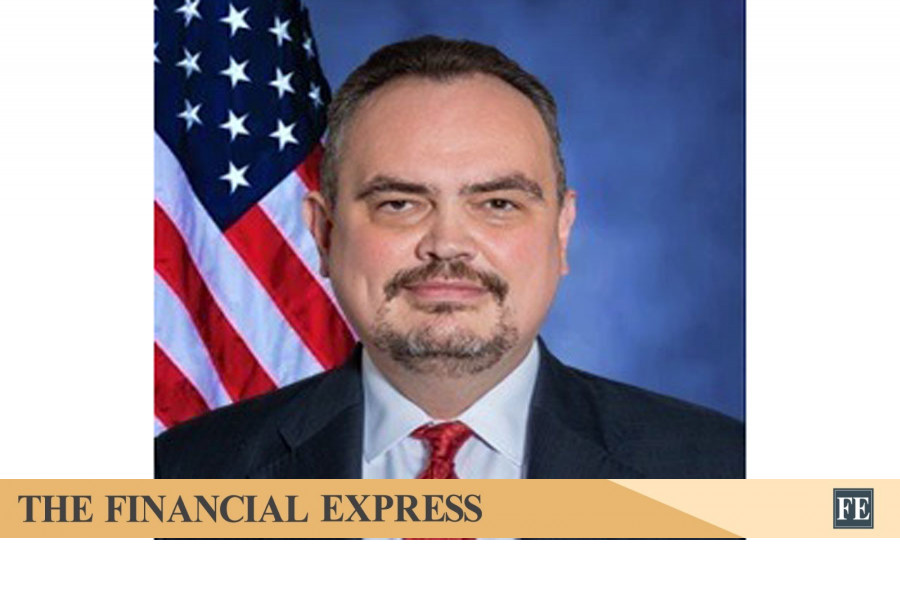
Newly appointed US Ambassador to Bangladesh Brent T Christensen on Wednesday said he is concerned about broader Chinese influence in South Asia, stressing that they have a host of options available to try to help their partner militaries meet their capability needs.

‘You know, as I said in my hearing…I am concerned about broader Chinese influence in South Asia. I think the United States government has been very clear about that," he said while responding to a question during an interaction with a small group of journalists.

"And as I committed to my hearing, I will always engage with our friends in the government—be it the interim government or the newly elected government-- to clearly articulate the risks of involvement with the Chinese in certain areas should the Bangladesh government choose to go down that path," Ambassador Christensen said.

He said the US and Bangladesh have strong military-to-military cooperation, and it has been growing stronger.

The envoy said they have partnerships across all branches of Bangladesh defense forces, working with the Navy on maritime security, with the Army, and with the Air Force on operational and emergency response readiness through a host of training and exercises.

He said they are working with the Bangladeshi military in support of its plans for modernisation and developing its capabilities, especially as it looks to expand what it can do in peacekeeping, but also what it can do here for domestic security needs.

"You know, security issues are a topic..... of great interest to me given the prior role that I had as a senior official back in Washington and also my long experience here in Bangladesh," the Ambassador said.

During his nomination hearing, Senator Pete Ricketts of Nebraska, a Republican, asked Christensen about what he described as Bangladesh’s growing military-to-military cooperation with China.

Saying he shared the senator's concern over Chinese influence in South Asia, Christensen at the hearing said if confirmed, he would engage with the Bangladesh government and military to “clearly articulate the risks from Chinese activity, involvement with their military activities in the maritime domain and in their critical infrastructure, as well as highlight the opportunities and benefits that come with a closer partnership with the United States, especially military-to-military.”​
 
Analyze

Analyze Post

Add your ideas here:
Highlight Cite Respond

US looks forward to working with all Bangladeshi political parties: Ambassador

UNB
Published :
Jan 21, 2026 21:49
Updated :
Jan 21, 2026 21:49

1769042417955.webp


Expressing optimism over the future of the two countries, US Ambassador to Bangladesh Brent T. Christensen on Wednesday said his country does not take any side and it is the 'sovereign decision' of the people of Bangladesh whom they want.

“We don't take any side," he said during his first interaction with a small group of journalists at the EMK Centre in Dhaka.

The Ambassador said he is optimistic about the future of the two countries and looks forward to Bangladesh’s historic elections next month.

After his recent meeting with BNP Chairman Tarique Rahman to hear his perspective on upcoming elections, he said the United States looks forward to working with all Bangladeshi political parties to advance shared peace and prosperity.

The US Ambassador also met with Chief Justice Zubayer Rahman Chowdhury to discuss his plans for the judiciary and potential areas for cooperation to strengthen the security of both the countries.

During the interaction with the media, he spoke on the broader bilateral relationship, indicating that cooperation in the areas of trade, economy and security would be the priorities of the relationship.

The Ambassador believes there are many opportunities for cooperation between Bangladesh and the United States.

On January 15, Ambassador Christensen presented his credentials to President Mohammed Shahabuddin at Bangabhaban and said he looks forward to strengthening the Bangladesh-US relationship.

Christensen said he was honoured to return to Bangladesh, a country he knows well and holds in the highest regard.

For over two decades, he said, he has had the privilege of working closely on US policy toward Bangladesh and the broader region.

As US ambassador, he said his primary responsibility is to advance the interests of the American people and the agenda of President Donald Trump, making America safer, stronger and more prosperous.

“You might have heard this policy referred to as the America First foreign policy. I believe that elected governments should always put their people first,” the ambassador said, adding that America First does not mean America alone.

“Today I had the honor of presenting my Ambassadorial credentials to President Shahabuddin. The United States is proud to call Bangladesh a friend," he said in a brief statement after the ceremony.

In over 50 years of partnership, the US Ambassador said they have worked together to promote regional stability, economic growth benefiting both the two countries, and the sovereignty of their great nations.

"I look forward to continuing this work and further strengthening the U.S.-Bangladesh relationship," he said.

“It is an honor for me to serve the United States as the 19th Ambassador to Bangladesh,” said Ambassador Christensen who along with his wife Deanne Dao arrived in Dhaka on January 12.

In a brief statement shared by the US Embassy in Dhaka soon after his arrival, he said they both are thrilled to return to a country that holds many fond memories for them.

The newly appointed Ambassador laid emphasis on enhancing the relations between Bangladesh and the United States.

The US Embassy Dhaka welcomed Brent Christensen as the newly sworn-in Ambassador to Bangladesh. “I am thrilled to return to Bangladesh, a country I know so well," said Ambassador Christensen.

The US Ambassador said he is excited to lead a great team at Embassy Dhaka, Americans and locally employed staff alike, to "enhance US-Bangladesh relations, advance President Trump's agenda, and work hard every day to make America safer, stronger, and more prosperous.”

He had "excellent first week" at U.S. Embassy Dhaka. "I’m proud to join the hard-working U.S. Embassy team and look forward to advancing President Trump’s priorities and further strengthening U.S.-Bangladesh relations."​
 
Analyze

Analyze Post

Add your ideas here:
Highlight Cite Respond

We will clearly highlight risks of engagement with China in certain cases: Brent Christensen

Diplomatic Correspondent Dhaka
Updated: 21 Jan 2026, 23: 11

1769043812440.webp


Brent Christensen, the ambassador of the United States stationed in Dhaka, at the EMK Centre in the capital on Wednesday afternoon. Courtesy: The US Embassy in Dhaka.

In the US Senate hearing on ambassadorial appointments last October, Brent Christensen stated that he would clearly present the risks associated with engagements with China to Bangladesh.

After joining as the new ambassador in Dhaka, he reiterated this point when facing journalists for the first time.

Brent Christensen mentioned his intention to clearly communicate the specific risks related to engagements with China to the interim government or the newly elected government.

On Wednesday afternoon, Christensen discussed various aspects of the relationship between the two countries with several media representatives at the EMK Centre in the capital.

During this exchange, he addressed a question regarding the geopolitical competition between the US and China.

During the Senate hearing last October, Christensen expressed his concerns about China's influence in South Asia and highlighted the potential for closer military engagement between Bangladesh and the United States as an alternative.

In today's meeting, when asked about defence cooperation, to avoid placing Dhaka amid the competition of major powers, Brent Christensen commented, ''You know, security issues are a topic you know of great interest to me given the prior role that I had as a senior official back in Washington and also my long experience here in Bangladesh. You know, the United States and Bangladesh have strong military to military cooperation. It's been growing stronger."

1769043857744.webp


Brent Christensen, the ambassador of the United States stationed in Dhaka, at the EMK Centre in the capital on Wednesday afternoon. Courtesy: The US Embassy in Dhaka.

Brent Christensen noted, "We have partnerships across all branches of Bangladesh defense forces, working with the Navy on maritime security, with the army and with the air force on operational and emergency response readiness, you know, through a host of training and exercises."

The US ambassador stated, "Yeah, over the last year we conducted several important exercises, things like, you know, tiger shark, working with the Navy on operational readiness, tiger lightning with the army on peacekeeping, counter-terrorism, and medical issues, you know, and a host of other engagements."

Brent Christensen said, "As we look to to deepen those ties and that interoperability as as you suggested, you know, we also provide about a $1.5 million dollars a year in professional military education for the Bangladeshi military. I myself am a proud alumnus of our National War College where I had a Bangladeshi Brigadier General as one of my classmates."

Brent Christensen, "We are, you know, working with the Bangladeshi military in support of its plans for modernisation and developing its capabilities. A specialist that looks to expand what it can do in peacekeeping, but also what it can do here for your own domestic security needs. We're, you know, working to help facilitate the number of military purchases, and trying to see what could be the best fit for the Bangladeshi military."

The US ambassador noted that while the budget realities of Bangladesh are important, the ability to integrate new capabilities is also being considered.

Brent Christensen said, "You know, given as you said, Bangladesh's budget, but also, you know, it's ability to absorb certain new capabilities. You know, as I said in my hearing. I am concerned about broader Chinese influence in South Asia. I think, the United States government's been very clear about that."

"And as I committed my hearing, you know, I will always engage, you know, with our friends, in the government, be it the interim government or the new elected government, to clearly articulate the risks of involvement with the Chinese in certain areas, should the Bangladesh government choose to go down that path. As I also said in my hearing, we have a host of options available to try to help our partner militaries meet their capability needs. This can include US systems," he added.

Brent Christensen said, "This sometimes includes us helping identify a good good system from one of our allies and partners that might be better suited to what the Bangladeshi military needs or might be more affordable. You know, if the United States doesn't have the appropriate system, you know, we do often work with our partners and our our allies to also help meet those needs."​
 
Analyze

Analyze Post

Add your ideas here:
Highlight Cite Respond

Members Online

No members online now.

Latest Posts

Back
 
G
O
 
H
O
M
E