Donate ☕
201 Military Defense Forums
[🇧🇩] - Budget for 2025- 2026 | Page 13 | PKDefense
Home Login Forums Wars Watch Videos
Serious discussion on defense, geopolitics, and global security.

[🇧🇩] Budget for 2025- 2026

Reply (Scroll)
Press space to scroll through posts
G Bangladesh Defense
[🇧🇩] Budget for 2025- 2026
72
2K
More threads by Saif

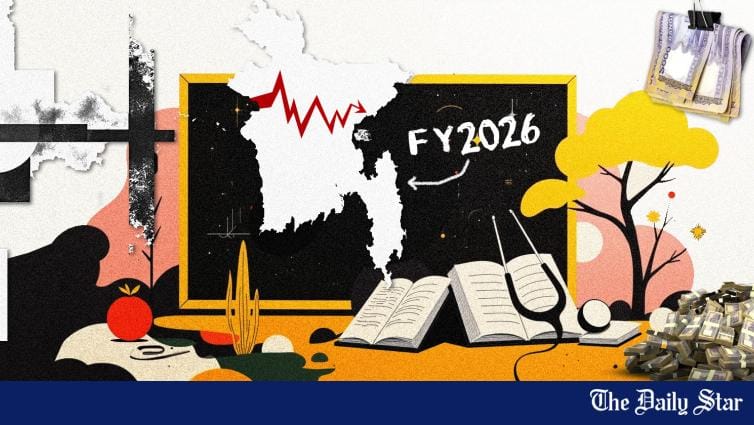
FY26 budget to prioritise reform initiatives
Shakhawat Hossain 02 March, 2025, 23:39

1740960409060.png


The national budget for the forthcoming financial year of 2025-26 will focus on the reform initiatives taken by the interim government aiming at ensuring good governance, eradicating poverty and curbing discrimination to achieve an inclusive economic growth in the country.

Officials referring to a directive given by finance secretary Khairuzzaman Mozumder in the past month said that all ministries and divisions were asked to send information linked to reform programmes taken by the interim government that assumed power on August 8, 2024 after the ouster of autocratic Awami League regime in a mass uprising in July-August past year.

The ministries and divisions have been asked to send the information by March 15, added the officials.

Finance adviser Salehuddin Ahmed, who is expected to announce the national budget on June 5, in his speech would give the updates on reforms in the areas of good governance, inclusive growth and poverty alleviation.

Economists said that it would be highly interesting to know about the reform programmes taken by the ministries and divisions since the national budget would be the first major government document to follow up the spirit of the mass uprising.

People are yet to know about priority reform agendas of the different ministries and division, said former World Bank Dhaka Office chief economist Zahid Hussain.

Besides, people will be able to learn the interim government’s views on mass uprising, to be reflected in the budget speech, he added.

Economists said that the narratives of uprising available in the government documents had so far been prepared by the task forces and commissions led by economists, academicians, law experts and former bureaucrats.

Officials said the finance secretary issued the directive after placing an outline of the new budget before interim government chief adviser Professor Muhammad Yunus on February 5.

They said that the chief adviser suggested a proper reflection of the uprising spirit in the budget document.

It has been reported that the chief adviser directed ministers and divisions to select at least one reform programme out of the recommendations made by the task force on re-strategising the economy and mobilising resources for equitable and sustainable development.

The task force’s recommendations include new institutions in the civil aviation sector, postgraduate education, research in science, technology, engineering and mathematics, information and communication technology and artificial intelligence.

To tackle the issue of over-regulation and bureaucratic hurdles that have long hindered business growth, the task force proposes the creation of a regulatory reform commission tasking it with evaluating and streamlining regulations across sectors, including business operations and taxation.

The finance secretary also sought information regarding the measures taken by the ministries and divisions on the country’s graduation from the least developed country status in 2026.

The government needs to bring about changes in incentives for the export-oriented sector in the budget since the graduation would restrict the facilitating of direct cash subsidy.

Besides, the country would loss preferential tariff in sending goods to the developing and developed countries.

Economists said that the country was in a favourable position to complete graduation from the LDC status.

Some sections of stakeholders have demanded deferring the graduation process, citing disruption in businesses, said Centre for Policy Dialogue distinguished fellow Mustafizur Rahman.

He said that the FY26 budget document should disseminate updates from the ministries and division on the important national issue.

Officials said the finance ministry had planned a big outlay of about Tk 8.5 lakh crore for the 2025-26 financial year, aiming at encouraging business activities.

They said that emphasis would be given on the generation of more revenue by the National Board of Revenue to support the big expenditure plan.

The provisional target for the NBR has been set at Tk 5.2 lakh crore.

The annual development expenditure in FY26 would be close to a third of the total outlay with focus on job creation projects in sectors like education, health and social safety net.​
 
Last edited:
Analyze

Analyze Post

Add your ideas here:
Highlight Cite Fact Check Respond
  • Like (+1)
Reactions: Bilal9

FY ’26 Post-budget reactions
Few measures may raise business costs, deter investment: ICAB
Rise in minimum tax main issue

FE REPORT
Published :
Jun 05, 2025 08:27
Updated :
Jun 05, 2025 08:27

1749165788970.webp


Chartered accountants on Wednesday raised concerns that several proposed fiscal measures in the FY26 budget may lead to higher costs for businesses and reduced private-sector investment, especially amid the ongoing economic uncertainties.

At a press conference held at its office in the capital, the Institute of Chartered Accountants of Bangladesh (ICAB) said some measures show promise, especially those aiming at digitisation and administrative simplification, but others may raise the cost of doing business and deter private sector growth.

It urged the government to have a broader dialogue among policymakers, industry leaders, and financial professionals, saying it is essential to refine the budget for sustainable economic recovery and growth.

ICAB President Maria Howlader lauded a landmark inclusion in the budget - the government's recognition of women's unpaid household labour as a contributor to the gross domestic product (GDP) - which she described as a "major policy change".

She expressed concerns about the feasibility of achieving the revenue target without modernising the tax structure and expanding the tax net.

As for individual taxation, she criticised the minimal increase in the tax-free income limit - from Tk 3,50,000 to Tk 3,75,000 - and the rise in minimum tax for marginal taxpayers from Tk 3,000 to Tk 5,000. She urged a higher tax-free threshold of Tk 4,50,000 to offer relief to low-income earners and emphasised the need for a more progressive and equitable tax regime.

Maria opposed the increase in turnover tax to 1 per cent, stating that taxing turnover instead of profit is inconsistent with a fair tax policy.

However, she welcomed other proposals to boost private investment and reduce business costs, including the removal or reduction of supplementary duties and tariffs on several products.

She also appreciated tax measures to rationalise the effective tax rate, including adjustments for bad debts as per IAS/IFRS standards, quarterly filing of withholding tax return, and reduced tax on brokerage commissions and merchant banks.

As for VAT and customs, she praised reduced advance tax on raw material imports and acceptance of ERP books for VAT purposes, while raising concerns about increased VAT on commercial goods and commissions from online sales.

She also expressed concerns over new regulatory duties on essential and healthcare items.

Commenting on macroeconomic risks, the ICAB president warned that borrowing from domestic sources - 12.25 per cent of the total budget - could fuel inflation, which already stands at over 9.17 per cent.

Snehasish Barua, partner at Snehasish Mahmud & Co, presented the keynote at the event.

He emphasised that inflationary pressures - driven by increased money supply and demand - require urgent containment, stressing the need for enhanced market monitoring and stable supply chains to prevent further price hikes.

Besides, he observed that due to the increase in minimum tax under Section 163 of the Income Tax Ordinance, even companies not making taxable profits will face higher tax burdens.

"For large firms with a substantial turnover, this would significantly increase the cost of doing business. For small businesses, more than 50 per cent of their profits may now go to the government, while loss-making companies could see their tax burden rise by 67 per cent." He said that companies listed on the stock exchanges but with less than 10 per cent of their shares floated through initial public offerings (IPOs) will be taxed at the higher rate of 27.5 per cent, equivalent to private companies.

Snehasish suggested the government extend the same condition to follow-on public offerings (FPOs) for consistency. He noted that Bangladesh already has the highest corporate tax rates among the peer countries, such as Vietnam, Indonesia, and Sri Lanka, for public and private limited companies as well as banking institutions.

"A logical and timely reduction in corporate tax is viewed as essential to encourage business activities and investment during this challenging period."

While reduced tax deducted at source (TDS) rates are expected to boost trading, he said, the increased minimum taxes - up by 67 per cent for companies and nearly 300 per cent for individual businesses - could hinder investment in new projects, ultimately affecting the GDP growth.

He advocated for a faster, digitised customs clearance system and urged the National Board of Revenue (NBR) to adopt international best practices, including easing conditions for participation in the authorised economic operator (AEO) programme to encourage self-compliance.

ICAB Chief Executive Officer Shubhashish Bose said the government refrained from increasing indirect taxes, aligning its policies with the World Trade Organisation (WTO) guidelines.

"Such measures are also part of the broader strategy to prepare for the country's LDC graduation."

He termed the budget a "preparatory blueprint" for Bangladesh's transition to a developing economy, with a focus on long-term sustainability, fiscal discipline, and global competitiveness.

Mohammed Humayun Kabir, vice president of the South Asian Federation of Accountants (SAFA) and past president of ICAB, moderated the discussion.​
 
Analyze

Analyze Post

Add your ideas here:
Highlight Cite Fact Check Respond

Poverty spending shrinks in new budget
Economists warn of 'mistimed retreat' amid soaring inflation, sluggish growth

JAHIDUL ISLAM
Published :
Jun 12, 2025 01:10
Updated :
Jun 12, 2025 01:10

1749684206964.webp


Despite mounting economic pressures on low-income households, the government has slashed the allocation for poverty reduction in the proposed national budget for FY2025-26, raising concerns among economists and development experts about the direction of fiscal priorities.

The proposed budget earmarks Tk 4.48 trillion for poverty reduction, down from Tk 4.61 trillion in the original budget for the outgoing fiscal year.

As a share of the total budget, poverty-focused spending has decreased from 57.9 per cent to 56.77 per cent, according to a Finance Division summary titled "Poverty Reducing Expenditure."

In absolute terms, this marks a nominal cut of Tk 129.94 billion in poverty-related allocations within a single fiscal year. The decline in budget share amounts to 1.13 percentage point year-on-year.

A longer-term view shows an even more concerning trend. The revised budget for FY 2023-24 allocated Tk 4.33 trillion-60.66 per cent of the total outlay-for poverty reduction.

Over just two years, the share of poverty-related spending has dropped by 3.89 percentage points, signaling what many see as a waning policy emphasis on poverty alleviation.

Economists warn that this shift comes at a particularly vulnerable time. With persistently high inflation, weak investment, and a slow recovery in employment, lower-income groups are under increasing stress.

Yet the new budget appears to reduce, rather than strengthen, the fiscal support aimed at them.

"It is disappointing that the announced budget, unveiled amid high inflation and a slowdown in investment and employment, has reduced rather than increased support for the poor-falling short of the rising demand for expanded benefits to protect vulnerable populations," said Dr Mustafa K. Mujeri, former Director General of the Bangladesh Institute of Development Studies (BIDS).

He expressed concern that much of the allocation may not reach its intended beneficiaries due to inefficiencies in targeting and implementation.

He emphasised the need for greater direct support for the poor through social safety nets, such as cash transfers and subsidised food distribution.

The national budget for FY 2025-26, proposed by Finance Advisor Dr Salehuddin Ahmed on June 2, includes Tk 3.01 trillion in direct poverty reduction spending, or 38.10 per cent of the total budget, and Tk 1.47 trillion (18.66 per cent) in indirect spending with potential poverty alleviation impact.

This marks a decline from last year's original budget, where direct and indirect poverty reduction shares stood at 38.88 per cent and 19.02 per cent respectively.

According to the Finance Division, Tk 2.84 trillion-or 53.06 per cent of the Tk 5.35 trillion operating budget-is considered poverty-reducing expenditure. An additional Tk 1.63 trillion, or 66.46 per cent of the Tk 2.46 trillion development budget, is similarly classified.

Budget documents reveal that the Ministry of Food will receive the largest poverty-focused share of its allocation, 98.01 per cent, followed by the Bridges Division (94.04 per cent) and the Statistics and Informatics Division (90.44 per cent).

Other high-ranking ministries include the Ministry of Disaster Management and Relief (88.43 per cent), Ministry of Railways (87.66 per cent), and Ministry of Primary and Mass Education (87.22 per cent).

On the other end of the spectrum, several government institutions show negligible or no poverty-focused allocations. The President's Office and the Office of the Comptroller and Auditor General received zero per cent, while the National Parliament received just 0.25 per cent.

Other low-ranking agencies include the Supreme Court of Bangladesh, Economic Relations Division, and the Anti-Corruption Commission.

Dr Selim Raihan, Professor of Economics at Dhaka University and Executive Director of the South Asian Network on Economic Modeling (SANEM), was more critical of the classification itself.

"Who is this report being made to satisfy?" he asked, calling the poverty-reduction label "arbitrary and ad hoc."

He argued that only well-targeted social protection programmes can be considered direct poverty reduction, while broader development investments-though important-should not be lumped together without clear methodological justification.

Raihan also pointed out that economic growth in recent years has not translated into proportionate income growth, and poverty levels have not declined as expected.

He warned that unless poverty spending is restructured and better targeted, the budget risks failing the very people it claims to support.​
 
Analyze

Analyze Post

Add your ideas here:
Highlight Cite Fact Check Respond

In quest of a practical budget

Asjadul Kibria
Published :
Jun 14, 2025 22:46
Updated :
Jun 14, 2025 22:46

The annual budget of the government is the most crucial fiscal event which has a bearing on the living conditions of all social groups. It is the main conduit of national resource mobilisation and management. Every year in June, the country receives its annual national budget for the upcoming fiscal year. After unveiling the budget by the man-in-change of national exchequer, different stakeholders scrutinise the various fiscal proposals placed in the budget. They also submit their suggestions and demands for the inclusion or exclusion of specific measures. Finally, the proposed budget receives approval from the parliament with or without some amendments. Thus, the proposed budget becomes the original budget.

Besides placing the budget proposal for the new fiscal year, the finance minister also declares a revised budget for the outgoing fiscal year. When the national parliament is operational in the country, he/she also presents a supplementary budget for the approval of the lawmakers.

The general trend in Bangladesh is to revise the proposed or original budget by reducing the original outlay. Ultimately, the size of the actual or implemented budget gets further reduced, mainly due to inefficiency in public spending, coupled with the wrong selection of development projects and inadequate mobilisation of resources. Budgetary decisions are primarily dependent on the availability of resources.

The government has been disclosing the status of the implemented or actual budget since FY09 in the budget document, specifically in the 'Budget in Brief.' This document provides a concise overview of the budget, including key figures and policy priorities. The practice brings some amount of transparency in the case of public spending disclosure and helps analysts and stakeholders get a more realistic picture of the budget.

In the first week of this month, the finance adviser to the interim government unveiled the national budget for the fiscal year 2025-26 (FY26). As there is no parliament in the country, Dr Salehuddin Ahmed, the finance adviser, delivered his budget speech via television and radio. Titled 'Building an Equitable and Sustainable Economic System', his speech nominally outlined the future direction of Bangladesh's economy.

Breaking the tradition of incremental budgets over the last five and a half decades, Salehuddin proposed an outlay of Tk 7.90 trillion for FY26, which is around one per cent lower than the original outlay of Tk 7.97 trillion for FY25. The proposed budget for the next fiscal year, however, is 6.20 per cent higher than the revised budget for the current fiscal year. Nevertheless, the modest increase over the revised budget is also a deviation from the long practice. For the last 15 years, since FY10, the proposed budget for the new fiscal year has shown a double-digit rise over the revised budget of the current fiscal year. Considering the high rate of inflation, the 6.20 per cent increase in the proposed FY26 budget over the revised FY25 budget is also not a hike, in real terms. The annual average rate of inflation stood at 10.13 per cent in May this year.

The reduced outlay of proposed public spending for the next fiscal year is a reflection of reality. During the last decade of the ousted Hasina regime, the annual average rate of hike in the proposed budget was 13.40 per cent. Most of the time, inflated outlay was proposed to widen the misappropriation and misuse of public money. The reduction in the proposed outlay for the next fiscal year could potentially lead to a more efficient allocation of resources, but it also raises concerns about the adequacy of funding for key sectors.

The finance adviser also delivered an abridged speech of around 7,000 words, whereas the original text contained around 17,000 words. The shortened version also helps viewers and listeners maintain their concentration.

Nevertheless, the unnecessary delay in making the budget documents public was a disturbing development, especially for analysts and the media. For many years, budget documents were made public when finance ministers began delivering their budget speeches. The practice is disrupted this time. The transmission started at 3:00 pm, and the finance ministry made the documents public after nearly an hour, without any apparent reason. The media personnel who gathered at the Ministry of Information to collect the budget documents also waited for an hour to obtain the documents. Despite repeated requests, the officials did not distribute the documents, quoting the official instruction to wait until the end of the speech. Over the years, journalists have been urging the government to announce the budget before noon. Regrettably, the Yunus-led interim government stuck to the previous timing of budget presentation.

True, the budget is not a panacea for all financial problems, though it is the most critical instrument of a government to manoeuvre public investment and development activities. In a democratic environment, the nature of the budget-making process should be more people-oriented, and policymakers should pay due attention to ensure that the expectations and aspirations of the people are reflected in the budget. According to some economists, public choice and democracy are interrelated, and the economic interpretation of democracy is that public wants and desires be entertained in the budget.

So, the budget process needs to be judged on the basis of (i) the constitutional obligations of the government, (ii) changes in the domestic political perspectives, and (iii) changes in the global economic environment. Like the previous finance ministers, the finance adviser also tried to comply with these three aspects.

Nevertheless, a budget is also not simply an annual financial statement of the government or a set of documents prepared by the bureaucrats, but rather a political tool which combines political decision-making with bureaucratic procedure. It is the numerical documentation of the government's political ideology, which is to be implemented through a suitable economic framework.

Over the last 16 years, it has been observed that the actual budget spending was, on average, 14 per cent lower than that of the original budget and 11 per cent lower than the revised budget, which is the budget that has been adjusted after the initial proposal to account for any changes or new information. Only the actual or implemented budget of FY11 was around 3 per cent and 1.5 per cent lower than the original and revised budgets of the year, respectively.

As the final implementation of the budget is generally lower than the proposed or revised outlay, it implies a structural weakness in the country's public expenditure system. This has led to some critical areas being deprived of due allocation or public investment, while some less important sectors are flooded with funds. The FY26 budget is a modest attempt to deviate from this trend. Its success, however, will depend significantly on the actions of the democratically elected government in the near future, underscoring the importance of their role in the budgeting process.​
 
Analyze

Analyze Post

Add your ideas here:
Highlight Cite Fact Check Respond

Bangladesh's austerity budget at a challenging time

Muhammad Mahmood
Published :
Jun 14, 2025 22:41
Updated :
Jun 14, 2025 22:41

1749942790425.webp


The Interim government presented its annual budget on June 2, with a total outlay of TK7.9 trillion which is 0.88 per cent lower than the outgoing budget, and a revenue target of TK5.64 trillion resulting in a budget deficit of TK 2.26 trillion. It is a trimmed budget relative to budgets presented in previous years reflecting stark economic reality facing the country. The economy is facing a combination of slow growth, high inflation, and rising unemployment notwithstanding the impending political changeover.

Even after almost ten months in power, there remains a sense of unease about the future as to whether the interim government under the leadership Nobel Laureate Professor Mohammad Yunus can get the economy back on track while spearheading political reforms needed to rebuild a durable democratic system and prevent another dictator from emerging. The economic factor will ultimately be the key issue in determining the interim government's success. It is a monumental challenge.

The finance Advisor in defending his austere budget said the budget "is realistic, pragmatic and implementable' in the current economic context. Such a scaled down "responsible" budget most likely will receive positive nod from the IMF and the World Bank if not from the economically disadvantaged section of the population.

The measures to reduce the budget deficit have resulted in a decrease in annual development expenditure, set at Tk 2.3 trillion, which is a 13.2 per cent decline from the original allocation in the previous budget. The proposed fiscal deficit of TK1.25 trillion will further balloon the already accumulated public debt despite the austerity measures.

In 2024, Bangladesh's public debt was $181,008 million. This amount represented 40.13 per cent of Bangladesh's GDP. Bangladesh's debt per capita in 2024 was $1,056. The public debt is composed of domestic debt (56 per cent of total debt) and external debt (44 per cent). Bangladesh's Private debt and household debt debts stand at 36.92 per cent and 6.69 per cent respectively of GDP in 2025.

Now the debt/GDP ratio is also expected to rise further at the end of fiscal 2025-26. Because debt is a stock rather than a flow, it is measured as of a given date, usually the last day of the fiscal year. Interest payment will account for 22 per cent of total revenue budget or 15.5 per cent of total spending. Between 1979-80 and 2024-25, Bangladesh always ran budget deficits except for four years. It indicates the budget has a structural deficit problem rather than cyclical.

The debt/GDP ratio for Bangladesh is notably lower when compared to the United States at 125 per cent, the United Kingdom at 105 per cent, and Japan at 270 per cent. If output falls sharply and the deficit grows, the debt/GDP ratio for Bangladesh will further climb up. Only budget surplus or high economic growth can help reduce the debt/GDP ratio.

The government also increased subsidy spendings to deal with rising oil, gas and fertiliser prices amounting to 11.3 per cent of budget expenditure. In the present situation, continuous dependence on existing energy and food subsidies will restrict adjustments in domestic prices and hinder fiscal measures from promptly addressing any significant economic challenges that may emerge in the coming months or years. Therefore, it is imperative that the emergency economic support does not become deeply ingrained.

A structural deficit problem implies that even allowing cyclical fluctuations in the economy, current government spending is being financed by borrowing. With structural deficit, therefore, a deficit will be posted regardless of the strength of the economy. A structural deficit problem implies that borrowing will become increasingly unsustainable or more expensive. A structural deficit problem can lead to a rise in interest payments as a percentage of GDP which means increasing amount of tax revenue would be needed to make debt interest payments.

Only spending cuts or raising revenue or both are methods that can get rid of structural deficits. But neither of these methods are appealing to any government and that is why structural deficits continue to linger. More importantly, spending cuts and tax concessions combined can also create a challenge more existential than fiscal. Therefore, the government could reform the taxation regime to solve the structural deficit problem. The current budget does not address that issue significantly.

This budget further demonstrates that Bangladesh is trapped in highly bureaucratised budgetary system with deep structural impediments. A notable example is the longstanding budgetary practice that still provides opportunities to legalise laundered money. This budget is no different in this regard. There also appears to be an inability to reform the taxation system which remains a critical issue for a long time.

10.2 per cent of budget allocation went for the public administration up by 1 percentage point along with increased special benefits for public servants who are set to receive a "special benefit" of up to 15 per cent on their basic salary. It remains unclear what productivity gains were achieved by public servants that justified an increased allocation. Also, the public service in Bangladesh is not known for efficiency. In fact, the public service in Bangladesh is highly bloated, inefficient and also known to be corrupt.

The Budget has allocated Tk 89.2 trillion for subsidies. While energy remains the primary focus, subsidies allocated for fertiliser, mechanisation, and food assistance remain in place as before. Continued reliance on existing energy and food subsidies will constrain adjustments in domestic prices, subsequently limiting the effectiveness of fiscal measures in addressing potential economic challenges that may occur in the coming months or years. Emergency economic support should not become permanent.

The budget has set a GDP growth rate target of 5.5 per cent for the fiscal year 2025-26 against a realised GDP growth rate of 3.97 per cent for the current fiscal year and an inflation target of 6.5 per cent. However, such a growth projection comes at a time when all major economies are facing a downturn, the US is set to suffer the sharpest drop. The OECD predicts US growth will slow from 2.8 per cent in 2024 to 1.6 per cent in 2025 and 1.5 per cent in 2026. The OECD further said, "This reflects the substantial increase in the effective tariff rate on imports and retaliation from some trading partners, high economic policy uncertainty, a significant slowdown in net immigration, and a sizeable reduction in the federal workforce." The inflation target appears challenging based on the experience of the past few years as well as the current economic and political climate.

An economic slowdown in developed countries is concerning for developing countries like Bangladesh, which depend on exports to wealthy regions such as the US, UK, and EU. Economic slowdown in these countries will hit Bangladesh hard. It is also to be noted that all developing countries including Bangladesh are at the receiving end of the advanced economies macroeconomic policy consequences. The budget document does not indicate that the Bangladesh economy may experience a significant slowdown, recession, or stagflation. Rather the picture painted is just the opposite.

According to the World Bank during the interim government's tenure, more than 2.7 million people have become new-poor. Of these, 1.8 million are women. Wages have not kept up with inflation, reducing real incomes. High inflation and increasing unemployment are indicators of an economy potentially experiencing stagflation. Domestic and foreign investment are stagnant, and income inequality is increasing, further worsening economic turmoil.

For a trade dependent country like Bangladesh, budget deficits can boost inflation considerably. Also, fiscal deficits can widen the current account deficit and push up interest rates. An appreciating US dollar as reflected in the BDT/USD exchange rate will make debt repayment or buying commodities even more expensive.

The budget includes measures designed to prepare the economy for becoming a lower-middle income country by November of next year. With that objective in mind, the tariff structure has been simplified by reducing tariffs and removing supplementary and regulatory duties on a very large number of goods rather than introducing a simplified tariff rate across the board. Despite design limitations, this is a positive step towards creating a more competitive environment in the country which is the key to productivity growth.

The principal fiscal challenge facing Bangladesh needs to be viewed in the context of high inflation, rising unemployment, poverty and income inequality and falling to stagnant investment both domestic and foreign. This fiscal year's budget prioritises debt servicing over public welfare. Structural reforms are necessary and have been recognised for a long time as crucial. But the budget appears to be business-as-usual type without any attempt to undertake structural reforms needed to revamp the economy.​
 
Analyze

Analyze Post

Add your ideas here:
Highlight Cite Fact Check Respond

Contractionary fiscal policy for private sector, not for government, says BNP’s Mintoo

bdnews24.com
Published :
Jun 21, 2025 21:55
Updated :
Jun 21, 2025 21:55

1750546868861.webp


Abdul Awal Mintoo, business leader and vice-chairman of the opposition BNP, has criticised the government for applying austerity measures selectively in the proposed 2025-26 national budget.

Speaking at a discussion titled “Budget Debate: Context-Appendix” organised by the Bangladesh Economic Association (BEA) at the SIRDAP auditorium in Dhaka on Saturday, he said the austerity policies were designed only for the private sector, while the government exempted itself.

“To curb inflation, we’ve raised interest rates, fair enough,” he said. “We’ve also slashed the size of the budget by 7 to 8 billion under a tight fiscal policy.

“But what’s clear is that this contractionary monetary and fiscal policy is targeted solely at the private sector.”

Mintoo's remarks were sharply critical of what he sees as a dual standard in the government’s economic approach--tightening the belt for businesses while continuing unrestrained spending in public institutions.

He said: “In the past one and a half years, Bangladesh has received a total of Tk 3 trillion in bank deposits. The government has taken Tk 2.70 trillion from it. So I don't see a tight fiscal policy for them.”

He advised the government to take all aspects into consideration and adopt a policy after judgement and analysis.

Although the interim government has talked about reforms in several areas, Mintoo says they are not evident.

Pointing out that the proposed budget also does not show any reforms to the identified problems of the economy, he said: “On one hand, economic growth is low, on the other hand, inflation is high.

“To get out of this situation, some reforms could have been made in this budget. But I haven't seen that.”

On Jun 2, Finance Advisor Salehuddin Ahmed presented a budget of Tk 7.9 trillion for the new fiscal year.

Although the overall budget has been reduced, most of the reduction has been done in the development sector, which directly benefits the citizens.

A notable rise is seen in non-development or operating expenditure. For the upcoming fiscal year, operating expenditure has increased by Tk 283.46 billion to Tk 5,353.17 billion.

In comparison, the outgoing 2024-25 budget had set operating expenditure at Tk 569.71 billion, which was later revised down to Tk 560 billion.

The proposed budget for the upcoming fiscal year estimates a deficit of Tk 2.26 trillion, of which Tk 1.26 trillion, which is equivalent to 2 percent of GDP, will be sourced internally.

Among these internal sources, the government plans to borrow Tk 140 billion from the banking sector, representing 1.67 percent of GDP.

In addition, it aims to raise Tk 125 billion from savings certificates and Tk 210 billion from non-bank financial institutions.

ADVISOR SEES “NATIONAL CONSENSUS” ON CORRUPTION

The chief guest of the discussion meeting, Muhammad Fouzul Kabir Khan, shared his experience after taking over as the interim government’s advisor on power, energy, and mineral resources.

He said, “I’ve seen a national consensus on corruption. No one is exempt. Politicians, bureaucrats, professors, everyone is involved.”

Giving an example, he said: “There was a report in Prothom Alo about the Bridges Division, which falls under one of the ministries I oversee.

“They built buildings for the rehabilitation of those who have been affected by a project, but later discovered some areas had been left out.

“So as a solution, they decided to distribute it among government officials. But there’s already a separate ministry for that, the Ministry of Housing and Public Works.

“It was unimaginable that even cabinet secretaries and university professors were taking bribes.”

Regarding lobbying, he said: “Politicians still meet with me, but none of them want corruption to end. Rather, they want to be complicit in it themselves.

“They say things like, ‘we couldn’t do business during the fascist era, so now it’s our turn'.”

In contrast, regarding the government’s efforts, he said: “We’re trying to introduce competition in the economy. Wherever there’s business, there should be competition. We’ve opened everything up.”

He expressed hopes of inflation declining by July or August.​
 
Analyze

Analyze Post

Add your ideas here:
Highlight Cite Fact Check Respond

Members Online

⤵︎

Latest Posts

Latest Posts