Donate ☕
201 Military Defense Forums
[🇧🇩] - Save the Rivers/Forests/Hills-----Save the Environment | Page 70 | PKDefense
Home Login Nation Wars Watch Videos
Serious discussion on defense, geopolitics, and global security.

[🇧🇩] Save the Rivers/Forests/Hills-----Save the Environment

Reply (Scroll)
Press space to scroll through posts
G Bangladesh Defense
[🇧🇩] Save the Rivers/Forests/Hills-----Save the Environment
523
13K
More threads by Saif

Stop disturbing the Sundarbans!​

Restrain traffic of ships through the forest

1711232731282.webp


It is deeply concerning that on top of projects, megaprojects, illegal occupations and deforestation ravaging the Sundarbans, traffic of ships through the forest has increased dramatically in recent years. A recent report sheds light on how ships, discharging harmful fumes and sound pollution, and often carrying toxic materials through the forest, have nearly doubled in a decade—from 357 trips monthly in 2012 to 837 trips in 2022, and 701 trips monthly so far this year.

Under the first Protocol on Inland Water Transit and Trade between Bangladesh and India, signed in 1972, lighter cargo vessels can operate between the two countries using the waterways mostly through the Sundarbans. A major route for these ships goes through at least 100 km of the river system inside the mangrove forest, which takes around eight hours for the vessels to travel. While any motor vehicle, including boats and ships, is strictly prohibited from operating through the forest after sunset till sunrise, ships continue to operate 24/7 unrestrained. The customs station in Angtihara, the entry point to the forest on this route, only logs the trips of the ships and does not monitor if any laws have been broken. While the customs and immigration in India close off at night, our customs office continues to operate throughout the night.
By allowing these activities, we are now destroying the Sundarbans from the inside. The toxic fumes and loud sounds greatly impact wildlife habitats and breeding environments. The propellers disrupt the marine ecosystem, and the waves cause severe erosions. For instance, the width of rivers on this route has increased from 20-30 metres to 50-60 metres. Most of the ships on this route contain fly ash, coal, and stones from India for our riverside cement factories. In the last seven years, at least 15 such ships have capsized inside the forest, spilling these harmful materials directly into the river.

Bangladesh has now become a land of lost forestlands and dead ecosystems. We have irredeemably destroyed a number of forests and major sources of biodiversity throughout this delta, and even in the hill tracts. The Sundarbans is the last hope for any unique and great population of wildlife to survive. The government must ensure that any activity harming this forest is halted immediately, and look for an alternative route for maritime trade with India as well as consider moving major power plants and factories from the area.​
 
Analyze

Analyze Post

Add your ideas here:
Highlight Cite Fact Check Respond

Sink-based solutions can ease Chattogram's waterlogging

1741826293016.webp

Between 1989 and 2011, approximately 15 percent of the exposed land in the Sholakbahar ward of the city was converted into various types of built-up areas, increasing the risk of waterlogging. FILE PHOTO: PALASH KHAN

Waterlogging in our port city in recent years has caused enormous suffering and economic loss. The government of Bangladesh has recently initiated efforts to find sustainable solutions to this problem. This hydro-climatic disaster occurs when the amount of source water exceeds what the sinks can accommodate. A better understanding of the sources and sinks of water will foster sustainable solutions to this issue.

Waterlogging primarily occurs during the monsoon season, characterised by heavy rainfall. A practical solution entails—(i) identifying the sinks and (ii) enhancing their capacity to ensure that the volume of water from the source does not surpass it. Furthermore, we must tackle the factors that diminish the capacity of sinks, such as landfilling, the removal of hills, and eutrophication, among others.

Inland water bodies

The most easily accessible water sink is the inland water bodies, which include ponds, lakes, canals, and drainage networks. To get a rapid solution to waterlogging, we must increase the water-retention capacity of these inland water bodies. Dredging is a proven method to enhance the volume of water that reservoirs can hold. Additionally, dredging boosts interactions between lake water and groundwater. However, it is vital to manage the dredged materials properly, as mismanagement can cause them to return to the water bodies shortly thereafter.

During heavy rainfall on certain days in the rainy season, a significant volume of water rapidly accumulates on the surface. This extra water necessitates enhanced drainage systems to keep the city free from flooding. Expanding and deepening the canals could increase their capacity to handle excess water. Furthermore, we could construct new lakes and drainage systems within the city, particularly in the areas most affected; this approach could significantly enhance the water retention capacity.

Alongside enhancing the capacity of the sinks, it is equally crucial to mitigate factors that restrict the volume of sinks—(i) landfilling in any form must cease immediately; (ii) hill-cutting should be halted as it generates a large volume of clastic sediment, much of it ends up at the bottom of inland water bodies; (iii) strict solid waste management must be enforced to prevent any forms of solid waste, such as non-degradable plastics and household materials, from entering the drainage system as solid waste can restrict flow velocity and reduce the water retention capacity of reservoirs; and (iv) chemical and bio-waste from domestic and industrial sources should be segregated and disposed of separately since inland water bodies gradually lose volume due to harmful algal blooms and eutrophication, exacerbated by increased nutrient levels from such waste.

The groundwater sink

Groundwater is a crucial destination for rainwater through the process of infiltration. Unfortunately, this aspect is often overlooked when planning to eliminate waterlogging. The reduction of open land restricts the infiltration process. Consequently, a substantial volume of water overflows that should ideally transfer into the groundwater; an increase in surface water heightens the likelihood of waterlogging. A research paper published by the Department of Geography and Environmental Studies at the University of Chittagong finds that between 1989 and 2011, approximately 15 percent of the exposed land in the Sholakbahar ward of the city was converted into various types of built-up areas. The situation is presumably similar in other wards of the city corporation. Reducing such a significant amount of open space presents a serious risk of waterlogging.

Increasing the amount of open space is a potential measure to ensure accelerated infiltration. Additionally, we could construct tiny artificial ponds throughout the city, designed with coarser rocks at the bottom, as fine-grained particles limit infiltration. The ponds need not be large; they could be situated along the streets in a manner that also contributes to the city's beautification. Furthermore, we can plan to establish recharge wells and soak pits to enhance infiltration into the groundwater.

Impermeable streets also impede groundwater recharge. Permeable city roads can be constructed to facilitate the percolation of more water from the lane into the ground.

By implementing the aforementioned sink-based solutions, the city's waterlogging problems can be eased. In addition to tackling waterlogging, these measures will enhance functional hydrology and foster a clean aquatic environment that aligns with biodiversity.

Mohib Billah is doctoral researcher in the Department of Geography and Geology at the University of Turku in Finland.​
 
Analyze

Analyze Post

Add your ideas here:
Highlight Cite Fact Check Respond

Over 600 trees felled at Dinjapur’s Karai Beel; case filed
1741911332715.webp

Photo: Kongkon Karmaker

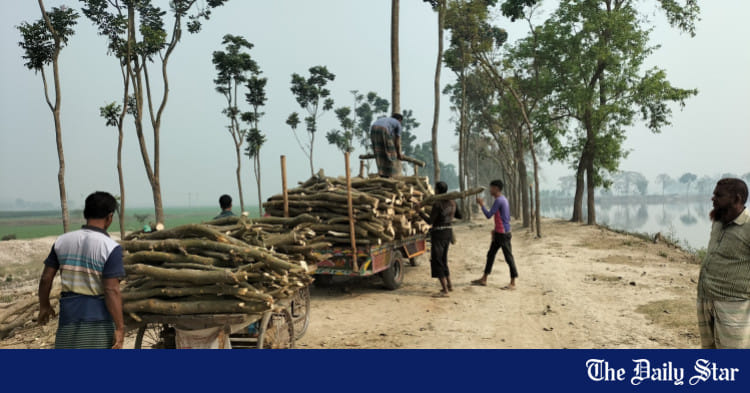
A case has been filed following the felling of over 600 fruit-bearing and timber trees at Karai Beel, a once-thriving natural sanctuary renowned for its biodiversity and scenic beauty, in Dinajpur's Biral upazila.

The beel is situated alongside Ramsagar and Sukhsagar, two of Dinajpur's largest manmade waterbodies. Karai Beel has long been a vital ecological and agricultural resource.

The large-scale tree felling, allegedly carried out by leaders of the Biral Muktijoddha Poultry and Livestock Cooperative Society, has raised serious concerns among local residents and environmental activists.

Yesterday, locals seized the felled trees and filed a case against two named individuals and 10-12 unidentified persons for illegal logging.

According to the First Information Report, the primary suspects in the case are Aibur Rahman 68, of Biral upazila and Jobaidur Rahman 55, a timber trader from West Ramnagar Gobrapara under Dinajpur Sadar upazila and the district president of Matsyajibi Dal.

1741911454448.webp

Photo: Kongkon Karmaker

Karai Beel spans 56.10 acres in Shankarpur Mouza and is classified as state property.

On Monday afternoon, the accused, along with several others, were seen cutting trees around the beel and transporting them using tractors.

Receiving information, the union land official rushed to the scene and seized the felled trees.

However, one tractor carrying 55 mango trees had already been moved elsewhere.

Authorities managed to confiscate an additional 170 mango trees, two jackfruit trees, and 1,489 cubic feet of firewood before further transportation.

Forest officials confirmed that the logging was done without obtaining prior authorisation.

"As per regulations, any tree felling must be reported to the local Forest Department. However, we were not informed about the cutting of Karai Beel's trees," said Mohsin Ali, beat officer of the Forest Department.

Following notification from the upazila administration, forest officials seized the logs and transported them to the local police station for further investigation.

Jobaidur Rahman, one of the accused, claimed to have legally purchased the trees through a tender process for Tk 4.1 lakh, with the amount deposited in Sonali Bank.

He asserted that cooperative leaders assured him they would settle the issue with the administration.

The Biral Muktijoddha Poultry and Livestock Cooperative Society was originally formed in 1974 by local freedom fighters, who leased Karai Beel from the government for fish farming. In 1977, the then president, Ziaur Rahman, allocated funds for digging a pond as part of a canal excavation programme, leading to the establishment of a tree plantation around the embankment.

Although society members later obtained ownership of the pond, the administration revoked their lease years later, leading to an ongoing land dispute in court, according to well placed sources of the government and cooperative body.

At a press conference today, Mokhsed Ali Mongolia, acting president of the cooperative and a BNP leader, denied any wrongdoing.

"The trees were not stolen but sold with the approval of the cooperative's general assembly," he said.

He further explained that after the July and August political unrest, the pond became vulnerable to looting, and the trees were no longer yielding fruit.

"We decided to cut them down and convert the area into a litchi orchard," he said.

Biral Upazila Nirbahi Officer (UNO) Ishtiaq Ahmed, who is overseeing the investigation, confirmed that legal action has been taken due to violations in axing over 600 trees under public property laws.

The cooperative leaders have failed to provide a valid explanation against the tree axing, added the UNO.​
 
Analyze

Analyze Post

Add your ideas here:
Highlight Cite Fact Check Respond

Gorer Khal on its deathbed
Yet another example of a poorly executed project

1741911784714.webp


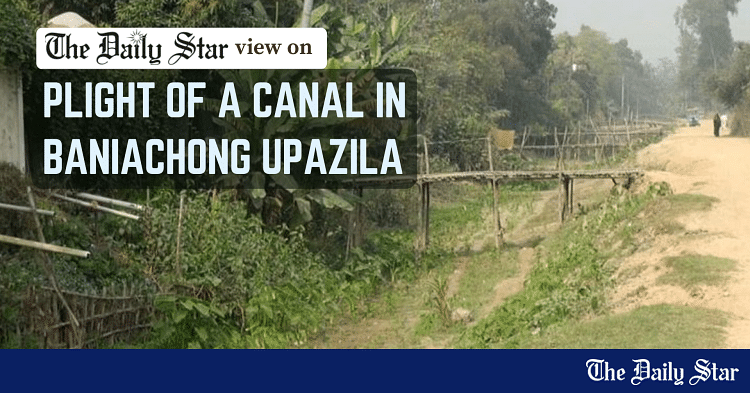
It is appalling to witness our rivers, canals, and such water bodies die one after another due to encroachment, pollution, and mindless development. One such canal is Gorer Khal at the Baniachong upazila in Habiganj. According to a report, the 19.2-kilometre-long canal was once a lifeline for the region's agriculture, communication, and flood management. But it is now on the verge of death due to illegal encroachment, pollution, and siltation. The Bangladesh Water Development Board (BWDB) took up a project at a cost of Tk 7.16 crore in FY 2022-23 to excavate and revive it but failed to do so. What, then, was the point of taking up such a project?

Clearly, the project was not properly planned or executed. Reportedly, while the project was underway, the authorities focused on digging the canal's branches instead of excavating its main body. Moreover, the excavation was allegedly conducted without proper land measurement or clearing encroachments. Additionally, the soil dug from the canal was piled up along its banks, which washed back into it during the monsoon. And although a total of 4,000 trees were supposed to be planted along the banks, this was not done either. All this explains why, around a year and a half into the work, the project has failed to bring any positive results.

Local residents also alleged corruption and misappropriation of funds by those who implemented it. Although the canal's situation has not improved at all, the project authorities have claimed that they did as far as they could, which shows their inefficiency and lack of sincerity. Unfortunately, the situation of Gorer Khal and the excavation project undertaken by the BWDB is not unique. Hundreds of such ill-executed projects can be found across the country. For instance, only the other day, a report published in this daily revealed how bridges built over the canals of Barguna were collapsing due to the use of poor-quality materials.

Corruption in development projects, whether large or small, was a recurring issue during the previous Awami League regime. This must come to an end. We urge the government to hold those responsible for such poorly planned projects accountable and reclaim canals like Gorer Khal to restore the vital lifelines of rural Bangladesh.​
 
Analyze

Analyze Post

Add your ideas here:
Highlight Cite Fact Check Respond

Wasa pipeline chokes Bhairab
1741912557046.webp


Rivers are the lifelines of Bangladesh, shaping its geography, economy, and culture. However, unchecked encroachment, pollution, and water withdrawal from upstream have left many rivers struggling to survive. Once-mighty rivers like the Padma, Bhairab, and countless others are drying up, forming vast shoals, disrupting agriculture, and forcing fishermen to abandon their livelihoods. The worsening crisis demands urgent attention and action. On this International Day of Action for Rivers, let's have a look at two of our rivers, which once used to flow gloriously, but are now being choked to death due to a lack of sustainable management, dredging, and pollution control.

The 20km part of Bhairab River, stretching from Khulna to Bagerhat, is shrinking into a stagnant canal due to a massive pipeline installed by the Khulna Water Supply and Sewerage Authority (Wasa).

The 56-inch-diameter pipeline, laid without an adequate environmental assessment, has severely disrupted the river's natural flow, causing heavy siltation and making navigation nearly impossible for boats and trawlers.

To protect the pipeline, Wasa later erected five- to six-foot-high iron structures, further worsening the situation.

These barriers obstruct boat movement, forcing fishermen and transporters to wait for high tide to cross. During low tide, the pipeline remains exposed, creating an impassable obstruction.

"Almost every day, I have to wait an extra six to seven hours for the tide to rise just to cross the pipeline," said Sabur Rana, a fisherman from Naihati village, Rupsha. "Khulna Wasa did this without thinking of our plight. We urge the authorities to resolve it immediately."

Mohammad Ali, a 75-year-old tea stall owner near the Mulghar Bridge, said, "This river, once 300 feet wide, has narrowed to just 20-25 feet over the years. The pipeline has made things worse."

The once-mighty Bhairab, vital for trade and transportation, is now struggling to survive. Businesses relying on river transport face immense hardship, with goods-laden boats frequently getting stuck.

In 2019, Water Development Board (WDB) undertook a Tk 24.23 crore excavation project to improve the river's water flow, dredging 17.5km of the river from Daratana in Bagerhat to Atharobaki in Khulna.

However, the benefits of this effort have been undone by the pipeline's installation.

Md Humayun Kabir, WDB sub-assistant engineer, said, "We opposed the pipeline installation. When the river flow was obstructed post-excavation, we warned them again. Instead of resolving the issue, they made things worse by erecting an iron cage."

Environmentalists say Bhairab's condition reflects the larger crisis facing Khulna's rivers.

Mahfuzur Rahman Mukul, divisional coordinator of the Bangladesh Environmental Lawyers Association (BELA), said, "Around 50 rivers in this region are under threat. A responsible government institution should protect them. The pipeline must be removed or relocated immediately."

WDB has repeatedly urged Wasa to relocate the pipeline, with even the deputy commissioner of Bagerhat writing to higher authorities, including the cabinet secretary, five times. Yet, no concrete action has been taken.

1741912625413.webp


Khan Salim Ahmed, superintending engineer of Khulna Wasa, said steps are being taken to relocate the pipeline. "The estimation is complete, and a contractor has been appointed. We are working on laying the pipe deeper underground for a sustainable solution," he said.

However, locals remain skeptical, fearing that bureaucratic delays will further endanger the Bhairab's survival.​
 
Analyze

Analyze Post

Add your ideas here:
Highlight Cite Fact Check Respond

37 rivers in Khulna division at risk: speakers

1741996906025.webp

Photo: Partha Chakrabortty/Star

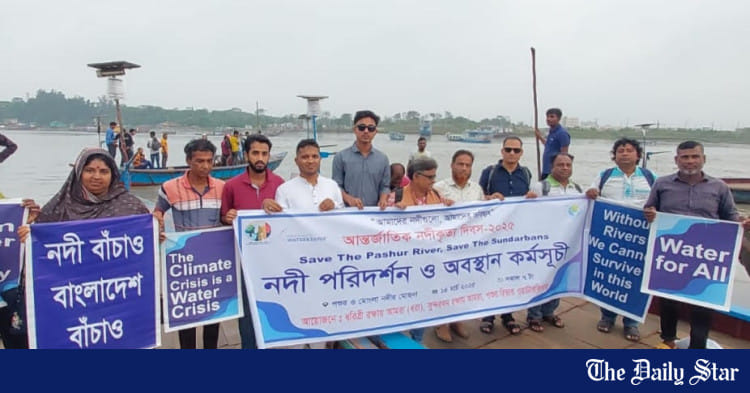
Relentless encroachment and pollution have placed 37 rivers in Khulna division in critical condition, warned speakers at an International Day of Action for Rivers event in Mongla yesterday.

They also mentioned that out of the 138 rivers in the division, 21 have completely lost their flow, while seven are only partially active.

The alarming situation was highlighted during a river inspection and protest programme at the confluence of the Mongla and Pashur rivers, organised by "Dharitri Rokkay Amra" (We for Earth), "Sundarban Rokkay Amra" (We for Sundarbans), and Pashur River Waterkeeper, under the slogan "Our Rivers, Our Future".

At the programme, Mongla Technical and Business Management College Principal Md Selim said, "Rivers are an integral part of our heritage and culture. The vast network of the Ganges, Brahmaputra, Meghna, Padma, Jamuna, Pashur, Rupsha, Surma, and Teesta forms the lifeline of Bangladesh. However, climate change, upstream water withdrawal, pollution, encroachment, unplanned development, and administrative negligence have pushed these rivers to the brink of extinction."

Women's rights activist Kamala Sarker expressed concerns over the environmental hazards caused by the Rampal Power Plant.

She said, "Pollution from the Rampal Power Plant has led to the presence of toxic substances in fish from the Sundarbans' rivers, posing a serious threat to human health. It is high time we shut down this environmentally destructive project".

Meanwhile, environmental activist Mostafizur Rahman Milon, lyricist Mollah Al Mamun, and river activists Idris Imon and Hasib Sardar addressed the gathering, urging immediate action to protect the country's rivers. Volunteer members of the Pashur River Waterkeeper, including Dollar Mollah and Mehedi Hasan, actively participated in the discussions.

Mohammad Noor Alam Sheikh, coordinator of 'Sundarban Rokkay Amra' and Pashur River Waterkeeper, warned that industrial, plastic, and agricultural waste are exacerbating river pollution.

He also said, "Climate change is another major threat to our rivers. Rising sea levels and increased salinity are making the water in coastal rivers unfit for use, aggravating both agricultural challenges and the drinking water crisis".

He further highlighted the impact of reduced Ganges water flow and climate change on the Sundarbans by adding, "The rising salinity levels in the Sundarbans' rivers are accelerating the destruction of the mangrove forest, putting its unique ecosystem at serious risk."

Speakers at the event unanimously urged the authorities to take immediate action to protect the country's rivers from further destruction. They warned that without urgent intervention, Bangladesh's rivers, which are vital for biodiversity, livelihoods, and agriculture will continue to degrade, posing a serious threat to both people and nature.​
 
Analyze

Analyze Post

Add your ideas here:
Highlight Cite Fact Check Respond

Members Online

⤵︎

Latest Posts

Latest Posts