Donate ☕
201 Military Defense Forums
[🇧🇩] - Save the Rivers/Forests/Hills-----Save the Environment | Page 83 | PKDefense
Home Post Alerts Inbox Watch Videos

[🇧🇩] Save the Rivers/Forests/Hills-----Save the Environment

Reply (Scroll)
Press space to scroll through posts
G Bangladesh Defense
[🇧🇩] Save the Rivers/Forests/Hills-----Save the Environment
521
12K
More threads by Saif


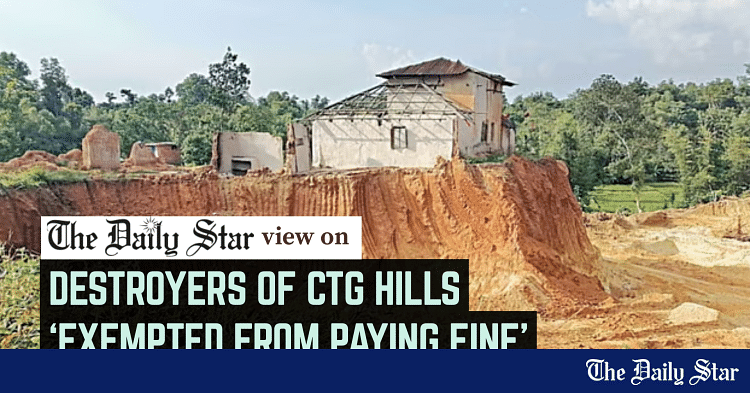
Don’t let hill destroyers get away unpunished
Troubling development involving fine exemptions comes to light

1748131226422.webp

VISUAL: STAR

A troubling development has recently come to light, highlighting the culture of impunity that flourished under the Awami League regime. According to a report by Prothom Alo, two contractors—Toma Construction and Messrs Hasan International—were fined Tk 50 crore by the Department of Environment (DoE) in early 2021 (or late 2020) for illegally cutting hills in Chattogram during the construction of the Dohazari-Cox's Bazar railway project. However, the companies were exempted from paying the fine in June 2022 allegedly by the then secretary of the Ministry of Environment, Forests and Climate Change, who also chaired the ministry's appeal authority at the time. This points to a serious abuse of power, with strong indications that the waiver was due to the secretary's ties with the companies involved.

As per an earlier report, the above-mentioned companies excavated 2.22 crore cubic feet of earth from hills in the Rangapahar area of Lohagara upazila, far exceeding the approved limit. While the government authorised the excavation of 37 hills—an act that is itself questionable—the companies cut an additional 16 without permission. According to a DoE official, the environmental damage caused by Toma Construction, a company of questionable repute, was estimated at around Tk 2,000 crore! Because of the sheer scale of the damage, the matter was allegedly hushed up to avoid further scrutiny.

In November 2021—nine months or so after the levying of the initial fine of Tk 50 crore, which was exempted at a later stage—the Chattogram DoE filed a case against the two companies with the Environment Court, which delivered its verdict on February 26 last year. Messrs Hasan International reportedly admitted its offence and was fined Tk 120,000, while Toma Construction was fined only Tk 50,000. Such nominal penalties for such grave violations raise serious concerns about the effectiveness of our justice system and environmental safeguards.

Over the past decades, illegal hill-cutting has become rampant across the country despite being prohibited by law, precisely because of the complicity of relevant officials and the political connections of offenders. Chattogram city alone has lost 120 hills over the last 40 years to real estate developments, road construction, and other projects. Alarmingly, this destructive trend has continued even after the political transition in August last year. Given the aspirations of the new Bangladesh we are trying to build, the authorities must take decisive steps to halt further destruction of hills and hold all responsible parties—regardless of their connections or influence—fully accountable. Our environment cannot afford another chapter of negligence and impunity.​
 
Analyze

Analyze Post

Add your ideas here:
Highlight Cite Fact Check Respond

Madhupur Sal forest and its biodiversity will be brought back: Rizwana

1748216885210.webp

Photo: Mirza Shakil/Star

Environment Adviser Syeda Rizwana Hasan today said that the Sal trees and its biodiversity will be brought back to the Sal forest.

"The forest dwellers here should play their role in protecting this forest. Students are being involved in these activities. Boundary pillars are being provided to identify the encroached areas in the forest," Rizwana said while planting Sal seedlings in the Telki area of Madhupur under the jurisdiction of the Tangail Forest Department in the afternoon.

Therefore, more and more Sal trees should be planted in the upcoming monsoon, she said.

She also said that eucalyptus and acacia trees are commercially planted in the Sal forest. These will be phased out.

1748216915681.webp

Photo: Mirza Shakil/Star

In response to a question from journalists, the adviser said that although it is not possible to do it now, the encroached forest land of Madhupur will be recovered in phases.

Later, the activities of the "Madhupur Shalban Restoration through the Participation of Local Communities" project were inaugurated by inspecting the boundary marking work and installing boundary pillars in the Rajabari area of the Madhupur forest area.

She addressed as the chief guest at a discussion meeting marking the International Day for Biological Diversity 2025 in Dokhala, Madhupur.

She called on local forest dwellers to be vigilant in protecting the forest. She told them that if they are in the forest, they should behave like the forest.

1748216949947.webp

Photo: Mirza Shakil/Star

She said that hundreds of acres of forest land should be cleared of pineapple and banana cultivation and trees compatible with the Sal forest should be planted.

At this time, the advisor announced the withdrawal of 129 cases filed against forest dwellers, including ethnic minorities, in Madhupur.

Renowned wildlife expert Professor Mohammad Ali Reza Khan, Chief Conservator of Forests Md Amir Hossain Chowdhury, Tangail Deputy Commissioner Sharifa Haque, Tangail Divisional Forest Officer Abu Naser Mohsin Hossain, local tribal leaders Ajay A Mre and Eugene Nokrek were also spoke the meeting.

Earlier, the advisor inaugurated the process of releasing peacocks at Luhuriya in Madhupur National Park.

In the morning, Rizwana inaugurated the 500,000 tree planting programme organised by local environmental organisation Sabuj Prithibi by planting trees at the public service square in front of the Tangail Deputy Commissioner's office.​
 
Analyze

Analyze Post

Add your ideas here:
Highlight Cite Fact Check Respond

Saving the Modhupur Forest a race against time

MIR MOSTAFIZUR RAHAMAN
Published :
May 26, 2025 23:42
Updated :
May 26, 2025 23:42

1748301784584.webp


There was a time when the Modhupur forest, also known as the Modhupur Sal forest, was a vibrant ecosystem teeming with wildlife. For those who grew up near its edges, the memories of deer grazing freely, birdsong echoing through thick canopies, and the subtle rustle of Sal leaves in the wind are indelible. But today, these sounds are fading, and the forest is shrinking before our eyes. What was once a vast stretch of 45,000 acres of Sal-dominated wilderness has now been reduced to mere 10,000 acres. The culprit: unchecked deforestation, illegal encroachment, and unregulated agricultural activities.

The decline of Modhupur Forest situated in Tangail district, is not just a local tragedy -- it is a national crisis. Many environmentalists and scientists fear that this 22,000-year-old natural treasure might vanish within the next ten years if we fail to act decisively. The forest's destruction would not only erase a critical biodiversity hotspot but also dismantle an ecological system that supports water regulation, carbon storage, and soil conservation in central Bangladesh.

Against this alarming backdrop, the recent initiative by the Government of Bangladesh to restore the degraded Sal forest through a community-based approach is both commendable and urgently needed. It represents a crucial shift in forest management -- one that acknowledges that forests cannot be saved by fences and enforcement alone, but by involving the very people who live alongside them.

According to officials from the Forest Department, the restoration efforts in Modhupur rest on several vital pillars. The backbone of this initiative is the replanting of native Sal trees in degraded zones. This move is essential for reviving the forest's original character and biodiversity.

The inclusion of local communities in the restoration process is key. By turning forest dwellers into stewards of the environment, the initiative aims to build sustainable, long-term conservation practices.

Demarcation and reclamation of forestlands are also crucial under which a significant portion of forestland will be officially demarcated to protect it from illegal occupation. Forest areas already encroached upon are being reclaimed and reforested.

The government is also embracing a data-driven model. With tools such as an ODK-based dashboard, forest officials are now equipped to undertake precise, site-specific planning for restoration.

This comprehensive approach -- rooted in ecology, technology, and community partnership -- marks a new chapter in Bangladesh's environmental conservation journey.

The restoration of the Sal forest carries implications far beyond the boundaries of Modhupur. First and foremost, Sal forests are critical for biodiversity conservation. They are home to many native species of plants, birds, and animals that are now facing the threat of extinction due to habitat loss.

Second, these forests provide vital ecosystem services -- they regulate water cycles, sequester carbon, and help conserve the soil. Their disappearance would exacerbate climate vulnerability in the region, increasing risks like flooding, drought, and land degradation.

Third, Sal forests offer livelihoods to many indigenous and local communities, particularly the Garo people, who have historically relied on forest products, farming, and cultural practices tied to the land.

Lastly, Sal forests play an essential role in maintaining the ecological balance of central Bangladesh. Their continued degradation would have cascading effects on weather patterns, agricultural productivity, and human health in the broader region.

Despite the promising framework of the restoration initiative, its success will depend on a few critical factors like ensuring clear demarcation and legal protection.

Boundary demarcation is essential. Without clear physical boundaries -- marked by durable boundary pillars -- the forest will remain vulnerable to encroachment. These legal protections must be upheld without exception, and regular monitoring should be conducted to prevent further illegal activities.

The government's decision to plant only native Sal trees and allow a mix of 70 per cent Sal and 30 per cent companion species is ecologically sound. Foreign and invasive species have no place in a restoration effort of this kind, as they can disrupt local ecosystems and outcompete native flora.

A major concern lies in the use of pesticides and chemical hormones in pineapple and banana cultivation by members of the Garo community and other settlers within the forest. These practices not only degrade the forest soil but also poison water sources and threaten wildlife. Alternatives must be provided -- such as organic farming training, sustainable land use planning, and economic incentives -- to ensure that livelihoods are not sacrificed in the name of conservation.

No part of the forest -- regardless of the socio-economic background of the claimant --should be allocated for private use. Forestland is not a political commodity; it is a national ecological asset. Landless and river erosion-affected people must be rehabilitated on khas land, not inside forest areas.

Steps need to be taken for protecting the rights of indigenous communities.

While illegal encroachment must be addressed firmly, it is equally important that the traditional rights of forest-dwelling communities are recognised and preserved. "No harassment of local communities" should be more than a policy slogan -- it must be a guiding principle in all enforcement actions. Forest-friendly livelihoods, participatory forest management, and educational initiatives must be undertaken to bring communities into the fold of forest protection.

A collective responsibility is also essential. It is naive to expect the Forest Department alone to safeguard Modhupur. Protecting this ancient forest demands collaboration -- from government agencies, NGOs, indigenous leaders, environmental experts, and ordinary citizens. Schools, media, and local governments all have a role to play in raising awareness and fostering a sense of shared responsibility.

Time is running out for Modhupur. The forest that once defined the landscape of central Bangladesh -- rich with Sal trees, medicinal plants, and elusive wildlife -- is on the verge of extinction. But the story of Modhupur does not have to end in tragedy. With the right vision, political will, and community engagement, we can still reverse the tide of destruction.

Let this not be another tale of what we lost. Let it be a story of what we saved -- together. The restoration of Modhupur is not just about trees; it is about healing the relationship between people and nature. It is about ensuring that future generations can walk beneath the Sal canopy and hear the forest breathe again.

If we fail to act now, we risk losing not just a forest, but a living chapter of our environmental and cultural heritage. The time to save Modhupur is now.​
 
Analyze

Analyze Post

Add your ideas here:
Highlight Cite Fact Check Respond

Bangladesh can earn $1b a year from carbon market: analysts

The information was revealed at a discussion on carbon financing organised by LightCastle Partners

1748306335690.webp


Bangladesh has the potential to generate up to $1 billion annually from the global carbon market, but a lack of clear national policy continues to limit investment in the sector, analysts said at a discussion.

Despite some progress, including $17 million earned since 2006 through projects like improved cooking stoves and solar home systems, the analysts stressed the need for stronger policy direction to unlock the country's full potential.

The discussion, titled "Catalysing carbon financing in Bangladesh: private sector pathways and policy readiness," was held today in Dhaka and organised by international consultancy firm LightCastle Partners.

The event was organised to raise awareness among private sector leaders and investors about the country's readiness for carbon market participation and the implementation of Article 6 under the Paris Agreement.

At the event, Lincoln Teo, managing director of ZERO13, in his presentation emphasised Bangladesh's commitment to combating climate change, citing national goals to produce 16 percent of energy from renewable sources by 2030 and to reduce annual carbon emissions by 89.47 metric tonnes of CO₂e.

He said that achieving these targets would significantly support sustainable agriculture, water management, and overall economic growth.

"While we've set green financing targets and launched refinancing schemes, we must now strengthen public-private cooperation and follow international best practices, with strong banking sector support," said Ahmed Zubaer Mahmud, Additional Director of the Sustainable Finance Department of Bangladesh Bank.

Bijon Islam, CEO of LightCastle Partners, called for innovative financing models aligned with environmental and social impact.

"Carbon financing can unlock new investment channels. But we must rethink how we mobilise capital to support a low-carbon, inclusive economy," he added.​
 
Analyze

Analyze Post

Add your ideas here:
Highlight Cite Fact Check Respond

Grabbers feast on Sonadia forest
More than 1,000 acres of mangroves destroyed since August last year

1748478729176.webp

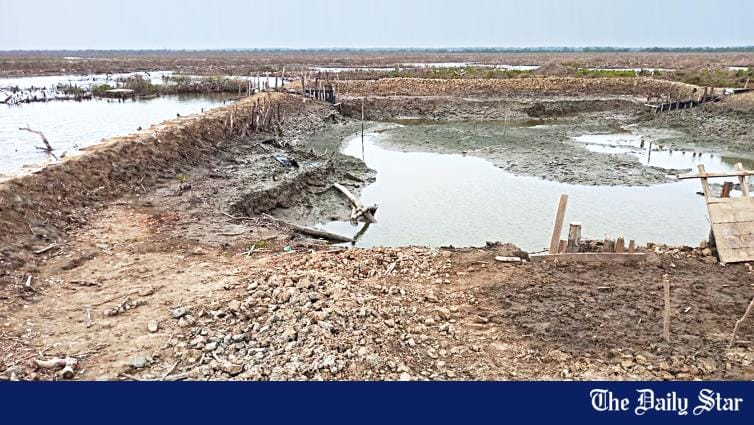
A shrimp enclosure set up razing a section of the mangrove forest in Sonadia Island. Photo: collected​
  • Encroachers cleared over 4,000 acres of forest​
  • Encroachment continues defying SC order​
  • Forest razed for shrimp and crab farming​

Over 1,000 acres of protected mangrove forest on Sonadia Island in Moheshkhali upazila of Cox's Bazar have been razed since August 5 last year.

The encroachment, aimed at developing enclosures for shrimp and crab farming, came to light recently when grabbers set fire to piles of felled mangrove trees at night in an attempt to destroy evidence of their illegal activities.

The incident, which defied a Supreme Court ruling issued last year, sparked public outrage and led to criticism of the authorities for their inaction.

The upazila administration said it has launched drives against the encroachers.

On May 18, the Department of Environment (DoE) filed a case against 20 individuals, including a local BNP leader and several leaders and activists of the now-banned Awami League, for encroaching on at least 112 acres of forest land.

Over the years, encroachers have cleared over 3,000 acres of Sonadia's mangrove forest and established 37 shrimp enclosures. Last July, the DoE filed a case against 26 individuals, mostly linked to the AL, for grabbing 128 acres of forest land. That move temporarily halted the encroachment.

However, the illegal activities soon resumed.

On November 28 last year, the SC upheld a High Court order that directed the government to immediately stop the destruction of mangrove forests on Sonadia and neighbouring areas.

Following a petition, the High court on October 23 ordered concerned government officials to demolish all illegal shrimp projects from Sonadia Island and neighbouring areas, take appropriate legal action against those involved in the destruction of the mangroves, and submit a compliance report before this court within 90 days.

SM Rubel, journalist and environment activist based in Moheshkhali, said the latest case filed by DoE significantly underestimated the land encroached by some influential people.

He claimed that more than 1,000 acres of mangrove forest had been razed since August 5.

"If you stand at the edge of the razed area, you cannot see the end of it," said Rubel, one of the 12 petitioners in the HC case.

Upazila Nirbahi Officer (UNO) Md Hedayet Ullah said the latest encroachments occurred after the fall of the AL-led regime on August 5 last year, during a period of administrative transition.

"Opportunists took advantage of the situation and grabbed forest land due to a lack of oversight," he said.

Since taking office on December 5, 2024, the UNO said he has monitored the situation, deployed forces to prevent further encroachment, and conducted five drives against encroachers on Sonadia.

He said a detailed report on about 50 illegal occupiers has been prepared and will be submitted to the High Court soon.

He also said an estimated Tk 5 crore is needed to permanently remove the 45-kilometre-long embankments built for the shrimp enclosures on the island.

The UNO added that the trees might have been burnt in preparation for the upcoming shrimp cultivation season, but did not disclose the total area of forest destroyed since last August.

Requesting anonymity, another official of the upazila administration said the total destroyed forest area may well exceed the figures mentioned in DoE cases.

"If there are about 30-35 shrimp enclosures in the island and each enclosure has 70-100 acres of land, the encroached land may exceed 3,000 acres. In some estimates the total grabbed land may reach 4,000 acres," he said.

In the latest case filed on May 18, Md Abdus Salam, senior chemist at the DoE's Cox's Bazar office, said the latest encroachment occurred in the Paschimpara and Purbapara areas of the island.

"We found evidence that the grabbers set fire to felled mangrove trees to erase signs of destruction," Salam said.

The 20 named accused include Alamgir Chowdhury, general secretary of Kutubjom Union BNP; Sheikh Kamal, chairman of Kutubjom Union Parishad; his brother Sheikh Alamgir; Abul Kalam, president of Ward 2 AL; Abdul Monaf, his nephew; Swechchhasebak League leader Imtiaz Uddin; AL member Azizul Haque; Sonadia UP member Ekram Mia; Mohammad Shamsher Ullah, cousin of former MP Asheq Ullah Rafiq; and 12 others. An additional 25–30 unidentified individuals were also named in the case.

According to the case statement, the accused committed offences under the Bangladesh Environment Conservation Act by destroying mangroves in an ecologically critical area (ECA), building embankments, establishing shrimp and salt farms, and harming flora, fauna, and natural land and water features.

Maheshkhali Police Station Officer-in-Charge Mohammad Kaisar Hamid said the DoE will investigate the case under the Environment Court Act 2010.

One of the accused, Sheikh Kamal Uddin, Kutobjom UP chairman and also an AL leader, denied his involvement.

"I was on the run after August 5, so how would I destroy the mangrove forest?" he said.

He claimed that his name had been included in the case by his political rivals to tarnish his image ahead of the upcoming union parishad election.He claimed to have joined anti-encroachment drives and said the encroachers are influential people of the Moheshkhali area, without identifying anyone.

Alamgir Chowdhury, secretary of Kutubjom union unit BNP, said the allegations against him were part of a conspiracy by his political rivals.

Contacted, Environment, Forest and Climate Change and Water Resources Adviser Syeda Rizwana Hasan said the previous government in 2017 allocated 9,467 acres of land on the island to the Bangladesh Economic Zones Authority (BEZA) for an eco-tourism park.

The land grabbers had already started burning down the forest and setting up shrimp enclosures, she said, acknowledging that the destruction continued even after August 5 last year.

"After taking charge of the office, my first initiative regarding Sonadia was to bring the land back under the Forest Department's control from BEZA," she said.

She said only one step remains to complete this process as Cox's Bazar district administration has cancelled the allocation to Beza.

"Once the forest is officially recorded under the Forest Department, it can exercise legal authority in the area," said the adviser.

She said the last incident of forest burning occurred on April 27 this year.

"Joint forces have carried out several raids and demolished a number of shrimp enclosures there," she added.

"A full-scale operation is now required. The Cox's Bazar deputy commissioner has been instructed to lead the effort," she said, adding that local administration, navy, and other forces will take part in the major drive.

Asked about the fund needed for demolishing the embankments that encroachers built for their "ghers" [shrimp enclosures], she said, "The government is working to secure the necessary funds. The embankments built by the occupiers must be dismantled."

On May 5 this year, the government officially cancelled the land allocation to BEZA to help restore the island's environment and biodiversity.​
 
Analyze

Analyze Post

Add your ideas here:
Highlight Cite Fact Check Respond

Members Online

⤵︎

Latest Posts

Latest Posts