โ˜• Support Us โ˜•
[๐Ÿ‡ง๐Ÿ‡ฉ] - Sea Ports/Air Ports/River Ports/Bridges/Mega Projects | Page 18 | PKDefense

[๐Ÿ‡ง๐Ÿ‡ฉ] Sea Ports/Air Ports/River Ports/Bridges/Mega Projects

Reply (Scroll)
Press space to scroll through posts
G Bangladesh Defense
[๐Ÿ‡ง๐Ÿ‡ฉ] Sea Ports/Air Ports/River Ports/Bridges/Mega Projects
172
6K
More threads by Saif

A turbulent year for the premier seaport
Strikes, tariff resets and disputes over foreign operator appointments tested governance at Ctg port.

1766884439273.webp


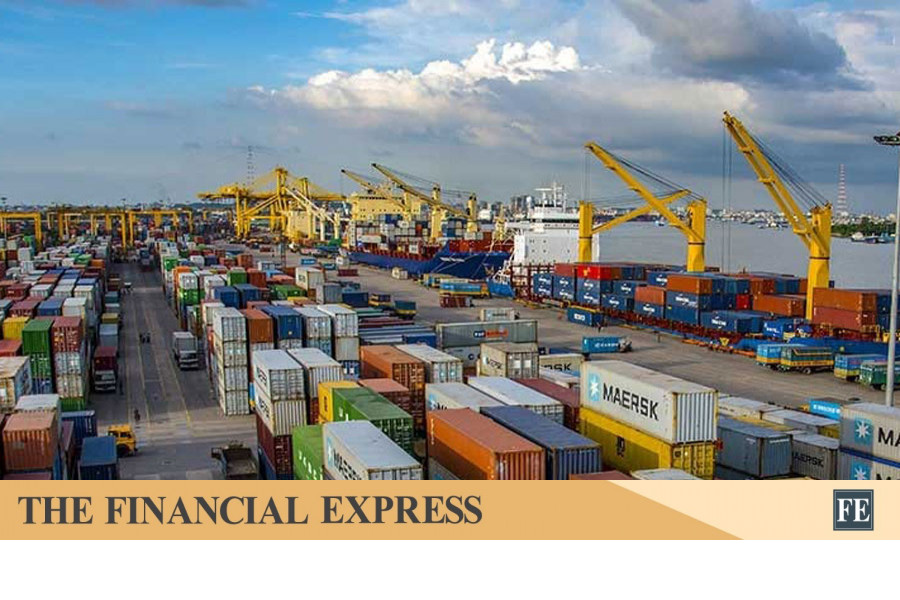
From the start to the end, Chattogram port remained in the national spotlight this year -- for protests, controversy, tariff hikes and other significant policy decisions like handing over operations of major terminals to foreign companies.

Throughout the year, political uncertainty, labour unrest and sensitive reform decisions all collided at the facility that handles more than 90 percent of the country's international trade. It barely got any breathing space for trade to bloom.

Even so, as of December 26, the port handled 33.64 lakh TEUs (twenty-foot equivalent units) containers, a 2.68 percent growth from 32.27 lakh TEUs handled last year, according to Chittagong Port Authority (CPA) data.

Meanwhile, the port handled a total of 13.63 crore tonnes of overall cargo, including the containerised ones, this year till December 27 morning, toppling last year's total volume of 12.40 crore tonnes, which was the highest so far.

The total number of vessels handled so far reached 4,396 compared to 3,867 in 2024.

EARLY-YEAR DISRUPTIONS

The year began with operational strain. In early February, container transport between the port and inland container depots was disrupted after clashes involving prime mover drivers and helpers at DC Park in the port city, temporarily halting cargo movement and exposing the fragility of last-mile logistics for days.

The interruption set an early tone for a year marked by repeated disruptions to port operations. The next month, the CPA sharply increased storage charges for containers remaining beyond the free period, introducing a fourfold hike.

Customs agents and importers warned that the move would inflate logistics costs and compound congestion rather than resolve it. The decision was widely seen as an early signal that port users would face higher charges after decades of relative stability in tariffs.

The true chaos began in the second quarter. Operational pressure intensified during April and May, when a nationwide strike by National Board of Revenue (NBR) officials โ€“ protesting an ordinance restructuring the revenue administration โ€“ severely affected customs services at the port.

Protests continued on and off for weeks. Cargo clearance slowed, vessels waited longer at anchor, and yard capacity approached critical levels. Even after the strike was formally withdrawn in late May, congestion lingered, with the port struggling to return to normalcy.

THE FOREIGN OPERATOR DEBATE

The NBR protest was surely a key flashpoint for the port in the outgoing year. As this protest went on, the Chattogram port unit of Jatiyatabadi Sramik Dal, the workers' wing of BNP, launched a series of weeklong protest programmes, protesting the government's move to lease out the New Mooring Container Terminal (NCT) to a foreign operator.

By June, labour and political opposition to foreign operators at Chattogram port moved into a more organised protest. On June 15, the Jatiyatabadi Sramik Dal, aligned with the port workers' federation, launched a six-day protest programme opposing plans to lease the NCT to UAE-based DP World. Demonstrators argued that handing over the port's largest operational terminal would undermine national control over a strategic asset and threaten workers' jobs.

The issue became a topic of national debate, making headlines regularly. All the while, port operations continued to struggle.

The opposition was notable not only for its intensity but also for its ideological breadth. Political parties from opposing ends of the spectrum, including left-leaning groups and right-wing nationalists, raised similar objections, framing foreign terminal operations as a question of sovereignty, transparency and long-term national interest.

Government officials and port authorities countered that involving experienced global operators was essential to modernise port operations, reduce vessel turnaround time and handle rising trade volumes.

They repeatedly pointed to competition from ports in India, Sri Lanka and Southeast Asia, warning that without rapid reform, Chattogram risked losing cargo to regional rivals.

Political unease over the matter continued through July, August and September, with BNP and Jamaat leaders publicly questioning whether an interim government had the mandate to sign long-term concession agreements for strategic infrastructure.

HIGH TARIFFS, TERMINAL DEALS, PROTESTS

October proved to be the most disruptive month of the year.

In mid-October, the CPA announced a sweeping revision of port tariffs โ€“ the first such adjustment in about four decades โ€“ with an average increase of around 41 percent across several charges related to container handling and storage.

Trade bodies reacted sharply, warning that the higher costs would erode export competitiveness, particularly for garment exporters already facing global demand pressures.

As part of the hike, the CPA raised gate pass fees for heavy vehicles more than fourfold, from Tk 57 to Tk 230. The decision prompted the Chattogram Prime Mover Owners Association to suspend container transport from October 15, causing deliveries to plunge by nearly 45 percent and rapidly building backlogs at the port.

Despite the mounting opposition, the government moved decisively at the year's end. In mid-November, it signed agreements with Denmark's APM Terminals and Switzerland-based Medlog SA for the construction and operation of the Laldia Container Terminal and the operation of the Pangaon Inland Container Terminal.

Street mobilisation followed swiftly. Rallies, torch processions and hunger strikes swept Chattogram, demanding cancellation of foreign operator agreements and reversal of tariff hikes.

Legal challenges soon followed. On November 9, the High Court stayed the tariff hike for one month, offering temporary relief to port users. Later in November, the court ordered a suspension of all activities related to the proposed foreign operator contract for the NCT, following a writ petition challenging its legality.

Meanwhile, the fate of the NCT remained unresolved. On December 4, a High Court bench delivered a dissenting verdict on the writ petition challenging the NCT contract, leaving the matter pending before the chief justice, effectively guaranteeing that the controversy will spill into 2026.​
 
the Chattogram port unit of Jatiyatabadi Sramik Dal, the workers' wing of BNP, launched a series of weeklong protest programmes, protesting the government's move to lease out the New Mooring Container Terminal (NCT) to a foreign operator.

These Jatiyatabadi Sramik Dal people (BNP port workers' wing) are being instigated by Indian RAW agents to destabilize CTG port operations. Every kind of BNP "dal" has these agents, RAW network is exceptionally strong within BNP in Bangladesh.

This is why Indians were so happy to see Tareq Rahman get back home. He's been sold to the Indians long ago. Wake me up when I'm proven wrong.

These Indian haramis have their eye on the port. Indians haven't let go of the idea of taking over the port somehow, so they can improve the economy of their Northeast states.

Little do they know, that the NE states themselves will separate from India proper soon. So mango and sack both will be gone.
 

Members Online

Latest Posts

Latest Posts