Donate ☕
[🇧🇩] - Textile & RMG Industry of Bangladesh | Page 28 | PKDefense

[🇧🇩] Textile & RMG Industry of Bangladesh

⤵︎
Reply (Scroll)
Press space to scroll through posts
G Bangladesh Defense
[🇧🇩] Textile & RMG Industry of Bangladesh
417
16K
More threads by Saif


Vietnam's apparel export strategy lesson for BD

Atiqul Kabir Tuhin
Published :
Dec 24, 2025 22:38
Updated :
Dec 24, 2025 22:38

1766623734455.webp


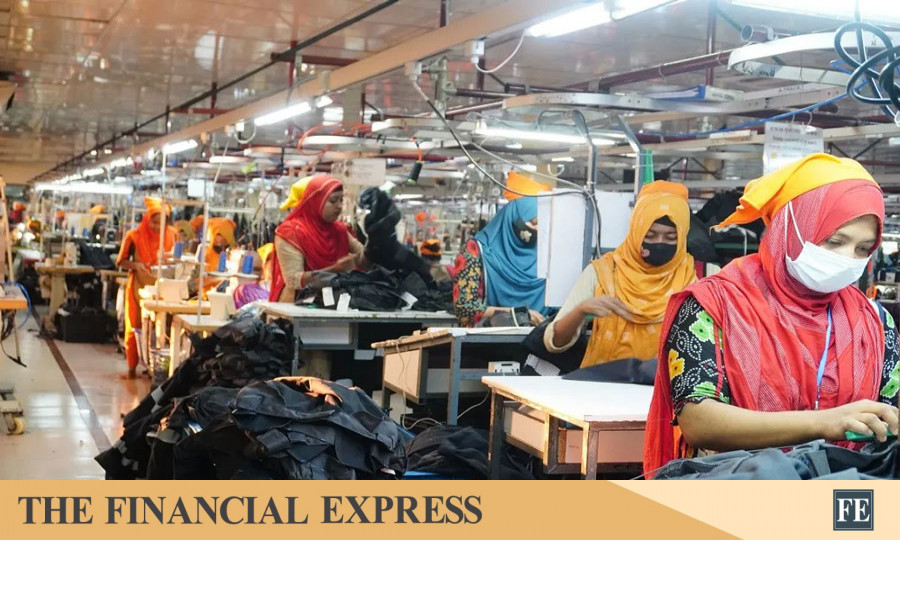
Bangladesh and Vietnam are often presented as close rivals in the global apparel industry, with export figures suggesting a neck-and-neck race for a larger share of global apparel market. In 2024, Bangladesh exported garments worth USD 38.48 billion, accounting for 6.9 per cent of the global market, closely followed by Vietnam's USD 33.94 billion with a 6.1 per cent share. Meanwhile, China remains dominant, commanding 29.6 per cent of global apparel exports, while India and Turkey trail with less than 3-4 per cent each.

On the surface, Bangladesh is slightly ahead of Vietnam. However, focusing only on headline numbers obscures a deeper reality: the two countries are competing under different trade frameworks. Vietnam is exporting from a position of strategic security, while Bangladesh remains heavily dependent on time-bound trade privileges that are nearing expiry date.

This contrast is most visible when export destinations are examined. Vietnam has built a dominant position in the United States, exporting USD 14.98 billion worth of apparel there in 2024, almost twice Bangladesh's USD 7.34 billion. Bangladesh, in contrast, relies overwhelmingly on the European Union, where it exported USD 19.77 billion, compared to Vietnam's USD 4.31 billion. This dependence has served Bangladesh well so far, largely because of duty-free access under the EU's Everything But Arms (EBA) scheme for least developed countries. But that advantage is temporary. Vietnam's access, by contrast, is contractual and permanent, secured through the EU-Vietnam Free Trade Agreement (EVFTA).

The EVFTA is steadily reshaping competitive dynamics inside the EU market. Tariffs on many Vietnamese apparel products have already been eliminated, while others are on a clear path to full liberalisation by 2027. As a result, trade patterns are beginning to shift. In product categories where tariffs were removed immediately or within four years, EU imports from Vietnam have grown faster than those from Bangladesh. More importantly, the most commercially significant apparel items such as cotton T-shirts, denim trousers, and knitt garments fall under tariff slabs that will soon be fully liberalised for Vietnam. Early signs suggest that Bangladesh's growth in these categories is slowing, while Vietnam is accelerating.

Beyond tariffs, the two countries differ sharply in product composition. Vietnam's apparel exports to the EU are overwhelmingly non-cotton based, accounting for more than three-quarters of its shipments. Bangladesh, by contrast, remains heavily concentrated in cotton garments, with non-cotton items making up less than one-third of exports. Although Bangladesh has made progress in recent years, Vietnam's head start is reinforced by deeper investments in synthetic textiles, stronger backward linkages and greater use of renewable energy, factors that are being increasingly valued in the EU market.

This structural gap becomes more problematic when rules of origin are considered. Future EU trade preferences, particularly under GSP Plus, require compliance with double transformation rules of origin. Bangladesh's dependence on imported woven and manmade fibre fabrics puts it at a disadvantage, while Vietnam's domestic textile base allows it to meet these requirements more easily. So, without accelerating investment in fabric manufacturing, Bangladesh risks losing competitiveness even if some preferential access is retained.

Vietnam's faster growth and higher-value product mix also pose a real challenge. In the EU, 100 kg of T-shirts from Vietnam earned $2,158, nearly double the $1,092 fetched by Bangladeshi equivalents. This reflects Vietnam's strength in value-added, synthetic and technical garments, in contrast to Bangladesh's dominance in cotton basics. Approximately 73 per cent of Bangladesh's export value comes from cotton garments, even though the global apparel market is increasingly shifting towards synthetics and multifunctional apparel. Bangladesh's advantage lies in scale, cost-efficiency and production reliability.

Policy risks are also looming large. The EU is set to review its Generalised Scheme of Preferences, with changes expected to take effect in 2028. Bangladesh has already exceeded safeguard thresholds that allow the EU to suspend preferences when import concentration becomes excessive. Its share of EU apparel imports under GSP far surpasses the established limits, creating a significant obstacle to securing GSP Plus status. When EBA benefits finally expire in November 2029, Bangladesh could face standard tariffs of around 12 per cent, while Vietnam will continue exporting duty-free under the EVFTA.

This looming asymmetry underscores a critical point: Vietnam is not merely competing on price or productivity; it is competing on certainty. Its extensive network of free trade agreements including the CPTPP, RCEP, ASEAN FTAs and agreements with Eurasian markets has sealed in access across major regions. Bangladesh, by contrast, is still navigating graduation-related adjustments without a comparable web of long-term trade arrangements.

The next five years, therefore, represent a decisive window. For policymakers, securing sustained access to the EU must be treated as an economic priority, whether through GSP Plus eligibility, a bilateral trade agreement, or an extended transition arrangement. At the same time, trade diplomacy must be matched by domestic reform, particularly in building backward linkages in woven and manmade fibre textiles, improving energy efficiency and aligning with emerging sustainability and traceability standards.

For entrepreneurs and manufacturers, the challenge is equally urgent. The future will reward those who diversify products, invest in technology and integrate more deeply into global value chains. Bangladesh's apparel sector has demonstrated resilience time and again, but resilience alone will not offset structural disadvantages in market access. Bangladesh must deepen its global integration, adopt high-value production, and differentiate itself through innovation and sustainability. The focus must shift from just scale to sophistication.

Vietnam's trade strategy offers a clear lesson: long-term competitiveness in today's global trading system is shaped as much by policy foresight as by factory efficiency. If Bangladesh can combine its proven manufacturing strength with proactive trade strategy and industrial upgrading, it can move from vulnerability to stability, and secure a strong foothold in global apparel trade.​
 
Analyze

Analyze Post

Add your ideas here:
Highlight Cite Fact Check Respond

RMG sector’s resilience tested as 2025 nears end
Saddam Hossain 27 December, 2025, 01:27

1766799372402.webp

A file photo shows workers sewing clothes at a readymade garment factory on the outskirts of Dhaka. | New Age photo

Bangladesh’s readymade garment sector faced one of its most challenging period in 2025, as manufacturers struggled to cope with tariff shocks and volatility in key export markets.

Rising production costs at home, a shaken law-and-order situation and persistent disruptions to energy and logistics forced many manufacturers to prioritise short-term survival over long-term planning.

Shovon Islam, managing director of Sparrow Group, told New Age that 2025 had been challenging for the sector.

‘In many ways, the situation is comparable to the shocks we faced during the abolition of the quota system, the Rana Plaza tragedy and the Covid-19 pandemic,’ he added.

Industry insiders said that the primary source of uncertainty was the US market, Bangladesh’s single-largest apparel export destination.

In April, the United States imposed sharply higher reciprocal tariffs on several countries, including Bangladesh, on which it raised the duty on apparel shipments to the US to 37 per cent. The tariff was later lowered to 35 per cent and then to 20 per cent, following a series of negotiations on July 30.

From August 7, Bangladeshi apparel items have been facing a 20 per cent reciprocal tariff, in addition to the regular 16.5 per cent tariff.

‘During the imposition of the tariff, we were completely in the dark,’ said Shovon Islam, adding that buyers were also operating in a ‘go-slow’ mode.

Although the tariff was eventually reduced, a slowdown on the global market deepened following the US tariff measures, which reshaped global trade by raising costs, industry insiders said.

Exports of RMG items throughout the year fluctuated. While exports maintained positive growth until June 2025, they nosedived consecutively from July.

According to Export Promotion Bureau data, Bangladesh exported RMG items worth $35.49 billion to global destinations during January-November period of 2025, which was 2.53 per cent higher than the $34.71 billion recorded during the same period in 2024.

Although exports posted marginal growth overall, the negative trend that began in July persisted through November, signalling that year-on-year growth could turn negative once data for December becomes available.

Moreover, during the July-November period of FY26, Bangladeshi exporters recorded a 1.03 per cent decline in exports to the European Union to $7.83 billion, while growth to the US market remained thin at 3.06 per cent to $3.22 billion.

Surprisingly, exports to non-traditional markets also declined by 3.19 per cent to $2.67 billion during the July-November period.

Regarding the export decline, Inamul Haq Khan, senior vice-president of the Bangladesh Garment Manufacturers and Exporters Association, said that they had expected a comeback in the second half of 2025.

‘However, instead of a recovery, exports nosedived across all three major destinations — the US, the EU and the non-traditional markets,’ he added.

The slowdown on non-traditional markets is shocking, he said, noting that shipments to these destinations had remained strong for many years.

‘Throughout 2025, the global fashion industry experienced a slowdown that affected us. Most probably, consumers changed their buying patterns due to inflation and economic sluggishness,’ he added.

He said that, due to the US tariffs, China, India and other competitors aggressively entered the EU and new markets, squeezing Bangladesh’s market share.

Moreover, Bangladesh did not receive the expected volume of orders shifting from China, as Vietnam, Indonesia and Myanmar captured a larger share, he added.

Fluctuating inflation in key markets — especially the US, Europe and the United Kingdom — reduced consumers’ appetite for new apparel, forcing retailers to shift from placing large orders to smaller, more cautious purchases.

Several domestic headwinds also affected the RMG sector in 2025, including political instability, labour unrest, banking sector weaknesses, a complete shutdown of the customs house due to officials’ protests, a fire at the airport cargo village and a persistent gas and energy crisis.

Shovon Islam said that throughout 2025, the banking sector experienced severe liquidity shortages, foreign currency constraints, high interest rates and elevated levels of classified loans.

Many RMG exporters faced difficulties opening back-to-back letters of credit due to weakened bank health. Several Shariah-based banks were merged under government supervision because of their volatile condition.

Many RMG factories, including those of BEXIMCO and NASSA, as well as some small and medium-sized ones, were also forced to shut down due to non-performing loans, a lack of orders and unavoidable political situations.

Moreover, confidence among depositors and manufacturers declined as NPLs reached about 36 per cent of total loans.

Throughout the year, operations in Bangladesh’s industrial sectors — particularly the textile sector — were severely affected by frequent interruptions in gas supply, with factories receiving only 2-5 PSI, well below the required 15 PSI.

Due to the persistent gas shortage, production at textile mills fell by nearly 30-35 per cent, industry insiders said.

Mohiuddin Rubel, former BGMEA director, said that intensified labour unrest, including road blockades and factory closures, also disrupted production and deliveries.

‘Moreover, the country experienced a complete shutdown of the customs house for the first time — an event rare globally — which severely impacted exports,’ he added, noting that a significant fire at the cargo village of Hazrat Shahjalal International Airport destroyed garment shipments worth about $1 billion, directly cutting export earnings.

At the same time, he added, the removal of export incentives and the reduction of the Bangladesh Bank’s Export Development Fund to $2 billion also hurt the sector.

On November 17, 2025, the interim government amended the Bangladesh Labour Act to simplify trade union formation, introduce enhanced maternity benefits, mandate provident fund contributions and reduce the minimum wage review cycle from five to three years.

Bangladesh also ratified ILO Conventions C190, C155 and C187, becoming the first South Asian nation to ratify all 10 fundamental conventions.

While worker rights groups widely praised these reforms, industry stakeholders expressed concerns about rising compliance costs and administrative burdens.

Among the mentioned issues, a silent trade war with India was also on, as India imposed a ban on imports of several jute products and ropes through land ports on August 11, following similar import bans on several jute and woven products through land ports on June 27, leaving Kolkata and Mumbai ports open.

Earlier on May 17, India imposed restrictions on the import of most Bangladeshi products, including RMG, processed foods and agro-products.

On April 9, India withdrew the trans-shipment facility it had granted to Bangladesh for exporting various items to the Middle East, Europe and other countries, except Nepal and Bhutan, following Bangladesh’s March 28 ban on importing yarn from India through land ports.

Mustafizur Rahman, distinguished fellow of the Centre for Policy Dialogue, said that Bangladesh had failed to resolve key issues that continued to erode its competitiveness.

Despite these headwinds, Bangladesh achieved some positive milestones in 2025.

During January-September period 2025, Bangladesh’s exports to the US reached $6.42 billion, marking 18.64 per cent growth, according to OTEXA data, while exports to Europe also rose by 9.45 per cent to 16.67 billion euros.

The country maintained its growth trajectory despite intense competition from rival exporters.

According to World Trade Organisation data, Bangladesh remained the world’s second-largest RMG exporter in 2024, with a global market share of 6.9 per cent.

Throughout 2025, Bangladesh also retained its leadership in green transformation, with 38 RMG factories receiving certification from the US Green Building Council for Leadership in Energy and Environmental Design in 2025, bringing the total number of LEED-certified garment factories to 270.

‘As the industry moves forward, the challenge will be to build on this foundation by integrating green factories with low-carbon operations, circular production models and digital sustainability reporting,’ said Mohiuddin Rubel.

The progress achieved in 2025 showed that Bangladesh is not only ready for this transition but is already leading it, he added.

Regarding recommendations for 2026, Mustafizur Rahman said that Bangladesh must address issues related to product and market diversification, reduce the cost of doing business, ease port congestion and develop a comprehensive logistics solution.

‘Bangladesh should focus on attracting more foreign direct investment and implementing a national logistics policy,’ he added, noting that all measures must be taken with the country’s LDC graduation scheduled for November 2026 in mind.

Inamul Haq Khan said that industry players remained cautious about a recovery in 2026 as the global economy continued to face turmoil.

‘However, an elected government could boost buyers’ confidence, as they closely monitor the February election,’ he added.

Echoing similar sentiments, Shovon Islam said that elections and the formation of a political government could help restore confidence.

‘Buyers are focusing on the February elections and they are highly concerned. If a fair election takes place on time, it could significantly boost buyers’ confidence,’ he added.

However, buyers have also expressed disappointment over attacks on media houses and cultural centres, which have tarnished the country’s image, he said.

He added that if political stability and law and order were restored, exports could begin to recover after April.

Mohiuddin Rubel said that Bangladesh must identify and address the root causes of factory closures and strengthen the financial sector’s capacity to provide stable and appropriate support to the industry in 2026.

‘It must also establish effective monitoring systems to ensure that new factories entering the sector align with and contribute to broader industrial development goals,’ he added.

Bangladesh’s competitiveness, he said, will depend on how quickly it can close infrastructure gaps, ease internal bottlenecks and move up the value chain — calling for stronger logistics, political and social stability, better factory-level efficiency and greater investment in research and development, innovation and marketing.​
 
Analyze

Analyze Post

Add your ideas here:
Highlight Cite Fact Check Respond
RMG sector hits green milestone with 38 LEED certified factories in 2025
Staff Correspondent 28 December, 2025, 00:21

1766884970046.webp


Bangladesh’s ready-made garment industry reached a milestone in sustainable manufacturing, securing 38 new United States Green Building Council’s Leadership in Energy and Environmental Design certifications in 2025.

With these, the number of LEED-certified green garment factories reached 270, including 114 Platinum and 137 Gold facilities, 15 Silver, and 4 certified factories, the highest in the world.

In 2025, the most factories achieved LEED certification in a single year to date, according to data compiled by Bangladesh Apparel Exchange, a platform focused on research in the RMG sector.

Of the 38 newly certified factories in 2025, 22 achieved LEED Platinum, 11 LEED Gold, and 5 LEED Silver.

Moreover, none of the factories settled for basic certification, reflecting a clear shift from compliance-driven sustainability toward excellence-driven green transformation, said the BAE.

Mohiuddin Rubel, managing director of the BAE, said that the momentum gained in 2025 reflected broader global dynamics.

As international buyers, regulators, and consumers increasingly demand lower environmental footprints, Bangladeshi manufacturers are proactively aligning with evolving standards such as carbon efficiency, water stewardship, energy optimization, and climate-resilient infrastructure, said Rubel, also a former director of the Bangladesh Garment Manufacturers and Exporters Association.

‘LEED certification has thus become not only a sustainability benchmark, but a strategic competitiveness tool for the industry. This achievement signals a deeper transition as it demonstrates that Bangladesh’s RMG sector is preparing itself for the next phase of global sustainability requirements, including EU regulations, carbon pricing mechanisms, and digital transparency frameworks, while continuing to deliver at scale,’ he added.

According to industry insiders, 550 factories are now awaiting USGBC LEED certification.

Bangladeshi factories have been obtaining LEED certification since 2011.

The USGBC honours factories based on several criteria: transformation performance, energy, water, and waste management. The best performers are rated platinum, followed by gold and silver.

Industry insiders said that these criteria enable green factories to significantly reduce operational costs over time, even though they may initially incur higher setup costs.

According to apparel manufacturers, the move towards green factory buildings helped regain Bangladesh’s image after the Rana Plaza tragedy, which claimed 1,134 lives and left more than 2,000 injured.​
 
Analyze

Analyze Post

Add your ideas here:
Highlight Cite Fact Check Respond

Spinners blame India for dumping yarn as imports surge 137%​

Local spinning mills are left with Tk 12,000 crore of unsold stock as cheap yarn from India floods the market, according to the Bangladesh Textile Mills Association (BTMA).

BTMA leaders say yarn imports from the neighboring country rose 137 percent during the April-October period this year, as Indian traders are dumping it in Bangladesh at more than $0.30 per kilogram below domestic prices.

Google News LinkFor all latest news, follow The Daily Star's Google News channel.

As a result, nearly 50 local spinning mills have closed in recent years after failing to survive the competition, said BTMA President Showkat Aziz Russell.

Speaking at a press conference at Gulshan Club in Dhaka yesterday, he added that one of his own mills has shut down, while another is struggling to stay afloat.

"These mills had an investment of Tk 500-Tk 700 crore each, and it is difficult to start them anew," he said.

The BTMA president said Bangladesh should reduce its dependence on Indian yarn. In the past, India stopped cotton exports to Bangladesh without any prior notice, causing severe losses for local spinners.

"If Bangladesh depends heavily on Indian yarn, they may stop supplying it suddenly, putting our garment sector in trouble," he said.

In April this year, Bangladesh imposed a ban on importing yarn from India through land ports to protect local textile producers from cheaper Indian yarn and promote domestic production. But the restriction does not cover imports through sea routes.

At the press conference, millers said they do not want a complete ban on Indian yarn. Rather, they advocated for reducing the bilateral trade gap, which now heavily favors New Delhi.

Besides, they called for import bans on certain yarn types abundantly produced domestically.

In his speech, Russell said the Indian economy is protective in nature. He said that once his company exported Royal Crown Cola to Kolkata, but the Indian government raised tariffs on the product within 15 days, affecting the business.

According to him, the total investment in the garment and primary textile sectors is more than $75 billion, including $23 billion in the primary textile sector. Combined, the two sectors contribute $40 billion in exports.

His recommendations included facilitating warehousing for cotton merchants to allow stockpiling of US cotton for use in local mills, as promised by Dhaka during reciprocal tariff negotiations.

At the program, other millers said they cannot compete with cheap Indian yarn, currently priced at $2.50 per kilogram, while local mills must sell at $3 per kilogram due to shortages of raw materials such as cotton.

They called for at least 10 percent cash incentives for garment exports that use locally spun yarn, an increase in the Export Development Fund (EDF) at lower interest rates, and reduced bank lending rates.

Former BTMA director Razeeb Haider described the influx as an act of "economic aggression", designed to "pressure" Bangladesh's primary textile sector. "Because of low prices, international clothing brands are also choosing Indian yarn over local yarn, severely affecting the spinning sector," he said.

Haider, managing director of Outpace Spinning Ltd, said that in fiscal year 2025-26, $2.0 billion worth of yarn was imported from India, with local mills using 1,600 tons daily. From April to October 2025, imports reached $950 million, a 137 percent increase year-on-year.

Bangladesh has become the largest destination for Indian yarn exports, receiving 44 percent of the total, while Cambodia ranks second at 21 percent, he added.

Former BTMA president A Matin Chowdhury said India provides incentives at multiple stages, from cotton growers to factories and exporters, making Indian yarn highly competitive.

Another former BTMA president, Mohammad Ali Khokon, said that Indian control of Bangladesh's backward linkage industries could eventually extend to the garment sector.

"Nearly 40 to 50 mills have closed, and more face the threat of shutdown. Amendments to the labor law may also provoke unrest," he said.

At the program, BTMA President Russell urged the government to introduce policy support within 72 hours to save the textile sector.

With 25 percent cash incentives, back-to-back LC facilities, and the EDF, he said the sector could still grow.
 
Analyze

Analyze Post

Add your ideas here:
Highlight Cite Fact Check Respond

Spinners blame India for dumping yarn as imports surge 137%​

Local spinning mills are left with Tk 12,000 crore of unsold stock as cheap yarn from India floods the market, according to the Bangladesh Textile Mills Association (BTMA).

BTMA leaders say yarn imports from the neighboring country rose 137 percent during the April-October period this year, as Indian traders are dumping it in Bangladesh at more than $0.30 per kilogram below domestic prices.

Google News LinkFor all latest news, follow The Daily Star's Google News channel.

As a result, nearly 50 local spinning mills have closed in recent years after failing to survive the competition, said BTMA President Showkat Aziz Russell.

Speaking at a press conference at Gulshan Club in Dhaka yesterday, he added that one of his own mills has shut down, while another is struggling to stay afloat.

"These mills had an investment of Tk 500-Tk 700 crore each, and it is difficult to start them anew," he said.

The BTMA president said Bangladesh should reduce its dependence on Indian yarn. In the past, India stopped cotton exports to Bangladesh without any prior notice, causing severe losses for local spinners.

"If Bangladesh depends heavily on Indian yarn, they may stop supplying it suddenly, putting our garment sector in trouble," he said.

In April this year, Bangladesh imposed a ban on importing yarn from India through land ports to protect local textile producers from cheaper Indian yarn and promote domestic production. But the restriction does not cover imports through sea routes.

At the press conference, millers said they do not want a complete ban on Indian yarn. Rather, they advocated for reducing the bilateral trade gap, which now heavily favors New Delhi.

Besides, they called for import bans on certain yarn types abundantly produced domestically.

In his speech, Russell said the Indian economy is protective in nature. He said that once his company exported Royal Crown Cola to Kolkata, but the Indian government raised tariffs on the product within 15 days, affecting the business.

According to him, the total investment in the garment and primary textile sectors is more than $75 billion, including $23 billion in the primary textile sector. Combined, the two sectors contribute $40 billion in exports.

His recommendations included facilitating warehousing for cotton merchants to allow stockpiling of US cotton for use in local mills, as promised by Dhaka during reciprocal tariff negotiations.

At the program, other millers said they cannot compete with cheap Indian yarn, currently priced at $2.50 per kilogram, while local mills must sell at $3 per kilogram due to shortages of raw materials such as cotton.

They called for at least 10 percent cash incentives for garment exports that use locally spun yarn, an increase in the Export Development Fund (EDF) at lower interest rates, and reduced bank lending rates.

Former BTMA director Razeeb Haider described the influx as an act of "economic aggression", designed to "pressure" Bangladesh's primary textile sector. "Because of low prices, international clothing brands are also choosing Indian yarn over local yarn, severely affecting the spinning sector," he said.

Haider, managing director of Outpace Spinning Ltd, said that in fiscal year 2025-26, $2.0 billion worth of yarn was imported from India, with local mills using 1,600 tons daily. From April to October 2025, imports reached $950 million, a 137 percent increase year-on-year.

Bangladesh has become the largest destination for Indian yarn exports, receiving 44 percent of the total, while Cambodia ranks second at 21 percent, he added.

Former BTMA president A Matin Chowdhury said India provides incentives at multiple stages, from cotton growers to factories and exporters, making Indian yarn highly competitive.

Another former BTMA president, Mohammad Ali Khokon, said that Indian control of Bangladesh's backward linkage industries could eventually extend to the garment sector.

"Nearly 40 to 50 mills have closed, and more face the threat of shutdown. Amendments to the labor law may also provoke unrest," he said.

At the program, BTMA President Russell urged the government to introduce policy support within 72 hours to save the textile sector.

With 25 percent cash incentives, back-to-back LC facilities, and the EDF, he said the sector could still grow.
When the Indians cannot compete with the local businesses they start dumping yarn to increase their export to Bangladesh. The Bangladesh government should take some anti dumping measures to stop the Indians from dumping yarn into Bangladesh.
 
Analyze

Analyze Post

Add your ideas here:
Highlight Cite Fact Check Respond
DUMPING-RATED YARN INFLUX IMPERILS DOMESTIC INDUSTRY
Manufacturers fret over Tk120b unsold apparel raw material

Neighbouring traders pushing in knitting threads at rates deep down market value, millers say

1766970569929.webp

Published :
Dec 29, 2025 00:22
Updated :
Dec 29, 2025 00:22

Millers fret over a stockpile of unsold local yarn worth Tk 120 billion amid massive influx of the cheap-rated clothing raw material, allegedly meant to undercut domestic industry, manufacturers say.

The country's primary textile millers, especially spinners, say yarn imports from India increased 137 per cent last fiscal year as traders over there are dumping the raw material at significantly cut-down prices.

This competitive pressure has already forced 50 local spinning mills to shut down while another 50 are on the verge of closure, threatening the stability of the country's garment sector and its reliance on foreign raw materials.

Bangladesh Textile Mills Association (BTMA) president Showkat

Aziz Russell made the remarks at a press conference held Sunday at Gulshan Club in Dhaka.

The BTMA president alleged that Indian traders kept dumping yarns into Bangladesh at US30-cent lower price per kg than that of local make as their government provides a number of incentives.

Citing the closure of one of his cotton mills out of five, he said another one was going the same way.

"Reopening those closed mills where Tk 5.0 billion to Tk 7.0 billion has been invested is difficult," the association chief says, adding that some 0.2 million workers lost their employment following the shutdown.

He mentions that yarns worth of Tk 100 billion, if price is calculated at Indian rates, remained unsold in the spinning mills due to the influx of Indian yarns. He hastens to add that the original price of the unsold yarn would be Tk 120 billion.

The mill owner, however, makes it clear they are not against yarn import from the neighbouring country rather they want a reduction in gaping trade deficit.

"We should reduce such huge dependency on Indian yarn," the BTMA leader told the reporters, recalling the past instances when India had halted cotton and yarn export to Bangladesh.

The association comes up with a number demands meant for a remedy, by way of helping local spinning mills to reduce cost of production and sustain competitiveness.

They seek urgent government decision within 72 hours to salvage the crisis-hit textile sector.

The BTMA demands include 10-percent cash incentives on local yarn use, reducing gas price and bank interest rates, an extension in loan- repayment periods, enhancing the Export Development Fund and providing the funds at 1.0-percent interest.

Speaking there, A Matin Chowdhury, former president of BTMA, stressed stopping import of Indian yarns which are locally available and demanded financial supports to reduce the production cost to be competitive.

"Local yarn prices compared to that of Indian variety are not that high," he said, explaining that India offers a number of benefits, including incentives, to keep their yarn prices low.

Former BTMA director Rajib Haider demands safeguard measures against imported yarns which local spinners have the capability to produce.

Speaking at the news conference, former president of the association Mohammad Ali Khokon demanded separate window at the central bank for textile industry and an increase in the loan-repayment schedule with two years' grace period.​
 
Analyze

Analyze Post

Add your ideas here:
Highlight Cite Fact Check Respond
Textile sector needs urgent support

MIR MOSTAFIZUR RAHAMAN
Published :
Dec 29, 2025 23:18
Updated :
Dec 29, 2025 23:18

1767055632059.webp

The country's textile sector, the backbone of export economy and the foundation on which the garment industry stands, is facing an existential crisis. Nowhere is this more evident than in the country's spinning mills, where mounting losses, policy inertia and external pressures are pushing an entire industry to the brink. The Bangladesh Textile Mills Association (BTMA) on Sunday issued a stark warning: unless the government takes effective decisions within the next 72 hours, domestic yarn and textile production could suffer irreversible damage.

This is not the language of routine lobbying. It is the alarm of an industry that has exhausted its buffers and is now fighting for survival.

According to industry leaders, the situation is no longer tolerable. Many mills have already shut down, while others are operating far below capacity. If current trends continue, they warn, the entire sector could collapse. Bangladesh currently has more than 500 spinning mills, yet a significant number are now being forced to sell yarn below production cost -- an unsustainable practice that guarantees losses rather than recovery.

At the heart of the crisis lies a deadly combination of rising production costs and distorted market competition. Energy prices, particularly gas, remain a critical burden. Textile entrepreneurs point out a glaring inconsistency in policy: when global gas prices rise, domestic tariffs are promptly increased; but when international prices fall to historic lows, local industries see no relief. For an energy-intensive sector such as spinning, this asymmetry is devastating.

The result is predictable. Mills bleed cash. Working capital dries up. Debt mounts. And confidence evaporates.

The problem is compounded by dumping practices, particularly yarn imports from India at prices that domestic producers simply cannot match. Industry insiders allege that Indian exporters are selling yarn in Bangladesh at around 30 cents less per unit than in their own domestic market. Such pricing, whether driven by subsidies, excess capacity or strategic market capture, has wreaked havoc on local production.

This is not merely a question of trade competition; it is a question of industrial sovereignty. Bangladesh has been here before. Industry leaders recall that in the past, when domestic textile mills collapsed, India suspended exports of cotton and yarn, exposing Bangladesh's dangerous dependence on imports. To allow the same vulnerability to re-emerge would be a strategic failure.

An import-dependent textile base is a contradiction in terms for a country whose global reputation rests on its garments industry. The spinning and textile sectors are not peripheral players; they are the supply chain's foundation. Undermine them, and the entire apparel ecosystem -- from small factories to multinational buyers -- becomes hostage to external shocks.

The scale of distress is visible in the numbers. Spinning mills are currently holding unsold yarn worth approximately Tk 120 billion. This idle inventory represents frozen capital, rising interest costs and shrinking liquidity. For many entrepreneurs, it is the final straw.

Yet this crisis is not inevitable. It is the outcome of policy choices -- and policy neglect.

Bangladesh's economic success over the past three decades has been built on a simple but powerful strategy: value addition at home. The textile sector allowed the country to move beyond basic assembly into integrated production, reducing lead times, stabilising costs and increasing competitiveness. To let this achievement unravel would be to reverse decades of progress.

The government's response so far has been cautious, even hesitant. But caution, at this moment, risks becoming complicity. What the sector requires is not sympathy, but decisive intervention.

First, energy pricing must be rationalised. Domestic gas tariffs for export-oriented and backward-linkage industries should reflect global market realities. If international prices fall, domestic industries should benefit. Without competitive energy costs, no spinning mill can survive -- regardless of efficiency or scale.

Second, dumping must be confronted head-on. Bangladesh has the legal and institutional tools to impose anti-dumping duties and safeguard measures under World Trade Organization rules. What has been missing is the political will to deploy them swiftly and credibly. Protecting domestic industry from unfair trade practices is not protectionism; it is responsible governance.

Third, targeted financial relief is essential. Temporary support mechanisms -- whether in the form of low-interest working capital loans, rescheduling of existing debt or tax relief -- could provide breathing space for mills struggling under unsold inventories and cash flow shortages. Without liquidity, even viable businesses collapse.

Fourth, policy coherence must replace fragmentation. The textile sector sits at the intersection of energy policy, trade policy, fiscal policy and industrial strategy. Treating these in isolation has produced the current crisis. A coordinated, whole-of-government approach is long overdue.

The closure of some factories is not a market correction driven by inefficiency, but a systemic failure caused by distorted inputs and unfair competition. Allowing mass closures under these conditions would destroy productive capacity that cannot be easily rebuilt.

The consequences would extend far beyond spinning mills. Garment manufacturers would face higher input costs and longer lead times. Employment would be lost -- not just in factories, but across logistics, transport and services. Export earnings would come under pressure. And Bangladesh's hard-earned reputation as a reliable sourcing destination would suffer.

There is also a political dimension. Industrial decline fuels social instability. Idle factories mean idle workers, rising loan defaults and growing resentment. At a time when the country is navigating political transition and economic uncertainty, allowing such a strategic sector to implode would be reckless.

The BTMA's 72-hour ultimatum should not be dismissed as exaggeration. It reflects the urgency felt on factory floors, in boardrooms and in bank offices across the country. Decisions delayed today will be closures tomorrow.

Saving the textile sector is not about favouring one industry over another. It is about safeguarding the structural integrity of Bangladesh's economy. It is about recognising that backward linkage industries are national assets, not disposable entities.

History will judge this moment. Either the government steps in with clarity, courage and speed -- or it presides over the slow dismantling of one of the country's most critical industrial pillars.

Bangladesh built its development story on textiles. Abandoning that foundation now would be an unforgivable mistake.​
 
Analyze

Analyze Post

Add your ideas here:
Highlight Cite Fact Check Respond
RMG exporters to shoulder EU tariffs in post duty-free era
Study warns of pressure on profits
1767056946364.webp

Photo: Amran Hossain

Bangladeshi apparel exporters are likely to absorb much of the future EU tariffs by cutting their own prices once duty-free access ends, according to a new study that warns of pressure on profits and long-term competitiveness.

If the EU imposes a 10 percent tariff on Bangladeshi garments after the end of trade preferences, exporters will need to cut their pre-tariff export prices by about 4 percent to remain competitive, according to the study on tariff and exchange rate pass-through in apparel exports to the EU. Tariff pass-through refers to the extent to which exporters transfer new tariffs to buyers in their selling price.

This means that nearly 40 percent of the tariff cost would be absorbed by exporters themselves, rather than being fully passed on to European buyers or consumers.

The study, presented at an event in Dhaka organised by the Research and Policy Integration for Development (RAPID) in collaboration with the International Growth Centre (IGC), examines how exporters are likely to respond to higher tariffs and exchange rate movements after Bangladesh graduates from least developed country (LDC) status in 2026.

Duty-free and quota-free access to the EU under the Everything But Arms (EBA) scheme is set to end in 2029, following a transition period.

Once preferences expire, apparel exports, more than 90 percent of which consist of low-value garments, could face Most Favoured Nation (MFN) tariffs of about 12 percent.

Using a counterfactual pricing model based on comparator exporting countries, the researchers find that tariff pass-through is likely to be incomplete in such a scenario.

Instead of transferring higher tariffs to buyers, exporters are expected to lower their own prices to protect market share in the EU, a strategy that may help sustain export volumes in the short term but would significantly compress profit margins.

The study cautions that prolonged price absorption could weaken firms' capacity to invest, upgrade technology and move into higher-value segments.

The research also suggests that exchange rate depreciation will provide only partial relief after preference erosion.

"About half of changes in the exchange rate are passed through to export prices, suggesting that currency depreciation alone cannot neutralise the impact of higher tariffs," said Md Deen Islam, research director of the RAPID, while presenting the keynote paper.

This is particularly relevant as Bangladesh has moved toward a more market-based exchange rate regime since mid-2024, increasing volatility for exporters.

Despite recent nominal depreciation of the taka, Bangladesh experienced a prolonged period of real exchange rate appreciation between 2012 and 2022, making its exports progressively more expensive relative to competitors such as China, Vietnam and Cambodia, said Islam.

Combined with rising tariffs, this trend has further squeezed exporters who already compete primarily on price.

The study identifies significant variation across product categories, with woven garments emerging as more vulnerable than knitwear.

At the event, Munir Chowdhury, national trade expert of the Bangladesh Regional Connectivity Project-1 under the commerce ministry, said non-tariff barriers can often be more restrictive than tariffs, underscoring the need for early preparation.

He warned that growing requirements related to human rights, labour standards and environmental, social and governance (ESG) compliance could increasingly shape the future sustainability of Bangladesh's export markets.

Echoing the same, Badrun Nessa Ahmed, senior research fellow at BIDS, said Bangladesh's competitiveness in the EU market depends not just on price but also on compliance, standards, logistics, and branding.

She noted that Bangladesh has 4-5 years before full preference erosion, giving time for policy and firm-level adjustments. Some larger firms are already investing in innovation, automation, and market diversification.

Ahmed stressed that the apparel sector must shift from low-priced products to higher-value segments, as preferential access cannot last indefinitely, and LDC graduation is inevitable.​
 
Analyze

Analyze Post

Add your ideas here:
Highlight Cite Fact Check Respond
Green revolution in RMG: Leave no factories behind

Atiqul Kabir Tuhin
Published :
Jan 04, 2026 00:34
Updated :
Jan 04, 2026 00:34
Share this news


1767507212861.webp


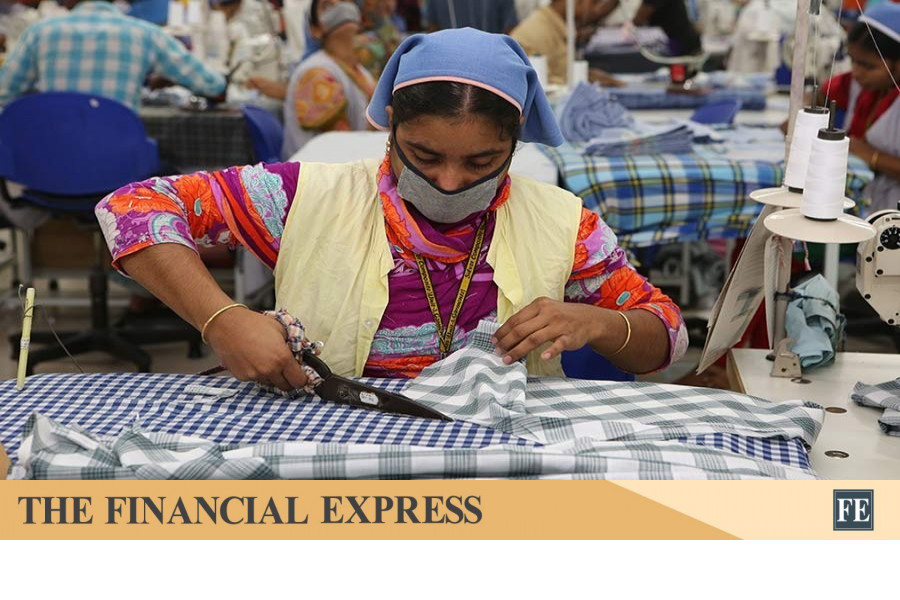
For apparel makers, 2025 has been an exceptionally challenging year. In the aftermath of the July-August 2024 uprising that ended Sheikh Hasina's authoritarian rule, the sector had hoped for a fresh start. Instead, a series of setbacks has pushed the industry into renewed crisis. Frequent labour unrest, a sharp rise in banks' lending rates that has driven up production costs, and a tougher US tariff regime have combined to squeeze manufacturers from all sides. Factory closures, weakening demand in key export markets and a near twofold increase in financing costs due to soaring interest rates have left the apparel sector grappling with one of its most difficult periods in recent years.
FE

However, 2025 was not entirely bleak. Despite the multifarious challenges, the readymade garment (RMG) sector recorded a notable achievement in sustainability. During the year, 38 garment factories received international recognition as green factories - the highest number of such certifications achieved in a single year so far. This milestone has taken the total number of LEED-certified green garment factories in Bangladesh to 270, with another 600 reportedly in the pipeline for certification. The growing shift towards green factories highlights the industry's commitment to environmentally responsible manufacturing, even amid persistent economic headwinds.

It is worth noting that LEED (Leadership in Energy and Environmental Design) is the world's most widely used green building rating system. Awarded by the United States Green Building Council (USGBC), LEED certification is a globally recognised symbol of sustainability excellence. To qualify, factories must meet stringent criteria on carbon emissions, energy and water efficiency, waste management and indoor environmental quality, all under the rigorous evaluation and supervision of the USGBC.

Bangladesh RMG industry's stride towards environmental sustainability is arguably unmatched anywhere in the world. Notably, nine of the world's top 10 greenest garment factories are located in Bangladesh. Moreover, 48 of the 100 highest-scoring green garment factories globally are based in the country, firmly positioning Bangladesh as a global leader in environmentally sustainable apparel manufacturing.

Green factories can play a crucial role in addressing the challenges of climate change as Bangladesh is among the countries most vulnerable to its impacts. At the same time, LEED certification is not merely a sustainability benchmark; it has emerged as a strategic competitiveness tool for the apparel industry. As international buyers, regulators and consumers increasingly demand lower environmental footprints, Bangladeshi manufacturers are proactively aligning with evolving standards on carbon efficiency, efficient use of water and energy, and climate-resilient infrastructure.

However, as large factories move towards green transformation, small-scale entrepreneurs risk being left behind as going green requires huge initial investment. Moreover, securing green financing from banks is often a lengthy and complex process involving high transaction costs, which many small and medium enterprises find difficult to meet.

Feasible solutions are therefore needed to support smaller manufacturers. One option could be the introduction of coalition-based schemes, allowing small-scale entrepreneurs to team up and submit collective applications to banks and financial institutions for green financing. The shared objective should be to elevate the RMG industry to the next level of sustainability through a comprehensive and inclusive approach.

At the same time, factories must strengthen partnerships with international buyers and brands to deliver on environmental commitments. Achieving meaningful progress will require not only stronger commitment from manufacturers, but also a greater willingness on the part of brands to pay a premium for products made in green factories.

Finally, it needs to be kept in mind that sustainability is a marathon, not a sprint. Setting higher benchmarks is therefore essential to make the industry truly environment-friendly. The next objective could be a transition towards a circular economy. Such a shift will be crucial in building a resilient, competitive and sustainable apparel industry for the future.​
 
Analyze

Analyze Post

Add your ideas here:
Highlight Cite Fact Check Respond
2025 was a testing year for RMG sector

1767662968521.webp

Bangladesh's export engine, long powered by the ready-made garment (RMG) sector, slowed in 2025 amid overlapping domestic and external shocks. After a strong rebound in 2024, when RMG exports reached $38.48 billion, a 7.23 percent year-on-year increase, exports in 2025 edged up to $38.82 billion, marking growth of just 0.89 percent.


Several interlinked factors explain this slowdown. Externally, trade tensions played a critical role. Tariff threats and order suspensions from major markets, especially the United States, created deep uncertainty. Buyers became cautious in placing orders and, in some cases, temporarily shifted sourcing to other suppliers. For an industry dependent on stable, long-term relationships with global brands, such volatility disrupts planning, investment, and production.

Last year, India withdrew the long-standing transhipment facility it had provided to Bangladesh for exports to third countries. As a result, export lead times have increased, deliveries have been delayed, and some foreign buyers have moved orders to alternative suppliers.

Domestically, political instability weakened business confidence and disrupted normal trade flows. Political tensions frequently triggered logistical bottlenecks, further exposing the fragility of the overall business climate. In such conditions, both local and foreign investors delayed decisions, while exporters became more cautious in importing raw materials or expanding capacity.


Labour unrest intensified in 2025, with serious consequences for the RMG sector. Road blockades, factory shutdowns, and repeated production disruptions directly reduced output and damaged Bangladesh's reputation as a reliable sourcing hub. Since global buyers value timeliness alongside low cost, recurring delays or sudden stoppages encourage them to diversify away from a country.

An extraordinary shock came from the complete shutdown of the customs house, an event almost unheard of globally. In a country where most export earnings come from RMG, such a shutdown was unprecedented and deeply damaging. On top of this, despite the huge financial losses suffered by factories, exporters, and insurers due to a major cargo fire at the airport, the incident further undermined buyer confidence.

The withdrawal of export incentives and persistent domestic inflation raised production costs and eroded price competitiveness. These pressures further constrained export growth in 2025, preventing it from matching the previous year's performance. Structural challenges and global competition added to the strain. Tougher competition in Europe squeezed Bangladesh's share in a key market, while weak performance in non-traditional markets highlighted the risks of relying heavily on a few destinations such as the European Union and the United States. Limited product diversification remains evident, particularly when compared with rivals like Vietnam, which is moving faster into higher value-added products and broader market coverage.


Even so, important positive developments emerged. Recent labour law amendments aim to strengthen workers' rights and align the RMG sector with international standards, a vital step for long-term sustainability, although they also raise compliance costs and responsibilities for factory owners. In 2025, Bangladesh's RMG industry set a global benchmark in sustainable manufacturing by adding 38 new LEED-certified green factories. This reinforced its leadership in environmentally responsible apparel production and signalled a shift from basic compliance to an excellence-driven green transformation.

Bangladesh's competitiveness will depend on how quickly it can close infrastructure gaps, ease internal bottlenecks, and move up the value chain. Stronger logistics, political and social stability, higher factory-level efficiency, and greater investment in research, innovation, and marketing are essential. The country must address the root causes of factory closures and strengthen the financial sector capacity to support both distressed firms and viable enterprises with growth potential. At the same time, it needs a critical assessment of least developed country graduation prospects and implications, alongside effective monitoring to ensure new factories contribute to broader industrial development goals.

Despite current headwinds, Bangladesh retains strong advantages in scale, capacity, and buyer relationships, and has emerged as a pioneer in sustainable apparel. With a coherent strategy, coordinated action, and sustained policy commitment, it can restore export momentum and reinforce its position in global trade.

The writer is a former director of the Bangladesh Garment Manufacturers and Exporters Association (BGMEA)​
 
Analyze

Analyze Post

Add your ideas here:
Highlight Cite Fact Check Respond
Spinners, apparel exporters differ over extra duty on yarn imports

To decide the way forward, Trade and Tariff Commission is meeting today with spinners, garment makers and knitwear manufacturers

1767836521126.webp


Apparel and knitwear manufacturers have opposed a proposed 20 percent safeguard tariff after local spinners asked the Bangladesh Trade and Tariff Commission to recommend it on imports of 100 percent cotton and blended yarns in the 20-30 count range.


The manufacturers said such a tariff would force them to buy local yarn at higher prices, hurt production, and ultimately affect exports.


Local spinners, however, argued that the safeguard duty is necessary to protect the domestic industry. In the last week of December, they accused India of dumping cheap yarn in Bangladesh and said they were sitting on Tk 12,000 crore of unsold stock.

Domestic spinners claim they can meet the entire national demand for 100 percent cotton and blended yarns, including PC, CVC, PV, and grey melange.


In addition to the tariff, the Bangladesh Textile Mills Association (BTMA) requested the cancellation of the bonded warehouse facility for these yarns, according to multiple sources familiar with the matter.

Against this backdrop, the Bangladesh Trade and Tariff Commission, the statutory body responsible for preventing dumping of foreign goods, convened a meeting with spinners, garment makers and knitwear manufacturers today.

The commission had already held a session earlier this week on the proposed safeguard measure.


The proposal has drawn opposition from the Bangladesh Garment Manufacturers and Exporters Association (BGMEA) and the Bangladesh Knitwear Manufacturers and Exporters Association (BKMEA).

In separate letters to the commission, both trade bodies said imposing a 20 percent safeguard duty on yarn imports would put the export-oriented garment sector in serious trouble.

They said the sector will lose its global competitiveness if yarn prices rise as a result of the safeguard duty. They called on the government to improve gas and power supply to industrial units so mills can produce sufficient yarn, and requested incentives to make the domestic mills more competitive.

In the last week of December, Showkat Aziz Russell, president of the BTMA, said at a press conference in Dhaka that local spinning mills were left with Tk 12,000 crore of unsold yarn as cheap imports from India flooded the market.

He said that yarn imports from India rose 137 percent last year, being sold below domestic prices, and that nearly 50 local spinning mills have closed in recent years after failing to survive the competition.

While apparel makers and knitwear manufacturers in their letters said that the government cannot impose such a measure on any particular country under World Trade Organization (WTO) rules, Russell also said the BTMA does not want a 20 percent safeguard duty targeting any single country.

"It is not possible to impose such a tariff on a particular country under the WTO rules," he said. Instead, he called for subsidies on the use of local yarn to make the sector more competitive.

He told The Daily Star yesterday that the amount of stockpiled yarn has decreased somewhat as spinning mills have reduced production due to low demand.

Local spinners are operating at around 50 percent capacity because of low gas pressure, he added.

According to Russell, the total investment in the garment and primary textile sectors is more than $75 billion, including $23 billion in the primary textile sector. Combined, the two sectors contribute $40 billion in exports.

BTMA leaders said Bangladesh imported $2 billion worth of yarn from India in fiscal year 2025-26, with local mills consuming 1,600 tonnes daily. From April to October 2025, imports reached $950 million.

They said Bangladesh has become the largest destination for Indian yarn exports, receiving 44 percent of the total, while Cambodia ranks second at 21 percent.​
 
Analyze

Analyze Post

Add your ideas here:
Highlight Cite Fact Check Respond
Garment exports to US grew 15% in Jan-Oct

Show US Department of Commerce data


11 January 2026, 00:00 AM
By Refayet Ullah Mirdha

1768115321689.webp

Garment.jpg

Bangladesh’s readymade garment exports to the United States, the country’s largest single-market destination, grew more than 15 percent year-on-year to $7.08 billion in the January-October period, according to US government data.


Local apparel makers say the surge was largely driven by front-loaded shipments ahead of the Trump administration’s reciprocal tariff enforcement.


A temporary 10 percent baseline tariff was applied by the US from part of April to the entire July before higher country-specific rates took effect on August 7 last year. It added with the existing 16 percent, taking the total rate to around 26 percent.

During the low baseline tariff period, local apparel makers say American buyers brought in larger-than-usual consignments. Apparel exporters said this rush pushed overall shipments in the January-October window above normal levels, somewhat masking the basic trend for the rest of the year.


For Bangladesh, a punishing 35 percent reciprocal rate was initially announced in April last year. It was later revised to 20 percent after bilateral negotiations.

The growth came amid a largely flat US apparel market. Total imports from the world by the United States declined 0.61 percent year-on-year to $66.63 billion during the January-October period last year, according to the Office of Textiles and Apparel (OTEXA), an agency under the US Department of Commerce.

Similar to Bangladesh, most other major exporting countries also saw positive growth in the American market during the period.


Vietnam’s exports to the US rose 11.5 percent to $14.16 billion, India’s 8.6 percent to $4.39 billion, Pakistan’s 12.3 percent to $2.02 billion, Indonesia’s 10.1 percent to $3.98 billion, and Cambodia’s 25.5 percent to $4.04 billion.

China was the exception, with exports to the US falling 32.4 percent to $9.49 billion.


During the period, unit prices of Bangladeshi garments declined slightly, reflecting intense competition and cautious buying by US retailers, according to OTEXA data.

The unit price for Bangladeshi items declined 0.63 percent. The decline for Vietnam was 0.46 percent and 10.47 percent for China. Cambodia’s price declined by 7.26 percent, Pakistan’s 6.85 percent and Indonesia’s 2.72 percent, show OTEXA data.

In the case of India, the unit price increased by 1.57 percent during January-October.

Despite the strong headline growth, exporters said momentum began to ease after August. Shipments weakened in October and November, following the enforcement of the higher tariffs.

Anwar-ul Alam Chowdhury (Parvez), former president of the Bangladesh Garment Manufacturers and Exporters Association (BGMEA), said the January-October figures do not fully reflect the year’s underlying trend.

“The growth was concentrated in the early months, when shipments were rushed ahead of tariff enforcement,” he said.

Parvez added that export performance slowed after August but expects shipments to stabilise after Bangladesh’s general election next month, as international buyers are likely to place full work orders once the heated political atmosphere cools off.

Meanwhile, retail sales in the United States posted solid year-on-year growth in November, with early holiday-season activity keeping results on track to meet the National Retail Federation’s (NRF) 2025 spending forecast, the organisation said in a statement recently.

It means the retail buying is likely to consume the fashion inventory, prompting the US buyers to place fresh orders.

“Retail sales showed healthy year-over-year gains in November, while month-on-month data was largely flat,” NRF President and CEO Matthew Shay said.

For large apparel manufacturers like Bangladesh, it is positive news on the export front.

Shay said, “Shoppers looking for online deals may have held back a bit until Cyber Monday, which fell in December this year due to a late Thanksgiving, likely shifting some spending. Consumers are focusing on value and spending carefully during the holiday period, and retailers are offering products at competitive prices to fit every budget.”

“We remain confident in our holiday forecast as well as our retail sales projections for the full year,” he concluded.

 
Analyze

Analyze Post

Add your ideas here:
Highlight Cite Fact Check Respond
Khaleda Zia played pioneering role in RMG growth: BGMEA leaders

By Star Business Report

1768268137744.webp


Khaleda Zia, a three-time prime minister of Bangladesh, played a pioneering role in the growth of the country’s ready-made garment (RMG) sector, according to leaders of the Bangladesh Garment Manufacturers and Exporters Association (BGMEA).


The leaders recalled her contributions at a doa mahfil held yesterday at the trade body’s office in Uttara, Dhaka, attended by several hundred garment entrepreneurs.


In 1991, recognising the potential of the garment industry, Khaleda Zia introduced an innovative policy that allowed BGMEA to issue the crucial Utilisation Declaration (UD) and Utilisation Permission (UP) certificates.

The UD permits the production of a certain quantity of imported fabrics under the bonded warehouse system, while the UP allows the import of raw materials for the export-oriented garment sector.


Before this change, these certificates were issued by the government’s Export Promotion Bureau (EPB), often causing delays that led international clothing brands to shift orders to other countries.

Khaleda Zia’s decision to delegate this authority to BGMEA streamlined the process, supporting private entrepreneurs and accelerating exports.

Thanks to her pragmatic decisions, Bangladesh’s apparel exports crossed the $1 billion mark for the first time during her tenure, BGMEA leaders recalled.


The sector, which had struggled since its inception in 1978 due to limited government support, gained momentum under her leadership.

Khaleda Zia also introduced a high percentage of cash incentives, further enhancing the country’s competitiveness in global markets.


Today, Bangladesh is the world’s second-largest apparel exporter after China, with nearly 8 percent of the global market share.

Over the past five decades, the RMG industry has employed over four million workers, empowered women, contributed 13 percent to the national GDP, and attracted combined investments of $75 billion -- $23 billion in primary textiles and $52 billion in garments.

At the event, Salim Rahman, acting president of BGMEA, said Khaleda Zia played a crucial role during the phase-out of the World Trade Organization’s Multifibre Arrangement in 2004, which ended the quota system on garment exports. She formed the National Coordination Committee and took critical steps to help the industry adjust to the new global trading environment.

“She facilitated ease of doing business, reduced costs, and provided stipends for female education. These decisions brought significant societal changes,” he added.

The event also featured a video documentary highlighting Khaleda Zia’s contributions to reviving the economy, promoting democracy, empowering women, and developing the garment sector.

BGMEA Senior Vice-President Inamul Haq Khan and former president Quazi Moniruzzaman also spoke at the programme.

During Khaleda Zia’s tenure, Bangladesh was ranked the 11th fastest-growing country globally in 2005, and an estimated 1.8 crore people were lifted above the poverty line, BGMEA leaders said, adding that her VAT reforms were widely recognised.​
 
Analyze

Analyze Post

Add your ideas here:
Highlight Cite Fact Check Respond

Members Online

Latest Posts

Latest Posts

Post