Home Watch Videos Wars Movies Login

[🇧🇩] Bangladesh Police and Rapid Action Battalion

Latest Posts Countries Wars Q&A

[🇧🇩] Bangladesh Police and Rapid Action Battalion
147
5K
More threads by Saif

G Bangladesh Defense

Major reshuffle in police force
3 top cops forced into retirement; 5 retired police officials reinstated

1724799720425.webp


In a major reshuffle in the police force yesterday, three top police officials have been sent into forced retirement and five mid-ranking officials, who had been forced to retire by the Awami League government, have been reinstated.

Also, 24 district police superintendents were transferred to police units across the country.

The government also transferred 38 additional SP- and 14 assistant superintendent of police- (ASP) ranked officers from Dhaka Metropolitan Police to different police units, including in-service training centre, river police, and Rab.

Many of these officials have worked in the capital for years and had held major posts during the AL rule.

Forty-seven additional SP- and 10 ASP-ranked officers, who were outside Dhaka or in different units, have been transferred to the DMP.

Six deputy inspectors general and two additional inspectors general also got new posts.

Over the last one week, 13 top police officers have been sent into forced retirement in "public interest".

Many of these officials have been alleged to have used excessive force to suppress the student movement that toppled the AL government on August 5.

Much-talked-about names like Monirul Islam, additional IGP at Special Branch; Habibur Rahman, DMP commissioner; Atiqul Islam, additional IGP of police headquarters; Mohammad Ali Miah, CID chief; and Krishna Pada Roy, additional IGP of the Police Headquarters, were among those forced to retire.

Some of them have murder cases filed against them.

Police and home ministry sources said the changes were made as a part of measures to revamp the force that has been "politically used" for a long time.

"We have transferred the officials out of Dhaka as a part of measures to revamp the force," Md Mainul Hasan, commissioner of the DMP, told The Daily Star yesterday.

He said, "Capable, professional, and deprived officers are being selected for filling the vacant posts."

Muhammad Nurul Huda, a former inspector general of police, termed the moves "administrative measures or actions warranted by the present situation".

He told The Daily Star, "The officials, who have been given charge in new posts, should strictly follow the law so that the image [of the force] is restored."

REINSTATEMENTS, RETIREMENTS

With three circulars, the government yesterday sent three top police officials, including an additional inspector general of police (IGP), into forced retirement from today.

The officials are Krishna Pada Roy, additional IGP of police headquarters; Mozammel Haque, Khulna Metropolitan Police commissioner; and Sarder Rakibul Islam, additional commissioner.

The circular invoked section 45 of the Public Service Act, 2018.

The five reinstated police officials, who were forced to retire between 2020 and 2023, are Deputy Inspector General of police Abdullah Al Mamun, and SPs Nazmul Karim Khan, Ali Hossain Khan, Delwar Hossain Mia, and Zillur Rahman.

Five circulars were issued in this regard yesterday.

They would be considered on duty from the day of their forced retirement, and they would be entitled to arrears, promotions, and other benefits as per rules, read the circulars.

The home ministry during the AL rule had cited "public interest" as reason for them being forced to retire.

THE NEW TO BE WATCHED

Sources said many of the newly posted DMP officials do not have experience in working in the capital.

Talking to this newspaper, a source, requesting anonymity, said, "It would be hard for the newly appointed officers to perform their duties if they have no experience in dealing with crime in the capital … ."

DMP Commissioner Mainul said, "We will keep the newly transferred officials under the scanner and follow their work. If they fail to perform and maintain the professional standard, then they would be sent back.

"We want to ensure the best service to people … ."

Earlier, the authorities transferred all additional commissioners and deputy commissioners of eight crime divisions and eight detective branches of the DMP.

The officials, who were posted outside Dhaka, are now being given the charges of these divisions and DB branches.

NEW SPs, DIGs

The home ministry in another circular transferred the SPs of 24 districts.

New officials were also appointed to these districts.

The districts that got new SPs are Rangpur, Gazipur, Cumilla, Dhaka, Sirajganj, Chattogram, Manikganj, Mymensingh, Gaibandha, Habiganj, Rajshahi, Munshiganj, Sylhet, Narayanganj, Natore, Pabna, Patuakhali, Bagerhat, Kishoreganj, Jhenaidah, Magura, Tangail, Jashore, and Narsingdi.

In another circular, the home ministry yesterday transferred two additional inspectors general of police and six DIGs.

Additional IGP (supernumerary) AKM Hafiz Akter and KH Mahid Uddin were transferred to the Industrial Police and Tourist Police.

DIG Munibur Rahman of DMP was sent to the Armed Police Battalion headquarters while DIG Faruk Ahmed to the DMP.

DIGs (supernumerary) Israil Howlader, Khondoker Nazmul Hasan, Masud Karim, and Hasan Md Shawkat Ali were posted to the DMP.​
 
Analyze

Analyze Post

Add your ideas here:
Highlight Cite Respond
  • Love (+3)
Reactions: Bilal9

Restoring full police capacity is vital for public security
Police must be able to carry out law and order duties

1725688821878.webp

VISUAL: STAR

It is disheartening that the police still remain in a state of disarray despite attempts in recent weeks to overhaul the force and imbue it with a new sense of direction. According to a report by this daily, the violent fallout of the regime change on August 5 continues to cast a shadow over the force even now, with logistical challenges as well as low morale due to the fear of withdrawal, transfer, forced retirement, lawsuits and/or arrest still stifling their capacity. This cannot be allowed to persist, as the role of the police is critical in maintaining law and order, ensuring public security, and preventing chaos.

Presently, police services remain largely limited to registering complaints and cases. Despite all police stations resuming their operations several weeks ago, there has been little field presence of officers, especially after dark and without army escorts. Meanwhile, the national helpline 999 continues to struggle to provide services because of the lack of police personnel and logistical support. For a time, all the 999 calls asking for police help were referred to the armed forces. Even though the home adviser has urged the superintendents of police to work sincerely with the force and logistics they have in their respective districts, a number of issues have combined to make progress difficult.

Key among them is the lack of morale. Reportedly, the fear of being sued or arrested or, worse, facing public wrath for police actions during the bloody mass uprising still haunts police members. To this day, over 700-800 officers remain absent without leave. Add to that the fear of being withdrawn or transferred, with major reshuffles being announced every now and then. There is no easy solution for this. It is natural for police, after having served as enforcers of an authoritarian regime for over a decade, to find themselves caught between the need to redeem their credibility and the lingering fear of consequences. Ensuring accountability and creating an enabling environment for police are both important. The authorities must find a way to achieve these objectives with tact, and with people's expectations in mind.

The issue of diminished operational capability is another major barrier, one that should be handled with relative ease, however. Given the overarching need of public safety, the authorities must urgently expedite their efforts to reinforce and restructure the police force, make necessary resources available, and repair damaged infrastructure. Soon after the mass uprising, over 450 out of 664 police stations were attacked by mobs, with some set on fire. Around 300 vehicles were also destroyed. Large quantities of firearms and ammunition were looted as well, leaving a security concern for the future. Restoring full police capability means addressing all such logistical issues as well as staff shortages created afterwards, through new recruitments if necessary.

We must say that we expect a better performance from the interim government in terms of fully operationalising the police force. Police must be able to secure the streets, protect citizens, and prevent crimes. The responsibility to ensure that they are able to do so lies on the government. Reforms cannot happen overnight, so striking a balance between reform and general functionality may be considered in the short term, keeping long-term reforms for the future.​
 
Analyze

Analyze Post

Add your ideas here:
Highlight Cite Respond
  • Like (+1)
Reactions: Bilal9

Committee soon for police reform
Says home adviser

1725929933279.webp

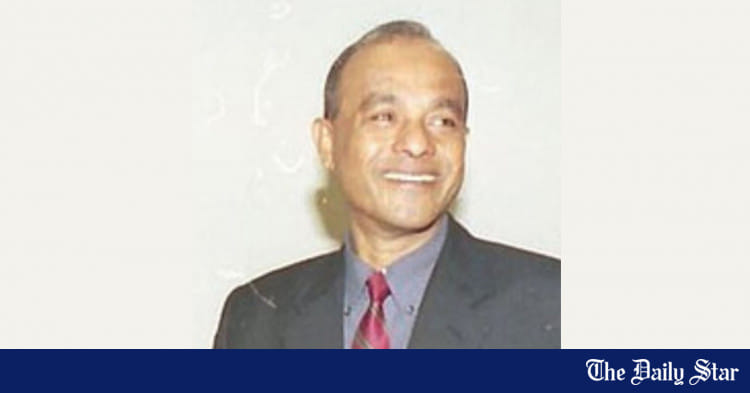
Photo: Jahangir Alam Chowdhury

A committee will soon be formed for police reform, said Home Adviser Lt Gen (retd) Jahangir Alam Chowdhury yesterday.

He made this announcement during a meeting at his office, where an eight-member delegation led by Stefan Liller, resident representative of the United Nations Development Program (UNDP) in Bangladesh, met him.

Regarding police reform, the adviser mentioned that it is still in the preliminary stage.

"No committee has been formed yet, but a primary committee for police reform will be established soon. This committee will determine the process, how the reform will be conducted, and who will be included," he said.

The adviser further said the process will move forward based on the recommendations and opinions of the primary committee, and future actions will be determined accordingly.

Stefan Liller said police reform should be conducted in such a way that the public can gain trust and confidence in the force, avoiding any criticism.

Earlier at an event, the home adviser said most of the problems in jails could be solved by stopping bribery and corruption.

He made the remark while speaking as the chief guest at a views exchange meeting with prison officials at the Directorate of Prisons in Dhaka's Bakshibazar.

Calling for the transformation of jails into correctional centres, Jahangir said, "The quality of food for prison guards and prisoners should be improved. They need to improve their skills through training."

He also gave necessary directives to the authorities concerned to ensure discipline and welfare of jail employees.

Addressing prison officials, the adviser said, "Your main responsibility is to ensure the security of the prison. Restore your respect without taking bribes, because bribery damages the reputation of the individual as well as the organisation."

During the meeting, prison officials and employees presented various demands to the adviser.​
 
Analyze

Analyze Post

Add your ideas here:
Highlight Cite Respond
  • Like (+1)
Reactions: Bilal9

Rab can't be used for political purpose: home adviser

1726018219985.webp

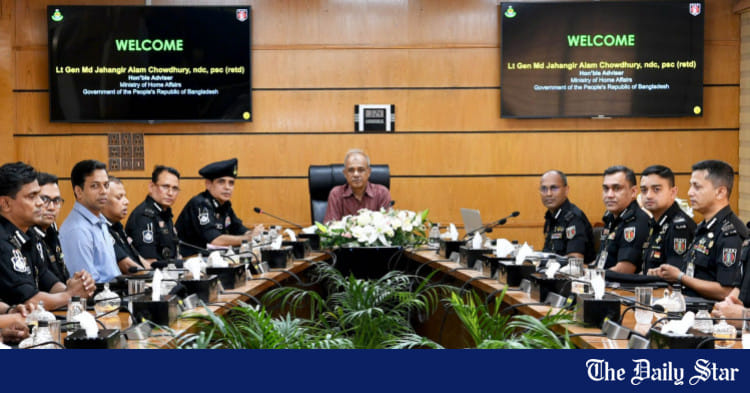
Photo: PID

Home Adviser Lt Gen (retd) Md Jahangir Alam Chowdhury yesterday said Rapid Action Battalion (Rab) cannot be used for political purposes.

The adviser said this in a discussion held at Rab headquarters in the city's Uttara with participation of the senior Rab officials, a press release said.

The adviser emphasised that Rab was initially established with a commitment that it would not be used for political ends, a principle that has not been adhered to in recent years.

He noted that there is a strong public perception that the misuse of Rab for political objectives has led to its involvement in illegal activities, including enforced disappearances and extrajudicial killings.

Jahangir highlighted that Rab was once a disciplined and well-regarded force, gaining public trust and respect through the deployment of top officers from the police and armed forces. However, he pointed out that political influence in the recruitment and posting within RAB has eroded the integrity of the force.

He urged that Rab's lost glory and honour could be restored through love, proper conduct, and performance, stressing the importance of operating within the law.

He instructed that illegal orders from higher authorities must not be followed, unauthorised detentions must cease, and the force must steer clear of extrajudicial actions such as crossfire, enforced disappearances, and killings.

The meeting was attended by Rab Director General AKM Shahidur Rahman and other officials of the force, who briefed the adviser on various activities of Rab.​
 
Analyze

Analyze Post

Add your ideas here:
Highlight Cite Respond
  • Love (+3)
Reactions: Bilal9
'কাজে না ফেরা পুলিশ সদস্যদের আর সুযোগ দেওয়া হবে না'


Analyze

Analyze Post

Add your ideas here:
Highlight Cite Respond
  • Love (+3)
Reactions: Bilal9

The morale issues of Bangladesh Police

1726704019451.webp

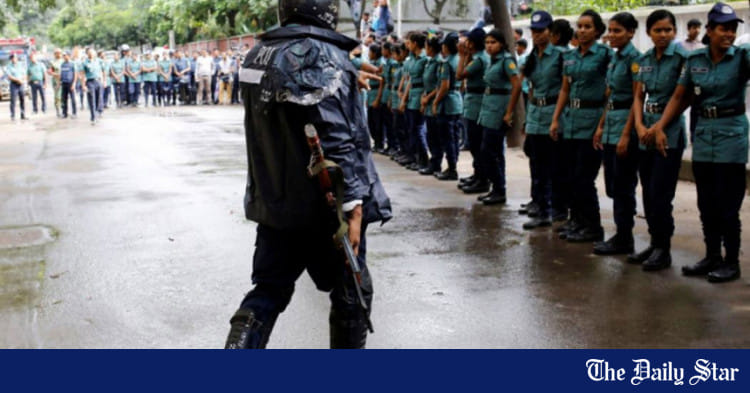
The police leadership needs to explore how it can financially and socially help the aggrieved families that have been victims of police actions. FILE PHOTO: STAR

It would definitely be an understatement to say that as of now, the morale of Bangladesh police is less than desirable. The reality is that our police have been badly shaken by the events leading to the fall of a despised authoritarian government. For a significant length of time in the recent past, there was hardly any police presence in public life.

There is no denying that for a long time, the police have been used as a tool of repression in the subcontinent and politicians have frequently misused this vital organ of the state for personal gain and partisan advantages. In the process, the police hierarchy have been willing collaborators of their political masters. However, what is markedly different this time is that many police officers of different ranks have acted as party goons devoid of any sense of legal propriety of their actions. They are complicit in using excessive force while countering public protests, with some policemen stooping low enough to be branded by some as public enemies.

It has to be admitted that the single-minded pursuit of money has impoverished the minds and desiccated the hearts of many politicians, with whom an unholy nexus has been built by reckless and corrupt police officials. Quite often, interference with the statutory duties of police contrary to the provisions of law has not been condemned. This was the case when it impeded the performance of duties in the maintenance of public order and investigation of cases.

Coercive powers—such as the recourse to fire while dispersing assemblies—have been given under the law to certain officers, and they alone as agents of law, have to act in accordance with their own assessment of the situation and as per their conscience. In our situation, many senior officers have not used their statutory authority to advise, guide, and direct the public order operations. Instead, they resorted to indiscriminate and excessive use of force. Consequently, the police have been demonised in public, perhaps with some justification. This, however, is not desirable as we cannot dispense with the services of the police in public interest.

The police in Bangladesh, coupled with the required determination to perform its legally mandated functions, need to regain its confidence. Winning the trust and support of the public would be the first step. However, this will be difficult as many delinquent officers must face actions for criminal actions and have to be brought under the law by their own colleagues.

The best course of action in this case would be the police, as the country's principal law enforcement agency, themselves set an example of scrupulously abiding by the law. The practical display of this course would be to investigate all cases of murder and other offenses arising out of the recent incidents of July and August, and bringing to book the offending police functionaries. There must not be anyprotective investigation or any quarter given to defaulting officials.

The police leadership needs to explore how it can financially and socially help the aggrieved families that have been victims of police actions. There are funds that can be judiciously used to ameliorate the distress of the suffering families, particularly those that require medical assistance. Bearing the educational expenses of families that have lost its principal earner could also be helpful. The remorse and compassion has to be visible to heal the wounds.

In addition, the 999 service provided by police has to be restored to its full capacity with adequate supportive actions on ground. The "open house" project where senior officers of respective units used to hear the grievances of the public on a monthly periodical basis has to be resumed. This would hopefully allay fears, remove confusion, and create a climate of trust. This would be a salutary public relation exercise vital for enlisting public support for law and order maintenance.

Improvement in traffic management in the country, in particular Dhaka city, would significantly contribute to morale boosting. Dhaka motorists should see traffic police performing their tasks with efficiency and authority. Coordination remains a key element in any traffic management. It is suggested that actual behavior patterns of the motorists could be seen and verified only on the roads. Furthermore, wrong parking in Dhaka is a major cause of traffic snarl-ups. If necessary, we have to press several cranes into action in order to tow away the offending vehicles to the nearest police station. Everybody, including VIPs, should face consequences for wrong parking.

In the long-term, measures like sanitisation of recruitment, adequate training and depoliticisation of law enforcement must not escape our attention. The police in Bangladesh needs to be rescued from a dehumanisation process that has engulfed them.

Muhammad Nurul Huda is former IGP of Bangladesh Police.​
 
Analyze

Analyze Post

Add your ideas here:
Highlight Cite Respond
  • Love (+3)
Reactions: Bilal9

ICT case filed against six RAB officers
Staff Correspondent 23 September, 2024, 00:29

1727049255557.webp


A case was filed with the International Crimes Tribunal against six Rapid Action Battalion officers on charge of crimes against humanity for reported abduction, enforced disappearance and torture of a physician in 2021.

In the first-ever case filed with the tribunal for reported abdcutionand enforced disappearance, the complainant, physician Israt Rafique Eshita, alleged that the officers abducted her from her house at Kafrul in the capital on July 28, 2021.

The accused officers include the then Squadron Leader Ali Ashraf, IT expert Rakib, and additional superintendent of police Md Akhteruzzaman.

According to Israt’s complaint, she became a victim of enforced disappearance after the battalion officers abducted her and held her in an undisclosed location, where she was subjected to torture. She was produced before the media by the battalion five days later, on August 1, 2021.

On the following day, August 2, 2021, Israt was publicly presented as a ‘fake physician’ and implicated in three narcotics-related cases, which she claimed, were fabricated.

Her case took to 30 the number of cases filed with the tribunal, mostly targeting deposed prime minister Sheikh Hasina, since her resignation and fleeing to India on August 5.

In a related development, the International Crimes Tribunal-1 has received two more complaints against Sheikh Hasina, involving allegations of crimes against humanity in connection with the deaths of Dr Sajib Sarkar and Sheikh Ashabul Yamin, both of whom were killed in police firing during the student-people uprising on July 18.

Halim Sarkar, the father of Dr Sajib Sarkar, filed a complaint accusing 71 individuals, including police members, of killing his son.

Sajib, who completed his MBBS from Taherunnesa Medical College in 2020, was shot dead by police at Azampur of Uttara in the capital during peaceful protests.

‘They killed my innocent son, and I want justice,’ Halim Sarkar told the media after filing the case.

In another complaint, Yamin’s uncle, Md Abdullah Al Mun Kadir, accused 78 individuals, including Sheikh Hasina, Awami League leaders Obaidul Quader, Zunaid Ahmed Palak, and Mohammad A Arafat, of genocide and crimes against humanity under the International Crimes (Tribunals) Act of 1973.

Yamin was reportedly detained by police during the student-people uprising in Savar and shot at point-blank range. Disturbing footage of the police dragging Yamin’s body to an armoured vehicle, dropping it on the street, and brutally discarding it on a road divider went viral and shocked the nation. Yamin was rushed to Savar Enam Medical College Hospital, where doctors pronounced him dead.

The allegations against the accused are being pursued under sections 3(2), 4(1), and 4(2) of the International Crimes (Tribunals) Act, as calls for justice intensify following the tragic events of July 18.​
 
Analyze

Analyze Post

Add your ideas here:
Highlight Cite Respond
  • Love (+3)
Reactions: Bilal9

'The police cannot run in this way'
Sarfuddin Ahmed
Published: 24 Sep 2024, 12: 49

1727399659378.webp


Earlier, it was commonly said, "The police and local trains seldom arrive on time." However, it seems now the police don’t even arrive at all, not even on rare occasions.

Many places are devoid of police presence. Even on busy roads, the police are nowhere to be seen. Traffic management seems to be running on an "in the name of God, we proceed" system.

Recently a man selling vegetables from a mobile stall said, "Someone stole the battery from my van. That person is lucky he wasn’t caught. If I had caught him, I would have beaten him to death because there’s no police and no case would have been filed."

This suggests that people now believe that in many areas of the country, there is practically no police presence.

There are no police patrols. Ever since the shooting during student protests, the public no longer respects the police as they used to. They are no longer willing to listen to the police. Instead of following the law, people now want to do whatever they please.

The ‘open secret’ across the country today is that the police chain of command is no longer functioning. The entire command structure has collapsed. If a senior officer instructs a subordinate to go right, there’s no guarantee they will comply.

For a long time, this was perceived merely as public perception. However, last Sunday, Deputy Commissioner (DC) Sarwar Jahan of the Ramna Division of Dhaka Metropolitan Police was overheard telling a senior officer on his mobile, "Sir, this force cannot be run like this. No one is following orders. The police cannot function like this." It left no doubt in anyone’s mind that the chain of command of police has broken down.

According to a report in Prothom Alo, Sarwar Jahan had ordered his subordinates to remove auditors protesting in front of the Audit Building at Kakrail, who were blocking the road. However, like Nawab Siraj-ud- Daula’s army standing before Robert Clive’s forces, Sarwar’s team of officers stood motionless.

The report states that the auditors were blocking the road, and despite repeated requests over a loudspeaker to clear the area, they refused. Sarwar then gave them a five-minute ultimatum. When they didn’t move, he instructed his officers to advance. However, apart from a handful of officers, no one else moved.

Even after repeated urgings from DC Sarwar, some constables and sub-inspectors openly told him, "Sir, we cannot go into action."

Sarwar asked, "Won’t you listen to me?" To which one officer replied, "We can’t, sir."

At that moment, many officers were overheard saying to each other that no matter what, they would not move forward. One sub-inspector was heard telling the constables, "No matter what the sir says, just stay quiet."

Frustrated, DC Sarwar then called a superior officer and said, "Sir, no one is listening. Despite my repeated orders, no one is moving forward."

It’s not unusual for individual officers to show allegiance to a political party. However, if a large number of officers openly defy orders and say, "Sir, I won’t follow your command," then this becomes a serious issue
This is not a trivial incident. It is, in fact, quite alarming. The police are a disciplined force, and the chain of command is their primary strength. There is no room for anyone to act outside the command structure.

When a constable dares to tell a deputy commissioner of police, "I won’t follow your orders," it indicates that the chain of command within the force has broken down. There is serious disorder within the force.

Since the final days of the Hasina government, the relationship between the police and the public had become, in some cases, like that of a mongoose and a snake.

Thousands of people were injured or killed in police shootings at that time. Many police officers were also injured or killed by protesters. The antagonistic relationship that developed between the police and the public has not yet normalized.

The reality is that the police are still struggling to present themselves in a straightforward manner to the public. They feel that the public no longer respects them. This feeling can become a psychological barrier for them when attempting to break up protests.

However, a senior police officer, speaking on condition of anonymity, told Prothom Alo that "a large number of officers in Dhaka were appointed during Sheikh Hasina’s government, and they no longer want to listen to orders."

Former Inspector General of Police (IGP) Muhammad Nurul Huda has also stated that the close relationship between police officers and political parties is responsible for the current state of the force.

According to the Ministry of Home Affairs, between 2009 and 2023, a total of 119,919 constables, sub-inspectors, and sergeants were recruited. Analysts believe that over the decade and a half of the Awami League government, the police were used as a tool to maintain power.

It’s not unusual for individual officers to show allegiance to a political party. However, if a large number of officers openly defy orders and say, "Sir, I won’t follow your command," then this becomes a serious issue.

If this situation is not quickly addressed, the disciplined police force could transform into a disorderly one.

* Sarfuddin Ahmed is Assistant Editor, Prothom Alo​
 
Analyze

Analyze Post

Add your ideas here:
Highlight Cite Respond
  • Love (+3)
Reactions: Bilal9

Members Online

Latest Posts

Back
 
G
O
 
H
O
M
E