Bangladesh Defense
- Jan 24, 2024
- 4,080
- 2,216
Commission uncovers evidence suggesting ‘Indian involvement’ in the planning of Pilkhana killings
The chief of the commission says General Moeen had warned that any action could provoke Indian intervention

Senior Correspondent
bdnews24.com
Published : 01 Dec 2025, 01:20 AM
Updated : 01 Dec 2025, 01:20 AM
The head of the National Independent Inquiry Commission, retired major general ALM Fazlur Rahman has said evidence points to “Indian involvement” in the conspiracy behind the 2009 Pilkhana killings.
Speaking at a press conference after submitting the 16-year-old case’s report to Chief Advisor Muhammad Yunus on Sunday, Fazlur highlighted that the Border Guard Bangladesh (BGB, formerly BDR) had been “deliberately weakened”, contributing to the bloodshed.
Fazlur, who also served as BDR director general, said: “The conspiracy aimed to weaken this force and destabilise Bangladesh. At that time, India sought to create instability while the then government sought to extend its rule.”
Asked at the media briefing who the main Pilkhana massacre plotters were, the head of the commission formed last December, said: "Former prime minister Sheikh Hasina, barrister Fazle Noor Taposh, Sheikh Selim, Jahangir Kabir Nanak, Mirza Azam, Sahara Khatun, General Tarique Siddique, ex-Army chief General Moeen U Ahmed, and the former DGFI chief maj gen Akbar (Hossain).
"After the BDR carnage took place, the government wanted to prolong its power, and the neighbouring country wanted to destabilise Bangladesh," he added.
When asked who he meant by the neighbouring country, Fazlur replied: "We meant India, where our former prime minister, along with her party members, took shelter."
In response to another question, the former army official said: "General Moeen stated in his remarks that if he had taken 'action' here, India would have 'intervened' here."
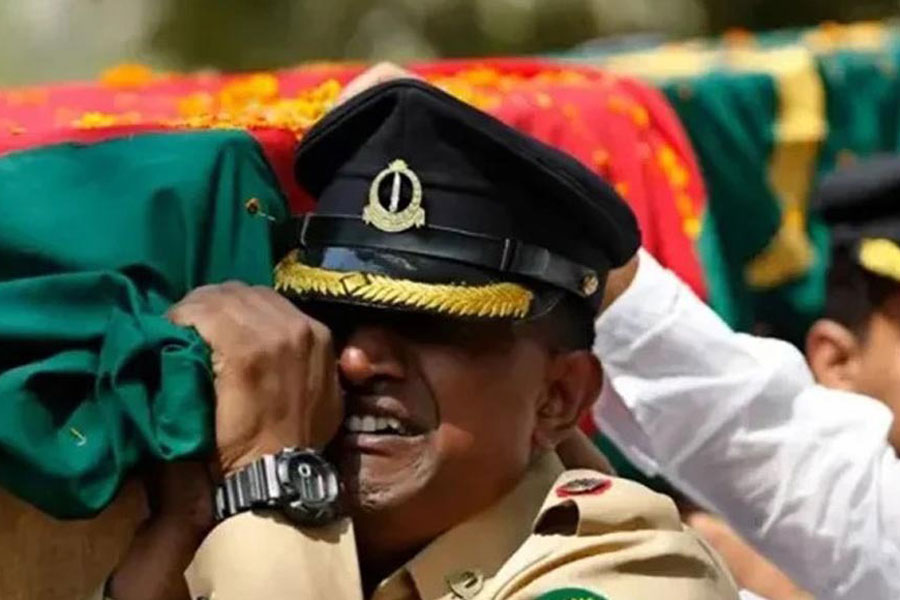
Seventy-four people, including the 57 army officers, were killed in the mutiny at the erstwhile Bangladesh Rifles, or BDR, Headquarters in Dhaka’s Pilkhana on Feb 25 and 26, 2009.
Citing evidence of the involvement of Indians in the incident, Fazlur said: "Around 921 Indians came to the country during that time. The whereabouts of 67 of those Indians are unknown."
The case and judicial proceedings concerning this massacre, which caused national and international interest, were carried out during the Awami League government's tenure.
Following a change in power and the interim administration taking charge, demands arose for a re-investigation of the incident. The inquiry commission was formed on Dec 24, with a 90-day deadline to submit its findings.
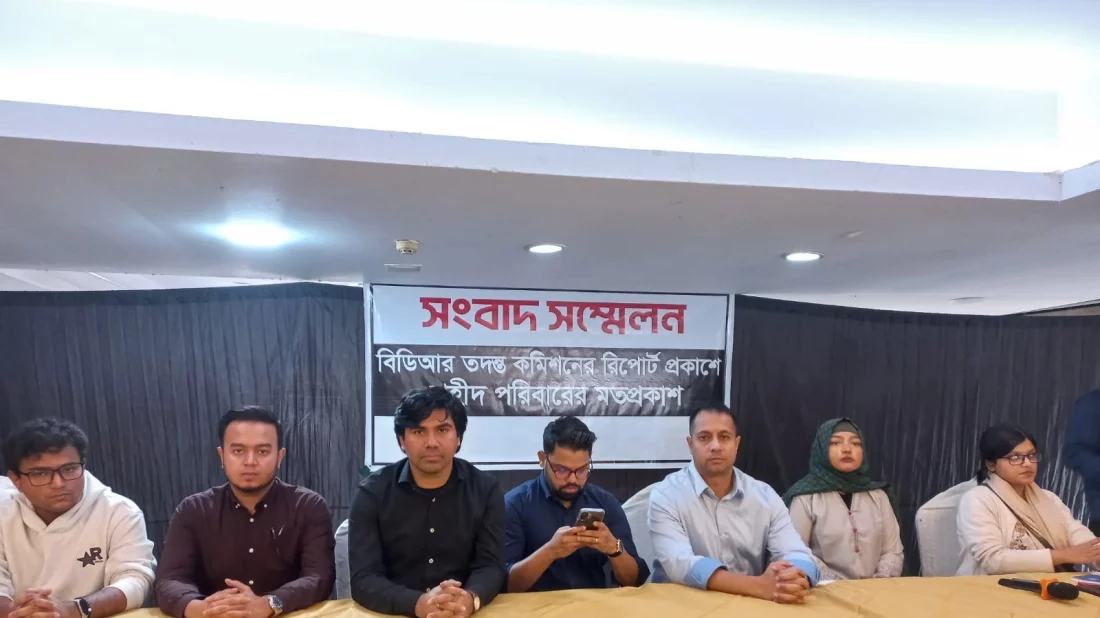

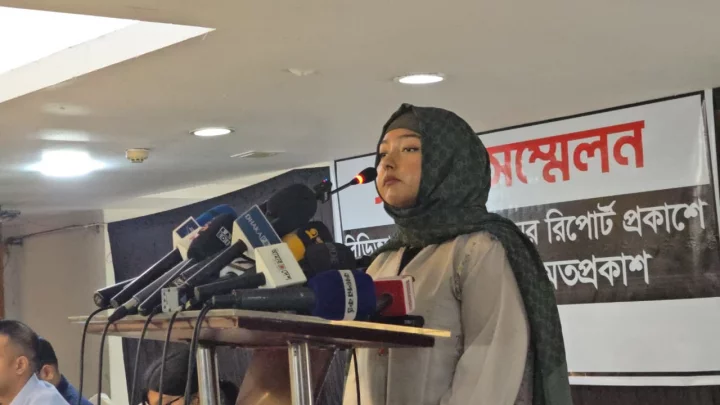
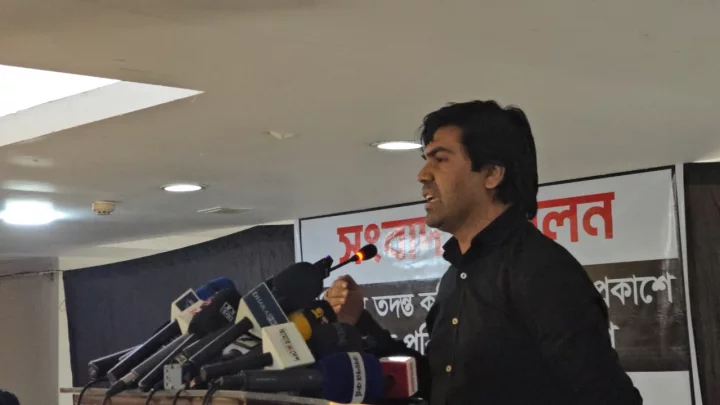 A press conference titled “Opinions of the Families of the Martyrs on the Publication of the BDR Inquiry Commission Report” was held on Monday, December 1, 2025, at the RAOWA Club in the capital where family members demanded the full disclosure of the report and called for legal action regarding the BDR carnage. Photo: Dhaka Tribune.