โ˜• Support Us โ˜•
[๐Ÿ‡ง๐Ÿ‡ฉ] - Banking System in Bangladesh | Page 24 | PKDefense

[๐Ÿ‡ง๐Ÿ‡ฉ] Banking System in Bangladesh

Reply (Scroll)
Press space to scroll through posts
G Bangladesh Defense
[๐Ÿ‡ง๐Ÿ‡ฉ] Banking System in Bangladesh
249
8K
More threads by Saif


Digital bank: The missed bus to the future

1764293759009.webp


If digital banking were a cricket match, Bangladesh would still be warming up while Kenya and Ghana are already batting in the Super Over. The idea is simple: if a country wants to take banking to the unbanked, it must go where the unbanked actually live, outside traditional banking halls, far away from the marble floors and token queues. Most African nations figured this out early.

Kenya allowed both banks and telecom operators to operate mobile money services. Today, M-Pesa handles transactions worth over 50 percent of Kenya's GDP. Nigeria opened its doors to Payment Service Banks, where telecoms and fintechs coexist. Even India, our giant next door, has over 300 million digital bank accounts thanks to a liberal ecosystem where banks, telcos, fintechs, and government platforms compete, collaborate, and irritate each other into innovation.

Bangladesh, meanwhile, is debating who should be allowed to innovate. On paper, we have the ambition to obtain a Digital Bank licence to expand financial inclusion. In reality, we tend to design policies around preferred players. During the previous regime, the digital bank initiative essentially circled around one player, Nagad, while bKash, the country's largest MFS provider with millions of users, was mysteriously sidelined. The process was so opaque that even Faluda would need a Freedom of Information request.

Today, as Bangladesh Bank reopens the process, experts suspect dรฉjร  vu. The intention appears tilted toward bKash. Do not get me wrong, bKash absolutely deserves a Digital Bank licence. Their scale, governance, and track record speak for themselves. But if the goal is national financial inclusion, then the question should not be "Who is our favourite child?" but rather "How big is the family we want to build?"

And this is where telecom operators and other big players with similar capacity come in. Globally, every successful digital banking model rests on two pillars, connectivity and distribution reach. Telcos own both. They have the SIMs, towers, agents, and customer relationships that no bank, digital or otherwise, can match cost-effectively. In Kenya, Safaricom did not just support digital banking; it became digital banking. In Pakistan, JazzCash, backed by a telecom operator, serves nearly 40 million users. Even India's Airtel Payments Bank has over 40 million monthly transacting users.

Bangladesh, ironically, has three telecom operators, and they have been politely kept outside the MFS and digital banking sandbox for a decade. Meanwhile, our MFS pricing remains among the highest in the region. For instance, Bangladesh's cash out fees hover around 1.85 percent to 2 percent, compared to Pakistan's 0.5 percent to 1 percent, India's 0.65 percent, and Kenya's tiered rates that are significantly lower for small value transactions. Competition is not just good economics; it saves crores for the poor.

There is also the matter of deep pockets. Running a digital bank is not like launching an app, it is like building the Padma Bridge with a better user experience. You need capital, technology, risk management, cybersecurity, and the stamina to navigate regulatory paperwork that can outlive governments. Telcos and established MFS players have both the money and the muscles.

So here is the policy question that matters. Do we want a digital bank landscape that mimics our telecom duopoly, our political duopoly, and our cricket selection committee, or do we want real competition? If Bangladesh truly wants inclusion, transparency, and lower costs for citizens, the digital banking licence must be open to all credible players, banks, fintechs, and yes, telecom operators.

Otherwise, we risk ending up with the same old wine in a slightly shinier bottle, sold at a slightly higher cash-out fee.

The writer is the president of the Institute of Cost and Management Accountants of Bangladesh and founder of BuildCon Consultancies Ltd​
 
newagebd.net/post/Banking/283616/merged-bank-to-be-launched-this-week-says-bangladesh-bank-governor

Merged bank to be launched this week, says Bangladesh Bank governor
Staff Correspondent 29 November, 2025, 13:43

1764467902193.webp

BB governor Ahsan H Mansur speaking at the 4th Bangladesh Economic Summit held on Saturday. | Focus bangla photo

The new state-run Shariah bank, which will be formed through the merger of five crisis hit Islamic banks, will be officially launched next week, according to Bangladesh Bank governor Ahsan H Mansur.

He made the announcement at the 4th Bangladesh Economic Summit held in the capital on Saturday.

The bank will start with paid-up capital of Tk 35,000 crore, the highest ever for any bank in the country.

The governor said that the new entity is being created under the Bank Resolution Ordinance, which the central bank is using for the first time to restructure weak banks.

The five banks to be merged into single entity were First Security Islami Bank, Union Bank, Global Islami Bank, Social Islami Bank and Exim Bank, all of which have faced prolonged liquidity stress, governance failures and rising defaults.

Of the Tk 35,000 crore capital base, the government will provide Tk 20,000 crore. The remaining funds will come from the assets and equity of the five institutions being merged.

The central bank earlier granted a letter of intent for the new lender, to be named Sammilito Islami Bank PLC. The government has already nominated Nazma Mobarek, secretary of the Financial Institutions Division, as chair of the board.

Mansur said the goal is to convert five weak banks into a single stable bank backed by strong capital support and tighter oversight.

Since the interim government took office, Bangladesh Bank has injected about Tk 35,300 crore in liquidity support to keep these lenders afloat. He said that the merger offers a path to end repeated bailouts and restore discipline to a segment of the banking sector that has long remained vulnerable.

He acknowledged that the broader industry faces deep structural problems, including non-performing loans that he estimated at 35 per cent, far above the earlier official figures.

Mansur said that resolving bad loans could take five to ten years and warned that both banks and non-bank financial institutions showing sustained deterioration will face strict action.

Nine non-bank financial institutions are set to be liquidated under the new ordinance.

He said that inflation is 8.20 per cent, and if it falls below this or into the 7 per cent range, the policy rate will be reduced.

Mansur added that essential goods for Ramadan will not face import or supply disruptions, as banks have already opened the required letters of credit.​
 

BB board clears winding up of nine non-banks

Governor says govt verbally approved Tk 5,000cr to pay depositors; Sammilito Islami Bank gets licence.

1764553680213.webp


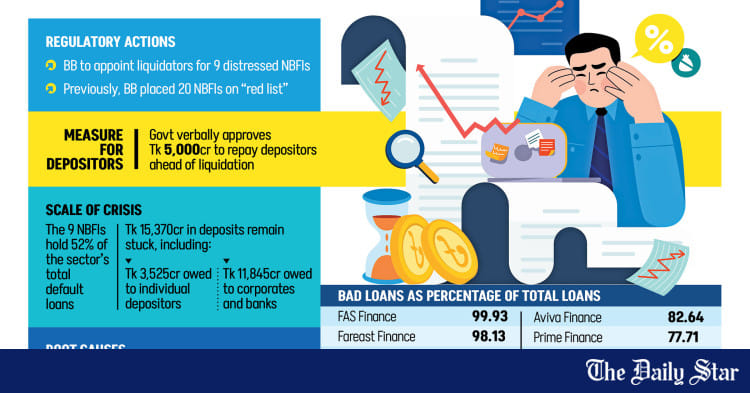
The Bangladesh Bank is moving to wind up nine ailing non-bank financial institutions as its board has approved their liquidation under the newly framed Bank Resolution Ordinance 2025, the country's first comprehensive framework for resolving failing banks and non-banks.

The ordinance sets out how distressed institutions may be merged, restructured or closed, and establishes the hierarchy for repaying creditors once assets are sold.

The BB board, chaired by Governor Ahsan H Mansur, granted the approval yesterday, clearing the way for the regulator to formally shut the institutions, appoint liquidators, sell their assets and distribute the proceeds to claimants, a senior central bank official confirmed on condition of anonymity.

The move coincides with another major clean-up operation in the financial sector -- the merger of five troubled shariah-based banks. The BB board also licensed the newly merged Sammilito Islami Bank, marking the largest bank consolidation in the country's history. It is to be the largest Islamic bank in the country now.

Officials say the NBFI liquidations, alongside the bank merger, reflect the regulator's shift towards aggressive intervention after years of deterioration across the financial system.

The nine selected NBFIs are FAS Finance, Bangladesh Industrial Finance Company, Premier Leasing, Fareast Finance, GSP Finance, Prime Finance, Aviva Finance, People's Leasing, and International Leasing.

Together, they accounted for 52 percent of total defaulted loans in the NBFI industry, which stood at Tk 25,089 crore at the end of last year, reflecting years of unchecked lending irregularities and erosion of capital.

Seven of the eight NBFIs have an average net asset value of negative Tk 95 per share, leaving little prospect of meeting obligations without state intervention. In other words, when the companies' assets are sold off and debts cleared, there will be nothing, or far too little, left for ordinary shareholders.

DEPOSITORS TO BE PRIORITISED

The BB board's approval comes as the institutions are failing to pay back depositors, many of whom have been waiting months, in some cases years, despite their schemes maturing.

Earlier on Saturday, responding to a query from The Daily Star, Governor Mansur said BB would appoint liquidators "soon".

He also confirmed that depositors would be paid before liquidation proceeds, saying, "The government has already verbally approved around Tk 5,000 crore to repay depositors of these NBFIs."

Mansur said they are moving forward with the liquidation of the companies only to protect depositors. "Returning the deposits of the NBFI customers is our top priority," he said.

For depositors, the collapse of these NBFIs has been devastating. Irregularities in lending, including loans to related parties, poor recovery practices and unchecked concentration of credit, left the institutions unable to meet obligations. As a result, customers' savings remain blocked despite matured schemes.

Khalil Ahmed Khan, a 64-year-old depositor of Aviva Finance, is among those affected. His Tk 23 lakh deposit matured in January, but he has so far received only Tk 8.98 lakh. He met with the top officials at the NBFI but all his attempts have turned futile.

A patient with high blood pressure and diabetes, he said the long delay has made it difficult to pay for treatment. "I need the money urgently to pay my dues and bear the cost of treatment."

BB data shows Tk 15,370 crore in deposits, belonging to both individuals and institutions, remain locked in the nine NBFIs. Of this, Tk 3,525 crore belongs to individuals and Tk 11,845 crore to banks and corporate depositors.

People's Leasing holds the largest volume of unreleased individual deposits at Tk 1,405 crore, followed by Aviva Finance with Tk 809 crore, International Leasing Tk 645 crore, Prime Finance Tk 328 crore and FAS Finance Tk 105 crore.

Industry insiders say the problems in the NBFI sector have deep roots. Unlike banks, non-banks were not subject to equally rigorous supervision, allowing scams and governance failures to accumulate over the years.

Several institutions continued reporting inflated assets and understated losses, masking their worsening condition until the impact became impossible to contain.

Earlier this year, the central bank's Financial Institutions Department shortlisted the nine NBFIs for closure and sent the names to the Bank Resolution Department. The decision followed an assessment 10 months ago, when BB identified 20 NBFIs with critically weak financial health, including high defaulted loans and depleted capital, and placed them in the "red" category.

The remaining 11 NBFIs are: CVC Finance, Bay Leasing, Islamic Finance, Meridian Finance, Hajj Finance, National Finance, IIDFC, Uttara Finance, Phoenix Finance, First Finance and Union Capital.

The BB has asked them to present viable recovery strategies.​
 

Independent central bank: ideal vs illusion
Abdullah A Dewan

Published :
Dec 01, 2025 23:41
Updated :
Dec 01, 2025 23:41

1764637955140.webp


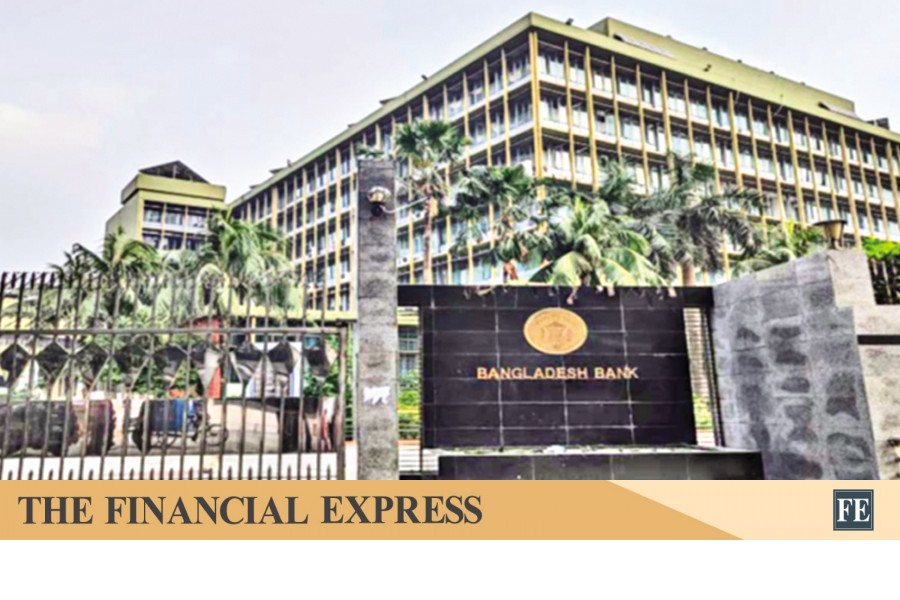
Head quarters of Bangladesh Bank, the central bank of Bangladesh, in Dhaka โ€”FE File Photo

This article is inspired by recent discourses and insightful commentaries across the print media on the โ€œNeed for an Independent Central Bank (ICB).โ€ Few would contest their arguments that political dominance over the Bangladesh Bank (BB) has undermined monetary discipline, distorted credit allocation, fueled inflationary pressures, and, most damagingly, led to foreign exchange mismanagement. Yet none of these commentaries have probed the deeper question: what does independence truly meanโ€”and are the worldโ€™s so-called โ€œindependentโ€ central banks really the models we imagine them to be?

The European Exampleโ€”Not Quite What It Seems: Promoters of ICB almost always cite the Federal Reserve, the Bank of England, and โ€œall central banks of the European Unionโ€ as paragons of independence, prohibited from financing Treasury deficits. Formally, that is true: Article 123 of the Treaty on the Functioning of the European Union forbids direct purchase of government debt. But reality long ago outpaced principle. During the euro-debt crisis, the European Central Bank (ECB) launched a succession of bond-buying programsโ€”the Securities Markets Programme, Outright Monetary Transactions, and later, Quantitative Easing and the Pandemic Emergency Purchase Programme. These initiatives indirectly financed governments through secondary markets, lowering borrowing costs and expanding the money supplyโ€”legally clever but economically equivalent to direct financing.

Likewise, during the pandemic, the Federal Reserve reopened and expanded its dollar swap-line arrangements with major central banks, including the ECB, to ease global funding stress. Through this facility, the ECB temporarily drew U.S. dollars from the Fed and on-lent them to euro-area banks. Its borrowing peaked at about $140โ€“$150 billionโ€”well below the roughly $449 billion global total that included the Bank of Japan. These short-term liquidity swapsโ€”not conventional loansโ€”were fully repaid as financial conditions stabilised later that year.

This episode also underscored how interdependent ICBs have become. Even as the ECB formally adheres to Article 123 of the EU Treaty, its reliance on the Federal Reserveโ€™s dollar liquidity revealed the practical limits of monetary sovereignty. Nor are all EU central banks bound by Article 123. Seven membersโ€”Sweden, Denmark, Poland, the Czech Republic, Hungary, Romania, and Bulgariaโ€”retain their own currencies and domestic monetary authority. Their โ€œindependenceโ€ exists by statute yet remains politically intertwined; Swedenโ€™s Riksbank, for instance, coordinates closely with its finance ministry. Thus, Europeโ€™s experience reflects delegated autonomy within negotiated political limits. Even the ECBโ€™s Executive Board is appointed through intergovernmental consensus and remains accountable to the European Parliament. Independence, then, is conditional, not absolute.

Bangladeshโ€™s Challenge โ€” Legal Independence, Political Intrusion: A central bank cannot be sovereign above the state. It must be shielded from political whim yet answerable to democratic oversight. The worldโ€™s strongest institutions balance these two forces through transparency and accountability. The US Federal Reserveโ€™s governors serve 14 years long, staggered terms and operate on self-financing revenues, but the Chair must testify before Congress twice a year. The Bank of England gained operational independence in 1997, yet its inflation targets and metrics are set annually by the Chancellorโ€™s remit. These models show that independence is a negotiated trustโ€”not unbounded freedom.

On paper, BB already enjoys autonomy under the Bangladesh Bank Order of 1972. It designs monetary policy, manages exchange-rate operations, and regulates banks. In practice, it remains hostage to fiscal dominance and political patronage. Successive governments have used the BB to monetize deficits, reschedule bad loans, and rescue politically connected borrowers. When the regulator becomes a rescuer, monetary policy turns into fiscal policy by stealth. The flaw lies not in law but in governance.

In truth, on matters of monetary and macroeconomic policy, as well as data interpretation and analytical expertise, BB has never been qualified for genuine independence. Its institutional culture remains bureaucratic rather than technocratic; promotions reward compliance over competence. Except for the present governor, senior executives with doctoral training or research experience in macroeconomics, financial modelling, or international monetary systems are few and far between. Policy decisions are typically reactive, driven by circulars rather than analytical forecasts. Even internal publications avoid critical assessments that might contradict ministerial narratives. This intellectual deficit leaves the institution dependentโ€”not on law, but on permission. A bank so habituated to subservience cannot transform overnight into an independent authority.

For genuine independence, reforms must ensure:

โ€ข Appointment transparencyโ€”governors and board members confirmed by Parliament, not by executive decree.

โ€ข Budgetary autonomyโ€”financing operations without annual approval from the Finance Division.

โ€ข Mandatory reportingโ€”quarterly updates to Parliament on inflation, liquidity, and credit.

โ€ข Term securityโ€”dismissal only for defined misconduct, never for policy disagreement.

Without such safeguards, independence remains ceremonial โ€” word in law but a ghost in practice.

The Myth of Technocratic Perfection: The global gospel of central bank independence rests on the assumption that insulated technocrats will always act in the public interest. History warns otherwise. The 2008 financial crisis erupted under some of the worldโ€™s most independent central banks, the Federal Reserve, ECB, and Bank of England. Their autonomy did not prevent asset bubbles or reckless financial innovation; it may even have delayed corrective action. Economists such as Stiglitz, Blanchard, and Buiter have cautioned that absolute independence can turn central banks into ideological fortressesโ€”fixated on inflation while ignoring jobs and growth. For developing economies like Bangladesh, where employment and investment are as vital as price stability, a dual-mandate model like the U.S. Federal Reserveโ€™s may serve better than narrow inflation targeting.

Inflation Control Needs Coordination, Not Isolation: Some op-eds correctly identify excessive liquidity during FY2020โ€“23 as a key driver of inflation. Yet Bangladeshโ€™s inflation also stems from structural bottlenecksโ€”energy shortages, import constraints, and supply-side weaknesses. Monetary tightening alone cannot cure these. Fiscal prudence, credible data, and coordinated supply management must complement central bank policy. An โ€œindependentโ€ central bank working within policy incoherence will still failโ€”just as the ECB struggled when eurozone fiscal policies diverged. Autonomy must coexist with coherence.

The deeper challenge lies in distinguishing demand-pull from supply-push inflation. Demand-pull inflation occurs when consumer and business spending outpaces production capacity, making higher interest rates an appropriate corrective to cool demand. Supply-push inflation, by contrast, stems from cost shocksโ€”rising fuel, food, or import pricesโ€”that compress output and purchasing power simultaneously. In such episodes, raising rates can aggravate the problem: investment contracts, unemployment rises, and yet prices remain stubbornly high. The policy dilemma, therefore, is not merely technical but diagnosticโ€”identifying which inflation one is fighting before pulling the trigger.

Understanding and diagnosing the sources of inflation, recession, and growth require deep analytical expertise in macroeconomics, monetary theory, and data interpretation. Bangladesh Bank, given its current capacity, would need yearsโ€”perhaps a decadeโ€”to cultivate such institutional competence. Until then, its policy responses are likely to remain reactive rather than anticipatory, constrained by limited research depth and an absence of high-calibre economists trained to distinguish between cyclical trends and structural shocks.

Lessons from Europe: Europeโ€™s crisis decade offers three relevant lessons:

1. Rules must flex in crises. The ECB bent its own no-financing rule to preserve the euro. Bangladesh Bank will need similar discretion in emergencies.

2. Credibility matters more than law. Independence is sustained by transparency, not by decree. Bangladesh Bankโ€™s credibility has eroded from data opacity and delayed responses; rebuilding trust is paramount.

3. Coordination trumps isolation. In a remittance- and export-dependent economy, monetary policy must align with fiscal and external-sector strategies.

Toward Genuine Autonomy: For independence to be meaningful, Bangladesh needs a Central Bank Reform Act anchored on three pillars:

1. Legal insulation. prohibit deficit financing; fix leadership terms.

2. Professional capacity. strengthen analytical divisions, recruit economists and financial engineers, empower research units to speak without censorship.

3. Public accountability. publish minutes of policy meetings; report to Parliament, not ministries.

Question: Does BBโ€™s research and statistics departments have trained economists and modern data systems needed to model shocks, forecast inflation, or interpret trends? Without credible data and professional analysis, autonomy becomes blindness. Independence without intelligence is as perilous as dependence without discipline.

BBโ€™s path to genuine autonomy will not begin with a new statute but with a new creed. It demands leadership by world-class, research-trained economistsโ€”professionals adept at interpreting data and versed across macroeconomics, monetary policy, international trade, and finance. More than credentials, they must possess the moral courage to say โ€œnoโ€โ€”to ministers, to cronies, and to populist temptations that threaten policy integrity. For in the final reckoning, the only currency that never loses value is public trust.

Dr Abdullah A. Dewan, Professor Emeritus of Economics, Eastern Michigan University (USA),

Former Physicist and Nuclear Engineer, Bangladesh Atomic Energy Commission.

Caption:

Head quarters of Bangladesh Bank, the central bank of Bangladesh, in Dhaka โ€”FE File Photo​
 

Addressing the rising NPL crisis
Md Touhidul Alam Khan

Published :
Dec 02, 2025 22:14
Updated :
Dec 02, 2025 22:14

1764724377941.webp


The banking sector in Bangladesh is currently grappling with a critical challenge that poses a significant threat to its stability and future growth: the alarming rise in Non-Performing Loans (NPLs). The factors contributing to this crisis are complex and multifaceted, and it is essential to confront these issues proactively to safeguard both the financial institutions and the broader economy.

At the core of the escalating NPL issue is a weak credit risk assessment process. In many instances, loans are approved without thorough evaluations of borrowers' capacities or the viability of their projects. This lack of diligent scrutiny significantly compromises lending integrity, raising concerns about the sustainability of projects being financed and the banks' responsibilities to their stakeholders. As economic resilience becomes increasingly vital, it is imperative that banks implement rigorous standards for credit evaluation to prevent avoidable defaults.

Additionally, political influences in lending decisions cannot be ignored. The practice of directed lending-where loans are awarded based on personal connections rather than merit-creates an accommodating environment for inefficiency and higher risk. Borrowers who obtain funds through such means often feel less accountable contributing to raise in default rates. This trend not only undermines public trust in financial institutions but also erodes the principles of fairness and responsibility on which these institutions are built.

Compounding the problem is the slow legal recovery process in the judicial system, particularly within the specialised financial courts. Lengthy legal proceedings enable defaulters to exploit delays, thereby hampering banks' recovery efforts. An efficient judicial system should facilitate timely loan recoveries, yet existing inefficiencies disincentivise prompt repayments and foster a culture where rescheduling or writing off loans is normalised. While these practices may temporarily reduce reported NPL figures, they create a false sense of security that ultimately exacerbates long-term risks.

Weak corporate governance within banks further intensifies the NPL crisis. Inadequate oversight regarding loan approvals allows for irregular lending practices, enabling unnecessary risks to flourish within the sector. Moreover, concentrating significant loans among a select group of borrowers increases vulnerability; when these borrowers default, the repercussions can destabilise not only the institution in question but the economy as a whole.

Despite the establishment of committees aimed at tackling the NPL issue, their impact has been limited. While recommendations may be made, the lack of enforcement power often leads to limited genuine progress. Addressing this crisis requires more than discussions; it demands structural reforms that can tackle the root causes of NPLs. Constructive dialogue is essential, but without actionable steps and a commitment to reform, such efforts may dissipate into mere rhetoric.

Given these challenges, the question arises: can Bangladesh realistically adopt international best practices to manage its NPL crisis? While there is potential for progress, several obstacles remain. Regulatory frameworks are improving but have not yet reached international standards. The inefficiencies within the judicial system continue to hinder timely loan recoveries, while political interference obstructs the implementation of stricter global lending practices. These issues call for urgent attention from policymakers, regulators, and banking authorities who must collaborate to strengthen institutional frameworks and enhance compliance.

To pave the way for effective reform, the government must prioritize initiatives that address the inefficiencies ingrained in our legal and banking systems. Streamlining legal processes for expediting loan recoveries will restore confidence among banks and borrowers alike. Reducing political meddling in the lending process will further reinforce credit operations' integrity, ensuring that financial decisions are based on objective criteria rather than personal connections.

A forensic audit is a critical tool that can significantly aid in pinpointing key individuals responsible for the alarming rates of loan defaults. By systematically investigating the factors that contribute to these defaults, forensic audits can uncover the underlying reasons, providing invaluable insights into the incompetencies or misconduct involved. It is essential that forensic auditing be institutionalised across all banks, guided by the stringent prudence required by the Bangladesh Bank, particularly amidst the ongoing reforms within the banking sector. This proactive approach will not only clarify who is accountable and the rationale behind the financial mismanagement but will also gather substantial evidence to support any necessary legal actions. By adopting such measures, we can foster a culture of accountability and transparency, ultimately restoring confidence in our banking system.

Ultimately, it is crucial to acknowledge that the foundations for adopting international best practices are already present in Bangladesh. However, the necessary institutional capacity to act on these frameworks effectively is still lacking. A concerted commitment to enhancing transparency, employing robust credit evaluation methods, and enforcing sound governance practices will position the banking sector for greater resilience.

In conclusion, the increasing prevalence of NPLs in Bangladesh represents a significant challenge that requires immediate and comprehensive reform. The need for a cohesive and proactive approach to address existing weaknesses within the system is clearer than ever. By fostering an environment of accountability, transparency, and adherence to established standards, Bangladesh can navigate the turbulent waters of financial challenges and strengthen the integrity of its banking sector for the future. The time for action is now-economic stability depends on it.

Dr. Md. Touhidul Alam Khan is Managing Director & CEO of NRBC Bank PLC and a Fellow Cost & Management Accountant from ICMAB.​
 

The prerequisites to creating sustainable banking system in Bangladesh

1764899044831.webp

Banks must diversify their depositor base and assets to reduce risks. FILE VISUAL: ALIZA RAHMAN

A bank traditionally performs the function of financial intermediation: collecting deposits for lending. To do that, it faces the challenge of electing good borrowers for lending. Similarly, depositors face the challenge of finding good banks, where their deposits will be safe. To attain viability, banks must manage the various risks they encounter in this process of intermediation.

In the banking business, both banks and depositors face the problem of asymmetric informationโ€”a situation in a transaction where one party has more information than the other. This may lead to adverse selection where banks fail to distinguish between good and bad borrowers. Depositors also bear the risk of selecting bad banks, as they may not have complete information about their bank's financial condition. Therefore, banks need to select creditworthy borrowers and depositors need to recognise strong banks.

Depositors' savings are at risk when they select a poor-performing bank, being oblivious about its financial condition. For example, once in 2023, Union Bank reported its non-performing loan (NPL) standing at only four percent; later, Bangladesh Bank's audit found it to be 95 percent. Similarly, AB Bank reported its NPL rate to be only 31 percent of its lending portfolio in 2024. Recently, it was unearthed that the rate is as high as 84 percent. The high NPL rate means that depositors of these banks are at serious risk and cannot withdraw their deposits.

Underreporting NPLs can distort the true picture of a bank's asset quality, capital adequacy, and provisioning levels. Since a lower NPL ratio suggests healthier assets, it reduces the apparent need for capital and loan-loss provisions. Once the actual NPLs are revealed, the capital and provisions are found to be significantly lower than what is required. However, in AB Bank's case, the massive discrepancy in NPL rate did not arise from asymmetric information. Most of these loans were sanctioned, and it was known ex ante that they would default ex post.

Banks collect short-term deposits and make long-term loans, which creates a gap between the terms of deposits and loans. Subsequently, deposits mature earlier than the loans. So, banks have to maintain liquidityโ€”the ease with which an asset can be converted into cashโ€”all the time to meet the demands of withdrawals by depositors. A sudden surge in deposit withdrawals may leave banks in a position to liquidate assets at very short notice and low prices.

Imprudent liquidity management is generally followed by a bank run, where many depositors rush to withdraw their funds. Therefore, it is imperative to reduce the maturity mismatch between deposits and loans by focusing more on short-term loans that are less risky and contribute to the economy. Moreover, their individual impact on the total loan portfolio is minimal.

Banks generally collect small deposits while they grant large loans. Borrowers need large loans because their large-scale businesses require huge capital. However, this process puts depositors at risk if a large loan is defaulted. The larger the loan size, the higher the magnitude of risk.

Large loans are always a threat to bank sustainability. A large loan is often equal to at least 10 percent of a bank's capital and the default of five such loans can eat up half of the bank's capital. Now think about a single borrower exposure where a bank is permitted to grant a maximum of 25 percent of its capital. The failure of four such borrowers can deplete the total capital of the bank.

A paradox in this country is that, despite the existence of a large number of banks, only 47 percent of people have bank accounts. The rural poor are less interested in maintaining bank accounts, while the urban poor keep their money in informal and semi-formal repositories. It is impossible to have a stable banking system by keeping these people out of the banking network. Just as several banks offer priority banking to large depositors, they must also provide priority banking for the marginalised, since most unbanked people perceive conventional banking unfit for them.

For financial inclusion, banking services should be established in various locations. Banks should offer affordable services to low-income and unbanked individuals. They have to ensure fair banking for all customers, regardless of their background. Another important task is to reinvest deposits from disadvantaged communities back into those communities.

Another area that requires attention is state-owned banks, which have been operating almost without accountability. Their boards are mainly politically appointed; they often apply their power to approve loans, but rarely bear the consequences when those loans go bad. The performance of these state-owned banks is miserable. For instance, Janata Bank's non-performing loans soared to 72 percent and five other state-owned banks averaged 48 percent bad loans. Between 2009 and 2024, the government had to inject more than Tk 25,000 crore as capital to make up for the state-owned banks' capital shortfall, but recapitalisation did not improve their operations.

A culture of accountability and punishment must be established in the banking sector. All parties involved in lending decisions should be held liable for the loans that go into default. Not only the wilful defaulters, the unscrupulous bankers must also be penalised. The salaries and benefits of bankers should be made proportional to their default rates.

Banks must operate in diverse geographic locations with various products to reduce risk. Their service delivery should be innovative, using cheaper technology. They have to avoid credit concentration in a few sectors, such as ready-made garments and megacities like Dhaka and Chattogram, where 78 percent of all bank loans are concentrated. Merger, acquisition and restructuring of banks should be a continuous process so that poor-performing banks bear the threat of being acquired or merged. For transparency, a bank must disclose all the components of lending interest rates to its borrowers. These must be carried out to establish a sustainable banking system that will protect depositors' savings and promote public confidence. If public confidence in the banking system is lost for any reason, its economic and social costs will be enormous and restoring the confidence will be extremely difficult.

Dr Md Main Uddin is professor and former chairman of the Department of Banking and Insurance at the University of Dhaka.​
 

Rebuilding trust through technology: The future of Islamic digital banking

Mubasher Hasan
Published :
Dec 05, 2025 11:09
Updated :
Dec 05, 2025 11:09

1764982661529.webp


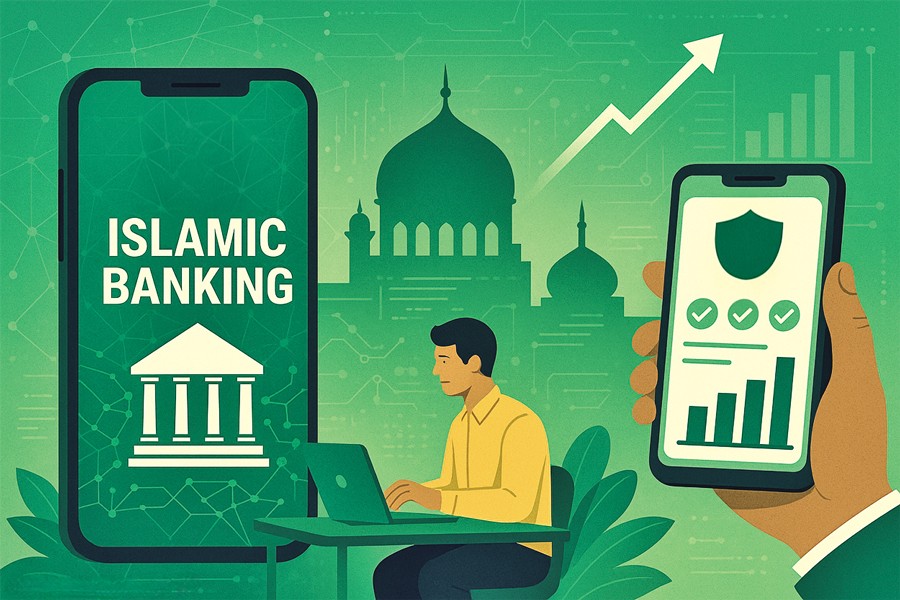
Islamic banking in Bangladesh is entering a new phase of transformation shaped by evolving customer expectations, rapid technological progress and an increasingly digital financial landscape. As the market expands and customers seek more accessible, transparent and value-driven financial solutions, the sector is positioning itself for a renewed era of innovation. This moment presents an opportunity to modernise Islamic banking practices and reinforce confidence by embracing technology as a core enabler of progress.

Across the global financial ecosystem, digitalisation is reshaping how people save, transact, invest and manage financial responsibilities. Bangladesh is no exception. The steady rise of mobile connectivity, digital payments, automated processes and data-driven decision-making has created a foundation upon which Islamic banking can strengthen its service delivery. By aligning technological advancements with the core values of Shariah-compliant finance, the industry is moving toward a model that is both efficient and ethically grounded.

The integration of technologies such as artificial intelligence, machine learning, digital workflows and automated monitoring systems is helping Islamic banking evolve into a more responsive and transparent ecosystem. These tools enhance the reliability of financial operations, ensure consistency in service delivery and enable institutions to uphold Shariah principles with greater precision. Digital processes also allow customers to experience seamless financial interactions, from onboarding to transaction monitoring, while fostering a clearer understanding of how their finances are managed.

A digital-first Islamic banking model provides a unique opportunity to broaden financial participation across Bangladesh. As more individuals, entrepreneurs, freelancers and small businesses adopt digital platforms, the need for Shariah-compliant solutions that are easily accessible, user-friendly and accountable continues to grow. A well-structured digital Islamic bank or neo-bank can meet these expectations by offering services that balance modern convenience with ethical financial practices.

Bangladesh is well-positioned to become a regional leader in this space. With high mobile adoption, a youthful population eager to embrace digital services and strong interest in values-based financial solutions, the country has the right foundation for large scale expansion of Islamic digital banking. This shift can support financial inclusion, encourage entrepreneurial growth and deliver banking solutions tailored to serve both urban and rural communities.

As the financial sector evolves, the need for a trusted, future-ready Islamic digital banking model becomes increasingly evident. An institution that combines strong governance, modern technology and Shariah principles can serve as a benchmark for the industry. With the right leadership and commitment to innovation, Islamic digital banking can reinforce Bangladesh's position as a forward-looking country in the global Islamic fintech landscape, offering customers a model of banking that is transparent, reliable and aligned with their values.​
 

Bankers given until end of Dec to downsize bloated NPLs
Regulator directs following announced policy support, write-off facilities

FE REPORT
Published :
Dec 08, 2025 00:22
Updated :
Dec 08, 2025 00:22

1765241738683.webp


Commercial banks in Bangladesh are now given a cutoff time until end of this month to significantly downsize mounting non-performing loans to clean up their year-end balance sheets.

Spelling out this direction at a meeting with bankers Sunday, the central bank high-ups suggested top executives of the banks to go by all the instructions the banking regulator recently issued regarding the policy support for the revival of the ailing businesses and partial write-off facility to cleanse the banks' balance sheets.

The Bangladesh Bank top management led by its governor Dr Ahsan H. Mansur made the instructions at the bankers' meeting with the top executives of the country's commercial banks at the BB headquarters.

The FE correspondent talked to nearly a dozen of the managing directors and chief executive officers of the scheduled banks to know the outcomes of the meeting but all of them agreed to share what transpired in the consultation on condition that they not be quoted by name.

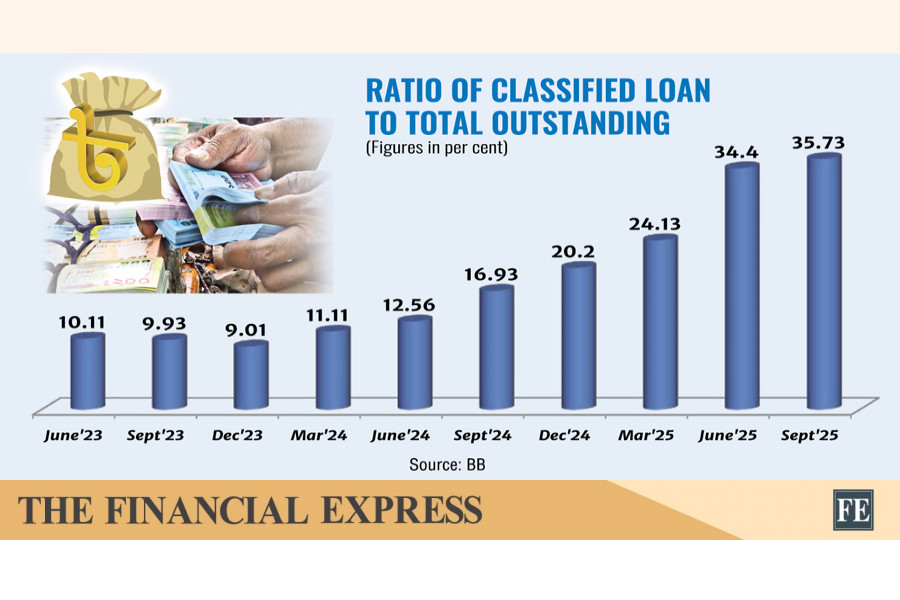
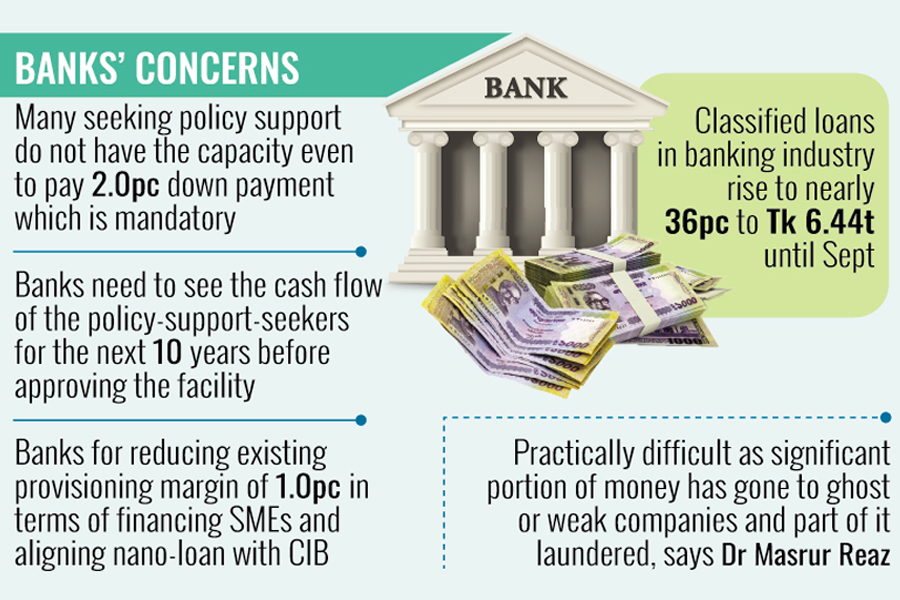
The managing director and chief executive officer of a private bank said the BB governor told them that ratio of classified loans in the banking industry rose as high as to nearly 36 per cent until September last, which is a matter of "serious concern to everyone".

The governor instructed the bank executives to pay serious attention to NPL management and execute all the instructions the regulator recently issued through circulars regarding policy support for reviving the struggling businesses and partial write-off facility for the banks.

"If the banks implement the instructions properly, a significant volume of NPLs is expected to be come down by end of this December," the BB governor was quoted by the bank executive as saying.

Another top executive of a private bank says they raised the problem that arises in terms of providing policy support because a significant number of people coming to get the policy support do not have the capacity even to pay 2.0-percent down payment, which is mandatory.

At the same time, he says, the commercial banks need to see the cash flow of the policy-support-seekers for the next 10 years before approving the facility to them. "The fact is majority of them do not have cash flow, which needs to be certified by a registered auditor. In fact, most of them are not eligible to get such support."

He adds about the dilemma: "If we allow them based on fictional cash-flow calculations, we would get into fresh problem, which the bankers don't want."

Apart from NPLs, another bank top executive says they also requested the regulator to reduce the existing provisioning margin of 1.0 per cent in terms of financing SMEs. Earlier, the provisioning requirement was 0.25 per cent which was enhanced to 1.0 per cent few months ago.

The bankers also requested the central bank to align the nano-loan with CIB (credit information bureau).

The central bank also instructed the banks to pay more focus on digital transformation to ensure cashless society, SME and agri-financing.

The volume of classified loans in the banking sector rose to Tk 6.44 trillion by end of September last, which accounts for 35.73 per cent of the loans disbursed by the banking system. The figure was Tk 4.20 trillion by March this year.

Founding chairman of Policy Exchange Bangladesh M Masrur Reaz says it is practically difficult to bring down the existing stock of NPLs because a significant portion of the money has gone to ghost or weak companies and a part of those was laundered.

If the bank executives become careful in NPL management through ensuring credit governance and properly handle risk management, the fresh flow of the possible classified loans can be avoided, he suggests.

Expressing concern over delay in implementing various institutional and legal reforms like expediting money-loan court and out-of-court resolutions and the introduction of distress-management company.

"It has been 15 months since the governance restoration has taken place. I think these (reform measures) should have been in place now," he tells the FE.​
 

Bangladesh Bank launches โ€˜E-Deskโ€™ system

BSS
Published :
Dec 09, 2025 21:22
Updated :
Dec 09, 2025 21:22

1765327548663.webp


In a major stride toward modernising its internal operations, Bangladesh Bank (BB) has officially launched the E-Desk System, marking a new chapter in the central bank's digitisation journey.

The system was inaugurated on Tuesday by Bangladesh Bank Governor Dr Ahsan H. Mansur, signalling the bank's entry into a new technological era, said a press release.

This initiative replaces the traditional, manual noting system with a modern, online-based noting system.

Developed jointly by the bank's HRD-1 and ICT departments, the E-Desk system aims to streamline administrative procedures.

The implementation will occur in two specific phases. From tomorrow, all file notings disposable up to the Director level at the departmental stage will be settled exclusively through the E-Desk.

Beginning January 1, 2026, the system will expand to cover disposable notings at all levels.

The inauguration ceremony was attended by deputy governors, executive directors, and relevant directors of the bank.

During the event, the governor provided vital instructions regarding the system's implementation and thanked the officials responsible for its development.

Currently, the system is being deployed at the Head Office, with plans to introduce it to all Bangladesh Bank offices in phases.​
 

New bank coming for small entrepreneurs

1765328691052.webp


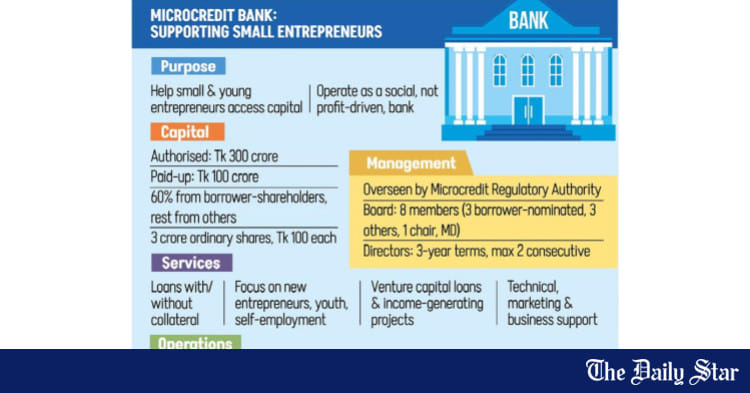
The government has taken an initiative to set up a new "Microcredit Bank" aimed at helping small entrepreneurs secure capital on easier terms.

To this end, the Financial Institutions Division (FID) under the finance ministry has drafted the Microcredit Bank Ordinance-2025 and published it on the division's website.

According to the draft, the proposed bank will run as a social institution. Dividend payments to investors will not cross the amount they invest, which indicates that profit will not be the main objective.

The bank is expected to have an authorised capital of Tk 300 crore. This is the maximum sum a company may raise by issuing shares.

The initial paid-up capital, which refers to money received from shareholders for shares issued, will be Tk 100 crore. Borrower-shareholders will provide at least 60 percent of this amount, with the rest coming from other shareholders.

Both individuals and institutions will be able to become shareholders if they meet the conditions.

The authorised capital will be divided into three crore ordinary shares with a face value of Tk 100 each, according to the draft.

It says that a separate division under the Microcredit Regulatory Authority (MRA) will issue licences and oversee operations. A chief executive will lead this division.

In May this year, Chief Adviser Prof Muhammad Yunus proposed the creation of a dedicated microcredit bank based on the social business model. He said it would differ from conventional banks.

Speaking at the inauguration of the MRA building in the capital's Agargaon, he called for a fresh approach to microfinance and said microcredit organisations should move away from NGO-style activities and develop into a full-fledged bank regulated by the MRA or another authority.

The chief adviser said the bank would operate as a social business and prevent owners from extracting profit. It would also provide venture capital loans to young entrepreneurs.

He referred to Grameen Bank, which he founded and for which he jointly received the 2006 Nobel Peace Prize, as an example. He said its microcredit model is built on trust rather than collateral.

The draft of the Microcredit Bank Ordinance proposes a board of directors with eight members. Borrower-shareholders will nominate three directors, and other shareholders will nominate another three. These six will elect a chairperson. The managing director will sit on the board as well.

A director may serve for up to three years and may serve two consecutive terms. A three-fourths majority of the full board may cancel any nomination.

In such cases, the managing director will not hold voting rights. The board may increase paid-up capital from time to time, provided it notifies the regulatory authority in advance.

Under the draft, the bank may offer loans with or without collateral, either in cash or other forms, for a wide range of economic activities. Priority will be given to new entrepreneurs.

The focus will be on self-employment, poverty reduction and helping people improve their quality of life. The bank will offer technical and administrative support to new entrepreneurs, sometimes for a fee, and will undertake income-generating projects on their behalf.

Borrowers will qualify for insurance benefits under existing laws. Support will include business management, marketing and technical guidance, along with help to start or expand ventures.

For operational purposes, the bank will accept deposits from borrowers and other individuals. It may also receive local or foreign assistance and grants if these comply with the law. The bank may take out loans using its assets or other collateral. It may buy shares of statutory organisations and invest in government securities.

The draft says the bank will invest part of its deposits in government-backed instruments, subject to approval from the licensing authority, to ensure financial stability.

It will conduct audits through the listed auditors in line with existing standards. The audited report must also state whether adequate measures were taken to protect the interests of borrowers, as required in the draft.​
 

Members Online

Latest Posts

Latest Posts