Donate ☕
201 Military Defense Forums
[🇧🇩] - Forming Election Commission/Conducting Elections | Page 55 | PKDefense
Home Login Forums Wars Watch Videos
Serious discussion on defense, geopolitics, and global security.

[🇧🇩] Forming Election Commission/Conducting Elections

Reply (Scroll)
Press space to scroll through posts
G Bangladesh Defense
[🇧🇩] Forming Election Commission/Conducting Elections
273
5K
More threads by Saif

Justice Zubayer Rahman Chowdhury to head EC search committee

1730248882689.png


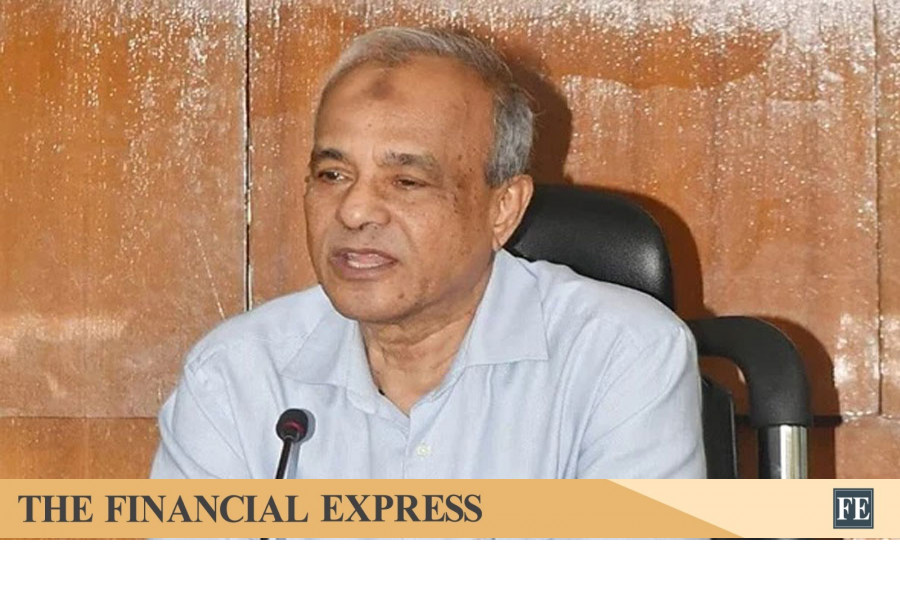
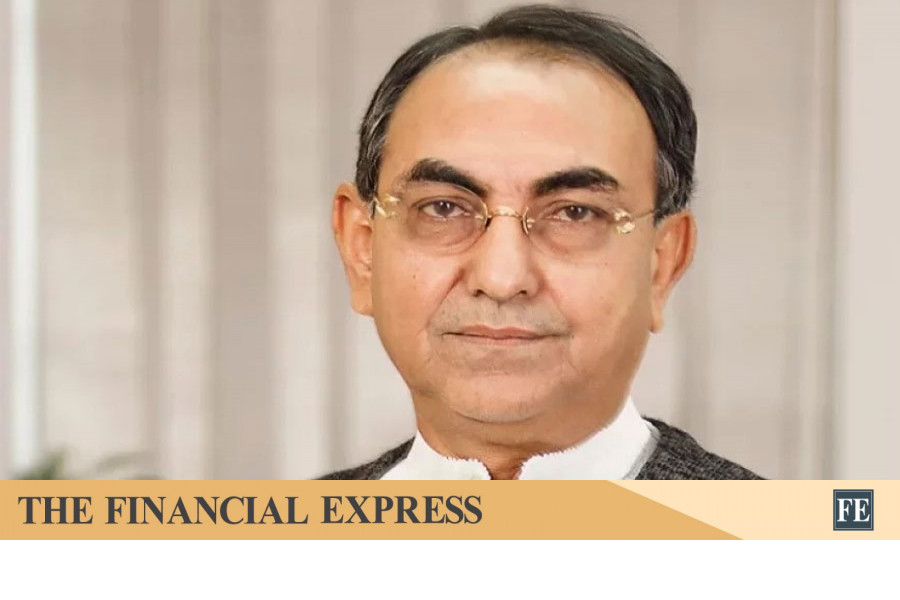
Clockwise from left: Justice Zubayer Rahman Chowdhury, Justice AKM Asaduzzaman, Prof CR Abrar, Prof Zinnatunnesa Tahmida Begum, Prof Mobasser Monem and Md Nurul Islam.

The government has formed a six-member search committee, chaired by Appellate Division Justice Zubayer Rahman Chowdhury, to select eligible candidates for a new Election Commission (EC).

The committee will recommend two candidates for each position, including the chief election commissioner and other election commissioners.

According to government sources, the committee will include Justice AKM Asaduzzaman from the High Court Division, nominated by the chief justice, and two distinguished citizens appointed by the president.

These individuals are former PSC Chairman Professor Zinnatunnesa Tahmida Begum and retired Dhaka University professor CR Abrar. Additionally, under the law, Comptroller and Auditor General of Bangladesh Md Nurul Islam and the Chairman of the Public Service Commission (PSC), Mobassher Monem, will serve as ex-officio members.

Speaking on the matter at the secretariat earlier today, Law Adviser Asif Nazrul stated that the process for the upcoming 13th National Parliamentary Election has begun. He mentioned that a search committee is being formed to constitute the Election Commission. An official notification will soon be issued after being signed by Chief Adviser Prof Muhammad Yunus.

The law adviser noted that there are numerous questions about the voter list, describing previous elections as fraudulent. This time, the voter list will be updated to ensure transparency.

The Awami League government was ousted on August 5 following a student-led uprising, and on the following day, President Mohammed Sahabuddin dissolved the 12th Parliament. On August 8, an interim government led by Yunus was established.

On September 5, the Election Commission, led by Kazi Habibul Awal, resigned before the end of its term. This commission had been sworn in on February 27, 2022.

The law for the appointment of the chief election commissioner and other election commissioners specifies that a six-member search committee will be formed by the president to establish the Election Commission.

This committee is to include an Appellate Division judge nominated by the chief justice (who will serve as committee chair), a High Court Division judge nominated by the chief justice, the comptroller and auditor general, the chairman of the Public Service Commission (PSC), and two distinguished citizens appointed by the president, one of whom must be a woman.

According to the law, the search committee must provide its recommendations to the president within 15 working days.​
 
Analyze

Analyze Post

Add your ideas here:
Highlight Cite Fact Check Respond

How AI and deepfakes can create alarm in the elections

• Fake videos, fabricated posts and concocted campaigns created with the help of artificial intelligence are being widely used on social media with the aim of influencing voter psychology. • Incidents of AI-driven disinformation in Bangladesh and elsewhere around the world show that the misuse of technology can distort the electoral process and pose a serious threat to democracy. • It is crucial for political parties and candidates to fact-check information in their own campaigns, clearly identify their official digital channels, and take swift action against suspicious content.

Md Mizanur Rahman
Updated: 23 Jan 2026, 11: 38

1769216317002.webp


Artificial intelligence (AI) is a significant component of contemporary technological advancement. It is capable of functioning by mimicking human-like thinking, learning abilities and decision-making processes. While AI is bringing progress and convenience to society, its misuse can also give rise to various complex problems. In particular, its application poses risks in areas such as verifying the authenticity of information, personal privacy and social security.

The misuse of artificial intelligence in fields such as elections, business and healthcare can create confusion, cause harm, and lead to ethical and social deadlocks. For example, there have been international instances of AI-based deepfake (near-perfect replicas of reality) technology being used to spread misinformation in the healthcare sector.

In the economy, too, there are major examples of fraud carried out using artificial intelligence. Globally, there have been incidents of deepfake scams in which the voices and videos of senior officials were impersonated to siphon off employees’ bank accounts or obtain sensitive institutional information. These tactics have not only caused financial losses but have also eroded public trust and confidence in institutions.

Just as technological advancement has transformed society in Bangladesh, it is also opening a new chapter in electoral politics. With the expansion of digital platforms and the easy availability of AI-based tools, political campaigning is no longer confined to stages or leaflets; fake videos, fabricated posts and concocted campaigns created with the help of artificial intelligence are now being widely used on social media to influence voter psychology.

In the context of Bangladesh, especially with the 13th parliamentary election approaching, the issue has come to the forefront of contemporary political discourse. AI-generated content is being seen as a major threat, as it can mislead voters with false information and call into question the very foundations of democracy.

Across the world, AI-driven disinformation has been used during elections to misdirect voters and shape or derail public opinion. The impact of automated social media tools and misinformation campaigns during the 2016 and 2020 elections in the United States has been widely discussed; similar instances of AI-based videos and false posts have been observed in Europe and South Asia. These have affected electoral trust and democratic transparency.

During Slovakia’s 2023 parliamentary election, an attempt was made to mislead voters by circulating a fake audio clip on social media that mimicked the voice of an opposition leader. In the 2024 New Hampshire primary election, AI-generated robocalls were used to confuse voters by spreading false information about voting dates or procedures.

There is also evidence from European Union elections of AI-driven chatbots being used to provide misleading guidance to voters. This is seen as an attempt to influence the behaviour and participation of ordinary voters. Such content typically goes viral quickly, blurring the distinction between real and false information and creating misunderstandings about the electoral process.

According to research by the German organisation Konrad Adenauer Foundation (KAS), numerous incidents of deepfakes have occurred in recent elections around the world. Examples include the United States, Turkey, Slovakia, Argentina, Indonesia, India, Poland, Bulgaria, Taiwan, Zambia and France.

Most recently, ahead of Moldova’s 2025 parliamentary election, a large volume of AI-driven disinformation was spread. The aim was to turn public opinion against the government, using more than a thousand YouTube channels, TikTok and Facebook accounts. This enabled the dissemination of Kremlin-backed propaganda.

Such coordinated “engagement farms” have helped create false perceptions among voters and attempted to undermine trust in the country’s pro-European party PAS.

In Bangladesh’s 2024 parliamentary election, a deepfake video was circulated in a constituency in Gaibandha falsely announcing that a candidate had withdrawn from the race—an assertion that was later proven untrue. Although the candidate eventually won, the incident raised questions at the time about the credibility of the electoral process.

When political trust is undermined through AI-driven disinformation, voters may lose confidence in the electoral system itself.

This can lead to a decline in political participation, a growing tendency to abstain from voting, or increased scepticism about the act of voting itself. Misinformation can tilt the political landscape in such a way that false narratives take precedence over substantive issues. Incidents in Bangladesh and elsewhere around the world in which AI-driven disinformation has distorted electoral processes demonstrate that the misuse of technology is dangerous for democracy.

In Bangladesh, the use of artificial intelligence and deepfake technology has grown rapidly since mid-2025, surpassing the levels seen in 2024. An analysis by Dismislab shows that in the second quarter of 2025, the number of AI-generated videos and images used in the country increased significantly.

More than 1,361 unique instances of misinformation were identified, of which nearly one thousand were related to political matters. One example of targeted misinformation was a photo card that went viral on social media, falsely claiming that a leader of the Ganadhikar Parishad had been misrepresented, a claim later debunked through fact-checking.

FactWatch reports also show that AI-generated deepfake videos are being created and circulated to produce misleading content against political parties or administrative officials.

According to a report by the Dhaka Tribune, AI-driven videos on Bangladesh’s social media have altered the statements of political leaders and administrative officials, creating confusion and division.

A research report notes that ‘fake information and malicious campaigns’ have posed unprecedented risks to the credibility of the electoral process, social stability, and the political participation of women and marginalised communities. The aim of such misinformation or AI-generated content is generally to influence voter psychology, damage the reputation of opponents, create division and tension, and mislead public opinion regarding election campaigns, thereby endangering free and fair elections. Addressing this situation requires a multidimensional approach in Bangladesh.

Fact-checking platforms must be strengthened, the Election Commission’s technical capacity enhanced, and political parties and media compelled to follow transparency and ethical campaigning. Moreover, an effective framework integrating digital security and electoral laws is urgently needed

Firstly, fact-checking platforms and truth-verification initiatives must be strengthened so that voters can quickly verify which information is false.

Secondly, the Election Commission and the government need to enhance their technical capacity to detect AI-driven misinformation and take legal action. As part of this effort, plans have already been proposed to launch a dedicated mobile app or a digital monitoring system.

Thirdly, political parties must ensure transparent campaigning and adhere to digital ethics, committing themselves against the use of deepfakes or fabricated information.

Fourthly, the media and civil society need to focus on raising public awareness, preventing misinformation, and promoting evidence-based reporting. Citizens themselves should pay attention to quickly verifying the truth whenever they encounter controversial content on social media and avoid spreading false information. Educational institutions and youth organizations can provide training in misinformation detection so that young voters become proficient in digital analysis.

An effective framework must be established by integrating the Digital Security Act, electoral laws, and appropriate regulations. Such a framework should ensure that the dissemination of AI-driven misinformation is strictly punishable. If, in Bangladesh’s upcoming elections, such narratives reach voters and distort public opinion, the impact will extend beyond election results, negatively affecting the country’s democratic stability and political credibility. Therefore, timely high-level preparation, enhanced technical capacity, and the development of political and social awareness are essential.

Ultimately, the key to safeguarding against the misuse of AI technology lies in information awareness, technical preparedness, a robust legal framework, and a culture of accountable politics—all of which will ensure free, transparent, and fair elections in Bangladesh.

Taking coordinated and multidimensional initiatives to prevent the misuse of artificial intelligence is now an urgent necessity. First, the government and relevant regulatory bodies should formulate clear laws and policies that explicitly define AI-driven misinformation, deepfakes, and digital fraud as criminal offenses, with provisions for swift justice and exemplary punishment.

The Election Commission and political authorities should incorporate transparent guidelines for the use of AI and digital content in electoral codes of conduct and require candidates and parties to commit in writing not to use misinformation or deepfakes.

It is essential for political parties and candidates to fact-check information in their own campaigns, clearly identify their official digital channels, and take swift action against suspicious content. For law enforcement and security agencies, the formation of specialized cyber and AI forensic units is necessary, capable of rapidly detecting, tracing the source of, and removing fake content.

At the same time, the media, technology platforms, and civil society should strengthen coordinated fact-checking, public awareness initiatives, and digital literacy programs. This will enable ordinary people to distinguish between false and true information themselves. Only the collective and responsible actions of all these actors can prevent the misuse of artificial intelligence and safeguard society, security, and democracy.

Law enforcement agencies can play a central role in preventing the misuse of AI. First, they can establish specialised cyber units to identify and investigate AI-driven misinformation, deepfake videos, and digital fraud, monitoring social media, websites, and other digital platforms. Second, they can ensure punishment for offenders and alert the public by conducting swift and exemplary cases under relevant laws.

Finally, it must be noted that Bangladesh was under the grip of authoritarianism for over a decade and a half. Now, there is an opportunity to restore democracy. But if AI is used to influence election outcomes, the country’s democratic stability, voter confidence, and social cohesion could be undermined, political tensions could rise, and international reputation could be damaged.

To address this challenge, fact-checking platforms must be strengthened, the Election Commission’s technical capacity enhanced, and political parties and media compelled to follow transparency and ethical campaigning. Moreover, an effective framework integrating digital security and electoral laws is urgently needed.

* Dr. Md. Mizanur Rahman is an economist and researcher​
 
Analyze

Analyze Post

Add your ideas here:
Highlight Cite Fact Check Respond

Asif Mahmud accuses Tarique Rahman of violating electoral code of conduct

Calls for action from Election Commission


By Star Online Report

1769217445955.webp

File Photo

National Citizen Party (NCP) has alleged that BNP Chairperson Tarique Rahman is violating the electoral code of conduct during the ongoing election campaign.

At a press conference at the NCP’s Bangla Motor office on Friday night, NCP spokesperson and election management committee chief Asif Mahmud Shojib Bhuyain said Tarique Rahman has been breaching rules since the first day of campaigning.

He accused BNP of holding public meetings late at night, using microphones and sound boxes beyond the permitted hours of 2pm to 8pm.

“Meetings at 12am and even 4am are clear violations of the code of conduct,” he said.

Asif urged the Election Commission to take action, warning that violations at the highest level of a party encourage wider disregard for rules.

“The code of conduct is the same for everyone. If anyone from the NCP or the ten‑party alliance violates it, they should also be brought to justice,” he said.

The NCP leader further accused sections of the media of bias, claiming that 69 journalists, including senior editors, had aligned with a particular party’s campaign in Dhaka‑17.

“You have already seen the consequences of media bias. I hope the same thing does not happen again,” he warned.

The former adviser said referendum campaign must reach marginal areas to counter rumours and raise awareness.​
 
Analyze

Analyze Post

Add your ideas here:
Highlight Cite Fact Check Respond

One box for every 400 postal ballots: EC circular says

BSS
Published :
Jan 24, 2026 21:36
Updated :
Jan 24, 2026 21:36

1769299645265.webp


Election Commission (EC) has issued a special circular outlining the procedures to be followed after the receipt of the postal ballots by the Returning Officer (RO).

The circular contains detailed guideline on the preservation and counting of postal ballots of the forthcoming 13th national parliamentary election and the referendum.

The circular said the postal ballots must reach to the concerned RO by 4:30 pm on the polling day (February 12) to be counted for. The ballots to be received after 4:30 pm will not be scanned or counted and would be kept separately as rejected ballots.

Once the RO logs in the software developed for voting through postal ballots, they will be able to view and know the overall picture of the number of voters registered for voting by postal ballot and the votes cast through postal ballots for the respective parliamentary constituency, the circular said.

Based on the number of voters registered for postal voting, the ROs of each constituency will use one box for every 400 ballots (ballot envelopes). Each ballot box must have a sticker bearing the constituency number and name.

Sealing of Ballot Boxes:

Postal ballots will start arriving at RO office from the day of allocation of symbols (January 21) onward. Accordingly, ballot boxes for preserving postal ballots must be kept ready on the day of symbol allocation or the following day.

To ensure transparency in postal ballot-related activities, the RO will make a written request to the candidates or their election agents, specifying the date and time, to be present before sealing (locking) the ballot boxes.

On the scheduled date, in the presence of all attendees, four seals/locks on each ballot box will be affixed. Before affixing the seals/locks, the numbers of each box and each seal/lock will be read aloud, and the attending candidates or election agents will be asked to record them.

Once a ballot box is filled with postal ballots, its lid must be sealed with a fifth lock/seal and stored in a secure location.

Receipt and Preservation of Returned Postal Ballot Envelopes Received by Post:

The RO will assign one officer to receive and preserve postal ballots received from the postal department. In addition, the RO will appoint the necessary number of supporting staff to assist the officer responsible for scanning and other related tasks.

Upon receiving the postal ballot envelopes by post, the responsible officer will scan the QR code printed on the envelope. The envelopes will then be securely preserved in the designated ballot boxes based on the constituency.

By scanning the QR codes, constituency-wise lists of distributed and received postal ballots will be generated from the software in Form-12. The responsible officer will sign and preserve the software-generated forms daily.

If, during QR code scanning, the software displays a QR code as a duplicate, the RO will cancel the ballot. In such cases, the envelope must be preserved separately without opening it. The Election Commission will provide the necessary scanning equipment for QR code scanning.

If the Voter Does Not Scan the QR Code:

According to the voting instructions sent to each voter, voters must log in the Postal Vote BD mobile app and scan the QR code on the envelope immediately after receiving the postal ballot envelope.

Verification of the voter will be required during scanning, through which the system will identify that the voter has received the ballot paper. However, if a voter casts the vote and returns the envelope without scanning the QR code on the envelope, the ballot will not be identified in the system at the time of scanning and will therefore be considered invalid.

In such cases, the envelope must be preserved separately without opening it, and proper records must be maintained.

Deadline for Receiving Postal Ballots:

Postal ballots received by 4:30 pm on the polling day (Feb 12), will be included for the count. Postal ballot envelopes received after that time must not be scanned or included in the counting process and must be preserved separately as rejected ballots.

Appointment of Presiding Officers and Polling Officers for Counting:

For counting postal ballots, the RO will appoint one Presiding Officer per constituency. Additionally, based on the number of ballots received, one Polling Officer will be appointed for every 100 postal ballots, and one Assistant Officer will be appointed to coordinate every 15 Polling Officers.

Persons to be allowed during counting:

During the counting of postal votes, candidates, polling agents, journalists, and observers will be allowed in accordance with the same rules applicable to other polling centres.

The RO will inform the candidates and their polling agents in advance, through written communication, about when, where, and how the postal ballot counting for the respective constituency will be conducted. The RO will request for the presence of the candidates or their poling agents during the counting process.

Postal Ballot counting activities:

For counting postal ballots, a constituency-wise counting room must be prepared at the office of the RO or at another convenient location.

Immediately after 4:30 pm on polling day on February 12, the Presiding Officers will receive the ballot boxes filled with postal ballots of their respective constituencies from the RO.

During counting, the Presiding Officer responsible for the constituency will inform the candidates, polling officers, polling agents, journalists, and observers about the number and details of postal ballots received for that constituency. The Presiding Officer will then open all boxes of the postal ballots for that constituency. After opening the boxes, Polling Officers will first pour all returned envelopes into one place and then open them one by one.

Preparation, Publication, and Distribution of Counting Statements:

After completing the counting of postal ballots, the Presiding Officer will record the results of the National Parliamentary Election in Form-16A and the results of the referendum in Form-4, as is done for general polling centers.

Then the Presiding Officer will publish the results and provide their copies to the candidates, polling officers, polling agents and journalists present during counting.

RO will announce the results after consolidating the votes received from general polling centers and postal ballots. The final results will be published in Form-18 for the national parliamentary election and in Form-7 for the referendum.

Regarding expatriate voter registration, Salim Ahmad Khan, Team Leader of the ‘OCV-SDI’ project, told BSS that most postal ballots have already reached to expatriate voters, and expatriates are casting their votes and submitting postal ballots at post offices.

He informed that a total of 1,533,683 voters including Bangladeshi expatriates have registered their names to take part in the 13th National Parliamentary Election and the Referendum.​
 
Analyze

Analyze Post

Add your ideas here:
Highlight Cite Fact Check Respond

Election 2026: Amid a crowd of millionaires, ‘poor’ candidates much discussed

Sohrab Hassan
Published: 24 Jan 2026, 09: 13

1769302274001.webp

Jatiya Sangsad bhabanAI-generated image

Elections are synonymous with money in Bangladesh. Even contesting a union Parishad election requires spending millions of taka. A parliamentary election, needless to say, costs far more. In the past, candidates spent crores of taka on parliamentary elections; today, that figure has risen even higher.

Many candidates are also required to deposit large sums into party funds in order to secure nominations. Those who cannot arrange such funds, despite being long-standing and loyal party activists, are denied nominations. Conversely, those who can afford to pay are often awarded nominations even if they have remained inactive within the party for years. A cursory look at the nomination lists of major parties, including the BNP and Jamaat-e-Islami, is sufficient to confirm this reality.

Based on candidates’ affidavits, Transparency International Bangladesh (TIB), calculating the current market value of both movable and immovable assets, has identified 891 millionaire candidates contesting the upcoming 13th parliamentary election. Among them are 27 candidates who are billionaires.

Presenting data from 10 political parties, TIB reports that 59.41 per cent of BNP candidates are indebted. Independent candidates rank second, with 32.79 per cent indebted, followed by the Jatiya Party at 26.97 per cent.

Overall, more than 25 per cent of all parliamentary candidates carry some form of debt or liability. The total amount of candidates’ debt stands at Tk 18,868 crore (188.68 billions), of which Tk 17,471 crore (174.71 billions) is bank debt alone. Had these loans been repaid prior to the election, many banks might have been spared financial distress.

These figures are based solely on information disclosed in electoral affidavits. In reality, the number of millionaire candidates and loan defaulters is likely to be significantly higher.

TIB’s investigation has also uncovered a startling fact: six candidates have been contesting the 13th parliamentary election while concealing information about foreign citizenship or assets held abroad. However, the organisation has not disclosed their identities. If such information is submitted to the election commission, appropriate action may be taken.

Against this backdrop, we have also encountered candidates who are financing their election campaigns entirely through donations from working people, essentially a form of genuine crowdfunding. This is not the ostentatious, performative crowdfunding practiced by leaders of some newly formed parties. One such candidate is Monisha Chakrabarty, contesting from Barishal-5 (Sadar). Representing the Bangladesh Socialist Party (BASAD) and the Democratic Left Alliance, she is collecting campaign funds through traditional clay money banks.

Monisha previously contested the 2018 Barishal City Corporation mayoral election as a BASAD candidate, where her campaign, funded through clay banks, attracted widespread attention. Her entire election effort was sustained by small savings contributed by ordinary citizens.

She is following the same approach again. Even before the formal campaign began, hundreds of small clay banks were distributed among party workers and supporters. Most donors are battery-powered rickshaw pullers, van drivers, easy-bike operators, and factory workers.

Many workers are contributing willingly because, when labourers, van pullers, and rickshaw drivers faced repression or harassment, Monisha stood by them. She has been arrested in the past for organising movements in defence of workers’ rights.

Another ‘poor’ candidate has also come to light: Tarek Rahman, the candidate of the Amjanatar Dal from Dhaka-12, popularly known as “Aam Tarek”. According to his affidavit submitted to the election commission, Tarek Rahman is the poorest candidate in the race. He owns no car, house, land, or flat. Listing his occupation as business, he has declared assets worth Tk 1,059,143, with an annual income of Tk 450,000.

In Dhaka, Mizanur Rahman, a resident of Jurain, has gained recognition for consistently speaking out in defence of urban residents’ rights. Contesting as an independent candidate from Dhaka-4, he once carried a pitcher of contaminated WASA water to force the managing director of WASA to drink it, an incident that sparked considerable discussion.

He is constantly present in the neglected alleyways of Jurain, standing beside residents in their daily struggles. One cannot truly grasp how deeply an individual can be devoted to their locality without seeing Mizanur Rahman’s work.

Mizanur Rahman is also raising campaign funds through crowdfunding announced on Facebook. Many have come forward to contribute, and so far he has raised nearly Tk 200,000.

It is not only Monisha, Tarek, or Mizanur; many candidates from smaller parties and independent backgrounds are funding their campaigns through public contributions.

According to TIB, among the 27 candidates worth over 100 crore taka contesting the 13th parliamentary election, 16 belong to the Bangladesh Nationalist Party (BNP), while nine are independents, all of whom are BNP leaders. Total bank and other loans held by candidates amount to Tk 18,868 crore. Of the BNP’s 288 candidates, 59.4 per cent are indebted, compared to 22 per cent of Jamaat’s 224 candidates. Eight of the 10 most indebted candidates belong to the BNP. Ten candidates own more than 100 bighas of land.

Candidates’ declared assets amount to Tk 6,188 crore, yet their taxable income stands at only Tk 693 crore, on which they have paid Tk 546.8 million in taxes. For 259 candidates, their dependents possess more assets than they do, while for 282 candidates, their spouses own more movable and immovable property.

TIB has raised serious questions about the credibility of information submitted in candidates’ affidavits. According to its observations, at least three candidates concealed information about assets held abroad, yet their nomination papers were deemed valid.

Only those with absolute loyalty to Bangladesh should be eligible to become the country’s representatives—those who will work for the people and in the public interest. This is impossible while retaining the citizenship of another country.

In many democratic nations, prospective representatives must first submit affidavits to their parties affirming that they are not citizens of any other country. In the past, several individuals have become ministers and MPs while concealing dual citizenship. The election commission must remain maximally vigilant to ensure that this is not repeated. Leniency may exist elsewhere, but there can be no compromise on this issue.


Following the July uprising, the interim government initiated state reform processes in various sectors to prevent the national parliament from becoming a mere instrument of personal ambition. We are aware of the fate of reforms related to the constitution, the election commission, local government, the media, the police, and the women’s affairs commission. In effect, the government’s activities have remained confined to forming commissions and submitting recommendations.

Despite the establishment of so many commissions, the absence of any meaningful change in political culture is evident from the candidates’ affidavits themselves. It can be said with hesitation that those who have submitted false information will prioritise self-interest over public service if elected.

* Sohrab Hassan is a journalist and poet​
 
Analyze

Analyze Post

Add your ideas here:
Highlight Cite Fact Check Respond

Members Online

⤵︎

Latest Posts

Latest Posts