Donate ☕
201 Military Defense Forums
[🇧🇩] - Monitoring Bangladesh's Economy | Page 186 | PKDefense
Home Post Alerts Inbox Watch Videos

[🇧🇩] Monitoring Bangladesh's Economy

Reply (Scroll)
Press space to scroll through posts
G Bangladesh Defense
[🇧🇩] Monitoring Bangladesh's Economy
933
24K
More threads by Saif

Overcoming economic malaises

Published :
Jan 13, 2026 00:25
Updated :
Jan 13, 2026 00:25

1768264462038.webp

The Centre for Policy Dialogue (CPD), a local think tank, has pinpointed the weaknesses of the country's economy and also recommended various measures to overcome those. In fact, the very title of the paper, "State of the Bangladesh Economy in FY2025-26" amply clarifies the objectives of the briefing organised by the CPD's Independent Review of Bangladesh's Development (IRBD) programme at its Dhaka office. It has spelt out the challenges the government to be formed following the next month's general election will face. Strong fiscal discipline, according to the paper presented by Dr Fahmida Khatun, will be the key to a turnaround for the economy. The contractionary monetary policy now being followed cannot continue eternally. There is a compelling need for investment from the country's private sector as well as foreign sources. Unrelenting inflation with no compatible rise in income compounded by no job creation leads to stagflation which now stares in the face of Bangladesh.

The list of economic malaises is long but at a time when economists are in favour of private and foreign investments, the lowest ever ADP (annual development programme) implementation is a stark aberration. These are highly contradictory. ADP programmes not only boost infrastructure in developing countries but also create jobs. Why not the bungling bureaucracy be held accountable for this miserable performance? The interim government has totally failed to breathe fresh air into ADP execution and yet it goes for rewarding the same bureaucracy by offering salary increases for the inefficient behemoth. In the first quarter of FY2025-26, the ADP implementation was only 8.33 per cent, which increased to 11.75 per cent in the July-November period, forcing budget cuts. In the first quarter of the previous fiscal, the rate was 7.90 per cent, ending the year at 41 per cent. So, the rate may increase in the second and third quarters but still it will lag far behind the targets.

ADP programme implementation is fundamental for providing momentum to economic development through structural reforms and generation of employment. At the same time, mobilisation of tax by expanding the range and scope of taxable net prove vital for government's income. Now that debt servicing is eating away the country's income from taxes, export and remittance, the development fund is further squeezed. The heavy reliance on costly imported liquefied natural gas further reduces the accumulation of funds. To cope with the increasing demand for gas and power, there is no alternative to exploring local sources of gas and expanding the base of renewable energy. In this connection, climate change-induced compulsions may prove overriding within a few years.

That the time for trickle-down benefits of development for the poor is over should be kept in perspective of all development programmes. Education and skill must be compatible with industrial requirements in order to address the rising unemployment. The hard reality is that even if the educated youths are provided with jobs, there will be a huge legion of uneducated or barely literate young people. To bring them out of the rut, at least functional literacy with prospective skill development is required. As for food security of the most vulnerable, bottle-feeding has to be brought to an end at some point. The poor and vulnerable groups should be detected for initial support for education and health but the main objective would be to pull their next generation out of the poverty cycle. This is how they can cope with the supply side economy.​
 
Analyze

Analyze Post

Add your ideas here:
Highlight Cite Fact Check Respond
  • Like (+1)
Reactions: Bilal9
BD in troubled waters of tomorrow

SYED FATTAHUL ALIM
Published :
Jan 13, 2026 00:21
Updated :
Jan 13, 2026 00:21

1768264786845.webp

As is the usual practice every year, economists and experts on business trends locally and globally have been making their projections and predictions about how the country's as well as the world's economy will fare in the coming year (s). So far as Bangladesh's economy is concerned, much cannot be expected from it in the near future until its manufacturing sector comes of age. For, at present, the manufacturing is dominated by the Readymade Garment (RMG), which contributes roughly 25 per cent to the GDP and 81 per cent to the total export earnings. Overall, the manufacturing is contributing 34.81 per cent to the GDP.

The RMG sector demonstrated some resilience in the first half of last year, but in the second half its performance faced challenges (in November last year the export actually contracted) from external market due to uncertainties in international trade and politics. But to overcome Bangladesh's export-related challenges, diversification of exportable products as well as their destinations has become urgent. In this connection, the apparel industry's Apex body, BGMEA's talk of reaching a Free Trade Agreement (FTA) with Mercosur or Southern Common Market, which is a South American trade bloc, is a positive step forward. Notably, the size of the Mercosur economy is approximately USD 3 trillion. So, it is a move that may prove worth the while in the long run. The present-day world's economic order is highly volatile in the face of the US president Donald Trump's tariff-centred and other wars.

Bangladesh being an export-dependent economy, it could not remain unaffected by its impact since even after some exemptions, the main export item, the apparel products, would still have to pay 20 per cent tariff to enter the US market. The ongoing war in Ukraine, political volatility in the Middle East and other issues have reduced Bangladeshi apparel products' demand in their main destinations in the European Union (EU) and North American markets. And, following graduation scheduled for the month of November this year, the preferential treatment Bangladesh's exports had so far been receiving as a member of the LDCs from the EU markets might come to an end. So, the future does not hold much in store for Bangladesh as an export-and-remittance dependent economy. There are also challenges regarding remittance, given the political uncertainties in the Middle East. So, the hope that things both in the regional and international contexts would soon return to normalcy might prove to be a chimera. In that case, Bangladesh will have to fend for itself, keenly watch development abroad and prepare for the worst in the coming days. Economists and observers of the international financial markets are forecasting about the risk of another crisis in the global market driven by the US economy as the value of US dollar is falling. The US economy is facing a huge debt burden of USD38 trillion, with the public debt amounting USD30.8 trillion, which is between 120 and 125 per cent of that country's GDP. That explains to some extent President Trump's warmongering postures. In fact, US's economic decline vis-à-vis the rise of China's as a competitor on the global stage has a lot to do with the developments. The US-dominated unipolar world is giving way to multipolarity led by emerging economies like China. But changes are not going to happen smoothly. Bangladesh will have to learn to navigate through these ever-emerging complexities of the new world order in the making. That would require an able political leadership at the helm. It is expected that the elected government to take office following the February polls will be competent enough to efficiently deal with the upcoming challenges on the home as well as the regional and global fronts.​
 
Analyze

Analyze Post

Add your ideas here:
Highlight Cite Fact Check Respond
  • Like (+1)
Reactions: Bilal9
Three economic priorities for the upcoming political government

By Fahmida Khatun

1768268578031.webp

VISUAL: ANWAR SOHEL

The upcoming parliamentary election, scheduled for February 12, is of exceptional political and economic significance for Bangladesh. For many years, elections failed to serve as genuine instruments of democratic choice. The lack of meaningful opposition participation, allegations of vote manipulation, and ritualistic voting practices weakened democratic institutions and entrenched an increasingly authoritarian system. A generation of young citizens grew up without getting to exercise their right to vote, leading to political disengagement, erosion of public accountability, and a collapse of trust in state institutions. The election, therefore, offers a historic opportunity to restore democratic legitimacy, rebuild public confidence, and reset the relationship between citizens and the state.


However, restoring electoral credibility alone will not be sufficient. The next government will inherit an economy under severe strain after years of policy complacency, institutional erosion, and weak macroeconomic management.


In recent years, Bangladesh’s economic momentum has weakened. Growth has slowed, inflation has remained stubbornly high, and the banking sector continues to struggle under the weight of rising non-performing loans. Low private and foreign investment, inefficient public investment, rising public debt, declining real wages, and weak employment generation are placing a lasting strain on the economy.

Against this challenging backdrop, the newly elected government will inherit a daunting reform agenda aimed at restoring economic discipline, strengthening governance, and delivering better outcomes for ordinary citizens. The list of priorities is long and complex. However, three urgent and interconnected issues stand out and require immediate, decisive attention. These will shape not only the direction of economic recovery, but also the credibility and effectiveness of the new administration.


First, controlling inflation must be the new government’s top economic priority. Over the past several years, the country has experienced persistently high inflation, driven mainly by rising food and energy prices. As food accounts for more than half of household expenditure for low-income families, rising prices have significantly reduced purchasing power and increased financial pressure across income groups. Wage growth has lagged inflation, leading to declining real incomes and eroding household savings, while middle-income families have reduced spending on education, healthcare and nutrition.

High inflation also weakens overall economic performance. It creates uncertainty for businesses, discourages long-term investment, puts pressure on the exchange rate, and undermines confidence in economic management. Once inflation expectations become entrenched, restoring price stability becomes more difficult and costly.

Inflationary pressures reflect both global shocks and domestic policy weaknesses. While higher global commodity prices raised import costs, exchange rate controls delayed adjustment and encouraged speculation. Energy prices were kept below cost for years and then adjusted sharply, raising production costs. Heavy government borrowing from the banking system added demand pressures, while weak competition, poor storage facilities and inadequate transport infrastructure constrained food supply.


The next government must adopt a comprehensive and credible anti-inflation strategy. Bangladesh Bank should be granted clear operational independence to prioritise price stability, supported by a transparent interest rate framework aligned with economic conditions. Fiscal discipline must be restored by reducing reliance on bank borrowing and strengthening revenue mobilisation, so that monetary policy can operate effectively and inflationary pressures are contained.

Food market reforms should focus on strengthening competition, dismantling syndicates and hoarding, improving storage and transport infrastructure, and raising agricultural productivity. Energy pricing should follow a predictable, rules-based adjustment mechanism to avoid abrupt shocks. A transparent, automatic pricing formula, linked to global fuel prices and exchange rate movements, would allow gradual adjustments, reduce fiscal risks from subsidies, and provide greater certainty for households and businesses.


Second, private investment is essential to restoring growth, productivity, and job creation. Investment drives long-term economic expansion by supporting innovation, industrial upgrading and employment. In recent years, however, Bangladesh’s investment momentum has weakened. Private investment has stagnated, while rising public investment has delivered limited returns due to concerns about project quality, governance and efficiency.

Foreign direct investment remains particularly weak relative to regional competitors. This reflects persistent concerns about policy uncertainty, regulatory complexity, weak contract enforcement, infrastructure bottlenecks, bureaucratic inefficiencies, and financial sector fragility. Together, these factors have undermined investor confidence and discouraged long-term capital commitments.

The banking sector has become a major constraint on investment. Political interference, weak governance, and repeated loan rescheduling have eroded credit discipline. Productive firms struggle to access finance, while connected borrowers continue to receive preferential treatment, distorting capital allocation and weakening financial intermediation.

A comprehensive reform agenda is required to restore investment momentum. Banking sector governance must be strengthened, loan recovery enforced, asset quality reviews completed, and regulatory forbearance phased out. At the same time, the business environment must improve through streamlined regulation, digitised public services, simplified tax administration, reduced discretionary authority, and stronger contract enforcement.

Infrastructure development must prioritise efficiency and reliability over scale alone. Persistent weaknesses in power supply, ports, customs, and logistics continue to drive up business costs and undermine export competitiveness. Without modern infrastructure and predictable regulation, the country will struggle to integrate into global value chains and diversify its economy.

Third comes job creation. Bangladesh stands at a demographic crossroads. Around two million young people enter the labour force each year, yet employment growth has lagged far behind. Youth unemployment is more than twice the national average, and most new jobs are informal, with low productivity. Educated unemployment is rising, exposing a growing mismatch between education and labour market needs. This is not only an economic failure but also a social and political risk.

Job creation depends on restoring macroeconomic stability and reviving investment. High inflation erodes real wages, weakens consumer demand, and discourages hiring. Low private investment limits firm expansion and the formation of new enterprises. A stable macroeconomic environment, predictable policies, and a business-friendly regulatory regime are therefore essential foundations for employment growth.

Targeted labour market reforms are equally critical. Education and training must align with industry demand, with a major expansion of well-funded technical and vocational programmes. SMEs, the main source of employment globally, need easier access to finance, stronger market linkages, and simplified regulations. A focused SME growth strategy can rapidly create large numbers of jobs.

If employment opportunities grow, the gains will be transformative: higher incomes, lower poverty, stronger domestic demand, a broader tax base, and greater social cohesion.

The upcoming election is not only about who governs Bangladesh but also about how it is governed. Democracy must be matched by economic discipline, leadership and accountability. If the new government governs with courage and responsibility, the country can begin a new chapter of stability, opportunity and trust.

Dr Fahmida Khatun is executive director at the Centre for Policy Dialogue (CPD).​
 
Analyze

Analyze Post

Add your ideas here:
Highlight Cite Fact Check Respond
  • Like (+1)
Reactions: Bilal9
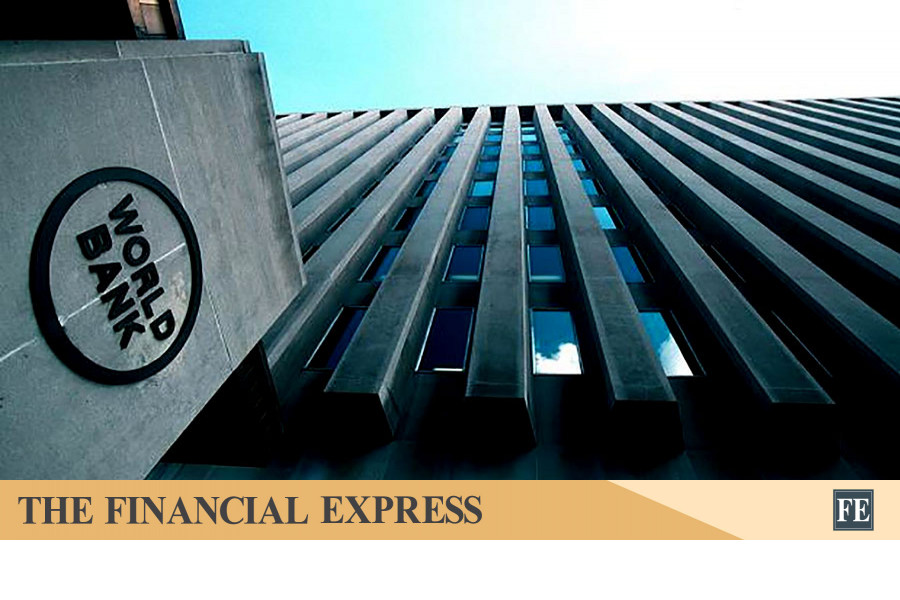
World Bank predicts 2026 GDP growth to improve slightly over forecasts

REUTERS
Published :
Jan 13, 2026 21:56
Updated :
Jan 13, 2026 21:56

1768350580152.webp

The global economy is proving more resilient than expected, with 2026 GDP growth expected to improve slightly over forecasts from last June, the World Bank said on Tuesday while warning that growth is too concentrated in advanced countries and overall too weak to reduce extreme poverty.

The World Bank's semi-annual Global Economic Prospects report shows that global output growth will slow slightly to 2.6 per cent this year from 2.7 per cent in 2025 before edging back to 2.7 per cent in 2027.

The 2026 GDP forecast is up two-tenths of a percentage point from the last predictions released in June, while 2025 growth will exceed the prior forecast by four-tenths of a percentage point.

The World Bank said about two-thirds of the upward revision reflects better-than-expected growth in the US despite tariff-driven trade disruptions. It predicts US GDP growth will reach 2.2 per cent in 2026, compared to 2.1 per cent in 2025 - up two-tenths and half a percentage point from the June forecasts, respectively.

After an import surge to beat tariffs early in 2025 held back US growth for that year, bigger tax incentives will aid growth in 2026, offset by the drag of tariffs on investment and consumption, the World Bank said.

But if the current forecasts hold, the 2020s are on track to be the weakest decade for global growth since the 1960s and too low to avert stagnation and joblessness in emerging market and developing countries, the global lender said.

"With each passing year, the global economy has become less capable of generating growth and seemingly more resilient to policy uncertainty," Indermit Gill, the World Bank's chief economist, said in a statement. "But economic dynamism and resilience cannot diverge for long without fracturing public finance and credit markets."

Gill added that global GDP per person in 2025 was 10 per cent higher than on the eve of the COVID-19 pandemic - marking the fastest recovery from a major crisis in the past 60 years. But he said many developing countries are being left behind, with a quarter of them saddled with lower per-capita incomes than in 2019, particularly the poorest countries.

CHINA'S ECONOMIC GROWTH EXPECTED TO SLOW

Growth in emerging market and developing economies will slow to 4.0 per cent in 2026 from 4.2 per cent in 2025, up two-tenths and three-tenths of a percentage point from the June forecasts, respectively. But excluding China, the 2026 growth rate for this group will be 3.7 per cent, unchanged from 2025, the World Bank said.

China's growth will slow to 4.4 per cent in 2026 from 4.9 per cent, but the forecasts are both up four-tenths of a percentage point from June due to fiscal stimulus and increased exports to non-US markets.

Growth in the euro zone is set to slow to 0.9 per cent in 2026 from 1.4 per cent in 2025 due to the drag from US tariffs but recover to 1.2 per cent in 2027 due to increases in European defense spending, the World Bank said.

Japan's outlook is much the same for 2026, with growth slowing to 0.8 per cent after a rise of 1.3 per cent in 2025, a year aided by the front-loading of exports to the US to beat President Donald Trump's tariffs. But slower consumption and investment in Japan will keep GDP growth unchanged at 0.8 per cent for 2027, the World Bank said.​
 
Analyze

Analyze Post

Add your ideas here:
Highlight Cite Fact Check Respond
  • Like (+1)
Reactions: Bilal9
Reviving the capital market in Bangladesh

Waqar Ahmad Choudhury
Published :
Jan 13, 2026 23:38
Updated :
Jan 13, 2026 23:38

1768351372297.webp

Bangladesh recorded nominal economic growth under the previous regime. The headline performance, however, concealed deep-rooted structural weaknesses from entrenched corruption, weak fiscal discipline, and severe governance failures. These deficiencies strained the economy, leading to a sharp build-up of public debt and one of the highest non-performing loan (NPL) ratios globally, estimated at 35.7 per cent. This alarming figure reflected widespread financial mismanagement and systemic abuse within the banking sector.

Foreign exchange reserves deteriorated rapidly, falling from US$34.3 billion at the end of 2022 to US$20.48 billion by July 2024, a nearly 40 per cent decline mainly due to capital flight and fund siphoning by politically connected entities. Inflation surged to a 12-year high of 11.66 per cent in July 2024. Despite these pressures, the government maintained a 9 per cent interest rate cap between April 2020 and June 2023. Even after the SMART lending rate framework was introduced, rates rose only to 11.52 per cent by June 2024, which was insufficient to contain inflation.

Bangladesh Bank worsened these pressures by aggressively expanding monetary policy, injecting about Tk 980 billion in FY23 to support distressed banks, especially those controlled by the S Alam Group. This liquidity injection coincided with a Tk 1 trillion decline in foreign assets, so monetary expansion added no real economic value and directly fuelled inflation. Weak data transparency obscured the true extent of these imbalances, preventing timely corrective action and eroding public trust.

Together, these failures led to acute economic distress and set the stage for the political upheaval that ultimately caused the collapse of the previous regime.

REFORM UNDER INTERIM GOVERNMENT: The Interim Government, which assumed power in response to public demand and the July uprising, has made tangible progress in macroeconomic stabilisation. A key priority was rebuilding foreign exchange reserves, which rose from US$21.4 billion in 2024 to US$28.1 billion in 2025, a 31 per cent increase supported by restrictive import policies and a surge in remittance inflows.

The introduction of a market-driven exchange rate stabilised the foreign exchange market and restored incentives for remittances, which increased by 31 per cent year-on-year as of November 2025. Inflation moderated to 8.29 per cent in November 2025 from its 2024 peak, easing pressure on household incomes and creating space for future monetary management also initiated reforms to address the NPL crisis through asset quality reviews and stricter loan classification and recovery standards, alongside efforts to improve data transparency and institutional accountability.

Despite these stabilisation gains, growth recovery has been weak. GDP growth for FY25 stands at 3.69 per cent, the lowest in five years, reflecting subdued business confidence and ongoing political uncertainty. Foreign direct investment in equity declined by 17 per cent, while low domestic investor participation underscores concerns about policy predictability and governance continuity.

THE PROSPECTS FOR GROWTH: Macroeconomic stabilisation has yet to translate into robust growth, mainly due to unresolved political uncertainty. The absence of a clear roadmap toward an elected government has weighed on investor sentiment, compounded by recent political developments that heightened uncertainty.

However, Tarique Rahman's return after 17 years in exile has brought greater clarity to the political landscape. As a leading political figure and potential prime ministerial contender, his re-emergence has reduced ambiguity around the electoral process. His public messaging emphasising stability, security, and national unity has resonated with investors seeking assurance after prolonged volatility.

With expectations of greater policy continuity under an elected administration, business confidence is likely to improve, supporting investment inflows and a gradual recovery in growth. Continued prudence in macroeconomic management should further ease inflation, allowing interest rates to decline and stimulate consumption and investment. The IMF projects GDP growth to rebound to 4.9 per cent in 2026.

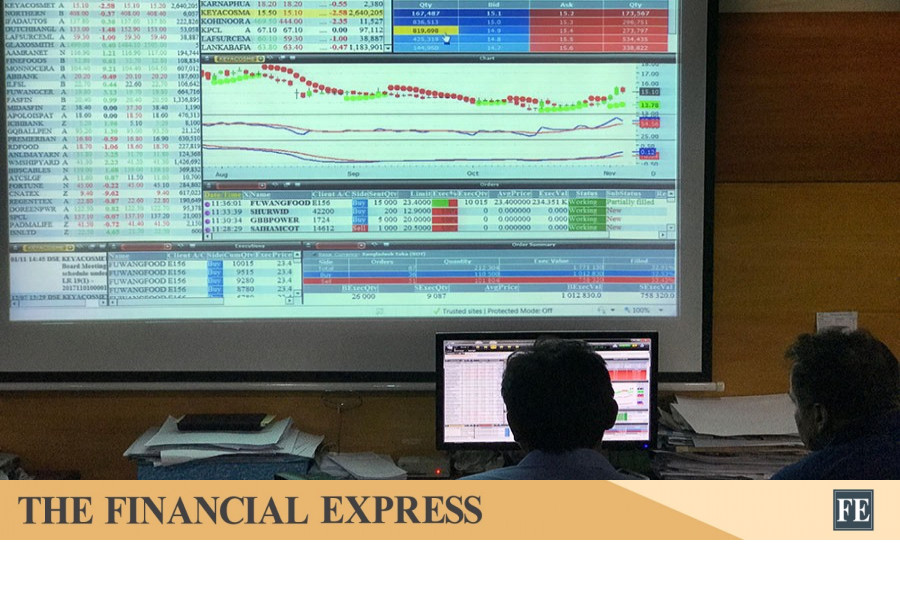
BANGLADESH CAPITAL MARKET: Despite improving macro fundamentals, Bangladesh's capital market remains under severe stress. The DSEX traded around 4,880-4,960 points in late December 2025, down about 11 per cent from its September peak and near a five-year low reached earlier in the year. Valuations remain compressed at 9-10x P/E, well below the three-year average of 14.4x, reflecting risk aversion rather than earnings deterioration.

In contrast, regional peers have delivered strong returns. Pakistan's KSE-100 reached record highs after IMF-backed reforms, Sri Lanka's ASPI rose 42 per cent year-on-year after debt restructuring, and India's Sensex delivered high single-digit returns. Bangladesh's underperformance highlights country-specific challenges, including political uncertainty, liquidity constraints, and structural weaknesses.

Market depth indicators reinforce this divergence. Market capitalisation declined to Tk 3.49 trillion in January 2025, while foreign ownership in multinational stocks fell sharply, with net foreign outflows of US$66 million in early FY26. Although brief inflows followed recent political developments, sustained foreign participation remains elusive.

STRUCTURAL CRACKS: The market's prolonged weakness reflects deep structural deficiencies. No new IPOs have been listed in the past 18 months, as approval timelines exceed two years, far longer than regional peers. Combined with limited tax incentives and weak disclosure standards, this has left only 25-30 investable companies among nearly 400 listed entities. dominates corporate funding, with loans approved within months and minimal disclosure, while capital market fundraising has collapsed. High interest rates and attractive fixed-income instruments have diverted liquidity away from equities, while mutual funds remain underdeveloped, accounting for less than 3 per cent of market capitalisation. Since September 2024, nearly 80,000 investors have exited the market.

FUTURE PATH: These conditions have created a cycle of low liquidity, weak participation, and depressed valuations. Nevertheless, macroeconomic stabilisation, improving reserves, and emerging political clarity provide a narrow but meaningful window for capital market revival. However, sustained recovery requires coordinated reforms addressing structural bottlenecks and restoring institutional credibility as follows:

Tax Incentives & Fiscal Measures. Expanding the corporate tax gap to 10-15 percentage points would restore strong incentives for companies to list. Making dividends up to Tk 1 lakh tax-free would shift household savings toward equities. A 20 per cent tax rebate would stimulate bond issuance and the development of the fixed-income market. Tax exemptions on mutual fund dividends up to Tk 1 lakh would accelerate mutual fund growth.

Regulatory Efficiency & Market Operations. Streamlined, digitised disclosures would improve transparency and investor confidence. Reducing IPO approval time to 3-6 months would revive the listing pipeline. Mandatory independent directors would protect minority shareholders and improve governance. Stronger oversight and transparency would enhance market integrity. Institutional reforms would improve BSEC's credibility and enforcement. Strengthening ICB would restore counter-cyclical market support.

Bank & Credit Policy. Targeted incentives would encourage private firms to voluntarily list on public markets. Aligning savings rates would reduce liquidity diversion from equities. Moreover, higher insurance investment would add stable long-term capital. Faster approvals would support domestic bond market growth.

Investors Education. Inter-agency coordination would ensure policy consistency. Supporting the financial literacy and institutional investor development would reduce volatility and herd behaviour.

Mutual Fund. Higher quotas would anchor long-term demand for Mutual Funds. Lifting the 15 per cent cap on the fund would unlock institutional capital. Routing institutional funds through mutual funds would reduce volatility.

END NOTE: If implemented consistently, these reforms could drive valuation re-rating toward historical norms, delivering meaningful upside and attracting renewed foreign participation. With much-anticipated political stabilisation under an elected government, Bangladesh's capital market, now a regional underperformer, may have the opportunity to make a turnaround.


The writer is Waqar Ahmad Choudhury, Managing Director & CEO, Vanguard Asset Management Limited​
 
Analyze

Analyze Post

Add your ideas here:
Highlight Cite Fact Check Respond

Members Online

⤵︎

Latest Posts

Latest Posts