Donate ☕
201 Military Defense Forums
[🇧🇩] - Save the Rivers/Forests/Hills-----Save the Environment | Page 88 | PKDefense
Home Post Alerts Inbox Watch Videos

[🇧🇩] Save the Rivers/Forests/Hills-----Save the Environment

Reply (Scroll)
Press space to scroll through posts
G Bangladesh Defense
[🇧🇩] Save the Rivers/Forests/Hills-----Save the Environment
521
12K
More threads by Saif


Research, knowledge for climate resilience

Published :
Jun 24, 2025 01:19
Updated :
Jun 24, 2025 01:19

1750720725796.webp


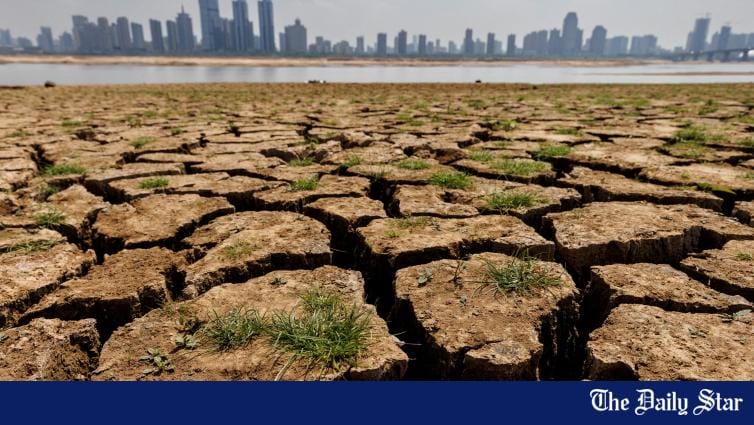
When the developed nations are yet to get the priorities in terms of global warming right, countries like Bangladesh are not expected to have enviable records on such issues. But much as such countries may be the least contributor to environmental pollution leading to worsening climate, their stake is higher than that of the rich and more pollutant nations. Thus Bangladesh is the seventh most climate-vulnerable country in the world. Usually, the vulnerability indices of the smaller, least developed, and developing countries have prompted them to look more for external climate funds than domestic resources. Now domestic mobilisation of fund is also important because no one else will bear the brunt of increasing and unpredictable natural calamities. The country will definitely claim its share of the rightful green climate fund (GCF) created under the UN framework convention, but it also has to do its homework for judicious utilisation of this fund and its domestic allocation for the purpose.

According to a report carried in the FE on Sunday last, the moderate domestic allocation of fund hardly finds its rational and proper use. Climate is a vast subject and it is not same everywhere on the planet. This deltaic land may have some similarities with its big neighbour India but still this lower riparian nation has its special problems which are quite different from that upper riparian land. So this country has to identify the causes of its climate-related vulnerabilities on its own. This climate emergency points to the fact that continuous and extensive research is the key to pinpointing the causes and nature of vulnerability arising out of global warming. To the credit of the Sunday's report, it has pointed out the paucity of research and knowledge management in relation to climate vulnerability or lack of resilience. In a country of limited research base, though, this is not quite surprising.

However, the fact is that indifference to climate-related research can be self-defeating in the end. Under the six broad categories of climate funding by 25 ministries, this particular research field has been the least recipient of allocation of fund, according to the report. This has to change urgently because the less than 5.0 per cent ---roughly 3.0 per cent --- allocation for research and knowledge creation and implementation will not help the country to build a model of resilience to climate vulnerability. The Bangladesh Rice Research Institute (BRRI) and the Bangladesh Agriculture University have been an exception to the general lack of research culture in the country. Now there is a complaint that the salinity-drought- and flood-tolerant paddies developed by the BRRI have failed to reach farmers at the grassroots level because of lack of government promotion and patronage.

Such inaction on the part of government agencies act as a disincentive for research. Academic knowledge gets authenticated by research and experiment but unless the outputs of such efforts are taken out of the laboratory for implementation at the field level to the benefit of the end users, the overall ambience of knowledge creation through research and experiments shrinks. Given the country's vulnerabilities to an increasingly hostile climate, the jaded outlook must change for developing its own robust research base in order to take care of the special kinds of problems confronting it.​
 
Analyze

Analyze Post

Add your ideas here:
Highlight Cite Fact Check Respond

Decarbonisation is prerequisite for foreign funding

Wasi Ahmed
Published :
Jun 25, 2025 00:54
Updated :
Jun 25, 2025 00:54

1750807001588.webp


There is growing concern about the likely scarcity of foreign funding for non-green development projects in the immediate future. Reports from various sources, including leading multinational financiers, confirm a marked shift in the global project funding landscape, prompted by international treaties aimed at mitigating the impacts of climate change. Foreign funding -- a crucial driver of development in countries like Bangladesh -- is now aligning more closely with climate commitments under agreements such as the Paris Accord.

Key institutions such as the Asian Development Bank (ADB), the World Bank Group (WBG), and the European Investment Bank (EIB) have already pledged to follow the 'Direct Investment Lending Operation' (DILO) framework consistent with the Paris Agreement. This commitment signals a definitive preference for investments that are environmentally sustainable, pushing countries to restructure their development strategies around green objectives.

Infrastructure specialists warn that financing for coal, oil, and other fossil-fuel-based projects may soon disappear altogether. Although Bangladesh is not a significant emitter of greenhouse gases (GHGs), it nonetheless faces pressure to decarbonise its economy. This entails adopting expensive technologies like carbon capture and storage -- an investment challenge for a developing country. Multilateral lenders are reportedly maintaining updated lists of activities they consider compatible or incompatible with a low-carbon trajectory. As a result, any project that does not prioritise emissions reduction or energy efficiency will likely find it difficult to secure international financing.

This raises an urgent question: what does this new financing climate mean for Bangladesh's development ambitions? Fully grasping the implications of the Paris Agreement's guidelines on foreign investment will take time. Bangladesh, despite contributing minimally to global emissions, is among the most vulnerable countries to climate change. Recognising this, the government has already laid out emission reduction targets across multiple sectors, signalling a proactive stance towards transitioning to a low-carbon economy.

According to Bangladesh's revised Nationally Determined Contributions (NDCs), submitted in August 2021, the country intends to cut GHG emissions by 27.56 million tonnes of carbon dioxide by 2030 through unconditional measures, with an additional 61.9 million tonnes to be reduced conditionally -- subject to foreign support. Realising these ambitious targets requires an estimated $175 billion in investment. More broadly, Bangladesh needs roughly $10 billion annually to finance development initiatives in energy, transport, urban infrastructure and more.

Local experts stress that decarbonisation and emission reduction must now be embedded in the core of all development planning. For instance, projects in the energy and manufacturing sectors should now aim for greater reliance on renewable energy, efficient hydropower systems, and modern heating and cooling technologies that minimise GHG emissions.

The DILO framework under the Paris Agreement outlines a list of eligible activities aligned with climate mitigation goals. These include water supply and sanitation, sustainable construction, information technology and environmental research. Conversely, funding is now explicitly restricted to projects involving thermal coal mining and coal-based power generation. The Paris Agreement, adopted in 2016, set a global goal of limiting average temperature rise to well below 2°c -- and ideally to 1.5°c -- above pre-industrial levels.

Bangladesh's Planning Commission and other government bodies reportedly view this shift in funding priorities positively. They believe it will drive better alignment between development projects and sustainable environmental goals. Future project design and approval will likely incorporate more rigorous environmental screening and compliance requirements. However, while the intentions behind these changes are positive, their implementation poses practical challenges. Multilateral financiers have expressed willingness to continue supporting Bangladesh, but their decisions will increasingly depend on whether proposed projects demonstrate measurable contributions to climate goals. This means that future proposals must be underpinned by robust environmental assessments, carbon impact studies, and clear mitigation strategies.

Ensuring access to foreign funding under these stricter guidelines calls for meticulous planning. Incorporating energy transition measures -- such as replacing fossil fuels with renewable energy -- in development projects will not only make them more fundable but also help address the long-term challenge of climate change.

Admittedly, the shift towards green development may slow or complicate certain traditional growth strategies. Yet, it also presents an opportunity, a chance for Bangladesh to build its development trajectory on sustainable, environmentally responsible foundations. But to do this effectively, the country will require significant capacity building in institutions, workforce skills, and technical knowledge.

Transitioning to green energy and low-carbon infrastructure demands extensive investment in research and innovation. Bangladesh must also upgrade its technical training and education systems to equip the workforce for new jobs in the renewable energy and clean technology sectors.

The shift will have socio-economic ramifications. Industries heavily dependent on fossil fuels may face disruption, potentially causing job losses or economic dislocation. Policymakers must, therefore, design inclusive transition strategies to cushion vulnerable communities and sectors. Social protection, retraining programmes and job creation in green sectors will be crucial components of a just transition.

At the same time, investing in green infrastructure can bring multiple benefits. Reduced reliance on imported fossil fuels will enhance energy security and insulate the economy from global price shocks. Cleaner air, lower pollution levels, and improved public health outcomes are additional dividends of a green transition. This makes the environmental imperative a public health and economic priority as well.

Moreover, the emphasis on sustainable projects can spur innovation and entrepreneurship. Sectors such as renewable energy, sustainable agriculture, and eco-tourism could experience rapid growth. Bangladesh's natural resources, biodiversity and geographical location have considerable potential for green economic initiatives -- provided they are well managed and supported.​
 
Analyze

Analyze Post

Add your ideas here:
Highlight Cite Fact Check Respond

Plastic pollution grows for flawed recycling
Sadiqur Rahman 25 June, 2025, 00:21

1750809730020.webp

File photo

The country’s plastic recycling industry continues to be fraught with many barriers, including lack of awareness about plastic pollution, poor waste separation and unsupportive tax policies.

Despite Bangladesh recycling nearly 40 per cent of the plastic waste, far better than the global average of 9 per cent, serious plastic pollution inflicts deep impact on its environment and lives not only of human beings but all living beings also, according to environment experts and activists.

Stakeholders of plastic recycle industry observe that policy and other necessary support will significantly reduce the threat of plastic pollution with Bangladesh annually generating around 8,00,000 tonnes plastic waste, according to an estimate by development organisation Practical Action.

With a call to reduce plastic pollution, the government is celebrating World Environment Day today, instead of on June 5 set by the United Nations for observing the day, as this year it fell in the Eid-ul-Azha holiday.

This year’s theme for the day—‘Beat plastic pollution’—particularly highlights the country’s miserable failure to address the use of single-use plastics although it was the world’s first country to ban single-use plastics in 2002.

Successive governments’ failure to materialise the ban brought monstrous consequences— around 87,000 tonnes of single-use plastics, including polythene bags, are discarded annually with its 96 per cent ending up directly as waste, reveals ‘Plastic Tsunami: Bangladesh’s Maritime Ecosystem Under Siege’, a World Bank study report published in 2024.

On November 1 last year, the incumbent interim government rolled out a renewed effort to restrict the production, marketing, and use of polythene bags. The drive was invariably halted in just two weeks of its execution in face of fierce protests by workers of the plastic polythene bag factories in Old Dhaka.

Experts, however, suggest that plastic pollution in Bangladesh is more a waste mismanagement problem rather than bad consumption.

Yusuf Ashraf, a director at the Bangladesh Plastic Goods Manufacturers and Exporters Association, emphasises adopting of advanced recycling technology as they do in the industrially developed countries like Singapore.

Separation technology is highly important, he says, adding mixing plastics with other solid waste lowers the quality and recycling value.

‘City corporations and municipal councils, other waste management authorities, are typically unable to separate plastic from other waste,’ Yusuf told New Age.New age fashion

‘Extortion from waste transporters by the police and local strongmen is another big problem in plastic recycling,’ he also said.

Indiscriminate littering of household waste in polythene bags is a major driver of plastic pollution and monsoon-time urban flooding, as the plastics clog drainage systems, experts observe.

Professor Ijaz Hossain, dean of engineering at Bangladesh University of Engineering and Technology, said that the country currently recycles around 40 per cent of its plastic waste, and the rest ended up in landfills and water bodies.

‘Yet, the remaining 60 per cent is mismanaged due to poor waste handling and public littering,’ he said.

The Organisation for Economic Co-operation and Development’s first ‘Global Plastics Outlook’ report revealed in 2022 that the global plastic waste mismanagement rate was 22 per cent and the recycling rate for plastic trash was 9 per cent.

Ijaz said that the country’s amount of mismanaged plastic waste surpass the global average. Apart from single-use polythene bags and PET bottles, which is polyethylene terephthalate, the most common type of polyester used to make bottles in which most beverages are put and marketed, a wide array of plastic products, including food wrappers, medicine foils, baby diapers, cotton buds, vehicle parts and styrofoam goods enter the waste stream daily.

Professor Ijaz stressed the need for bold public campaigns, strict anti-littering laws, implementation of extended producer responsibility and financial incentives for waste collectors to improve plastic recycling.

BPGMEA director Yusuf calls for friendly tax policies to support the recycling industry, saying that while recyclers are tax-exempted, businesses involved in sorting and purchasing recycled raw materials must pay value added tax.

Citing that some global garment brands ask for recycled plastic hangers, he said that the export of such items from Bangladesh faced difficulties.

He added that hangers made from recycled plastics are sometimes rejected by airport scanners due to iron content or sludge, while only imported recycling machines could produce iron or sludge-free plastic raw materials.

According to him, locally made recycling machines cannot produce quality products, while the imported machines cost up to $45,000.

‘Although the import duty on such machines is only 1 per cent, the duty on spare parts remains an unreasonable 15 per cent,’ Yusuf said.

He called for rational import policies, easy bank loans for importing efficient plastic recycling machines and duty waiver to incentivise the use of recycled plastics in manufacturing.

The 2025-26 budget has doubled the VAT on tableware, kitchenware, household items, hygiene products and similar goods from 7.5 per cent to 15 per cent at the production stage.

To promote eco-friendly recycling industries, the withholding tax on the supply of raw materials to these sectors has been reduced from 3 per cent to 1.5 per cent.

Although the ‘Solid Waste Management Rules 2021’ mandates city corporations and municipal authorities to ensure waste separation, the rule had yet to become binding for them due to their operational limitations, said Fahmida Khanom, additional secretary (environment wing) at the environment, forest and climate change ministry.

Entrepreneurs in plastic recycling can get soft loans from Bangladesh Bank’s green fund, she also notes, adding that Palli Karma-Sahayak Foundation’s partner organisations also provide loans for small-scale recyclers.​
 
Analyze

Analyze Post

Add your ideas here:
Highlight Cite Fact Check Respond

Bangladesh should not follow the West's example on climate change

1750812019077.webp

The incessant scare stories have driven some Western governments to enact immensely costly policies. File photo: REUTERS

In recent years, climate anxiety has taken over many Western governments and most international organisations. The result has been ruinous policies that help little but undermine future prosperity needed to deal with a host of other problems. Fortunately, Bangladesh can avoid repeating their mistakes.

Climate change is a man-made problem, but campaigners and irresponsible politicians have blown this out of proportion and call it an existential threat that could eradicate humanity. No further action on climate will result in a problem, but it would not be the end of the world.

The incessant scare stories have driven some Western governments to enact immensely costly policies. The UK has gone further in climate policies over the past two decades than nearly any other country. As a result, the inflation-adjusted electricity price, weighted across households and industry, has increased significantly from 2003 to 2023. By comparison, the US electricity price has remained almost unchanged over the same period.

At the same time, the rich world is increasingly realising that it faces many other expensive challenges, including an ageing population bringing higher pension and healthcare costs, crumbling infrastructure, poor educational outcomes and a need for larger defence spending. Yet the EU has committed itself to climate goals which will cost it severely.

Bangladesh should not repeat the mistakes made by Western countries by diving headlong into ineffective climate policies. It has a record of huge achievements, vast potential, and—like every other country—a myriad of complex challenges. Bangladesh must get the balance right between the challenges and opportunities in front of it. A considered, balanced response to climate change means rolling out solar and wind in the areas where that is sensible, while realising that the longer-term solution to climate change must be innovation.

In 1970, when hunger stalked the developing world, the answer was not to make the whole world eat less to redistribute food. Innovation through the Green Revolution dramatically increased yields and brought better varieties and more fertiliser. Likewise, we will not solve climate change by being poorer, colder and with less power. Instead, the leading industrial nations that are responsible for the majority of carbon emissions need to ramp up innovation in future generations of low-carbon energy. Once they innovate clean energy to be cheaper than fossil fuels, everyone will be able to switch.

Adaptation is another vital climate change response. Farmers across Bangladesh know this already: they adapt to suit changes in the climate. In cities, we know that adaptive infrastructure like green areas, more reflective surfaces, and water features helps keep temperatures cooler. Adaptation can avoid a large part of the climate problem.

Finally, poverty alleviation is a crucial part of the response to climate change. Lifting people out of poverty reduces their vulnerability to climate shocks like heat waves or hurricanes. Moreover, wealthier, more prosperous societies can afford better protection from the elements, along with better nutrition, healthcare and social protection. Wealthy countries can spend more on environmental protection, and all other good things.

Being smart about climate change also means that governments will have more resources to invest in solving other important challenges.

One such investment: we should boost maternal and newborn health through a simple package of basic emergency obstetric care and more family planning. Globally, this could save the lives of many mothers and newborns every year. Another phenomenal investment: agricultural research and development to help Bangladesh's farmers become more efficient.

Bangladesh has immense possibilities if it can seize the opportunity to invest wisely and judiciously. It should avoid the singular climate focus of some Western countries and invest based on rigorous economic science in areas where it can make the most impact and the greatest progress.

Bjorn Lomborg is president of the Copenhagen Consensus, visiting fellow at Stanford University's Hoover Institution, and author of False Alarm and Best Things First.​
 
Analyze

Analyze Post

Add your ideas here:
Highlight Cite Fact Check Respond

A clean canal, a healthier city
What Ramchandrapur's revival means for Dhaka

Tanjim Hasan Patwary

Published :
Jun 25, 2025 10:16
Updated :
Jun 25, 2025 10:16

1750894165356.webp


This canal is approximately three kilometres in length and is almost filled with dust, including solid waste, plastic, and household waste, which interferes with the regular water flow and causes waterlogging during the rainy season. Another adverse effect of pollution is the spread of mosquitoes that cause dengue, which increases during the monsoon. Yes, this has been the typical scenario at Ramchandpur Canal, located in Mohammadpur, which has been successfully cleaned to revive the biodiversity and environment of its surroundings.

The two-day-long project was conducted under the supervision of 2 government organisations, including the Ministry of Environment, Forest and Climate Change, and Dhaka North City Corporation (DNCC).

The project started on June 20th and ended the following day, highlighting the importance of water flow for a healthy lifestyle.

Syeda Rizwana Hasan, Adviser at the Ministry of Environment, Forest and Climate Change, and Mohammad Ejaz, Administrator of DNCC, visited the project on the concluding day of the campaign.

More than 300 volunteers from DNCC and Footsteps actively participated in this work to provide a healthy life for the residents of the residence.

Moreover, the waste emits a stench that can spread airborne diseases to its nearby inhabitants.

The effect is especially severe for children and older people, as they often have a weakened immune system. Furthermore, this type of environmental pollution can lead to long-term health complications in the human body, which may sometimes result in fatal diseases among its inhabitants.

The government's campaign to rescue this canal was conducted several times in previous years, but no real benefit was gained from those efforts. Not only are the industrials responsible, but the general public is also responsible.

People deliberately throw plastic and other debris into the canal, which ultimately leads to the canal being filled with wastewater, making the once lively river a deadly one.

The sewage and construction debris pollute the water in this canal, which has a detrimental impact on aquatic life and contributes to the canal's poor condition.

The cleaning project of this year has made the dwellers surrounding the canal happy, but regular supervision is also crucial to maintaining this scenario throughout the year.

Public awareness should also be created in this regard, as any initiative will be ineffective without the proper understanding of its residents.

Syeda Rizwana Hasan, Adviser at the Ministry of Environment, Forest and Climate Change, talked to the journalists while visiting the campaign.

She said, "We can not ignore the significance of canals to our lives. However, the government can not serve the duty of cleaning the canals alone. The general public should assist us so that we can continue our work smoothly."

"If the dwellers of this region do not help us in this regard, no initiative will be successful. We also have a plan to make the canal deeper, but it may take some time, as the work may threaten the buildings surrounding the canal. But we are hoping to make a meaningful solution of it, and the residents of here will get benefits if our upcoming plans become successful," she added.

Mohammad Ejaz, Administrator of DNCC, also visited the campaign. He also attended the dialogue with the journalists at the campaign.

He said, "Canals have a good tie with the people of that residence. Any animosity at the flow of canals adversely affects the lifestyle of those residents. So, we have to be careful to protect the canals for our betterment."

There are several canals in Dhaka city, although the total number of canals in this city varies according to different government organisations. According to Dhaka District Administration (2016), the total number of canals in Dhaka city is 58. On the other hand, the number is 54, according to 2 city corporations in Dhaka (2022).

Cleaning the waste of Ramchandrapur can serve as an example to other canals in Dhaka city, conveying a message to continue such work in the rest of the canals. The densely populated Dhaka city may offer its residents a better life, which is a long cherished dream for people living there. Government initiatives, as well as public awareness through personal and community efforts, are essential to make this dream a reality.

Shah Rafayet Chowdhury is the Co-founder and President of Footsteps. He said, "Firstly, we doubted whether we would be successful in cleaning it up, as it was full of waste. However, when we began our work, we received very positive responses from all the project stakeholders. DNCC helped us a lot while implementing our project, especially their logistics support, which made our work smooth."

"We have a plan to monitor the canal so that the cleanliness remains in the future. As the sanitation system near the canal is extremely woeful, we will work with the related ministries of the government so that the residents of that area get a healthy, livable place. We may also engage ourselves to restore the water supply system along with other individuals so that the canals of Dhaka city can explore its missing heritage."

Canals are assets for any country that balance the water flow of the city. However, unawareness and an unethical mentality contribute to environmental disruption, leading to suffering in daily life.

Therefore, public and private initiatives, as well as awareness among the people, must be created to protect the canals, which will ultimately save the dwellers from destruction.​
 
Analyze

Analyze Post

Add your ideas here:
Highlight Cite Fact Check Respond

Members Online

⤵︎

Latest Posts

Latest Posts