Donate ☕
201 Military Defense Forums
[🇨🇳] - China vs USA | Page 40 | PKDefense
Home Post Alerts Inbox Watch Videos

[🇨🇳] China vs USA

Reply (Scroll)
Press space to scroll through posts
G   Chinese Defense
[🇨🇳] China vs USA
207
5K
More threads by Saif


US licences Nvidia to export chips to China, official says

REUTERS
Published :
Aug 09, 2025 11:21
Updated :
Aug 09, 2025 11:21

1754788580691.webp

A smartphone with a displayed NVIDIA logo is placed on a computer motherboard in this illustration taken on March 6, 2023 — Reuters/File

The commerce department has started issuing licenses to Nvidia to export its H20 chips to China, a US official told Reuters on Friday, removing a significant hurdle to the AI bellwether's access to a key market.

The US last month reversed an April ban on the sale of the H20 chip to China. The company had tailored the microprocessor specially to the Chinese market to comply with the Biden-era AI chip export controls.

The curbs will slice $8 billion off sales from its July quarter, the chipmaker has warned.

Nvidia CEO Jensen Huang met with Trump on Wednesday, two sources familiar with the matter told Reuters.

A spokesperson for Nvidia declined comment. A White House spokesman did not immediately respond to a request for comment.

The company said in July it was filing applications with the US government to resume sales to China of the H20 graphics processing unit, and had been assured it would get the licenses soon.

It is unclear how many licenses may have been issued, which companies Nvidia is allowed to ship the H20s to, and the value of the shipments allowed.

Nvidia disclosed in April that it expected a $5.5 billion charge related to the restrictions. In May, Nvidia said the actual first-quarter charge due to the H20 restrictions was $1 billion less than expected because it was able to reuse some materials.

The Financial Times first reported Friday's developments.

Nvidia said last month that its products have no "backdoors" that would allow remote access or control after China raised concerns over potential security risks in the H20 chip.

BIG MARKET

Exports of Nvidia's other advanced AI chips, barring the H20, to China are still restricted.

Successive US administrations have curbed exports of advanced chips to China, looking to stymie Beijing's AI and defence development.

While this has impacted US firms' ability to fully address booming demand from China, one of the world's largest semiconductor markets, it still remains an important revenue driver for American chipmakers.

Huang has said the company's leadership position could slip without sales to China, where developers were being courted by Huawei Technologies with chips produced in China.

In May, Nvidia said the H20 had brought in $4.6 billion in sales in the first quarter and that China accounted for 12.5 per cent of overall revenue during the period.​
 
Analyze

Analyze Post

Add your ideas here:
Highlight Cite Fact Check Respond

US is the biggest recipient of Chinese loans: study

1763517406707.webp

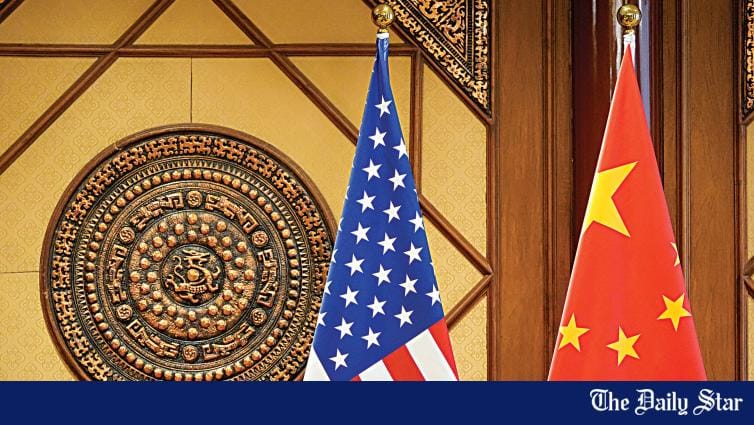
Flags of the USA and China are seen at a room before a meeting of the officials of the two countries in Beijing. More than three-quarters of China’s overseas lending operations now support projects and activities in upper-middle-income countries and high-income countries. Photo: AFP/file

The United States is the biggest recipient of China's lending activities globally, according to a study which tracked Beijing's credit activities and found it is increasingly lending to higher-income countries over developing countries.

The report, published on Tuesday by AidData, a research lab at US university William & Mary, said China's lending and grant giving totalled $2.2 trillion across 200 countries in every region of the world from 2000 to 2023.

China has long been seen as a creditor to developing countries through its Belt and Road initiative, but is shifting toward lending to advanced economies — backing strategic infrastructure and high‑tech supply chains in areas such as semiconductors, artificial intelligence and clean energy.

Beijing's portfolio size is two-to-four times larger than previous estimates suggest, AidData said, adding that China remains the world's largest official creditor.

More than three-quarters of China's overseas lending operations now support projects and activities in upper-middle-income countries and high-income countries.

"Much of the lending to wealthy countries is focused on critical infrastructure, critical minerals and the acquisition of high-tech assets like semiconductor companies," said lead author Brad Parks, AidData's executive director.

The United States received the most official sector credit from China, more than $200 billion for nearly 2,500 projects and activities, the report said.

Chinese state-owned entities are "active in every corner and sector of the US", bankrolling the construction of LNG projects in Texas and Louisiana, data centres in Northern Virginia, terminals at New York's John F Kennedy International Airport and Los Angeles International Airport, the Matterhorn Express Natural Gas pipeline and the Dakota Access Oil pipeline, AidData said.

Beijing has financed the acquisition of high-tech companies, while Chinese state-owned creditors have provided credit facilities for many Fortune 500 companies including Amazon, AT&T, Verizon, Tesla, General Motors, Ford, Boeing and Disney, the report said.

The share of lending to low and lower-middle income countries fell to 12 percent in 2023 from 88 percent in 2000. Beijing has also cut lending for infrastructure projects in the "Global South", under its Belt and Road Initiative.

At the same time it has ramped up its share that supports middle-income and high-income countries to 76 percent in 2023 from 24 percent in 2000. The United Kingdom for instance received $60 billion, while the European Union got $161 billion.​
 
Analyze

Analyze Post

Add your ideas here:
Highlight Cite Fact Check Respond

How China leveraged its rare earths dominance over US

1764206724123.webp

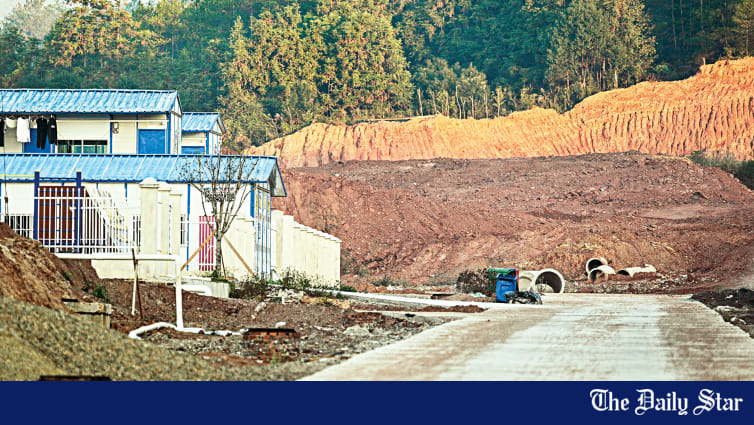
A view of the under-construction Rare Earth Industrial Park in Anyuan county, in eastern China’s Jiangxi province, on November 21. Photo: AFP

China's stranglehold on the rare earths industry -- from natural reserves and mining through processing and innovation -- is the result of a decades-long drive, now giving Beijing crucial leverage in its trade war with the United States.

The 17 key elements will play a vital role in the global economy in coming years, as analysts warn that plans to secure alternative supply chains by Western governments could take years to bear fruit.

Rare earths are crucial for the defence sector -- used in fighter jets, missile guidance systems and radar technology -- while also having a range of uses in everyday products including smartphones, medical equipment and automobiles.

Visited this month by AFP, the southeastern mining region of Ganzhou -- which specialises in "heavy" rare earths including yttrium and terbium -- was a hive of activity.

Media access to the secretive industry is rarely granted in China, but despite near-constant surveillance by unidentified minders, AFP journalists saw dozens of trucks driving in and out of one rare earths mine, in addition to several bustling processing facilities.

Sprawling new headquarters are being built in Ganzhou for China Rare Earth Group, one of the country's two largest state-owned companies in the industry following years of consolidation directed by Beijing.

Challenges this year have "paved the way for more countries to look into expanding rare earth metal production and processing", Heron Lim, economics lecturer at ESSEC Business School, told AFP.

"This investment could pay longer-term dividends," he said.

TRADE WAR

Sweeping export restrictions China imposed on the sector in early October sent shockwaves across global manufacturing sectors.

The curbs raised alarm bells in Washington, which has been engaged in a renewed trade war with Beijing since President Donald Trump began his second term.

At a high-stakes meeting in South Korea late last month, Trump and Chinese counterpart Xi Jinping agreed to a one-year truce in a blistering tariff war between the world's top two economies.

The deal -- which guarantees supply of rare earths and other critical minerals, at least temporarily -- effectively neutralised the most punishing US measures and was widely seen as a victory for Beijing.

"Rare earths are likely to remain at the centre of future Sino-US economic negotiations despite the tentative agreements thus far," Heron Lim told AFP.

"China has demonstrated its willingness to use more trade levers to keep the United States at the negotiating table," he said.

"The turbulence has created a challenging environment for producers that rely on various rare earth metals, as near-term supply is uncertain."

Washington and its allies are now racing to develop alternative mining and processing chains, but experts warn that process will take years. During the Cold War, the United States led the way in developing abilities to extract and process rare earths, with the Mountain Pass mine in California providing the bulk of global supplies.

But as tensions with Moscow eased and the substantial environmental toll wrought by the rare earth industry gained prominence, the United States gradually offshored capacity in the 1980s and 1990s. Now, China controls most of global rare earths mining -- around two thirds, by most estimates.

It is already home to the world's largest natural reserves of the elements of any country, according to geological surveys.

And it has a near total monopoly on separation and refining, with analysis this year showing a share of around nine tenths of all global processing.

Furthermore, a commanding lead in patents and strict export controls on processing technology solidify efforts by Beijing to prevent know-how from leaving the country.

"The United States and the European Union are heavily reliant on imports of rare earth elements, underscoring significant risks to critical industries," said Amelia Haines, commodities analyst at BMI, at a seminar this month.

"This sustained risk is likely to catalyse a faster, broader pivot towards rare earth security," she said.

CHASING ALTERNATIVES

US defence authorities have in recent years directed large sums towards shoring up domestic production -- part of efforts to achieve a "mine-to-magnet" supply chain by 2027.

Washington has also been working with allies to develop extraction and processing alternatives to China.

Trump signed a rare earths deal last month promising $8.5 billion in critical minerals projects with Prime Minister Anthony Albanese of Australia -- its vast territory home to extensive rare earth resources.

The US president also signed cooperation deals covering the critical minerals sector last month with Japan, Malaysia and Thailand.

Despite the flurry of activity and headlines this year, Washington has been aware of its rare earths problem for years.

In 2010, a maritime territorial dispute with Tokyo prompted Beijing to suspend shipments of the minerals to Japan -- the first major incident highlighting geopolitical ramifications of China's control over the sector.

The episode sparked calls by the administration of then-president Barack Obama to shore up US domestic resilience in the strategic field.

But 15 years later, China remains the chief rare earths power.​
 
Analyze

Analyze Post

Add your ideas here:
Highlight Cite Fact Check Respond
newagebd.net/post/telecom/284981/us-launches-pact-for-ai-supply-chains-to-face-china

US launches pact for AI supply chains to face China
Agence France-Presse . Washington 12 December, 2025, 22:31

The United States on Thursday announced a pact with allies to secure supply chains for minerals needed for artificial intelligence, hoping to secure a key resource as China quickly takes a lead.

The United States signed an agreement on the supply chains with key Asia-Pacific allies concerned about China’s growing clout — Japan, South Korea, Singapore and Australia — as well as Israel.

Dubbed the ‘Pax Silica,’ adapting the Latin terms for peace and silicon, a key material in AI, the partnership aims to secure supply chains and ensure that the countries are not dependent on China.

‘Pax Silica is a new kind of international grouping and partnership — one that aims to unite the countries that host the world’s most advanced technology companies to unleash the economic potential of the new AI age,’ a State Department statement said.

The United States, which said other countries would join, was vague on the practicalities but said countries would work together to ensure timely supply chains.

‘We believe that this gathering and grouping matters because the global system is shifting from ‘just in time’ to strategically aligned,’ said Jacob Helberg, the State Department’s undersecretary for economic affairs.

‘Pax Silica ultimately ensures that these countries have reliable access to the inputs and infrastructure that determine AI competitiveness,’ he told reporters ahead of the signing.

China has quickly taken a dominant position in the race for resources in the fast-growing area of artificial intelligence, mining around 70 per cent of key rare earths.

The signing in Washington comes despite president Donald Trump this week announcing he will allow the export of Nvidia’s advanced artificial intelligence chips to China, reversing a decision by his predecessor Joe Biden who voiced national security concerns in sharing the key technology.

Other countries participating in the meetings in Washington on supply chains, without formally joining the Pax Silica, were the United Arab Emirates, Canada and The Netherlands, as well as the European Union as an institution.​
 
Analyze

Analyze Post

Add your ideas here:
Highlight Cite Fact Check Respond

How China built its ‘Manhattan Project’ to rival the West in AI chips

Reuters Singapore
Published: 25 Dec 2025, 20: 57

1766709651049.webp

A Chinese flag is displayed next to a "Made in China" sign seen on a printed circuit board with semiconductor chips, in this illustration picture taken 17 February 2023. Reuters

In a high-security Shenzhen laboratory, Chinese scientists have built what Washington has spent years trying to prevent: a prototype of a machine capable of producing the cutting-edge semiconductor chips that power artificial intelligence, smartphones and weapons central to Western military dominance, Reuters has learned.

Completed in early 2025 and now undergoing testing, the prototype fills nearly an entire factory floor. It was built by a team of former engineers from Dutch semiconductor giant ASML (ASML.AS), opens new tab who reverse-engineered the company's extreme ultraviolet lithography machines or EUVs, according to two people with knowledge of the project.

EUV machines sit at the heart of a technological Cold War. They use beams of extreme ultraviolet light to etch circuits thousands of times thinner than a human hair onto silicon wafers, currently a capability monopolized by the West. The smaller the circuits, the more powerful the chips.

China's machine is operational and successfully generating extreme ultraviolet light, but has not yet produced working chips, the people said.

In April, ASML CEO Christophe Fouquet said that China would need "many, many years" to develop such technology. But the existence of this prototype, reported by Reuters for the first time, suggests China may be years closer to achieving semiconductor independence than analysts anticipated.

Nevertheless, China still faces major technical challenges, particularly in replicating the precision optical systems that Western suppliers produce.

The availability of parts from older ASML machines on secondary markets has allowed China to build a domestic prototype, with the government setting a goal of producing working chips on the prototype by 2028, according to the two people.

But those close to the project say a more realistic target is 2030, which is still years earlier than the decade that analysts believed it would take China to match the West on chips.

Chinese authorities did not respond to requests for comment.

The breakthrough marks the culmination of a six-year government initiative to achieve semiconductor self-sufficiency, one of President Xi Jinping's highest priorities. While China's semiconductor goals have been public, the Shenzhen EUV project has been conducted in secret, according to the people.

The project falls under the country's semiconductor strategy, which state media has identified as being run by Xi Jinping confidant Ding Xuexiang, who heads the Communist Party's Central Science and Technology Commission.

Chinese electronics giant Huawei plays a key role coordinating a web of companies and state research institutes across the country involving thousands of engineers, according to the two people and a third source.

The people described it as China's version of the Manhattan Project, the U.S. wartime effort to develop the atomic bomb.

“The aim is for China to eventually be able to make advanced chips on machines that are entirely China-made,” one of the people said. "China wants the United States 100% kicked out of its supply chains."

Huawei, the State Council of China, the Chinese Embassy in Washington, and China's Ministry of Industry and Information Technology did not respond to requests for comment.

Until now, only one company has mastered EUV technology: ASML, headquartered in Veldhoven, Netherlands. Its machines, which cost around $250 million, are indispensable for manufacturing the most advanced chips designed by companies like Nvidia and AMD—and produced by chipmakers such as TSMC, Intel, and Samsung.

ASML built its first working prototype of EUV technology in 2001, and told Reuters it took nearly two decades and billions of euros in R&D spending before it produced its first commercially-available chips in 2019.

“It makes sense that companies would want to replicate our technology, but doing so is no small feat,” ASML told Reuters in a statement.

ASML's EUV systems are currently available to U.S. allies including Taiwan, South Korea, and Japan.

Starting in 2018, the United States began pressuring the Netherlands to block ASML from selling EUV systems to China. The restrictions expanded in 2022, when the Biden administration imposed sweeping export controls designed to cut off China's access to advanced semiconductor technology. No EUV system has ever been sold to a customer in China, ASML told Reuters.

The controls targeted not just EUV systems but also older deep ultraviolet (DUV) lithography machines that produce less-advanced chips like Huawei’s, aiming to keep China at least a generation behind in chipmaking capabilities.

The U.S. State Department said the Trump Administration has strengthened enforcement of export controls on advanced semiconductor manufacturing equipment and is working with partners "to close loopholes as technology advances.”

The Dutch Ministry of Defence said the Netherlands is developing policies requiring “knowledge institutions” to perform personnel screenings to prevent access to sensitive technology “by individuals that have ill intentions or who are at risk of being pressured.”

Export restrictions have slowed China's progress toward semiconductor self-sufficiency for years, and constrained advanced chip production at Huawei, the two people and a third person said.

The sources spoke on condition they not be identified due to the confidentiality of the project.

China's Manhattan Project

One veteran Chinese engineer from ASML recruited to the project was surprised to find that his generous signing bonus came with an identification card issued under a false name, according to one of the people, who was familiar with his recruitment.

Once inside, he recognized other former ASML colleagues who were also working under aliases and was instructed to use their fake names at work to maintain secrecy, the person said. Another person independently confirmed that recruits were given fake IDs to conceal their identities from other workers inside the secure facility.

The guidance was clear, the two people said: Classified under national security, no one outside the compound could know what they were building—or that they were there at all.

The team includes recently retired, Chinese-born former ASML engineers and scientists—prime recruitment targets because they possess sensitive technical knowledge but face fewer professional constraints after leaving the company, the people said.

Two current ASML employees of Chinese nationality in the Netherlands told Reuters they have been approached by recruiters from Huawei since at least 2020.

Huawei did not respond to requests for comment.

European privacy laws limit ASML's ability to track former employees. Though employees sign non-disclosure agreements, enforcing them across borders has proven difficult.

ASML won an $845 million judgment in 2019 against a former Chinese engineer accused of stealing trade secrets, but the defendant filed for bankruptcy and continues to operate in Beijing with Chinese government support, according to court documents.

ASML told Reuters that it “vigilantly guards” trade secrets and confidential information.

"While ASML cannot control or restrict where former employees work, all employees are bound by the confidentiality clauses in their contracts," the company said, and it has "successfully pursued legal action in response to the theft of trade secrets.”

Reuters was unable to determine if any legal actions have been taken against former ASML employees involved in China’s lithography program.

The company said it safeguards EUV knowledge by ensuring only select employees can access the information even inside the company.

Dutch intelligence warned in an April report that China "used extensive espionage programmes in its attempts to obtain advanced technology and knowledge from Western countries," including recruiting "Western scientists and employees of high-tech companies.”

The ASML veterans made the breakthrough in Shenzhen possible, the people said. Without their intimate knowledge of the technology, reverse-engineering the machines would have been nearly impossible.

Their recruitment was part of an aggressive drive China launched in 2019 for semiconductor experts working abroad, offering signing bonuses that started at 3 million to 5 million yuan ($420,000 to $700,000) and home-purchase subsidies, according to a Reuters review of government policy documents.

Recruits included Lin Nan, ASML's former head of light source technology, whose team at the Chinese Academy of Sciences' Shanghai Institute of Optics has filed eight patents on EUV light sources in 18 months, according to patent filings.

The Shanghai Institute of Optics and Fine Mechanics did not respond to requests for comment. Lin could not be reached for comment.

Two additional people familiar with China’s recruitment efforts said some naturalized citizens of other countries were given Chinese passports and allowed to maintain dual citizenship.

China officially prohibits dual citizenship and did not answer questions on issuing passports.

Chinese authorities did not respond to requests for comment.

Inside China's EUV fab

ASML's most advanced EUV systems are roughly the size of a school bus, and weigh 180 tons. After failed attempts to replicate its size, the prototype inside the Shenzhen lab became many times larger to improve its power, according to the two people.

The Chinese prototype is crude compared to ASML's machines but operational enough for testing, the people said.

China's prototype lags behind ASML's machines largely because researchers have struggled to obtain optical systems like those from Germany's Carl Zeiss AG, one of ASML's key suppliers, the two people said.

Zeiss declined to comment.

The machines fire lasers at molten tin 50,000 times per second, generating plasma at 200,000 degrees Celsius. The light is focused using mirrors that take months to produce, according to Zeiss' website.

China's top research institutes have played key roles in developing homegrown alternatives, according to the two people.

The Changchun Institute of Optics, Fine Mechanics and Physics at the Chinese Academy of Sciences (CIOMP) achieved a breakthrough in integrating extreme-ultraviolet light into the prototype's optical system, enabling it to become operational in early 2025, one of the people said, though the optics still require significant refinement.

CIOMP did not respond to requests for comment.

In a March online recruitment call on its website, the institute said it was offering "uncapped" salaries to PhD lithography researchers and research grants worth up to 4 million yuan ($560,000) plus 1 million yuan ($140,000) in personal subsidies.

Jeff Koch, an analyst at research firm SemiAnalysis and a former ASML engineer, said China will have achieved "meaningful progress” if the “light source has enough power, is reliable, and doesn’t generate too much contamination.”

"No doubt this is technically feasible, it's just a question of timeline," he said. "China has the advantage that commercial EUV now exists, so they aren't starting from zero."

To get the required parts, China is salvaging components from older ASML machines and sourcing parts from ASML suppliers through secondhand markets, the two people said.

Networks of intermediary companies are sometimes used to mask the ultimate buyer, the people said.

Export-restricted components from Japan’s Nikon and Canon are being used for the prototype, one of the people and an additional source said.

Nikon declined to comment. Canon said it was not aware of such reports. The Japanese Embassy in Washington did not respond to a request for comment.

International banks regularly auction older semiconductor fabrication equipment, the sources said. Auctions in China sold older ASML lithography equipment as recently as October 2025, according to a review of listings on Alibaba Auction, an Alibaba-owned platform.

A team of around 100 recent university graduates is focused on reverse-engineering components from both EUV and DUV lithography machines, according to the people.

Each worker's desk is filmed by an individual camera to document their efforts to disassemble and reassemble parts—work the people described as key to China's lithography efforts.

Staffers who successfully reassemble a component receive bonuses, the people said.

Huawei scientists sleep on-site

While the EUV project is run by the Chinese government, Huawei is involved in every step of the supply chain from chip design and fabrication equipment to manufacturing and final integration into products like smartphones, according to four people familiar with Huawei’s operations.

CEO Ren Zhengfei briefs senior Chinese leaders on progress, according to one of the people.

The U.S. placed Huawei on an entity list in 2019, banning American companies from doing business with them without a license.

Huawei has deployed employees to offices, fabrication plants, and research centers across the country for the effort. Employees assigned to semiconductor teams often sleep on-site and are barred from returning home during the work week, with phone access restricted for teams handling more sensitive tasks, according to the people.

Inside Huawei, few employees know the scope of this work. "The teams are kept isolated from each other to protect the confidentiality of the project," one of the people said. “They don't know what the other teams work on.”​
 
Analyze

Analyze Post

Add your ideas here:
Highlight Cite Fact Check Respond

Members Online

⤵︎

Latest Posts

Latest Posts