Bangladesh Defense
Saif
Senior Member
- Jan 24, 2024
- 21,040
- 9,686
- Nation

- Residence
- Axis Group

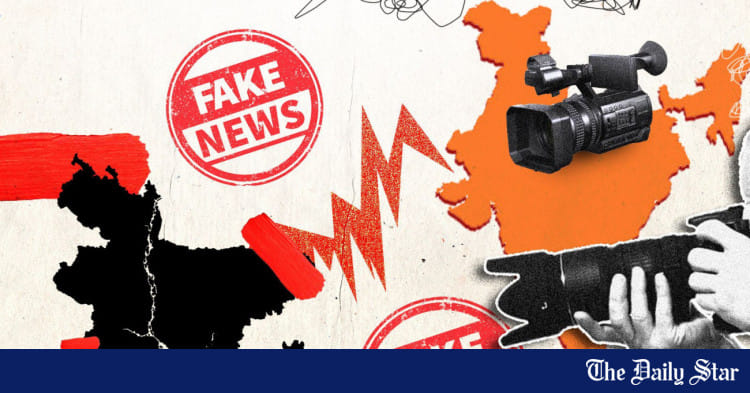
How Indian media distorted two interviews with the CA's press secretary
The interviews presented a good example of the typical Indian disinformation campaign.
 images.thedailystar.net
How Indian media distorted two interviews with the CA's press secretary

VISUAL: SALMAN SAKIB SHAHRYAR
The India Today interview, aired on December 3, of Shafiqul Alam, the chief adviser's press secretary, is a fairly good example of the typical Indian disinformation campaign.
The tone is set right at the beginning when the presenter introduces Shafiqul saying, "…now listen in to how, in fact, this Yunus-government insider actually denies Hindu hate" as if that has already been established.
Gaurav Sawant begins by saying that the reports from Bangladesh suggest the situation is rather "grim" for Hindus and minorities in Bangladesh and proceeds to ask Shafiqul, what the government is doing to make Hindus and other minorities feel secure "amid reports that there is a sharp rise in attacks on them." There is no substantiation of the "grim" situation or the "sharp rise," however, as if it is already established.
Shafiqul begins by saying there is an industrial scale misinformation coming out of India and the situation here for Hindus, or other minorities, is not as bad as is being made.
By the time Gaurav Sawant comes back with the question, the screen starts showing a photo of Ramen Roy and another of former ISKCON monk, Chinmoy Krishna Das, with subtitles reading Ramen Roy, Chinmoy Prabhu's lawyer, allegedly attacked by Islamists. This is where another layer of disinformation begins.
Ramen Roy is a Supreme Court lawyer who was attacked in Shahbagh on November 25 during a protest by ISKCON supporters. He slipped into a coma for lack of medical attention. A grave misfortune, no doubt, and rather deplorable incident. But the man was by no means Chinmoy's lawyer. In all likelihood, Ramen Roy was caught in a scuffle and the police must find the perpetrators of this senseless violence and ensure justice for the lawyer. As for Chinmoy himself, the monk had to leave (or was let go) ISKCON under very dubious circumstances with grave allegations levelled against him.
Gaurav Sawant then goes on to say, "The manner in which Hindu temples are being burnt, professors are being sacked, police personnel are being sacked…your attorney general is calling ISKCON fundamentalist but Hefazat-e-Islam and Jamaat-e-Islami, they seem to be ruling the roost in Bangladesh…it just seems a little odd for a country like Bangladesh where India had played a very critical role in the freedom of Bangladesh from Pakistan and it just seems to be becoming another Pakistan." To that, Shafiqul repeated that India was flooded with an industrial scale misinformation campaign and asked Gaurav to send his team to Bangladesh.
The line of questioning brings in too many elements into play which makes it difficult to address the actual question at hand because of the need to set the premise straight—that the fundamentalist Islamists are not ruling the roost. No one from Bangladesh challenges Indian government about why RSS is ruling the roost there. It is a question for the Indians and their journalists to ask but not for outsiders. What the Indian media establishment refuses to accept or acknowledge is that they have a party in power for the last 10 years that aspires to establish a Hindu Rashtra, a Hindu state, which is almost similar to what the Jamaat-e-Islami aspires for—an Islamic state. Also, just because India helped Bangladesh does not mean Bangladesh is a vassal state.
The presenter suggested that hundreds of temples are burning as he speaks, while frenzied mullahs are forcing Hindu teachers and police officers to resign. It is not that it has not happened. It has. But police officers and teachers were made to resign for their political affiliations, not because they were Hindus, there were Muslims too. In fact, if one were to enumerate them, Muslims would perhaps outnumber Hindus by four to one. It was political retribution. That was also the same case with Munni Saha, which Shafiqul explains as another case of political reprisal, and not a case of religious persecution. There were some temples vandalised in August while in Chattogram, one temple was stoned and its glass door broke down.
But Shafiqul does not get the opportunity to point this out as Gaurav Sawant has begun talking at his interviewee almost goading him, instead of talking to him. Shafiq implores to let him finish before the host begins to shout over him. The interview soon breaks down where both are talking at the same time and it seems to the audience that a government official has been exposed.
In another interview with NDTV (this one with Shafiqul as well, aired on December 4), the anchor points out that the government has not arrested the violence on minorities "given the fact that some of the videos and photos and commentary that's been coming in are actually attacks on minorities that continue unabated." Again, none of this is established or attributed directly. But the question is premised in such a manner that the unabated violence is a universally acknowledged truth.
Shafiqul acknowledges that there were indeed some violence and says there were isolated incidents. While this host continues in a more civil manner, the footage on screen turns aggressive. It shows absolute mayhem in several places, where thugs are beating up young women on the streets, mobs are chasing away police patrol and vandalising a police pickup van. Anyone would agree that the situation was completely out of control in Bangladesh and Hindus were indeed in grave danger. Except, most of the clips are from July and August where Chhatra League goons were beating up protesters, or where protesters were chasing away policemen and trying to vandalise their cars. Thus, through Shafiqul's insistence that the situation is stable, he comes off as brazenly misrepresenting facts.
Rumor Scanner, a factchecking outfit in Dhaka reported on December 6 that as many as 49 Indian news outlets published 13 fake news items on Bangladesh over the four months that the interim government has been in power. The outlets include reputable ones like Live Mint, India Today, Hindustan Times and The Print.
This selective choice of half-truths and exaggerating them with meticulous manipulation is repeated so much, especially on social media platforms and television stations, that they have unfortunately come to define the Indian media. There are of course some credible outlets like The Hindu and tough, but journalistic interviewers like Karan Thapar. In fact, Rajdeep Sardesai's recent interview by Karan Thapar for The Wire where the reputed journalist expressed his disillusionment with the Indian media establishment bears testimony to its downward spiral.
What is perhaps most worrying is that this unrelenting barrage of disinformation campaign from the other side of the border is not helping cool down temperatures. It is becoming increasingly worrisome for minorities in India as well as those in Bangladesh, sometimes to such an extent that governments are now having to grapple with the issues before they escalate further.
Tanim Ahmed is digital editor at The Daily Star.
VISUAL: SALMAN SAKIB SHAHRYAR
The India Today interview, aired on December 3, of Shafiqul Alam, the chief adviser's press secretary, is a fairly good example of the typical Indian disinformation campaign.
The tone is set right at the beginning when the presenter introduces Shafiqul saying, "…now listen in to how, in fact, this Yunus-government insider actually denies Hindu hate" as if that has already been established.
Gaurav Sawant begins by saying that the reports from Bangladesh suggest the situation is rather "grim" for Hindus and minorities in Bangladesh and proceeds to ask Shafiqul, what the government is doing to make Hindus and other minorities feel secure "amid reports that there is a sharp rise in attacks on them." There is no substantiation of the "grim" situation or the "sharp rise," however, as if it is already established.
Shafiqul begins by saying there is an industrial scale misinformation coming out of India and the situation here for Hindus, or other minorities, is not as bad as is being made.
By the time Gaurav Sawant comes back with the question, the screen starts showing a photo of Ramen Roy and another of former ISKCON monk, Chinmoy Krishna Das, with subtitles reading Ramen Roy, Chinmoy Prabhu's lawyer, allegedly attacked by Islamists. This is where another layer of disinformation begins.
Ramen Roy is a Supreme Court lawyer who was attacked in Shahbagh on November 25 during a protest by ISKCON supporters. He slipped into a coma for lack of medical attention. A grave misfortune, no doubt, and rather deplorable incident. But the man was by no means Chinmoy's lawyer. In all likelihood, Ramen Roy was caught in a scuffle and the police must find the perpetrators of this senseless violence and ensure justice for the lawyer. As for Chinmoy himself, the monk had to leave (or was let go) ISKCON under very dubious circumstances with grave allegations levelled against him.
Gaurav Sawant then goes on to say, "The manner in which Hindu temples are being burnt, professors are being sacked, police personnel are being sacked…your attorney general is calling ISKCON fundamentalist but Hefazat-e-Islam and Jamaat-e-Islami, they seem to be ruling the roost in Bangladesh…it just seems a little odd for a country like Bangladesh where India had played a very critical role in the freedom of Bangladesh from Pakistan and it just seems to be becoming another Pakistan." To that, Shafiqul repeated that India was flooded with an industrial scale misinformation campaign and asked Gaurav to send his team to Bangladesh.
The line of questioning brings in too many elements into play which makes it difficult to address the actual question at hand because of the need to set the premise straight—that the fundamentalist Islamists are not ruling the roost. No one from Bangladesh challenges Indian government about why RSS is ruling the roost there. It is a question for the Indians and their journalists to ask but not for outsiders. What the Indian media establishment refuses to accept or acknowledge is that they have a party in power for the last 10 years that aspires to establish a Hindu Rashtra, a Hindu state, which is almost similar to what the Jamaat-e-Islami aspires for—an Islamic state. Also, just because India helped Bangladesh does not mean Bangladesh is a vassal state.
The presenter suggested that hundreds of temples are burning as he speaks, while frenzied mullahs are forcing Hindu teachers and police officers to resign. It is not that it has not happened. It has. But police officers and teachers were made to resign for their political affiliations, not because they were Hindus, there were Muslims too. In fact, if one were to enumerate them, Muslims would perhaps outnumber Hindus by four to one. It was political retribution. That was also the same case with Munni Saha, which Shafiqul explains as another case of political reprisal, and not a case of religious persecution. There were some temples vandalised in August while in Chattogram, one temple was stoned and its glass door broke down.
But Shafiqul does not get the opportunity to point this out as Gaurav Sawant has begun talking at his interviewee almost goading him, instead of talking to him. Shafiq implores to let him finish before the host begins to shout over him. The interview soon breaks down where both are talking at the same time and it seems to the audience that a government official has been exposed.
In another interview with NDTV (this one with Shafiqul as well, aired on December 4), the anchor points out that the government has not arrested the violence on minorities "given the fact that some of the videos and photos and commentary that's been coming in are actually attacks on minorities that continue unabated." Again, none of this is established or attributed directly. But the question is premised in such a manner that the unabated violence is a universally acknowledged truth.
Shafiqul acknowledges that there were indeed some violence and says there were isolated incidents. While this host continues in a more civil manner, the footage on screen turns aggressive. It shows absolute mayhem in several places, where thugs are beating up young women on the streets, mobs are chasing away police patrol and vandalising a police pickup van. Anyone would agree that the situation was completely out of control in Bangladesh and Hindus were indeed in grave danger. Except, most of the clips are from July and August where Chhatra League goons were beating up protesters, or where protesters were chasing away policemen and trying to vandalise their cars. Thus, through Shafiqul's insistence that the situation is stable, he comes off as brazenly misrepresenting facts.
Rumor Scanner, a factchecking outfit in Dhaka reported on December 6 that as many as 49 Indian news outlets published 13 fake news items on Bangladesh over the four months that the interim government has been in power. The outlets include reputable ones like Live Mint, India Today, Hindustan Times and The Print.
This selective choice of half-truths and exaggerating them with meticulous manipulation is repeated so much, especially on social media platforms and television stations, that they have unfortunately come to define the Indian media. There are of course some credible outlets like The Hindu and tough, but journalistic interviewers like Karan Thapar. In fact, Rajdeep Sardesai's recent interview by Karan Thapar for The Wire where the reputed journalist expressed his disillusionment with the Indian media establishment bears testimony to its downward spiral.
What is perhaps most worrying is that this unrelenting barrage of disinformation campaign from the other side of the border is not helping cool down temperatures. It is becoming increasingly worrisome for minorities in India as well as those in Bangladesh, sometimes to such an extent that governments are now having to grapple with the issues before they escalate further.
Tanim Ahmed is digital editor at The Daily Star.