Donate ☕
201 Military Defense Forums
[🇧🇩] - Disinformation/Misinformation about Bangladesh in National/International Media | Page 20 | PKDefense
Home Post Alerts Inbox Watch Videos

[🇧🇩] Disinformation/Misinformation about Bangladesh in National/International Media

Reply (Scroll)
Press space to scroll through posts
G Bangladesh Defense
[🇧🇩] Disinformation/Misinformation about Bangladesh in National/International Media
109
6K
More threads by Saif


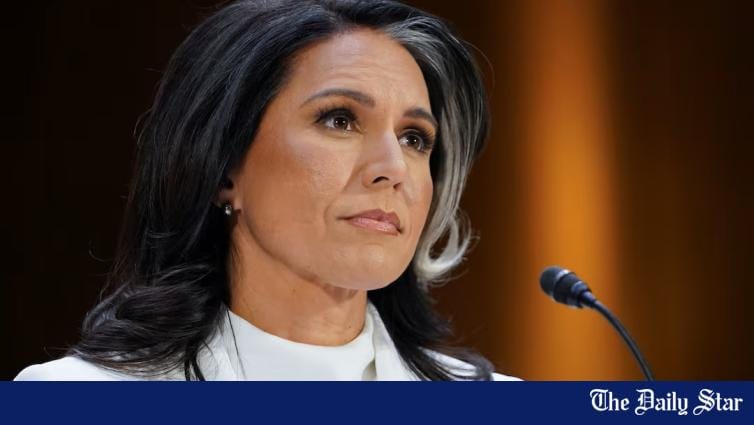
Tulsi Gabbard’s misguided accusations
HM Nazmul Alam 19 March, 2025, 00:00

1742347540720.webp

Tulsi Gabbard

TULSI Gabbard, the newly appointed US Director of National Intelligence, has recently made inflammatory and baseless remarks regarding the treatment of religious minorities in Bangladesh. In an interview with NDTV, she alleged that religious minorities in Bangladesh face systemic persecution and killings, linking the situation to the ideology of an Islamic caliphate. These assertions not only distort the socio-political landscape of Bangladesh but also serve as a stark example of selective outrage — ignoring the far more systemic and institutionalised oppression of religious minorities in India.

Prominent South Asian geopolitical analysts have criticised Gabbard’s comments as misleading and politically motivated. Dr Arjun Chatterjee, a professor of international relations at Georgetown University, remarked:

‘Bangladesh has a history of religious coexistence, and while challenges exist, the government has consistently taken steps to mitigate extremism. Gabbard’s statements ignore the fact that no state-sponsored pogroms exist in Bangladesh, unlike what we have seen in India with repeated incidents of religious violence.’

Furthermore, Dr Sarah Whitman, an expert on South Asian affairs, added, ‘One must question why figures like Gabbard remain silent on the institutionalised marginalisation of Muslims, Sikhs, and Christians in India. The Citizenship Amendment Act (CAA) and the National Register of Citizens (NRC) are glaring examples of exclusionary policies that disproportionately target minorities.’

Bangladesh has long been known for its cultural and religious diversity, with Muslims, Hindus, Buddhists, and Christians living in relative harmony. While sporadic incidents of religious violence occur — as they do in most multi-religious societies — these are neither state-sponsored nor reflective of a systemic pattern. The Bangladeshi government has consistently demonstrated a commitment to countering religious extremism and protecting minority rights.

Legal frameworks ensure religious freedom, and Bangladesh’s counterterrorism initiatives have been widely praised. International allies, including the US, have worked closely with Bangladesh to combat extremism. Yet, instead of acknowledging these efforts, Gabbard’s rhetoric dangerously aligns with the broader agenda of anti-Bangladesh propaganda emanating from certain Indian political factions.

Before accusing Bangladesh, Gabbard should have turned her attention to the state of religious minorities in India, where Muslims, Sikhs, and Christians face systemic discrimination. According to a 2022 Human Rights Watch report, India has witnessed a sharp rise in anti-Muslim violence, fuelled by Hindu nationalist rhetoric. The 2020 Delhi riots, in which over 50 Muslims were killed, remain a glaring example of this intolerance.

India’s marginalisation of religious minorities is not limited to mob violence. It is institutionalised through government policies such as:

The Revocation of Article 370: Stripping Jammu and Kashmir of its special status, leading to widespread human rights violations.

The Citizenship Amendment Act and National Register of Citizens: These laws disproportionately affect Muslims, effectively creating a mechanism to render millions stateless.

The 1984 anti-Sikh riots: State-backed pogroms that saw thousands of Sikhs massacred, with justice still elusive decades later.

Christian persecution: Attacks on churches, anti-conversion laws, and intimidation of Christian missionaries continue unabated.

Contrast this with Bangladesh, where Christian institutions operate freely, and religious conversion remains a personal choice rather than a criminal offence.

Gabbard’s statements align closely with the principles of propaganda as outlined by Edward Bernays in his seminal work, Propaganda (1928). Bernays describes how selective dissemination of information can manipulate public perception:

‘The conscious and intelligent manipulation of the organized habits and opinions of the masses is an important element in democratic society.’

By focusing exclusively on Bangladesh while ignoring India’s well-documented human rights abuses, Gabbard engages in a form of cognitive dissonance that perpetuates biased narratives. Noam Chomsky, a leading voice in media criticism, once stated:

‘Propaganda is to a democracy what the bludgeon is to a totalitarian state.’

Gabbard’s remarks exemplify how misinformation can be wielded as a tool to shape geopolitical narratives, rather than to promote objective truth.

Throughout history, state-backed propaganda has been used to control narratives about religious persecution. Indian media, influenced by ruling nationalist sentiments, frequently exaggerates or misrepresents the conditions of minorities in Bangladesh to distract from domestic issues. The infamous ‘Bangladeshi infiltrator’ rhetoric used by India’s ruling party, the Bharatiya Janata Party (BJP), serves to justify exclusionary policies while demonising Bangladesh.

Political scientist Dr James Faulkner notes, ‘By externalizing blame and portraying Bangladesh as an extremist hub, Indian nationalists effectively shift focus from their own government’s failures in protecting religious minorities.’

This narrative benefits political factions in India while harming diplomatic relations between the two neighbouring countries.

Philosophers from Aristotle to John Rawls have emphasised the necessity of fairness in justice. If human rights advocacy is to be meaningful, it must apply equally across all nations. Selective outrage — condemning one nation while ignoring similar or worse infractions in another — is inherently unjust.

As the German philosopher Friedrich Nietzsche famously warned, ‘Whoever fights monsters should see to it that in the process he does not become a monster.’

If Gabbard genuinely seeks to defend religious minorities, she must be willing to scrutinise India’s systemic failings as much as she scrutinises Bangladesh. True justice demands consistency, not political convenience.

Rather than fuelling misinformation, international leaders should work towards fostering constructive diplomatic dialogue. Bangladesh and India share historical and economic ties, and reckless accusations serve only to destabilise relations. Instead of falling for politically motivated rhetoric, global audiences must demand fact-based discussions that promote peace and cooperation.

The international community has a responsibility to challenge biased narratives and advocate for fairness in addressing religious persecution. As George Orwell famously said, ‘In a time of universal deceit, telling the truth is a revolutionary act.’

Bangladesh has no need for external validation, but it will not remain silent in the face of baseless accusations. The world must recognise the dangers of one-sided narratives and engage in fair, fact-based discussions on minority rights in South Asia. If concerns about religious persecution are genuine, then scrutiny must be applied equally to all nations — including India.

Rather than engaging in inflammatory rhetoric, figures like Gabbard should focus on fostering diplomatic relationships built on mutual respect and objective analysis. Until then, Bangladesh will continue to uphold its commitment to religious harmony and challenge those who seek to distort its global image.

HM Nazmul Alam is an academic, journalist and political analyst.​
 
Analyze

Analyze Post

Add your ideas here:
Highlight Cite Fact Check Respond

Tulsi Gabbard’s misguided accusations
HM Nazmul Alam 19 March, 2025, 00:00

View attachment 15675
Tulsi Gabbard

TULSI Gabbard, the newly appointed US Director of National Intelligence, has recently made inflammatory and baseless remarks regarding the treatment of religious minorities in Bangladesh. In an interview with NDTV, she alleged that religious minorities in Bangladesh face systemic persecution and killings, linking the situation to the ideology of an Islamic caliphate. These assertions not only distort the socio-political landscape of Bangladesh but also serve as a stark example of selective outrage — ignoring the far more systemic and institutionalised oppression of religious minorities in India.

Prominent South Asian geopolitical analysts have criticised Gabbard’s comments as misleading and politically motivated. Dr Arjun Chatterjee, a professor of international relations at Georgetown University, remarked:

‘Bangladesh has a history of religious coexistence, and while challenges exist, the government has consistently taken steps to mitigate extremism. Gabbard’s statements ignore the fact that no state-sponsored pogroms exist in Bangladesh, unlike what we have seen in India with repeated incidents of religious violence.’

Furthermore, Dr Sarah Whitman, an expert on South Asian affairs, added, ‘One must question why figures like Gabbard remain silent on the institutionalised marginalisation of Muslims, Sikhs, and Christians in India. The Citizenship Amendment Act (CAA) and the National Register of Citizens (NRC) are glaring examples of exclusionary policies that disproportionately target minorities.’

Bangladesh has long been known for its cultural and religious diversity, with Muslims, Hindus, Buddhists, and Christians living in relative harmony. While sporadic incidents of religious violence occur — as they do in most multi-religious societies — these are neither state-sponsored nor reflective of a systemic pattern. The Bangladeshi government has consistently demonstrated a commitment to countering religious extremism and protecting minority rights.

Legal frameworks ensure religious freedom, and Bangladesh’s counterterrorism initiatives have been widely praised. International allies, including the US, have worked closely with Bangladesh to combat extremism. Yet, instead of acknowledging these efforts, Gabbard’s rhetoric dangerously aligns with the broader agenda of anti-Bangladesh propaganda emanating from certain Indian political factions.

Before accusing Bangladesh, Gabbard should have turned her attention to the state of religious minorities in India, where Muslims, Sikhs, and Christians face systemic discrimination. According to a 2022 Human Rights Watch report, India has witnessed a sharp rise in anti-Muslim violence, fuelled by Hindu nationalist rhetoric. The 2020 Delhi riots, in which over 50 Muslims were killed, remain a glaring example of this intolerance.

India’s marginalisation of religious minorities is not limited to mob violence. It is institutionalised through government policies such as:

The Revocation of Article 370: Stripping Jammu and Kashmir of its special status, leading to widespread human rights violations.

The Citizenship Amendment Act and National Register of Citizens: These laws disproportionately affect Muslims, effectively creating a mechanism to render millions stateless.

The 1984 anti-Sikh riots: State-backed pogroms that saw thousands of Sikhs massacred, with justice still elusive decades later.

Christian persecution: Attacks on churches, anti-conversion laws, and intimidation of Christian missionaries continue unabated.

Contrast this with Bangladesh, where Christian institutions operate freely, and religious conversion remains a personal choice rather than a criminal offence.

Gabbard’s statements align closely with the principles of propaganda as outlined by Edward Bernays in his seminal work, Propaganda (1928). Bernays describes how selective dissemination of information can manipulate public perception:

‘The conscious and intelligent manipulation of the organized habits and opinions of the masses is an important element in democratic society.’

By focusing exclusively on Bangladesh while ignoring India’s well-documented human rights abuses, Gabbard engages in a form of cognitive dissonance that perpetuates biased narratives. Noam Chomsky, a leading voice in media criticism, once stated:

‘Propaganda is to a democracy what the bludgeon is to a totalitarian state.’

Gabbard’s remarks exemplify how misinformation can be wielded as a tool to shape geopolitical narratives, rather than to promote objective truth.

Throughout history, state-backed propaganda has been used to control narratives about religious persecution. Indian media, influenced by ruling nationalist sentiments, frequently exaggerates or misrepresents the conditions of minorities in Bangladesh to distract from domestic issues. The infamous ‘Bangladeshi infiltrator’ rhetoric used by India’s ruling party, the Bharatiya Janata Party (BJP), serves to justify exclusionary policies while demonising Bangladesh.

Political scientist Dr James Faulkner notes, ‘By externalizing blame and portraying Bangladesh as an extremist hub, Indian nationalists effectively shift focus from their own government’s failures in protecting religious minorities.’

This narrative benefits political factions in India while harming diplomatic relations between the two neighbouring countries.

Philosophers from Aristotle to John Rawls have emphasised the necessity of fairness in justice. If human rights advocacy is to be meaningful, it must apply equally across all nations. Selective outrage — condemning one nation while ignoring similar or worse infractions in another — is inherently unjust.

As the German philosopher Friedrich Nietzsche famously warned, ‘Whoever fights monsters should see to it that in the process he does not become a monster.’

If Gabbard genuinely seeks to defend religious minorities, she must be willing to scrutinise India’s systemic failings as much as she scrutinises Bangladesh. True justice demands consistency, not political convenience.

Rather than fuelling misinformation, international leaders should work towards fostering constructive diplomatic dialogue. Bangladesh and India share historical and economic ties, and reckless accusations serve only to destabilise relations. Instead of falling for politically motivated rhetoric, global audiences must demand fact-based discussions that promote peace and cooperation.

The international community has a responsibility to challenge biased narratives and advocate for fairness in addressing religious persecution. As George Orwell famously said, ‘In a time of universal deceit, telling the truth is a revolutionary act.’

Bangladesh has no need for external validation, but it will not remain silent in the face of baseless accusations. The world must recognise the dangers of one-sided narratives and engage in fair, fact-based discussions on minority rights in South Asia. If concerns about religious persecution are genuine, then scrutiny must be applied equally to all nations — including India.

Rather than engaging in inflammatory rhetoric, figures like Gabbard should focus on fostering diplomatic relationships built on mutual respect and objective analysis. Until then, Bangladesh will continue to uphold its commitment to religious harmony and challenge those who seek to distort its global image.

HM Nazmul Alam is an academic, journalist and political analyst.​

I see Ms. Gabbard (an opportunist chameleon as she is) only surviving in the Trump administration until the mid-terms. Very unwelcome, unintelligent, ill-considered and immature comments coming from the mouth of a Modi-shill who is surprisingly the intelligence chief of the US. SMH.
 
Analyze

Analyze Post

Add your ideas here:
Highlight Cite Fact Check Respond
  • Like (+1)
Reactions: Saif
I see Ms. Gabbard (an opportunist chameleon as she is) only surviving in the Trump administration until the mid-terms. Very unwelcome, unintelligent, ill-considered and immature comments coming from the mouth of a Modi-shill who is surprisingly the intelligence chief of the US. SMH.
Tulsi is a Hindu who has inherited pathological hatred for Muslims from her mother. Don't expect anything from her. Trump will throw her into a trash bin eventually.
 
Analyze

Analyze Post

Add your ideas here:
Highlight Cite Fact Check Respond
  • Like (+1)
Reactions: Bilal9

Why Tulsi Gabbard’s statements on Bangladesh matter

1742513792830.webp

As a senior intelligence official, Tulsi Gabbard should recognise that her statements about Bangladesh carry consequences. FILE PHOTO: REUTERS

US Director of National Intelligence Tulsi Gabbard's recent remarks on Bangladesh are not only irresponsible but also unfair and baseless. As the chief of US national intelligence, her words carry significant weight, making it imperative that they be backed by credible evidence and diplomatic prudence. Instead, Gabbard's comments reflect a broader pattern of propaganda, particularly one emanating from India, that seeks to malign Bangladesh's reputation on the global stage. This is not merely a diplomatic faux pas but an act with severe repercussions for Bangladesh's global standing.

Diplomacy is not just about power but also responsibility. As former UN Secretary-General Kofi Annan once said, "To live is to choose. But to choose well, you must know who you are and what you stand for." As a senior intelligence official, Gabbard should recognise that her statements about Bangladesh carry consequences. A responsible diplomat does not make sweeping generalisations about another nation without substantial proof. Ethics in international relations demand fairness, respect, and factual accuracy—qualities evidently absent in her remarks.

Gabbard's approach to Bangladesh can be analysed through the lens of international psychology. States that perceive themselves as superior often develop a patronising attitude towards smaller nations, a phenomenon best described by political scientist Noam Chomsky, "The powerful do what they want, while the weak suffer what they must." This mindset drives nations to interfere in the affairs of others under the pretext of human rights concerns, when in reality geopolitical motives often lie beneath the surface.

Her comments mirror a long-standing psychological pattern where Western and larger states adopt a paternalistic role towards smaller, developing nations. Psychologist Alfred Adler's theory of superiority and inferiority complexes explains this well: powerful nations often assert dominance over others, under the guise of guidance or correction, to reinforce their own self-image as global leaders. Bangladesh, having fought against extremism with great success, does not need unsolicited and factually incorrect judgements from a foreign intelligence head.

As historian Edward Said noted in his seminal work Orientalism, the West has long held a distorted and condescending view of the East, shaping narratives to maintain ideological dominance. Tulsi Gabbard's statements reflect this enduring bias, where Bangladesh is unfairly categorised despite its strides towards progress and stability.

Gabbard's words are not just an oversight but a strategic move in the broader game of influence. By painting Bangladesh as a breeding ground for extremism, she indirectly strengthens India's long-held geopolitical ambitions in the region. This aligns with what Italian philosopher Antonio Gramsci called "cultural hegemony," where dominant forces manipulate discourse to maintain control over the international order. The theme of labelling independent nations as "unstable" or "extremist" has been used repeatedly by powerful states to justify intervention and coercion. Gabbard's accusations fit this troubling pattern.

It is no coincidence that Gabbard made these comments at a conference in India. The historical pattern of propaganda against Bangladesh from a certain section in India is well-documented. From exaggerated reports of human rights violations to the systematic portrayal of Bangladesh as a hub of Islamist extremism, this section, which also includes some media platforms, has repeatedly sought to undermine Bangladesh's independent political and social trajectory.

The timing of her remarks is also suspect. The interim government in Bangladesh is actively working to rebuild democratic norms and restore stability after years of authoritarianism. By raising unfounded allegations at this juncture, Gabbard inadvertently or deliberately provides fodder for forces that seek to destabilise Bangladesh.

Responsible statesmanship requires basing assertions on verified facts, not political expediency. As Aristotle aptly put it, "The least initial deviation from the truth is multiplied later a thousandfold." If Gabbard had credible evidence of systemic persecution in Bangladesh, it should have been presented through proper diplomatic channels instead of being aired in a sensationalised interview.

Former US Secretary of State Colin Powell, reflecting on the Iraq War intelligence failures, famously admitted, "What we know now, we should have known then." This acknowledgment of past mistakes highlights the dangers of acting on misinformation, something Gabbard should take into account before making unverified claims.

Bangladesh's track record in protecting minorities speaks for itself. The country's constitution guarantees religious freedom, and its leadership has consistently condemned communal violence. The occasional incidents that do occur are neither state-sponsored nor reflective of the nation's broader ethos.

History is rife with examples of how unverified allegations have led to disastrous consequences. The 2003 invasion of Iraq, justified under the pretence of "weapons of mass destruction," remains one of the most egregious cases of misinformation being used as a tool for political manoeuvring. Philosopher George Santayana's warning remains relevant, "Those who cannot remember the past are condemned to repeat it."

Gabbard's statements, if left unchallenged, could create an international perception that justifies unwarranted interventions, sanctions or diplomatic hostilities against Bangladesh. This is not just about national pride, it is about protecting the country's sovereignty against an emerging pattern of disinformation.

Gabbard, and politicians like her, should practise greater prudence when assessing another country. Reckless comments based on flawed narratives do not help Bangladesh, the US, or the cause of global peace.

The international community must demand higher standards of integrity and objectivity from political figures entrusted with global security. Engaging in constructive dialogue, rather than relying on baseless rhetoric, is the way forward.

Bangladesh has fought hard against extremism and has made commendable progress in religious inclusivity. Unsubstantiated allegations from foreign officials should not be allowed to dictate the narrative of a nation that has time and again proven its commitment to peace and progress. It's high time that international leaders remembered the words of Voltaire, "Those who can make you believe absurdities can make you commit atrocities." Let's resist the politics of misinformation and stand firm against the forces that seek to tarnish Bangladesh's reputation for their own strategic gains.

H.M. Nazmul Alam is an academic, journalist, and political analyst.​
 
Analyze

Analyze Post

Add your ideas here:
Highlight Cite Fact Check Respond

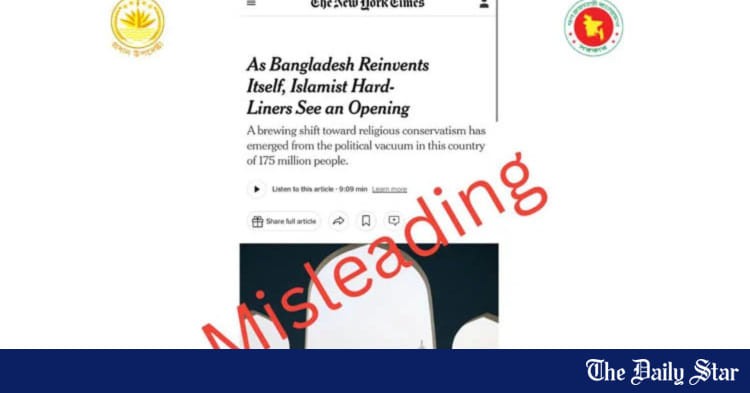
নিউইয়র্ক টাইমসের প্রতিবেদনটি ‘মিসলিডিং’: প্রেস উইং

1743554336298.png


দ্য নিউইয়র্ক টাইমস প্রকাশিত 'নতুন বাংলাদেশ গঠনের সুযোগ নিচ্ছে ইসলামি কট্টরপন্থীরা' শীর্ষক প্রতিবেদনটি 'মিসিলিডিং' বলে মন্তব্য করেছে অন্তর্বর্তী সরকারের প্রধান উপদেষ্টার প্রেস উইং।

আজ মঙ্গলবার প্রকাশিত প্রতিবেদনে 'বাংলাদেশ ধর্মীয় চরমপন্থার কবলে পড়তে যাচ্ছে' বলে উপস্থাপন করা হয়েছে।

এতে আরও বলা হয়, প্রধান উপদেষ্টা অধ্যাপক মুহাম্মদ ইউনূস চরমপন্থী শক্তির বিরুদ্ধে কঠোর অবস্থান নেননি।

প্রধান উপদেষ্টার প্রেস উইং বলছে, প্রতিবেদনটি বিভ্রান্তিকর ও একপাক্ষিক। এতে বাংলাদেশের রাজনৈতিক ও সামাজিক গতিশীলতাকে সরলভাবে দেখা হয়েছে।

নিউইয়র্ক টাইমসের প্রতিবেদনে বাছাইকৃত কিছু ঘটনা তুলে ধরে ভ্রান্ত ধারণা ছড়ানোর চেষ্টা করা হয়েছে বলেও জানিয়েছে প্রেস উইং।

প্রেস উইং ফ্যাক্ট ফেসবুক পেজে এক পোস্টে পয়েন্ট আকারে ওই প্রতিবেদনে উল্লেখ করা বক্তব্যগুলোকে খণ্ডন করা হয়েছে।

বাংলাদেশের অগ্রগতি ও চ্যালেঞ্জের বাস্তবতার উল্লেখ করে ওই পোস্টে বাংলাদেশে ধর্মীয় সহিংসতা সম্পর্কে বিভ্রান্তি, বাংলাদেশের বৈশ্বিক অগ্রগতির কথা উপস্থাপন করা হয়েছে এবং বাংলাদেশের সমসাময়িক বিষয়গুলোকে একপাক্ষিক অতি সরলীকরণ করে বিচার না করার আহ্বান জানানো হয়েছে।

প্রেস উইং থেকে বলা হয়, বাংলাদেশ নারীদের অবস্থার উন্নতিতে উল্লেখযোগ্য অগ্রগতি অর্জন করেছে এবং অন্তর্বর্তী সরকার তাদের সুরক্ষা ও কল্যাণের জন্য বিশেষভাবে প্রতিশ্রুতিবদ্ধ।

এটি এমন একটি সরকার যা নারীর অধিকার ও সুরক্ষাকে অগ্রাধিকার দিয়েছে, যা নিবন্ধে তুলে ধরা আবছা চিত্রের সম্পূর্ণ বিপরীত।

এর একটি উল্লেখযোগ্য উদাহরণ হলো 'যুব উৎসব ২০২৫', যেখানে দেশের বিভিন্ন প্রান্ত থেকে প্রায় ২৭ লাখ মেয়ে ৩ হাজার খেলা ও সাংস্কৃতিক কর্মকাণ্ডে অংশগ্রহণ করেছিল।

বিভিন্ন অঞ্চল, প্রান্তিক সম্প্রদায় এবং আদিবাসী যুব সমাজের ব্যাপক অংশগ্রহণ বাংলাদেশের সামাজিক ও সাংস্কৃতিক জীবনে নারী ও মেয়েদের স্বতঃস্ফূর্ত ও গতিশীল সম্পৃক্ততার প্রতিফলন।

একটি ফুটবল খেলা বিরোধিতার মুখোমুখি হওয়ার বিষয়টি অন্যান্য ২ হাজার ৯৯৯টি ইভেন্টের সাফল্যকে মুছে ফেলে না, যা অসংখ্য অংশগ্রহণকারী ও সম্প্রদায় উদযাপন করেছিল।

একটি অনুষ্ঠানে একটি মাত্র বাধার বিষয়ে আলোকপাত করার মাধ্যমে দেশের যুব সমাজের, বিশেষত নারীদের প্রাণবন্ত অংশগ্রহণ ও দৃঢ় অঙ্গীকারের বিষয়ে বিভ্রান্তিকর তথ্য উপস্থাপন করে।

প্রধান উপদেষ্টা অধ্যাপক মুহাম্মদ ইউনূস 'চরমপন্থী শক্তির বিরুদ্ধে যথেষ্ট কঠোরভাবে প্রতিরোধ করেননি' এই দাবি কেবল মিথ্যাই নয়, বরং এটি নারীর ক্ষমতায়নের প্রতি তার আজীবন প্রতিশ্রুতিকেও উপেক্ষা করে।

প্রধান উপদেষ্টা হিসেবে অধ্যাপক ইউনূস নারীর অধিকারের পক্ষে তার অবস্থানে অটল রয়েছেন। দুই কন্যার পিতা, ইউনূস তার সমগ্র কর্মজীবন এবং গ্রামীণ ব্যাংককে নারীর শক্তিতে তার গভীর বিশ্বাসের ওপর ভিত্তি করে গড়ে তুলেছেন, যা শেষ পর্যন্ত তাকে নোবেল পুরস্কার এনে দিয়েছে।

নারীর অধিকার এগিয়ে নেওয়া এবং তাদের স্বাধীনতা রক্ষায় তার নিষ্ঠা ও কাজ তার খ্যাতির ভিত্তি।

ধর্মীয় সহিংসতা সম্পর্কে ভুল ধারণা সংশোধন

বাংলাদেশের মতো দেশে, রাজনৈতিক অস্থিরতা ও ধর্মীয় সহিংসতার মধ্যে পার্থক্য করা গুরুত্বপূর্ণ। শেখ হাসিনা চলে যাওয়ার পর থেকে বিভিন্ন গোষ্ঠীর মধ্যে সংঘটিত অনেক সংঘর্ষকে সাম্প্রদায়িক সহিংসতা হিসেবে ভুলভাবে উপস্থাপন করা হয়েছে, যদিও বাস্তবে, সেগুলো মূলত রাজনৈতিক প্রকৃতির ছিল।

রাজনৈতিক বিভিন্ন দল অনেক সময় সমর্থন লাভের জন্য ধর্মকে ব্যবহার করে, যা বিষয়টিকে জটিল করে তোলে এবং রাজনৈতিক অস্থিরতার সাথে ধর্মীয় নিপীড়নের মিশ্রনের ঝুঁকি তৈরি করে। পুরো পরিস্থিতিকে একটি সাম্প্রদায়িক সংঘাত হিসেবে উপস্থাপন করা বিভ্রান্তিকর, কারণ এটি প্রকৃত রাজনৈতিক ও আর্থ-সামাজিক কারণগুলোকে উপেক্ষা করে।

অন্তর্বর্তীকালীন সরকার সব সংখ্যালঘু সম্প্রদায়কে রক্ষা করার জন্য তার প্রতিশ্রুতি সুস্পষ্ট করেছে। আইন প্রয়োগকারী সংস্থার চলমান কাজ এবং সন্ত্রাসবাদ দমন প্রচেষ্টা এই প্রতিশ্রুতিকে আরও জোরদার করে।

সামাজিক সংস্কার ও আন্তর্জাতিক সম্প্রদায়ের সঙ্গে সহযোগিতার মাধ্যমে চরমপন্থা মোকাবিলায় বাংলাদেশের প্রচেষ্টা ভুল তথ্য ছড়ানোর মাধ্যমে ম্লান হওয়া উচিত নয়।

বৈশ্বিক মঞ্চে বাংলাদেশের ভূমিকা

বাংলাদেশ নীরবে এশিয়ার অর্থনৈতিক শক্তিগুলোর মধ্যে একটিতে রূপান্তরিত হচ্ছে, একটি প্রবৃদ্ধির ধারাবাহিকতায় যা বিশ্বব্যাপী বিনিয়োগকারীদের জন্য প্রচুর সুযোগের প্রতিশ্রুতি দেয়।

সব প্রতিকূলতার মধ্যেও, বাংলাদেশের অর্থনীতি স্থিতিশীল হয়েছে যা উল্লেখযোগ্য স্থিতিস্থাপকতার প্রতিফলন।

গত সাত মাসে, রপ্তানি প্রায় ১২ শতাংশ বৃদ্ধি পেয়েছে। রাজনৈতিক অস্থিরতার পরেও ব্যাংকিং খাত গতিশীল রয়েছে এবং স্থানীয় মুদ্রার বিনিময় হার মার্কিন ডলারের বিপরীতে প্রায় ১২৩ টাকায় স্থিতিশীল রয়েছে।

সামনের দিকে তাকালে, বাংলাদেশ ২০২৬ সালের মধ্যে মধ্যম আয়ের দেশে পরিণত হবে এবং ২০৩০ সালের মধ্যে বিশ্বের নবম বৃহত্তম ভোক্তা বাজারে পরিণত হবে বলে ধারণা করা হচ্ছে।

৮৪ বছর বয়সী মুহাম্মদ ইউনূস গত আট মাস ধরে যেসব অবিশ্বাস্য কাজ সম্পন্ন করেছেন তার স্বীকৃতি কোথায়? বাংলাদেশের জন্য একটি উন্নত ভবিষ্যৎ নিশ্চিত করার জন্য তিনি সারা বিশ্বজুড়ে সফর করে অক্লান্ত পরিশ্রম করে চলেছেন।

গত সপ্তাহে চীন সফরের সময় চীন সরকার ও ব্যবসা প্রতিষ্ঠানগুলো বাংলাদেশকে দুই দশমিক এক বিলিয়ন মার্কিন ডলার ঋণ, বিনিয়োগ ও অনুদানের প্রতিশ্রুতি দিয়েছে।

ঢাকা আগামী সপ্তাহে বিনিয়োগকারীদের সম্মেলন আয়োজন করবে, যেখানে ৫০টি দেশের দুই হাজার ৩০০ জনেরও বেশি অংশগ্রহণকারী অংশগ্রহণ করবেন, যার মধ্যে মেটা, উবার ও স্যামসাংয়ের মতো বৈশ্বিক কোম্পানির শীর্ষ কর্মকর্তারাও থাকবেন।

বিশ্ব ক্রমবর্ধমানভাবে বাংলাদেশকে একটি উদীয়মান অর্থনৈতিক শক্তি হিসেবে স্বীকৃতি দিচ্ছে। এটি হচ্ছে আশা, শক্তি ও অভূতপূর্ব সুযোগের গল্প—যা সম্মান ও যথাযথ বিবেচনার দাবি রাখে।

অতি সরলীকরণ এড়িয়ে চলা এবং একটি জাতিকে অপবাদ দেওয়া

নিউইয়র্ক টাইমসের নিবন্ধে কয়েকটি ঘটনার উল্লেখ রয়েছে, যেমন একজন নারীর ওপর নির্যাতনকারী একজন ব্যক্তিকে মুক্তি দেওয়া হয়েছে, যা একটি দেশের চরমপন্থায় পতিত হওয়ার চিত্র তুলে ধরে।

এটি কেবল বিভ্রান্তিকরই নয় বরং ক্ষতিকারক। ১৮ কোটি জনসংখ্যার একটি দেশে, কয়েকটি বিচ্ছিন্ন ঘটনা দ্বারা সমগ্র দেশকে সংজ্ঞায়িত করা অযৌক্তিক।

বাংলাদেশ একটি বৈচিত্র্যময় ও গতিশীল সমাজ যেখানে সহনশীলতা, সংস্কৃতি এবং প্রগতিশীল চিন্তাভাবনার সমৃদ্ধ ইতিহাস রয়েছে।

ধর্মীয় উগ্রবাদের চ্যালেঞ্জ মোকাবিলায় বাংলাদেশ একা নয়; এটি একটি বিশ্বব্যাপী সমস্যা যা অনেক দেশ বিভিন্ন রূপে মোকাবিলা করে।

তবে, আইন প্রয়োগ, সামাজিক সংস্কার ও সন্ত্রাসবাদবিরোধী উদ্যোগের মাধ্যমে বাংলাদেশ এই চ্যালেঞ্জগুলো মোকাবিলা করার জন্য ক্রমাগত কাজ করে আসছে।

মুসলিম, হিন্দু, খ্রিস্টান বা অন্য যেকোনো সম্প্রদায়ের বৈচিত্র্যময় জনসংখ্যাকে রক্ষা করার জন্য বাংলাদেশ প্রতিশ্রুতিবদ্ধ।

বিভিন্ন সমাবেশে ও সোশ্যাল মিডিয়ায় ঘৃণা ছড়ানোর জন্য সব সময়ই কট্টরপন্থীরা সক্রিয় থাকলেও তাদের ক্ষোভে ঘৃতাহুতি না দেওয়া আমাদের দায়িত্ব।

এছাড়া, বাংলাদেশের রাজনৈতিক পরিবর্তনের ফলে চরমপন্থার উত্থান অনিবার্য এমন চিন্তা অত্যন্ত পূর্বধারণাপ্রসূত।

দেশের গণতান্ত্রিক চেতনা ও প্রাণবন্ত নাগরিক সমাজ এমন শক্তিশালী যা চরমপন্থী মতাদর্শের উত্থানকে প্রতিহত করে চলেছে।

চ্যালেঞ্জ থাকা সত্ত্বেও, বাংলাদেশের দীর্ঘমেয়াদি গতিধারা কেবল চরমপন্থীদের কর্মকাণ্ড দ্বারা নির্ধারিত হবে না।

বাংলাদেশের জনগণ, বিশেষ করে এর যুব সমাজ ও মহিলারা একটি ন্যায়সঙ্গত, গণতান্ত্রিক ও অন্তর্ভুক্তিমূলক সমাজের জন্য লড়াই চালিয়ে যেতে দৃঢ়প্রতিজ্ঞ।

পরিশেষে, বাংলাদেশের সহনশীলতার ইতিহাস, গণতন্ত্রের প্রতি তার অঙ্গীকার এবং নারীর ক্ষমতায়নের ওপর তার মনোযোগ এই সত্যের প্রমাণ যে, দেশটি চ্যালেঞ্জের মুখোমুখি হওয়া সত্ত্বেও এগিয়ে যাবে।

কয়েকটি নেতিবাচক উদাহরণের উপর মনোযোগ দেওয়ার পরিবর্তে, আমাদের আজকের বাংলাদেশকে সংজ্ঞায়িত করে এমন অগ্রগতি, সহনশীলতা ও দৃঢ় অঙ্গীকারের ব্যাপকতর চিত্রটির স্বীকৃতি দেওয়া উচিত।​
 
Analyze

Analyze Post

Add your ideas here:
Highlight Cite Fact Check Respond
  • Like (+1)
Reactions: Bilal9

Members Online

⤵︎

Latest Posts

Latest Posts