Donate ☕
201 Military Defense Forums
[🇧🇩] - Forming Election Commission/Conducting Elections | Page 50 | PKDefense
Home Post Alerts Inbox Watch Videos

[🇧🇩] Forming Election Commission/Conducting Elections

Reply (Scroll)
Press space to scroll through posts
G Bangladesh Defense
[🇧🇩] Forming Election Commission/Conducting Elections
260
5K
More threads by Saif


Shafiqur Rahman sets 3 conditions for electoral alliance with Jamaat
Urges Shibir to act as guardians of the student community

1766798385880.webp

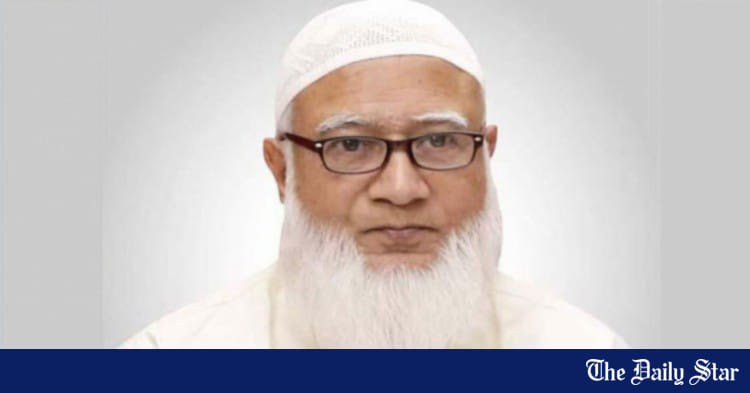
File photo of Shafiqur Rahman

Jamaat-e-Islami Ameer Shafiqur Rahman today said any political party can forge an electoral alliance with Jamaat if it agrees to three conditions.

The conditions are: refraining from corruption and from patronising corrupt individuals, ensuring equal justice for all at every level of society without any political interference in the judicial process, and committing to the implementation of all reform recommendations.

He made the remarks while speaking as the chief guest at the central members' conference of Islami Chhatra Shibir, Jamaat's student wing, at the Bangladesh-China Friendship Conference Centre in Dhaka's Sher-e-Bangla Nagar.

Shafiqur said Jamaat wants to build an education system that leaves no one unemployed. "Jamaat aims to turn every pair of hands into skilled builders of the nation," he added.

Urging Chhatra Shibir to act as guardians of the student community, the Jamaat ameer said, "For the last 54 years, pens were snatched from students' hands. Innocent students were misled and weapons were put in their hands. Educational institutions were turned into mini cantonments."

He added, "There was no guarantee of women's dignity, or of students' lives and careers. That dark chapter has begun to recede. But its dark shadow has not yet lifted from the nation. Until this shadow is eliminated, Chhatra Shibir must continue its struggle."

Addressing the conference, Jamaat Secretary General Mia Golam Porwar said, "Failing to confront Shibir with logic and ideology, the opposing forces have resorted to lies and propaganda. They have labelled Shibir as anti-independence, and 'rogkata', but failed to prove it. In student union elections at four public universities, the people rejected them."

In the opening session, Omar Bin Hadi, elder brother of martyred Inqilab Moncho spokesperson Sharif Osman Hadi, also spoke. He said, "Not as Osman Hadi's brother, but as a fellow fighter, I want to say that it is you who must decide how Bangladesh will be built in the days ahead. If anyone retreats from here or collaborates with a neighbouring state or the deep state to help re-establish fascism in this country, you will be held accountable before Allah."

He added, "May this Bangladesh be freed from hegemony in exchange for Osman Hadi's blood, and may justice be established in this country."

Alongside other top Jamaat leaders, those present at the conference included Ashraf Ali Akon, presidium member of Islami Andolan Bangladesh; Mostafizur Rahman Iran, chairman of Bangladesh Labour Party; and Rashed Pradhan, spokesperson of Jatiya Ganotantrik Party (JAGPA), among others.

The opening session, presided over by Chhatra Shibir Central President Zahidul Islam, was conducted by Central General Secretary Nurul Islam Saddam.

In the second session of the conference, attended by several thousand Shibir members, Nurul Islam Saddam was elected president for the 2026 session through a vote of members.

According to the organisation's constitution, the newly elected president nominated the secretary general. Accordingly, Sibgatullah has been appointed as the new secretary general of the student organisation.​
 
Analyze

Analyze Post

Add your ideas here:
Highlight Cite Fact Check Respond
Touhid calls for cooperation among political parties during elections

bdnews24.com
Published :
Dec 27, 2025 19:39
Updated :
Dec 27, 2025 19:39

1766881899273.webp

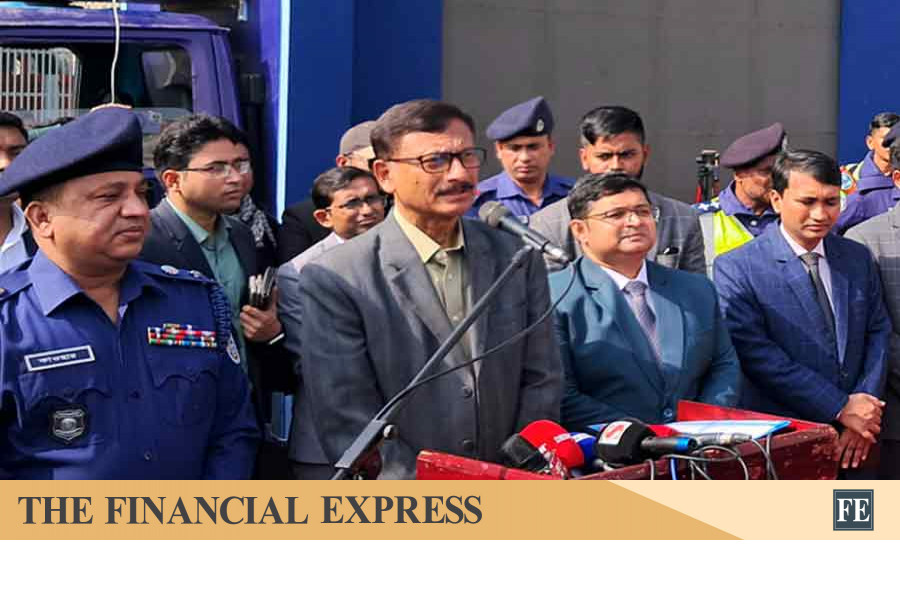
The interim administration will step aside after handing over power to a government elected through a peaceful parliamentary election, according to Foreign Advisor Touhid Hossain.

Speaking on Saturday afternoon at the inauguration of a voter awareness vehicle caravan at Bhola Government School ground, Touhid said the administration expects political parties to cooperate among each other during the election process and avoid any form of disorder.

He said the government would withdraw after the polls and the country would return to a normal democratic course.

Touhid described the approaching election as particularly important, saying Bangladesh had not experienced a “genuinely credible” election over the past 15 years.

He said the last meaningful election took place in 2008 and that no proper election had been held since then.

“The national election will be held on the 12th of February. We expect a festive voting atmosphere,” he said.

Addressing international oversight, the advisor confirmed that global observers have been invited. He noted that the European Union and the American International Republican Institute will be sending delegations.

He said he had already met and spoken with those expected to arrive and assured them that necessary arrangements would be ensured.

At the same time, he said the government would not extend assistance to observers unless it was specifically requested, as any unsolicited involvement could be viewed as interference.

He said the interim administration would refrain from influencing observers in any manner.

According to him, the government’s role would be limited to ensuring the security of observers.

“If they later seek assistance, it will be provided. Beyond that, the decision on who will serve as observers rests entirely with the Election Commission,” he said.

He noted that observer applications were being reviewed by the Election Commission, which would approve those it considered neutral.

“We want a large number of observers so that no one gets the chance to create disorder during the election,” he said.

He urged political parties to engage directly with voters and present their programmes to the public, saying there was no need for violence as the people would decide whom they wish to elect.​
 
Analyze

Analyze Post

Add your ideas here:
Highlight Cite Fact Check Respond
Election is not the real story, what counts is how it is conducted


1766883964306.webp

File Visual: Anwar Sohel

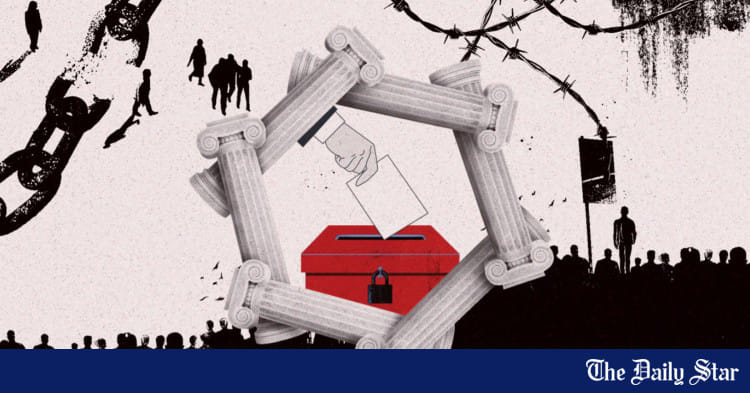
By now, we all know that February 12 is election day, and BNP acting chairman Tarique Rahman's return after 17 years in exile has added December 25 as another date to remember. In some circles, the big showdown witnessed on Thursday has been pitted against the large turnout at the funeral of July warrior Sharif Osman Hadi on December 20, turning both into rallying points. Dates and rallies consume us as a nation. There are also rumours circling about secret alliances and overt and covert operations. But the real story of the next two months will not be about dates; it will be about the execution of a free and fair election as promised by the interim government. Given that two of its advisers resigned shortly before the announcement of the election schedule in order to participate in the forthcoming polls, some concerns over the rules, the referees, and the level playing field have already been raised. The outcome of the election will largely depend on how contestation is managed.


Parties and camps long demanding overarching systemic reforms have by now shown signs of hesitation. Among them are emerging parties who have understandably struggled with organisation, candidates, finances, and grassroots reach. They redirected the momentum they gathered during the July uprising into various strands. Some among them adopted delay as a political strategy. Their programmes seem intended to buy time, shift blame, or unleash fearmongering in order to delegitimise outcomes in advance. In doing so, however, they risk losing voter confidence. While they framed election postponement as a principled stand in the name of reform, they are quietly eroding institutional timelines and delaying the transition to democracy.

All this poses an intriguing dilemma for first-time voters. The voterless elections held under the previous regime have pushed many young voters into prolonged cycles of confrontation. Their political memory is defined by an urgency to "save democracy". Yet in recent months, the electoral system's processes and protections have received minimal clarity. We have seen those in charge of electoral reform meet with selected stakeholders and produce a complicated "buy one election, get one referendum free" model where voting appears as both a sacred duty and a venture into the unknown. The younger generation, whose political memory is tied to their "muscle" memory, now finds itself often subscribing to a school of thought that privileges cynicism over participation.

A wholesale rejection of the old can create problems even for those committed to change. Such an attitude makes the role of election observers more important than ever, however. Undoubtedly, we must steer clear of monitoring agents who endorsed previous flawed elections. At the same time, participating parties and alliances must come to a consensus about credible domestic and international observation mechanisms.

The Election Commission does not have much time left to invite monitors, assign mandates, and grant meaningful access. Nobody wants symbolic reassurance from rubber-stamp observers. One way to avoid post-election chaos is to guarantee robust procedural safeguards. The interim government must protect voters, not merely certify an outcome. Observers must be carefully selected, empowered, and clearly defined in their scope.

The sheer desire for or taste of power, which some construe as a necessary evil, has contaminated our political culture over the years. Many of us have grown accustomed to systems and traditions averse to compromise. We need to move away from the "do whatever you can in court, the palm tree is mine" kind of mentality that has long plagued our politics. Conversely, the urge to remain within the orbit of power can drive intense pre-election backroom bargaining or executive overreach, both of which may likely cause post-election paralysis.

Despite a number of surveys, it remains difficult to predict the voting behaviour of new voters or of supporters of the previous regime who find themselves with limited choices but may still play an important role. This raises the possibility of a fractured verdict. Meanwhile, AI-driven misinformation and disinformation can be deployed to manufacture consent or divisions, further harming the democratic process. Monitoring, therefore, must extend to all such aspects and spaces, both physical and digital.

The alleged selective flexibility shown for certain camps, combined with alleged rigidity towards others, also highlights how uneven application of rules may corrode trust faster than outright exclusion. One electoral buzzword has been "inclusivity." International pressure groups have already urged the government to include individuals or groups whose rights have not been legally revoked by courts of law. For inclusivity to be meaningful, it must be applied consistently. Otherwise, it risks becoming yet another tool of manipulation.

The road to democracy has many obstacles. The way muscle power has dominated the streets and silenced dissenting voices over the past months is a worrying sign for the planned revival of democracy. Even student leaders have at times justified the need for showdowns, falling into the same trap that equates influence with money power, whether for nominations or for countering opponents. Perhaps the greatest concern, however, lies in the neutrality of the civil and military bureaucracy. It is important for those in charge and those on the ground to maintain quiet centrality as the ultimate stabiliser. If these institutions fail to operate within transparent oversight at all times, the election may fall short of delivering its promised outcomes.

Another pressure point involves our international partners. On paper, they all want "inclusive and credible elections." Yet we carry the lived memory of a previous regime that manipulated democracy by turning elections into a procedural theatre while some of those actors watched in silence. The challenge for the interim government will be to craft a sovereign democratic standard; it needs to carefully navigate between the "rock" of defiance and the "hard place" of compliance to rebuild institutional self-respect.

As the calendar year draws to a close, few wish to carry forward the exhaustion and anxiety of the past. People are tired. They want normalcy and stability. And this can only be achieved through discipline. All parties and stakeholders concerned must therefore return to the principles of rules, fairness, and civic courage. Democracy is not a once-in-five-years moment; it is a way of life that needs to be constantly practised across society.

As 2025 gives way to 2026, we stand at a familiar threshold where hope is battling with fear. The greatest fear is that narrow personal interests may override the national good, and that internecine clashes and infighting may pave the way for external actors to exploit our vulnerabilities for geopolitical gain. It is not too late to rebuild trust in a democratic system where people of all races, religious sects, classes, and communities feel welcome to participate. The recovery of trust can be done through the consistent application of order and justice. The task of the new year is not simply to survive another election. Election 2026 must restore meaning to the act of participation itself. This is something we owe to the generation that ushered in change, especially those voting for the first time. We must ensure their right to step into the future with pride and dignity.

Dr Shamsad Mortuza is a professor of English at Dhaka University.​
 
Analyze

Analyze Post

Add your ideas here:
Highlight Cite Fact Check Respond
Jatiya Party's two factions want to grab Awami League's votes

Anowar Hossain Dhaka
Updated: 29 Dec 2025, 13: 16

1767230506604.webp

Jatiya Party logo

Hussain Muhammad Ershad’s Jatiya Party (JP) has once again split. Ahead of the election following the July uprising, a new Jatiya Party has emerged under the leadership of Anisul Islam Mahmud, bringing together several “heavyweight” leaders. Separately, another faction of the Jatiya Party is being controlled by Ershad’s brother, GM Quader.

Meanwhile, Awami League, whose activities remain banned, cannot take part in the election. However, there is no bar on its ally, the Jatiya Party, contesting the polls. So now there is now discussion over which Jatiya Party, the one led by Anisul Islam Mahmud or the one led by GM Quader, will outdo the other in the upcoming election.

Jatiya Party broke up several times while Ershad was still alive. Each time, however, the faction under Ershad’s leadership stood as the main Jatiya Party. In the 2008 election, Jatiya Party became the third-largest party in parliament. After the 2014 election, it assumed the position of the main opposition in parliament, but also joined the government, a move that drew considerable attention at the time. Ershad’s party played a role in lending “legitimacy” to three controversial elections held under Awami League governments.

Jamaat-e-Islami, National Citizen Party (NCP) and Gono Odhikar Parishad have been demanding a ban on Jatiya Party, describing it as an ally of Awami League that was ousted from power in the July mass uprising. However, while the interim government has imposed a ban on the activities of Awami League, it has not taken any such decision regarding Jatiya Party.

There is discussion in political circles that the parties calling for a ban on Jatiya Party on the grounds that it supported fascism are, in fact, aiming to draw the party’s vote bank into their own fold. On the other hand, with the opportunity to participate in the election, both factions of Jatiya Party have now set their sights on attracting Awami League voters.

Awami League’s top leadership is either in jail or on the run. The party’s chief, Sheikh Hasina, has been sentenced to death on charges of crimes against humanity. She fled to India on 5 August last year in the face of the uprising and remains there. In the 2008 election, Awami League secured 48 per cent of the vote, while in the 2001 election it received 40 per cent. What its actual vote share is now remains a major question. A survey conducted by Prothom Alo last month found that 28 per cent of people favour allowing the Awami League to participate in the next election unconditionally. A large portion of this group can be considered Awami League supporters.

The interim government has made it clear that the Awami League will not be able to participate in the upcoming election. Attempts to allow a “cleansed” Awami League to contest, excluding Sheikh Hasina, have not succeeded. The government had also assumed that relatively “moderate” Awami League leaders might run as independent candidates, but no such signs have appeared. In fact, there are reportedly no such plans or discussions within the party at present. Many parties, including the BNP and Jamaat, now aim to use this opportunity to draw in Awami League votes. The emergence of both factions of the Jatiya Party as claimants to the Awami League vote has drawn additional attention.

Political analysts note that historically Jatiya Party has maintained good relations with the Awami League. During Ershad’s rule, the BNP boycotted the 1986 election, but the Awami League participated. In 1996, after 21 years, the Awami League returned to power with the support of the Jatiya Party. In 2006, the Jatiya Party sided with the Awami League in the anti-BNP–Jamaat government movement. Later, in the 2008 election, it reached an understanding with the Awami League and participated in the vote, joining the government. This long-standing association makes it reasonable for the Jatiya Party to expect some share of the Awami League vote.

Will the new JaPa surpass the old one?


GM Quader, chairman of one faction of the Jatiya Party, served as a minister in the Awami League government from 2009 to 2014. The new Jatiya Party, led by Anisul Islam Mahmud with Executive Chairman Mujibul Haque Chunnu, also had leaders who served in the Awami League-led government, back when the party was still united. Currently, almost all top leaders are with Anisul Islam Mahmud, many of whom have been ministers and members of parliament at different times.

Many leaders who had previously split Jatiya Party to form new parties have now joined this new faction. Among them is the Jatiya Party (JP) led by Anwar Hossain Manju, who was a minister twice under Sheikh Hasina’s government. This alliance has been named the “National Democratic Front (NDF),” which includes 18 registered and unregistered political parties. Notable parties in the alliance include JaPa, JP, Janata Party Bangladesh, Trinamool BNP, Bangladesh Jatiyatabadi Andolan, Bangladesh Sangskritik Mukti Jote, and Gono Front. The alliance has allocated party nominations in 119 constituencies.


Analysis of the NDF’s nomination list shows that at least 18 individuals have served as members of parliament one or more times, and seven of them have held ministerial or state minister positions at different periods. Many of them have been regarded as “heavyweights” in politics. In comparison, the Jatiya Party led by GM Quader now lacks such well-known leaders. As a result, the focus of discussion is currently on the new Jatiya Party.

According to government and political sources, the Jatiya Party led by Anisul Islam Mahmud is receiving support from the government and various influential quarters in multiple ways. Some are even considering positioning the new party as an alternative to Jamaat.

However, the question has again arisen: who will get the plough symbol? Although this has not yet been resolved, most political analysts believe the plough is likely to remain under GM Quader’s faction.

Jatiya Party has been a leader-dependent party from the start. Its organisational structure outside greater Rangpur is not very strong, and its support base has shrunk. In the most recent survey conducted by Prothom Alo, only 0.1 per cent of people believe that JaPa can form the government in the next election. However, the NDF alliance, led by the experienced and familiar leaders Anisul Islam Mahmud, Anwar Hossain Manju, Ruhul Amin Howlader, Kazi Firoz Rashid, and Mujibul Haque Chunnu, is expected to have the potential to make a political impact.

Fewer prominent leaders in GM Quader’s JaPa

Even while Ershad was alive, there was conflict between Raushan Ershad and GM Quader over the leadership of the Jatiya Party. Ershad had run the party in coordination with his younger brother GM Quader and his wife Raushan Ershad. However, after Ershad’s death, that arrangement no longer exists. Although Raushan Ershad is unwell, another faction of the Jatiya Party continues under her leadership. In the 2024 election, the Awami League drew GM Quader forward as the main leader, which pushed Raushan largely into the background. Meanwhile, senior leaders under Anisul Islam Mahmud are now challenging GM Quader.

GM Quader’s Jatiya Party has announced plans to field candidates in all 300 constituencies for the upcoming 13th parliamentary election, and party nomination forms are being sold. However, unlike previous elections, the number of nomination forms purchased is low.

Currently, the secretary general of GM Quader’s faction is the comparatively younger Shamim Haider Patwary. Beyond him, the party lacks other well-known leaders. Last September, former secretary general Mashiur Rahman Ranga was expelled from the party. On 14 December, he rejoined after seeking forgiveness. At the same time, former MP of Rangpur-6, Noor Mohammad Mondal, has also returned to the party. These moves are part of an effort to revitalise a fragile party.

According to political analysts, in the northern districts, including Rangpur, Lalmonirhat, Kurigram, Gaibandha, and Nilphamari, there is still some residual sympathy among the general public for Ershad’s Jatiya Party. This support is expected to lean toward GM Quader’s faction under Ershad’s brother’s leadership. Additionally, the party’s co-chairman and former mayor of Rangpur, Mostafizur Rahman, has a strong local position. Overall, considering the plough symbol and lingering affinity for Ershad, GM Quader’s JP may be able to maintain some standing in the greater Rangpur region, though they are unlikely to have any significant influence nationwide.

After the July uprising, the central office of the Jatiya Party in Kakrail was attacked and set on fire several times. GM Quader’s Jatiya Party has announced plans to field candidates in all 300 constituencies for the upcoming 13th parliamentary election, and party nomination forms are being sold. However, unlike previous elections, the number of nomination forms purchased is low, and interest appears limited. This raises the question of how many qualified candidates the party will be able to nominate nationwide.

During the interim government’s 16-month tenure, GM Quader’s Jatiya Party was unable to conduct substantial political programmes due to its past role. While the government and the Election Commission engaged in dialogue with various political parties, GM Quader’s faction was not invited. In other words, although they can contest the election, they will not receive any official support.

In contrast, the Jatiya Party led by Anisul Islam Mahmud and Anwar Hossain Manju, along with the alliance they have formed, has not faced such obstacles in pursuing their program. In fact, in some cases, they have even received assurances and sympathy from different sections of the government. As a result, discussion is growing over whether the Anisul Islam Mahmud–Anwar Hossain Manju alliance might take the place of the old Jatiya Party.

Voting for the 13th parliamentary election will be held on 12 February. It is believed that those factions able to capture the portion of the Awami League vote that would otherwise go to Jatiya Party are likely to gain an advantage.​
 
Analyze

Analyze Post

Add your ideas here:
Highlight Cite Fact Check Respond
Why the long wait for elections has been an illuminating interlude

1767509198952.webp

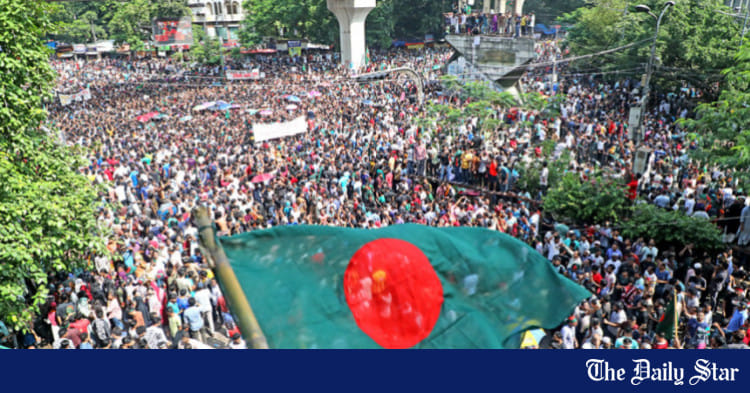
The public's once-fervent enthusiasm for certain student leaders, seen as pure-hearted and symbolising hope, has been tempered. FILE PHOTO: STAR

The delayed election, rather than being merely a period of political stagnation, has paradoxically served as a crucial and illuminating interlude for Bangladesh. Had the interim government, formed on August 8, 2024, acted as a caretaker, conducted elections within 90 days, and then departed, people would have imagined—perhaps unrealistically—that the interim administration could have solved many of the country's problems. Instead, this extended timeframe has allowed for a deeper, more sobering examination of the nation's political landscape, resulting in unexpected clarity. The delay provided the necessary time for several pervasive national myths to be confronted by the hard light of reality.


For instance, many believed that Nobel Peace Prize–winning economist Dr Muhammad Yunus's leadership would usher in an era of unparalleled peace, explosive economic growth, and abundant foreign investment. This past year and a half allowed that idealised image to be scrutinised leading to a more nuanced and realistic public assessment, dispelling the notion of a singular, messianic alternative. Similarly, the public's once-fervent enthusiasm for certain student leaders, seen as pure-hearted and symbolising hope, has been tempered. Their direct and indirect involvement in power dynamics during this period revealed that they, too, are not immune to the corrupting influence of authority or the temptation of authoritarian behaviour, often displaying a surprising lack of deep political wisdom. The delay granted the nation time for this necessary disillusionment.


Furthermore, the extended period acted as a relentless unmasking agent for Bangladesh Jamaat-e-Islami. The actions of some of its leaders—targeting cultural institutions and independent media outlets—over these months clarified its fundamental opposition to progressive ideals, indigenous culture, and women's freedom for the educated and conscious class, cutting through previous ambiguities. For the BNP, this was not a swift return to power but a gruelling "time test," oscillating between proximity to and distance from authority. This protracted process may have instilled a necessary moment of reckoning, a forced contemplation of public accountability that might shape any future governance. It also gave the public an invaluable, prolonged study of the incumbent administration and the state machinery.

Within the government itself, the delay humbled certain narratives. Advisers who hailed from prominent NGO backgrounds, once prolific critics of state incapacity and lack of transparency from the outside, found their grand, idealistic rhetoric colliding with the immense complexities of actually running a country. Their once-loud proclamations were inevitably moderated by the weight of executive responsibility. Moreover, the widespread hope that, if enough time were given to this administration, it would implement transformative structural reforms to make Bangladesh a model of accountability remains far-fetched. The public can now move beyond the illusion that this administration held a unique key to systemic perfection. Finally, the very functionality of the state over this contentious period challenged the persistent narrative of great dependence on a single foreign ally, proving the nation's operational resilience.


While the political waiting has been arduous, it has functioned as an unscheduled but intense national tutorial. It has stripped away layers of political fantasy, forcing a clearer, if more demanding, view of the actors and dynamics at play. There is undoubtedly more to observe as the story unfolds. But this interval has provided a sobering education, ensuring that the next chapter begins not with wistful illusions, but with eyes more open to the intricate and often unforgiving realities of power and governance.

Md Firoj Alam is a development consultant.​
 
Analyze

Analyze Post

Add your ideas here:
Highlight Cite Fact Check Respond

Members Online

⤵︎

Latest Posts

Latest Posts