Donate ☕
201 Military Defense Forums
[🇧🇩] - Reforms carried out by the interim/future Govts. | Page 25 | PKDefense
Home Post Alerts Inbox Watch Videos

[🇧🇩] Reforms carried out by the interim/future Govts.

Reply (Scroll)
Press space to scroll through posts
G Bangladesh Defense
[🇧🇩] Reforms carried out by the interim/future Govts.
203
5K
More threads by Saif


Talks likely with political parties over reforms in Feb: Rizwana
BSS
Dhaka
Published: 15 Jan 2025, 17: 43

1736986947813.webp


Adviser Syeda Rizwana Hasan on Wednesday spoke in a press briefing at the Foreign Service Academy. BSS

Environment adviser Syeda Rizwana Hasan has said the interim government is hopeful to initiate formal talks with political parties next month for reaching a consensus on reform agenda.

“I think talks with political parties can begin formally in the middle of February," she told in a press briefing at the Foreign Service Academy today, Wednesday after submission of the reports of the four reform commissions to the chief adviser.

“We are in a sort of dialogue already with the political parties as they have submitted their written proposal on reforms,” she noted.

Law adviser Asif Nazrul however said it might be possible to open formal talks with political parties in the first week of February if necessary works on the submitted reports are completed.

Earlier in the day, the chiefs of four reform commissions- Constitutional Reform Commission, Electoral Reform Commission, Police Administration Reform Commission and the Anti-Corruption Commission (ACC) Reform Commission- submitted their reports to chief adviser Dr Muhammad Yunus at his Tajgaon office.

Youth and sports adviser Asif Mahmud Shojib Bhuyain and chief adviser’s press secretary Shafiqul Alam also spoke at the press briefing.​
 
Analyze

Analyze Post

Add your ideas here:
Highlight Cite Fact Check Respond

We never got a chance to reform our state and politics like now. Let’s not waste it

1737068436301.webp

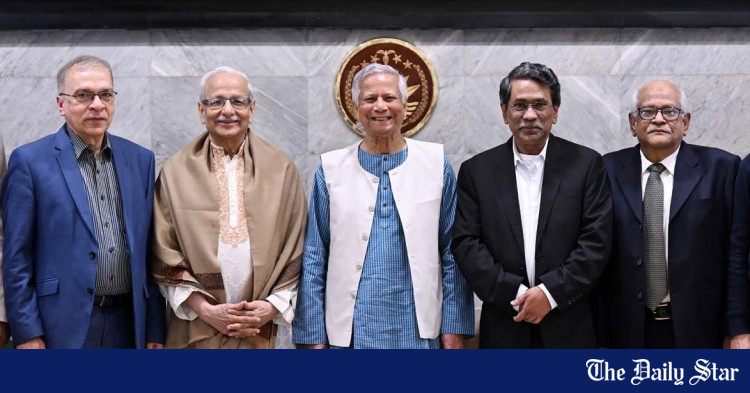
Chief Adviser Prof Muhammad Yunus with the heads of the four reform commissions that submitted their reports on January 15, 2025. PHOTO: PID

This may turn out to be Prof Muhammad Yunus's most lasting legacy. He gave a chance to the poor to break out of the shackles of poverty through microcredit. He is now giving Bangladesh a chance to break out of all its political, governance, and institutional shackles to march forward with democracy, equality, justice, and tolerance. With one stroke, he is literally opening up a rare chance to carry out fundamental reforms in some of the vital areas that we have been unable to do over the last 54 years.

While we congratulate the chief adviser and his team for this grand work, we must not forget to thank the real heroes who opened the door for all these reforms for us: the students, a section of teachers, intellectuals, civil society leaders, a section of the media, and, of course, the general public.

Independence in 1971 gave us the first opportunity to build a democratic and egalitarian state. We got a second chance when Gen HM Ershad fell and democracy was restored after a coordinated mass uprising led by the alliance of political parties. We missed both these opportunities. Now, historically, the students' nation-building role is not new; they played pivotal roles in the Language Movement of 1952, and the democratic and anti-military movements of the Pakistan period in the late 1950s and 1960s. Their role, including that of our rural youth, during our Muktijuddho, was the most glorious. They were at the forefront of the anti-Ershad movement in the 1990s, and then the student-led mass movement in July-August 2024 that has given a new opening to build the Bangladesh that was the dream of the Liberation War martyrs.

When Sheikh Hasina fell, instead of going for an immediate election, instituting a self-corrective process was the right—and historic—decision. The idea to form reform commissions was a most appropriate one. The choice of areas to concentrate on were right. The selection of individuals to head the commissions received general acceptability, though the relative absence of a woman head of commission (except one) marked a serious lapse. Finishing the work of four commissions within the stipulated time also testifies to their efficiency and sincerity.

Our initial study of the reports of the four commissions, submitted on January 15, indicates that the recommendations are quite substantive, though some seem based more on emotion than clear judgement.

Recommendations of the Constitution Reform Commission are very significant. We support the introduction of the bicameral system, limiting the tenure of a prime minister to two terms, introduction of the National Constitutional Council, and reintroduction of the caretaker government system. However, we think holding elections after every four years may be counterproductive as it shortens the tenure of an elected government to implement their plans and projects. Also, elections are a hugely expensive affair and involve massive logistical tasks, which a country like ours may find burdensome.

Reforms of the election system and Anti-Corruption Commission (ACC) are vital. We want to emphasise police reforms because, of all the state institutions, the police, in our view, have been maligned and misused the most. A study conducted by the International Truth and Justice Project (ITJP) and Tech Global Institute (TGI), which was released on January 14, showed how our police force was turned into a brutal, inhuman and bloodthirsty force, which proves the urgent need to totally transform the force from an anti-people institution to a pro-people one. The most difficult task will be changing the mindset of the police members. They have been conditioned to hate demonstrators and consider every protester as an "enemy." They have little training on crowd control, except to beat them up or shoot to injure or kill.

All recommendations of the four commissions, and others that are expected to follow, must be subject to a genuine national debate. The first thing that needs to be guaranteed is openness. There should be no name-calling and "tagging" because of the views expressed, which will prevent the type of genuine discussions that we need. The chief adviser has correctly focused on discussions with political parties. We think an additional attempt should be made to engage think tanks, specialised rights groups, religious and ethnic minorities, etc. The media should reach out to its readers and viewers and try to expand both the depth and reach of the discussion.

As for the political parties, they should approach the reform proposals with national interests in mind, and not that of their parties. There is no denying the fact that after the restoration of democracy in 1991, Bangladesh has been ruled by only two parties—the Awami League (AL) and the Bangladesh Nationalist Party (BNP)—though both had allies while in power. With Sheikh Hasina's fascistic rule, we may be tempted to forget that BNP ruled us for 10 years since Ershad fell.

The basic mistake made by both AL and BNP during the period of 1991-2006 is that they did not consider the parliament to be the House of the People, but rather as an extension of the ruling party, because the treasury bench had the majority. The fact that even as the minority of few, the parliament offered a much better chance for the opposition to voice dissent. But in our case, the unfortunate trend was to boycott parliament. It would always start with a walkout for hours, followed by boycott for days, then weeks, then months and finally resignation. Our lack of experience in operating within a parliamentary form of constitutional structure—we practically had none till 1991—was the main cause of our failure. The notion that the opposition is considered the "government in waiting" or the "shadow government", and as such commands a place within the power structure, had no place in the thinking process of the treasury bench. On the other side, the opposition thought that making the government dysfunctional by never cooperating with them in parliament was their objective, which terribly weakened the system. Let's not forget the public suffering and damage to the economy that were caused by incessant and irrational hartals.

This newspaper has published dozens of reports, editorials, and op-eds pleading with the ruling party to give due respect and status to the opposition, while begging the opposition not to boycott the House. It was all to no avail. The result was the gradual weakening of the parliament, the parliamentary system, and finally democracy.

While reforms of so many state institutions are under discussion, we cannot miss the fact that we need to reform our political parties too.

Prof Yunus's move to set up a consensus commission is a highly commendable one. Dialogue with all political parties is the way to go forward. However, there is also the critical responsibility of the political parties to take the whole process seriously and honestly. We urge them to bring their concern to the table, argue with facts and logic, but finally come to a consensus. Once we are able to do that, political parties must pledge publicly that whichever party is voted to power by the people will honour their pledge, and through resolutions in the new parliament, they will bring them all into our governance structure through amending both the constitution and the relevant laws.

Mahfuz Anam is the editor and publisher of The Daily Star.​
 
Analyze

Analyze Post

Add your ideas here:
Highlight Cite Fact Check Respond

A new chapter for the nation
Submission of four commission reports brings momentum into the reform process

1737153298740.webp

VISUAL: STAR

We welcome the submission of reports by four reform commissions to Chief Adviser Prof Muhammad Yunus on Wednesday, bringing momentum into the interim government's state reform drive as it can now engage with key stakeholders based on the framework provided through these (and other upcoming) reports. As Prof Yunus has aptly called it, this marks the beginning of "a new chapter" for Bangladesh. In the coming days, the proposals submitted by the commissions on constitution, elections, police, and Anti-Corruption Commission (ACC) are expected to be discussed and debated at length to ensure consensus, with the talks with political parties likely beginning in mid-February. One hopes all this will eventually lead to the outcome desired by citizens.

Among the most crucial proposals are those aimed at restructuring the constitution and the electoral system. Expanding people's fundamental rights to include food, clothing, shelter, education, internet, and voting, the Constitution Reform Commission has proposed replacing "nationalism," "socialism," and "secularism" with equality, human dignity, social justice, and pluralism as state principles, with democracy the only core principle retained from the 1972 constitution.

The first signs, however, are encouraging, as the four reports propose sweeping changes targeting the systemic flaws that facilitated unchecked executive power, electoral manipulation, and institutional decay. Among the most crucial proposals are those aimed at restructuring the constitution and the electoral system. Expanding people's fundamental rights to include food, clothing, shelter, education, internet, and voting, the Constitution Reform Commission has proposed replacing "nationalism," "socialism," and "secularism" with equality, human dignity, social justice, and pluralism as state principles, with democracy the only core principle retained from the 1972 constitution. Key proposals also include a bicameral parliament, two-term limits for president and prime minister, allowing MPs to vote against party line (except in finance bills), decentralising the judiciary, forming a National Constitutional Council, stronger opposition-led parliamentary oversight, etc.

Meanwhile, the Electoral Reform Commission has recommended significant changes to enhance the Election Commission's powers and ensure its accountability. Key proposals include empowering the EC to suspend elections for up to 90 days with Supreme Court approval, disqualifying individuals accused of serious human rights violations from elections, holding all elections under a caretaker government, requiring political parties to conduct internal elections, banning their student, teacher or labour wings, online voting by expatriates, etc. The reform commission also called for the reintroduction of the "No-Vote" option. Similarly, reports by the Police Reform Commission and the ACC Reform Commission have laid down pathways to address systemic flaws in these vital institutions and ensure accountability.

At the heart of this drive lies a singular goal: to restore democracy in its true form and prevent the return of authoritarianism. The success of these recommendations, therefore, must be measured not by their adoption alone, but by their faithful implementation.

At the heart of this drive lies a singular goal: to restore democracy in its true form and prevent the return of authoritarianism. The success of these recommendations, therefore, must be measured not by their adoption alone, but by their faithful implementation. If we are to build a future where state power is exercised in service of the people rather than against them, any reforms must be pursued with an unwavering commitment to public interests. This is where the role of political parties—who will be tasked with implementing the reforms after the next elections—becomes crucial. They must credibly demonstrate their commitment to this process, including by undertaking intra-party internal reforms, while citizens too must actively take part in it.

Without the collaborative efforts of all, the change sought through the July uprising will remain unfulfilled.​
 
Analyze

Analyze Post

Add your ideas here:
Highlight Cite Fact Check Respond

Set priority reform sectors based on consensus: EU

1737153797180.webp

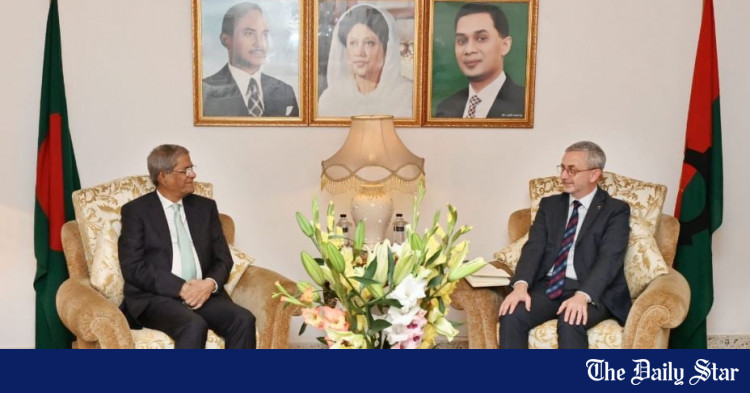
Photo: Courtesy/BSS

The EU today said it stands ready to support the interim government's ambitious reforms on democracy, rule of law, and human rights.

However, the EU said those priority reform areas should be identified based on a consensus reached by dialogues between the interim government and political parties.

EU Ambassador to Bangladesh Michael Miller made the comments after meeting with the Bangladesh Nationalist Party leaders to learn about its political plans.

The remarks came after four reform commissions submitted their recommendations on 15 January. It also came after Chief Adviser Professor Muhammad Yunus last month set out possible election dates.

Meanwhile, the US said it remains dedicated to upholding human rights and strengthening the justice system to ensure the principles of fairness and security for all.

In her first engagement with the interim government, new Chargé d'Affaires, Ambassador Tracey Ann Jacobson had a "productive discussion" with the Law Adviser Asif Nazrul on labour rights, judicial reform, and counter-terrorism.​
 
Analyze

Analyze Post

Add your ideas here:
Highlight Cite Fact Check Respond

Reform proposals without consensus unacceptable
Says Fakhrul; BNP pays tribute to Ziaur Rahman on his 89th birth anniversary

1737329559392.webp


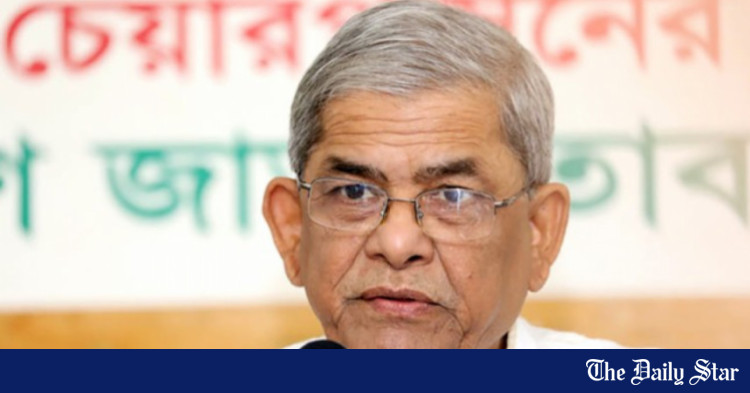
BNP Secretary General Mirza Fakhrul Islam Alamgir today said none of the reform proposals will be acceptable without the consensus of the political parties.

When asked about the submitted reports of the four reform commissions, he said, "We are yet to make any initial remarks as we have not received the full report. The government has said it will hold discussions with political parties after receiving the reports and make a decision on the reform proposals afterwards. Without consensus, none of it will be acceptable."

The BNP leader made the remarks while speaking to reporters after paying tribute to Ziaur Rahman on the occasion of his 89th birth anniversary at his grave in the capital's Sher-e-Bangla Nagar area.

"We hope, within a short time, we can return to democracy through elections and that such a system can be established," Fakhrul said.

Asked about BNP's demand for elections by July-August, which some have called unrealistic due to the challenges of reforms and justice, Fakhrul said, "We have always said there is no conflict between reforms and elections."

He said the party that wins the election and forms the government will carry forward the reforms.

"We can say it clearly, on behalf of our party, that we will take forward every reform if we form the government," he said.

To mark the birth anniversary of BNP founder, Fakhrul, alongside other party activists and leaders, paid homage by placing floral wreaths at the mausoleum of Ziaur Rahman.

After paying tributes, Fakhrul said, "When Ziaur Rahman assumed state leadership in 1975, he undertook numerous reforms in a short time to build a modern and prosperous Bangladesh."

"He (Ziaur Rahman) was also the first to liberate the economy from the restrictive socialist framework and introduce a free-market economic plan. It was during his tenure that a revolution occurred in agriculture," added Fakhrul.

Zia became a statesman after a lot of political changes post-Liberation War. He established the Bangladesh Nationalist Party (BNP) on September 1 in 1978.​
 
Analyze

Analyze Post

Add your ideas here:
Highlight Cite Fact Check Respond

Members Online

⤵︎

Latest Posts

Latest Posts