Donate ☕
201 Military Defense Forums
[🇧🇩] - Textile & RMG Industry of Bangladesh | Page 80 | PKDefense
Home Post Alerts Inbox Watch Videos

[🇧🇩] Textile & RMG Industry of Bangladesh

Reply (Scroll)
Press space to scroll through posts
G Bangladesh Defense
[🇧🇩] Textile & RMG Industry of Bangladesh
420
16K
More threads by Saif


Climate change reducing RMG productivity
Finds BIDS study

1765156099592.webp

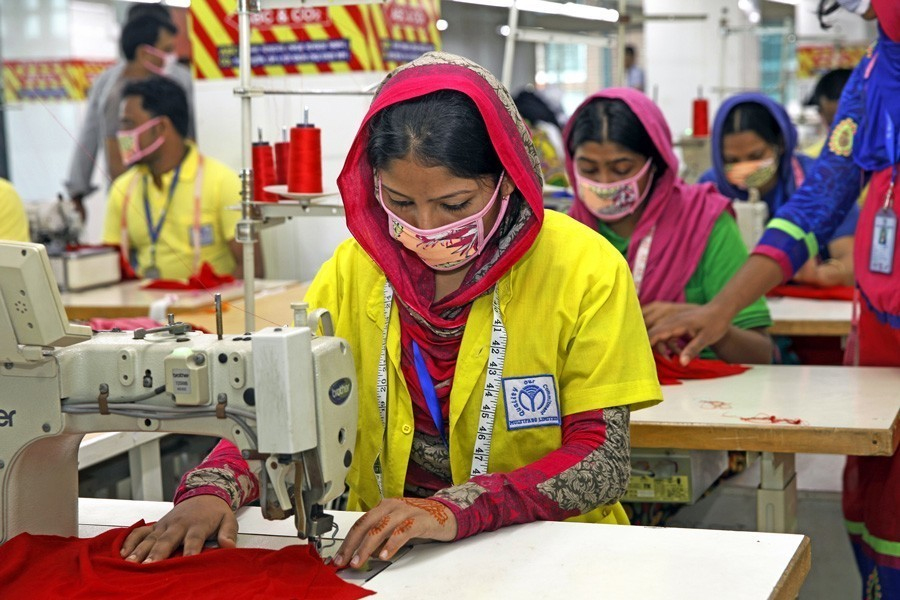
File photo of a garment factory/Star

Climate change is already denting production in Bangladesh's garment factories as rising temperatures reduce worker productivity, according to a study presented today.

The research, titled "Global Value Chains and Climate Change Governance: Garment Producers' Futures", said excessive heat inside factories poses a major barrier to social upgrading.

Mohammad Harunur Rashid Bhuyan, senior research fellow at the Bangladesh Institute of Development Studies (BIDS), carried out the work with Rachel Alexander. He presented the findings at a session of the Annual BIDS Conference on Development in Dhaka.

The study noted that climate refugees are increasingly taking up jobs in the garment sector. As their numbers rise, more may enter the workforce, which "may have negative impacts on wages".

Moreover, it said climate pressures could heighten gender-based violence and harassment as productivity falls and socio-economic vulnerability increases.

The global garment industry is a major emitter of greenhouse gases (GHG), releasing between 1.025 billion and 3.29 billion tonnes of CO2e. This represents 2 percent to 7 percent of total worldwide emissions.

Fossil fuel-based energy across apparel production stages remains the main source of emissions, according to the study.

It said fertiliser and pesticides used in cotton farming and the production of polyester contribute heavily. During manufacturing, emissions are generated by sewing machines, production lines, and heating, ventilation and air conditioning systems.

The study said pressures to cut emissions may support environmental improvements in factories, although the shift to green energy in Bangladesh remains slow.

The government has pledged to produce at least 30 percent of electricity from renewable sources by 2041. Yet only 1.4 percent of Bangladesh's electricity in 2019 came from renewables.

The study said factories depend almost entirely on the national grid, which needs to be "green for environmental upgradation of this sector".

The government's Industry Policy 2022 encourages cleaner industrial practices by promoting effluent treatment plants, central ETPs, and assistance for industries seeking to apply clean development management to control greenhouse gases.

Producers, however, face steep costs, limited access to finance, technical constraints, and inadequate information and equipment, according to the study.

'UNIONISED WORKERS EARNING MORE'

A separate study at the event examined wage patterns among manufacturing workers. Mahmudul Hasan, research associate at BIDS, said unionised workers consistently earn higher wages across all model specifications.

The study found that even after full controls, unionisation remains a strong determinant of earnings.

For garment workers, wages are 19 percent to 22 percent higher due to stronger compliance, formal structures, and higher skill intensity.

The research found no significant wage difference between unionised and non-unionised garment workers once characteristics and compliance were taken into account.

Within the RMG sector, unions advocate for both unionised and non-unionised staff. Spillover effects and compliance norms help lift garment workers' wages above those in non-RMG industries.

Unionised RMG workers earn markedly more than both non-unionised RMG staff and non-unionised workers in other sectors, the study said.

It added that 11.35 percent of manufacturing workers are unionised overall, earning about 10 percent more than non-unionised workers. Higher wages in RMG may reflect stronger compliance, more effective unions, formal structures, and greater skill intensity.

'TECHNOLOGY LIFTING PRODUCTIVITY'

The third study assessed technology use across industrial sectors.

Kazi Zubair Hossain, research associate at BIDS, said annual productivity growth in the garment sector reached 4.19 percent for 2014-2023 due to technological improvements.

RMG firms producing jackets recorded the fastest growth at 6.59 percent a year. Knit-lingerie followed at 6.43 percent and sweater production at 6.05 percent.

Home textiles grew by 5.58 percent, and T-shirt production by 4.39 percent. In contrast, woven shirts rose by 3 percent, woven trousers by 1.15 percent, and denim by 1.81 percent over the same period, the study said.

BIDS Research Director Mohammad Yunus moderated the session.​
 
Analyze

Analyze Post

Add your ideas here:
Highlight Cite Fact Check Respond

Brazil becomes Bangladesh’s top cotton supplier, surpassing India
1765243329412.webp


Brazil has emerged as the main supplier of raw cotton for Bangladesh, one of the world's top cotton importers and the second-largest garment exporter, surpassing neighbouring India, according to a US Department of Agriculture (USDA) report.

In the marketing year 2024–25 (MY25), beginning in August, Bangladesh imported 8.28 million bales of raw cotton. Brazil supplied about 1.9 million bales, accounting for 23 percent of total imports.

Google News LinkFor all latest news, follow The Daily Star's Google News channel.
India was the second-largest supplier with 1.4 million bales, followed by Benin (1.06 million bales), Cameroon (616,538 bales), and the United States (595,902 bales).

The USDA report said that Brazilian cotton has become popular among Bangladeshi spinners due to its competitive pricing, wide availability during harvest, and stable supply.

In MY24, India was the top supplier, exporting 1.79 million bales (23 percent share). Bangladeshi importers mainly bought Indian cotton for shorter shipment times via the Kolkata and Benapole ports, despite higher prices and some quality issues.

For the current marketing year, MY26, the USDA forecasts Bangladesh's cotton imports at 8.4 million bales, a 1.4 percent increase from MY25, driven by higher usage by local spinners. This is 5.2 percent higher than the 7.8 million bales imported in MY24.

The report highlighted that cotton imports remained stable throughout MY25, despite early disruptions in RMG production following the formation of a new interim government in August 2024 after former prime minister Sheikh Hasina fled amid a student-led uprising in July.

Domestic cotton production is, however, expected to remain unchanged at 153,000 bales, limited by land scarcity and the long growing period, with cotton cultivated on 45,000–46,000 hectares.

Bangladesh's textile industry has the capacity to consume about 15 million bales annually, depending on raw material availability, power supply, and yarn demand.

Currently, only half of this capacity is being used, with raw cotton consumption estimated at 8.3 million bales in MY25. The USDA projects consumption will rise to 8.5 million bales in MY26, a 2.4 percent increase, driven by higher expected imports.

The spinning industry uses raw cotton to produce cotton and blended yarn, with yarn production expected to increase to 1.9 million tonnes in MY26 from 1.7 million tonnes.

Despite rising raw cotton imports and usage, Bangladesh's readymade garment industry is still expected to import more yarn and fabric.

India remains the largest supplier of cotton yarn to Bangladesh due to its large spinning industry, shorter shipment times, and lower logistics costs, while China is the top fabric exporter, followed by Pakistan and India.​
 
Analyze

Analyze Post

Add your ideas here:
Highlight Cite Fact Check Respond
  • Love (+3)
Reactions: Bilal9

BGMEA seeks Chinese investment in man-made fibre

1765501875546.webp


Leaders of the Bangladesh Garment Manufacturers and Exporters Association (BGMEA) today sought cooperation from the Chinese investors for joint-venture investment in manmade fibre (MMF), chemical and renewable energy.

The request was made during a meeting between the BGMEA officials and a visiting Chinese delegation held at the BGMEA office in Dhaka.

China, the largest garment exporter globally, currently holds over 30 percent of the international garment market, though its share has declined in recent years.

The country is also the largest supplier of MMF products and is exploring alternative production destinations in other countries to reduce costs.

At the meeting, Inamul Haq Khan, senior vice-president of BGMEA, said Bangladesh is focusing on technology upgrades, advanced machinery, and MMF-based production to remain competitive in global markets.

He urged Chinese investors to explore joint ventures in MMF textiles, chemicals, and renewable energy, which he said would reduce costs and shorten lead times for apparel exporters.

Khan also highlighted cooperation opportunities in AI-driven manufacturing, integrated supply chain systems, 3D photo production, and digital product passports as critical for Bangladesh's post-LDC graduation challenges.

BGMEA Director Faisal Samad emphasised the need for frequent engagement between businesses of both countries, proposing a coordination meeting in January supported by Betttex Industries.

He also suggested signing a memorandum of understanding (MoU) with the Cheung Kong Graduate School of Business (CKGSB) to enhance collaboration in education and research.

Samad noted that since Bangladesh imports a significant volume of fabrics from China, business disputes occasionally arise.

Having a Chinese law firm available for dispute resolution, he said, would benefit companies on both sides by providing a reliable platform for settling commercial issues.

The Chinese delegation expressed interest in joint investments in renewable energy and other emerging sectors.

They also invited BGMEA leaders to visit major fabric-manufacturing hubs in China and agreed to meet again in January.

Key members of the Chinese delegation included information technology (IT) and supply chain specialists Yi Shanwei, chairman of Weihai Bettex, and Yi Ran, project manager; Luo Fei, chairman of Beijing Mofeng Technology; and Gao Bin, president of Nanjing Zhiyi Network Technology.

From the textile and fabrics sector, attendees included Shen Hanxin, CEO of Fast Powder; Luan Rundong, executive director of Changzhou Jinhe Investment; and Quan Shouli, general manager of Suzhou Youwo Rui New Materials Technology.

Currently, China remains Bangladesh's largest source of imported raw materials, including fabrics, chemicals, and accessories for export-oriented garment items.

Many Chinese investors are exploring opportunities in Bangladesh due to higher US tariffs on Chinese products, while global brands are increasingly relocating some work orders from China to countries such as Bangladesh, Vietnam, Thailand, and Myanmar to reduce production costs and mitigate supply chain risks.​
 
Analyze

Analyze Post

Add your ideas here:
Highlight Cite Fact Check Respond
  • Love (+3)
Reactions: Bilal9

EXPORTERS GATHER WITS AFTER TARIFF TROUBLE
RMG export to US beats BD’s competitors
Jan-September turnover posts double-digit growth at18.64pc


Monira Munni
Published :
Dec 14, 2025 01:07
Updated :
Dec 14, 2025 01:07

1765673451629.webp


Bangladesh's apparel export to the United States, its single-largest market, circumvents tariff tempests and records a double-digit growth of18.64 per cent, the highest among major competitors, in the first nine months of 2025.

According to US official count, the exports grew both in terms of value and volume during the January-to-September period of the current calendar year.

inset-p-1-1Readymade garment exports from Bangladesh during the period singly fetched US$6.42 billion, marking the 18.64-percent growth, according to the data released on December 11 by OTEXA, an affiliate of the US Department of Commerce.

The country had earned US$5.41 billion in the same period of 2024.

During the reporting period, the growth rate also surpassed the global average of 1.74 per cent, placing Bangladesh ahead of main competitors, save Cambodia, though Vietnam sustained top-exporter stand pushing China behind.

During the reporting period, Bangladesh outpaced almost all its major competitors in export growth to the US, its single-largest export destination.

However, exporters say that the OTEXA published the data of September for the shipments made two months back while reciprocal tariffs imposed by the US came into effect on August 7.

And it would take two more months to get "the real picture of US tariff impact when the country might see a downturn in the coming months due to tariff issues".

According to state-owned Export Promotion Bureau (EPB) data, published two months ahead of Otexa data, overall RMG exports have already started facing a downtrend for the past four months since August 2025.

Meantime, during the January -to- September period, Bangladesh shipped 2.07 billion square meters of garments, about 19 per cent higher than 1.73 billion square meters sent in the corresponding period of 2024.

America's overall apparel imports during the period stood at US$60.34 billion, up from $59.31 billion in the corresponding period of last year. Vietnam, during the first nine months of 2025, became leading apparel exporter to the US, shipping RMG items worth US$12.74 billion, accounting for about 13.69-percent growth.

China dropped to the second position with US$8.78 billion worth of apparel shipments with a 29.89-percent year-on-year negative growth, highlighting the effects of elevated tariff barriers and ongoing geopolitical tensions.

Asked about the industry view, Fazlee Shamim Ehsan, executive president of Bangladesh Knitwear Manufacturers and Exporters Association (BKMEA), says Otexa revealed two-month previous data, meaning September data reflected the shipments made early July and onwards.

To get the picture of US tariff impact, he says, it takes two more months when data would revealed for the shipments of August onwards. "There is still growth on the US market and it might not fall much or continue to grow provided a stable political situation with national election in place which will also bring back the buyers' confidence," the industry owner tells The Financial Express.

He looks to a better tomorrow for business. With improving local situation having a stable political government, Bangladesh would likely to get higher chunk of shifted work orders especially from China, he says.

The BKMEA leader, however, notes that Bangladesh is facing challenges in the EU where the economy is undergoing difficulties while major competitors like China have been focusing on that market due to high US tariffs on China's goods.

Exporters say though Chinese orders have been shifting from the US due to high tariffs, China is increasing its share in the EU market aggressively by offering 'much lower prices' to buyers to offset US market-share decline.

Meantime, India's apparel exports rose by 12.81 per cent to US$4.10 billion during the January-to-September period of 2025.

Indonesia recorded a 13.49 -percent increase in apparel shipments to US$3.59 billion, continuing its steady growth as a supplier to the US market. Cambodia bagged 28.47-percent rise in exports, reaching US$3.57 billion, during the period under consideration.

Pakistan also recorded a growth of 14 per cent to bag US $1.80 billion from the US market.​
 
Analyze

Analyze Post

Add your ideas here:
Highlight Cite Fact Check Respond

RMG industry under strain amid factory closures, job losses
BKMEA chief says, decries rising production costs

1765675305027.webp


Mohammad Hatem

The country's readymade garments (RMG) sector is facing one of its toughest periods in recent years, with falling exports, rising production costs, factory closures, and financial instability putting immense pressure on manufacturers, Mohammad Hatem, president of the Bangladesh Knitwear Manufacturers and Exporters Association (BKMEA), said.

In an interview with The Daily Star, Hatem described the situation as "extremely alarming," blaming ineffective policies and a lack of banking support for worsening the crisis.

"Not only the RMG sector, but the entire economy, business environment, and flow of money are not functioning smoothly," he said. "We have raised these issues for a long time, but effective solutions are still missing."

Hatem acknowledged some government measures, including action against large-scale bank irregularities, partial control of inflation, and easing the dollar crisis, but said they do not address the deep structural problems of the export-driven RMG sector.

"The government has failed to introduce business-friendly policies in a timely and coordinated way. We are not against the government; we have praised several initiatives. But on key economic issues -- trade, banking, and industrial policies -- there has been little consultation with stakeholders like us," he added.

Over the past few years, major financial support for the sector has been withdrawn. Hatem cited the reduction of the Export Development Fund (EDF) allocation and the closure of the Tk 5,000 crore Pre-shipment Credit Fund in April 2024, which offered loans at just 5 percent interest.

"With borrowing costs now around 15-16 percent, businesses are struggling to survive. How can an industry survive under such intense financial pressure? We are fighting just to stay afloat," he said.

The removal of export incentives, part of Bangladesh's plan to phase them out ahead of its graduation from Least Developed Country (LDC) status, has added further pressure. "From February 1, 2024, previous export incentives were discontinued. The remaining 0.3 percent is almost unusable due to heavy paperwork and red tape. For us, it is effectively cancelled," Hatem said.

He said around 250-260 RMG factories have closed over the past 18 months, leaving more than 2.2 lakh workers unemployed. "Some factories have opened during this period, creating 30,000 to 40,000 jobs, but overall job loss remains very high," he added.

In Narayanganj, a major knitwear hub, individual factory closures have left thousands unemployed. "These are not just statistics. They represent families, livelihoods, and entire communities," he said.

GLOBAL MARKET PRESSURES AND BANKING CHALLENGES

The global economic climate has also become less supportive for Bangladeshi exporters. In the United States, the country's largest export market, inflation and weaker consumer purchasing power have reduced demand. "Buyers are cautious. They are uncertain about future tariffs and are taking a wait-and-see approach. As a result, we are receiving fewer orders," Hatem said.

Some US quarters have tried to impose parts of the general tariff structure -- about 20 percent -- on Bangladeshi goods, which could further undermine competitiveness.

Meanwhile, exporters from China and India, facing barriers in the US, have shifted focus to Europe, creating "unhealthy competition" and reducing Bangladesh's flow of orders.

As a result, many factories are running well below capacity. "Most are running 20-30 percent below capacity, and some are 40-50 percent lower than normal. This is not sustainable," Hatem said.

Hatem criticised the banking sector for failing to support industries in their time of need. "Banks are completely uncooperative, especially with small and medium-sized enterprises. In some cases, it's worse than neglect -- it's active obstruction," he said.

Bank credit limits have not been adjusted with changing exchange rates. "For example, a Tk 50 crore credit limit when the dollar was Tk 83 allowed LCs worth $6 million. Now that the dollar is Tk 122, I can only open LCs worth around $4 million with the same limit. Yet banks refuse to revise it," Hatem added.

He also highlighted long delays in back-to-back LC processing -- sometimes 20-30 days -- which disrupt production cycles. "Banks give all sorts of excuses -- margin issues, documentation problems, or that your limit is used up. It's the same story every time."

Exporters are struggling to access their own funds, with banks charging 15-16 percent interest on export proceeds needed for salaries. "Earlier, we could access this money interest-free for 30 days. Now, we are being charged even for that," he said.

Hatem also accused banks of manipulating exchange rates. "They buy dollars from us at lower rates but sell them back at higher rates when we need to make payments. This dual pricing is unfair."

He urged the government and Bangladesh Bank to act quickly. "We need targeted, sector-specific policies. Most importantly, the banking system needs urgent reform. If this trend continues, more factories will close, and the impact on the national economy will be severe," he said.

"This is not just about factories -- it's about exports, jobs, and the economic future. If we don't act now, we may not get a second chance," Hatem warned.​
 
Analyze

Analyze Post

Add your ideas here:
Highlight Cite Fact Check Respond
  • Sad (0)
Reactions: Bilal9

Members Online

⤵︎

Latest Posts

Latest Posts