Donate ☕
201 Military Defense Forums
[🇧🇩] - Save the Rivers/Forests/Hills-----Save the Environment | Page 5 | PKDefense
Home Login Forums Wars Watch Videos
Serious discussion on defense, geopolitics, and global security.

[🇧🇩] Save the Rivers/Forests/Hills-----Save the Environment

Reply (Scroll)
Press space to scroll through posts
G Bangladesh Defense
[🇧🇩] Save the Rivers/Forests/Hills-----Save the Environment
523
13K
More threads by Saif

Stop disturbing the Sundarbans!​

Restrain traffic of ships through the forest

1711232731282.webp


It is deeply concerning that on top of projects, megaprojects, illegal occupations and deforestation ravaging the Sundarbans, traffic of ships through the forest has increased dramatically in recent years. A recent report sheds light on how ships, discharging harmful fumes and sound pollution, and often carrying toxic materials through the forest, have nearly doubled in a decade—from 357 trips monthly in 2012 to 837 trips in 2022, and 701 trips monthly so far this year.

Under the first Protocol on Inland Water Transit and Trade between Bangladesh and India, signed in 1972, lighter cargo vessels can operate between the two countries using the waterways mostly through the Sundarbans. A major route for these ships goes through at least 100 km of the river system inside the mangrove forest, which takes around eight hours for the vessels to travel. While any motor vehicle, including boats and ships, is strictly prohibited from operating through the forest after sunset till sunrise, ships continue to operate 24/7 unrestrained. The customs station in Angtihara, the entry point to the forest on this route, only logs the trips of the ships and does not monitor if any laws have been broken. While the customs and immigration in India close off at night, our customs office continues to operate throughout the night.
By allowing these activities, we are now destroying the Sundarbans from the inside. The toxic fumes and loud sounds greatly impact wildlife habitats and breeding environments. The propellers disrupt the marine ecosystem, and the waves cause severe erosions. For instance, the width of rivers on this route has increased from 20-30 metres to 50-60 metres. Most of the ships on this route contain fly ash, coal, and stones from India for our riverside cement factories. In the last seven years, at least 15 such ships have capsized inside the forest, spilling these harmful materials directly into the river.

Bangladesh has now become a land of lost forestlands and dead ecosystems. We have irredeemably destroyed a number of forests and major sources of biodiversity throughout this delta, and even in the hill tracts. The Sundarbans is the last hope for any unique and great population of wildlife to survive. The government must ensure that any activity harming this forest is halted immediately, and look for an alternative route for maritime trade with India as well as consider moving major power plants and factories from the area.​
 
Analyze

Analyze Post

Add your ideas here:
Highlight Cite Fact Check Respond

Coca-Cola, PepsiCo, Nestlé among top plastic polluters: Study
Staff Correspondent 27 April, 2024, 18:51

1714260896164.webp

This photo taken on April 26, 2024 shows plastic wastes floating on water in river Buriganga in Dhaka. Coca-Cola, PepsiCo, and Nestlé have been identified as the top three contributors to global plastic pollution in a new study published in the journal Science Advances on April 24. | Sony Ramany.

Coca-Cola, PepsiCo, and Nestlé have been identified as the top three contributors to global plastic pollution in a new study published in the journal Science Advances on April 24.

The study, involving over 100,000 volunteers and cataloguing 1.8 million pieces of plastic waste from 84 countries between 2018 and 2022, identified 56 companies as responsible for over 50 per cent of branded plastic waste worldwide.

Among the companies, Coca-Cola is the biggest contributor, causing 11 per cent of global branded plastic pollution, followed by PepsiCo at 5 per cent, Nestlé and Danone each at 3 per cent and Altria at 2 per cent respectively.

The study, led by scientists at Dalhousie and a dozen different universities in the United States, Australia, the Philippines, New Zealand, Estonia, Chile, Sweden, and the UK, disclosed that 19,586 companies were accountable for all branded plastic, with major corporations in the food and tobacco industries emerging as the primary polluters in their respective regions.

The study highlighted that around 9,10,000 out of over 1.8 million plastic pieces had visible brands, while noting that plastic items can lose their brand identification due to exposure to sunlight and weather conditions.

It found over 50 per cent of plastic items unbranded, underscoring the necessity for improved transparency regarding the production and labelling of plastic products and packaging to enhance traceability and accountability.

The study observed that if the largest polluters phased out single-use and short-lived plastic products, it could significantly reduce global plastic pollution.

The countries used in the analysis represented a combined population of 6.5 billion people or about 81 per cent of the global population, based on July 2022 population estimates.

To effectively combat global plastic pollution, the study suggests that corporate producers of plastic waste must reduce the amount of plastic in their products and refrain from using regrettable alternatives.

This involves phasing out nonessential and avoidable single-use products and adopting safe, sustainable product designs that decrease the global demand for new items while promoting reusability, reparability, and recyclability, it added.​
 
Analyze

Analyze Post

Add your ideas here:
Highlight Cite Fact Check Respond
  • Like (+1)
Reactions: Bilal9

To protect Dhaka's future, balance urbanisation with greenscapes

1714346763915.webp

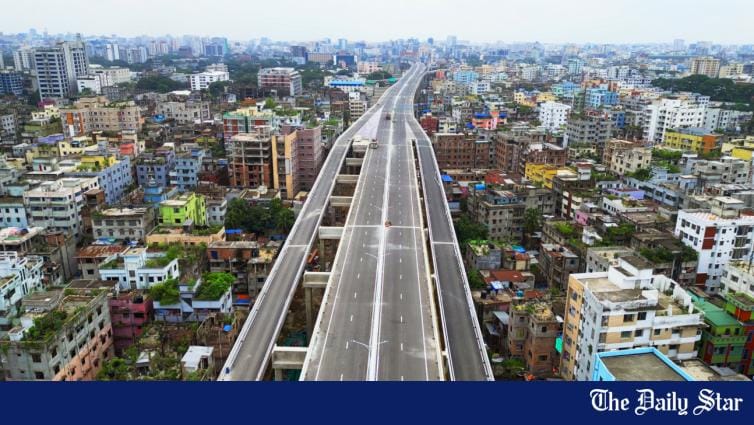
Imagine a Dhaka where integrated greenways, adorned with trees, shrubs, and native plants, would offer respite from the concrete jungle that it is today. FILE PHOTO: NAIMUR RAHMAN

Rapid urbanisation, soaring temperatures, and the urgent need for sustainable solutions—are what currently defines the city of Dhaka, the capital of Bangladesh. The recent temperature surge in the city has been unprecedented. In April, it witnessed its second-highest temperature ever recorded, at 40.2 degrees Celsius. The highest temperature in Dhaka's history remains 42.3 degrees Celsius, recorded in April 1960. Heatwaves during the dry month of Chaitra, the Bangla calendar month that coincides with the period of mid-March to mid-April, intensified the discomfort, urging for a rethink of the country's urban strategies.

The intense heat absorbed by building walls and roofs from direct sunlight exposure can significantly raise temperatures, especially for top-floor flats in multistorey buildings in a city like Dhaka. Inadequate shade exacerbates this issue, leading to prolonged air conditioner use for comfort, resulting in higher energy consumption. The escalating demand for cooling devices has surged in Dhaka due to rising temperatures, which have increased by around three degrees Celsius over the past two decades, according to the Institute of Planning and Development (IPD).

This overuse of air conditioners has led to increased energy consumption both at the household and national levels. Studies have highlighted that a significant portion of electricity consumption in residential buildings is attributed to cooling purposes, with the latter noting that 38 percent of consumption is for cooling comfort provided by electric fans. According to a World Bank analysis in 2010, the majority of urban households in Dhaka consumed between 100 and 400 kWh of power per month, with wealthier households using over 400 kWh primarily due to increased air conditioner usage. This is ironic as air conditioners contribute to global warming.

Dhaka has been transforming into a city of roads, flyovers, and high-rises. Unfortunately, this development has come at the cost of widespread tree loss. Trees, crucial for heat mitigation, are being uprooted during road and flyover construction. Foliage gives way to concrete, and the microclimate within the city diverges significantly from rural surroundings. Dhaka's outdoor temperature registers 1-1.5 degrees higher than the adjacent regions. While development is essential for progress, preserving trees is equally critical. These natural air conditioners absorb heat, release moisture, and maintain ecological balance. Striking the balance between urban growth and safeguarding green spaces is vital for Dhaka's resilience against extreme temperatures and ensuring a sustainable future.

The metro rail system has emerged as a popular mass transit solution for Dhaka. Its expansion promises efficient connectivity and reduced traffic congestion. Integrating metro lines with greenways and blue nodes can revolutionise urban mobility. Imagine a network where metro stations seamlessly blend with green corridors. These integrated greenways, adorned with trees, shrubs, and native plants, would offer respite from the concrete jungle. At strategic points, blue nodes, natural water bodies, or revitalised canals become urban oases. Imagine strolling along a tree-lined path with glimpses of shimmering water, a harmonious blend of nature and infrastructure.

These authors conducted several studies on the plausible impact of integrated greenways in ameliorating street canyon microclimates of residential Dhaka, ensuring pedestrian thermal comfort for the urbanites, between 2016 and 2023. These studies revealed that Dhaka's street canyons are thermally uncomfortable for pedestrians with raised air temperature (TA), mean radiant temperature (MRT), reduced relative humidity (RH), and wind speed (WS) during hot summer days. The authors steered field investigation in 13 points of eight street canyons for bare (no tree) and green or greenway (large green trees on either side of the roads) canyons. The field investigation showed that the greenway identical street canyons showed lower TA by 0.73-1.34 degrees and higher RH up to 0.44-1.58 percent than the bare canyons.

Dhaka's roads are mostly categorised into primary, secondary, and tertiary levels. While tertiary roads mostly serve as residential access routes, primary and secondary roads can be strategically integrated with greenways. Transforming selected roads into greenways while preserving the alternative ones for vehicular access enhances thermal comfort. Even tertiary roads, transformed into partial or half greenways or fully orthodox pedestrian greenways, effectively moderate temperatures.

Outside Dhaka, cities following similar development trajectories should reevaluate their strategies. Preservation should take precedence over relentless construction. While development is important and inevitable, it should be harnessed for climatic advantage. Incorporating blue and green networks during planning ensures a sustainable future. Reducing reliance on air coolers and promoting natural ventilation by keeping windows open enhances comfort. Transforming hard surfaces into softscapes, such as porous pavements, improves the microclimate. These materials allow for evapotranspiration, cooling the surroundings. Cool pavements, including PICP, can tremendously reduce daytime TA and MRT.

Edifices can contribute significantly to temperature reduction. Green roofs act as insulators, absorbing excess heat and providing additional green space. Vertical green walls enhance aesthetics, improve air quality, and reduce heat absorption. Urbanisation does not need to come at the cost of green spaces; rather, it should harmonise with them.

With the support of the UK-based Wellcome Trust, Griffith University, the University of Sydney, BMT, and Buet jointly conducted a three-year research project on the escalating heat exposure at garment factories in Bangladesh and its impact on workers. Workers at RMG factories endure physical discomfort from excessive heat exposure exacerbated by global warming, significantly reducing their productivity. This reduction is projected to reach five percent of the workers' total work hours by 2030.

Bangladesh is predicted to experience an increase of temperature by two degrees Celsius by 2050, which will lead to more frequent heatwaves, posing challenges for RMG factories. Increased reliance on air conditioners, as well as coal and gas for power generation, exacerbate the situation. However, proactive measures can reduce temperatures by two to three degrees through natural heat control methods, preserving work hours and minimising worker discomfort. A pilot project implementing climate change heat reduction recommendations can pave the way for sustainable solutions.

Dhaka thrives as a city of possibilities, a place where progress aligns with nature, ensuring comfort, resilience, and well-being for all. Its destiny hinges on all urbanites' collective commitment to sustainable urbanisation. Let Dhaka be a city where progress coexists harmoniously with nature, a beacon of sustainable urban living, ensuring comfort, resilience, and well-being for all.

Dr Md Ashikur Rahman Joarder is professor of environment and energy at the Department of Architecture, Bangladesh University of Engineering and Technology (Buet).

Zarrin Tasnim is lecturer at the Department of Architecture, Fareast International University (FIU).​
 
Analyze

Analyze Post

Add your ideas here:
Highlight Cite Fact Check Respond
  • Love (+3)
Reactions: Bilal9

Environmental issues to be included in textbooks: minister

1714433237809.webp

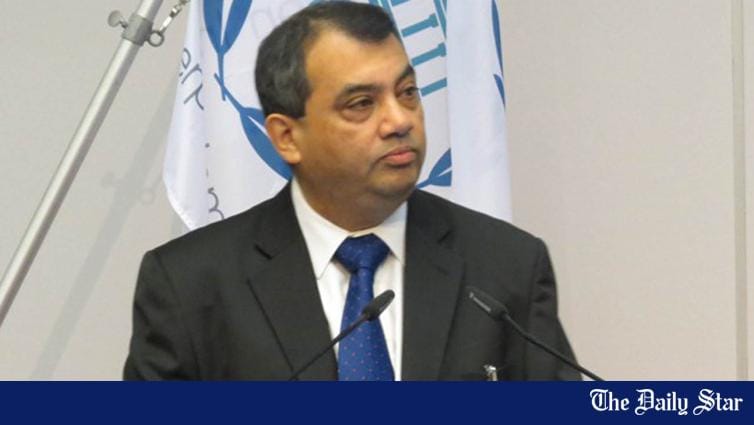
Saber Hossain Chowdhury. Star File Photo.

Environment, Forest, and Climate Change Minister Saber Hossain Chowdhury today said his ministry has initiated the inclusion of issues related to environmental conservation and climate change mitigation in the curriculum for students from Class 3 to 8.

"The ministry is undertaking such initiatives to instill awareness in children from a young age," he said.

The minister made these remarks while speaking as the chief guest at the National Seminar on "Citizen Roadmap to Advance Sustainable Urbanisation and Environmental Protection", organised by Counterpart International with funding of USAID, held at a hotel in the capital.

Saber said everyone must be more mindful of plastic usage, city authorities must have a proactive role in waste management. The government cannot address these issues alone; collaboration with all stakeholders is essential and called for a caucus in parliament involving 46 MPs, who had pledged to address waste management.

He said effective measures are being taken to combat air and noise pollution.

Muhammad N Khan, director of the Office of Economic Growth at USAID; Katie Croake, chief of party at Counterpart International; Gwendolyn Appel, vice president of programmes at Counterpart International, and Ijaz Hossain, former professor and dean at the Department of Chemical Engineering at BUET, were also present.​
 
Analyze

Analyze Post

Add your ideas here:
Highlight Cite Fact Check Respond
  • Like (+1)
Reactions: Bilal9

Govt to enhance eco-tech in rice cultivation: Saber

1714605998764.webp


Environment, Forest, and Climate Change Minister Saber Hossain Chowdhury today shared plans to boost the adoption of eco-friendly technologies in rice cultivation, aimed at curbing greenhouse gas emissions.

Embracing such technologies not only mitigates carbon footprints but also optimises resource utilisation, potentially unlocking opportunities for international carbon crediting.

The minister shared these insights during a meeting with a coalition comprising the Asian Development Bank, the Federation of Chambers of Commerce and Industries, and Cisco, convened at his residence in Dhaka's Paribagh.

Acknowledging the efforts of the Asian Development Bank and Cisco in launching a pilot project in the Barendra region, Saber emphasised the significance of technology in resolving water scarcity and slashing carbon emissions.

He expressed readiness to endorse initiatives that address these critical issues, urging stakeholders to submit proposals through the Ministry of Agriculture.

Highlighting the pivotal role of the private sector and farmers, he underscored the importance of implementing carbon-reducing smart agricultural practices to bolster productivity and yield positive outcomes while grappling with challenges like dwindling groundwater levels and the imperative of decarbonisation.

The delegation commended Bangladesh's proactive stance and pledged support in advancing environmental sustainability endeavours.​
 
Analyze

Analyze Post

Add your ideas here:
Highlight Cite Fact Check Respond
  • Like (+1)
Reactions: Bilal9

Climate victims testify at Americas rights court in historic case

Activists and residents hold a banner reading 'Climate emergency' while standing near houses destroyed by rising sea levels, forcing villagers to relocate, in El Bosque, Mexico November 7, 2022.

From Mexicans left homeless by rising seas to Colombians affected by coral bleaching, hundreds of people are telling the top human rights court in the Americas what climate change means to them in a historic case that could shape international law.

Environmental lawyers also hope the hearings at the Inter-American Court of Human Rights (IACHR), which were requested by Colombia and Chile, will define the duties of states to confront the climate crisis and stop it from infringing on human rights.

As well as receiving submissions from climate victims, the Costa Rica-based court, which started its inquiry in Barbados in April, will hear from UN agencies, legal experts, grassroots environmental campaign groups, and youth groups.

The next sessions are due to be held in Brasilia and then in Manaus, Brazil at the end of May, and an advisory opinion is expected by May 2025.

"We're hoping that the court's legal opinion is a guide and reference for Mexico, and other states, to develop public policies from a climate justice perspective," said Nora Cabrera, a lawyer and head of Our Future, a Mexico-based youth climate justice campaign group.

"And that it includes loss and damage compensation for affected communities, and adaptation policies for those not yet directly affected by climate change," said Cabrera, who will be speaking at the next hearing in Manaus.

In January, Colombia and Chile asked the IACHR to issue an advisory opinion, saying that they were experiencing the "daily challenge of dealing with the consequences of the climate emergency," including fires, landslides, droughts and floods.

"These events reveal the need for an urgent response based on the principles of equity, justice, cooperation and sustainability, with a human rights-based approach," they said in their petition.

"There is a close relationship between the climate emergency and the violation of human rights," they added.

It is this link between climate change and human rights that the IACHR will seek to define, while also examining how climate change affects migration and looking at the disproportionate effect on children, women and Indigenous people.

Chile and Colombia also asked the court for clarification on a state's duties to protect environmental activists.

Latin America is the most dangerous place in the world for environmental and land defenders, according to advocacy group Global Witness. Around 90% of the 177 killings of environmental activists recorded in 2022 took place in the region.

"The hearing aims to ask for clarity about human rights obligations and the climate crisis," said Jacob Kopas, senior attorney at the Earthjustice environmental group, one of a group of lawyers who spoke at the Barbados hearing on April 26.

"It will help to create a more concise framework to guide state behavior and policy to confront the climate crisis and protect human rights," said Kopas.

WE'RE LIVING CLIMATE CHANGE NOW

Among those submitting testimonies will be the residents of the El Bosque fishing community in Tabasco, Mexico, where rising sea levels caused by climate change have swept away about 200 meters of coastline.

Since 2019, the school and more than 50 homes have been destroyed, forcing about 200 people to leave.

El Bosque community leader, Guadalupe Cobos, said she and 10 neighbors will probably have to leave within a year and resettle in an area about 12 km away, where new homes are being built by the government.

"We depend on the sea but coastal erosion has affected our way of life. It's important for the court to know that we're living climate change now and that this isn't something that will happen in the future in 20 or 50 years' time," said Cobos.

"We want the court to hear our experiences and to know that our rights have been violated, that we have been forced to migrate," Cobos told the Thomson Reuters Foundation.

The court's advisory opinion could have important implications for climate litigation across Latin America and the Caribbean and make it easier for communities living with the effects of global warming to take legal action.

The opinion will apply to all signatories of the American Convention on Human Rights, most of whom are members of the Organization of American States. The United States and Canada have not ratified the treaty however.

The advisory opinion will help shape the region's legal systems as many countries incorporate its jurisprudence into their laws and constitutions.

"We're hoping that the court makes the link between the climate crisis and human rights violations and that it recognizes climate displacement," said Cabrera, whose organization has been supporting the El Bosque community.

FUTURE CLIMATE LITIGATION

The IACHR is known for its progressive stance on climate justice and human rights.

In March, it recognized that citizens in Peru have the right to a healthy environment when it ruled in favor of people living in the Andean mining town of La Oroya, who had suffered from decades of environmental pollution.

Other courts are also breaking new ground in this sphere.

In Colombia in April, in response to a lawsuit filed by a farming couple who were driven out of their home by flooding caused by heavy rains, the country's constitutional court recognized the links between environmental disasters and climate change and people being forcibly displaced.

Across the world, other top courts are also examining the connection between human rights and climate change. On April 9, the European Court of Human Rights (ECHR) ruled that the Swiss government had violated the human rights of its citizens by failing to do enough to combat climate change.

Two other courts - the International Court of Justice (ICJ) and the International Tribunal for the Law of the Seas (ITLOS) - are also expected to give advisory opinions on the international legal obligations of states regarding climate change.

Kopas said the IACHR ruling could lead the way by delivering a "forward-reaching and progressive" advisory opinion.

"It's historic because of the climate crisis we are in. This is the crisis of our lifetime and of all future generations."​
 
Analyze

Analyze Post

Add your ideas here:
Highlight Cite Fact Check Respond
  • Like (+1)
Reactions: Bilal9

Members Online

⤵︎

Latest Posts

Latest Posts