Post exchange analysis from satellite imagery.
Both countries crossed a threshold and demonstrated what they could do to each other IF they had nukes.
For the ballistic missile that hit the Nevatim air base, with a tactical nuclear warhead, it would have eliminated it.
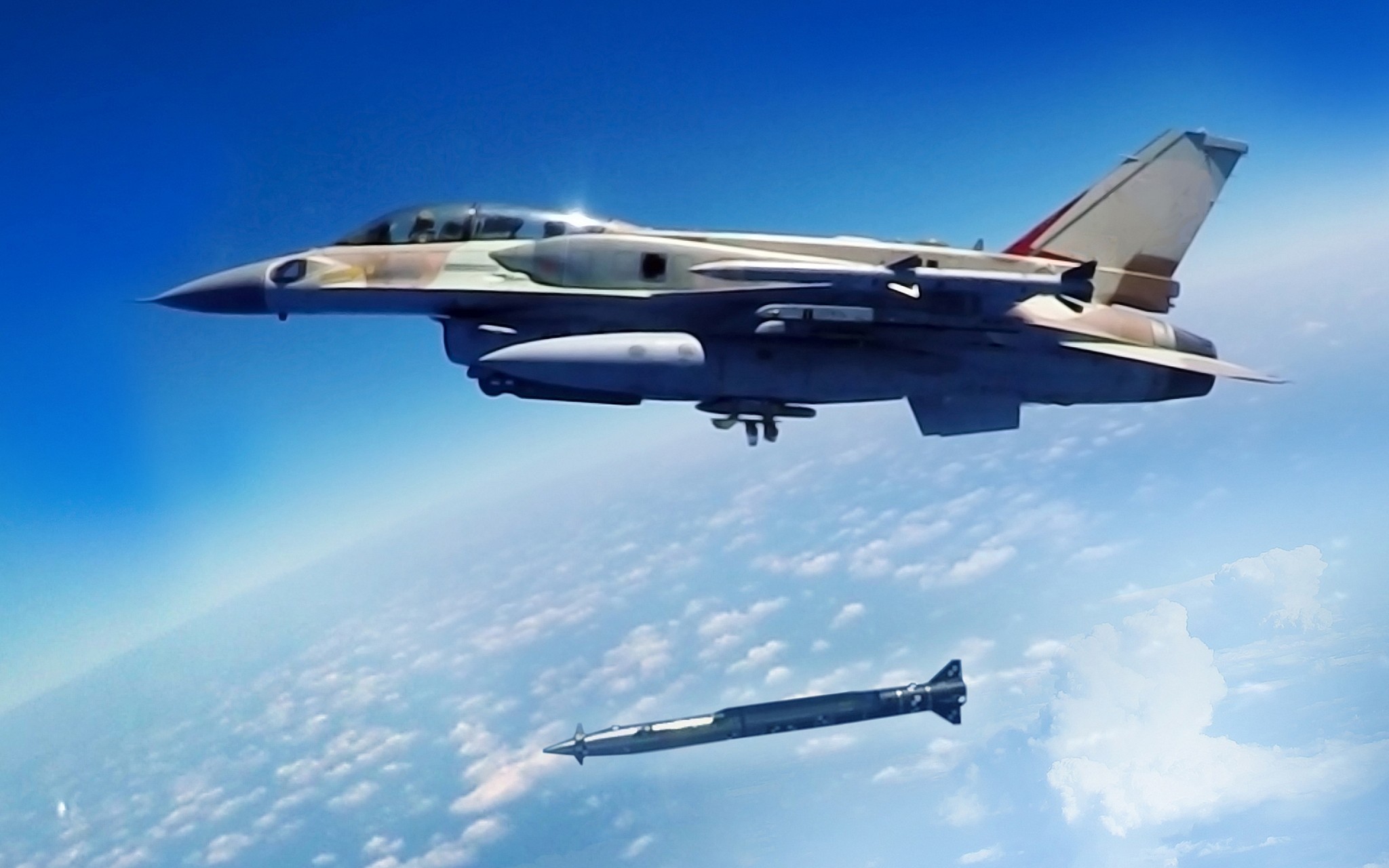
The Israelis that used likely a Air Launched stand-off weapon like Blue Sparrow or Rocks to destroy an S-300 demonstrated that they can fly right up to 300 miles stand-off range unchallenged over Iraq/Syria and launch a weapon to pinpoint a target like an S-300 and have no trouble. With a nuclear weapon they can repeat this.
Both countries have different philosopies. Iran with mass attack to overwhelm and Israel with precision and stealth. Doesn't mean one is better than the other. Both work for each country.
Thats what they respectively proved in this exchange.
I am all for chest thumping for emotional reasons that Iran is great (and more guts and gusto than all other muslim countries COMBINED), but as given this is pkdefense, we should not mix emotion with reality
An Iranian attack on an Israeli desert air base last week as part of Tehran’s unprecedented assault on the country damaged a taxiway.

apnews.com
DUBAI, United Arab Emirates (AP) — An Iranian attack on an Israeli desert air base last week as part of
Tehran's unprecedented assault on the country damaged a taxiway, a satellite image analyzed by The Associated Press on Saturday shows.
The overall damage done to Nevatim air base in southern Israel was minor despite Iran launching hundreds of drones, ballistic missiles and cruise missiles. Israeli air defenses and fighter jets, backed by the U.S., the United Kingdom and neighboring Jordan,
shot down the vast majority of the incoming fire.
But the Iranian attack last weekend showed Tehran's willingness to use its vast arsenal of ballistic missiles directly against Israel as tensions remain high across the wider Middle East over the
Israel-Hamas war in the Gaza Strip. An
apparent Israeli retaliatory attack Friday on Isfahan, Iran, and Tehran's low-key response to it suggest both countries want to dial back their long-running shadow war for now — though risks of a wider conflagration in the region remain.
The Planet Labs PBC image, taken Friday for the AP, shows fresh blacktop across a taxiway near hangars at the southern part of Nevatim air base, about 65 kilometers (40 miles) south of Jerusalem. The daily newspaper Haaretz, which published lower-resolution images of the site Thursday, identified the hangars nearby as housing C-130 cargo aircraft flown by transport squadrons.
The satellite image corresponds to footage earlier released by the Israeli military, which showed construction equipment working on the damaged taxiway. A hangar in the background of the video mirrors those seen nearby.
Other images released by the Israeli military showed a crater in the sand and damage under what appeared to be a wall that it said came from the Iranian attack. The little visible damage seen at the air base in the satellite image directly contradicts Iran's efforts to portray the attack as a great victory to a public alienated by the Islamic Republic's cratering economy and its heavy-handed crackdowns on dissent in recent years.
"This operation became a sign of the power of the Islamic Republic and its armed forces," Iranian President Ebrahim Raisi said Friday. "It also showed the steely determination of our nation and our wise leader, the commander of all forces."
However, it does show Iran's arsenal has the ability to reach Israel, as the April 13 attack marked the first direct military assault on the country by a foreign nation since Iraqi dictator
Saddam Hussein launched Scud missiles at Israel in the 1991 Gulf War.

 Iranian Defense