Bangladesh becomes world largest cotton importer in MY25
Brazil becomes main supplier overtaking India
Saddam Hossain 14 December, 2025, 23:33
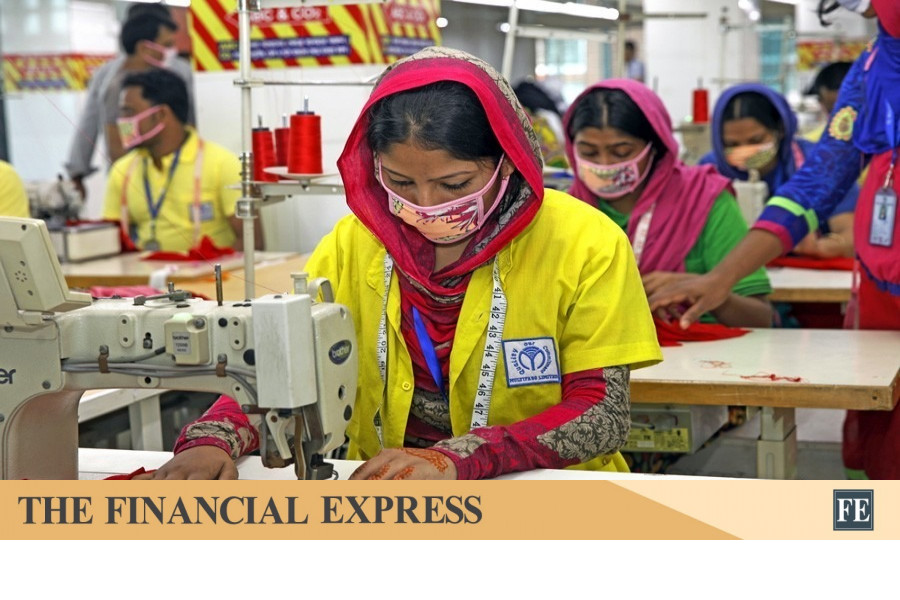
A file photo shows a worker overseeing a cotton processing machine at a factory in Habiganj. | New Age photo
Bangladesh became the world’s largest importer of cotton, importing 8.05 million bales in the marketing year 2024-25, which starts August 1.
According to data recently released by the United States Department of Agriculture, imports were 5.2 per cent higher than in MY2023-24, at 7.8 million bales.
Bangladesh became the top cotton importer in MY25 as the textile industry continued to recover from a post-pandemic slowdown, the report added, saying that despite a political regime change, cotton imports remained stable throughout the marketing year.
Meanwhile, during MY25, Brazil emerged as the largest single supplier of cotton, surpassing India, although West Africa remained the primary source region.
According to USDA data, Bangladesh imported 1.9 million bales of cotton from Brazil in MY25, accounting for approximately 25 per cent of total imports.
The import from India stood at 1.4 million, which was 15 per cent of the total imports, followed by 1.06 million bales from Benin (13 per cent), 616,538 bales from Cameroon (8 per cent), and about 595,902 bales from the United States and Australia, each holding 7 per cent of total imports.
Regarding greater imports from Brazil than from India, the report stated that Brazilian cotton has become popular among Bangladeshi spinners due to its competitive pricing, wide availability during harvest, and stable supply.
Fazlul Hoque, former vice president of the Bangladesh Textile Mills Association, echoed a similar sentiment, noting that Brazil experienced a surge in cotton production, which kept prices comparatively low.
‘Although Brazil is far from our country, the pricing remained competitive despite the long route,’ he said, noting that Brazilian cotton sellers stocked their cotton at various ports, from where any importer could easily import.
The price of Brazilian cotton remained lower than that of West African countries and India; for this reason, the millers have been leaning toward the South American country.
Meanwhile, Brazil has long sought to increase the supply of cotton for Bangladesh’s textile sector by ensuring continuity and sustainability through strategic partnerships in Asia.
In June of 2022, Brazilian cotton businesses led by Brazilian Cotton Growers Association president Julio Cezar Busato visited Bangladesh and discussed a number of cotton millers.
In April of 2024, a delegation led by Brazilian Minister of Foreign Affairs Mauro Vieira visited Bangladesh, just after another delegation of ABRAPA visited Bangladesh on February of the same year.
During MY25, Vietnam became the second-largest importer of cotton, importing 7.9 million bales, followed by Pakistan (6.1 million bales) and China (5.1 million bales).
The report also stated that domestic cotton use in Bangladesh stood at 8.1 million bales in MY25. The USDA report forecast that for MY2025-26, the raw cotton import might increase to 8.4 million bales, up 1.4 per cent from the estimated 8.1 million bales in MY25, due to higher utilisation of raw cotton by the spinning industry.
However, textile millers stated that imports might decline in the coming months, as the country’s textile sector has been experiencing difficulties due to energy shortages and reduced demand.
Regarding domestic production, the report indicated that in the current MY26, the harvested area and production might stand at 46,000 hectares and 155,000 bales, respectively.
Cotton cultivation is fully manual in the country, relying heavily on human labour for applying fertilisers, spraying insecticides, and harvesting, the report added.