โ˜• Support Us โ˜•
[๐Ÿ‡ง๐Ÿ‡ฉ] - Corruption Watch | Page 32 | PKDefense

[๐Ÿ‡ง๐Ÿ‡ฉ] Corruption Watch

Reply (Scroll)
Press space to scroll through posts
G Bangladesh Defense
[๐Ÿ‡ง๐Ÿ‡ฉ] Corruption Watch
335
10K
More threads by Saif


Defaulted loan rises to Tk 4.2 trillion
Staff Correspondent Dhaka
Published: 15 Jun 2025, 23: 16

1750030721564.png


Loans distributed through irregularities during the past government have become defaulted. At the same time, the loans of many businesspersons close to the ousted Awami League also have become irregular.

As a result, the amount of defaulted loans in the banking sector rose to Tk 420,334 crore (over 4.2 trillion) at the end of March. The amount stands at 24.13 per cent of all distributed loans, the Bangladesh Bank revealed Sunday.

The amount of defaulted in December last year was Tk 345,765 crore (over 3.45 trillion). That means, the amount of bad loans increased by nearly Tk 75,000 crore (750 billion) in the span of three months.

Bangladesh Bank officials have said that funds were withdrawn from banks under various names, both real and fictitious, during the tenure of the Awami League governmentโ€”ousted by a student and public uprising. These funds are now beginning to be classified as defaulted loans.

At the same time, with the classification criteria for defaulted loans being raised to meet international standards, the volume of defaulted loans is increasing, they also pointed out.

The officials also said many of the loans that have been renewed are not being recovered. Due to irregularities, the central bank is itself categorising many loans as defaulted, which is further contributing to the rise in bad loans. The amount of such loans may continue to rise in the coming days.

It has been learned that at the end of March, the total amount of loans in the banking sector had risen to Tk 1,741,992 crore (nearly 17.42 trillion), which was Tk 1,711,402 crore (17.11 trillion) at the end of December.

According to data from Bangladesh Bank, as of March, the proportion of defaulted loans in state-owned banks had increased to 45.79 per cent, up from 42.83 per cent in December. In private commercial banks, 20.16 per cent of loans had become defaulted, compared to 15.6 per cent in December.

When the Awami League formed the government in 2009, the total amount of the defaulted loan was Tk 22,481 crore (224.81 billion). Since then, the volume of bad loans has steadily increased.

Economists have long alleged that people close to and influential within the then-government took out large sums of money from banks through various irregular practices, much of which has been laundered abroad.

Since the fall of the government on 5 August last year, the true scale of the defaulted loan crisis has started to emerge. During the previous governmentโ€™s rule, powerful people were granted a significant amount of loans under favourable conditions. Successive policies were also implemented to artificially reduce the apparent volume of defaulted loans on paper.

Following the change in government, the central bank has abandoned these policies. It has also announced a plan to merge five Shariah-based banks plagued by high default rates.

Sources said that once the banks that were previously controlled by the controversial business conglomerate S Alam Groupโ€”closely associated with the ousted Awami Leagueโ€”were freed from its influence, the real picture of their loan books began to surface.

Among them, Islami Bank has seen the highest increase in defaulted loans. Similarly, default rates have surged in First Security Islami Bank, Global Islami Bank, Union Bank, Social Islami Bank, and EXIM Bank.

At the same time, several major business groupsโ€”including Beximco (owned by former Prime Minister Sheikh Hasinaโ€™s adviser Salman F Rahman), Bashundhara Group, and S Alam Groupโ€”have become loan defaulters, further inflating the defaulted loan amount.​
 

ACC conducts drive over alleged irregularities in RAJUK's Rupsha Apartment project

UNB
Published :
Jun 18, 2025 21:42
Updated :
Jun 18, 2025 21:42

1750287630572.png


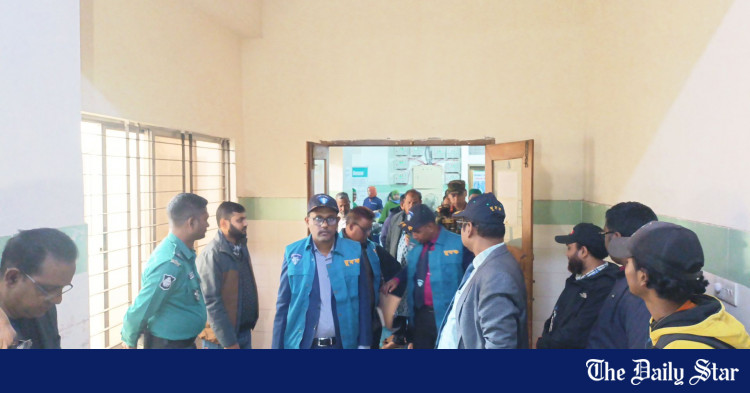
The Anti-Corruption Commission (ACC) on Wednesday conducted an enforcement drive at the RAJUK Rupsha Apartment project in Gulshan over allegations of corruption and irregularities in flat allocations.

According to the complaint, during the tenure of the previous government, a number of high-value apartments in the Rupsha Apartment project-located behind the Westin Hotel in Gulshan-2-were allegedly allocated at reduced prices to politically influential individuals, their children, and senior government officials, in a non-transparent manner.

During the drive, the ACC enforcement team took statements from the officials involved in the project and conducted an on-site inspection of the apartment complex.

Initial observations by the team suggest signs of procedural irregularities in the allocation process.

To investigate further, the team collected relevant documents, including allocation applications, approval records, and the list of beneficiaries.

The collected records will be reviewed and a detailed report will be submitted to the Commission for further action.​
 

Politicians, bureaucrats unwilling to end corruption: Energy Adviser

Published :
Jun 21, 2025 20:56
Updated :
Jun 21, 2025 20:56

1750546987266.png


Emphasising the need for good governance, Energy Adviser Muhammad Fouzul Kabir Khan said on Saturday that neither politicians nor bureaucrats in Bangladesh are truly committed to eradicating corruption.

He made the remarks while speaking at a seminar on budget policy debate organised by the Bangladesh Economic Association (BEA) at CIRDAP Auditorium in Dhaka, UNB reports.

The seminar, presided over by BEA Convener Mahbub Ullah, brought together leading economists for an in-depth discussion on the national budget.

The Adviser highlighted the widespread wastage of resources, stressing the interim government's commitment to preventing such occurrences in the future. โ€œWaste, corruption and inefficiency are major obstacles to Bangladesh's economic progress.โ€

Fouzul Kabir cited examples, such as the construction of a power plant six kilometres from its water source solely for the convenience of a minister, unnecessary road development and the mismanagement of state funds.

Regarding the interim government's mandate, Fouzul Kabir emphasised their aim to set a positive precedent for the future. "We want to leave behind an example where we do not appoint relatives or grant business favours," he said, underscoring a commitment to good governance.

Focusing on the power sector, he noted the growing reliance on imported LNG due to declining domestic gas reserves, which requires significant government subsidies.

To address this, he said, an initiative has been launched to install solar panels on all government buildings, with the electricity generated intended for the national grid.

He also pointed out the potential for the private sector to contribute at least 2,000MW of electricity by installing solar panels on rooftops.

The seminar featured presentations on nine key budget issues by renowned experts. Sajjad Zahir, Executive Director of the Economic Research Group, underscored the importance of short and medium-term sustainable development, advocating for greater transparency in the government's domestic and foreign borrowing to address the budget deficit.

Md Gulzar Nabi, Research Director at Bangladesh Bank, expressed strong optimism for the medium and long-term stability of the countryโ€™s macroeconomy, citing Bangladesh's current GDP of $467 billion.

He highlighted self-sufficiency in food production, strong remittance inflows, and the significant contribution of the ready-made garment sector as key drivers.

Professor Saima Haque Bidisha, Pro-Vice-Chancellor and Professor of Economics at Dhaka University, said contractionary monetary and fiscal policies in certain budget sectors could hamper the creation of new jobs.

She also raised concerns about persistently high inflation and its potential to obstruct youth employment in the private sector.

Addressing the health sector, Professor Shafiun Nahin Shimul of Dhaka University's Institute of Health Economics drew on examples from Thailand, Sri Lanka, and the Philippines, urging a shift in perception from health budget as merely sectoral expenditure to a smart investment in human resource development.

He described the allocated 1.7 per cent of GDP for health in the proposed budget as inadequate.

On the education front, Zulfiqar Ali, Research Director at BIDS, emphasised the need for increased investment in science, technology, and technical education to bridge the existing gap between the education and employment sectors.

Referring to India, Nepal and Malaysia, he noted with concern the declining trend in education budget allocations in Bangladesh and called for more funds for teachers and educational resources.

He also expressed disappointment at the governmentโ€™s โ€˜failureโ€™ to establish an education commission.

Dr Munshi Sulaiman, Research Director at the BRAC Institute of Governance and Development (BIGD), criticised the insufficient allocation for the social safety net in the budget, particularly in relation to poverty alleviation and income inequality.

He proposed implementing productive social safety net programmes supported by modern technologies.

Professor Sharmind Nilormi of Jahangirnagar University's Economics Department pointed out a reduction in budget allocation for women's safety, workplaces and access to government services, suggesting that even a token allocation would have been appropriate.

Kazi Iqbal, Research Director of the Industrial Division at BIDS, criticised the national industrial policy for failing to reflect global trends of deglobalisation and the growing inclination of global economic powers towards domestic industrialisation.

He argued that tariff reduction without specific targets and long-term strategies for export-oriented industries would be ineffective.

Professor Rashed Al Mahmud Titumir of Dhaka University's Department of Development Studies characterised the national budget as a product of political struggle and advocated for the re-establishment of public ownership over public funds.

Abdul Awal Mintoo, Chairman of National Bank PLC, highlighted the destructive subculture of vested interests capturing and exploiting constitutional, social, and economic institutions.

He stressed the political nature of the budget and warned that investment growth would be unachievable without meeting key preconditions, particularly in light of the tightened monetary policy.

Leading researchers, economists and policy analysts attended the event.​
 

Corruption culture lives on

Published :
Jun 22, 2025 01:16
Updated :
Jun 22, 2025 01:16

1750548351414.png


The Bangladesh Bureau of Statistics (BBS) has recently published its Citizen Perception Survey, which demonstrated no let-up in the pervasiveness of corruption faced by service-seekers in government offices. It's a disheartening reality that public servants, paid by the very people they're meant to serve, are instead compelling them to pay bribes for services. According to the survey, the Bangladesh Road Transport Authority (BRTA) has been identified as the most corrupt public office, with 63.29 per cent of respondents reporting that they were forced to pay bribes to receive services. BRTA handles essential tasks such as issuing driving and vehicle licenses and route permits. This rampant graft directly contributes to the alarming frequency of fatal road accidents, as the focus appears to be more on who can pay rather than who is qualified. Law enforcement agencies ranked second with 61.94 per cent of service-seekers reporting bribery and corruption, an indictment that undermines public trust and signals a serious breach of duty. This is a classic case of fox guarding the henhouse where those meant to protect incite fear and anxiety. Passport offices, which are supposed to facilitate services for expatriates whose remittances are vital to the economy, came in a close third. Furthermore, over 50 per cent of survey participants reported encountering corruption when dealing with land-registry offices, courts and land records offices.

The latest survey reveals that the same government offices previously notorious for corruption and bribery continue to perform poorly, demonstrating little improvement despite public outcry. Even the ousting of a fascist government in mass uprising and subsequent reform measures aimed at curbing corruption by the interim government failed to change their behaviour. Their corrupt ways persist, seemingly immune to accountability measures. Many public servants seem to believe that passing a civil service exam grants them unchecked authority over the public rather than an obligation to serve. At the survey report launch, planning adviser Dr Wahiduddin Mahmud observed that wealthier citizens today are increasingly offering bribes to receive quicker or better public services. This turns what should be fair and equal services into a system where money buys privilege. He noted that when the rich use bribes to skip ahead, they create an alternative service stream that runs parallel to the official one that makes corruption worse. In doing so, they share responsibility for perpetuating the very corruption they would later decry.

Public perceptions of law and order were also measured in the survey by asking how secure respondents feel in daily life. It found that 84.81?per cent of citizens feel safe walking alone in their neighbourhoods after dark, while 92.54?per cent feel safe inside their homes after sundown. In what should be a civilized society, it is shocking that nearly one in ten individuals don't feel safe in their own homes and two in ten feel vulnerable in their neighbourhoods. In principle, diligent policing should curb crime and strengthen the sense of safety both indoors and outdoors. Yet when 61.94?per cent respondents report being victims of law enforcement corruption, behaviour that is itself criminal, it is hardly surprising that genuine offenders grow more brazen.

Overall picture painted by the survey is undeniably gloomy. Without strict surveillance and exemplary punishment for wrongdoing, corruption in government offices has apparently become institutionalised. This is the reason why reports like this must not be dismissed as routine data collection. Instead, it should serve as a wake-up call for the authorities to prosecute corrupt officials and ensure that accountability structures function without fear or favour. In the current political context, shaped by the fall of authoritarian Awami League government, achieving this should not be difficult, provided there is sufficient will.​
 

Governments come and go, but bribery stays on
Latest BBS survey reveals enduring corruption in public services

1750554271766.png

VISUAL: STAR

We are concerned to learn of the findings of the latest survey by Bangladesh Bureau of Statistics (BBS) that paints a troubling picture of public service delivery in the country. The survey period covered both the tail end of the now-ousted Awami League regime and the first few months of the interim government, thus requiring its findings to be read with nuance. But the fact that 31.67 percent of respondents, or nearly one in three, reported having to pay bribes for essential services is a stark reminder of how entrenched corruption remains. The massive sample sizeโ€”with 84,807 respondents from 45,888 households interviewedโ€”also makes the data a fair representation of the experience of ordinary citizens. Although by now we would have appreciated a survey exclusively focused on the interim period, what has emerged still makes a case for why we should worry.

For that, we just need to look at some of the details. For instance, according to the BBS data, the worst offender among public service agencies was the Bangladesh Road Transport Authority (BRTA), where 63.29 percent of citizens reported being forced to pay bribes, followed closely by law enforcement agencies (61.94 percent), the Department of Immigration and Passports (57.45 percent), and the Directorate of Registration (54.92 percent). These institutions have long been synonymous with corruption, and the latest data suggests that the situation has not improved significantly despite the change in government. Another sector with a notable incidence of corruption is education where, as noted by the planning adviser at the BBS ceremony, the bribery rate for transfers is very high.

These findings more or less align that of other reports on corruption in Bangladesh. We may recall a December 2024 assessment of the Transparency International Bangladesh (TIB)โ€”based on six household surveys conducted between 2010 and 2023โ€”that an estimated Tk 1.46 lakh crore was paid in bribes for services during the rule of Awami League. According to the most recent of those surveys, covering the period between May 2023 and April 2024, some 70.9 percent of respondents had collectively paid Tk 10,902 crore in bribes while seeking services. It is no surprise that the same institutions flagged by TIB as most corruption-prone have also been named by BBS. Clearly, things have changed little.

The level of access and affordability in public services may have improved of late, but the quality and timeliness of service delivery still leave much to be desired. Just over half of the BBS survey respondents have expressed satisfaction with how long services take to process. While the interim government has taken some notable steps in recent weeks, such as replacing the BRTA chairman and conducting anti-corruption raids at BRTA offices, these actions are not enough to curb corruption unless systemic reforms are undertaken to support full automation of services, elimination of middlemen, de-politicisation, and rigorous trials and punishment of corrupt officials. Corruption must be confronted not with token measures but with genuine political will and long-overdue institutional changes.​
 

POLLING CENTRES WITH 100PC TURNOUT
Election officials under ACC scanner
Travel ban imposed on ex-minister Hasan Mahmud, wife


Staff Correspondent 23 June, 2025, 23:50

1750724386109.png


The Anti-Corruption Commission has launched an inquiry into corruption allegations against the officials involved in the polling centres that reported 100 per cent voter turnout in the controversial parliamentary elections in 2018.

The ACC in January this year formed a five-member inquiry team to probe into allegations of the โ€˜midnight votingโ€™ in the 2018 elections to identify individuals involved in the alleged vote rigging and abuse of power.

As part of the inquiry, the ACC on Monday sent a letter to the Election Commission seeking information on the officials involved in the polling stations where 100 per cent voter turnout was recorded in the 2018 Jatiya Sangsad polls.

Asked, ACC director general (prevention) Md Akhtar Hossain at a press briefing on Monday said that the inquiry team sent the letter to collet necessary information regarding the inquiry over the allegation of vote rigging.

He said that the ACC was conducting an inquiry into the individuals allegedly involved in vote rigging and power abuse during the JS elections.

A member of the inquiry team said that the ACC had already obtained documents related to several officials and they were collecting information to identify the officials involved in vote rigging and their illegal wealth allegedly accumulated by way of irregularities in the elections.

According to the allegations, Awami League leaders and activists of various tires executed the so-called โ€˜midnight votingโ€™ during the 2018 elections upon instructions from the then prime minister Sheikh Hasina, and AL general secretary Obaidul Quader.

Besides, the then inspector general of police Javed Patwary, former Dhaka Metropolitan Police commissioner Asaduzzaman Mia, former RAB chief Benazir Ahmed, former IGP Shahidul Haque, Sheikh Hasinaโ€™s defence adviser Tarique Ahmed Siddique, then public administration adviser HT Imam, now late, as well as various government and Election Commission officials at different levels allegedly helped in committing the polls irregularities.

Meanwhile, the Dhaka Metropolitan Senior Special Judge Court on Monday imposed a travel ban on former foreign minister Mohammad Hasan Mahmud and his wife Nuran Fatema over graft allegations.

DMSS judge Md Jakir Hossain passed the order, allowing an ACC plea.

The court also ordered freezing Hasan Mahmudโ€™s nine and his wifeโ€™s 12 bank accounts over the same allegations. It also ordered seizing an SUV of the former minister.

The ACC earlier on April 6 filed two separate cases against Hasan Mahmud and his wife over allegations of amassing illegal wealth of Tk 6.63 crore and suspicious transactions of Tk 722 crore.

After the Sheikh Hasina-led Awami League government was overthrown on August 5, 2024, Hasan Mahmud, also a former lawmaker for the Chattogram-7 constituency, fled the country.

The ACC on Monday filed a case against former lawmaker Ziaur Rahman on charges of amassing illegal wealth worth Tk 1.8 crore.

ACC DG Akhtar Hossain at a briefing said that the ACC also found suspicious transactions of Tk 10 crore in five bank accounts of Ziaur Rahman who was former lawmaker for the Chapainawabganj-1 constituency.

The ACC also issued a notice asking Ziaur Rahmanโ€™s wife Kashmeri Begum to submit her wealth statement to the commission.​
 

ACC opens investigation into its director generalโ€™s alleged bribe demand

bdnews24.com
Published :
Jun 26, 2025 20:11
Updated :
Jun 26, 2025 20:11

1750979379027.png


The Anti-Corruption Commission (ACC) has launched an investigation into allegations made by National Citizen Party (NCP) leader Hasnat Abdullah on Facebook regarding ACC officials demanding bribes.

On Thursday, the commission's Director General (Prevention) Md Akhtar Hossain told journalists, โ€œWe have issued numerous notices warning against fraud. Despite this, many continue to fall victim to scammers.

โ€œSo far, we have received four general diaries (GDs) from people who have been cheated.โ€

Hasnat, NCPโ€™s chief organiser (southern region), recently wrote in a Facebook post: โ€œIn independent Bangladesh, the ACCโ€™s tea bill is Tk 100,000,โ€ claiming that officials demanded this amount from Dr Mahmuda Mitu as a prerequisite for clearing her name, despite no corruption charges being filed against her.

โ€œMahmuda was told, โ€˜youโ€™re a doctor, so you have money; pay Tk 100,000 for clearanceโ€™.โ€

He also shared three recorded phone conversations with the doctor in the form of video clips.

In a statement on Tuesday, the agency said the accusations were โ€œunverified and defamatoryโ€.

According to the statement, signed by ACC spokesperson Md Akhtarul Islam, Hasnat made โ€œdefamatory remarks against the director general and senior officials without any verificationโ€.

Meanwhile, on Thursday, Akhter said: โ€œWe have informed the media through a notification about the information provided by a political party organiser.

โ€œThe fraudster who contacted the complainantโ€™s number has been linked to four more similar incidents. A complaint has been filed with the relevant police station.

โ€œThese cases are currently under investigation by both our team and the concerned police stations. It will soon be revealed that this is the work of a fraudster, as we now have all the necessary information in our hands.โ€

He said, โ€œThe fraudsters are very smart. Facebook and WhatsApp accounts were created using the ACC chairmanโ€™s name, and money was extorted through Nagad and bKash.

โ€œWe have arrested four individuals, including the man impersonating the ACC chairman. They are currently on remand.โ€

โ€œWe have also decided to investigate the video clips,โ€ he added.​
 

ACC probes appointments of 21 as cadre officers
Solamain Salman 27 June, 2025, 00:12

1750983649904.png


The Anti-Corruption Commission on Thursday initiated an inquiry into allegations of appointing 21 people to different cadre positions illegally under the 29th Bangladesh Civil Service examinations during the Awami League regime which was ousted past year.

The 21 officers were recommended by the Bangladesh Public Service Commission to be appointed to the non-cadre services not to the cadre services under the BCS examinations, the anti-graft agency said.

The ACC made the move as it got preliminary information that the then authorities appointed the 21 non-cadre officers as carder officers under the 29th BCS, 13 months after the publication of the final results of the BCS examinations conducted by the Public Service Commission.

The 21 officers recommended by the PSC for appointments as non-cadre officers, but later appointed as BCS cadre officers as identified by the anti-graft agency include Asmaul Hosna Liza, Shajia Afrin, Most Nasrin Parvin, Sultana Razia, Momtaz Begum, Shamim Ahmed, Alpora Borua, Farida Yasmin, Fahmid Mehjabin, Ruksana Khatun, Shiukta-ul-Jannah, Farhana Yasmin, Jamal Al Naser, Mohammad Kaiser Khasru, Suvana Ikram Chowdhury, Asaduzzuman, Mahfuza Aktar Shimul, Shafiqul Islam and Kamrunnahar Shampa, according to a document.

Out of them, five were appointed in the administration cadre, one in the Ansar cadre, four in the customs and VAT cadre, two in the economic cadre, two in the family planning cadre, one in the foreign service cadre, two in the police service cadre, three in the taxation cadre and one in the general education cadre.

The remaining two other officers were also appointed to cadre services.

ACC director general (prevention) Md Akter Hossain at a briefing at the commissionโ€™s headquarters in the capitalโ€™s Segunbagicha said that the Public Service Commission recommended a number of people to be appointed to the non-cadre services under the 29th BCS after completing all formalities.

But, after 13 months of the recommendation, 21 non-cadre candidates were appointed to different cadre services through corruption and misusing power, he said.

He, however, did not disclose the names of the officers.

A senior ACC official told New Age that they had information that the 21 non-carder officers under the 29th BCS were appointed to different cadre services through massive corruption.New age fashion

He also said that they got information that not only the PSC officials, senior officials of the past government were also involved in the illegal appointments.

The 29th Bangladesh Civil Service examinations were the first BCS exams under the Sheikh Hasina-led Awami League regime that came to power in 2009.

The preliminary exam of the 29th BCS was held in August 2009, while the final results of the BCS examinations were published in 2011.

The PSC came under heavy public criticism due to irregularities in the government recruitments and involvements of its officials in question paper leaks during the Hasina regime, which was ousted by a student-led mass uprising on August 5, 2024.​
 

What drives BD money into Swiss banks?

Asjadul Kibria
Published :
Jun 28, 2025 21:17
Updated :
Jun 28, 2025 21:17

1751152934247.png


The news that Bangladesh-linked money in Swiss banks increased by around 23 per cent last year has drawn attention of various quarters in the country. The significant rise in deposits has triggered widespread discussions, because of the fact that the notable increase did happen during a year when the country witnessed a mass uprising and the ouster of autocratic Prime Minister Sheikh Hasina. Many argued that the rise in deposit recorded since beneficiaries of the ousted regime transferred their ill-gotten financial assets and parked them in the safe vaults of the Alpine banks.

The data, released by the Swiss National Bank (SNB) on June 19, showed that Bangladesh-linked funds in the banks in Switzerland stood at CHF (Swiss Franc) 598 million in 2024, equivalent to Tk. 89.12 billion at the current market price. The amounts were CHF 58.38 million (approximately Tk 8.69 billion) in 2022 and CHF 26.38 million (approximately Tk 3.93 billion) in 2023. Bangladeshi money in the Swiss banks reached its peak in 2021 when the amount was CHF 871.76 million.

1751152953005.png


It is worth noting that Bangladeshi money in Swiss banks refers to deposits linked to Bangladesh in various ways. Besides Bangladeshi institutions and citizens, money deposited by firms and individuals with links to Bangladesh is also included. Several Bangladeshi nationals working in Switzerland and other European countries have their money in these banks. Bangladesh-based business houses also have accounts there. Moreover, there should be no reason to claim that all money deposited in Swiss banks are dirty or illegal money.

The popular perception is that people across the world keep their illicit income in Swiss banks, where the secrecy of depositors is highly protected. This perception is not baseless. The nature of secrecy makes Switzerland one of the leading tax havens, where individuals' or businesses' income or wealth is taxed at very low rates, if at all. As the beneficiaries of tax havens typically don't reside or operate in these countries or jurisdictions, tax havens also provide secrecy to conceal non-residents' incoming wealth from other governments. Therefore, tax havens offer lower tax rates, along with a legal system that ensures confidentiality for non-residents. That's why tax havens are termed as offshore jurisdictions or secret jurisdictions.

However, the significant surge in Bangladeshi money in Swiss banks over the past year is a cause for concern. It's not improbable that those who illegally transferred money from Bangladesh to various destinations in recent years have once again moved their funds to Swiss banks for better protection of their ill-gotten financial assets. The fall of the Hasina regime and the subsequent efforts of the Yunus-led interim government to identify and recover illegally flown money may have alerted those who have stashed their black money in different tax havens. There are indications that over the years, some prominent businessmen, along with several politicians and bureaucrats, have stashed their black money in Singapore, the United Arab Emirates (UAE), Canada, Hong Kong, the United Kingdom (UK), and the United States (US). Some of them may now be switching to Swiss banks, as Bangladesh lacks an agreement with Switzerland on the exchange of information on financial accounts.

Due to pressure from various countries, primarily the United States (US), the Swiss government has begun to relax the rules of bank secrecy. By joining the OECD accord on the exchange of banking information in 2014, the country opened the window to share information of the non-resident account holders in Swiss banks with the respective countries. In 2017, legislation was passed there allowing the Swiss government to share data with other countries under the Automatic Exchange of Information (AEOI). It has been on the rise. So far, more than 100 countries have AEOI agreement with

Switzerland. Switzerland implements the AEOI in accordance with the Multilateral Competent Authority Agreement on the Automatic Exchange of Financial Account Information (MCAA). Within the European Union (EU), the AEOI has been implemented based on a bilateral international treaty. India and Pakistan are the two countries in South Asia that have an AEOI agreement with Switzerland.

Under the AEOI system, banks in Switzerland disclose financial account data to the Swiss authorities. The Swiss authorities then automatically forward the data to the authorities in India or Pakistan, enabling them to examine the foreign financial account data. The primary purpose of the AEOI is to determine the extent to which taxpayers in a country hold bank accounts in Switzerland or any other country and whether they have transferred funds in a manner that avoids or evades taxes. The Swiss authorities, however, are committed to ensuring that information shared with a country does not breach international data protection requirements. Data sharing and receiving countries must adhere to the confidentiality clause of the AEOI. India has received a series of data about the Indian nationals and entities who have stashed money in Swiss banks after signing a bilateral agreement with Switzerland regarding AEOI in 2017.

During the Hasina regime, discussions arose about recovering Bangladeshi funds from Switzerland. The autocratic government, however, did not take any effective measures to sign a bilateral agreement with the Alpine nation. In other words, the ousted regime kept the window open for illicit financial flows from the country. At that time, the central bank prepared an analytical note on Bangladesh-linked Swiss money, which claimed that both the assets and liabilities in the Swiss banks were generated mainly due to foreign trade transactions. This situation underscores the urgent need for bilateral agreements to prevent such financial flows in the future.

There is, however, another source to know the amount of Bangladesh-linked money in the Swiss banks. Locational Banking Statistics (LBS), prepared and released by the Bank for International Settlements (BIS) quarterly, also provides some information. LBS data showed that money deposited by Bangladeshis (non-bank or individual) in Swiss banks declined in the last two years. The amount was $100 million in 2022, which decreased to $63 million by the end of 2023 and further declined to $43 million in 2024. The table also showed that (table-1) individual deposits in Swiss banks are much lower as per SNB statistics than shown in BIS locational banking statistics. The Bangladesh Bank may investigate the matter further and provide a comprehensive explanation on the issue.​
 

ACC opens probe against 6 NBR officials, including NBR Reform Unity Council president
Staff Correspondent Dhaka
Published: 29 Jun 2025, 18: 31

1751243380570.png


The Anti-Corruption Commission (ACC) on Sunday launched an investigation into six officials of the National Board of Revenue (NBR) over allegations of accumulating illicit wealth by facilitating tax evasion for taxpayers in exchange for bribes.

The six NBR officials facing investigation are: AKM Badiul Alam, member of income tax policy division; Hasan Muhammad Tarek Rikabdar, additional commissioner of audit, intelligence, and investigation directorate; Mirza Ashiq Rana, additional commissioner of tax region-8, Dhaka; Monalisa Shahreen Sushmita, additional commissioner of tax region-16, Dhaka; Sadhan Kumar Kondu, additional commissioner of Dhaka south customs, excise, and vat commissionerate; and Mohammad Morshed Uddin Khan, joint tax commissioner of BSS Tax Academy.

ACC deputy director (public relations) Akhtarul Islam said an investigation opened against the six NBR officials for allegedly acquiring wealth beyond their known sources of income through corruption and irregularities.

According to NBR sources, at least five of the officials under investigation are directly involved in the ongoing movement within the NBR.

Hasan Muhammad Tarek Rikabdar is the president of the NBR Reform Unity Council, the platform that is waging the NBR protest, while Mirza Ashiq Rana and Shahreen Sushmita are vice presidents of the Unity Council.

NBR officials and employees have been staging protests over the implementation of revenue reform initiatives since 12 May. As a result, a stalemate hit the agency, which is responsible for revenue collection on behalf of the government, disrupting its services.

On 12 May, the government issued an ordinance abolishing the NBR and the Internal Resources Division (IRD), creating two separate divisions: Revenue Policy Division and Revenue Administration Division. The goal is to separate policy-making tasks, like determining tax rates, from tax collection activities.

Economists, researchers, and business leaders have long been advocating for reforms in the revenue sector. One of the conditions of the $4.7 billion loan from the International Monetary Fund (IMF) was to establish separate entities for revenue policy and revenue collection.

NBR officials do not object much to the formation of the two divisions. They, however, want appointment preferences for revenue sector officials in the newly-formed divisions. The government said it will appoint competent individuals, which may bring more officials from the administrative cadre.

The protesters also demanded the resignation of NBR chairman Abdur Rahman Khan, alleging that the he is ignoring NBR officials and employees in the reform process and is instead suppressing and harassing those involved in the movement.

Meanwhile, the government issued a statement today, Sunday saying that it has decided to declare all categories of NBR jobs as essential services, as well as, at the same time, instructed the protesting officials and employees to return to work, warning that failure to do so would lead to strict measures in order to protect the people and the economy of the country.​
 

Members Online

Latest Posts

Latest Posts