Donate ☕
[🇧🇩] - Political Activities of Awami League after the fall of Hasina's Regime | Page 2 | PKDefense

[🇧🇩] Political Activities of Awami League after the fall of Hasina's Regime

⤵︎
Reply (Scroll)
Press space to scroll through posts
G Bangladesh Defense
[🇧🇩] Political Activities of Awami League after the fall of Hasina's Regime
24
1K
More threads by Saif


Awami League protests: A comeback or a cry for relevance?

1738795913747.webp

VISUAL: SALMAN SAKIB SHAHRYAR

The Awami League, once the most dominant political force in Bangladesh, now finds itself in an unfamiliar and precarious situation. Its leadership has fractured following its disgraced fall from power on August 5, 2024 in the face of the student-led mass uprising. The party is now attempting to find its footing again through a month-long protest programme. This raises a critical question: is the Awami League truly interested in working its way to democracy, or is it merely struggling to survive?

Awami League's current predicament is largely of its own making. The party, which once led the country's liberation struggle and positioned itself as a beacon of democracy, gradually turned into an authoritarian entity. Over the past decade, allegations of election manipulation, political repression and corruption eroded its credibility. The parliamentary elections in 2014, 2018 and 2024 were all marred by accusations of vote-rigging. Only a few months after the 2024 election, a mass uprising—which grew from a protest by students against the reinstatement of the quota system in government service—forced Sheikh Hasina's government out of power. This ouster was not just a shift in governance, it was a clear rejection by the people of the party's undemocratic practices and governance failures.

However, the party appears to have learnt little from its downfall. Its leaflet recently distributed to justify its protest movement offers little evidence of introspection or reform. The rhetoric remains unchanged, reflecting an outdated political mindset that fails to address the new realities in Bangladesh. There is a conspicuous absence of acknowledgement of the public grievances that led to its downfall, including the deaths of protesters during the July-August uprising. Instead of expressing condolences or seeking justice for those who lost their lives, the party remains focused on reclaiming power without addressing its past transgressions.

The hypocrisy in Awami League's protests is evident. The very tactics it now condemns—mass arrests, suppression of dissent, and human rights abuses—were once cornerstones of its own governance strategy. When it was in power, Awami League showed little tolerance for opposition protests, often employing law enforcement agencies to suppress them. Now, finding itself on the receiving end of a similar treatment, it suddenly seeks to champion democratic rights. This selective outrage raises suspicions about the party's true intentions.

Meanwhile, the interim government led by Chief Adviser Prof Muhammad Yunus has taken a firm stance, refusing to allow Awami League to hold demonstrations unless it takes responsibility for the human rights violations committed under its rule. The government insists that the party must first seek public forgiveness before re-entering mainstream politics. While some may claim this approach as being harsh, it underscores the need for accountability and political reform in Bangladesh.

The Awami League's month-long protest includes demonstrations, strikes and blockades, citing grievances such as the arrest of its leaders, economic instability, and alleged human rights violations under the interim government. Even if some of these issues were valid, the party's selective outrage diminishes its credibility. It must recognise that its own governance was rife with economic mismanagement, suppression of free speech, and political violence.

The party's continued denial of public sentiment only worsens its predicament. Rather than acknowledging the people's movement as a legitimate expression of frustration, it continues to frame it as a conspiracy. This deep-seated tendency to dismiss opposition as foreign or domestic sabotage was one of the key reasons it became so isolated from the people of the country. The fact that the Awami League has not shifted from this stance suggests either a deliberate refusal to change or a complete failure to grasp the current reality. If this trend persists, it will be increasingly difficult for the party to re-enter Bangladesh's political mainstream in future.

If the Awami League wishes to regain credibility, it must first embark on a process of genuine self-reflection and reform. This means acknowledging past mistakes, removing corrupt elements, and rebuilding trust with the people it once alienated. Without these fundamental changes, its current movement risks being seen as nothing more than a desperate attempt to gain some relevance.

The responsibility of addressing Awami League's misdeeds does not solely rest on the interim government. The political opposition must also rise to the occasion by mobilising public support through democratic means, rather than relying on government crackdowns to sideline Awami League. True political change in Bangladesh will come not through suppression, but through the people's mandate.

Ultimately, Awami League's protests reflect a party grappling with its own political survival rather than a genuine struggle for democracy. Unless it undergoes a sincere transformation, it will remain trapped in a cycle of political irrelevance, unable to reclaim the trust of the Bangladeshi people.

Mohammad Al-Masum Molla is a journalist at The Daily Star.​
 
Analyze

Analyze Post

Add your ideas here:
Highlight Cite Fact Check Respond

Fugitive party trying to destabilise Bangladesh: Yunus
United News of Bangladesh . Dhaka 03 March, 2025, 14:19

1741048812501.webp

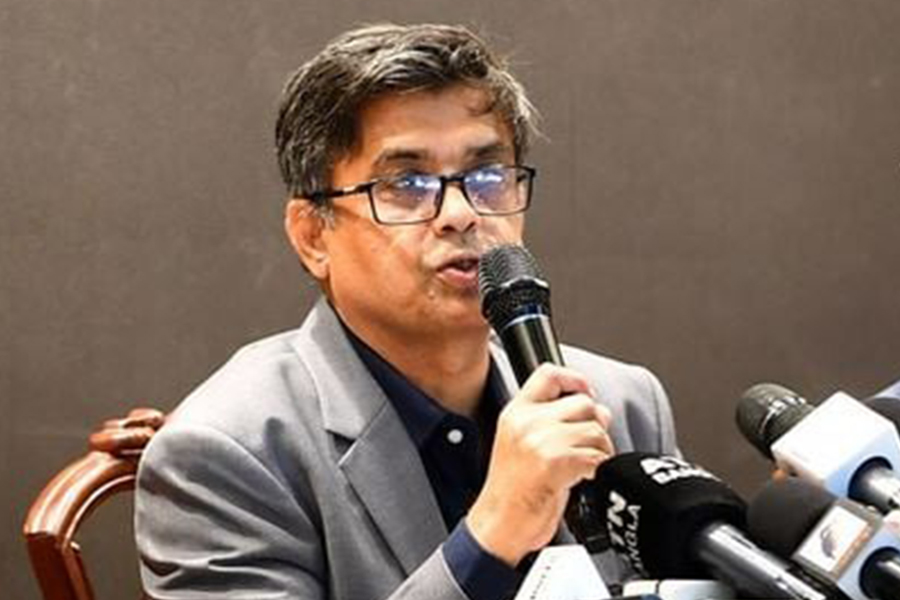
Professor Muhammad Yunus.

‘No alternative to strong Bangladesh-India good ties’

Chief adviser Professor Muhammad Yunus said that a fugitive party was making every effort to unsettle Bangladesh.

‘A fugitive party has left the country, or its leadership is no longer here. They are making every effort to destabilise the situation [law and order],’ he told BBC Bangla in an interview published on Monday.

Highlighting historical close ties, Professor Yunus said that there was no alternative to maintaining a good relationship between Bangladesh and India, as there had been some clouds in the relations that mainly came through propaganda.

When asked whether there was any possibility of independence and sovereignty being at risk, citing the army chief’s recent statement that Bangladesh’s independence and sovereignty could be threatened if everyone could not work together, he said that the risk always existed. ‘This threat is constant—it exists at every moment, in every place.’

Replying to another question whether he was referring to the ousted Awami League as the threat, Yunus said that he referred completely.

‘That is obvious! They are frequently making announcements, giving speeches, addressing the public. We all hear it. People are getting agitated. They are making public addresses, calling on people to rise, to take action. They are announcing programmes—hartals, protests and so on,’ he continued.

‘How do you think people will interpret this? Do you think everything will settle down peacefully just like that?’ asked the chief adviser.

About Bangladesh-India relationship, he said that some conflicts had been seen in the midway. These clouds mostly came through propaganda.

Yunus said that the relations between the two neighbours were in very good shape and there had been ‘no deterioration’.

The chief adviser said that he had always explained that the relations between Bangladesh and India were so deep, the relationship was in good shape then and it would remain good in the future.

‘There is no alternative to maintain good relations between the two countries. The relationship between Bangladesh and India is historically, politically and economically are very close and they cannot deviate from this,’ he said.

Yunus spoke about the law and order situation, reforms and elections, the formation of a new student leadership party, and political developments during the nearly seven months of the interim government under his leadership.​
 
Analyze

Analyze Post

Add your ideas here:
Highlight Cite Fact Check Respond

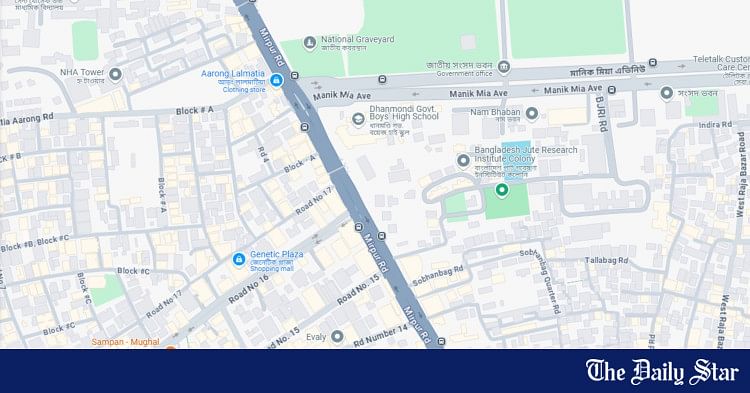
Students, locals intercept AL-BCL procession in Dhanmondi
Three people belonging to AL, Jubo Mohila League, BCL detained

1742689673635.webp

Dhanmondi 27. Image: Google Maps

Students and locals obstructed a procession of the Awami League and its affiliated organisations in the capital's Dhanmondi 27 area this evening.

They detained three people before handing them over to police.

The detainees are Laboni, 28, an activist of Jubo Mohila League, Sirajul, an AL activist, and Raju, 28, a BCL activist.

DMP Additional Deputy Commissioner (Mohammadpur Zone) Jewel Rana told The Daily Star that Mohammadpur police, with the help of students and public, detained three individuals from the AL procession.

He said around 40-50 AL and BCL activists brought out the procession after iftar. Students and locals stopped them and detained three individuals and handed them over to police.

Police are interrogating the detainees to find out why they organised a procession with the members of banned organisation BCL.

In a video on social media, it could be seen that at least 40-50 people participated in the procession, chanting "Joy Bangla".

In another video, locals were seen allegedly assaulting two of the detainees.​
 
Analyze

Analyze Post

Add your ideas here:
Highlight Cite Fact Check Respond

Police preserve right to use force if Awami League takes to streets: NCP
Staff Correspondent
Dhaka
Published: 22 Mar 2025, 22: 14

1742689993169.webp

National Citizen Party holds a a press conference at the party’s head office in Dhaka on 22 March 2024.Suvra Kanti Das

National Citizen Party (NCP) on Saturday said the Awami League is clearly an anti-state force and agent of India, and if they take to streets they would do so to destabilise the country, and in that case police will have the right to use force on them.

NCP’s reform coordination committee coordinator and joint convener Sarwar Tushar said this in reply to queries from journalists at a press conference at the party’s head office in Dhaka on Saturday.

The NCP held the press conference as they will submit their primary reform proposal to the National Consensus Commission on Sunday.

The party proposed to lower the election candidate’s age limit to 23 and voter’s age limit to 16 years.

Replying to a query on what would happen if Awami League starts a movement, Sarwar Tushar said, “Awami League will not wage a movement. What they would do, we will not call it a movement. There is a definition of movement in a democratic state. We call it a movement that is waged to press home various demands.”

“Awami League is clearly an anti-state force and an agent of India, and if they take to streets we would not call it a movement. They will wage movement to destabilise the country. In that case the police have the right to use force," he added.

NCP said they are likely to sit with the National Consensus Commission after Eid-ul-Fitr on their proposals.​
 
Analyze

Analyze Post

Add your ideas here:
Highlight Cite Fact Check Respond

Joy visits India to meet Hasina
New Age Desk 12 June, 2025, 00:22 Wellness retreats

1749774316979.webp

Sajeeb Wazed Joy

Former prime minister Sheikh Hasina’s US-based son, Sajeeb Wazed Joy, is in India to meet his mother, people familiar with the matter said on Tuesday, reports Hindustan Times.

Wazed, who has emerged as a key voice for the Awami League party, arrived in the country ahead of Eid-ul-Adha in order to celebrate the festival with his mother, currently living in self-exile in New Delhi, the people said.

Hasina fled to India after the dramatic collapse of the Awami League government in the face of nationwide protests led by student groups last August. She is currently living in a safe house in the heart of the Indian capital.

There was no word from Indian officials on the visit by Wazed, an American citizen.

‘Hasina’s son is visiting India primarily to celebrate Eid with his mother. He is the first visitor she has received since she arrived in India in August last year,’ a person close to the Awami League said.

The people said there are currently no plans for Wazed to participate in any public events.

Details of his itinerary too are not known, they said.​
 
Analyze

Analyze Post

Add your ideas here:
Highlight Cite Fact Check Respond

22 arrested over secret meeting of BCL, AL in Bashundhara, Army officer under interrogation
FE ONLINE DESK

Published :
Jul 31, 2025 22:35
Updated :
Jul 31, 2025 22:35

1754007458088.webp


Police have arrested 22 members of the banned Chhatra League, Awami League, and its affiliates over a secret meeting held at a convention centre near Dhaka’s Bashundhara Residential Area.

The event, reportedly attended by 300–400 people, included anti-government slogans and alleged plans to mobilise nationwide protests under the direction of former Prime Minister Sheikh Hasina, as per local agency reports.

A Major of the Bangladesh Army linked to the meeting is currently in military custody and being interrogated. Authorities say training for subversive acts was conducted at the event.

The convention centre’s manager has also been arrested for disabling CCTV footage. The Detective Branch is investigating under the Anti-Terrorism Act, and efforts to identify and detain all conspirators involved in the plot are ongoing.​
 
Analyze

Analyze Post

Add your ideas here:
Highlight Cite Fact Check Respond

Maj Sadique in custody for alleged training of AL activists: Army

UNB
Published: 31 Jul 2025, 22: 33

1754010657751.webp

Brigadier General Md Nazim-Ud-Daula, Director of Military Operations at Army Headquarters, briefs on Thursday at Officers’ Mess ‘A’ in Dhaka Cantonment. UNB

Bangladesh Army has taken Major Sadique into custody following a claim that surfaced recently on social media and various news platforms that he was involved in providing training to Awami League activists.

Brigadier General Md Nazim-Ud-Daula, Director of Military Operations at Army Headquarters, disclosed this at a press briefing held on Thursday at Officers’ Mess ‘A’ in Dhaka Cantonment.

“The issue involving Major Sadique has come to our attention. While the matter is still under investigation, I can confirm that he is currently in Army’s custody,” said Brig Gen Nazim replying to a question.

“If the investigation proves his involvement, action will be taken against him in accordance with the existing regulations of the army. Since the investigation is going on, it would not be appropriate to comment further at this moment,” he added.

About the situation in the Chattogram Hill Tracts, he said various groups, including the UPDF and JSS are often engaged in clashes over territorial dominance and extortion.

“This is nothing new. These groups regularly attempt to expand their influence, which leads to frequent conflicts. The army is working with utmost effort to keep the situation under control,” Brig Gen Nazim said.

He said the army alone is not the only stakeholder in the region. “Civil administration, police and others are all part of it. If we can all work together, I believe the situation can be brought under further control, and that is essential.”

When asked about the KNF (Kuki-Chin National Front), which is reportedly sourcing weapons from the Arakan Army, and attempting to expand influence, Brig Gen Nazim said, “It is not surprising that there is a connection between KNF and Arakan Army, given their ethnic and ideological similarities.”

He said KNF has failed to establish any dominance despite some logistical changes. Their influence has diminished considerably.

“Earlier, clashes with KNF resulted in the deaths of eight army personnel and many injuries. But in recent months, such incidents have notably decreased,” he said, adding that many KNF members were killed or injured in recent operations and several of their bases were destroyed.

“KNF is now in a vulnerable state. We strongly believe that with collective efforts, it is possible – and necessary – to uproot the KNF completely. In a sovereign country, the dominance of any armed group is unacceptable,” he said.​
 
Analyze

Analyze Post

Add your ideas here:
Highlight Cite Fact Check Respond

Govt monitoring what AL doing from outside Bangladesh: Press Secretary

UNB
Published :
Aug 10, 2025 17:37
Updated :
Aug 10, 2025 17:37

1754873286276.webp


Chief Adviser's Press Secretary Shafiqul Alam on Sunday said they are monitoring what the Awami League is doing from outside the country, as its activities are banned in the country.

"You know their activities are banned in Bangladesh. Definitely, we are monitoring what they are doing from outside the country," he said while responding to a question regarding AL's party office in Kolkata, as reported by BBC Bangla recently.

The Press Secretary said they are looking into their activities to know whether they want to "create any instability" in the country.

"We will be able to know if we can gather concrete information," Alam said during a media briefing at the Foreign Service Academy in the capital.

Chief Adviser's Deputy Press Secretary Abul Kalam Azad Majumder and Director General (Public Diplomacy) at the Ministry of Foreign Affairs Shah Asif Rahman were present at the media briefing which was arranged to highlight Chief Adviser Prof Muhammad Yunus' engagements in Malaysia from August 11-13.

In the bustling outskirts of Kolkata, a commercial complex has begun drawing unfamiliar visitors for the last few months.

According to a BBC Bangla report, the Awami League has set up a "party office" on the 8th floor of this complex.

In May this year, the interim government issued a gazette notification banning all activities of the Bangladesh Awami League and its affiliated organisations under the Anti-Terrorism Act until the International Crimes Tribunal (ICT) completes the trial of the party's leaders and activists.

According to the notification, all activities of the Awami League and its affiliated and like-minded organisations are prohibited until the ICT concludes the trial against their leaders and activists.

The notification mentioned that any form of publication, media engagement, online and social media campaigns, rallies, meetings, assemblies, and conferences organised by the Awami League or any of its affiliated bodies are strictly prohibited.

Earlier, in a special meeting, the Council of Advisers decided to ban all activities of the Awami League - including in cyberspace - under the Anti-Terrorism Act until the conclusion of the trial by the International Crimes Tribunal.

Law Adviser Dr Asif Nazrul said the decision was taken to safeguard the country's security and sovereignty, ensure the safety of the leaders and activists of the July movement, and protect the plaintiffs and witnesses involved in the tribunal proceedings.​
 
Analyze

Analyze Post

Add your ideas here:
Highlight Cite Fact Check Respond
Awami League has little future in Bangladesh politics: Shafiqul Alam

Correspondent Magura
Updated: 02 Jan 2026, 18: 00

1767402227902.webp


Press secretary to the chief adviser of the interim government, Shafiqul Alam speaks to the media after visiting the Nitai Gaur Gopal Sebashram under the Magura pourashava in Magura town on 2 January 2026 Prothom Alo

Press secretary to the chief adviser of the interim government, Shafiqul Alam has said that he sees little future for the Awami League (AL) politics in Bangladesh, adding that the party no longer enjoys public acceptance.

He made the remarks while responding to questions from journalists in his home district of Magura on Friday morning.

Earlier in the day, he visited the Nitai Gaur Gopal Sebashram under the Magura pourashava.


Replying to a question about the future of the politics of the Awami League, Shafiqul Alam said, “When people make mistakes, they apologise or express remorse. We all make mistakes. But even after 17 long months, the party has not expressed any regret for the large number of killings and enforced disappearances committed under its watch. They have not even spoken about remaining peaceful.”

Commenting further on the AL, he said, “From abroad, the party’s leaders and activists are instead spreading misinformation. They are claiming that 3,000 police officers were killed, which is not realistic.”

“They are also attempting to portray millions of students who took part in the movement as ‘terrorists’ before the international community, in order to legitimise the killings carried out against them. Because of such actions, the people of Bangladesh will no longer accept them,” he stated.

Asked whether the AL could still take part in the election, Shafiqul Alam said, “Even if they now come forward and admit their mistakes or say ‘sorry’, it has no value. The time has passed, and the opportunity for their nomination no longer exists.”

He also responded to a question on the credibility of the upcoming 13th national parliamentary election if the Awami League does not participate.

“There is no such perception among the general public that the election would become meaningless if the Awami League does not take part. On the contrary, people are eagerly waiting for the election,” the press secretary said.

According to him, “If a political party takes up arms and uses them against young students, carries out enforced disappearances, killings and mass murder, then no civilised country in the world considers it a democratic party. Actually, the Awami League has declared itself unfit to contest elections.”

Addressing journalists directly, Shafiqul Alam said, “You yourselves saw what happened in Magura in August. Alongside leaders of the (Bangladesh) Chhatra League and Jubo League, even the father of the local MP, Shakib Al Hasan, came out with weapons. Two students were killed by gunfire in Magura town. After that, can the Awami League still claim any moral legitimacy to engage in politics?”

In response to another question, Shafiqul Alam said that once the interim government’s tenure ends, he would like to return to journalism.

After visiting the Nitai Gaur Gopal Sebashram in the morning, he later went to his ancestral home in Sreepur.​
 
Analyze

Analyze Post

Add your ideas here:
Highlight Cite Fact Check Respond
Знакомство с новостными источниками является необходимым в повседневной жизни.
Оно помогает оставаться информированным и разбираться в текущих процессах.
Актуальные новости позволяют оценивать события.
Чтение СМИ способствует расширению кругозора.
Санкт-Петербург
Разные источники помогают анализировать информацию.
В профессиональной сфере СМИ дают возможность оставаться конкурентоспособным.
Осознанное потребление информации формирует умение работать с данными.
В целом, чтение СМИ делает человека более информированным.
 
Analyze

Analyze Post

Add your ideas here:
Highlight Cite Fact Check Respond

Members Online

Latest Posts

Latest Posts

Post